The Gallup Blog

Faculty members with online teaching experience are more confident in online learning outcomes than are faculty with only in-person teaching experience.

Low pay for early childhood professionals coupled with the high cost of care presents a challenge for leaders looking to assist working parents.

Postgraduate degree holders who took at least half of their classes online fare just as well on many employment and life satisfaction measures as those who took most courses in person.

Every employee is talented in some way. Discovering those strengths and fitting them to a job role improves companies and leadership.

Leaders must create organizational cultures that make sense for women. They need to examine their policies, strategies and values to ensure each employee can maximize their potential in and out of the workplace.
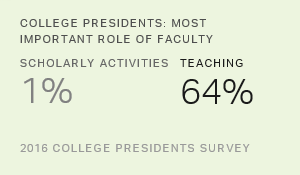
College presidents say they value teaching and student service, but they are not incentivizing faculty to pursue these roles. "Publish or perish" is undermining student success and the mission of higher education.
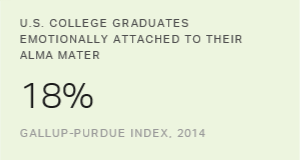
By emphasizing experiential learning and support before graduation, universities can potentially increase alumni attachment to their alma mater.

K-12 U.S. school district superintendents and Americans overall agree on the three most important factors in assessing the effectiveness of public schools -- high school graduation rates, student engagement and student hope.

Among 16 factors, U.S. college presidents rate student enrollment, job preparedness and student retention as most important for evaluating their own success; college ranking is least important.
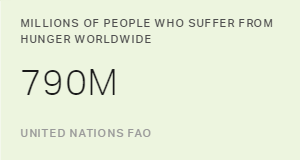
A new report from the United Nations on the world's progress on sustainable development goals features data that Gallup collected on behalf of its clients FAO and World Bank on world hunger and financial inclusion.

Americans have lost track of the fundamentals of education. We measure grades and graduation rates, but are we measuring all of the things that we value? It's not all explained by test scores.
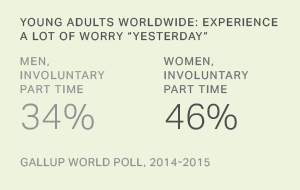
Young women generally report more negative life experiences than young men worldwide. This gender gap disappears, however, as their life experiences improve with full-time jobs.
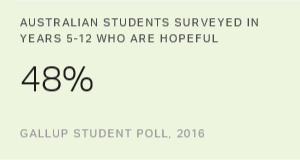
In Australia, less than half of students (48%) in Years 5 through 12 who were surveyed have hope for the future, according to the 2016 Gallup Student Poll.

There's a coming data revolution in higher education, but it's not the "big data" revolution that many have been hyping. This revolution will be about the voices of consumers and constituents in higher education.
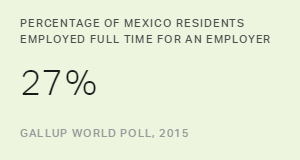
To achieve the greater economic inclusion that Mexico needs, schools and government should work together -- casting a wider net to find and develop a new generation of business leaders that spans regions and socioeconomic classes.

The State of Local and State Government Workers' Engagement report shows a median of 29% of local and state government employees across the U.S. are engaged at work and provides a snapshot of the engagement situation in 43 states.

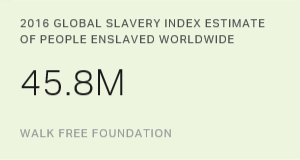
Modern slavery is present in some form in 167 countries, according to a new report from the Walk Free Foundation. The organization's 2016 Global Slavery Index estimates that 45.8 million people are in some type of modern slavery.

Gallup recognized organizations that go above and beyond in their commitment to and advancement of employee-centric performance excellence. These organizations demonstrate excellence in specific areas of employee engagement.