The Pulitzer Prizes

Nicole Carroll Elected Chair of Pulitzer Prize Board
“I’ve always believed that the most meaningful work we do in journalism is rooted in service – service to our communities and to the truth,” Carroll said. “Leading the Pulitzer Board continues that service to a profession that has meant so much to me and has been so critical to our society.”

The 2026 Pulitzer Prize Announcement
The Pulitzer Prize Board has announced the 2025 Pulitzer Prizes and Nominated Finalists. Watch the livestream and read the shortlist of winners and nominees here.

The 2026 Pulitzer Prizes: Behind the Scenes
A distinguished photojournalist offers a revelatory glimpse into the 2026 selection process.

Pace, Iyer Join Pulitzer Board
Julie Pace, senior vice president and executive editor of The Associated Press, and Vijay Iyer, a composer, pianist and professor at Harvard University, have been elected to the Pulitzer Prize Board, the Pulitzer Prize Administrator’s Office announced today.

Changes to Pulitzer Prize Journalism Categories
The Pulitzer Prize Board has decided to make several changes and clarifications in Journalism categories for the 2026 Pulitzer Prizes. The deadline for entry is January 26, 2026 at 11:59 pm Pacific time.

The 2025 Pulitzer Prize Awards Ceremony
The 2025 class of Pulitzer Prize winners gathered at Columbia University's Low Library on October 30 for a ceremony celebrating the May 5 conferral of their awards.

Eight Lesser-Known Film Adaptations of Drama Prize Winners
You've seen "A Streetcar Named Desire" and "Rent." But what about "State of the Union"?

The Many Guises of William Faulkner
Read about two-time Fiction winner William Faulkner's varied career.

Spotlight: Ornette Coleman
The 2007 Music winner enjoyed a varied and uncompromising career. Learn more about his life and vital contributions to American culture.
The 2026 Pulitzer Prize Announcement
The Pulitzer Prize Board has announced the 2025 Pulitzer Prizes and Nominated Finalists. Watch the livestream and read the shortlist of winners and nominees here.
The 2026 Pulitzer Prizes: Behind the Scenes
A distinguished photojournalist offers a revelatory glimpse into the 2026 selection process.
For the Record
Rolling Stone Publisher Sues Google Over AI Summaries

Diversified Publisher Sues Google Over AI Summaries: Penske Media Corporation (which publishes a wide array of at least 20 print and digital brands, including Variety, Rolling Stone, Women's Wear Daily, Billboard, The Hollywood Reporter, Artforum and ARTNews) "has sued Google, alleging that the AI summaries that appear atop search results are illegally using its reporting and depressing online traffic," Ben Fritz of The Wall Street Journal reported Friday. Fritz added: "Penske Media is the first major U.S. news company to challenge Google and its parent Alphabet in court over its growing use of artificial intelligence, which many publishers have said is damaging their businesses. Penske filed the antitrust suit late Friday in federal district court in the District of Columbia, where a judge last year found Google has an illegal monopoly in internet search. That judge earlier this month imposed softer penalties than the government had been seeking, in part because of the growing competition Google faces from other AI companies. Online education company Chegg has also sued Google over its AI Overviews in D.C. district court, as has a small Arkansas newspaper, the Helena World Chronicle, in a proposed class-action case." Alongside its flagship Gemini chatbot, Google "has been integrating AI more prominently into its search results" for the past sixteen months; the vast majority of queries "now produce an 'AI Overview' with information related to a search or question above links to other sites," while users may elect to use an AI Mode in lieu of traditional search per Fritz. He continued: "AI summaries and AI Mode include links to websites where the information was found. But publishers including Penske have said consumers often have little need to follow the links because the information they need is in the AI-generated answer. Penske said in its complaint that about 20% of Google search results with a link to one of its sites include AI Overviews and that percentage has been rising. It also said revenue on its sites from affiliate links for online shopping have dropped by more than a third since the end of 2024, which it attributed to decreased traffic from Google." In its complaint, Penske has further alleged that "siphoning and discouraging user traffic to [...] websites in this manner will have profoundly harmful effects on the overall quality and quantity of the information accessible on the internet." José Castañeda, a spokesperson for the high-technology behemoth, has maintained that "AI Overviews send traffic to a greater diversity of sites [...] We will defend against these meritless claims," also asserting to Fritz that "clicks on links that accompany AI Overviews are higher quality for publishers because [...] those users spend more time on the site." However, the complaint alleged that "with every article it publishes on its websites, PMC is forced to provide Google with more training and grounding material for its [AI] systems to generate AI Overviews or refine its models, adding fuel to a fire that threatens PMC's entire publishing business." The lawsuit, which seeks a permanent injunction against Google for its actions alongside "unspecified monetary damages," includes thirteen of the Penske publications as plaintiffs, although the predominantly Penske-owned Vox Media is not a party to the lawsuit.
Israel strike kills Al Jazeera journalists in Gaza

Israel Strike Kills Pulitzer Staff Contributor, Other Al Jazeera Journalists in Gaza: Anas Al Sharif, a prominent Al Jazeera journalist and contributor to the Reuters package that won a 2024 Pulitzer Prize in Breaking News Photography, was killed along with four colleagues in an Israeli airstrike on Sunday that was widely condemned by journalists and human rights groups. The Israeli military said it targeted Al Sharif, alleging he headed a Hamas militant cell that was involved in rocket attacks on Israel. Al Jazeera, which is funded by the Qatari government, rejected the claim and, before his death, Al Sharif also had denied Israeli charges against him. Al Sharif, 28, was among four Al Jazeera journalists and an assistant who died in an airstrike on a tent near Al Shifa Hospital in eastern Gaza City, Gaza officials and Al Jazeera said. A hospital official said two other people died. A sixth journalist, local freelance reporter Mohammad Al-Khaldi, was also killed in the strike, medics at Al Shifa Hospital said on Monday. In a statement, Al Jazeera lauded Al Sharif as "one of Gaza's bravest journalists," asserting that the attack was a "desperate attempt to silence voices in anticipation of the occupation of Gaza." Other journalists killed in the attack include Mohammed Qreiqeh, Ibrahim Zaher and Mohammed Noufal, according to Al Jazeera. "The deliberate targeting of journalists by Israel in the Gaza Strip reveals how these crimes are beyond imagination," Qatari Prime Minister Sheikh Mohammed bin Abdulrahman Al-Thani said in a post on X, while British Prime Minister Keir Starmer said he is "'gravely concerned' about the repeated targeting of journalists in Gaza,” according to a Reuters report. The Israeli military alleged in a statement that Al Sharif "led a Hamas cell and 'was responsible for advancing rocket attacks against Israeli civilians' and Israeli troops, citing intelligence and documents it said were discovered in Gaza but which it did not disclose," Reuters reported. Israel denies deliberately targeting journalists, and says many of those killed in Israeli airstrikes were members of Islamist militant groups, working under the guise of the press. Israeli military spokesperson Avichay Adraee posted photos on X that appeared to show Al Sharif with Yahya Sinwar, the mastermind of the Hamas October 2023 attack on Israel. Reuters could not verify their authenticity. It was not clear when the purported images were taken nor how the military acquired them. The Watson Institute for International and Public Affairs' Costs of War Project has ascertained that the Gaza war "is the deadliest on record for journalists" The Committee to Protect Journalists has determined that "at least 186 journalists and media workers have been killed in the conflict. U.N. Special Rapporteur Irene Khan said last month that Israel's claims against Al Sharif were “unsubstantiated." The Committee to Protect Journalists had urged the international community to protect Al Sharif as recently as last month.
NABJ Announces 2025 Hall of Fame Inductees & Special Honors Recipients

Moore Elected to NABJ Hall of Fame: 2012-13 Pulitzer Board Co-Chair Gregory L. Moore was inducted into the National Association of Black Journalists' (NABJ) Hall of Fame at a luncheon today under the aegis of the #NABJ25 Convention & Career Fair in Cleveland, according to the educational and professional organization. In his professional career, Moore co-founded and has served as chief executive of Klowtify, a media services firm. He previously served as a top executive at The Expert Press, a Canadian-based content agency that crafts expert commentaries for the American press. His journalism career culminated in a 14-year stint as executive editor of The Denver Post, where he oversaw a range of Pulitzer-winning journalism, perhaps most notably the news organization's 2013 Breaking News Reporting Prize-winning coverage of the 2012 Aurora, Colo. cinema mass shooting that killed 12 and injured 58. Before joining The Post, he spent 16 years at The Boston Globe, leaving as managing editor. A native of Cleveland and the eldest of five siblings, Moore spent his early career in his home state after receiving his undergraduate degree in journalism and political science from Ohio Wesleyan University. He has been a recipient of NABJ’s Lifetime Achievement Award and the Benjamin C. Bradlee Editor of the Year Award from the National Press Foundation in addition to serving as a board member and trustee of myriad organizations, including NABJ, the now-defunct American Society of News Editors, the University of Denver, the Boettcher Foundation and Polaris, a Washington, D.C.-based anti-human trafficking organization. Since leaving The Post, he has remained in the Denver metropolitan area with his family; in 2023, he was the co-chair of incumbent Denver Mayor Mike Johnston's transition team. Fellow Hall of Fame inductees this year include celebrated sports journalist (and Athletic editor-at-large) Leon H. Carter, Civil Rights Movement-era photojournalist Cecil J. Williams and recently retired San Francisco Bay Area-based broadcast journalist Pam Moore, who previously received a Peabody Award for her About Race series. Other NAJB Hall of Fame inductees with Pulitzer-related imprimaturs include 1977 Local Investigative Specialized Reporting winner Acel Moore; 2007 Commentary winner Cynthia Tucker; 1974 Public Service staff contributor and posthumous 2021 Biography winner Les Payne; 2009 Commentary winner and 2017-18 Pulitzer Board Co-Chair Eugene Robinson; longtime Pulitzer Board member Robert C. Maynard; and posthumous 2025 Special Citation recipient Chuck Stone.
Reddit claims top spot as most cited domain in AI-generated answers

Reddit Emerges as Top AI Citation Domain, Supplanting Wikipedia, Traditional Publishers: Despite foregrounding a topic-based discussion format that arguably bears more consanguinity to the bulletin board systems and Usenet newsgroups that captivated earlier waves of computer users thirty to forty years ago than today's plenitude of algorithmic-contingent video platforms, proprietary social aggregation forum Reddit "has revealed it is the number one most cited domain for AI across all models, according to data collected by analytics platform Profound," often surpassing such entrenched institutions as YouTube, Wikipedia and traditional news organizations, Alice Brooker of Press Gazette reported Monday. Brooker added: "It was cited twice as often as Wikipedia in the top ten most cited domains across AI in the three months ending 30 June, 2025, the platform said. While ChatGPT's top source was named as Wikipedia by Profound, both Google AI Overviews and Perplexity were AI models that relied most on Reddit as a source. The results were published in Reddit’s Q2 shareholder letter, which also revealed that more than 70 million people now use its on-platform search each week." Although certain publishers "have signed deals with AI companies which commonly include the use of their content as reference points for user queries in tools like ChatGPT (with citation back to their websites currently promised), others are opting out – even suing – AI companies over unauthorized use of their content," according to Brooker. David Buttle, the founder of media and tech consultancy DJB Strategies, postulated: “Reddit’s on-site search remains tiny. Its search’s 70 million weekly-active-users need to be seen alongside Google handling around 14 billion queries a day; that’s almost two searches for every human on the planet. In this context, Reddit’s focus on becoming a search platform poses a limited threat to publisher traffic, beyond perhaps outlets creating product / review content in narrowly defined niches, such as PC hardware or audio equipment." Conversely, Google's increasingly dominant AI Mode "threatens to substantially erode traffic" for publishers because "content creators cannot opt-out without damaging prominence in general search,” he continued, with Daily Beast Editor in Chief Joanna Coles recently divulging that "growing referral traffic from Reddit and Facebook had made up for falling referrals from Google." Although Reddit (a public company with a litany of prominent shareholders, running the gamut from the Newhouse family's Advance Publications [30%] to Chinese multinational tech conglomerate Tencent [11%] and OpenAI Chief Executive Sam Altman [9%]) has said its content is “essential for training” large language models and AI search engines in the current litigatory and regulatory environment for the technology, it does not feature a fact-checking component, thus raising the possibility that erroneous information on potentially niche topics will continue to suffuse the discourse.
Pulitzer Prize-winning political cartoonist Steve Benson dies at 71

Steve Benson (1954-2025): 1993 Editorial Cartooning winner Steve Benson has died following a 2024 stroke, the staff of the Arizona Mirror reported Tuesday. He was 71. The Mirror staff continued: "After being laid off by The Arizona Republic in 2019 [where he had published his Pulitzer-winning cartoons], Benson joined the Arizona Mirror, shortly after the nonprofit digital news outlet launched. He continued to produce thought-provoking cartoons for the Mirror until his retirement in 2024, capping off a remarkable career that spanned nearly half a century. [...] Throughout his career, Benson’s work appeared in publications such as The Washington Post, The New York Times, and Time magazine." In addition to four additional Pulitzer nominations (in 1984, 1989, 1992 and 1994), he received many other awards, including "multiple Best Editorial Cartoonist awards from the National Cartoonists Society," the staff added. They added that Benson was "known for his unflinching approach to political commentary, taking aim at figures across the political spectrum. His cartoons often sparked controversy, but he remained committed to his craft, once saying, 'If I'm not provoking a reaction, I'm not doing my job.' In addition to his work as a cartoonist, Benson was an accomplished public speaker and educator, frequently giving lectures on political cartooning and free speech at universities and conferences across the country. In 2020, Benson married Claire Ferguson, marking a new chapter in his life. He is survived by Claire, his children and grandchildren." A grandson of Eisenhower-era Secretary of Agriculture and 13th President (1985-1994) of the Church of Jesus Christ of Latter-day Saints Ezra Taft Benson, the cartoonist was raised in the church's milieu, receiving a political science degree with honors from Brigham Young University before joining the Arizona Republic as staff cartoonist in 1980; in 1990, he briefly moved to The News Tribune of Tacoma before rejoining the Republic a year later. During this period, Benson's visual journalism elicited criticism after he began to criticize Arizona Governor Evan Mecham (the first LDS Church member to attain the Arizona gubernatorial office) amid multivalent scandals that ran the gamut from obstruction of justice and misuse of government funds to myriad hateful remarks against women and Black Americans; although Meacham was removed from office after fifteen months following conviction in his impeachment trial, Secretary Benton allegedly told his grandson that "his eternal salvation was in jeopardy if he didn’t back off" from the coverage, ultimately removing his grandson from an ecclesiastical role in retaliation. After alleging that his grandfather's dementia had been covered up by LDS colleagues, Benson left the LDS Church in 1993, later appearing at many Freedom From Religion Foundation conventions.
Supreme Court Upholds Texas Law Limiting Access to Pornography

Supreme Court Upholds Texas’s H.B. 1181 Amid Potential First Amendment Implications: The United States Supreme Court today "rejected a challenge" to Texas's H.B. 1181 (a law "that seeks to limit minors’ access to pornography on the internet"), ruling that the measure "does not violate the First Amendment" by "[requiring] people to verify their age through measures like the submission of government-issued IDs," according to Adam Liptak of The New York Times. The vote was 6 to 3, with Associate Justices Sonia Sotomayor, Elena Kagan and Ketanji Brown Jackson dissenting from the majority. Liptak wrote: "The Texas law applies to any commercial website 'more than one-third of which is sexual material harmful to minors.' It requires such sites to use one of several methods to verify that users are 18 or older. It does not allow companies to retain the information their users submit. But the challengers said adults would be wary of supplying personal information for fear of identity theft, tracking and extortion." Since 2023, 24 states (primarily concentrated in the Southeast, Southwest, Mountain West and Upper Midwest regions of the U.S.) have passed similar legislation amid a politically heterodox resurgence of the anti-pornography movement whose social influence arguably peaked in tandem with the decade bookended by the publication of the Meese Report in 1986 (which prompted the withdrawal of publications like Playboy and Penthouse from their longtime perches in national convenience store chains) and the imposition of New York City's "60/40" adult-use zoning law in 1995, with proponents broadly asserting that the panoply of video-based variants of digital pornography constitute an unprecedented contagion that has engendered a sociocultural malaise among young men while also potentially abetting human trafficking and normalizing violence against women. According to Liptak, a trade group "representing companies that produce sexual materials, along with an adult performer, challenged the Texas law, saying that it violated the First Amendment right of adults." Federal District Judge David Alan Ezra initially blocked the law, noting that it could enable the state "to peer into the most intimate and personal aspects of people’s lives [...] It runs the risk that the state can monitor when an adult views sexually explicit materials and what kind of websites they visit. In effect, the law risks forcing individuals to divulge specific details of their sexuality to the state government to gain access to certain speech." A three-judge panel of the U.S. Court of Appeals for the Fifth Circuit disagreed, with a majority opinion avowing that the "age-verification requirement is rationally related to the government’s legitimate interest in preventing minors’ access to pornography." In a dissent, Judge Patrick E. Higginbotham said the law forestalls free speech rights and the decision "conflicts with Supreme Court precedent." In April 2024, the Supreme Court "refused to block the law while the appeal moved forward" after Texas lawyers noted that the "the sky [had] not fallen" after a year of enforcement. Liptak continued: "The appeals court’s majority relied on a 1968 Supreme Court decision, Ginsberg v. New York, which allowed limits on the distribution of sexual materials to minors, including what the justices called 'girlie magazines' that fell well short of obscenity, a form of speech unprotected by the First Amendment. That decision applied a relaxed form of judicial scrutiny. But in Ashcroft v. American Civil Liberties Union in 2004, the justices blocked a federal law, the Child Online Protection Act, which was similar to the one from Texas. They applied the most demanding form of judicial review — strict scrutiny — to find that the law impermissibly interfered with First Amendment rights. Applying that test, the Supreme Court ruled that the federal law violated the First Amendment, citing the availability of less restrictive alternatives like content-filtering software that 'would be at least as effective in achieving the legitimate purpose that the statute was enacted to serve.'" However, Judge Jerry E. Smith (who wrote the apellate court's majority opinion) "said the 1968 decision was the one that mattered" as the "Supreme Court's later Ashcroft decision contained 'startling omissions' that undercut its precedential force." In a statement, Cecillia Wang (national legal director of the American Civil Liberties Union, whose attorneys were among the litigators for the plaintiff) said that the Supreme Court “has departed from decades of settled precedents that ensured that sweeping laws purportedly for the benefit of minors do not limit adults' access to First Amendment-protected materials." She continued: "The Texas statute at issue shows why those precedents applying strict scrutiny were needed. The legislature claims to be protecting children from sexually explicit materials, but the law will do little to block their access, and instead deters adults from viewing vast amounts of First Amendment-protected content." Vera Eidelman, senior staff attorney with the ACLU Speech, Privacy and Technology Project, joined Wang in condemning the ruling. "With this decision, the court has carved out an unprincipled pornography exception to the First Amendment," she said. "The Constitution should protect adults' rights to access information about sex online, even if the government thinks it is too inappropriate for children to see." According to an organizational statement from the ACLU, the Texas law "burdens adults’ ability to access sexual materials, requiring individuals to disclose personal information vulnerable to surveillance and data breaches just to access online content [...] The law also ultimately fails to achieve its intended purpose. Because the law only applies if one-third of a site’s content is explicit, the online sites where minors are most likely to be exposed to sexual content, like forums or social media platforms, are not affected."
Sanctioned Russian media still partnered with Facebook

Sanctioned Russian Media Retain Facebook Partnerships: A new report by the nonprofit WHAT TO FIX (which "focuses on the accountability of internet platforms") has disclosed that Russian state media broadcasters such as Rossiya Segodnya (the administrative parent of RT and Sputnik) have "remained part of Facebook’s revenue redistribution program" despite the deplatforming of both entities following a European Union broadcasting ban (and concomitant sanctions) precipitated by the escalation of the Russo-Ukrainian War in February 2022, potentially enabling the outlets to "share in the platform's ad revenue," Eliza Gkritsi reported Friday. She added: "The campaign group said it could not ascertain whether funds were exchanged between [Facebook parent company] Meta and the sanctioned entities as part of the program, but said that its findings 'raise important questions regarding Meta's compliance with EU sanctions.'" A Meta spokesperson averred that "being listed on our Partner-Publisher list is not itself evidence that an account has received payouts, and any party on that list is still subject to our sanctions controls [...] When we identify accounts that appear to be run by or on behalf of sanctioned parties, we enforce against them." Gkritsi continued: "WHAT TO FIX looked at Facebook’s lists of active partner publishers, which include publishers that have signed up for Meta's monetization programs. Advertisers can choose from these lists where to feature their ads, and the platform may share some of its revenue with these pages. As of June 20, the lists included as many as 4.65 million accounts. Facebook removed RT and Sputnik from the list in 2022, but Sputnik pages in EU languages reemerged for one year as of October 2022, the researchers said. A new RT Arabic page also emerged in July 2023 and was on the list until earlier in June but has been removed, according to the researchers. Le Monde and Süddeutsche Zeitung, who reported on the research Friday, confirmed the findings independently." WHAT TO FIX also identified two sanctioned pages with ties to Polina Gagarina (a singer who finished second in the Eurovision Song Contest 2015 before being deplatformed by Spotify and YouTube for her strident advocacy of the war and myriad propagandistic interlocks with the Putin regime) and Sylvain Afoua (the pro-Russian leader of the Black African Defense League, which was banned by France for racist hate speech). Unverified accounts also disseminating Russian state media were included on the partner list. Gkritsi wrote: "According to the EU’s former top diplomat, Josep Borrell, the media sanctions were designed to target those 'who are polluting the public space with disinformation and malicious narratives, adding to the military warfare also through information warfare.' The bloc's foreign service in March warned that Kremlin-backed actors continue to try to manipulate and interfere in the politics of EU countries and prospective members like Moldova and Ukraine. Despite a blanket ban on broadcasters, experts warn that Russia-backed outlets have set up a vast array of accounts, pages and online channels to continue their operations."
News Sites Are Getting Crushed by Google’s New AI Tools

AI Tools Increasingly Forestall Publisher Traffic: Machine learning-based artificial intelligence chatbots "are replacing Google searches, eliminating the need to click on blue links and tanking referrals to news sites [...] As a result, traffic that publishers relied on for years is plummeting," according to a recent report by Isabella Simonetti and Katherine Blunt of The Wall Street Journal. They added: "Traffic from organic search to HuffPost’s desktop and mobile websites fell by just over half in the past three years, and by nearly that much at the Washington Post, according to digital market data firm Similarweb. Business Insider cut about 21% of its staff last month, a move CEO Barbara Peng said was aimed at helping the publication 'endure extreme traffic drops outside of our control.' Organic search traffic to its websites declined by 55% between April 2022 and April 2025, according to data from Similarweb. Similarly, Nicholas Thompson (a longtime technology journalist who currently serves as chief executive of The Atlantic) "said the publication should assume traffic from Google would drop toward zero and the company needed to evolve its business model," Simonetti and Blunt wrote. (Atlantic Staff Writer Anne Applebaum is a member of the Pulitzer Prize Board.) Although commercial chatbot products like ChatGPT were initially circumscribed by the finitude of their training data, current iterations have the ability to aggregate information from the web in real time, while the introduction of Google's complimentary AI Overviews (which "summarize search results at the top of the page," not infrequently with inaccurate information) have nonetheless "dented traffic to features like vacation guides and health tips, as well as to product review sites"; this effect likely will be compounded by the introduction of Google's streamlined AI Mode, which "responds to user queries in a chatbot-style conversation, with far fewer links." Major national newspapers also have seen precipitous organic search traffic declines over the past three years, including a significant percentage point decline (from 44% to 36.5%) at The New York Times. William Lewis, publisher and chief executive of The Washington Post, said the emergence of AI search results "is a serious threat to journalism that should not be underestimated," while Dow Jones/Wall Street Journal Chief Marketing Officer Sherry Weiss said that her remit is "focused on ensuring customers come to us directly out of necessity." Simonetti and Blunt continued: "Google executives have said the company remains committed to sending traffic to the web, and that people who click on links after seeing AI Overviews tend to spend more time on those sites. The search giant also said it elevates links to news sites and doesn’t necessarily show AI Overviews when users search for trending news. Queries for content included in older articles and lifestyle stories, however, may produce an overview. Publishers have been squeezed by emerging technology since the dawn of the internet. Digital news decimated once-lucrative print publications funded by classifieds, advertising and subscription revenue. Social-media platforms such as Facebook and Twitter helped funnel online traffic to publishers, but ultimately pivoted away from giving priority to news. Search was a stalwart traffic driver for more than a decade, despite some turbulence as Google tweaked its powerful algorithm. Generative AI is now rewiring how the internet is used altogether."
Former prisoners and hostages urge Starmer to secure release of Jimmy Lai

Kara-Murza, Other Former Prisoners Implore U.K. to Secure Lai Release: 2024 Commentary winner Vladimir Kara-Murza and other prominent former political detainees & hostages "wrongly held abroad have urged the UK prime minister to urgently secure the release of the pro-democracy campaigner Jimmy Lai before he dies in a Hong Kong jail," Haroon Siddique of The Guardian reported Wednesday. Siddique added: "The 77-year-old media mogul, who is a British citizen, has been held in solitary confinement for 1,602 days and his family fears he might not survive another summer in Hong Kong, where temperatures can reach 40C (104F). A letter to Keir Starmer signed by 22 people who were detained abroad and their family members, says he must act 'before it is too late.'" The signatories range from Nazanin Zaghari-Ratcliffe and Jason Rezaian (who faced discrete sets of politically motivated espionage charges in Iran during the mid-2010s); Matthew Hedges (a British academic who served several months of a life espionage sentence in the United Arab Emirates after being wrongly detained during a research trip in 2018); and Russian American journalist Alsu Kurmasheva, who was detained for nearly a year by Russia on a spurious foreign agent charge beginning in 2023 until her release alongside Kara-Murza last year. In the letter, the former prisoners wrote that "resolving these cases and bringing British citizens home to the UK depends on robust, principled, strategic action by the UK government." Caoilfhionn Gallagher KC, the Lai family's international counsel, said at a Wednesday press conference that the dilatory response to Lai's case constituted "outrageous foot dragging" in the face of the Law of the People's Republic of China on Safeguarding National Security in the Hong Kong Special Administrative Region (often characterized colloquially as the 2020 Hong Kong national security law), which established a specialized enforcement office in Hong Kong in addition to criminalizing speech urging the region's potential secession from China. Gallagher said that "raising Lai's case bilaterally was not enough [...] the UK government had to make the Chinese understand 'that actually there is a conditionality or an impact if they don’t engage.'" A UK government spokesperson said that the government "[continues] to call on the Hong Kong authorities to end their politically motivated prosecution and immediately release Jimmy Lai."
Newsom proposes $20-million funding cut for California newsrooms, citing budget issues

Newsom Proposes $20 Million Cut in California Newsroom Funding: Gov. Gavin Newsom of California "proposed slashing funding by 67% for a pioneering deal with Google to support struggling California newsrooms, citing financial pressures that have promoted wider budget cuts," Andrew J. Campa of the Los Angeles Times reported Wednesday. According to Campa: "California newsrooms had expected to receive $30 million from the state as part of a deal brokered last year in which Google and the state would jointly contribute money over five years to support local newsrooms through a News Transformation Fund. The state Department of Finance confirmed Wednesday that California instead will pay out $10 million for the 2025-26 fiscal year. [...] Newsom announced Wednesday that the state is facing an additional $12-billion budget shortfall next year. The revised $321.9-billion plan will also include a reduction in healthcare for low-income undocumented immigrants and a decrease in overtime hours for select government employees." The agreement "was born of negotiations that began with a proposed funding bill written by Assemblymember Buffy Wicks (D-Oakland), which is known as the California Journalism Preservation Act," Campa continued. "It would have required Google to pay into a fund annually that would have distributed millions to California news outlets based on the number of journalists they employ. The California News Publishers Assn., of which the Los Angeles Times is a member, backed the larger effort." Although the deal was based on a "Canadian bill that has Google paying about $74 million per year," the tech conglomerate "fought the bill, arguing its passage would force the company to remove California news from its platform, thus restricting access for Californians." Rebuild Local News President Steven Waldman, who heralded the $30 million pledge as a "modest" yet "meaningful" salvo, said that the funding cut "moves California in the wrong direction at a time when local journalism is collapsing across the state [...] We urge the Legislature to hold an open, transparent hearing to assess the impact of this shortfall and explore ways to ensure funding matches the scale of the crisis."
2026 Pulitzer Prize Winners







A breathless novel of World War I, a stylistic tour-de-force that blends such genres as allegory, magical realism and science fiction into a cohesive whole, told in a single sentence.

A striking blend of comedy and sincerity that explores the legacy of the consciousness-raising feminist groups of the 1970s, using the story of the playwright’s mother to demonstrate how the movement grew out of conversation, and that anyone experiencing the play has joined the discussion.

A lively and engaging narrative that investigates why the Constitution is so difficult to amend, including a review of noteworthy failed amendments proposed by marginalized groups.
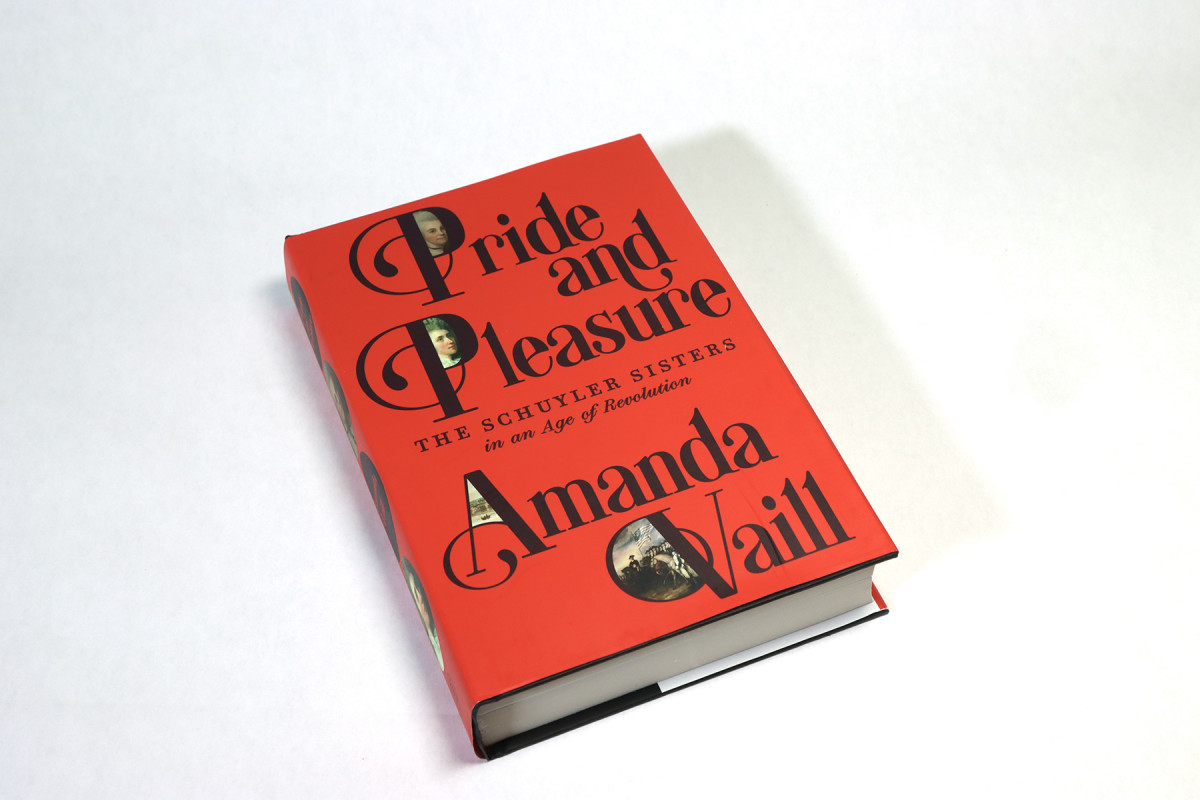
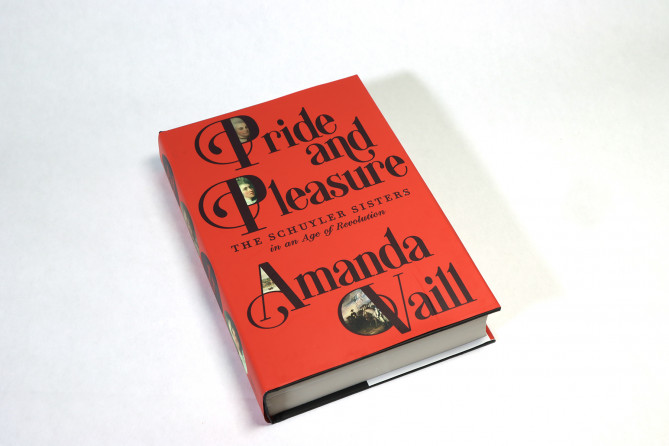
A lively and detailed biography of two daughters of wealthy and influential Dutch landowners who colored our nation’s history, using present tense to tell their story and past tense to chronicle the dramatic sweep of the American Revolution.

A writer’s deeply moving and revelatory account of losing her younger son to suicide a little more than six years after her older son died in the same manner, an austere and defiant memoir of acceptance that focuses on facts, language and the persistence of life.
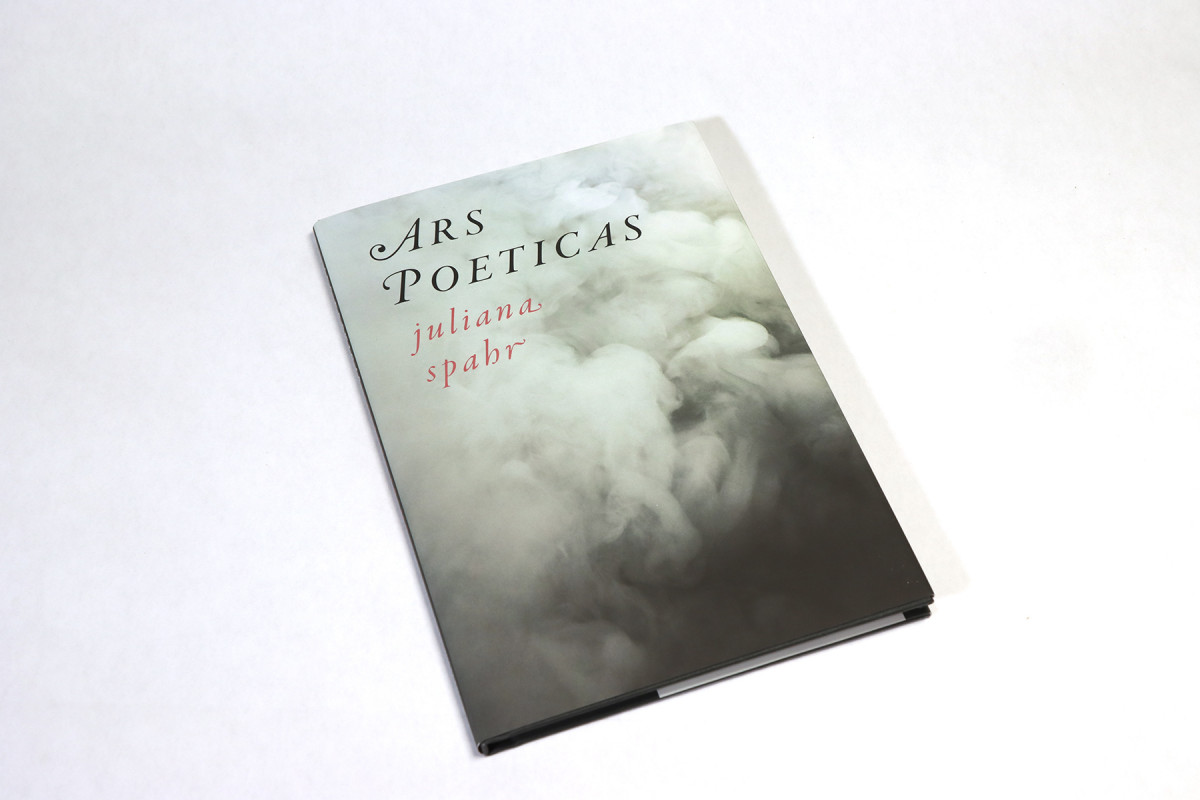
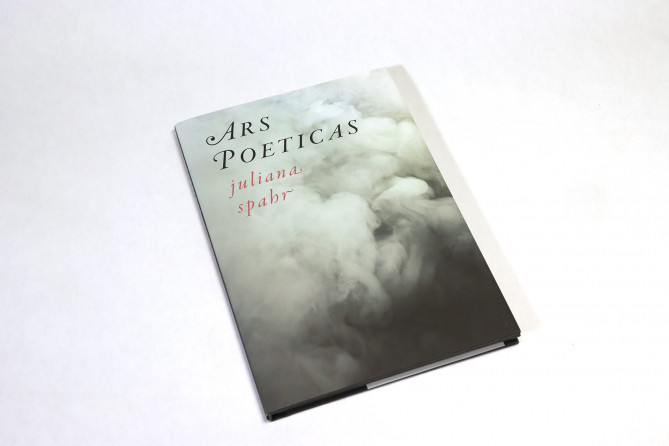
A collection in which the poet takes stock of her personal disillusionment, which she uses to interrogate her relationship to her art form, community and politics.

A feat of reportage, analysis and storytelling focusing on the issues that have created a national crisis of family homelessness among the so-called working poor.

Premiered on March 13, 2025 at Marian Anderson Hall, Philadelphia, a modern symphonic work informed by the composer’s personal experiences with California wildfires and Andean legend, ten powerful movements that follow a hummingbird through its attempts to escape cataclysms, a contemplation of the fragile future.
2026 Prize Winners
Journalism
Dave Altimari and Ginny Monk of The Connecticut Mirror and Sophie Chou and Haru Coryne of ProPublica
Staff of the Chicago Tribune
The Pulitzer Prize administration awards prizes across 23 categories in journalism and the arts each year. Learn how to enter.