Get Inspired
-
![]()
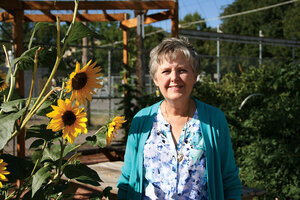
Change Agent How a city girl came to oversee a community garden
Dawn Blackman Sr. saw a need for fresh food in her urban community. The Randolph Street Community Garden in Champaign, Ill., now has 72 beds, and more than 3,000 people received fresh produce last year.
-
![]()
Change Agent ‘Star Wars’-style desert moisture farming: New tech brings it a step closer
Researchers are working to take the process from science fiction to reality. A new study is demonstrating how one device could work even in dry desert conditions using only the power of the sun.
-
![]()
Difference Maker Rescued chimpanzees and orangutans: This woman’s lifework is caring for them
Patti Ragan founded the Center for Great Apes near Wauchula, Fla., which has become a model for ape sanctuaries across the US.
-
![]()
Change Agent From waste to energy: Danish plant maximizes the power of wastewater
Most water treatment plants are energy hogs, but investment in new technologies helped the Marselisborg plant reduce its power consumption by 33 percent. Engineers from other countries have been lining up to learn about the process.
-
![]()
Difference Maker She found a way to make plastic waste useful
Medha Tadpatrikar helped design a machine in Pune, India, that heats up plastic to convert it to fuel. The process is eco-friendly in more ways than one.
-
![]()
Change Agent How Galápagos giant tortoises have made a comeback
As many as 300,000 giant tortoises once roamed the Galápagos Islands, but that number went down by about 90 percent. Here's a rundown of innovative conservation strategies that are enabling the restoration of tortoise populations.
-
![]()
Change Agent How farmers in Africa are finding ways to sustainably use wetlands
A range of organizations in Africa have recognized the way in which wetlands can be important for poverty reduction, improved livelihoods, and resilience in the face of climate change.
-
![]()
Change Agent How we discovered the world’s largest tropical peatland, deep in Congo
A team of three scientists and five assistants found 33 billion tons of carbon locked up in a Congo ecosystem – the equivalent of 20 years of current US fossil fuel emissions. The discovery is a key step in ensuring this carbon-storing area is protected.
-
![]()
Change Agent A back-to-basics way to deal with climate issues: have neighbors talk
Cool Block is an initiative that helps neighbors connect with each other, share resources, and collaborate on climate and disaster resilience projects.
-
![]()
Change Agent In Brazil, a new tool to cut illegal wood from supply chains
A digital platform analyzes data to make sure companies have the correct permits and aims to follow the timber from forests to sawmills and export markets.
-
![]()
Change Agent In Qatar, World Cup construction workers to get 'cooling' hats
Scientists at Qatar University designed the solar-powered hard hats to improve conditions for 2022 World Cup laborers. Qatar's desert heat can approach 120 degrees F.
-
![]()
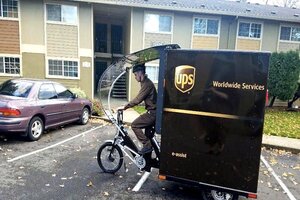
Change Agent UPS tests electric bikes for deliveries in Portland, Ore.
The trial program is part of the delivery company's efforts to reduce its carbon emissions, ease urban noise levels, and improve air quality. The experiment could also help get around traffic congestion.
-
![]()
Change Agent How forensics is boosting the battle against wildlife trade
From rapid genetic analysis to spectrography, high-tech tools are being used to track down and prosecute perpetrators of the illegal wildlife trade – offering hope in stopping the trafficking of endangered species.
-
![]()
Change Agent Entrepreneur turns plastic waste into a way to save trees in Kenya
In recycling the plastic waste, Aghan Oscar produces poles for use in construction, farming, and road signage. So far he’s sold 96,000.
-
![]()
Change Agent St. Louis Zoo's 'Snail Ladies' crucial to saving species
St. Louis Zoo docents Ellen Miller and Donna Mills have been taking care of Partula nodosa snails for 23 years. Last month, 630 of the snails they've cared for were put into the wild in Tahiti.
-
![]()
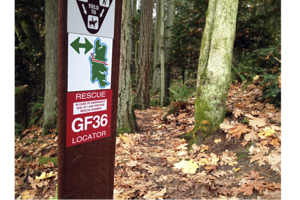
Change Agent Rescuing hikers: how one park district is making the process easier
The Bainbridge park district in Washington State is installing rescue locators that are coded with GPS coordinates. The information can help emergency responders find injured people in less time.
-
![]()
Difference Maker He’s championed cleanup of the Chesapeake Bay for four decades
William Baker started as an intern at the Chesapeake Bay Foundation and has been president since 1982. Recent findings indicate that bay cleanup processes are approximately halfway to their 2025 goal.
-
![]()
Change Agent The internet of things: a way small firms can use it
INEX Advisors is bringing innovative applications to businesses in Massachusetts – troubleshooting IoT in the dirt, diesel, and seawater of the real world.
-
![]()
Change Agent How innovation could preserve culture, as climate change uproots communities
Some creative ways to rescue culture are emerging, including from heritage protection organizations that until now haven't played a big role in figuring out solutions to climate-related threats.
-
![]()
Change Agent Sportswear companies make fashion statement out of ocean trash
This month, Adidas is selling shoes made mostly of plastic collected off the coast of the Maldives, and a swimsuit line from Volcom is largely made from recycled nylon materials, including abandoned fishing nets.
-
![]()
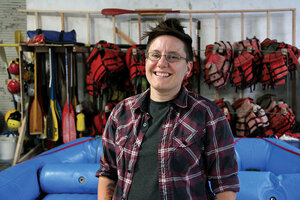
Difference Maker A Denver native brings the vast outdoors to at-risk youths
Jes Ward is the executive director of cityWILD, which enables students in Denver to raft, backpack, mountain-bike, and snowshoe – while they also strive to reach their full potential.
-
![]()
Change Agent Amid climate change, small-scale farmers find merit in traditional techniques
Many small farmers are using natural methods to improve the soil and protect against pests. 'We can feed our people,' one says.
-
![]()
Difference Maker How Haidar el Ali became one of Africa’s best-known environmentalists
Haidar el Ali started out in his family’s furniture business but then dedicated his life to protecting the oceans and other habitats.
-
![]()
Change Agent Protecting mangroves, Kenya's fishermen net cash – and more fish
A coastal Kenyan community has earned $30,000 in two years selling carbon credits from the mangroves they protect. Mangrove forests are particularly effective at absorbing carbon dioxide.
-
![]()
Difference Maker She takes an eco-friendly approach to helping homeless people
Kathleen ‘Cass’ Cronan was a lawyer but found her work had limits. Now, as head of EarthLinks, she invites marginalized people to join a community that has an environmental focus.
-
![]()
Change Agent Digital soil mapping project gives Ethiopian farmers new fertilizers
The nationwide survey of soil conditions is leading to more effective use of fertilizers and could boost food security.
-
![]()
Difference Maker His mission to fix leaky taps has saved millions of gallons of water
Aabid Surti was irked when he saw water wasted by dripping taps. Now he’s visited 13,000 homes in the suburbs of Mumbai to fix leaks.
-
![]()
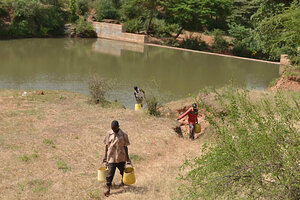
Change Agent Innovative water storage helps Kenyans thrive in drought
Rock catchment systems take advantage of the area's hilly, rocky geography. The systems are even generating income for the community groups that build them.
-
![]()
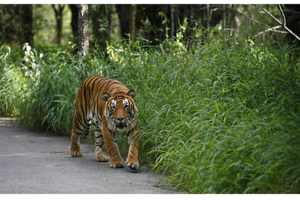
Change Agent She's helping save tigers with bioacoustics research
Courtney Dunn is working to monitor the social vocal communications of tigers, which could aid in tracking the animals. Her work won an Oxford prize and is now the basis of a nonprofit.
-
![]()
Change Agent Efficient cookstoves save trees – and chickens – in Kenya
A wood-saving ceramic stove that doubles as a chicken brooder is raising incomes and reducing deforestation.













Ask Friends &
Start Conversations
Ever wanted to share your interest in a cause or engage family and friends but weren’t sure how to get the conversation started? Wonder no more. Our Monitor editors are here to offer relevant questions on a specific news topics to help you get the discussion going.
Is it possible to protect the environment without hurting the economy?
Power plant regulations, green technology subsidies, and other environmental protections are often criticized for killing jobs or otherwise slowing growth. Is that fair? Can you think of examples where people are creating wealth while being good stewards of the planet?
What can individuals do to tackle a challenge as big as climate change?
Scientists around the world continue to warn of the threats posed by greenhouse gas emissions, but climate change is a global, wide-scale challenge that can sometimes feel overwhelming. What role can you play on a personal level? What are your tips for conserving water and energy?
Discover Groups
Making a Difference

GoSol.org
GoSol.org aims to spread solar energy to end energy poverty and slow climate change; current crowdfund effort is to support the offering of free construction guides to build high-powered solar concentrators.
Universal Giving helps people give to and volunteer for top-performing charitable organizations around the world. All the organizations and projects listed below have been vetted by Universal Giving; 100 percent of each donation goes directly to the listed cause.

Osa Conservation
Osa Conservation protects and supports the habitats, people, and wildlife of the Osa Peninsula, Costa Rica.

Greenheart Travel
Greenheart Travel is personally invested in providing cultural immersion programs that change lives, advance careers and create leaders.
Speak Up
& Lend a Hand

Contact Congressperson