|
Year-End Strategies for Charitable Giving
|
|
|
|
|
Wednesday, December 18, 2019
|
|

By Jackie Yahr, Assistant Vice President, Charitable Planning, The Associated For many, year-end giving looks the same every year. Most people look for ways of combining their desire to help the causes they believe in with their desire to save on taxes. And before the changes to the tax laws, it was simple – a charitable contribution meant a charitable deduction which meant the lowering of your tax burden. But the increase to the standard deduction means that now a lot of those charitable contributions will not necessarily have the same impact on your taxes. So, what advice can you give your clients so that their charitable giving has the same impact on their taxes that it does on the charities that receive their contributions? Here are 5 year-end strategies to consider that can help you make the most out of your client’s giving this year. 1. Give long-term appreciated securities, rather than cash. The expression “cash is king” does not apply when it comes to charitable giving. While donations made by cash or check are, by far, the most common methods of charitable giving, contributing stocks, bonds, or mutual funds that have appreciated over time has become increasingly popular in recent years, and for good reason. Most publicly traded securities with gains that you have not yet sold may be donated to a public charity. When the donation is made, the donor can claim the fair market value as an itemized deduction on the donor’s federal income tax return and avoid paying any capital gain when the donor eventually sells that stock. 2. Consider establishing a donor-advised fund. A donor-advised fund (DAF) is a giving vehicle sponsored by a public charity, like The Associated. It allows the donor to make a charitable contribution to the public charity, receive an immediate tax deduction, and then recommend grants from the fund over time. The donor can contribute to the charity as frequently as you like and then recommend grants to his/her favorite charities whenever it makes sense for the donor. It can also be a great way for charitably inclined individuals to offset a year with unexpectedly high earnings, or to address the tax implications of year‐end bonuses. Click here to learn more about DAFs at The Associated. Further, by “bunching” or “clumping” 3 or 4 years of annual gifts in Year One and placing them into a DAF, the donor can take advantage of a higher deduction. Under the new tax law, a gift of $10,000 does not afford a married taxpayer the opportunity to deduct their gift. But a gift of $40,000 would. The idea is to bunch multiple years of giving into just one year and take a large charitable deduction in the same year. Same money and same amount of giving, just timed differently. Moreover, by transferring low-basis, appreciated assets, such as publicly traded stock, the benefits to this type of gift are enhanced. 3. Over 70½? Consider a qualified charitable distribution (QCD) from an IRA. If your client is age 70½ or over, has an IRA, and plans to donate to charity this year, another consideration may be to make a QCD from their IRA. This action can satisfy charitable goals and allow funds to be withdrawn from an IRA without any tax consequences. A QCD is appealing because it can be used to satisfy your client’s required minimum distribution (RMD)—up to $100,000 for tax year 2019. When your client withdraws his/her RMD, your client is realizing additional income in that taxable year. One solution to avoid paying those additional taxes is to make a charitable gift directly from an IRA. To do this, you or your client simply contacts the IRA plan administrator and instructs them to send all or a portion of your client’s RMD directly to the charity or charities that your client supports; some plan administrators even provide a checkbook which allows your client to send portions of the RMD to multiple charities. By employing this tactic, your client fulfills the obligation to take his/her RMD, avoids additional income, and continues to support the charities he/she cares about most deeply. Tip: A QCD cannot be used to fund a DAF, but there are opportunities for alternative funds at The Associated. Contact Jackie Yahr at [email protected] or 410369-9248 to find out more. 4. Life Income Plans. The use of almost any life income planned gifts has now become more and more appealing. Charitable Remainder Trusts, Charitable Gift Annuities and other gifts can all create a large, charitable income tax deduction and provide your client with an income stream for a term of years or for life. While these gifts may be complex, they are also quite powerful each in its own way. 5. Consider donating complex assets. Your client may also contribute complex and illiquid assets—such as private company stock, restricted stock, real estate, alternative investments, bitcoin, or other long-term appreciated property—directly to charity. The process for making this type of donation requires more time and effort than donating cash or publicly traded securities, but it has distinct advantages. These types of assets often have a relatively low cost basis. In fact, for entrepreneurs who have founded their own companies, the cost basis of their private C-corp or S-corp stock may effectively be zero. Don’t Wait! The end of the year is quickly approaching. There are many giving opportunities available. The Associated’s professionals remain ready to work with you and your clients on how to incorporate charitable planning into your client’s year-end planning and how to help maximize the financial and charitable benefits of any such planning strategies available to your client. For more information, contact Jackie Yahr at 410-369-9248 or [email protected]. 
This is for informational purposes only and should not be construed as legal, tax or financial advice. When considering gift planning strategies, you should always consult with your own legal and tax advisors.
|
|
|
Connecting to Ashkelon through Volunteering
|
|
|
|
|
Thursday, December 12, 2019
|
|

Howard Goldstein and his wife Sally first travelled to Israel in the late 70’s, visiting a family member who had made aliya years before. Having taken a ten-year hiatus, they began to visit more frequently, not at all deterred by the political climate and unrest at that time. “We were in Israel during the first Intifada in 1987 (Palestinian uprising against the Israeli presence in the West Bank and Gaza) and that’s when I first felt a very visceral connection and knew that I wanted to be there as much as possible,” Howard shared. Over the years, the Goldsteins and their family travelled back and forth to Israel, immersing themselves in Israeli culture, history and language. A few years ago, they purchased an apartment in Ashkelon, Baltimore’s partner city, spending time in the summers with their two younger children. “The growth and development and education and culture that is going on in Ashkelon is fantastic,” said Howard. “People in Ashkelon are very interesting. They are very understated and dedicated to Israel. Almost everyone I met had underwent large self-sacrifice to move there and made a life and contribution to the country.” Howard’s desire to interact with more Israelis and give back to a country he loves, led him to volunteer work in the city of Ashkelon. A self-proclaimed “handy man”, Howard volunteered doing carpentry at a nearby school and spent time engaging with people of all ages. For one week this past summer, Howard volunteered at a day school camp, joining the kids in their activities and helping the teacher in class as needed. During his second week volunteering, Howard worked at the Halperin Elderly Home. "Howard came and joined our activities in the art room. He helped the elderly with their crafts and during that time had a chance to have long conversations with them. Despite the short time, some of our residents really got attached to him," said Rivkah, volunteer coordinator at Halperin. “I try and help the community, help the people, help the country in whatever small way I’m able. I am very proud of all Israel accomplishes and the benefit Israel provides to all Jews,” explained Howard. “Volunteering allows me to express my gratitude and allows me to give something back. I hope to do much more in the future as well.” Howard will be returning to volunteer in Ashkelon later this month. If you are interested in learning about the impact you can make through volunteering with the Baltimore-Ashkelon Partnership, contact Marisa at [email protected].
|
|
|
Students Build Professional Skills Through Onward
|
|
|
|
|
Tuesday, December 10, 2019
|
|

Alyssa Miller, a student at the University of Maryland, worked in Israel last summer for Israelevitz Architects as part of an eight-week internship program through Baltimore Onward Israel. Alyssa says that living and working in Tel Aviv-Yafo, provided her the opportunity to work hand-in-hand with the people of Israel, immersing herself in the country’s culture and strengthening Jewish connections. What did you do for Israelevitz Architects? I interned for Israelevitz Architects, a private architecture firm in Southern Tel Aviv. Specifically, I worked with their interior design department utilizing a program that highlights different sections of a house so that the carpenter can make custom units for those rooms. What was the advantage of going to Israel and doing this versus having an internship somewhere in the States? In Israel, you're treated like an employee, which is what I wanted to do rather than getting coffee or copying papers. In the States, part of becoming a licensed architect is pursuing an internship. This means I would be competing with kids who have completed graduate school. Working in Israel, I learned more about my intended area of study from a professional standpoint and felt that my employers and supervisors valued my work. How do you think this will help you in your career next year and in the future? I think because there were no other kids in the office, I was held to a different standard. I was forced to elevate my skills which will be an advantage over my peers since more was expected from me this past summer. What were some of your favorite parts about Onward Israel? Living in Yafo and being outside of Tel Aviv proper was a highlight because it was nice to have a break from the hustle and bustle of the city. I enjoyed a lot of our ‘Israel nowadays’ when we’d go out to see different cities. I think that's important because we need to remember we're not just there to work, we were there to experience the culture in the country as well. What was the greatest, positive surprise of this experience? Overall, I was surprised by how welcoming people were. Israelis were honest and friendly whether I was walking down the street, going to a restaurant, or having a conversation with a taxi driver. Having gone to day school, I spoke Hebrew. People were pleasantly surprised to hear and encouraged me to speak Hebrew even if I was embarrassed by my accent or forgot a couple of words. What was your weekend away or Shabbaton like? I went to the Negev and stayed on a Kibbutz about 30 minutes south of Be’er Sheva. We learned about different minorities – the Bedouins and the Ethiopian communities in Israel. Often, Americans assume that the only issue that Israel has is safety, security and defense, but we talked a lot about racism, healthcare, failing infrastructure and other issues that Americans aren't necessarily aware of. I really enjoyed doing learning about that. So, you've been to Israel before, but what was new this time besides working? All my other trips we had gone to the Western Wall, the Dead Sea, rode a camel and so on. I think this is the first time that I really felt immersed in the culture and that I got to know the people. If you were telling a friend about the program, what would you tell them? Why should they sign up? I would tell someone to sign up for Baltimore Onward Israel because I think the program gives you an internship that you would not have the ability to pursue in the States. People in Israel like to work hard and play hard because it is a fun country and a fun culture, but we were also there to learn. If you want a summer where you can have fun but also learn and grow, I think that Onward is a great way to do that.
|
|
|
Year-End Strategies For Charitable Giving
|
|
|
|
|
Tuesday, December 10, 2019
|
|

For many, year-end giving looks the same every year. Most people look for ways of combining their desire to help the causes they believe in with their desire to save on taxes. And, before the changes to the tax laws, it was simple – a charitable contribution meant a charitable deduction which meant the lowering of your tax burden. But the increase to the standard deduction means that now a lot of those charitable contributions will not necessarily have the same impact on your taxes. So how can you make your charitable giving have the same impact on your taxes that it does on the charities that receive your contributions? Here are 5 year-end strategies to consider that can help you make the most out of your giving this year. 1. Give long-term appreciated securities, rather than cash. The expression “cash is king” does not apply when it comes to charitable giving. While donations made by cash or check are, by far, the most common methods of charitable giving, contributing stocks, bonds, or mutual funds that have appreciated over time has become increasingly popular in recent years, and for good reason. Most publicly traded securities with gains that you have not yet sold may be donated to a public charity. When the donation is made, you can claim the fair market value as an itemized deduction on your federal income tax return and avoid paying any capital gain when you eventually sell that stock. 2. Consider establishing a donor-advised fund. A donor-advised fund (DAF) is a giving vehicle sponsored by a public charity, like The Associated. It allows you to make a charitable contribution to the public charity, receive an immediate tax deduction, and then recommend grants from the fund over time. You can contribute to the charity as frequently as you like and then recommend grants to your favorite charities whenever it makes sense for you. It can also be a great way for charitably inclined individuals to offset a year with unexpectedly high earnings, or to address the tax implications of year‐end bonuses. Click here to learn more about DAFs at The Associated. Further, by “bunching” or “clumping” 3 or 4 years of annual gifts in year one and placing them into a DAF, you can take advantage of a higher deduction. Under the new tax law, a gift of $10,000 does not afford a married taxpayer the opportunity to deduct their gift. But a gift of $40,000 would. The idea is to bunch multiple years of giving into just one year and take a large charitable deduction in the same year. Same money and same amount of giving, just timed differently. Moreover, by transferring low-basis, appreciated assets, such as publicly traded stock, the benefits to this type of gift are enhanced. 3. Over 70½? Consider a qualified charitable distribution (QCD) from an IRA. If you are at least age 70½, have an IRA, and plan to donate to charity this year, another consideration may be to make a QCD from your IRA. This action can satisfy charitable goals and allow funds to be withdrawn from an IRA without any tax consequences. A QCD is appealing because it can be used to satisfy your required minimum distribution (RMD) – up to $100,000 for tax year 2019. When you withdraw your RMD, you are realizing additional income in that taxable year. One solution to avoid paying those additional taxes is to make your charitable gift directly from your IRA. To do this, you simply contact your IRA plan administrator and instruct them to send all or a portion of your RMD directly to the charity or charities that you support; some plan administrators even provide a checkbook which allows you to send portions of your RMD to multiple charities. By employing this tactic, you fulfill your obligation to take your RMD, avoid additional income, and continue to support the charities you care about most deeply. Tip: You cannot use your QCD to fund a DAF, but there are opportunities for alternative funds at The Associated. Contact Jackie Yahr at [email protected] or 410-369-9248 to find out more. 4. Life income plans The use of almost any life income planned gifts has now become more and more appealing. Charitable Remainder Trusts, Charitable Gift Annuities and other gifts can all create a large, charitable income tax deduction and provide you with an income stream for a term of years or for life. While these gifts may be complex, they are also quite powerful each in its own way. 5. Consider donating complex assets. You may also contribute complex and illiquid assets—such as private company stock, restricted stock, real estate, alternative investments, bitcoin, or other long-term appreciated property—directly to charity. The process for making this type of donation requires more time and effort than donating cash or publicly traded securities, but it has distinct advantages. These types of assets often have a relatively low cost basis. In fact, for entrepreneurs who have founded their own companies, the cost basis of their private C-corp or S-corp stock may effectively be zero. Don’t Wait! The end of the year is quickly approaching. There are many giving opportunities available. The Associated’s professional team remains ready to work with you on how to incorporate charitable planning into your year-end planning and how to help maximize the financial and charitable benefits of any such planning strategies available to you. For more information, contact Jackie Yahr at 410-369-9248 or [email protected]. This is for informational purposes only and should not be construed as legal, tax or financial advice. When considering gift planning strategies, you should always consult with your own legal and tax advisors.
|
|
|
Meet Jill Snyder - Lawyers' Division Co-Chair
|
|
|
|
|
Wednesday, December 04, 2019
|
|

Jill Snyder, owner of Law Office of Jill A. Snyder, LLC, is a trust and estate attorney. Prior to opening her practice, she worked as a senior attorney in the Division of Enforcement of the United States Securities and Exchange Commission. What brought you to Baltimore? I was living in Washington, DC, when I met and married my husband who is from Baltimore. After we got married, his job took us to Chicago for a few years and then we moved to Baltimore to raise our children. Why is being involved in The Associated and giving back to the Jewish community important to you? My family was very involved in the Pittsburgh Jewish community throughout my childhood, so it was natural for me to gravitate toward The Associated upon my relocation to Baltimore. My first introduction to The Associated was through my participation in a two-year women’s leadership program called Dor Tikvah. This program taught me about the many ways that The Associated meets the needs of our Jewish community and the greater Baltimore community. Upon completing Dor Tikvah, I created a volunteer program called Mitzvah Makers with the support of The Associated. This program was designed to provide bi-monthly hands-on volunteer activities for families with young children. It was important to me to expose my children to charitable giving from a young age with the hope that they would incorporate this value into their lives and pass it on to future generations. You currently serve as Lawyers’ Division Co-Chair. What other leadership roles have you held within The Associated and the broader community? I have enjoyed various leadership roles at The Associated that complimented the different stages of my personal and professional life. When my children were young and I was not working, I served on the board of the Jewish Volunteer Connection and coordinated several volunteer events. My favorite event that I was coordinated was making hundreds of toiletry bags for homeless individuals during Mitzvah Day on Christmas at the JCC. As my children grew and I returned to the practice of law, I began attending the Planned Giving Roundtable and later joined the planning committee. This group provides excellent educational and networking opportunities to professionals who advise clients regarding charitable giving as part of their financial, tax, or estate planning practices. I also served as a member and chair of the Administration Committee of The Associated, which is responsible for developing policies and procedures regarding matters such as gift acceptance, donor advised funds, charitable gift annuities, and life insurance. This year, I am pleased to join the board of The Associated in addition to serving as Co-Chair of the Lawyers’ Division with Searle Mitnick. You are a Trust and Estate attorney. How did you get into this type of law? When I first graduated from law school, I was an attorney in the Enforcement Division of the Securities and Exchange Commission. I loved investigating and prosecuting financial crimes, but the travel was very demanding and no longer desirable once I had children. I spent six years at home with my three young sons before opening my own estates and trusts law practice. I became passionate about this area of law after my father died because I wanted to help families avoid the mistakes that we made by failing to timely plan and communicate. What’s one piece of legal advice you would give related to your area of expertise? It is much less expensive and stressful to plan ahead than to clean up messes that may arise in the event of death or incapacity. How have you seen this area of law change over the years? When I first began practicing this type of law, the primary focus of estate planning was on tax planning to reduce or eliminate estate taxes. Now that the tax exemption amounts are so high and very few people’s estates will be subjected to estate tax, planning has shifted from being tax-driven to values-driven. I enjoy talking to clients about leaving a legacy. Of course, I still talk to clients about tax planning, but the discussion now includes income tax and capital gains tax considerations in addition to estate taxes. What is something most people do not know about you? After taking the bar exam, I participated in an army volunteer program on an air force base in Israel for three weeks before starting my job at the Securities and Exchange Commission.
|
|
|
Teaching Our Children About Community Service
|
|
|
|
|
Tuesday, December 03, 2019
|
|

By Mike Schwartz From as far back as I can remember – being married to my wife of 10 years (and knowing her for 12) – we have enjoyed participating in various types of “Community Service” days whether living in New Jersey or Maryland. While it has a different, yet familiar name in New Jersey (Mitzvah Day at the J), and we did not have our two children then, it was and still is a day full of activities/mitzvot supporting the community. Now that our two children are at the age where they understand what we are doing and why, we feel that it is important to inspire them and demonstrate that kindness and understanding brings the community closer. While in Maryland, we have participated four times in Jewish Volunteer Connection’s (JVC) Annual Community Mitzvah Day where our children have enjoyed helping the community. They are naturally curious and want to know who needs winter care packages and why. They ask many questions about why people don’t have clothes or food to eat, and we have explained how many small mitzvot like making trail mixes, sandwiches and coloring pictures can have more impact on the community than a single, large activity. Year after year, we have come back to JVC to support them on this important day. And after participating in the Mitzvah Days, it was an easy progression for the kids to want to do more. This past spring, we participated in the JVC’s Good Deeds Day where we cleaned up a portion of the Western Run Stream in Park Heights. Our children, aged four and seven, could not have been more excited to help. It may have had to do with the fact that they would be able to play near or even in a stream and use a cool trash grabber tool (yes, that’s the technical term), but they also understood why cleaning up the stream was important. This was not in their neighborhood. Nor was it really something that would have had a direct impact on their daily lives, yet they understood the impact to the community. Maybe the direct impact is the way these events make it easy to teach kindness to our children. Simple acts of help go a long way. Community Mitzvah Day, Jewish Volunteer Connection’s largest volunteer event, takes place on December 24 and 25 at sites throughout the Baltimore area. Learn more and register today!
|
|
|
Chanukah Activities To Do With Your Children
|
|
|
|
|
Friday, November 22, 2019
|
|

The holidays are just around the corner! Fill up your calendar with these amazing Chanukah activities. Hands on Holidays, Light Street
December 11, 11:15 a.m. | Enoch Pratt Library (Light Street)
Celebrate the holidays with the JCC free storytime, songs, and crafts. For children ages up to 5 years. DBJCC Pre-Chanukah Party
December 13, 10:00 a.m. | Downtown Baltimore JCC
Join us for PJ Library story time, craft, songs, and kosher snack. $5/guest, free for members. Hands on Holiday: Govans
December 13, 10:30 a.m. | Enoch Pratt Library (Govans)
Celebrate the holidays with the JCC free storytime, songs, and crafts. For children ages up to 5 years. Hands on Holiday: Ivy Bookshop
December 15, 10:00 a.m. | The Ivy Bookshop
Celebrate the holidays with the JCC free story time, songs, and crafts. For children ages up to 5 years. Chanukah at Foundry Row
December 15, 11:00 a.m. | Foundry Row
Join the JCC for Chanukah activities story-time, and a special Chanukah singalong. The Great Jewish Bake Off: Holiday Cookie Edition
December 15, 1:00 p.m. | Jewish Museum of Maryland Herbert Bearman Campus
This year we take inspiration from the season - with the approach of December holidays, what could be more perfect than holiday cookies? Share your family favorite or create a new tradition. We are looking for delicious cookies that can be given as gifts or shared by the whole family, something that looks great and tastes event better! Chanukah Yolka
December 15, 4:00 p.m. | Baltimore Hebrew Congregation
Join PJ Library and the ArtXutor theater troupe for a family-friendly Chanukah-Yolka celebration with a Jewish twist. Children and families will be treated to an original, interactive production in Russian. Traditional New Year and Chanukah delicacies will be served plus arts and crafts for kids! $20 for kids, $15 for adults, Kids under 18 months – free. Hands on Holiday: Patterson Park
December 16, 11:00 a.m. | Enoch Pratt Library (Patterson Park)
Celebrate the holidays with the JCC free story time, songs, and crafts. For children ages up to 5 years. A Shining Light
December 18, 4:30 p.m. | Weinberg Park Heights JCC
A gathering to honor loved ones who are no longer with us but continue to be a light in our lives. Join us for candle making and menorah lighting. Cost: $5/family Chanukah at Hunt Valley Towne Centre
December 21, 4:30 p.m. | Hunt Valley Towne Centre
Join the JCC at Wegmans (upstairs dining area) for Chanukah activities, story time and a special singalong with Chanukah songs. Activities Include: Make Chanukah candles, Spin dreidels, Decorate tzedakah boxes, Play a healthy memory matching game, Enjoy treats from Wegmans and a Chanukah Sing Along. Six13
December 22, 3:00 p.m. | Gordon Center for Performing Arts
Celebrate Chanukah and jam with this Jewish a cappella group featuring soulful harmonies and a dynamic, full-band sound. Mitzvah Day
December 25, various times and locations
Join our community and see what an impact you can make in one day. Assemble winter care packages, help in soup kitchens and shelters, visit the elderly and much more. Chanukah Wonderland
December 29, 10:00 a.m. | Weinberg Park Heights JCC
Two days of fun-filled activities for the entire family – Chanukah Arts & Crafts, Moon Bounce, New! Toddler Corner, Face Painting, Balloon Animals, Donut Decorating, Olive Press Demonstrations, Food for Purchase. A partnership between the JCC of Greater Baltimore and Chabad of Park Heights. RSVPs preferred, walk-ins welcome! Chanukah Wonderland
December 30, 11:00 a.m. | Weinberg Park Heights JCC
Two days of fun-filled activities for the entire family – Chanukah Arts & Crafts, Moon Bounce, New! Toddler Corner, Face Painting, Balloon Animals, Donut Decorating, Olive Press Demonstrations, Food for Purchase. A partnership between the JCC of Greater Baltimore and Chabad of Park Heights. RSVPs preferred, walk-ins welcome!
|
|
|
Raising Kids Who Care About The World
|
|
|
|
|
Thursday, November 21, 2019
|
|

Achieving independence is an essential part of our children’s journey to adulthood, yet many parents struggle with finding the right balance of freedom, support and guidance. If you ask Dr. Deborah Gilboa, internationally known parenting expert, speaker and author of several books, she will tell you it comes down to one thing – building resilience. Dr. Gilboa, popularly known as Dr. G and a regular expert on the TODAY Show, will be the keynote speaker on December 15 at The Associated’s Center for Jewish Camping community-wide event for families and professionals. “To raise kids who care about the world, we have to be willing to introduce them to it and help them navigate the world from a younger age than might be comfortable for us. Talking to our kids about what is happening to our neighbors, in our communities, in our country and even on the global scene takes perseverance and courage,” explains Dr. G. “Getting them involved in tikkun olam – hearing about our work and diving into their own – will give them all those values: respect, resilience, empathy and action.” Pamela Rae Schuller, full-time disability-inclusion advocate, couldn’t agree more. Named one of the "36 under 36" who are changing the face of the Jewish community by The Jewish Week, Schuller, who is also a stand-up comedian, will be the opening act on December 15. Relentlessly funny, Schuller, who grew up with Tourette syndrome, found her happy place at Jewish summer camp. “I talk a lot about Jewish summer camp when I speak and perform because for me, it was transformative. It was the first place where I felt like I was being included NOT because it was a mitzvah or good deed but because the camp knew I added something to the community, and they wanted to accommodate me so they could celebrate me,” Schuller shares. “It's a place that often has the flexibility to really get creative when it comes to inclusion and helping young people find themselves, explore their identities and relationships and build resilience.” Both Dr. G and Schuller agree that Jewish summer camp is a wonderful opportunity for kids to develop a strong character, gain life skills and grow spiritually and socially. “There are two kinds of people in the world: camp people, and people who never had the chance to become camp people! Jewish summer camp is a values-driven, communication and skills-building world where everything from schedules to songs are focused around one central goal: to grow our kids' character. And, in a world of growing antisemitism, we have an obligation to strengthen our children's ties to our community so they will feel a part of something larger, rather than feeling alone,” Dr. G. says. Dr. G and Schuller will share stories of how Jewish camp shaped who they are today. Join us and our partner camps to hear how their Jewish camp experiences influence their work in inspiring parents to raise children to be thoughtful, caring citizens of the world. For more information or to register for the event on December 15, visit associated.org/campconnections.
|
|
|
Connecting Across Faiths
|
|
|
|
|
Tuesday, November 19, 2019
|
|

By Sam Hopkins During 2019 I was pleased to participate in two events connected to my year as part of the Baltimore Jewish Council’s (BJC) Leadership Development Program that showed the interest and attention the BJC and the Associated put into connecting Jewish Baltimore to our neighbors of other faiths: the Interfaith Trialogue Series and the Interfaith Dinner at Muslim Community Cultural Center of Baltimore. It is not incidental that these experiences were connected by communal meals and positive conversation – through both we were nourished and given energy to continue the commitment to interaction. Understanding others comes from action and interaction – we may be the People of the Book eternally, but we are people of Baltimore daily. Breaking bread with others allows for exploration of the common need for sustenance as well as our different approaches to giving thanks for our blessings through different prayers, foods, and even ways of eating. The Interfaith Trialogue series involved three faiths joining in discussion three weeks in a row. The venue was the R House, itself a place of hope and revitalization in Baltimore that emphasizes sharing of space and personal interaction with strangers. Christian, Jewish and Muslim clergy opened with discussions of varying approaches to community, focusing on overlap and mandates in each tradition to love one another--both our co-religionists and those around us. There are of course many significant differences among faith traditions, and those have been taken in dark directions at various points in history. Our Jewish calendar is full of actual or near-genocides, cultural assaults, and other commemorations of sadness. However, we also mark the role of the righteous among the nations in our survival. Baltimore has always been a city of refuge and mixture, but tendencies toward division threaten the potential for shared peace from Fell’s Point to Park Heights. I did not come from Baltimore – my family began settling in the Kansas City area before the Civil War, and that is where I was raised. But being in Baltimore for 15 years has required me to figure out how to represent myself and my community authentically. I am not religious, which prompted interesting discussions about what it means to be a Jew with some involved in these interfaith events. A mezuzah may mark the door of a home where prayer is seldom heard, and that can be striking to an African American who converted to Islam. My family has a deep history of intermarriage, first Catholic-Protestant and then Christian-Jewish, but my guiding faith and sense of community come from Judaism. The series of conversations arranged by the BJC forced me to articulate my own background and goals in a way that simply does not come up in most day-to-day interactions. It is a heavy burden to try to represent a community of tens of thousands, but it is always possible to represent yourself. Lively chats about individual faith journeys turned naturally into discussions of neighborhoods, children, challenges and goals. We shared hopes, fears and food. Baltimore is a puzzle worth continuing to put together though it will never be finished. This is our religious and cultural lot as Jews – knowing that salvation is always just around the corner, and that we know the holy is among us when we know peace. We do not wait for the age of perfection to do our part in repairing the world, so we look around and we engage to hasten better times.
|
|
|
Meet Rachel Samakow
|
|
|
|
|
Tuesday, November 19, 2019
|
|

Coming to a new city is never easy but discovering a community that gives you a sense of purpose can connect you to your new home. Originally from Pittsburgh, Rachel moved to Baltimore after receiving her bachelors’ degree in 2009 and then beginning law school at the University of Baltimore. After permanently relocating to Baltimore, she soon found her niche in the Jewish community. It all started with one event, that has since grown into an active life in Jewish Baltimore. How did you end up in Baltimore? I originally moved to Baltimore to go to law school, after graduating from GW (George Washington University) in DC. One of the things they tell you before going to law school is to choose a school in a state where you would want to practice. I have some family in Bethesda so Maryland seemed like it would be a great fit. Baltimore is so similar to Pittsburgh that it really felt like home when I moved here. I love that there is always something to do, always something to check out. There are mini pockets of adventure pretty much everywhere you turn – it’s a great city for exploring. How did you become involved in IMPACT? A friend invited me to the Tu Bishvat seder where I met some truly incredible people. From there I started going to more events. Before I knew it, I was a CHAT hostess and on the Young Professionals Committee (YPC) helping plan events with The Associated. Have you enjoyed your experience as a CHAT host? I had such an incredible time. The CHAT program itself is great and you really get a chance to know people in a more intimate setting. Like the program name suggests, I enjoyed great conversations which have led to some really wonderful friendships. It was also an opportunity for me to get involved in The Associated community in a more IMPACTful way – pun intended. It’s been great to be a part of an organization that involves different types of young adults with different experiences. What do you think Jewish young adults are looking for? I think it’s having a place. It’s being part of the community and understanding and exploring your Jewish identity. I think it’s finding where you fit and having the opportunity to participate in activities that allow you to give back to the community and develop that identity. Is there a fun fact about yourself that you would like to share? In college I got into white-water kayaking and can roll over in a kayak. I love hiking and camping but I’m probably better known for my cupcake making skills. I’m also a pretty terrible guitarist, but hopefully more practice will change that. Who has had a big influence on your life? It’s hard to narrow down to just one person, but I think the advice that I’m always surprised by and resonates with me the most is from my younger sister, Becca. Her advice is always an incredible combination of empathy and humor, not to mention she has a gift for directness. I look up to her, but that may be because she’s an inch taller.
|
|
|
Empowering the Next Generation - L’dor V’dor
|
|
|
|
|
Thursday, November 14, 2019
|
|

By Eli Bass, Jewish Education Coordinator, Macks Center for Jewish Education Parents have a critical role to play in helping kids to form a strong Jewish identity as parents are their primary Jewish educator and guide. Specifically, the traditions established early in life help kids to develop necessary skills later on. These skills help us to build better relationships, strengthen responses to stress and anxiety and connect with the infinite. “Impress them upon your children. Recite them when you stay at home and when you are away, when you lie down and when you get up.” – Deuteronomy 6:7 We celebrate that there are so many ways to affirm and develop Jewish identities. There is an abundance of Jewish traditions and knowledge and it is impossible to know it all. Invite your family to join you as you grow and develop traditions and further your learning. There are so many small steps which can have a big impact on your child. Here are a few of our favorite suggestions as you guide your child down their Jewish path. - Develop a before bed Jewish ritual. You can use traditional liturgy or an alternative option both are great at developing connection and routinizing bedtime. Make your storytime Jewish with Books from PJLibrary.
- Bond over Jewish crafts as you go through the Jewish calendar.
- Put Judaism on in the background with PJLibrary radio. They have a great option which has energetic music for playtime and more relaxing music for bedtime. They have a great app for Apple and Android.
- Take out a Jewish cookbook and try a recipe. The Library at the Center for Jewish Education at the Park Heights JCC has many options including The Children’s Holiday Kitchen by Joan Nathan. These are great ways to both celebrate and engage with a wide variety of Jewish culinary traditions.
- Create Shabbat traditions. Braiding challah, shabbat meals and blessings create special family moments in the midst of a hectic week.
|
|
|
Making the Holidays Meaningful
|
|
|
|
|
Monday, November 11, 2019
|
|

By Rachael Abrams, LCSW-C It may already have happened in your house. The toy catalogs arrive. Commercials for the newest games, technology and “must haves” are everywhere. Children concentrate on eight whole days of gifts! And as much as you try to focus on the meaning of the holidays – the giving back, the time with family, the historical significance of Chanukah – it is hard to compete with the culture of consumerism that grabs hold onto all of us. Are you looking for ways to take back Chanukah, to make it more meaningful for your family beyond wrapped presents and new products? Check out the following eight suggestions to celebrate Chanukah in meaningful ways and remind kids that this holiday is about more than just new presents. Consider giving (and asking for) gifts rather than presents. Have an age appropriate conversation with your kids that gifts don’t necessarily mean tangible items you hold in your hand. Rather, a gift can be an experience, a memory or a tradition. Instead of the latest game (that is quickly discarded), the hottest toy (little kids prefer the box anyway) or a variety of other things that end up by the wayside, consider a gift that allows for adventure. Try: bowling, pottery painting, live theater or a concert, movies, trip to the fire station, visit the library or bookstore, ice cream outing, roller/ice skating, miniature golf or a special meal together. Consider a gift that allows you to spend time with family and friends. Our lives are busy, so busy and we often wish we had more time to spend with family, friends and loved ones. Give a gift that promotes togetherness and makes memories at the same time. How about a membership to: the zoo, an art museum, the aquarium, an amusement park, a children's museum, a national park/campground, a science museum, an industrial museum, a train museum or a cultural museum. Consider a gift that keeps on giving. Think about what your children – or those you’re giving gifts to – are interested in doing, learning or trying. This type of gift shows that you have a personal interest in their hobbies or interests and allows them to experience the gift over time. How about lessons for: horseback riding, art/crafting, swimming, music, rock climbing, karate, dance, chess, gymnastics or woodworking. Consider a gift to share an interest or a passion. All children love individual one on one time with adults to engage in an activity set aside just for them. Think about your own hobbies and interests and how you could pass on your love to a child. How about: - Teaching knitting, sewing or crafting.
- Create a memory book or photo book together.
- Explore a science kit and conduct experiments together.
- Go on a nature walk, hike or bike ride together and document your experience.
- Give a magazine subscription that conveys your passion and read together.
- Go to a sporting event, musical show, local play or art exhibit together.
- Give a favorite book and read together.
- Plan and cook a meal for your family together.
Consider volunteering together. While the holidays are about celebrating each other, they are also the perfect time to be grateful for what we have and help those who are less fortunate. Look for opportunities to give back in the community and explain the important of this mitzvah to your children. Additionally, children begin to understand community and the positive power of a group of people working together toward a worthwhile goal. How about: - Checking out JVC's website. Consider being a part of community Mitzvah Day on December 24 & 25.
- Calling a local senior center and inquire about opportunities to have young children visit and interact with residents.
- Looking for local toy drives and collection drives. Many local businesses are organizing collections for the holidays.
- Reading these articles for instilling a culture of philanthropy in your children: 6 Ways to Teach Your Children Philanthropy, The Giving Kid and Raising Children with Philanthropic Values.
- Modeling philanthropy whenever you can. It isn’t enough to talk about giving back. You have to show your children that it is part of who you are.
Keep it simple – spend time with your children. During this time of year, carve out time to spend as a family, or even one-on-one with each child, without distractions. Kids are happiest when you sit with them and build a city out of boxes, create a pillow fortress, have a tea party or play a game together. These activities create memories and won’t cost a penny. Teach children that Chanukah isn’t about presents. Chanukah is a wonderful family holiday that often gets overshadowed by the need to give and receive presents. Consider picking one night of Chanukah that is a “present-free night” and explore the holiday together through books, activities and education. - Visit PJ Library for a variety of books and activities to share together.
- Challenge your kids to make their own menorah out of Legos, a piece of wood, paint and some bolts or any creative material they imagine.
- Make edible dreidels using marshmallows, pretzel sticks, a Hershey kiss and some icing.
Make Chanukah a family affair. Consider adding a family activity to your menorah lighting each night. Here are 8 to get you started: - Make your favorite latke recipe and have a latke feast for dinner.
- Play dreidel or a favorite board game and have family game night.
- Rent a movie, pop some popcorn and snuggle up for movie night.
- Work on a puzzle together.
- Explore together with a science kit or art set.
- Bake your favorite Chanukah cookies together or try sufganiyot (jelly doughnuts).
- Light the menorah over Skype or Facetime and sing your favorite Chanukah songs with out-of-town family.
- Have each family member share their favorite book and read together.
Chanukah is a beautiful holiday that can be special and memorable for your family without breaking the bank. Join JCS and DBJCC this holiday season to share and create holiday traditions at our Chanukah celebration for families with young children from all faith backgrounds. Click here for more information. Wishing everyone a wonderful Chanukah!
|
|
|
This One is Personal
|
|
|
|
|
Monday, November 11, 2019
|
|

By Marvin Pinkert, Executive Director, Jewish Museum of Maryland In my 31 years of working in the museum field (at Chicago’s Museum of Science and Industry, DC’s National Archives Experience and here at the Jewish Museum of Maryland) I have led teams that pulled together more than 80 exhibits on topics ranging from genetics and aviation to Magna Carta and the American Civil War to Mendes Cohen and Harry Houdini. But none of these experiences engendered the type of strong personal feelings of JMM’s latest offering, Scrap Yard: Innovators of Recycling. Like many projects I’ve worked on, it’s hard to pinpoint a single origin for this exhibit. The late Barry Lever had attempted to pull together an exhibit on Maryland’s scrap industry back in 2009, several years before I arrived at JMM. But our progress really accelerated in 2015, when we were selecting a potential candidate to follow our successful run of Beyond Chicken Soup: Jews and Medicine in America. At that time, I had recently attended the national conference of Jewish museums in New York. The keynote speaker, a well-known cultural critic, chastised Jewish museums for giving as much space to the words of “housewives” as to the teachings of rabbis. Like several other members of the audience, I had a strong visceral reaction to this critique. Without denying the debt that Judaism owes to its great scholars, surely our survival as a people over the last two millennia is as dependent on Jewish mothers as it is on Jewish teachers. The real question wasn’t whose voices we paid attention to, it was “whose voices are we missing?” The question of “who we value” was very much on my mind as we went about selecting our next topic for a national traveling exhibit. As we considered under-appreciated aspects of Jewish life and history, it didn’t take me long to realize that my own family’s story was a candidate for a show. Like thousands of other Jewish immigrants, my grandparents had made a living from what other people threw away (paternal side – scrap metal; maternal side – scrap rag). Like so many others of their generation, my father and uncles hadn’t joined the scrap business – they were, in the words of Sonny Plant, “born into it.” And like so many of my contemporaries, I had left the “dirty work” of scrap behind for a career in a white-collar profession – even as my education was paid for by the sweat of the scrap yard. I was aware that scrap recycling was one of the largest industries in the US, a key to a deeper understanding of environmental issues and historically, one of the major sources of funds that built the Jewish community in America (In 1930, Forbes magazine estimated that 90% of scrap businesses were Jewish owned). I was also aware that most people had never been inside a scrap yard, had no idea what went on inside, and that many people not only denigrated “junk” but also the people who made their living from it. Given our goal of finding (and sharing) value in the activities of everyday members of the Jewish community, choosing to do the scrap yard project was easy, the challenge was making the topic accessible to a wider audience. In addition to interviews and photos of dozens of scrap entrepreneurs from across America, we captured drone footage of a working yard, included a section on scrap in pop culture (remember the scene from Goldfinger?) and added interactives to let visitors feel the weight of being a scrap peddler and measure their worth (in copper or aluminum). More than 100 people showed up for our VIP/Member opening and our first two public programs have received a strong positive response. Our education team has managed to fully book every school day between today and the middle of December. Many school groups participate in the board game we created as a companion to the exhibit, the game integrates learning about the history of scrap families with a hands-on lesson on supply and demand. But years from now, when I look back at this experience, the most amazing thing I will remember is standing in front of the photo of my dad (and the patent for his invention) and realizing that his story and the stories of thousands of other men and women, who often toiled without recognition, finally has earned a place in a museum.
|
|
|
On Your Next Day Off, Visit The Jewish Museum of Maryland
|
|
|
|
|
Thursday, November 07, 2019
|
|

When was the last time you visited The Jewish Museum of Maryland (JMM)? If it’s been a while, or you’re planning a visit for the first time, this fall is the perfect time to head downtown and explore the JMM. In the heart of Jonestown, just north of Little Italy, you’ll find America’s leading museum of regional Jewish history, culture and community. Serving as an anchor institution for this historic community, The JMM is not only a museum, but the campus also includes the historic Lloyd Street and B’nai Israel Synagogues. During your visit, as you walk through the neighborhood to grab lunch at the local deli, you’ll probably notice the revitalization along Baltimore Street. The current exhibits are worth an afternoon visit. Travel back in time and uncover the story of this historic neighborhood in Voices of Lombard Street: A Century of Change in East Baltimore. Also be sure to delve into the JMM’s newest exhibit, Scrap Yard: Innovators of Recycling, running now through April 26, 2020. Scrap recycling turns waste into raw materials and has given millions, many Jewish scrappers, a livelihood and has propelled American industry and innovation for centuries. Other programs open to the public surrounding the Scrap Yard exhibit include Jewish author Adam Minter speaking about his book Secondhand Travels of a Global Scrap Man on Sunday, November 17; a family event, A Greener Hanukkah, on December 8; and a talk led by Marvin Pinkert, Executive Director of The JMM, Lives Built on Scrap: A Family Biography, on January 12. Come discover this hands-on exhibit where you’ll encounter not just the tools of the scrap yard but the people who built and run a global industry, and so much more. Please visit jewishmuseummd.org for more details.
|
|
|
Chanukah Activities To Do With Your Grandchildren
|
|
|
|
|
Thursday, November 07, 2019
|
|
The holidays are just around the corner! Fill up your calendar with these amazing Chanukah activities. Hands on Holiday: Roland Park
December 5, 11:00 a.m. | Enoch Pratt Library (Roland Park)
Celebrate the holidays with the JCC free storytime, songs, and crafts. For children ages up to 5 years. PJ Library Monument Lighting
December 5, 5:00 p.m. | Walters Art Museum
PJ Library is a participating partner in this free event at the Walters Art Museum. A Greener Hanukkah
December 8, 11:00 a.m. | Jewish Museum of Maryland Herbert Bearman Campus
Chanukah is coming, join us this dollar day as we prepare for the holiday with a variety of arts and crafts projects all using recycled materials. Activities are suitable for all ages and no artistic talent is required. PJ Our Way Great Chanukah Bake Off
December 8, 2:00 p.m. | Park Heights JCC
PJ Library and PJ Our Way invite families to compete against each other to create the best cookies decorated with a Chanukah theme. Cost is $10/family. Chanukah at Foundry Row
December 15, 11:00 a.m. | Foundry Row
Join the JCC for Chanukah activities story-time, and a special Chanukah singalong. Chanukah at Hunt Valley Towne Centre
December 21, 4:30 p.m. | Hunt Valley Towne Centre
Join the JCC for Chanukah activities story-time, and a special Chanukah singalong.
|
|
|
Meet Brad and Melissa Hecht
|
|
|
|
|
Wednesday, November 06, 2019
|
|

On November 20, The Associated will present its signature Keynote event, “After Pittsburgh: Pride, People & Power.” Held at Woodholme Country Club, the evening will feature a conversation with Bari Weiss, New York Times staff writer and editor and author of How to Fight Anti-Semitism. Baltimore natives Bradley and Melissa Hecht are co-chairing the event with Morry and Lisa Zolet. We spoke to the Hechts about Keynote, Weiss and their involvement in the community. Why did you want to co-chair Keynote this year? Brad: When we were approached about the opportunity to take this leadership role, we jumped. We’ve attended Keynote for the better part of the last decade. We always find Keynote to be a great opportunity to connect with the community and learn from an interesting speaker on relevant topics. Melissa: Keynote is definitely one of our favorite events of the year. I always feel like I could spend more time listening to the speakers. They always share such interesting perspectives about their topics. Brad: That’s true. We often find ourselves talking about what was said at Keynote days and weeks afterward. Why Bari Weiss? Brad: Bari Weiss is a wonderful writer, and I’ve seen her speak on a number of television programs. She really stands up for our community. She grew up down the street from the Tree of Life Synagogue in Pittsburgh and brings an interesting perspective to Antisemitism. I recently saw her, and she was speaking about how Antisemitism can be indicative of broader, societal issues than just the Jewish people. I’d love for people to walk away with some talking points on this front. What would you like to ask her? Brad: I’d love to know what she reads in the media to stay informed. And, I’ve seen that her twitter often has polarizing comments. I wonder how she digests that – of if she digests it. Beyond Keynote, how does The Associated fit into your lives? Melissa: Several years ago, we attended an Oriole Park tour through IMPACT, the young adult division of The Associated. While there, I started talking to another mother who was also active within The Associated. She’s since become one of my closest friends. Brad: I remember in middle school I was a Top Notch Teen (the TNT summer program at the JCC). It was a great experience that taught me about volunteer service. At the same time, I had the opportunity to help kids form their Jewish identity. And, of course, I developed friendships and bonds that I still have to this day. I’ve spent the vast majority of my professional life with M&T Bank. M&T encourages all of us to be actively involved in supporting causes that are important to us. One of our core principles is that we believe that our company’s success is dependent of the success of the communities we serve. When I decided I wanted to give back to the community as a young professional, I became involved with The Associated’s Young Leadership Council. You both seem to have strong Jewish identities. Melissa: I grew up attending Hebrew school at Temple Oheb Shalom and was bat mitzvahed there. We always celebrated the Jewish holidays with my grandparents, who spoke Yiddish. Although I wasn’t as Jewishly involved when I moved out and went to college, when Brad and I had a family, we circled back to our Jewish identities and knew that is how we wanted to raise our family. Who influenced you most? Brad: This is an answer that has changed over time. Initially, my grandparents were the strongest influence on my Jewish identity. All of the holidays were celebrated with them and, to this day, remain some of my best memories. Now, our kids are the biggest influence on my Jewish identity. Melissa: My late zayde was my biggest influence. He grew up in a kosher household and always reminded me of the pride he took in being Jewish. Giving back also seems to be part of that identity. Brad: We are passionate about giving to The Associated. It supports the Jewish and the broader community. It’s hard not to be passionate about that. The fact that we have a system we can invest in that makes investment decisions about what the community needs is so important. It addresses needs from before birth – in fact, Melissa and I attended a program before our first child was born – to the other end of the life cycle. Are you teaching your children about giving back like their parents do? Brad: My children see me spending a lot of time supporting the community and I explain to them that the community does a lot for us. It’s important to support it with the resources we have. Melissa: I try to make sure their Jewish identity is tied to caring for others, being good people and having empathy for people. I think we are succeeding for I feel like they have a lot of compassion for others. You two seem to be so busy. Melissa: Even our weekends are full. What are you up to? Melissa: When we’re not at one of our kids’ friend’s birthday parties, we fill our weekends spending time with friends and family. This story originally appeared in the November issue of JMORE, a new publication that tells the vibrant story of Jewish Baltimore. Read today’s issue!
|
|
|
Meet Mike Fuld
|
|
|
|
|
Tuesday, November 05, 2019
|
|

Mike Fuld will never forget the first time he saw his wife, Samantha. He was working at Kutz Camp as a staff member; so was Samantha. Mike and Samantha first met in 2006. They happened to both be assigned to work on an all-camp evening program. The rest, as Mke puts it, was history! They were married eight years later in 2014. Overnight camp. For Mike, it was not only where he met his future wife, but the place where he spent more than 20 summers as a camper and a staff member. It was where he formed lifelong friendships, enjoyed summers filled with swimming,climbing the tower and rocking out during song sessions. It's where he celebrated his Jewish identity through immersive, yet creative, programs that emphasized Jewish values and traditions. “What also really stands out about camp is that you gain independence and the experience of living as a community,” says Mike whose parents also attended Jewish camp. “It is these ah-ha moments that I saw with my campers. Whether it was their first time taking a risk and being successful, or the first time they read from the Torah, watching a child experience those moments for the first time as a member of a community is really impactful to me.” He adds, “Camp is the most important experience you can provide for your kids.” In fact, studies show that Jewish camp also has a lasting impact on Jewish identity. Jewish children with impactful Jewish camp experiences are more likely to become adults who value their Jewish heritage and take on leadership roles in their communities. That’s why The Associated provides free consultative services for families looking to get their children involved in Jewish camp through its Center for Jewish Camping. “The Associated is really an integral part of the fabric of the community,” says Mike, who was born in Baltimore but grew up in Central Pennsylvania. “I certainly am proud to be a part of it and to have the opportunity to help drive that.” In addition to his passion about camp, Mike has taken an active role in developing future leaders as co-chair of The Associated’s Young Leadership Council (YLC) a program he himself went through when he moved to Baltimore from New York three years ago to work in the family business. He also serves on the program committee for The Associated’s Center for Leadership. “I think these types of programs help create a stronger community by building a leadership pipeline. It’s exciting to help build and grow that.” At the same time, there is a passion for Baltimore that drives Mike’s interest in supporting the work of The Associated. Although he grew up in Central Pennsylvania – after moving when he was one – both his parents and grandparents are committed to the community. In fact, his parents met at Pikesville High. Looking towards the future, Mike and his wife are excited to get their daughter more involved. “She’s 21 months old and starting to become more aware and observant of the stuff we do,” Mike explains. “I think it’s important to provide our daughter with several types of Jewish experiences so that she can make informed choices when she’s old enough. I’m thankful that organizations like The Associated, through their partnership with organizations like Jewish Volunteer Connection or the JCC, provide those opportunities to families.” And, of course, there’s Jewish camp. “My wife and I have always and will always continue to be connected to Jewish camp, it’s been such a huge part of our lives. It’s provided us with so many opportunities and experiences, connections and friendships – I’m looking forward to watching our daughter experience that as well.” Did you know we are hosting a Camp Community Event? Sign up today!
|
|
|
Zack Garber: Busy Helping Baltimore
|
|
|
|
|
Thursday, October 24, 2019
|
|

To pin down Zack Garber’s involvement in the Baltimore Jewish community, and the greater Baltimore community, would be difficult. From his professional career as a financial advisor on the Garber Wealth Management team, to his time spent on various boards, task forces and volunteer organizations (not to mention a personal project or two), Zack’s day is filled with one goal – how to help others. Zack sat down with us earlier this month to give us a glimpse into his day-to-day, what inspires him and what advice he has for those looking to change the narrative. Did you grow up in the area? I did. I grew up in the Owings Mills area, went to Beth Tfiloh for elementary school and then went to McDonogh for middle and high school. After that I took a training program in London for four months before moving to New York and then ultimately earned my MBA at Penn. Were you aware of The Associated while you were growing up? My family has always been involved with The Associated. I remember my parents going to events, missions and meetings ever since I was a child. I have a vivid memory, when my mom served as president of Pearlstone. My little sister had her bat mitzvah there, so that was particularly memorable. When I moved back, I knew I wanted to get involved. How are you involved with The Associated? When I moved back to Baltimore, I reached out to The Associated and participated in their Young Leadership Council (YLC) program, among other things. Today, I serve on the board for IMPACT, The Associated’s Young Adult Division, as well as the general board. How has IMPACT and YLC helped you? For one, it’s a great way to get connected to The Associated and the Baltimore Jewish community. But it also gives you a big picture level of what The Associated is doing. In participating, you become an ambassador and truly understand the community. It’s also a great way to make friends and contacts. I still keep in touch with a lot of people from my YLC class. Other volunteering? I’m involved in a wide variety of volunteer organizations, locally and nationally, Jewish and non-Jewish. In addition to the work I do with The Associated, I frequently attend a volunteer organization that gathers like-minded individuals for high impact volunteer event and run my own networking group which highlights local Baltimore leaders. And I host a podcast! A podcast? It’s called Charm City Dreamers, and it’s 100% a personal endeavor. I interview diverse leaders about how they are achieving their dreams and why specifically they’re doing this in Baltimore. The goal is to highlight amazing visionaries that are achieving incredible things on a daily basis in Baltimore – people that we just don’t hear about. I want to help change the narrative around Baltimore City. You have a busy schedule. What’s a typical day look like? First thing I do is work out at the gym around 6:00 am, and then I head into work. I’ll be at the office from about 7:30 am to 6:00 pm. After that I either have a board meeting, a client event or a dinner with friends until about nine. Then, and this is my guilty pleasure, I probably watch like an hour of TV or read a book before bed. What’s the last book you read that inspired you? This is one of my favorite questions – so I have multiple answers. One topic I’ve been reading a lot about is water. Previously, I read Let There Be Water by Seth M. Siegel. I also recently read a book called Thirst by Scott Harrison. Seth Seigel just came out with a new book called Troubled Water that I just ordered and am looking forward to reading. And then I have two friends that recently published books, so that’s been very interesting! If you could sit and have coffee with anyone in the world, who would it be? I’ve thought about this and I think, if it’s someone that is alive, it would be Jeff Bezos. He’s an owner of a company that is going to have the largest impact on the world over the rest of our lifetime. I want to hear how he built what he did, understand what his vision is of the future, and how he’s managing it all. Last question, favorite Jewish holiday and why? I’d say Passover. I love the story of Exodus. I think one of the things about Passover that’s special is the concept of L’dor V’dor – Watching each generation and having multiple generations at the dinner table talk about the history of our people.
|
|
|
Get to Know Jeffrey Kahn, PhD, MPH
|
|
|
|
|
Wednesday, October 23, 2019
|
|

A Q&A with Jeffrey Kahn, PhD, MPH, the Andreas C. Dracopoulos Director of the Johns Hopkins Berman Institute of Bioethics and Levi Professor of Bioethics and Public Policy. Dr. Kahn is also the featured presenter for The Associated's upcoming November 5 Maimonides Society program "Genetic Tinkering: Could We? Should We?" What brought you to Baltimore? It was really a return to Baltimore for us, in that I did an MPH at Johns Hopkins in the mid 1980's while I was a doctoral student at Georgetown and I always hoped I might have the chance to come back to the faculty. I was recruited back in 2011 and became director of the Berman Institute in 2016. Your focus within the field of Bioethics is Genetic Engineering. Why is this a relevant area of concern? Ethics, policy and genetics is one area of focus for my work which has been an interest since I started studying bioethics when I was a molecular biology major in college. The issues have only continued as genetic research took off, from the sequencing of the human genome to the issues we’re grappling with today related to gene editing. With each advance the ethical issues seem to become more challenging—access to and use of genetic information; the implications of diagnostic genetic testing for ourselves and our children; and now we’re on the cusp of being able to modify individuals at the genetic level with unprecedented precision. Have you seen any specifically Jewish issues within your field locally or globally? I’m not sure specifically Jewish, but many issues raise questions of Jewish law and about what the right thing to do is from the perspective of Judaism; but, my work has always been secular. What is something you are looking forward to in the New Year? Finding time to work on writing a book, spending dedicated time with our (now adult) children, and for the renovations on our house to be finished! Favorite book you’ve recently read? Sapiens, by Yuval Noah Harari. For more details and to register for the November 5 event, which will explore the intersection of human genome editing and ethics, please visit: associated.org/maimonides.
|
|
|
Volunteering Through the Eyes of a Retiree
|
|
|
|
|
Friday, October 18, 2019
|
|

By Cindy Zonies Today I popped into the main office of Miguel’s high school to request an early dismissal for him. I was bringing him to his sixth and final appointment with an angel... a pro-bono dentist who treated and saved this 16 year old, his teeth and his smile. My experience helping newly arrived individuals and families began when I was the assistant director of volunteer services with Jewish Family Services (now Jewish Community Services). At the time we were setting up households and arranging transportation through Mitzvah Mobility for Russian refugees. Now, 35 years later, as a retiree, I volunteer to provide a more direct service to a family from Guatemala seeking asylum. I became involved after receiving an email from the team at Jewish Volunteer Connection (JVC), who had been asked to solicit Spanish speaking volunteers to assist with the many tasks of welcoming and offering support to families fleeing from the horrors of their native homes and their experiences at the border. There are so many unmet needs for my assigned family, so I work in a small team with the backing of Immigrant Families Together, a foundation dedicated to reuniting and supporting immigrant families separated at the US/Mexico border. I could write pages on the many ways we use our experiences, talents and connections to improve the quality of life for these folks who arrive with the clothes on their backs and nothing more. What could be more gratifying than delivering food to a hungry family, accessing what is needed to alleviate the pain of an earache, working with teachers in the children’s schools to facilitate communication and helping navigate the burdensome and frustrating immigration process? My transition from work to retirement was not easy. In my case, I needed to redefine my identity, find purpose, get to a gym and clean out the house. Ugh for the last two. While pursuing my volunteer interests, thanks to JVC, you might find me tutoring with Reading Partners, doing administrative work at Super Kids Camp or in the JVC office, shopping for The Market at Weinberg Village and participating in other long term, short term and one-time projects. Flexibility is crucial when you still want to meet up with friends and family, travel, get your dose of Netflix and follow other passions. The beauty of volunteering for me is the luxury of growing and learning, meeting new and interesting people and picking and choosing my next opportunity as I peruse the variety of options on the JVC website. I know this sounds trite, but I am truly honored and grateful to have the privilege of spending this chapter of my life doing what feels so right and so good. My new identity…VOLUNTEER DO-GOODER and I couldn’t be happier!
|
|
|
Continuing the Trend of Giving in the Face of Change
|
|
|
|
|
Thursday, October 17, 2019
|
|

Amid a complex climate for charitable giving, American individuals, bequests, foundations and corporations gave an estimated $427.71 billion to U.S. charities in 2018, according to Giving USA 2019: The Annual Report on Philanthropy for the Year 2018. “After reaching record-breaking levels of giving in 2017, American individuals and organizations continued their generous support of charitable institutions in 2018,” said Rick Dunham, chair of Giving USA Foundation and CEO of Dunham + Company. The enactment of the Tax Cuts and Jobs Act (TCJA) left many wondering how the changes would affect the arena of charitable giving, but what can be gleaned is that Americans continue to be philanthropic in the face of reduced taxable incentives. While the TCJA shifted the tax planning arena considerably, individuals are still left with a number of planning strategies to implement in order to continue their charitable inclinations and take advantage of the new tax laws. Not being able to itemize means that most charitable gifts are no longer income tax deductible for most taxpayers. What advice should advisors be giving their clients so that they still may continue to save on income taxes? What can advisors do to help clients continue their generosity in the new tax regime? What Can Advisors Tell Their Clients Three solutions present themselves which will allow clients to continue to save on taxes and give at the same or greater levels. 1. Bunching and Clumping. First, “bunch” or “clump” deductions by making three or four years of gifts in one year. Under the new tax law, a gift of $10,000 does not afford a married taxpayer the opportunity to deduct their gift. But a gift of $40,000 would. The idea is to bunch multiple years of giving into just 1 year and take a large charitable deduction in the same year. The individual can make multiple years of gifts in one year to be allocated by the charity over a number of years, or the individual can open a donor advised fund (DAF) at a sponsoring charity, like The Associated, and recommend distributions from the DAF over the next few years. Same money and same amount of giving as before 2018, just timed differently. Moreover, by transferring low-basis, appreciated assets such as publicly traded stock, the benefits to this type of gift are enhanced. Giving them to charity with no tax makes more sense than ever since the state tax payable on the sale of the appreciated stock is no longer deductible, thus raising the after tax cost of selling appreciated assets. 2. Qualified Charitable Distribution (QCD). For all of your clients that are 70½ or older who give any amount to charity, the QCD should be at the top of your planning tips to clients. All charitable dollars that your clients give should come directly from their IRA to the charities which they support instead of taking a required minimum distribution (RMD and then writing a separate check from their personal bank accounts. Even if your client is taking the standard deduction and they do not itemize their charitable contributions, the QCD reduces their taxable income and saves your client money on taxes. Most investment companies are even giving designated “checkbooks” to those individuals who contribute their RMD to charities, which allows de-facto check writing from their IRA account to the charities that they support. The process is becoming streamlined and the conversations you have with those clients about IRA giving should be too. 3. Life Income Plans. Third, is that the use of almost any of the common life income planned gifts has now become more and more appealing. Charitable Remainder Trusts, Charitable Gift Annuities and other gifts can all create a large, charitable income tax deduction and still leave your client with an income interest. While these gifts may be complex, they are also quite powerful each in its own way. Don’t Wait! Waiting until the end of the year to make gifts has been the norm. There are many opportunities to make giving part of the narrative; it may just need to be more thoughtful and happen a little earlier. The Associated’s professionals remain ready to work with you and your clients on how to incorporate charitable planning into your year-end planning conversations and how to help maximize the financial and charitable benefits of any such planning strategies available to your clients. For more information, contact Jackie Yahr at 410-369-9248 or [email protected]. This is for informational purposes only and should not be construed as legal, tax or financial advice. When considering gift planning strategies, you should always consult with your own legal and tax advisors.
|
|
|
Laurie Weitz Makes Women and Girls Her Priority
|
|
|
|
|
Tuesday, October 08, 2019
|
|

Born and raised in Pennsylvania, Laurie Weitz arrived in Baltimore in 1993 for her husband’s business. Living in the Greenspring Valley area at the time, she quickly connected with the Jewish community. She was involved as the first co-chair, along with Ned Himmelrich, for ACHARAI, president of Hadassah for two terms, then participated in programs through Associated Women. Today, this businesswoman – her family owns restaurants at BWI – is chairing the Jewish Women’s Giving Foundation (JWGF) at The Associated. JWGF is a giving circle that empowers women, each of whom contributes the same amount, to direct grants to organizations that support women and girls. Why JWGF? After I finished my second term as president of Hadassah, I joined Chapter Two (a 10-month educational and engagement program for women looking to grow as Jewish women through learning and hands-on social action) through Associated Women. Clara Klein, who was chair of Chapter Two at the time, gave a presentation about the giving circle. I loved the idea that we could help women and girls, not only in the Jewish community, but in the broader community as well. Women and girls? Yes. Girls, particularly in the inner city, don’t have the same advantages and the same access to educational programs that we do. Even women in prison don’t always get the same services as the men. I feel that we have a responsibility to promote gender equality. The end result affects all of us. What would you like to accomplish? I want to continue with the educational programs that Laury Scharff, who was the chair before me, added. Two years ago, for example, our group got to participate in a program that allowed us to walk a mile in someone else’s shoes. This year, we heard from Maggie Gunther Osborn from the United Philanthropy Forum, who gave us an overview of the 2020 census and its impact on the nonprofit community. I understand you want to add a travel component to Israel. My main vision is to create a JWGF mission to Israel – ideally at the end of my term in 2021. Every year we get proposals from programs in Israel that help women and girls. I’d love it if we could do site visits with the finalists. Do you have a Jewish role model? Henrietta Szold. She lived in Baltimore and created an amazing organization that created the medical infrastructure in Israel and many social programs to better the lives of women and girls. Best advice your mother ever gave you? To use my voice and volunteer time to make this world a better place. I see you have grandchildren. What advice would you give them? To do the same, and to never give up on reaching their goals. And be kind to others. Anything else? Being a member of JWGF gives one the opportunity for collective philanthropy and for empowering themselves. A member can do as much or as little as their schedule will allow. If you want to participate in site visits you can. If you are interested in educational programs, we offer it. Everyone has an equal say in what we fund, and you can vote when we get together or remotely. Thanks to the support of The Associated, we are making a difference for women and girls in the community.
|
|
|
Imagine More
|
|
|
|
|
Tuesday, October 08, 2019
|
|

Just a few weeks ago, JDC (American Jewish Joint Distribution Committee) convened its first ever global women’s summit. It’s theme: Imagine More. More than 200 women (and a few men), from 25 states and 15 countries, gathered together to examine the world we live in today through the eyes of women. A group of 20 Associated Women occupied three tables and immersed themselves into a day of learning and discovery. There was a palpable energy in the large banquet room filled with philanthropists, activists, and advocates who passionately addressed the importance of women as agents of change for individuals and communities around the globe. The first keynote address was delivered by Dr. Paula Johnson, President of Wellesley College. She encouraged everyone there to question society’s accepted beliefs. “Only then, when we ask tough questions, can we ensure that we hold firm to our moral stances,” as it pertains to what goes on around us every day. A constant thread throughout the day centered on women’s economic empowerment and how in many places around the world resources are needed to kickstart livelihoods. One fascinating example that was shared shed light on commonalities between the Haredi community in Israel and Israeli-Arabs. For some time now, strides have been made to support Haredi women so they can enter and advance within the Israeli workforce. Now this model has found its way into mixed communities with a significant Israeli-Arab population. These women also seek to be productive members of society and work alongside their Jewish neighbors. The summit concluded with an address by Nguyen, a sexual assault survivor and the CEO and founder of Rise. In her emotional and moving telling of how she found her way through despair to the halls of Congress and the floor of the United Nations, it seemed as though everyone in the room knew of a similar story of redemption in their own communities. It was clear that the Jewish community is not immune to the social injustices of the world. She left the audience with these words, “Hope is contagious – anyone can drive democracy, scale hope, and create change. If I could do it, so can you.” The group of Associated Women left feeling hopeful and challenged to make the world a better place tomorrow.
|
|
|
Anxiety Around School Violence and Lockdown Drills
|
|
|
|
|
Tuesday, October 08, 2019
|
|

By Beth Land Hecht LCSW-C
Jewish Community Services, an agency of The Associated
Senior Manager, Community Engagement In today’s world, our children are faced with multiple safety and security threats that we never, in our wildest dreams, could have imagined. Of course, there were routine fire drills all throughout my school years and while I can remember as a young child sitting in the hallway of my elementary school during “duck and cover” drills in the event of a nuclear blast, we weren’t exposed to constant reports and images of what that grim reality would actually mean. But today, the news bombards us with stories related to violent attacks often targeting school children. Parents often struggle with their own reactions to these stressful events and are challenged with the decision of whether and how to discuss what has happened with their children. Schools are tasked with the tremendous responsibility of implementing safety plans to ensure that staff and students know what to do in the event of an emergency. Most schools now have full-time security personnel or local police officers onsite. In addition to routine fire drills, public schools are now required to practice lockdown and active shooter drills in preparation for threats of violence. So, not only are our children more exposed to incidents of violence around the world through TV and social media, they are also frequently reminded by drills at school that it could happen to them. The drills can cause stress for some children; they may become confused or frightened and may worry about their safety or the safety of their friends and loved ones, which is why many experts say there is a delicate (and controversial) balance between preparing students and traumatizing them. Parents are searching for the tools to help their children cope with these events without causing them to feel anxious and stressed. Here are some suggestions to consider: 1. Ask your child’s school to provide information about the types and frequency of drills they conduct and the safety procedures in place. Do they notify parents that a drill is planned or took place? Many schools do communicate this information with parents, but it is not a universal practice. How do teachers explain drills to children? What words or terms do they use? 2. Make time to talk with your children after a drill or (G-d forbid) the aftermath of an actual act of school violence to gauge their thoughts and feelings about it – then and now. Let their questions guide the information you share and keep your explanations appropriate to your child’s age and development. Younger children need brief, simple information balanced with reassurance that their school and family want to make sure they are safe and protected. Some children may choose not to talk but may prefer to spend time playing their favorite game or reading their favorite book with you. Take your cues from your child about what they need. 3. Observe your child’s emotional reactions. Changes in behavior, appetite or sleep may be signs of distress or anxiety. For most children, these symptoms will subside with reassurance and time. However, some children may be at greater risk for severe reactions than others due to history of loss, trauma, or behavioral health challenges. Parents can help children feel safe by creating and maintaining a normal routine and talking to them about their fears. 4. Limit television viewing and other media following a violent event. Exposure to the sights and sounds related to the event can cause anxiety, stress and confusion, especially if it is replaying over and over or if the information is developmentally inappropriate. 5. Include your children in creating a home safety plan (www.ready.gov), which may help them feel more comfortable and secure. Even young children can play some part in developing and reviewing it regularly. Some families like to review their plan as part of a routine that includes checking their smoke detectors. 6. Seek help if you are at all concerned that your child might be experiencing anxiety. Jewish Community Services has mental health professionals who specialize in working with children and families. www.jcsbaltimore.org 410-466-9200. Resources: NASP: National Association of School Psychologists: www.nasponline.org. Lockdown: Talking to Your Kids About School Violence by Nancy Kislin LCSW 2019 by Highpoint Life.
|
|
|
Returning to Odessa After 40 Years
|
|
|
|
|
Tuesday, October 08, 2019
|
|

Can you imagine leaving your home and family and most of your worldly possessions to move to a country where you didn’t speak the language and had only a few dollars to your name? I can’t. Yet, that is precisely the choice my parents made when they decided to flee from Odessa over 40 years ago in search of a better life and for the freedom to be Jewish. My mother recalls, "It wasn't much of a choice, we grew up hearing, we're such great people but too bad we’re Jews. We had to hide who we were. Growing up, I would listen to Hatikvah and Hava Nagila on British radio, making sure that the sound was as a low as we could get it and still be able to hear. We would put a blanket over us as we listened to the radio, creating almost a tent to muffle the sound even further and fearing that our neighbors would find out. We knew that here (in the former Soviet Union (FSU)) we and our children had no future.” These are the stories that I heard growing up. I grew up privileged in Baltimore, free to be Jewish, free to go to Hebrew School, free to become Bat Mitzvah, free to be part of an amazing community. The complete opposite life of those who came before me. This summer, I was invited to participate in a professional exchange program that would take me back to Odessa for the first time since I left, at the age of five. To experience the city with another colleague (Esther Greenberg, Chief Advancement Officer at the Jewish Community Center), to see how Jewish life has been revitalized and to work with teens and Ukrainian camp professionals at a Jewish Summer camp ran through the Jewish Agency for Israel (JAFI) and supported The Associated’s Baltimore-Odessa Partnership…how could I say no?” I recognized what a lifechanging experience this would be but convincing my parents to travel with me and to take my eight-year-old son along for the ride, would add a component to this journey that would be impossible to duplicate. Walking hand-in-hand with my parents and my son down the streets of Odessa, the experience seemed surreal, especially for my parents. The city they remembered was alive and thriving but yet so different. All remnants of the FSU were erased, monuments were taken down, the streets were renamed and there were synagogues, JCC’s, little girls wearing Star of David necklaces, men wearing yarmulkes and kosher restaurants. My dad said, “This doesn’t even feel like my Odessa; I would have never imagined that this could happen here.” But thanks to The Associated and our international partners, the Jewish Agency for Israel (JAFI) and The American Jewish Joint Distribution Committee (JDC), this is possible. Everywhere we went, the imprint of Jewish Baltimore was felt and appreciated. Firsthand, we saw the help we provide to a 65-year-old blind woman, named Natasha, who only receives a $60 pension per month and has no living family. If it wasn’t for the food that we deliver weekly, the transportation we provide for doctor appointments and the companionship she gets from volunteers, Natasha would be alone. At a camp, 60 miles outside of Odessa, nearly 200 teens gather every year for ten days to strengthen Jewish identities and deepen their connection to Israel. “Camp is the single most powerful tool that we have in Ukraine for connecting our children to their roots and empowering them as a member of a global Jewish family. Many of these kids, go home and teach their parents what it means to be Jewish,” Ninel Dyakovskaya, camp director explains. Katerina Rabina, assistant camp director adds, “Without The Associated, who is our largest funder, these kids wouldn’t be able to experience Shabbat, learn about Israel, Jewish holidays or experience the beauty of what it means to be part of a Jewish Community.” Lena, age 17, has been going to the JAFI camp for four years in a row. This year marks her last. “I can’t begin to tell you how upset I am that I won’t be coming back next year as a camper. I have made my best friends here, learned about Jewish traditions, culture and other things that I would have never learned from other places.” “What makes this camp so unique, is our madrich (counselors). They create interesting content, make us curious to want to learn more, care about what we think and want to know what they could do to make it better. I plan to come back to camp as a madrich one day and share everything that I was taught with others,” said Vlad, camper, age 16. This winter, two JAFI camp professionals will travel to Baltimore as part of the same exchange. We will continue to help them expand their program, improve their marketing and develop meaningful content to share with youth all over Ukraine.
|
|
|
10 Popular Jewish Superstitions
|
|
|
|
|
Friday, October 04, 2019
|
|

My young co-worker once came late to a department meeting and found that there were no empty seats at the long conference table. She thought she was being discreet as she quietly pulled up a chair at the corner of the table in the back of the room. Little did she realize that this act would immediately halt the meeting as people shouted out to her that she will never get married if she sits at the corner of the table. Oy! Chances are, if your grandmother is Polish, Russian, Hungarian, Romanian, or Ukrainian, you probably grew up with this superstition and many like it. Like many cultures, Jews have developed numerous superstitious practices or bubbe meises (old wive’s tales), that have been handed down from generation to generation. Here is a list highlighting 10 of the most common, long-held Jewish superstitions: 1. Don’t Sit At The Corner Of The Table. According to Russian superstition, if an unmarried girl sits at the corner of the table, she won't get married for the next seven years. 2. Don’t Step Over Someone. If someone is sitting on the couch with their legs propped up on the coffee table, do not step over their legs. If you do, you will cause them to stop growing. To reverse this curse, just step back over them and ask that they put their feet down. 3. Never Leave Your Purse On The Floor. Never leave your purse or bag on the floor if you want to keep your money. 4. Spit Three Times After seeing, hearing, or learning of something horrible, it’s customary to spit three times to ward off the evil eye. Jews also spit and say “pu pu pu” after receiving good news. This ensures that the evil eye also doesn’t spoil the good news. 5. Don’t Take A Direct Path Home From The Cemetery. Cemeteries are filled with evil spirits, so after visiting a loved one don’t go directly home. You wouldn’t want the demons to follow you back to your house. 6. Bring Jam To A Housewarming Party. Not only is any flavor of jam a tasty gift to bring to a new home – it also serves as a distraction to evil spirits. While guests celebrate and mingle, demons nosh on sweet jam instead of wreaking havoc in the new home. 7. Only Bring An Even Number Of Flowers. While flowers are always a great way to commemorate a special occasion, make sure that bouquets are filled with an odd number of flowers. Bouquets with an even number of flowers are reserved for funerals only. 8. Wear A Metal Pin On Clothes When Embarking On A Trip. Attach a safety or straight pin out of sight under a shirt collar or on a sleeve before taking a journey. The metal is thought to be a powerful protective substance and can successfully ward off the evil spirits. 9. Never Hand A Knife Directly To Another Person. To avoid getting into a fight, make sure to place the knife down on a surface for the other person to pick it up. Or, you can give it directly, if you point the sharp end to yourself and make the knife's handle accessible for someone else to grab. 10. Close Open Books. Always make sure to close your book before you leave it, or the demons will steal the “holy knowledge” and use it for evil plans!
|
|
|
Jewish Private Schools are Bringing Community Home
|
|
|
|
|
Wednesday, October 02, 2019
|
|

When Anna Klein’s daughter, Mia, was a four-year-old preschooler at Beth Tfiloh Dahan Community School (BT), her class was asked to bring in brown bag lunches for the homeless. The bags were being delivered to Beans and Bread, a soup kitchen in Fells Point, not far from where the family was living at the time. “I volunteered to drop them off,” recalls Klein. “And when I did, it was because these are the values I want my children to learn. I want them to know that they have an obligation to give back, not only to the Jewish community, but also to the global community. And, Beth Tfiloh emphasized the values of going out in the world and doing good.” It was this commitment to civic responsibility, coupled with the knowledge that a Jewish private school education* developed the Jewish identity of its students, that was instrumental in her desire to see her children attend BT. “I attended Jewish private schools through 12th grade and am the grandchild of a Holocaust survivor so my Jewish identity was always very strong and a big part of who I am,” she adds. “A Jewish day school education has proven to be one of the most important entities in securing the next generation of Jews – no matter how they choose to identify as Jews,” says Michael Elman, who co-chairs The Associated’s Day School Commission with David Hurwitz. “The value added,” he adds “is that Jewish day schools also allow Jewish students to grow their Jewish identity without sacrificing academics but actually enhancing them.” Recognizing the impact Jewish private schools have on the next generation of Jews, The Associated: Jewish Federation of Baltimore provides scholarship assistance to students at 11 Baltimore day schools to ensure students interested in attending can receive a Jewish education. Hurwitz, whose three children graduated from BT, believes that each of them benefited from a strong academic dual curriculum that promoted critical thinking skills and made his children well prepared for college. And, the integration of Jewish values into the learning environment was critical to their development as responsible global citizens. Yet, Jewish private schools provide even more, explains Hurwitz. “They offer a unique community in which parents and students come together in times of joy and in times of sorrow.” Liana Davis can attest to that. Last year, when a family member faced a health crisis – and Liana had to be there to help – her Krieger Schechter Day School (KSDS) community stepped in. “It was amazing to see how everyone in my children’s classes rallied around us. They were there for me to pick my children up from school, to carpool them to after-school activities and to provide play dates when I needed help. I had a built-in community that was there, helping me in any way possible.” Davis, whose children are entering first and third grades at KSDS this year, I love how the school provided her kids with a community. It also instilled confidence in who they are. “My daughter went from hardly saying a word to feeling confident enough to take on speaking parts in the school play. And, I love to see how confident they have become in their Jewish identity – the way they look forward to the candles, challah and blessings for Friday night Shabbat dinners.” Yet many of Davis’ friends are often under the impression that one has to be religious in order for a Jewish private school to be the right fit. Not true, says Davis, who grew up Conservadox (Conservative/Orthodox) while her husband grew up Reform. “At Schechter, people don’t judge. There are Jewish families across the Jewish spectrum.” Klein agrees. “I often hear people express concern that sending their child to a Jewish private school, doesn’t provide the exposure to deal with the real world, which is obviously a lot more diverse. But I couldn’t disagree more, and I proudly share my experience.” The Associated provides scholarship assistance to students at Jewish day schools. “After graduating, I confidently navigated the VERY diverse world of Boston University, in large part because of the comfort of my strong Jewish identity. My first college friends were not even Jewish, and I loved shlepping them to a Hillel party and sitting around my Shabbat table with people from all over the world, Jewish and non-Jewish.“ “A Jewish private school education is important to the continuity of our community,” Hurwitz says. “And we are thrilled that The Associated, as the convener of Jewish Baltimore, recognizes the value of Jewish private schools in ensuring the sustainability and strength of our Jewish community.” For families in Baltimore interested in an independent school experience for their children, consider a Jewish private school education. Learn more at associated.org/jewishschools. * Jewish private schools, also known as Jewish day schools, are part of an independent network of schools that provide children with a superior academic curriculum along with a deep understanding of Jewish values and traditions. This story originally appeared in the September issue of JMORE, a new publication that tells the vibrant story of Jewish Baltimore. Read today’s issue!
|
|
|
What Are You Listening To?
|
|
|
|
|
Monday, September 23, 2019
|
|

For many people, music is the background sound to their day, or even their lives. A great podcast can help you discover something new, or just be fun and entertaining. We asked a few young adults in our community what they enjoy listening to throughout the day: Stephen Knable: IMPACT My favorite music is probably 90s rock. As a child of the 80s-90s, I grew up on this genre. Podcast wise, I listen to pretty much anything sports or politics related. My favorite podcast is fivethirtyeight politics. Other than my family, my professional life is all politics all the time, and my personal life outside of family is pretty sports oriented. Danielle Kasoff: Chair, CHAT My favorite music is country. I was introduced to it in high school and have been hooked ever since. I have several podcasts on my list, but I haven’t gotten around to listening to them just yet. The first one on my list is Serial. I love documentaries and the fact that the murder story of Hae Min Lee took place in Baltimore makes it a must for me to listen to at some point. Jon Yoffe: IMPACT I grew up listening to rock/alternative and classic rock, rap and hip-hop, and was a loyal Dave Matthews Band fan. All these years later I've started to get into Phish. Lately I listen to a blend of rock, alternative, EDM and hip-hop. I was really into rap and hip-hop in college and I ended up doing an internship at Island Def Jam Music Group in New York City. That experience really solidified a place in my heart for hip-hop music and the culture. Of course, now, with two young children I listen to a lot of kids’ songs, but I'm trying to get them into the classics! I also can’t stand country music. Heather Gorin: IMPACT I'm really not that into music. Lately, eight out of ten times I have Disney radio on for my 2-year-old.
|
|
|
Six Amazing Ways to Celebrate Sukkot
|
|
|
|
|
Friday, September 20, 2019
|
|

Experience the magic of this fall festival with songs, food, music and more. Check out these six family events around town. Hands on Holiday: Finksburg
October 4, 10:00 a.m. | Enoch Pratt Library (Finksburg)
Celebrate the holidays with the JCC free storytime, songs and crafts. For children ages up to 5 years. Hands on Holiday: Govans
October 11, 10:30 a.m. | Enoch Pratt Library (Govans)
Celebrate the holidays with the JCC free storytime, songs and crafts. For children ages up to 5 years. Sukkot at Pearlstone
October 13, 4:00 p.m. | Pearlstone
Join us for our 2nd Annual Sukkot at Pearlstone Holiday Retreat! This multigenerational gathering of participants, both local and distant, is a one-of-a-kind opportunity to experience Pearlstone’s stunning and unique outdoor setting with intentional collective communal engagement. Hands on Holiday: Light Street
October 16, 11:15 a.m. | Enoch Pratt Library (Light Street)
Celebrate the holidays with the JCC free storytime, songs, and crafts. For children ages up to 5 years. Sukkah City
October 17, 5:00 p.m. | Rosenbloom Owings Mills JCC
Celebrate this fall festival with over a dozen sukkot built to help our community celebrate together with activities, live music and so much more. Tiyul Journeys: Sukkot
October 27, 2:00 p.m. | Pearlstone
During this one-of-a-kind experience for second through sixth graders, we will awaken our senses in the outdoors, learn about nature and connect to our roots through storytelling, food, music and ancient sacred skills.
|
|
|
Finding the Right Sport for Your Child
|
|
|
|
|
Tuesday, September 17, 2019
|
|

By JCC Sports Coordinator and Coach Wendell Lee The sports activity and clinic season is upon us, and it’s that time of year when many parents are faced with scheduling activities to keep their children busy and active during the afternoons and weekends. Youth sports cover a wide range of activity and choosing the correct mix for a child is not a one-time event. For some first-time parents selecting the right activities will be a process fraught with angst and indecision. Just remember, says JCC Sports Coordinator and Coach Wendell Lee, “There is NO single right way. There is no roadmap for your child or children. Activities that may be vital and sustaining for one child may seem restrictive and suffocating for another." The Associated recently caught up with Coach Lee: What do you hope a child will gain through participation in youth sports? Here, the range of responses is wide open – from the parent who is focused on working towards a scholarship for their child to play a sport in college – to the parent who wants a fun and regular place for their child to exercise and develop a love for being active. At the youngest ages, determining what is the right sport can be the toughest question. Most parents tend to steer their children towards the sports that they enjoyed during their childhood. This predisposition allows a parent to guide and assist the child with a modest degree of skill, knowledge, or expertise. The crucial and elusive factor is finding the right balance. The trick is to be open and listen to each child as they will often tell you the direction that is of interest to them. Once you’ve considered your response to “what will my child gain through participation...”, the difficult process of finding the right program begins. Coaching children as young as two years old through grade 8, I have a keen sense of the challenges parents face. Once you have a clear vision of what you want, the selection process will become a breeze. Current experts cite the significant benefits of youth sports participation as: • Socialization
• Health Benefits
• Structure
• Life’s Lessons
• Enjoyment Once you targeted the benefits that you would like to acquire for your child, move in that direction. A big question that seems to be impacting participation in Youth Sports is individual versus team sport participation. Learning to work as a member of a team may be the single most significant skill that you can provide for your child. Remember that a family is a team in many aspects and teamwork is essential to a family’s success. Lastly, you are the adult, and your child needs you to make these decisions as part of their developmental process (although they may state otherwise). They are not yet equipped to know what is best for them in the long term. Choosing a program? Age, cross-referenced with developmental readiness, is probably the most influential matrix in this decision-making process. Talk to other parents about their experience with the program. Then determine your goal. I believe that skill development is better for younger children to help them gain confidence and competence to meet challenges that winning and losing ultimately demand. Finally, check out the coaches. Ask yourself, “what is their philosophy or experience with children at the age in question?” If your child isn’t happy with their first experience (i.e. Soccer is not the right fit), how do you encourage them to try something different? At the earliest ages, I am fortunate to coach multi-sport introductory clinics for children ages 3 to 5. What I’ve learned is that 6 months or even a year has a huge impact on what the children in the middle of the Bell Curve are interested in or capable of doing. That said, if it isn’t a good fit today, it does not mean it will not be a good fit in the next few months. Give participation a solid commitment. What are the advantages of participation in youth sports? Let’s look at this question in a completely backward manner. What are the disadvantages of your child trying a sport? Although I love scientific reasoning, I am not going to list the health or mental benefits of sport activity in this post. Involvement in sports or really any youth activity is going to come with a price for parents. • Sport activity can take time away from a comfortable time in front of a screen.
• You may need to do additional laundry each week.
• Your child may meet new children that do not live in your neighborhood or go to their school.
• You may have to drive a distance at an inconvenient time to participate in a specific program.
• It may be a sport that you did not play as child or know much about. In short, whether it is a sport, hobby, or creative endeavor working towards a goal to develop competence in any activity is a process. When you think you’ve got it headed in the right direction, your child may want to change. There is nothing wrong with that. Being active, engaged, and present is the true benefit of all competitive or non-competitive youth activities. We often don’t realize how many of Life’s Lessons are learned through interactive play or exploration.
|
|
|
Pearlstone’s Gramp Camp Was A Blast!
|
|
|
|
|
Monday, September 16, 2019
|
|

By Ann Abramson If you could see my face right now, you’d see the huge smile I have as I reflect on my experience at Pearlstone’s very first Gramp Camp. In my pre-Gramp Camp blog, all I could do was set my expectations and get excited. Now, I’m happy to tell you all that not only were my expectations met, they were absolutely exceeded. From the moment we arrived, we were greeted with such a warm and embracing camp feeling. The children immediately felt the same loving embrace. Upon checking in, the children were very excited to unpack and explore the room to claim their own spaces and sleeping spots. My husband and I got great delight in seeing how comfortable they became so quickly. When we emerged into the first group activity, the kids instantly gravitated to the relay races so they could find familiar faces and begin connecting with other children. At the same time, the grandparents had an opportunity to meet, share their hopes for the week, and, of course, play “Jewish Geography.” It was amazing how many different places people came from and how far they travelled to come to Pearlstone. After our settling in process, we accompanied our grandkids on an exploratory farm scavenger hunt so we could all absorb the beauty and spirituality of the farming experience at Pearlstone. It was delightful to watch our grandchildren run through the fields and gardens smelling and tasting herbs and vegetables. It was a great segue to our first meal together; a lunch with farm-grown delicacies followed by singing that accompanied the end of every meal. Live guitars, winds, horns and percussion original catchy lyrics and the grandchildren grabbing a drum or tambourine to support the music and glance at the posted lyrics held high so everyone could see and learn the words. My grandchildren felt the ruach. We were drawn in by the lively scene of the music and feelings of togetherness, especially when we started dancing around the dining room. It brought back memories from my own summer camp experience, and I instantly felt younger again. My grandchildren and I especially loved the creating seed balls that we will be able to plant in our gardens next spring. We’ll watch the seeds sown at Gramp Camp rise and bloom. And the zip line! Wow! It was so thrilling to watch our grandchildren flying through the zip line, some for the first time and others veteran “zippers.” My smallest granddaughter had great trepidation about trying this new activity, but after much encouragement from the grandchildren around her, she rose above her trepidations and decided to give it a try. The glee and on her face after completing the run will last in our memories (and hers) forever. It was such a freedom moment for her to try something a bit scary and different and to experience a sense of pride and success. I’m sure that next year she will be the first in line to do it again! By far, the best activity, we all agreed, was the “chop-chop” experience when teams of grandchildren and grandparents worked together to gather food from the fields, prepare a meal, create beautiful plated presentations and serve them to the judges. The excitement in the children’s eyes about their creations and sharing it with the judges and the other teams was incredible. When the judges awarded a prize to each team for the different categories, the groups screamed and sang with such feelings of accomplishment and connections to each other and to the other teams. A wonderful group experience for all. There were storytelling times for the kids and storytelling workshops for the grandparents. In the grandparent workshops, we were taught how to share a story with our grandchildren about ourselves that they might not have ever heard before. We then shared the story quietly with our grandchildren, and I could feel their thrill to learn something new about their grandparents. As the time came to a close, the kids felt that it was such a wonderful experience and that it was way too short. The grandparents, too, found new bonds that led to sharing of generational stories. The love and laughter would continue. With hugs and promises to return next year, both generations felt enriched, thrilled, sad and, of course, a bit exhausted. Such an extraordinary experience for one and all! Save the date, June 30 – July 1 for Gramp Camp 2020 at Pearlstone! Many thanks to the Jewish Grandparents Network and The Associated for helping to make this life-changing program possible!
|
|
|
Gordon Center Fall Film Lineup
|
|
|
|
|
Wednesday, September 11, 2019
|
|

With the fall season quickly approaching us, schedules are starting to fill up fast. Mark your calendar and don’t miss out on your chance to check out these featured films at the Gordon Center! A Serious Man | Monday, November 4 at 1:00 p.m. Set in the late 1960s, A Serious Man follows university professor Larry Gopnik through a series of personal and professional misfortunes, which lead him to seek understanding from the rabbis at his synagogue. Get tickets Fiddler: A Miracle of Miracles | Thursday, November 21 at 7:00 p.m. Enjoy an evening viewing the origin story behind one of Broadway's most beloved musicals, Fiddler on The Roof. Get tickets Gentleman’s Agreement | Monday, December 9 at 1:00 p.m. In this 1947 film that won three Academy Awards, including Best Picture, a journalist temporarily assumes a Jewish identity to research an assignment on anti-Semitism. Get tickets
|
|
|
Dating Again
|
|
|
|
|
Wednesday, September 11, 2019
|
|

By Donna Kane, MA, Grief Counselor, Jewish Community Services Many people say that it’s a couple’s world and indeed, it may seem that way when you have been widowed or divorced. For those who are newly single the perception of a “couple’s world” is especially daunting. Baby boomers who are choosing to date have to learn to embrace a new identity and navigate a new social environment. After spending decades as a couple, many people face overwhelming feelings of isolation and loneliness when they find themselves suddenly single. People who are now 50 and older most likely met their spouses organically, at work, school, or a social event. When boomers were in college, computers took up entire rooms w and electronic socializing and dating were the stuff of science fiction. Needless to say, dating has changed. Social media and online dating services have made people more accessible to one and other which may be a good thing for people are ready for a new, healthy relationship. But to be ready, it is important to do the work of mourning the loss of your prior relationship and becoming comfortable with yourself and your identity in your “new normal.” Skipping this step and moving too quickly into dating can make you more vulnerable to being exploited or manipulated. Many people who engage in support groups following divorce or the death of their spouse are adamant they will never date again. They are certain that they will live as a widow or a divorced person forever. But, forever is a long time. Boomers may have decades of good health and good living ahead of them. One of the happiest moments I have as a grief counselor is when I get a call from a former client and the conversation starts with, “you are not going to believe this…I met someone.” I cannot tell you why the conversation always starts with, “you are not going to believe this.” I totally believe it! There is good news for those ready to re-engage in social activities and even start dating. Now more than ever there are activities to accommodate all types of people and interests. Travel companies are catering to singles, there are book clubs, outdoor activities, Mah Jongg and bridge groups for singles. All the “good ones” are taken, you say. I would suggest that there may be even “better ones” out there. Many people who have experienced the loss of their spouse or partner – whether because of death or divorce – find that they have grown personally and spiritually through the experience. As a result, they may, in fact, be better prepared for a healthy relationship. With age and maturity, people often feel more comfortable and secure in their identities, which can allow for greater emotional and physical intimacy. Of course, that doesn’t mean there won’t be some nervousness, especially about introducing physical intimacy into the relationship. No matter our age, it is a significant step. And even though concerns about birth control may not be an issue, taking safety precautions remains important. In fact, the CDC recently reported that the rate of sexually transmitted infections (STIs) is increasing in the 50 and over population. Finding a relationship later in life can be “challenging” says Mary K. who began to date a few years after her divorce. My best advice, she says, “is be honest with yourself and the people you date. If you can do that, the bad experiences become funny stories and the good experiences sometimes turn into a relationship.” A woman in one of my grief groups told me she had so much anxiety about a first date she thought about taking all the family pictures off the walls. “There were too many holes in the walls, so I left them up.” One picture of her and her late husband was, in her words, “front and center in the entrance way.” Her date picked her up and made no comment about the picture. When they came back, he asked who was in the picture and commented on how handsome her husband was. What does that mean, she wondered? Her first instinct was to minimize the photo, but she remembered her grief group discussing the importance of accepting and integrating the past into the future relationships. She told him this, “My husband was very handsome, and he was a wonderful grandfather. My grandkids really miss him.” He totally understood and they dated for almost a year before he moved out of state and she choose to stay in Baltimore to be near her family. Of course, some people won’t journey into dating or a new intimate relationship, and that’s okay, too. Being alone, either by choice or by chance does not mean you have to be lonely. What is essential is to develop a positive support system of friends and family who will be there for you to share the good times and the bad times, people who will be there for you when you need physical and emotional support. A sense of social connection is one of our fundamental human needs. Social connection has been proven to improve health, well-being, and longevity. When you feel ready to re-engage, there are many avenues available for making meaningful, healthy connections. Dating can be one option at any age.
|
|
|
Meet Zac Plotkin
|
|
|
|
|
Wednesday, September 11, 2019
|
|

Zac Plotkin looks back fondly at his 14 summers spent at Capital Camps. It was there that he made lifelong friends and garnered the experiences that would later guide him towards his current career path. In fact, camp made such an impression on this young professional that in his junior year at Towson University, this human resource management major decided to make Jewish camping his profession. Today, Zac works as an Engagement Coordinator at Camp Airy & Louise. He also participated in E3, a teen professionals’ network, through the JCC, where he hopes to blend what he learned with his ability to connect with campers and the greater community. What was something you learned while participating in E3 that you never thought about before? I learned that I have a large network around me that can help solve problems in multiple situations. The networking opportunities and connections I made were the most valuable things I was able to take away from E3. I was surprised there were so many people in different positions and organizations willing, and happy, to help. How can you apply the program to your career? One of the things I learned from the peer consultancy protocols were tips for working with parents. A lot of the E3 cohort members were parents of kids who attend or attended Jewish summer camps. They had ideas of how to present issues to parents that I had never thought of before this session. It is not something a summer staff member has to deal with, but as a full-time Jewish camp professional, I have more significant responsibility. What was your favorite camp memory? I was a CIT counselor in 2016. We had weekly discussions with our CITs. This time I decided to wait for them to be quiet before I began talking. When they realized what was I doing, one of my CITs made a very funny comment. Almost immediately, the entire group started laughing uncontrollably. We laughed the entire time our discussion was meant to last—nearly 45 minutes. These are things that only happen at camp. It’s hard to connect teens to Judaism. What do you find resonates with them? The biggest connection for teens, that I’ve seen, is for them to simply be at camp and be a part of a Jewish community. For some, being at Jewish camp makes it easy to engage in Jewish life such as weekly Shabbat dinners, Israeli dancing and singing Jewish songs. Those who are not involved in Jewish life throughout the year can easily immerse themselves in Judaism. Looking back, what advice would you give your teen self? I would tell myself things are going to work out. I think every teen stresses over the little things too much, especially in social situations. We believe our image in middle school or high school is who we are and what we will be, but of course that’s not true. I’d probably go back and tell myself that you’re going to go off to college and this stuff won’t matter, nor will they care about what you looked like or acted like in high school. What Jewish person would you like to have a conversation with? What would you talk about? I would love to talk to Danny Stein who was my core teacher at Alexander Muss High School in Israel (HSI) and had a huge influence on my life. He taught me a good portion of what I know about Israel today and started my love for Israel. It would be great to catch up and see how he is doing now that he is living in Israel. What are your future career plans? My goal is to one day be a camp director wherever that may be. I have some steps to take and more to learn before I am ready to take on that job. It would be wise to get that experience at different camps along the way.
|
|
|
Melanie Shapiro — Advocate for Change
|
|
|
|
|
Monday, September 09, 2019
|
|

For Melanie Shapiro, change is a constant in her life. As director of Juvenile Justice Policy for the Maryland Office of the Public Defender, Melanie is an advocate for change (and sometimes for stability, ensuring policies remain unchanged). Today, Melanie’s involvement spreads beyond her professional career, as she leverages her skills and experiences through her involvement with Jewish Professional Women (JPW) and the Baltimore Jewish Council (BJC). Tell us about your professional life. I work for the Maryland Office of the Public Defender, in the Government Relations Division. For 15 years I was a juvenile defender and moved into policy work full-time about two years ago. I advocate on behalf of the Office of the Public Defender and our clients on legislative and policy issues year-round and in Annapolis during the 90-day legislative session. What made you pick a career in Juvenile Justice? For as long as I can remember, I wanted to work in the juvenile justice field. I don’t really remember the “why” anymore. I enjoy law, I am passionate about advocacy and I also like working with children – this job provides me the opportunity to combine all three. What does your involvement with The Associated look like? I’m currently on the Committee for Jewish Professional Women (JPW) and I am a co-chair for the Baltimore Jewish Council’s (BJC) Government Relations Committee. The majority of my involvement is with those two committees. What’s something you’ve noticed after working with JPW? When JPW first started, the events were so small. This year’s signature event, however, had a few hundred people. It’s a very empowering group, open to all women in the community to learn and grow and meet one other. I think it’s just great to see the group blossom and flourish the way that it has. What kind of change do you want to see in the community? I would like more people to have the experience I had when I returned to Baltimore. Growing up in Baltimore, my mom was very involved in the Jewish community and still is, but I wasn’t aware of the myriad opportunities and ways I could be involved in the Jewish community, and I wasn’t aware of how widespread The Associated network is. I was introduced to JPW through a friend and started down the path of giving back to the community. I hope others will choose one of the many opportunities to become involved in ways that are meaningful to them. What’s the best advice you’ve ever received? Someone once said to me that nothing has to be permanent – that you have the power to change everything. For example, after my oldest was born, I was preparing to return to work. We lived in New York City and had secured a spot at a daycare center. I wondered if putting him in daycare was the right decision. And the advice that I got was that nothing had to be permanent – that I had the power to change anything that I wasn’t happy with. I think that is a mindset that is good for folks, personally and professionally. What is your favorite Jewish holiday? I would have to say Simchat Torah. I have fond childhood memories of going to Chizuk Amuno [Congregation], dancing around the synagogue and enjoying the celebration – I just enjoyed the fun atmosphere. Now, as an adult, I enjoy taking my children to Chizuk Amumo to dance, sing and celebrate the Torah. Favorite book you read recently? I would say Educated by Tara Westover. It’s about a woman who grew up isolated from others. She had an abusive upbringing, Despite the absence of any formal education, the author went to college and ultimately obtained a doctorate in history Now she wants to help and empower others and has shared her story in her book. It’s very powerful. If you could have a coffee date with anyone in the world, who would it be? Michelle Obama. Dogs or Cats? Dogs. My children are begging me for a family dog – I probably get asked every single day!
|
|
|
Break The Fast with a Community Favorite
|
|
|
|
|
Friday, August 30, 2019
|
|

The J Camp's Emily Stern shares her "Break Fast" Recipe, Blintz Souffle! Ingredients: - 12 frozen blintz
- 4 Tbsp. butter
- 4 large eggs
- 1 ½ cup sour cream
- 1 Tsp. vanilla
- ½ cup sugar
- 2 Tbsp. orange juice
- Dash salt
Instructions: 1. Melt butter in 9x13 pan. 2. Place blintz in pan, roll in butter. 3. Combine eggs, sourcream, vanilla, sugar, orange juice, and salt. Beat together until fluffy. 4. Pour over blintz. 5. Bake 1 hour at 350°. Enjoy!
|
|
|
Children's Activities and Events for the High Holidays
|
|
|
|
|
Wednesday, August 28, 2019
|
|

Live with Purpose: Soup Kits
Runs until September 30 Tot Time with the J: Kenilworth
September 4, 10:00 a.m. | The Shops at Kenilworth
Join the JCC for an interactive story time with songs, puppets, movement and fun! Perfect for babies and toddlers. Hands on Holiday: Roland Park
September 5, 11:00 a.m. | Enoch Pratt Library (Roland Park)
Celebrate the holidays with the JCC free story time, songs, and crafts. For children ages up to 5 years. Tot Time with the J: Hunt Valley
September 12, 10:00 a.m. | Hunt Valley Towne Centre
Join the JCC for an interactive story time with songs, puppets, movement and fun! Perfect for babies and toddlers. Hands on Holiday: Govans
September 13, 10:30 a.m. | Enoch Pratt Library (Govans)
Celebrate the holidays with the JCC free storytime, songs, and crafts. For children ages up to 5 years. Tiyul Journeys: Rosh Hashanah
September 15, 2:00 p.m. | Pearlstone
During this one-of-a-kind experience for 2nd through 6th graders, we will awaken our senses in the outdoors, learn about nature and connect to our roots through storytelling, food, music and ancient sacred skills. Hands on Holiday: Patterson Park
September 16, 11:00 a.m. | Enoch Pratt Library (Patterson Park)
Celebrate the holidays with the JCC free storytime, songs, and crafts. For children ages up to 5 years. Tot Time with the J: Kenilworth
September 18, 10:00 a.m. | The Shops at Kenilworth
Join the JCC for an interactive story time with songs, puppets, movement and fun! Perfect for babies and toddlers. Hands on Holiday: Light Street
September 18, 11:15 a.m. | Enoch Pratt Library (Light Street)
Celebrate the holidays with the JCC free storytime, songs, and crafts. For children ages up to 5 years. Tot Time with the J: Metro Centre
September 19, 10:00 a.m. | Metro Centre at Owings Mills
Join the JCC for an interactive story time with songs, puppets, movement and fun! Perfect for babies and toddlers. Hands on Holiday: Ivy Bookshop
September 22, 10:00 a.m. | The Ivy Bookshop
Celebrate the holidays with the JCC free storytime, songs, and crafts. For children ages up to 5 years. Tot Time with the J: Hunt Valley
September 26, 10:00 a.m. | Hunt Valley Towne Centre
Join the JCC for an interactive story time with songs, puppets, movement and fun! Perfect for babies and toddlers. Rosh Hashana Chagigah
September 26, 11:00 a.m. | Weinberg Park Heights JCC
Join us in J Town for a Rosh Hashanah Chagigah (New Year Celebration)! Filled with songs, stories, snacks and crafts. This is a free event, no registration required. Tot Time with the J: Kenilworth
October 2, 10:00 a.m. | The Shops at Kenilworth
Join the JCC for an interactive story time with songs, puppets, movement and fun! Perfect for babies and toddlers. Hands on Holiday: Roland Park
October 3, 11:00 a.m. | Enoch Pratt Library (Roland Park)
Celebrate the holidays with the JCC free storytime, songs, and crafts. For children ages up to 5 years. Hands on Holiday: Finksburg
October 4, 10:00 a.m.| Enoch Pratt Library (Finksburg)
Celebrate the holidays with the JCC free storytime, songs, and crafts. For children ages up to 5 years. Tot Time with the J: Hunt Valley
October 10, 10:00 a.m. | Hunt Valley Towne Centre
Join the JCC for an interactive story time with songs, puppets, movement and fun! Perfect for babies and toddlers.
|
|
|
5 Ways to Incorporate Jewish Learning Into Your Daily Life
|
|
|
|
|
Tuesday, August 27, 2019
|
|

By Rabbi Debbie Pine There is no better time to engage in Jewish learning than right now. Here are a few suggestions for how to incorporate Jewish learning into your daily life. 1. Engage with your synagogue. Even if you don’t belong to a synagogue, you are welcome at any of our local synagogues for Torah study and adult education. We, at the Associated, are proud to partner with a wide variety of synagogues throughout our community. There is no better place to dive into Jewish learning than at your local synagogue. All of our synagogues offer dynamic learning opportunities in addition to prayer, community and social justice opportunities. Check one out and get involved. 2. Read a weekly Dvar Torah. You can subscribe to countless meaningful Jewish teachings by becoming a regular subscriber through the internet. You can receive a weekly Dvar Torah about the week’s Torah portion, read essays about the upcoming high holidays or even study Torah with a partner. There are countless websites offering great Jewish learning opportunities. 3. Read a Jewish book. There are wonderful Jewish books constantly being published. Two of my recent favorites describing contemporary life in Israel are Forest Dark by Nicole Krauss and Waking Lions by Ayelet Gundar-Goshen. If you are interested in history and biography, check out the thoughtful Jewish encounters series featuring great Jewish minds like Maimonides, Yehuda HaLevi, Rashi, David Ben-Gurion and most recently Yitzhak Rabin: Soldier, Leader Statesman, by Itamar Rabinovich. 4. Learn about Israel. Israel is a young, thriving and growing nation. Don’t let complex and confusing politics keep you away. Now is the time to understand the complexities of the modern state of Israel even if you might struggle to understand and accept current realities. Read The Times of Israel online for daily news and thoughtful blogs. 5. Travel. Join The Associated or your synagogue on a trip to Israel. You can also explore Berlin, Poland, Budapest, Morocco and other countries through a Jewish lens. By visiting and experiencing different Jewish communities, you can grasp the breadth and depth of global Jewish peoplehood. Judaism teaches that the Gates of Repentance are always open. Judaism is religion of doing and learning. In our tradition, learning is raised to the level of prayer. Just as we are challenged to repent every day and not just on Rosh Hashanah and Yom Kippur, the gates of learning are similarly always open. As we greet this new year, we are fortunate to live at a time with so many amazing opportunities for Jewish study. Life is busy, but you will never really have leisure. So seize the moment at this time of renewal to renew within yourself our great teaching on a regular basis.
|
|
|
6 Ways to Enjoy Rosh Hashanah Sustainably
|
|
|
|
|
Wednesday, August 21, 2019
|
|

By Joan D. Plisko, Ph.D., Community Sustainability Director, Pearlstone As we reflect on our personal actions and look toward the year ahead, it is an appropriate time to contemplate our relationship with Earth and our roles as stewards of G!d’s creation. G!d created the first human beings and led them around the Garden of Eden and said: “Look at my works! See how beautiful they are – how excellent! For your sake I created them all. See to it that you do not spoil and destroy My world; for if you do, there will be no one else to repair it” (Midrash Ecclesiastes Rabbah 7:13). From the onset, Jewish tradition teaches us that when we do not preserve the environment, we not only destroy life, but we diminish G!d’s presence in the world. As we enter 5780, I encourage each and every one of us to examine the small and large changes we can make that will create a deeper connection and benefit to Earth. Here are a few suggestions: Buy Local: Enjoying the sweetness of Rosh Hashanah is synonymous with apples dipped in honey. To reduce the apple’s foodprint (i.e., environmental impact, or footprint, including the amount of land required to grow, the amount of carbon dioxide produced, if the food is organic, and if it is local), venture to a local orchard and pick your own organic apples! Alternatively, visit a farmer’s market to buy juicy local apples. Pick-up some local honey too! Year ahead > Can you commit to buying more local food throughout the year? Forest Bathe: One of my favorite rituals of Rosh Hashanah is Tashlich – a time to enjoy nature and cast away the sins of the past year. This year consider a deliberate walk in the woods and forest bathe – walking through the trees, soaking in the experience through your senses (note: this is not exercise, or hiking, or jogging), and ending up at a local river or stream. Year ahead > Learn more about the watershed where you live and ways to help preserve it. Zero Waste: A traditional and bountiful meal is the perfect opportunity to prevent waste. Serve a mouth-watering meal using only reusable dishes, cups, cutlery and napkins; and prepare only the amount of food you and your friends and family can eat in an effort to eliminate food waste. Year ahead > Reduce/eliminate using plastic water bottles, plastic bags, straws and more. Turn Up the Ambience: To save energy, dine by candlelight using soy or beeswax candles. Also, get creative and use items found around your home or yard to accentuate your holiday table. Year ahead > Grab a sweater and turn down the thermostat over the winter! You will be amazed at how much energy you can save by lowering the temperature a few degrees. Dress for Earth’s Success: Thinking of buying one more outfit to wear? Consider these alternatives: swap clothes with friends, buy something new (to you) at a consignment store or purchase a new accessory such as a scarf or tie to accentuate an outfit you already have. Year ahead > Borrow, trade, swap or visit a tool bank (i.e., an organization that lends tools to community members) to get the items you need. Get creative and also donate unwanted clothes, tools, books and other items to local nonprofits. Take Earth Action!: During your amazing holiday celebration, discuss environmental issues and focus on actions you can make individually and collectively. Use your pen, keyboard, voice or organizing skills to become a Jewish environmental advocate. Year ahead > Join other Jewish Environmental enthusiasts via the Pearlstone Sustainability Coalition. About the coalition: Launched in 2015, and currently chaired by Pearlstone Board Member, Delegate Dana Stein, the Pearlstone Sustainability Coalition facilitates the coming together of individuals and organizations to promote and foster our collective vision, A culture where sustainability and environmental health are integral to Baltimore’s Jewish community. Have a healthy, sweet, and low impact year! For more information or to share your Jewish environmental actions, please reach out to Joan Plisko, Community Sustainability Director, Pearlstone.
|
|
|
Kate Cohen Is Making Connections in Her Lutherville-Timonium Neighborhood
|
|
|
|
|
Monday, August 19, 2019
|
|

Judaism was always an important part of Kate Cohen’s life. It’s why this former teacher – now turned mother and Macks Center for Jewish Education (CJE) Connector – is hoping others will discover the beauty in Jewish life – in ways that work for their families. By bringing her creativity and organizing skills to the Lutherville-Timonium neighborhood in which she lives, she is developing a variety of “fun” Jewish experiences for families across her community. Like a Havdalah swim party at the Kids First Swim Schools in Cockeysville. And a Tu B’Shevat program at Irvine Nature Center, where families taste-tested dried fruits – while listening to stories and singing songs. And, of course, the CPR program for parents in which Julie Wohl brought in some Jewish learning. Not only did they receive these critical life-saving skills, they learned how saving any life and helping others is a core Jewish tenet. Many of these events include partnerships with area synagogues, where the rabbis and/or cantors lead the activity. “If someone is interested in joining a synagogue, they get a taste of what each rabbi is like.” In addition to planning events, Kate is an open resource for Jewish families, meeting with them over coffee and providing them with information about the community. Many of the families want to learn about Jewish preschools, and Kate provides them with background information on the schools. She also offers suggestions about other programs in town that might appeal to these parents with young children, like the JCC’s Hello Baby Program, or local Tot Shabbats. “I’m excited that I am giving families opportunities to feel comfortable being Jewish in our community by exposing families to Jewish experiences that resonate with them. I am inspiring them to make Judaism a part of their family’s life.” Get to Know Kate Cohen My favorite Jewish childhood memory is: going to sleep away camp at Camp Louise and singing the Friday night services and songs. I love to bake. My go-to recipe: is whatever my mom wants to make. When I’m not connecting families, I’m: doing activities with my son or playing Mahjong. Favorite PJ Library book: to read to my son is Listen. The best part of living in Lutherville-Timonium: is being in a central location to many different places. My philosophy on being a Mom: is do what you have to do to survive. Best advice I have for other Moms on raising a child Jewishly: is make it your own. Start new traditions that work for you and your family.
|
|
|
Radical Hospitality: Gleaning Jewish Lessons from Restaurateur Danny Meyers
|
|
|
|
|
Wednesday, August 14, 2019
|
|

By Lisa Bodziner, Executive Director, Towson University Hillel A mentor of mine suggested last spring, that I read one book to set the tone for our school year. Now in early August, I am almost finished with her assignment and ready to launch an unforgettable year at Towson University Hillel. Growing up in Savannah, Georgia, I must admit it took me a while to learn that the cultural norms of how I was raised, weren’t norms everywhere. I assumed for example, everyone had 15 best friends over for cocktail hour every night, that everyone’s house was always filled with new friends, old friends, family and even strangers that quickly made connections. So, what can I say? When I entered the world and work of Hillel, becoming accustomed to words like Radical Hospitality and Big Tent Judaism, it felt almost natural, like I was home again. Isn’t this what we are meant to do, warmly welcome anyone into our space? I began to ask myself, where’s the nuance? Where’s the radical? To warmly embrace anyone looking, searching and asking, wasn’t that just, in essence, how I was raised? Setting the Table by Danny Meyer is a must read for any business owner, manager and/or CEO. Setting the Table is about the transforming power of hospitality in business. While it is not rooted in Jewish education, the concepts that Danny re-introduce to us are key and essentially Jewish. The foundation of what the Hillel movement and so many other Jewish organizations in our community are grounded in is exactly that – hospitality, warm embrace and acceptance in our everyday business transactions with people to create connections and growth with people. Danny shares in his introduction, “business, like life, is all about how you make people feel. It’s that simple, and it’s that hard.” And Danny is correct. In my years of experience in being an educator, program designer and Executive Director, how simple, yet challenging it is, to engage people, all people, to get connected to their own organizational mission, feel great about the product, vision and future. Danny explores in his book how, being a restaurant owner and business manager, one must lead by intention, rather than intuition. He writes about how focusing on guests, community, suppliers and investors, one must always set the priorities and do so with “enlightened hospitality.” Danny, in his book sets the tone and shares with readers the long journey and what it took, what lessons he learned along the way and what values he continued to return to, in order to become the successful and current CEO of Union Square Hospitality Group. As a Jewish educator and director of a Jewish organization, particularly being on a college campus, is it not imperative for our staff to warmly embrace, with radical hospitality, anyone that enters our space? At Towson University and specifically at our Hillel, students, faculty, donors, staff and board members come from all walks of life, have all different notions, connections and ideals for what it means to live and be Jewish. According to Danny, if we are setting the table in our organization properly, we are making room for anyone to sit and have a meal – and ENJOY themselves in that experience. In the last few chapters of his book, Danny concludes, “The courage to grow demands the courage to let go. Whenever you expand in business – not just the restaurant business – the process is incredibly challenging, especially for leaders who first rose to the top because of their tendency to want to control all the details. You have to let go. You have to surround yourself with ambassadors – people who know how to accomplish goals and make decisions, while treating people the way you would. They’re comfortable expressing themselves within the boundaries of your business culture and content with the role they play in helping a larger team achieve its greatest potential success.” Towson University and Towson University Hillel are in an incredible moment of transition and growth. This year will demand of us that our mission is clear and that along with our stakeholders, board members, parents, students, staff and all our ambassadors, we set the table with southern, radical and warm hospitality and that all are welcomed and enjoy a meal at our table and in our community. Please be in touch. Lisa Bodziner, Executive Director, Towson University – Hillel, [email protected] Lisa Bodziner's Reading List Recommendations Books:
Setting the Table – Danny Meyer
Attitude CHANGES EVERYTHING – Sam Glenn
Next Generation Judaism – Rabbi Mike Uram
How’s Your Faith? – David Gregory Podcasts: The Ballad of Billy Balls – iO Tillet Wright (not Jewishly themed)
|
|
|
Meet Laura Rubenstein – Attorney, Mother and Community Leader
|
|
|
|
|
Monday, July 15, 2019
|
|

Laura Rubenstein is a Partner at Wright, Constable & Skeen, LLP. As a Labor and Employment Attorney, she represents corporate clients and non-profit agencies in a wide range of matters including workplace and sexual harassment charges, wage and hour issues, FMLA disputes, employment contracts and more. How did you first get involved with The Associated? After graduating from law school, I knew I needed to broaden my social network and meet like-minded young professionals. I quickly joined YLC and became acquainted with some really great folks, many of whom I am still in touch with today. YLC also gave me an opportunity to observe the JCC Board for one year. It was a board full of intelligent and thoughtful leaders. I really enjoyed the experience. You recently rotated off as Lawyers’ Division Co-Chair. What other leadership roles have you had or will you hold within The Associated system? I have served on the JCC’s Board of Directors for the last 10 years and am now the 1st Vice Chair. I will take on the role of Chair of the Board in 2021. I’m honored for this opportunity to lead this dynamic organization and to follow in the footsteps of giants who have had this role before me. Prior to that, I was co-chair of The Associated’s reinvigorated Jewish Professional Women’s group and a committee member on the Human Resources Steering Committee. What is one piece of advice you would give to younger attorneys looking to become partners in their firms? Work hard, put in the time, be present, be helpful, be kind, be confident and always proofread your writing before sending any correspondence. Professionalism is still cool. What do you love about being a lawyer? I am doing exactly what I’ve always wanted to do professionally. I enjoy helping people and their businesses and watching my advice be put into action. I am fortunate to work with great people all day long. How do you recharge and reenergize? I go home and play with my kids. Our whole family hops on bikes and rides to the neighborhood pool to swim and play together. We are also parents to a new puppy, so that’s been keeping us all on our toes. I’m purposely working late tonight to finish answering this questionnaire and to let the evening shower pass, but especially to avoid the pup’s teething stage.
|
|
|
An Education on Israel is Becoming Standard College-Prep
|
|
|
|
|
Friday, July 05, 2019
|
|

For parents of graduating high school seniors, this can be an emotional and stressful time of year. While excited for their children, they are also faced with the realization that their kids will soon be leaving the nest to move on to college and the next phase of their lives. Having made it through the college application process, the attention now shifts to finding a compatible roommate, attending college acceptance days, planning fall move-in and organizing college schedules. And, of course, parents need to find time to squeeze in important conversations concerning alcohol and drug abuse, college hazing, roommate conflicts, class attendance…basically all the wisdom and advice they can impart to ensure their child’s safety and happiness. But today, for parents of Jewish students who have observed the rise of anti-Semitic incidents throughout our country and the world and watched the BDS (Boycott, Divestment and Sanctions) movement permeate college campuses, there is now a need to address these issues as well. According to a Brandeis University study, titled “Hotspots of AntiSemitism and Anti-Israel Sentiment on US Campuses,” overall, 15% of respondents agreed that there was a hostile environment toward Jews on their campus compared to over a third who agreed that there was a hostile environment toward Israel. The Associated: Jewish Federation of Baltimore works closely with local and international agencies and community partners to establish programs that keep teens safe whether on campus or at home. The Israel High Leadership Program, offered by The Louise D. and Morton J. Macks Center for Jewish Education (CJE) and funded by The Associated, seeks to educate students about the complexities of Israel and provides a historical background as well as an understanding of current day issues. Facilitators recently held two parlor sessions with parents and teenagers alike to help students prepare for life on campus through a Jewish lens. “CJE has curated and developed a range of resources to help prepare students for possible anti-Israel and anti-Jewish sentiment on campus,” explains Sam Hopkins, Israel Program Coordinator at CJE. “We hope to empower our Baltimore students with the tools and knowledge so that they feel confident to engage in an intelligent, mature way when confronted with these issues in college.” According to Hopkins, Israel High’s curriculum provides a starting point for thinking through real-world experiences on college campuses and an understanding of when criticism of Israel crosses the line into anti-Semitism. The program is designed to give students the knowledge and confidence to talk about Israel. “Many of our high school students, although aware of the upsurge in anti-Israel protests, simply are not used to being challenged on these topics in their day-to-day lives,” explains Liz Minkin-Friedman, Co-facilitator of Beth Am Congregation’s Time to Uproot program. Minkin-Friedman, who hosted one of the Israel High sessions in her home, is also the parent of a high school senior. The Time to Uproot program closely explores the change in the parent-student relationship during the college transition time. Seeing that many parents and students had questions surrounding the climate around Israel and being a Jew on campus, Minkin-Friedman approached CJE to help facilitate this discussion. “I really think the climate on campus is so different than when I was in school. We teach our children to love Israel and embrace their Jewish identity. It is important to me that my son chooses a college where he feels safe to explore his Judaism without feeling uncomfortable or endangered. Israel High is helping teach the proper language in which to respond,” Minkin-Friedman adds. In an effort to make the program content more relatable as well as provide an accurate perspective, CJE invited Lior Navon, Israel Fellow at Johns Hopkins Hillel, to share her perspective about what actually happens on college campuses. “The climate on campus isn’t black and white when it comes to dealing with Israel conversations. In addition to having more Israel knowledge and master the facts, our students also receive the support when it comes to dealing with emotions and opinions of others and learn how to create a space for conversations of all kinds in a constructive way,’’ Navon explains. CJE works closely with local educators and receives support and materials from international organizations such as Stand With Us, Makom, JerusalemU and Emory University’s Center for Israel Education. “The truth is, it’s a complicated subject. It’s a complicated world. We will continue to learn and explore the role that Israel plays as part of our students’ educational and personal growth and to provide families with the guidance they need to feel comfortable and well-supported living as Jews on campus,” Hopkins says.
|
|
|
Learn About Odessa, Ukraine
|
|
|
|
|
Wednesday, June 12, 2019
|
|

Here are six fun facts you may not have known about our partner city and its Jewish community. Thriving Jewish Community. In partnership with The American Jewish Joint Distribution Committee (JDC), the Jewish community in Odessa is thriving – they even have two Jewish Community Centers! The Beit Grand JCC and Migdal JCC serve as venues for large concerts & holiday celebrations and offers a wide range of cultural programming for individuals and families – including theater, dance, art, volunteering and so much more. Jewish Camp Connections. The Associated collaborates with the Jewish Agency for Israel (JAFI) to provide Jewish youth in Odessa with transformative summer camp experiences. Youth learn Hebrew, celebrate Shabbat, and make Jewish friendships. In summer 2019, eleven teens and one camp counselor from JAFI will travel to Baltimore, MD to attend summer camp in the US. This experience will introduce them to American Jewry and connect them to peers from their sister cities of Ashkelon and Baltimore. PJ Library in Odessa. In the spring of 2019, The Harold Grinspoon Foundation, in partnership with The Associated: Jewish Community Federation of Baltimore launched PJ Library in Odessa! This exciting opportunity provides each child with a free Jewish book each month. This program has been desired in the Odessa Jewish community for many years and its been wonderful to see hundreds of families signing up for the program. Odessa Cuisine. The food in Odessa is unique since it combines several culinary traditions: Jewish, Ukrainian, Bulgarian, Moldovan, and Greek. Guests in Odessa are commonly served stuffed fish, vegetables and small vareniki, cabbage rolls, pancakes and other traditional dishes. Famous Zionists of Odessa. Vladimir (Ze’ev) Jabotinsky is one of the many Zionists who was born and raised in Odessa, Ukraine. Jabotinsky was born to a Jewish family in Odessa in 1880. He became a powerful speaker and influential leader in the Zionist movement. He established a Jewish self-defense organization to safeguard communities throughout Russia and became the leader of the right-wing Zionist group after Theodore Herzl’s death in 1904. Odessa Opera House. The Opera House in Odessa was listed by Forbes Magazine as one of the most remarkable sights to see throughout Eastern Europe. The building was reconstructed in 1887 after a fire destroyed the first building in 1873. The unique acoustics of the horseshoe designed hall allows performers to deliver in a whisper-low tone of voice and can still be heard from any part of the hall.
|
|
|
Pearlstone Shaliach Connects Israel, Nature and Judaism
|
|
|
|
|
Wednesday, June 12, 2019
|
|

From growing up on a Kibbutz, to serving in the army, to working as an Israeli Shaliach (Israeli emissary) at Pearlstone, an agency of The Associated, David Ben Yehuda has followed his passions of environmental education and Judaism. His previous experiences have guided him in his work at Pearlstone, where he’s created and led programs for all ages, including middle school students and older adults. We sat down and talked with David at the retreat center where he greeted us wearing a Pearlstone t-shirt and his signature sandals. Can you tell us a little about yourself? I grew up on Kibbutz Kfar HaHoresh between Haifa and the Sea of Galilee. I spent four years in the Israeli Defense Forces (IDF) in the Shaldag unit as a combat soldier. The purpose of this unit was to prepare the IDF for special missions and maximize their abilities by training between war periods through intelligence gathering. After the army, I had a few small jobs before going to college. Today, I’ve been at Pearlstone for the past eight months and plan to stay for another 14 months. How did you learn about the Israeli Shaliach position at Pearlstone? After the army and attending school at a private college in the Negev, I met a girl, Michal, who grew up in the same town as myself. She was the first Shaliach at Pearlstone back in 2016 and said it would be a great fit. What are you most passionate about your job? I love the retreats and immersion programs where I get to spend a lot of time with a group of people. Initially, I tend to be be shy with others, but after I get to know them, I open up and become very involved. The retreats and celebrations at Pearlstone remind me of life on the kibbutz. Overall, I enjoy planning and creating educational programs. Another thing I am passionate about is the Teva (‘nature’ in Hebrew) program. We teach sixth-graders about environmental science over a four-day period. What I enjoy most is creating a positive Jewish community where everyone can take part. Is there something you have learned while at Pearlstone? I did not know that you could make a connection between nature and Judaism. There are connections between the land we live on and the lessons in Genesis for example. It could be how we reflect on prayer by sitting near a tree or in a grassy area in an open field. I studied environmental science in school but never thought to use it when talking about its relationship to Jewish texts or its teachings. What are the differences and similarities between living in Baltimore versus Israel? The biggest difference for me is the weather. The weather here is never predictable and can change quickly. We could have an event that gets rained out right before it starts or even during the event. I now look at the weather report every day. That is something we do not get in Israel. There you can rely on the weather depending on the season. In the summer it will be hot with no rain and open skies. You do not have to worry that an event will be rained out. However, there are a lot of similarities. One of which is the interactions between diverse groups of people. In both places, there are many cultures living and working with each other every day. The cultural diversity in Baltimore is unlike many places I have seen in America. What are your plans after finishing your time at Pearlstone? I want to stay in the field of agricultural education. Pearlstone has helped me understand how to combine physical education with the environment in an educational manner, whether it be climbing, swimming or fishing. I want to take this with me and use it in the future. I love Baltimore and America, but Israel is my home. After my time here, I would love to return to my country and continue what I have been able to accomplish at Pearlstone.
|
|
|
Lindsay Dermer: Making an Impact in Jewish Baltimore
|
|
|
|
|
Friday, May 31, 2019
|
|

To say Lindsay Dermer has a busy schedule would be a disservice. Between her profession as an occupational therapist, her new role as a business owner and her involvement in the Jewish community and beyond, this nominee and winner for IMPACT’s People’s Choice Award is always looking for ways to grow as a professional and as a member of the Baltimore Jewish community. Can you tell us a little about yourself? I grew up in Reisterstown and currently live in Pikesville. Last year, I became a Certified Aging in Place Specialist and started a business, Dermer Health Services, LLC. to help give people the opportunity to remain in their homes as long as possible. What does your involvement with the community look like today? After college, I knew I wanted to stay connected with the Jewish community. I wasn’t afraid to go to events by myself , which allowed me to meet new friends and colleagues I otherwise would not have met. It wasn’t long until I found myself attending IMPACT events and others hosted by various agencies in The Associated system and beyond. I’m also an active participant in a fellowship that helps families in need. Recently I applied to IMPACT’s Young Leadership Council (YLC) program. Volunteering is important to you. I’ve loved volunteering ever since my Bat Mitzvah project, where I put together care packages of toiletries for the Hackerman-Patz House at Sinai Hospital. Those Jewish values have been instilled in me from that point forward. No matter how big or small the volunteer project is, it still provides a rewarding feeling to help someone. I remember helping an otherwise home-bound woman with everyday days including, assisting her with her bills, housework, managing her finances, and taking her to see a speaker she really liked through an organization she was previously involved with. She really enjoyed being able to go out and socialize with others she hasn’t seen in a long time, especially since when she typically goes out, it is for doctor appointments. These simple acts of kindness were truly appreciated. Can you describe your involvement with IMPACT? I was recently on the Young Adult Task Force which works towards providing recommendations and funding for young adult programming. Those sessions recently concluded. At the end of last year, I attended the Channukah BrewHaha. I recently attended the Summer Soiree. I’m also involved with Repair the World: Baltimore, Charm City Tribe, and Moishe House. Becoming involved in different programs provides the opportunity to gain many different types of experiences. What are you looking forward to in the future? I’m looking forward to gaining more leadership skills, as I mentioned with my recent application to YLC. I hope to use those skills in my professional life, my personal life, with my new business and of course within the Jewish community. Whether it means I will serve on a board or something similar, I aim to be more involved than the average member. What’s a good piece of advice you would like to share? My advice would be to just go out there and try as many different programs as you can. There are so many programs and agencies within The Associated that you’re bound to find something that connects with you whether it is socially, volunteer-focused, or professionally. Would you like to share any thoughts on being receiving the People’s Choice award? I was, of course, extremely honored to be nominated. I’ve been involved in the Jewish community for a long time and within my close circle of friends, everyone has always said ‘you’re so involved, you do so much’ but to have someone from outside my circle give me a nomination, it truly resonated with me that I am where I’m supposed to be.
|
|
|
Taste of Israel
|
|
|
|
|
Thursday, May 30, 2019
|
|

Looking for some new brunch ideas? Israeli cuisine may be the answer. Meant to be shared with friends and family, everything from shakshuka (eggs poached in a sauce of tomatoes, chili peppers and garlic) to Israeli salads are the perfect addition to any brunch. Traditional Israeli fare comes from all over the world and adds a global flavor to your table. The best part about Israeli food is there is no right or wrong way to make or serve a dish. Just like in Judaism, and on an individual’s personal path to finding Jewish identity, Israeli food is made to taste and is always evolving. Recipes can be modified or changed to meet your flavor palate. SHAKSHUKA Inspired by Bino Gabso, Libyian born Israeli and founder of Dr Shakshuka. Originated in North Africa (Tunisia, Libya, Morrocco) • 1 Tbsp. olive oil • 1/2 onion, peeled and diced • 1 clove garlic, minced • 1 bell pepper, seeded and chopped • 4 cups ripe diced tomatoes, or 2 cans (14 oz. each) diced tomatoes • 2 tbsp tomato paste • 1 tsp mild chili powder • 1 tsp cumin • 1 tsp paprika • Pinch of cayenne pepper, or more to taste (careful, it’s spicy!)• Pinch of sugar (optional, to taste) • Salt and pepper, to taste • 6 eggs • 1/2 tbsp fresh chopped parsley (optional, for garnish) • Feta cheese (optional) - Heat a deep, large skillet or sauté pan on medium heat. Slowly warm olive oil in the pan. Add chopped onion, sauté for a few minutes until the onion begins to soften. Add garlic and continue to sauté till mixture is fragrant.
- Add the diced bell pepper, sauté for 5-7 minutes over medium heat until softened.
- Add tomatoes and tomato paste to pan, stir until blended. Add spices and sugar, stir, and allow mixture to simmer over medium heat for 5-7 minutes until it starts to reduce.
- At this point, you can taste the mixture and spice it according to your preferences. Add salt and pepper to taste, more sugar for a sweeter sauce, or more cayenne pepper for a spicier shakshuka.
- Crack the eggs, one at a time, directly over the tomato mixture, making sure to space them evenly over the sauce. I usually place 5 eggs around the outer edge and 1 in the center. The eggs will cook “over easy” style on top of the tomato sauce.
- Cover the pan. Allow mixture to simmer for 10-15 minutes, or until the eggs are cooked and the sauce has slightly reduced. Keep an eye on the skillet to make sure that the sauce doesn’t reduce too much, which can lead to burning.
- Remove from heat and let sit for 2-3 minutes. Shakshuka is most enjoyed with warm, crispy pita bread, fresh parsley and feta cheese (if desired).
EGGPLANT DIP Originated in in Iraq, however it is a national dish of Lebanon, Jordan and Syria. • 3 to 4 large eggplants • 1/2 cup vegetable oil • Juice from one lemon • 3-4 garlic cloves • Salt & pepper, to taste - Roast 3-4 large eggplants in the oven until the peel is burned. Scoop the inside of the eggplants and put in a food processor or blender.
- Turn on food processor and blender and slowly add a half cup of oil. Add lemon juice, garlic cloves and salt and pepper to taste.
BAKLAVA Modern day Baklava was most likely developed in the imperial kitchens of the Ottoman Empire in Istanbul. Baklava is believed to be a combination of the Roman placenta cake, Central Asian Turkic layered bread and the Persian lauzinaq. • 1 (1lb) box filo dough, defrosted and at room temperature • 1 cup raw pistachio pieces • 1 cup raw chopped walnuts • 1 cup raw chopped almonds • 2 tsp. cinnamon • 3 1/4 cups sugar • 1 cup (2 sticks) margarine, melted • 1 1/2 cups water • 1 Tbsp. honey - Preheat oven to 350 degrees F.
- Mix nuts with the cinnamon and 1/4 cup sugar. Make sure it is mixed well.
- Using a pastry brush, brush a light layer of margarine across the bottom of a 9x13 inch pan (do not to use a disposable aluminum pan).
- Take the filo sheets 2 at a time and layer along the bottom of the pan, brushing each layer with margarine.
- After using half the sheets, pour the nut mixture across the whole.
- Continue layering filo and margarine until there are no more sheets left.
- Cut into diamond-shaped pieces and bake for 45 minutes until top is golden.
- In the meantime bring the remaining 3 cups sugar, water and honey to a boil. Pour this carefully over the cooked baklava and allow it to be absorbed.
- Cool, cover and store in the refrigerator.
|
|
|
Meet Marina London
|
|
|
|
|
Tuesday, May 28, 2019
|
|

Director of Jewish Programs, JCC Beit Grand Tell us about yourself and your work experience: I was born and raised in a Jewish family from Odessa and have been involved in the Jewish community since I was thirteen years old. I started my career with the Israeli Cultural Center at the Israel State Embassy in Odessa. I worked as coordinator of various youth projects, including Taglit Birthright. I’ve now been working at the Beit Grand Jewish Community Center for the past ten years. What is your favorite part about the Odessa Jewish Community? I am proud that the Odessa Jewish community is diverse, vibrant, and accepting of all Jews. We come together as a united community in good and bad times which is always beautiful. What are your day-to-day responsibilities? As the Director of Jewish Programs, I manage over 25 different activities that take place at the JCC – including youth clubs, volunteer activities, summer camps, concerts, celebrations, ceremonies, and seminars. I hire and manage staff to work in all areas of the JCC. Additionally, I develop and implement marketing materials to recruit attendees for programs and events. I also build relationships with our community members and friends in Odessa. I facilitate projects that connect youth in Odessa to youth in Baltimore. What is your favorite part about your job? My favorite part of the job is seeing the outcome and results of the hard work I put into planning and organizing programs for community members. It gives me great pleasure to see their happiness. What do you like to do in your free time? Outside of work, I really enjoy traveling, though it is rare for me. I also like to go out with my friends, often to the beach. I participate in creative art workshops and projects at our JCC. Most importantly, I love spending time with my family.
|
|
|
Now is the time to be a part of LIFE & LEGACY!
|
|
|
|
|
Friday, May 24, 2019
|
|

I never thought we’d be able to do this. That is what I said to my wife, Jamie, as we discussed making a legacy gift to The Associated. One of my mentors, Louis Fox, advised me in my twenties that if I was going to ask people for money, I needed to personally give back as well. I took his words to heart and began contributing annually to The Associated and other meaningful causes. Now as we think about our legacy, we know how important it is to maintain a strong and vibrant Jewish community. The best way we could think of to help assure this was to endow our annual Associated gift through a bequest in our will. Imagine the impact if thousands of donors, large and small, took that step. It would provide a wonderful base of support for our community while it grows new resources to assist those in need. Jamie and I view our commitment as playing a small but vital role in our community’s future. Sheldon Caplis To create your legacy, contact Donna Kasoff, Director of Endowment Development, at 410-369-9256, [email protected]. For more information, visit associated.org/whylegacy. What is LIFE & LEGACY™? LIFE & LEGACY, a partnership of the Harold Grinspoon Foundation (HGF) with The Associated, promotes after-lifetime giving to benefit The Associated and its network of 26 agencies and programs. Through training, support and monetary incentives, LIFE & LEGACY helps integrate legacy giving into the community’s philanthropic culture to assure the future of Jewish Baltimore.
|
|
|
A Modern Day Jewish Educator
|
|
|
|
|
Thursday, May 23, 2019
|
|

Growing up in Prince Georges County, Sally Grobani had three passions – music, Judaics and Israel. Upon graduating from high school, she was fortunate to be able to incorporate her three interests, spending six years in Israel where she received an undergraduate degree in musicology from Bar-Ilan University. When she returned to the United States, she chose to pursue her love of Judaics, receiving a master's degree in Jewish education from what was then Baltimore Hebrew University. This year, she received the Sam Kahan Distinguished Educator Award/Grinspoon Award for Excellence in Jewish Education from the Macks Center for Jewish Education, an agency of The Associated. As the awardee, Sally will be Baltimore’s nominee for the national Grinspooon Award for Excellence in Jewish Education. How did you become a teacher? When I returned to the States, Annapolis became my home, and I began a career of teaching private violin and viola lessons, performing and teaching in a congregational school. I was drawn to the idea of working in the Diaspora and helping students find meaning in Judaism and had the opportunity to teach at Aleph Bet Day School in Annapolis. When my family moved to Baltimore, I started teaching at Krieger Schechter Day School, and earned my master’s degree in Jewish Education at Baltimore Hebrew University. What brought you to Baltimore? At the time, my oldest daughter was traveling to Baltimore to attend Jewish day school. It was an hour commute both ways. We decided it would make sense to move to Baltimore, where I got my new job, and make it easier for my kids. We also appreciated the rich Jewish life in Baltimore. You recently received the award for your creativity in creating a new curriculum? I decided to create an alternative to the fourth grade Judaics curriculum at Krieger Schechter Day School, where I work. In fourth grade, the students study the Book of Exodus in Hebrew. Yet we realized that some students in our diverse student body might not connect to the text if we only taught it in the Hebrew language. I began looking for ideas and I put together a text that was a combination of Hebrew and English, supplemented with activities to help hem engage. Activities? Activities might include acting out a part of the story, recreating the story by designing comic strips or developing a TV show where they interview characters. There is also a creative writing piece in which students create journal entries as if they were one of the characters. I also brought in iPads and incorporated technology into the lesson planning. I offer a variety of options so each student can choose what speaks to them. I hear you also started a Social Justice Fair? Yes. In seventh grade, we talk about justice across multiple disciplines – English, Social Studies, Jewish History, Bible. In the fall, I invite alumni who are involved in the social justice world to participate in a roundtable. They talk about what they do and how they took something they were passionate about and use it to help others. I understand that CJE, who gave you the award, has played a role in your educational career. I’ve been involved with CJE even when I lived in Annapolis. I would come in for their professional development workshops. And, thanks to their relationship with the Crane Foundation, they provide financial support for professional development opportunities. Because of that I was able to spend a week in Boston, learning how to teach Bible using a technique called philosophical inquiry. The goal is to encourage students to engage more deeply with the text and think of questions. If you didn’t teach, what would you do? I would follow my other passion. Music. I would look for ways to play in chamber groups or orchestras. What do you do in your spare time? I teach music lessons to eight violinists after school as well as b’nai mitzvah lessons. I love to listen to music and I try to find time to read. Do you have a favorite book? I guess I would say Sea Biscuit and Turbulent Souls. Is there anything people don’t know about you? When I was 10 years old and in fifth grade, I was arrested for “obstructing traffic and refusing to move.” I had participated in a demonstration for rights for Soviet Jews, in front of the Soviet embassy in Washington. I spent almost every Sunday demonstrating, but that was the only time I got arrested!
|
|
|
Four Ways to Make a CHANGE at the JCC Community Block Party
|
|
|
|
|
Monday, May 20, 2019
|
|

1. Begin Your Journey at Stevenson University. Before you head on the shuttle bus to go to the Block Party, grab some loose change from your vehicle and drop it in our CHANGE buckets! Teach your kids the value of tzedakah – just a few cents goes a long way to helping their friends and neighbors in Jewish Baltimore. As part of that effort, use this as an opportunity to talk to your kids about your values and what is important to them. On the shuttle drive to the JCC, ask them questions like: The Associated’s Questions might include: - Would you rather help a few people in a large way or help many people in a smaller way?
- What cause is most important to you? Do you want to help people, animals, the environment, or something else?
- Would you rather help to provide food for a homeless shelter, spend time reading and playing games with an older adult who is lonely, or spend the day cleaning a stream to help animals in the Chesapeake Bay?
2. No festival is complete without some free swag. Come by our Associated tables and kids can tie dye a t-shirt, that says “I am a Change Maker.” Use this opportunity to ask them how they hope to change the world. At the same time, visit our CHANGE Car. Check out our branded car. You can even try to win cool Associated prizes by participating in a game at the car. 3. Enjoy a fun-filled afternoon with your family. Did you know approximately 85 partners and vendors will be participating? Enjoy: - Inflatable Jumbo Games and Climbing Wall with J Kids & J Camps.
- A Baby Block featuring Character Meet and Greet with Early Childhood.
- A Sports & Wellness Boardwalk with carnival games, face-painting, live animals, and more!
- Delicious kosher food, plus shopping for arts, crafts, fashion and more.
4. Drop off your change Purchase food and beverages and then drop off loose change at various locations around the Block Party. As you enjoy your food, ask yourself and your family to talk about their dreams. Perhaps start with: My hope for the future is a world in which... The Block Party will be held Sunday, June 2 from 10:00 a.m. – 3:00 p.m. at the Rosenbloom Owings Mills JCC. Rain or shine! Click for more information about the Block Party
|
|
|
A Former Los Angeles Native Finds A Home in Baltimore
|
|
|
|
|
Tuesday, May 14, 2019
|
|

When Rena Stern Kates moved here from Los Angeles for her husband Max’s urology residency at Johns Hopkins Hospital, she really only expected to stay for six years. But to their surprise, the couple quickly realized how much they liked Baltimore. Today, as working parents two young children at home – Eli, 3, and Amira, 1 – they have developed a great group of friends. And, this busy mother still finds time to engage her children in making a difference for her newly adopted community. What do you do? I'm an attorney, and I recently became a legal instructor at the Baltimore Police Academy, where I teach law classes to entry level police officer trainees. I also serve as a board member for Jewish Volunteer Connection (JVC), and it's been such a fun, enriching, and rewarding experience. How’d you get started with JVC? My friend Jessica Goldstein and I were discussing how we wanted to do something to volunteer with our then two-year-olds. She came up with the idea to start a VolunTeam with JVC (Jewish Volunteer Connection) and to volunteer at a senior center. She asked me to be her co-chair. We met with Erica Bloom, and I was immediately impressed by Erica and by the resources JVC was able to offer us as volunteers. Erica was invaluable in helping us to establish contact with Springwell Senior Living Community and execute all the logistics of the project. All we had to do was focus on getting the word out to our friends and volunteering! Jessica has now passed the leadership torch to Michelle Holland, who is also a mom of young kids and a fantastic and dedicated VolunTeam co-chair. What made you decide to do PlayDate Together at Springwell? I was looking for a volunteer program that would be not only be accommodating to young kids, but that would contribute to their growth and social awareness. Through this program, our kids have grown comfortable around people of all ages. The seniors love just watching the kids play together, and our kids enjoy the love and attention from the seniors. Everyone leaves with smiles on their faces. Any specific moment that touched you? We volunteer at Springwell once a month. One week when we weren't volunteering, my son asked, ‘are we going to go see our friends at Springwell today?’ It was really sweet how he's come to look forward to going. What’s it like raising kids in Jewish Baltimore compared to Los Angeles? Actually, Los Angeles has a similar Jewish community to Baltimore. Very large, yet somehow everyone knows everyone's business! How do you recharge? Reading! And taking our 15-year-old beagle Professor Huggins for leisurely strolls in the neighborhood. She stops to smell basically every blade of grass, so it's more like a walking meditation than actual exercise, which is totally fine by me. Books that you are reading? White Teeth by Zadie Smith. Even though it was written almost 20 years ago, the themes are still so relevant today. The writing is so sharp and extremely funny as well. Favorite quote or song that motivates you? "Never doubt that a small group of thoughtful, committed citizens can change the world; indeed, it's the only thing that ever has." Margaret Mead Where do you see yourself and family 10 years from now? I hope healthy, happy, and able to sleep past 6 a.m.
|
|
|
Watch out! What are Your Kids Watching?
|
|
|
|
|
Monday, May 13, 2019
|
|

By Jennifer Rudo, Teen Engagement Coordinator, JCS Prevention Education How is it that elementary aged kids have been able to master the art of bottle tossing? Why are kids trying to eat as much cinnamon as they can possibly consume? The answer is YouTube. Kids are no longer being taught how to write cursive, but they sure know how to use the Internet, and YouTube is one of their favorite sites. YouTube has become America’s most popular social media platform – allowing anyone to upload videos to the site or watch videos others have posted, all free of charge. These days, our kids have easy access to a host of different devices and lots of opportunity to browse for things that interest them on sites like YouTube. While this may not be all bad, it certainly can be risky. Yet parents often seem to overlook the platform when sharing their concerns about the influence social media can have on their children. Most people have heard of the Tide Pod challenge which went viral on social media. Kids were recording videos of themselves and friends biting into the colorful laundry detergent pods just to prove that they could. It was all fun and games until some kids ended up in the hospital. Which leads me to ask why these kids who would never normally eat laundry detergent think that it’s somehow okay, just because they’ve seen it on online. Maybe it’s the perception that things seem less dangerous because the videos are posted by ordinary people. What our young kids don’t realize is that these people, YouTubers, are trying to become famous. While being YouTube famous seems like a reasonable aspiration for kids, parents understand that it may come at a cost. Here are some things parents can do to help kids navigate through the YouTube choices: - Take time to watch your child’s favorite videos with them, so you can see why they gravitate to those channels.
- Talk to your kids about what they’re watching. Explain that videos aren’t always what they appear to be and that creative editing can alter what appears to be true. Make sure they understand that just because something is on TV, doesn’t mean it’s safe.
- Help them “subscribe” to certain channels rather than allowing them to browse freely.
- Check their history on YouTube to see what they have been watching.
- Turn on the restricted mode setting to block out more mature themes. This is especially important since the minimum viewing age is 13 years old.
- Identify items lying around the house like iPads and laptops that could be used to access social media without your knowledge.
- If you have children of different ages, take steps to make sure the younger ones aren’t using their older sibling’s phones to access the internet.
As parents we can try our hardest to limit screen time and set boundaries, but remember that keeping an open line of communication starting when your kids are young will go a long way.
|
|
|
Entering the Next Chapter: Women Find Meaning with Chapter Three
|
|
|
|
|
Wednesday, May 08, 2019
|
|

For close to four decades, Nina Rosenzwog admits there was hardly a day that went by when she wasn’t busy juggling her work as a school psychologist while making time for family, friends and her love of singing. Always active, she knew that now that she was retired, she wasn’t going to be able to sit back. Buoyed by her passion to serve, and inspired by a lifetime of smart, interesting women she had befriended over the years, she wanted to provide a place where they could get together, learn and change the world. “I felt there was something missing in the community for active women, who had worked all their life and now have free time to give back and make a statement,” says Rosenzwog. That was when she approached Associated Women, and working with Michele Lax, Associated Women’s immediate past president, and Jessica Bronfein, chair-elect of Associated Women, Chapter Three was born. Geared for women ages 60 plus, Chapter Three provides them with access to interesting topics and speakers where they can engage in intimate settings. “I’ve heard from women who want to learn more about Jewish customs to help them pass these rituals on to their grandchildren and women who want to understand finances and philanthropy. We want these women to craft the agenda around topics in which they are personally interested,” says Rosenzwog, the current chair of Associated Women. Associated Women has been at the forefront of women’s programming for years. Its Inspired Women’s Project meets monthly for a year-long program that addresses topics such as Jewish traditions, women’s philanthropy and Israel engagement. Chapter Two is an educational and engagement program for Jewish women looking to grow that allows them to take part in experiential learning and hands-on social action while learning about The Associated and its agencies. Chapter Three will draw upon the interests of volunteers to frame the topics addressed and empower these participants to organize the programming. Chapter Three recently received a grant from the Jane Krieger Schapiro Family Foundation, a supporting foundation of The Associated, which supports leadership development and programming for women through Associated Women. In its first gathering held last fall, Chapter Three invited a small group of interested women to Rosenzwog’s home to hear from Dr. Yarden Fanta, the first Ethiopian woman to earn a doctorate in Israel. As part of the Sue Glick Liebman Visiting Israel Scholar program, the 50 attendees heard about the Fanta family’s journey from Ethiopia to Israel. This spring, they participated in a White Glove Session at the Baltimore Hebrew Institute at Towson University. The White Glove Session is a private viewing of rare books, seized by German soldiers, that were discovered in storehouses in Europe following World War II. The books were distributed to religious, cultural and educational institutions in the U.S. when their owners could not be located. During the White Glove Session, Chapter Three women will have a chance to learn about the collection before donning white gloves to explore these rare books. “I want to empower women to take on the burning questions they might have and invite their friends and make an event out of it. I want these amazing women who have such amazing energy to be inspired.” For more information about Associated Women, go to associated.org/women. This story originally appeared in the March issue of JMORE, a new publication that tells the vibrant story of Jewish Baltimore. Read today’s issue!
|
|
|
Meet Dov Hoffman
|
|
|
|
|
Monday, May 06, 2019
|
|

For Dov Hoffman, embracing new experiences is a part of developing as a person and as a professional. From his moving to the Canton area, to taking on a leadership role with the American Marketing Association Baltimore Chapter (AMA Baltimore), not to mention his role on the board of Towson Hillel, Dov’s life is a busy one. Even so, he still finds time to be engaged Jewishly. What was it like growing up Jewish? Looking back at my childhood, Jewish life in the home was so important – whether it was celebrating the holidays or going to synagogue – there was a sense of Jewish life being a part of how we lived our lives. I went to Jewish day school and when I moved to Baltimore from Staten Island, I attended Yeshivat Rambam. You didn’t go directly to college? When I finished high school, I thought it would be a good idea to spend a year in Israel. While I had planned to go to college, and I ultimately went to Towson, there was a sense that I didn’t need to necessarily jump right into it. I thought, this way, I would be able to have several new experiences. It was probably one of the best decisions I ever made. I attended a Young Judaea Year Course gap year program and it gave me the chance to explore Israel in different ways throughout the year. I spent three months volunteering on a kibbutz up north with one of my jobs being milking cows waking up at 4:00 in the morning; I took some classes in Jerusalem for which I ended up getting college credit; and, I volunteered for three months for Magen David Adom in Bat Yam, a city south of Tel Aviv. Near the end, my family came in and we did our own version of touring around Israel. Have you gone back since? I’ve gone back to Israel twice. The second time was during my freshmen year for a volunteer program in Northern Israel and helped do cleanup work around the area. My dad retired and three years ago made Aliyah. So, about a year and a half ago myself, my sister and my grandmother went out there for a couple weeks to visit. What’s it like living in Canton? Does it affect your Jewish identity? That’s an interesting question. I think from what I’ve seen, the Jewish community here in Baltimore is one that is very rich, and there are a lot of opportunities to engage in. You can even create your own opportunities. Such as? In addition, a few years ago, when I was getting involved with YLC and serving as an observer on the Towson Hillel board, fellow alumni Austin Nusbaum, Janna Zuckerman and myself formed what is now known as JTAA – The Jewish Tigers Alumni Alliance. It was something we wanted to create for Jewish Towson alumni including those involved with Towson Hillel while they were a student and those who weren’t as involved, I think it says something that we were able to say, “let’s do something about it” and we did. I remember when I moved to Canton many of my Jewish friends and peers either lived in the area, whether it was Canton, Fells Point or Brewer’s Hill. People go to friends’ places for Shabbat dinners or attend Chabad. I definitely get the sense that there are a lot of young adults who are in the area, who are Jewish, and are getting together and being a part of the community. What advice would you give to the person who either recently graduated or moved to Baltimore? In all honesty I would personally say connect with The Associated. Over the past several years I’ve learned that there is an overwhelming amount that The Associated does for the Baltimore Jewish community and beyond. The Associated can steer you in a direction that is best suited to you. Can you touch on your experience with Towson Hillel? I first got involved with Towson Hillel my freshman year. I remember spending time there especially during holidays like Passover. Unfortunately, as I continued my studies and took on different leadership and volunteer roles, I found I had less and less time to maintain my involvement. It was partially for that reason that when I had the chance to observe a board years later through The Associated’s Young Leadership Council (YLC), I chose Towson Hillel. I’ve been on the board since 2014. Do you see engagement with the younger generation, particularly when it comes to faith or religion, as a challenge? I think no matter what the organization in question may be, engagement is a huge factor - especially with the younger generation. I think a part of what we’re after at Towson Hillel is to always keep driving for deeper levels of engagement and grow that community. I can tell you from the past few years of being on the board and hearing from the students and the activities going on that there are more and more students getting involved. Favorite Jewish holiday? I think it would be a tie between Chanukah and Passover. But since it’s on my mind recently I will say Passover. Favorite place to hang out in Baltimore? I think I just really enjoy being along the water in the Canton or Fells area. Are you a Ravens or Orioles fan? Both. Despite growing up in New York, I can say that I’m not a Giants, Jets, Yankees or Mets fan. I guess we can contribute that to either coming here at a young age or growing up in a household where my dad was a diehard Steelers and Pirates fan. Dogs or Cats? Well growing up I had cats but most recently I would have to say dogs. I actually have been dog watching for my cousins so let’s say dogs.
|
|
|
Community Alert
|
|
|
|
|
Sunday, May 05, 2019
|
|
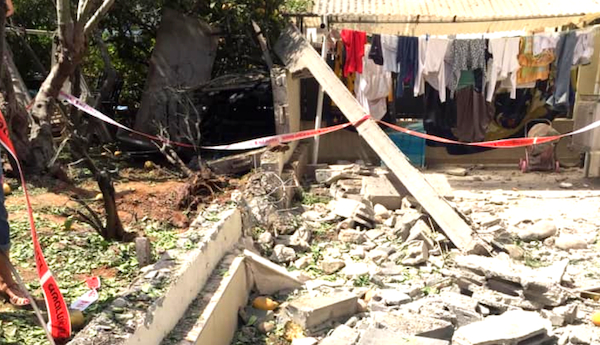
by Marc B. Terrill - Miles outside Ashkelon I arrived in Israel on Thursday, May 2 in the afternoon to join representatives from the Weinberg Foundation's Annual "Influentials" trip to Israel. As usual, the group experienced the joys and complexities of the country. The privilege of welcoming Shabbat on Friday evening with this group of individuals, many whom are not Jewish, was magical in so many ways. The song, the prayer, the emotion, the calm, the tranquility. Shabbat was ushered in with perfection. On Saturday May 4, everything changed. Hundreds and hundreds of rockets were launched from Gaza bombarding the southern region of Israel. Calm turned to chaos. Many communities in the south have been rocked. Innocent people have died, families have been devastated and the trauma continues. Moments ago, I spoke to representatives of Baltimore's partnership city in Israel. As you are aware, Ashkelon is situated no more than seven miles from Gaza City. Needless to say, our friends and family are in the bullseye of terror. During the torment of their circumstance, the Ashkelon leadership conveyed their deep appreciation to The Associated and Baltimore for being together in good times and the not so good. It was heartwarming to hear the comfort they take in knowing they are not alone. We will continue to support our Israeli friends and family during these difficult days. We are in Ashkelon assisting with trauma relief and basic necessities because of you. Your gift to The Associated's Annual Campaign is once again in action. 
Ashkelon Kids in Bomb Shelter So, today I extend a heartfelt thank you to the leaders, volunteers, donors and friends of The Associated who have made the lives of those in Ashkelon a bit better and a lot more hopeful today, because of what we all have done the days leading up to this unfortunate time. Today, say a prayer and continue to make a difference. If you would like to support our efforts in Ashkelon, please make a gift to the Annual Campaign today. If you have already made a gift to the Annual Campaign and would like to do more, please click here to make an additional gift.
|
|
|
Out of Stigma’s Shadow
|
|
|
|
|
Thursday, May 02, 2019
|
|

By Robyn Gellar, Public Relations Coordinator for Jewish Community Services While accepting an award at the Grammy’s in February, performer Lady Gaga positioned the issue of mental health front and center. "If I don't get another chance to say this, I just want to say I'm so proud to be a part of a movie that addresses mental health issues. They're so important... [W]e gotta take care of each other. So, if you see somebody that's hurting, don't look away. And if you're hurting, even though it might be hard, try to find that bravery within yourself to dive deep and go tell somebody...” – Lady Gaga The reason Gaga’s speech made headlines, according to Ruth Klein, PhD., director of mental health and compliance for Jewish Community Services (JCS), an agency of The Associated: Jewish Federation of Baltimore, is that people rarely speak out or even speak at all about mental health issues. “Brain diseases are tough,” she says. “Brain and behavior are seen as you, while other diseases of the blood or the body are things that happen to you.” People tend to feel that those with mental health issues can control their behavior, when that’s often not the case. Kerry Graves, executive director of NAMI (National Alliance of Mental Illness) Metropolitan Baltimore, agrees. “Mental illness is seen differently than other illnesses like cancer or heart disease,” she explains. “It’s still not acceptable to say, ‘I need a break because of my mental illness.’ Yet, when Medstar Health recently conducted a community health needs assessment, sampling nearly a thousand people in Baltimore City, behavioral health – which includes mental illness and substance use disorders – emerged as the top priority. Those findings signaled “a real opportunity for Medstar to get involved in a more intentional way,” says Ryan Moran, community health director for all three of Medstar Health’s hospitals in Baltimore City. Just a few months later, JCS, NAMI Metro Baltimore and Medstar Health are among the diverse group of partners coming together during Mental Health Awareness Month to present Out of Stigma’s Shadow: True, personal stories about mental health, mental illness, and the mysteries inside our heads. With help from The Stoop Storytelling Series, the program will feature first-person stories addressing behavioral health topics including depression, suicide, bipolar disorder, substance use disorders, and anxiety. Following intermission, a panel of experts will offer additional insight, resources, and information about advancements in treatment. The free program will take place on Tuesday, May 21, 2019 from 7:00-9:00 p.m. at Baltimore Hebrew Congregation. Additional program partners include Baltimore Jewish Council, Catholic Charities, Maryland Faith Health Network, and Behavioral Health System Baltimore. As with many diseases or disorders, Dr. Klein points out that early intervention makes all the difference. “Whether or not you seek help, you still have the disease – avoidance or ignoring it doesn’t make it go away. Issues will show up differently in different places like home or school, so professional evaluation is important.” The program partners want the event to help eradicate the stigma surrounding mental illness and substance use disorders and encourage people to seek help. Everyone agrees that increasing awareness is key. Kerry Graves hopes that will translate into action on everyone’s part.“ It’s so important for people to have to the courage to hold honest conversations with those around them,” she says. Learn more.
|
|
|
Meet Sandi Moffet
|
|
|
|
|
Wednesday, May 01, 2019
|
|

Baltimore native Sandi Moffet graduated from Park in 1987, earned her BA from Tufts University and returned home to attend the University of Baltimore School of Law for her JD and LLM in Taxation. A leader in her career and our Jewish community, Sandi is Partner and Strategic Advisor at Brown Advisory, President of the Board of Trustees of Chizuk Amuno Congregation and serves on the Boards of three Supporting Foundations at The Associated: the William and Irene Weinberg Family Foundation, the Harry Weinberg Family Foundation and the Jill Fox Memorial Fund. Sandi and her husband, Brian, an attorney at Miles & Stockbridge, live in Pikesville with their two daughters, Ilana, who attends the University of Michigan, and Wynne, who attends Roland Park Country School. Brown Advisory is one of The Associated’s corporate partners, investing in Jewish Volunteer Connection (JVC). What does a typical work day look like for you? I’m an early riser and start my day around 5:30 a.m. by answering work and Chizuk Amuno related emails. When I am not travelling to see clients, I am typically downtown by 8:00 a.m. As a Strategic Advisor at Brown Advisory, I work with our most complex clients – individuals and families – helping them navigate estate, tax, generational and other planning issues. What do you love most about the work you do? One of the best parts of what I do is working with so many families that are genuinely charitably inclined. Their hearts and passions motivate them to help those in need. It’s always fulfilling to be able to work with families and help them create a charitable plan that is dynamic and purposeful and most importantly transmit values and passions to the next generation. Why are you a donor to The Associated? I am a donor quite honestly because it is a part of my DNA. My grandparents and parents were always deeply committed – it is genuinely how I was raised. Giving time and funds to The Associated is just what you do. We are privileged in life to have the opportunity to help others and most especially those in the Jewish community. We must take care of our own and preserve and grow the future of the Jewish community. If not us – then who will? I have worked hard to instill this same passion in my daughters and I hope and believe that they will continue this family legacy. What motivated you to support Brown Advisory in becoming corporate sponsor of The Associated and JVC? Brown Advisory is committed to giving back to community. I am so proud to be part of firm that deeply values the importance of community service. An overwhelming number of my colleagues serve on not-for-profit boards across the country in all areas. Our commitment to the JVC’s Days of Service closely aligns with the core values of Brown Advisory, so it was an obvious partnership. In addition, it was a great opportunity for me and my colleagues, who are so deeply committed to The Associated by serving on various boards and committees, to embark on a corporate relationship together. Has anything positive come out of your corporate partnership with The Associated? Our partnership has been a wonderful chance for my firm to learn more about The Associated. Since the partnership began, JVC has come to our Baltimore office to facilitate a Party with/for a Purpose volunteer activity. Over fifty colleagues joined together to make lunches for an area shelter. The need to serve the homeless stems across all races, religions and gender – and our firm was able to come together to help those in need. Also, several of my colleagues have been inspired to continue to volunteer with JVC, and routinely participate in at least one of the Days of Service. They would never have known about these acts of service without Brown Advisory’s connection to The Associated. What is your favorite summer Baltimore activity? I love spending time outdoors. Whether taking long walks with my daughters and mother, reading a book on my patio, or barbecuing and eating outside, I always find time to take advantage of our amazing warm weather. I love the summer and would take a 90-degree Baltimore hot and humid day any time of the year!
|
|
|
What Is Jewish About A Ropes Course?
|
|
|
|
|
Wednesday, May 01, 2019
|
|

By Mike Tintner, Pearlstone Adventure Educator I sit on the edge of the platform looking down it feels like a mile to the ground. Am I really supposed to jump? My team is looking at me, walking me through the process of belaying in (securing a climber with a rope), tweezeling out (maintaining safety while unlocking safety ropes), and jumping down (from over 30 feet in the air). I know the steps, I have been trained and still, I feel butterflies in my stomach. Throughout the training for the high ropes adventure course, a song keeps coming to mind. Gesher Tzar Maod; the whole entire world is a very narrow bridge. At times I traverse elements singing the words, “The main thing is to recall is to have no fear at all!” in my head. Life gives every person a unique set of obstacles and challenges they must overcome if they wish to thrive. Jewish practice also presents challenges. On Sukkot, Jewish people are challenged to leave their homes and dwell outdoors. On Shabbat we are challenged to rest. On Yom Kippur, to pray and celebrate on an empty stomach. And finally, on Pesach, we are tasked with not eating leavened bread. The beauty of the natural world is that every being has its own set of unique challenges and obstacles to overcome. The bison stick together as a herd to overcome the predators that wish to eat them; the trees must survive fire; and the river must change direction based on the landscape it flows over. These challenges don’t just create friction in nature; in fact, they create balance. The moving of bison as a herd turns the soil they walk over. Forest fires (like the prescribed burns Pearlstone recently conducted) allow new seedlings room to grow and promotes healthy forests. The winding river slows and distributes water. For so many humans working 9-5, balance means work and family or school and personal life. High ropes courses allow a chance to redefine how we look at balance. Every step you take on the swinging elements feels different while high in the air. The gear supports you in case you fall or want to hold on, but if you dare, you can let go and allow yourself to walk forward trusting in yourself that you have balance. In an ideal world, all spiritual practices would be viewed like a ropes course: a challenge by choice. Challenge by choice means you are encouraged to push you comfort boundary in an effort to grow, yet peer pressure is not given nor is punishment feared. At Pearlstone’s High Ropes Adventure Course, participants will become familiar with challenge by choice as they’re encouraged to overcome physical obstacles such as height, and difficult balance to push their limits and have fun. As I looked at the ground below me, the forest surrounding me and my friends nearby, I knew this challenge of trusting my gear was one I could overcome. So, I pushed off and let out a big “weeeeeeee” as I descended all the way to the ground. I am grateful that Judaism, the natural world and working at Pearlstone all have provided me with challenges that I have the opportunity to overcome as I thrive while living a balanced life.
|
|
|
Shelley Hendler Explores the Next Great Thing
|
|
|
|
|
Tuesday, April 23, 2019
|
|

From the time she was a teenager, Shelley Hendler worked. First making money babysitting and tutoring in high school, then later as an educator in the Baltimore County school system, then for 12 years, she served as a middle school administrator for Krieger Schechter Day School. Yet, five years ago, Shelley felt it was time to move on and start her own “chapter two.” Knowing she was still young, and looking to broaden her horizons, this empty-nester wasn’t quite sure what she wanted to do. Then several opportunities came knocking at her door. What happened? Someone invited me to a meeting of The Associated’s Jewish Women’s Giving Foundation (JWGF). The women who participate in this collective philanthropy group make decisions on grants to programs that impact women and girls. JWGF opened up an opportunity for learning and, through the grant process, I was introduced to people working so passionately to make Baltimore and the Jewish community a better place. Such as? Well, each year we get more than 50 letters of interest from programs supporting women and girls from programs that address everything from sex trafficking and domestic violence to after-school initiatives for girls. We then ask for grant proposals and visit from some of these projects to determine who receives grants. I love reading about and seeing the work these organizations do up close and personal, especially in Baltimore city. Any surprises? I always gave to The Associated. It was what you did if you grew up in Jewish Baltimore. Yet I never had any idea of the breadth and depth of the work they did for the Jewish community and beyond. I understand you are co-chair of JWFG’s multi-year grant? Yes, along with Saundra Madoff. The last multi-year grant we gave was in Baltimore City, so we wanted this one to be in the Jewish community. After a great deal of research, we decided to seek something innovative that would have impact with our aging population. We have recommended a program, which we believe will proactively help to counter social isolation in older adults. You also are involved on the JCC Board? I’ve served on several task forces from supporting teen engagement to an early childhood education task force. Recently I found my niche with arts and culture and we are looking for opportunities to engage boomers. And, I’m on the Jewish Film Festival Committee. How do you decide what movies to include in the Festival? There are 27 committee members and we divide into three groups. Each person screens and scores the films initially at home. The top scorers move on to the “movie minyans,” where we analyze and rate the films as a group. We look at a variety of measures, from the technical aspects to making sure we have a diversity of films. For example, we don’t want a festival of only Holocaust films or just documentaries. And we like the films to be provocative so that filmgoers leave and have something to talk about. Favorites over the years? Last year, I really enjoyed Keep the Change and In Between. This year, I liked the opening film from Argentina, The Last Suit. And you also sit on the grants committee for the Jacob & Hilda Blaustein Fund of The Associated? As an educator, I love learning about informal and innovative Jewish educational programs that are being created to connect Baltimoreans to Judaism. What’s it like to retire? Having worked since I was a teenager, I didn’t know what life would be like without structure. I wasn’t able to say the “r” (retire) word for two years. My original motto was to say ‘yes’ to everything. But I’ve slipped in o what I call an “a la carte life.” I create my own schedule and it gives me time to care for aging parents. And I Iove learning, so I always try to find time to listen to authors, see a movie with a film critic, go to a museum and other excursions. And I spend a lot of time at the JCC – swimming and fitness. The JCC? My dad was a handball player and I grew up at the Park Heights JCC. Now I feel like the JCC is my second home. If I’m not there for meetings, I’m swimming or working out. Sometimes I’m there so often, I forget where I parked my car!
|
|
|
Traveling with Family? How About Israel?
|
|
|
|
|
Thursday, April 18, 2019
|
|

The weather might be getting warmer, but it’s time to start thinking about winter break. Why stress over booking hotels or planning tours, when The Associated has put together the prefect trip for you and your family. Just imagine your winter break in Israel. Rappelling into the Ramon Crater, digging at an ancient archaeological excavation, walking through ancient tunnels in Jerusalem, climbing Masada, floating in the Dead Sea and more. Read on to learn why Family Mission Co-Chairs, Stacey & Randy Getz and Carol & Robert Keehn, do not want you to miss this opportunity. Why are you encouraging friends, family and members of the community to go on this trip? C&R: FUN, FUN and more FUN. Israel is one of the most kid-friendly countries and offers so much for families to do and experience. S&R: There is nothing better than seeing the country, through the eyes of others, especially our children and first-time visitors. This is a journey of a lifetime that I want my entire community to experience. What surprised you the most on your last trip to Israel with The Associated? S&R: At the last minute, we decided to travel with an eight-month-old. Even though, this might have presented a challenge, we did not want to miss the opportunity to build a playground in Ashkelon (Baltimore’s partner city) and see the playground’s dedication. It turned out to be one of the most meaningful experiences in our lives. C&R: We remember our first trip with The Associated was back in 1983 on a young leadership mission. Each time we return, we are mesmerized by how the land has gotten greener, the culture has evolved, and the food has improved. What are the most helpful Hebrew phrases that everyone should learn before traveling to Israel? C&R: Eeifo ha-shaetuim, where is the bathroom, is an important phrase to learn. The more one can speak with the “locals,” the more fun you can have. S&R: efshar bevakasha lekabel cheshbon, can I please have the check, will come in handy throughout the week. What are you most excited to visit or do? S&R: We are looking forward to the first visit to the Kotel as a group just before Shabbat begins. There is nothing else like it. A close second will be celebrating the b’nai mitzvot at Masada. Watching the children ceremonially join the Jewish people in this historical place is quite meaningful. C&R: Visiting the Negev – David Ben Gurion had a dream that the people of Israel would one day reside in a green and lush Negev. Why is it important to travel to Israel as a family? C&R: The future of our community rests with our children. While our three sons all traveled to Israel in their teens, we now have the chance to experience it with our granddaughter, Molly. S&R: This is an amazing way to give your children and grandchildren an experience of a lifetime – to illustrate to them the importance that Israel has in our of community and in our lives. To learn more about The Associated’s Family Mission to Israel, visit associated.org/familymission or contact Marisa Ezrine at [email protected] or 410-369-9270.
|
|
|
A Young Mom's Israel Journey Surprises with Baltimore Connections
|
|
|
|
|
Tuesday, April 16, 2019
|
|

By Jillian Book Just a few weeks ago, I found myself in Israel on the Ashkelon Agricultural Farm, Hava Haklayit, with the breathtaking Ashkelon skyline in the backdrop. While newly jet-lagged, taking in the view of the city behind the farm, and breathing in the sweet Israeli air, I passively heard our facilitator mention “a seed can be planted anywhere in the world, but it will always yield a different variation of fruit based on its soil, then from that very flower grows the fruit.” During this trip, I was in good company. I was traveling with eight moms I’ve gotten to know over the past two years. We are all Community Connectors for The Mack’s Center of Jewish Education (CJE). Our goal: to bring the joys of Judaism to families unaffiliated with synagogue life and empower these families who are often unconfident practicing Judaism in the comfort of their own homes. Together, as Connectors we brainstorm activities and events big and small to bring Judaism to all things from coffee dates to cooking demos. But this opportunity, carefully crafted for us by both Huppit of the Afooda cooking world and Julie Wohl of the CJE, was an absolute treat. It was, for many of us, not only the first time we traveled without our children for such an extended period, this trip was a way for all of us to grow Jewishly, together. I’ll never forget locking eyes with one of my closest girlfriends that I have made during my time as a Connector when the trip was announced. In just that initial eye contact, we both knew we would do whatever had to be done – lock in whatever child care was needed and make sure work was taken care of- so this trip could happen. We made it happen because of our love for Judaism and our connection to Israel. Our goal on this trip of traveling from Baltimore to Ashkelon, our sister city, was to learn more about the Baltimore-Ashkelon Partnership, and, in turn, deepen our personal connection to Israel and our own Judaism. I found myself learning about the great impact Baltimore has on Israel, with eight like-minded women and mothers who have all become family through the program, and even further through this trip. Although some of us are sadly at the end of our two-year Community Connector commitment, we learned about other opportunities and ways to become more involved, affiliated and connected in Baltimore’s deeply rooted love for Israel, and how we can keep it flourishing. During our trip, we met the Director of the Partnership, Sigal, and facilitator, Roni. Each of them personally took the time to connect and match each of us with a host family for Shabbat. They took us to a Gan (kindergarten) in Ashkelon to teach us about the PJ ABC program. In this new age pen-pal program, Israel’s youngest students are paired with like-minded families in Baltimore to form a connection, a bond and a relationship that can last not only a year, but a lifetime. This particular class of kindergarteners happened to know students from Beth Tfiloh, a school where a few of my fellow moms send their children. As the Director of Education at Bolton Street Synagogue, it is no secret that I favor the CJE’s Shevet Achim and Israel High curriculum, where Israeli high schoolers match with Baltimore high school students. Being able to watch a similar connection between Israel’s youngest students with Baltimore’s youngest students even further enhanced my love and appreciation for the Partnership. As soon as I returned to Baltimore, I knew I had to bring PJ ABC to my younger students. It’s no secret I’ve always connected Jewishly. As a child, I was the one that looked forward to Hebrew school. Passover has always made me reflective of “breaking free” from my own “personal mitrzrayim.” Even now, lighting Shabbat candles in my grandparents (Bubby and Zaidy’s) kosher kitchen, makes me smile. Upon graduating from high school without much direction or exciting goals, I fell back on the one thing that was always there for me, my Judaism. I decided to travel to Israel for a gap year. While initially this was an opportunity to uproot myself, leave my environment or my “soil” and replant myself, it became an opportunity to return to it, and not just to return to it but to flourish in it. That’s right – It took me traveling across the world to find the great impact my small-but-mighty Baltimore community has on small-but-mighty Israel. As a pre-college student, I was luckily introduced to the opportunities Baltimore offers to stay involved. I learned that I could nurture my connection and my passion for Judaism with my love for Israel by being part of the Baltimore Jewish community. Following my gap year and during college, I returned to the same Baltimore synagogue, Beth El, where I looked forward to Hebrew school. I was seeking ways to become more involved and to reconnect with my “soil.” This is the same place where I attended preschool. The same synagogue where I chanted Torah to celebrate my Bat Mitzvah, where I danced the Hora at my wedding, and where I am now getting ready to celebrate my daughter’s pre-school graduation. Here I am, privileged enough to watch my little seed flourish in the same soil where I was planted. She is just as passionate about her love of Judaism and her smile shows me her comfort in all things Jewish. Right now she is too naïve to realize just how lucky we are to live here in Baltimore, a town constantly taking care of our soil, but I can’t wait to teach her about The Associated’s passion for the Partnership. I also can’t wait to teach her about The Associated’s passion for the Partnership and how farms providing lunches and everyday food to students in Israel were provided by community members in our town – congregants at our synagogues, congregants we pray with during High Holidays, congregants with whom we have shared Shabbat dinners. I know one day I will take her to Israel so she too can learn how our home town nourishes our homeland. Back on the farm, hearing our facilitator say “From the flower grows the fruit ...” meant so much more in that moment then farming. It meant taking care of our environment and teaching our children to take care of our environment, so they too can flourish. In this instance, the environment was the soil. As a parent, it meant passing on my love of Judaism to the next generation so they too can live Jewishly and then pass on their love for Judaism to the next generation. As a connector, it meant we are creating the soil for these families to feel comfortable and thrive in the Baltimore Jewish community. Two years ago, when I was offered the opportunity of becoming a Community Connector, it seemed like a nice way to give back. It would be easy. I would meet new families in my vicinity, connect them with other like-minded moms, move on to the next “mommy match,” repeat. What I didn’t expect was to exponentially grow my own village, and to make my own connections with families of all Jewish backgrounds across Baltimore. This opportunity has allowed me to further ground my Jewish Baltimore roots, to take care of my soil and to find additional ways to grow and help others flourish. These past two years have connected me with women who have become family, women who have the same interests as I do, and women who care about nurturing our environment so our soil bares the sweetest fruit. So, there we were, on a farm in Ashkelon. Eight moms that would have never been connected without this remarkable program, picking our very own vegetables to cook lunch, we would enjoy together. And this was just Day one. I am so grateful to have had this amazing opportunity. In one short week I learned so much about myself, my community, my friends and Israel. My thanks to The Associated, the Baltimore-Ashkelon Partnership and the Macks Center for Jewish Education for providing this amazing opportunity. Explore Israel during winter break with your family and join The Associated’s Centennial Family Mission. Learn more at associated.org/upcomingmissions.
|
|
|
Is Your Child Ready for Overnight Camp? Finding the Right Fit
|
|
|
|
|
Tuesday, April 09, 2019
|
|

Color wars and campfires... water sports and talent shows... holiday meals, musical productions, tournaments and traditions. Summers spent at an overnight camp are all that and more. Research shows that attending an overnight camp also builds confidence and encourages independence – as well as creates friendships that often last a lifetime. Yet how do you know if your youngster is ready to spend several weeks away from home? And, with a dizzying array of options, from general to specialty camps that focus on sports or arts, to even inclusion camps geared toward individuals with disabilities, it’s important to find the right match. Janna Zuckerman, program manager of The Associated: Jewish Community Federation of Baltimore’s Center for Jewish Camping, which helps families navigate the process of selecting a Jewish camp, has this advice for parents. Begin early, talk to other families and include your child in the process. Here are five tips from Zuckerman to help you find that right fit. 1. Meet with Janna Zuckerman. Zuckerman offers a free, personalized consultation to families interested in Jewish camp. She will talk to parents in person or on the phone to determine what works for their family and child and narrow the possibilities down to three or four camps to investigate. To best assist, she may ask you to describe your child and, in particular, his or her personality and interests. She may also ask questions to get a better sense of what you’re looking for: Are you looking for a co-ed or single sex environment? How far away are you willing to send your child? How many weeks are you looking for? What does Judaism look like for you and your family at home? 2. Research these options. Once you have a list of possible camps that fit your child’s interests, take a moment to narrow down the options. Go online to learn more about each camp, talk to the camp directors and get information and names of other camper families that you can contact to give you an unbiased view of what they like and don’t like. In addition, attend one of The Center for Jewish Camping’s special events throughout the school year, in which 13 partner camps come together to offer hands-on activities that focus on Jewish learning. In addition, The Center exhibits at a number of area festivals. 3. Schedule time to visit. You wouldn’t think of sending your teen off to college without touring the campus. Why not have the same attitude about camp? After all, this is the first time your child will be living away from home, even if it’s a few weeks. Many camps offer tours throughout the year, which provide a chance for your future camper to explore the campus, see the bunks, dining hall and activities. If you can, think about visiting during the summer when your child can see camp “in action.” “The more a camper is familiar with the environment, the easier it will be for them to acclimate,” says Adam Broms, camp director of Capital Camps, located in Waynesboro, Pa. Marty Rochlin, director of Camp Airy in Western Maryland estimates that between 75 and 80 percent of first-time families will take a tour prior to attending camp. As for younger siblings, who have an older brother or sister at camp, Rochlin advises families to also tour as all kids are different and siblings often have different interests. “Each child needs to see himself or herself in the camp environment.” 4. Ask the right questions. Whether speaking to a camp director by phone, or visiting on a tour, asking the right questions can help determine the best fit for your child and for your family. Questions can include: what makes your camp different, how do you train your staff, do you offer a diverse group of activities or how will parents communicate with the camp and what do counselors do to help acclimate a first-time camper. Families can also address cost and whether a camp offers scholarships or financial assistance. 5. Try a “mini” experience. Many camps offer a mini-week for rookie campers that feature smaller bunks comprised of all first-time campers. These youngsters get to experience the full range of camp activities and get adjusted to the camp experience so that they are excited about returning for a longer session the following year. Another new program is the family camp, weekends or short weeks at the campsite. Campers and parents participate in some activities side-by-side, other times they join their peers in programming. “Children gain confidence while their parents are there,” explains Broms. Capital Camps offers several family camp options throughout the year, including a summer family camp and a New Year’s option as well. In addition to family camp, Camps Airy and Louise, offers a “Camper in Training” Day, a one-day experience with family experience with two tracks, one for the camper and one for the parents, which includes information and camp activities like zip-lining and learning a new craft. For more information, contact Janna Zuckerman at [email protected] or 410-369-9237.
|
|
|
Love of Cooking Brings Communities Together
|
|
|
|
|
Friday, April 05, 2019
|
|

Many will agree that food is at the heart of Jewish life and culture. So, what better way to bring two communities together than through a shared love of cooking? That was the inspiration behind Food for Thought, The Louise D. and Morton J. Macks Center for Jewish Education (CJE) program funded by The Associated’s Baltimore-Ashkelon Partnership. The program offers a cohort of CJE connectors an opportunity to strengthen their connection to Israel and Judaism through an immersive cooking experience both in Baltimore and Ashkelon. Talya Knable, who serves on the board of both CJE and The Associated, recently participated in the Food for Thought program. “I often attend ‘Shabbat in the Park’ programs with my family presented by CJE,” shares Talya, a New Jersey native. “I love Moms’ Night Out and the opportunity to be with other like-minded Jewish women. Food for Thought was a great way to bring a smaller group together – learning to cook some traditional Israeli meals was an added bonus.” The Food for Thought participants met for several cooking workshops in Baltimore before traveling to Ashkelon, Baltimore’s partnership city, to meet their Israeli counterparts and sample some of the cuisine they learned to cook. “In addition to all of the street food and tastings at traditional markets, we had an amazing farm to table experience,” recalls Talya. “We were given a list of ingredients and then walked the land together and picked the food that we would later use to cook our meal.” Communal eating not only brings people together over a shared love of food but also encourages an opportunity for acceptance and engaging conversation. Talya says that the Food for Thought program served as a vehicle to talk about other things such as Jewish traditions, history and different cultures coming together as well as provided a life-changing experience. “During our home stay for Shabbat dinner, we shared a wonderful connection with our host family whose two older children are current Diller Teen Fellows in Baltimore. It was a nice personal touch and helped to bring our two Jewish communities closer together,” says Talya. “I’ve never eaten so much during a trip before,” she jokes. Talya admits that while her family’s favorite go-to meals are mac and cheese and pizza, she is excited to introduce some of the more traditional Israeli dishes at home with her husband Stephen and their two children Jack (age 3) and Leigh (age 15 months) and more importantly, share the stories about her new friends in Israel. Talya, a psychotherapist in Lutherville, is also the voice behind The Mother Fix, a blog that combines her expertise as a psychotherapist with her experience as a mom.
|
|
|
Meet Rich Topaz
|
|
|
|
|
Tuesday, April 02, 2019
|
|

A New York native, Rich Topaz, who today chairs the Ben-Gurion Society (BGS), recalls his moving to Baltimore and the warm welcome he received by the Baltimore Jewish community and IMPACT, The Associated’s young adult division. “My wife, Heidi, is from Baltimore but I am not,” explains Rich. “So, when we moved here five years ago, I didn’t really have a social or professional network. That’s where The Associated, particularly IMPACT, stepped in.” Rich knew he wanted to connect with other young professionals, and quickly found himself attending networking events, building relationships and ultimately participating in Young Leadership Council (YLC), a professional development program through IMPACT. Today, five years later, Rich’s involvement with The Associated has grown tremendously. Rich sits on the boards for IMPACT, The Louise D. and Morton J. Macks Center for Jewish Education (CJE), and The Center for Community Engagement and Leadership (CCEL). “There is a theme with the agencies I am involved in, which is that part of their missions is to provide entry points for people – both native Baltimoreans and transplants like myself – to become more involved in the Jewish community.” As chair of the previously mentioned Ben-Gurion Society, a part of IMPACT, Rich helps young professionals who are also donors of The Associated. Throughout the year BGS hosts multiple events, with their next event coming up in May. “It’s something we’re very excited about,” says Rich. “On May 1 we will be having our first Meeting with a Macher, which will be part of a larger leadership series speaking with leaders in our community. For this event BGS members will hear from Ronald J. Daniels, president of Johns Hopkins University, at the university’s incubator space. We think it will be a great opportunity to hear from Mr. Daniels and to see some of the exciting things the university is doing.” In addition to his positions within The Associated, Rich has a full-time career as a real estate attorney with Miles & Stockbridge P.C. At the end of the day, however, for Rich spending time with his family is most important. A big fan of sports, and baseball in particular, Rich looks forward to taking his youngest son (born this December) to his first baseball game. “We took my oldest to Camden Yards when he was only a few months old. Hopefully he’ll be able to follow the game a little better this year.” At the same time, Rich can’t wait to get his two boys more involved in giving back to the Jewish community and to teach them the same Jewish values that were instilled in him when he was younger. “My kids are still fairly young,” says Rich, “but my oldest is of the age where we’re trying to teach him about giving back, particularly to those less fortunate. We’re looking for events we can take him to, like Mitzvah Day. I’m looking forward to getting out and volunteering as a family.”
|
|
|
Meet Debbie Lubliner
|
|
|
|
|
Monday, April 01, 2019
|
|

Debbie Lubliner, a physical therapist at MedStar in Baltimore, grew up in Pikesville. After graduating high school, Debbie left for Washington University in St. Louis to begin a long academic career which included an advanced degree in physical therapy from Hahnemann University in Philadelphia. Yet like many Baltimore natives, the call of home was too strong, and in 1993 she returned with her husband, Jamie, to raise their three children – Adam, Zack and Jenna. “After being away for college and graduate school, I wanted to move back to Baltimore. Growing up, my immediate and extended family was very close, together for all of the holidays. I wanted to raise my family with that same closeness,” shares Debbie. Approximately nine years ago, Debbie, who grew up in a Conservative Jewish home with strong Jewish values, became involved in The Associated’s Dor Tikvah, a two-year leadership development program that inspires women to hold key leadership positions within The Associated and throughout the Baltimore Jewish community. “During my second year of Dor Tikvah I sat on the board of Jewish Community Services (JCS) where I remained actively involved for years,” Debbie explains. “As a physical therapist, I’ve always enjoyed helping people be the best they can be and my work with JCS seemed like an ideal fit.” Thrilled that she had a role in creating positive change for the Baltimore Jewish community, at the completion of the program, Debbie looked to continue her work with women leadership and philanthropy. “One of the biggest issues that women still face today,” Debbie says, “is finding work-life balance – being able to achieve goals professionally and within our families.” The Associated’s Jewish Professional Women (JPW) group, which Debbie co-chairs, helps career-minded women network, learn and grow both professionally and personally. “JPW’s events vary but the common theme is the programs allow women to network, reflect, and walk away with inspiration and information, all with a Jewish twist,” says Debbie. “JPW allows me to connect with other Jewish professional women, to learn from them, to discuss common goals and struggles. JPW is also a great introduction to The Associated for a lot of women who have never been involved in the organization. I hope by coming to our events, as an added benefit, women gain a better understanding of the crucial role The Associated serves in the lives of Jewish people in Baltimore and around the world.” Debbie is looking forward to JPW’s upcoming LeadHERship event which features Sarah Hurwitz, chief speech writer for Michelle Obama who, on Tuesday, June 4, will share her journey as a Jewish woman in the White House. “I’m particularly excited for A Jewish White House Journey: Storyteller to Speechwriter. Sarah Hurwitz is a great example of how finding one’s passion can breed success in both your career and personal life.” For more information about Jewish Professional Women and to register for the event visit associated.org/jpw.
|
|
|
Two Women, One Wrong Turn: The Ease of Opioid Addiction for Women
|
|
|
|
|
Wednesday, March 27, 2019
|
|

By Elizabeth Piper, Health Educator, Jewish Community Services, an agency of The Associated I remember my first time using a prescription opioid. I was 17 and just had my wisdom teeth extracted earlier in the day. I was lying on the couch in our family room watching a re-run of Gilmore Girls, trying to distract myself from the pain I felt from the surgery. My mom walked in with a white paper bag from the pharmacy. Inside was my prescription for Oxycodone. She opened the bottle and handed me one tablet. I took it with a glass of water and within 15 minutes, I felt something I had never experienced before. Not only was the pain gone, but all the thoughts that usually filled my worried brain had dissipated. I felt like I was floating on cloud 9 and nothing bad could touch me; I was safe. I was in a state of utter and complete bliss. I turned to my Mom, smiled, and said while giggling happily to myself, “This is why people do drugs,” before closing my eyes and passing out. After four days of using the tablets of oxycodone as prescribed, I asked my Mom to flush them down the toilet. While enjoying the high and temporary release from pain they offered me, I was scared of the power these tiny tablets possessed. I grew up in a home afflicted with addiction and mental illness. My mother was diagnosed with bi-polar disorder after years of battling alcoholism. I saw the ugliness behind the appeal of a psychoactive substance; I watched my loving, charismatic, military-serving, Johns Hopkins graduate mother turn into a hateful, cruel, incoherent mess, and I had no interest in living that Jekyll and Hyde narrative myself. My friend, “Anna,” however, had a very different experience. She was prescribed Percocet following gall bladder surgery in high school. The daughter of an opioid addict, Anna had always felt this deep and heavy void inside of her that resulted from the emotional and psychological abuse she fell victim to growing up. When she was prescribed the Percocet by her doctor, she received no warning about the highly addictive substance. She wasn’t asked if opioid addiction ran in her family. She wasn’t provided with any shocking statistic. She was simply advised to take the painkiller “as needed.” When Anna reflects on the first time she swallowed an opioid painkiller, like me, she remembers feeling blissful and completely at peace with herself –a novel feeling for her. After a month, Anna felt physically and psychologically addicted to her painkillers. While this rapid dependence may seem surprising, research by The U.S. Department of Health and Human Services (HHS) Office on Women’s Health (OWH) shows that women may become physically dependent on opioid pain medication more quickly than men, due to basic physical and psychological differences like body fat percentages, metabolic rate, and hormonal fluctuations. Once Anna had finished the Percocet tablets that were prescribed by her physician, she began to feel withdrawal symptoms commonly referred to as “dope sickness” – something people with opioid use disorder (OUD) describe as the worst flu you could possibly imagine. Symptoms include nausea, diarrhea, constipation, insomnia, hot and cold flashes, muscle aches and spasms, sensation of bugs crawling on or under your skin, headaches, and sweating. One study done by HHSOWH found that cravings were specifically higher among women than among men which puts people like Anna at higher risk for addiction and death by overdose. While initially people with opioid use disorder chase the calming sensation opioids offer, eventually it becomes less about the “high” and more about avoiding the “low” that is dope sickness. The physical and psychological dependence on opioids is so intense that to live without them becomes not only unfathomable, but also seemingly impossible. It’s no wonder then why so many women like Anna have struggled or are struggling with opioid use disorder in our country. While statistically there are more men overdosing and dying from prescription opioids, the rate of deaths from prescription opioid overdoses for women increased 471 percent between 1999-2015 compared to 218 percent for men. In addition, heroin deaths among women increased at more than twice the rate of men. This documented gender difference with regard to addiction is the topic of an upcoming program from Jewish Community Services (JCS). Women and Addiction: Our Unique Risks, will take place on Wednesday, May 22, 9:30 a.m. to 11:00 a.m. at The Suburban Club, 7600 Park Heights Avenue in Baltimore. Sponsored by The Joan G. Klein Fund for Substance Use Disorders with additional support from the Jewish Women’s Giving Foundation at The Associated: Jewish Federation of Baltimore, the program will address the unique factors which can place women at risk for addiction and overdose and create obstacles to seeking treatment. Vickie Walters, LCSW-C, Executive Director of REACH Health Services and President-Elect of the Maryland Association for the Treatment of Opioid Dependence (MATOD), will be the guest speaker for the event. The program is free, but seating is limited. To reserve a seat, visit jcsbalt.org/womenaddiction.
|
|
|
Stitching History With the Holocaust: A picture of talent and loss
|
|
|
|
|
Friday, March 15, 2019
|
|

The loss the world experiences when people die before their time is difficult to comprehend. Jewish tradition suggests it is immeasurable: “anyone who destroys a life is considered to have destroyed an entire world” (Mishnah Sanhedrin 4:5). When immeasurable loss is magnified over millions of souls, it becomes so large as to engender a kind of numbness. Statistics don’t evoke emotion. Individuals, though. Individuals we relate to, we see ourselves in them. Individual’s stories make us want to take action. That reality is part of what drives the exhibit Stitching History with the Holocaust, curated by the Jewish Museum Milwaukee (JMMilwaukee), and open at the Jewish Museum of Maryland until August 4, 2019. As the decades pass and the survivors and witnesses to the cruelty and horror of the Holocaust pass on, what lives on is statistics: 6 million Jewish lives lost to the camps, 5 million other lives lost in the camps, 416,000 American soldiers lost. They become numbers. Stitching History reminds us that every single one of those numbers was a human being with loves and hopes and fears, and, notably, talents that were stolen from the world. In 1939, Hedy Strnad (pronounced ‘streh-nod’) and her husband Paul knew the future looked bleak for Czech Jews like themselves. Paul wrote to his cousin Alvin in Milwaukee, hoping that Alvin would be able to help them get out of Europe. Paul sent along some of Hedy’s dress designs in his letter to Alvin, to prove her talent and that they could be financially independent. Alvin Strnad did what he could in Milwaukee, but he was unsuccessful. Hedy and Paul both perished. Fast forward to 1997, Burton Strnad found Paul’s letters and Hedy’s drawings in his parents’ basement. Burton donated the papers to the Milwaukee Jewish Historical Society, now the Jewish Museum Milwaukee, where they became central to the museum’s core exhibit. (Burton’s discovery, and his choices once he made it, underscore the power of material culture and of museums. If Alvin hadn’t saved his cousin’s letters, of if Burton hadn’t thought to donate them, not only would the world have lost Hedy and Paul, we would’ve lost their memory as well.) In 2013 JMMilwaukee commissioned the Costume Shop of the Milwaukee Repertory Theater to create the septuagenarian designs. The museum staff and costumers worked hard to ensure the final dresses are historically accurate – they used only technologies and fabrics that would have been available to Hedy in the 1930s (even the zippers are vintage). These modern-day manifestations of Hedy’s designs make up the core of Stitching History. They are punctuated by letters, photos, and research into Hedy and Paul’s life. JMMilwaukee staff found their niece, Brigitte Neumann Rohaczek, who survived the war through the Kindertransport. Brigitte shared stories of her aunt, Hedwig or Hedy (not Hedvika as the Nazis referred to her in the Thereisenstadt records) and helped fill in details for the exhibit. The resulting exhibit is a nuanced picture of a talented woman. Hedy Strnad, the individual, makes more real the statistics, and deepens the learning around the Talmud’s assertion that one life is equal to the whole world. People often use the Talmudic insight to underline the fundamental value in human life. In addition to the fact that human lives are inherently valuable, the Talmud’s teaching points to the contributions of which each human being is capable, whether in art, literature, science, medicine, humor, or fashion – that unspoken language we all use every day.
|
|
|
Making Passover Fun for Your Children
|
|
|
|
|
Thursday, March 14, 2019
|
|

By Gabrielle Burger, Director, Jewish Educational Engagement, Macks Center for Jewish Education Passover is one of my favorite Jewish holidays! I love the food, the time with family, and the child-centric focus of the holiday. The Torah teaches us "You shall tell your child on that day, saying, 'It is because of what The LORD did for me when I came out of Egypt.'" (Exodus 13:8). Memory and legacy are integral parts of the Passover holiday. Many see this passage as a mandate to tell the story of Passover to others, especially the children. How can we make the story of Passover or the time spent reading the Haggadah inviting and engaging to children? At my home we have Passover puppets for the kids to use and hands-on activities for the children to do during the reading of the Haggadah that can help them stay involved. Since before we were taken out of Egypt, we were slaves, and now we are free, we lean to the left during certain parts of the meal to symbolize our freedom. Many people bring pillows to the table to make the leaning that much more comfortable. One of my favorite pre-Passover activities is making a no-sew leaning pillow for everyone to have at the Seder. You can find instructions on how to make one here. What is a great PJ Library Passover book to read to your children? One of my favorites is And Then Another Sheep Turned Up written by Laura Gehl and illustrated by Amy Adele. This story emulates the Haggadah passage “All who are hungry, come eat. All who are needy, come join the Passover celebration.” Every turn of the page brings another unexpected guest to the Passover Seder, and the Sheep family always makes room and is happy to see them! This is a great message to teach our children. Sharing that which we are lucky to have, as well as being gracious hosts, are wonderful messages for our children to learn at our tables. Looking for new Passover recipes or a new Haggadah for your Passover meal? Look no further than the CJE library! Jessica Fink, our librarian, has collected over 50 different Haggadah’s and cookbooks for the whole family. Her favorite is Haggadah is The Gateways Haggadah by Rebecca Redner, and her favorite cookbook is The New Yiddish Kitchen, by Simone Miller and Jennifer Robins. This gluten free and Paleo cookbook has something for every holiday. Turn to page 239 to get your Passover cooking started! For more information, or to pick-up a free set of Got Forth and Learn – A Passover Haggadah by Rabbi David Silber with Rachel Furst for your family (while supplies last), call Jessica at 410-735-5017. What’s a great Passover dessert to make with your kids? My favorite Passover dessert is chocolate covered matzah. This is so easy to make and is finger-licking good!
|
|
|
Excited for Gramp Camp! His and Her Tales of Jewish Camp
|
|
|
|
|
Tuesday, March 12, 2019
|
|

By Ann Abramson When I first went to camp, I was 10 years old, going into the 5th grade. I won’t say what year it was but my favorite TV show at the time was Father Knows Best. I was excited to go to Chimney Corners in the Berkshires. I knew I was going to be okay because I went with my best friend from home and I had cousins that lived nearby. Before getting to camp, I was so excited to show my camp friends how I learned to cartwheel and do front walkovers. Since camp was in Massachusetts, but I was from Connecticut, I relished that my bunkmates were from other parts of the United States like New York, New Jersey, Pennsylvania, as well as Massachusetts and Connecticut. My favorite part of sleepover camp was the comraderies that were created with my bunkmates, and all the adventures we’d have in the outdoors like, riding horses, archery, tennis, hiking, water sports and more. I loved it all! When my children were younger, it was a pleasure to send them to Jewish camp because I knew they would love it as much as I did, and I am happy to say, I wasn’t wrong. The best part of sending them to a Jewish camp was the added bonus of Jewish tradition sprinkled throughout their time there. They became friends with Jewish children from other areas and not only expanded their friendship circles but grew those friendships into a real community of people who still keep in touch. Now I have the pleasure of being Granny Annie and I’m over the moon excited that my 9-year-old granddaughter is going to Jewish sleepover camp for the very first time this summer! I know she’s going to have a great time creating her own new community. This summer also marks a first for my grandchildren and me as we’re registered to attend Pearlstone’s very first Gramp Camp from August 13-14! I can’t believe I’m going to have the opportunity to share a camp experience with my grandchildren! What an amazing idea by the Jewish Grandparents Network! The minute I heard about Gramp Camp, I knew I wanted to register and get involved with the planning of this special program! I’m rapt with anticipation to make memories with my grandchildren which will be memories we will all cherish forever. I’m excited to share songs, campfires, hikes and connect with other grandparents in the beautiful surroundings of Pearlstone. Who knows, I might even get my courage to zipline over the lake! The best part is that I can have as much adventure or relaxing time as I want at Gramp Camp. All the meals are Kosher and I know Pearlstone accommodates all food allergies, so I’m relieved that there will be something for everyone at mealtime…even time to schmooze and laugh with other grandparents. And who knows where those connections will lead! I hope everyone will register to join me and my grandchildren at Pearlstone’s first ever Gramp Camp this summer! I’ll even get you started by sharing the registration link: pearlstonecenter.org/GrampCamp See you this summer! Gramp Camp from a Guy’s Point of View By Gil Abramson I exclusively went to Jewish camp as a child living in Massachusetts. It was at Camp Young Judea in New Hampshire that I spent 11 of the best summers of my life. I was 11 years old and raised in Yeshiva and everyone knew my father. The best thing about camp for me was that I learned that you could be Jewish and not be strictly Orthodox to be Jewish. During the year, Yeshiva taught me Torah and Gemara, and Camp taught me about Israel and Zionism! Israel was brand new and there was a lot to learn. When my children were younger, we sent them to Jewish camp and they, too, had very special Jewish camping experiences. The real mixing bowl of Jews happens at camp as children meet new friends from different Jewish backgrounds and different types of Jewish education, from all over. This summer, I’m overjoyed to share a Jewish camping experience with my grandchildren at Pearlstone’s very first ever Gramp Camp from August 13-14. What a great idea by the Jewish Grandparents Network! I’m excited to have a nice Jewish experience outside of the home. You can make a Jewish experience wherever you are, and Pearlstone provides the perfect background. More than any activity offered—and there are many—I’m excited to just spend time with my grandchildren and see how they react to the whole camp-like experience when their parents aren’t around. I hope everyone that can, registers for Pearlstone’s Gramp Camp. It will benefit all the generations present. I still talk to my camp friends 50 years later, and I hope my grandchildren will make connections as well. If interested in attending camp with your grandchildren, register at pearlstonecenter.org/GrampCamp. Gramp Camp is made possible in partnership with the Jewish Grandparents Network and the financial support of The Joseph and Harvey Meyerhoff Family Charitable Funds.
|
|
|
Charitable Planning Tips for this Tax Season
|
|
|
|
|
Tuesday, March 12, 2019
|
|

By Jackie Yahr, Esq., Assistant Vice President, Charitable Planning, The Associated As April 15 approaches, many of your clients will be facing a new reality as they see how the changes to the tax laws impact their tax liability. While it may be too late to make any decisions that will affect their 2018 tax return, inviting your clients into your office for a discussion around careful planning for the current tax year and beyond will set you apart from other professionals and position you as the trusted and well-versed advisor. Here are 3 tips to discuss with your clients: 1. Don’t let the increased Standard Deduction stop charitable giving. The sweeping changes to the federal tax laws now mean that charitable donations are deductible only if your client itemizes, which is a less likely scenario for many taxpayers given the new, higher standard deduction ($12,000 for individuals and $24,000 for married couples, slightly higher for those over 65). If your client’s gifts to charity last year did not exceed the standard deduction, do not worry, there are planning tools that you can employ this year and, in the years to come, that will help your clients continue to be tax-efficient. 2. Alternative gifting can help your client’s tax situation. If your client’s annual charitable giving does not put them over the standard deduction threshold, you may consider discussing the option of “bundling” your client’s giving with your client. The idea is to take a few years’ worth of ALL of your client’s charitable donations and give them in a single year to help push your client over the standard deduction threshold. Your client can certainly give the specific charities that they support those bundled amounts designate those gifts over a number of years. Another option is to put the bundled amount into a Donor-Advised Fund at The Associated, which affords your client a larger tax deduction in Year One and additional savings on their federal income taxes. Then, in the subsequent years, your clients have their Donor-Advised Fund from which to recommend all their charitable contributions to the charities that they support. For any client who is 70 ½ or older, if they have an IRA, they are most certainly taking a Required Minimum Distribution or RMD every year. When your client withdraws their RMD, they are realizing additional income in that taxable year. One solution to avoid paying those additional taxes is to encourage your client to make their charitable gifts directly from their IRA. To do this, your client must simply contact their IRA plan administrator and instruct them to send all or a portion of their RMD directly to the charity or charities that they support; some plan administrators even provide a checkbook which allows them to send portions of their RMD to multiple charities. By employing this tactic, your client will fulfill their obligation to take their RMD, avoid additional taxable income, and continue to support the charities your clients care about most deeply. 3. Look at your client’s entire portfolio for tax-advantageous giving. Assets that have appreciated in value can be among the most tax-advantaged items to contribute to charity because you can potentially eliminate capital gains tax liability on their sale and enjoy a current year tax deduction, if you itemize. This allows your client to pay lower taxes and also allows the charities your clients’ support to receive the most money possible. Some examples of highly appreciated assets include publicly traded securities, restricted stock, real estate, privately held stock (C-Corp and S-Corp), and limited partnerships or limited liability corporations. And a Donor-Advised Fund is a great vehicle to consider for those assets if your clients are giving to charities that are not as experienced at handling those complex assets. While not all appreciated assets may be suitable for a Donor-Advised Fund, here at The Associated, we can work with you and your clients to sell contributed appreciated assets and put the proceeds into a Donor-Advised Fund, which will allow your clients to recommend charitable contributions on a timetable that suits them. As always, The Associated’s Philanthropic Planning and Services professionals remain ready to work with you and your clients on how to incorporate charitable planning into their estate plans and how to help maximize the financial and charitable benefits of any such planning strategies available to you. For more information, contact Jackie Yahr at [email protected] or 410-369-9248.
This article is for informational purposes only and should not be construed as legal, tax or financial advice. When considering gift planning strategies, you should always consult with your own legal and tax advisers.
|
|
|
My Journey to Wellness
|
|
|
|
|
Monday, March 11, 2019
|
|

By Jeni Funderburk In 2015 I was at my worst. I was tired, depressed and I wanted to stay in bed all the time. I remember having my mother visit for Thanksgiving and I didn’t even want to get up and cook the meal I typically would have happily and proudly prepared and served. I could barely muster up the energy to push through that day. I had never felt that low and I was just not myself. I believe the more weight you put on, the more and more out of reach health seems, so you give up, believing a lie that you can never turn it around. This just perpetuates the cycle of gaining. You stuff unhealthy, hyper-palatable, processed food in, then feel guilty, so you indulge again. I had tried so hard to count calories and exercise, but I could never stay on the bandwagon. I yo-yo dieted. In July 2016, I watched a film called Forks Over Knives and I said to myself, that’s it! I am going to change the way I eat. Overnight I began a whole foods plant-based diet with no oil. I immersed myself in everything I could find online about the plant-based diet, sought recipe ideas and planned my meals around this new lifestyle. Since then, I have learned about processed food addiction and I eat whole foods from plants with no added oil, sugar, salt, flour or alcohol. Your taste buds adapt if you give them enough time. After I watched the documentary and started to change my eating habits, I decided to start going to the JCC for group exercise classes. I had been a member for a few years, but never went consistently. I started going to morning classes at the JCC about five times per week. I remember being so overweight that I tried to hide in the back of a dark spin class. I was so out of shape, but I was inspired by an instructor, Larisa Unger. Larisa didn’t ignore me or make me feel invisible – she made me feel like I was there for a reason and I could do more than I gave myself credit for. I kept going to any classes that fit my schedule: barre, spin, BODY PUMP, BODYSTEP, BODYATTACK, and BODYCOMBAT. The key to weight loss is caloric density. I only eat foods that are 600 calories per pound or less. This includes vegetables, fruits, whole grains and legumes. I don’t count, measure, weigh or restrict these plant-based, whole foods. I can eat as much as I want. The body does the work to heal. Exercise helps most with self-esteem, energy, and anxiety/depression. I found motivation from being in the JCC group fitness classes because the people are so friendly. So many people have supported and encouraged me all along my journey to lose weight. On December 2, I ran the JCC Chanukah Hot Chocolate Race 5K, my first 5K ever. I’ve never been a runner, but this is my latest endeavor. To date, I have lost 90 pounds, my cholesterol has dropped from 208 to 138, my blood pressure is down 40 points, I have gone from a size 18 to a size 4, and I am off all prescription medications. The JCC has been a wonderful place to grow.
|
|
|
What to Ask Your Advisor this Tax Season
|
|
|
|
|
Friday, February 22, 2019
|
|
By Jacqueline Fuchs Yahr, Assistant Vice President, Charitable Planning, The Associated As April 15 looms over us, many will be asking our advisors how the recent changes to the tax laws impacted our 2018 tax consequences. While it may be too late to make any changes to what your taxes will look like in April, by asking your advisor the right questions, you can make well-informed decisions for next year and present yourself as a knowledgeable client. Here are three questions to ask your advisor this tax season: 1. Did my gifts to charity last year help reduce my taxable income? The sweeping changes to the federal tax laws now mean that charitable donations are deductible only if you itemize, which is a less likely scenario for many taxpayers given the new, higher standard deduction ($12,000 for individuals and $24,000 for married couples, slightly higher for those over 65). If you find yourself in a situation where your gifts last year did not exceed the standard deduction, do not worry, there are planning tools that you can employ this year and, in the years to come, that will help you continue to be tax-efficient. 2. Is there any type of giving that I should be doing to help my tax situation? If your annual charitable giving does not put you over the standard deduction threshold, you may consider discussing the option of “bundling” your giving with your advisor. The idea is that you take a few years’ worth of ALL of your charitable donations into a single year to help push you over the standard deduction threshold. You can certainly give specific charities those bundled amounts and let them know that it is your giving for a number of years. Another option is to put the bundled amount into a Donor-Advised Fund at The Associated, which affords you a larger tax deduction in Year One and additional savings on your federal income taxes. Then, in the subsequent years, you have your Donor-Advised Fund from which to make all your charitable contributions to the charities that you love to support. For anyone who is 70 ½ or older, if you have an IRA, you are taking a Required Minimum Distribution or RMD every year. When you withdraw your RMD, you are realizing additional income in that taxable year. One solution to avoid paying those additional taxes is to make your charitable gift directly from your IRA. To do this, you simply contact your IRA plan administrator and instruct them to send all or a portion of your RMD directly to the charity or charities that you support; some plan administrators even provide a checkbook which allows you to send portions of your RMD to multiple charities. By employing this tactic, you fulfill your obligation to take your RMD, avoid additional income, and continue to support the charities you care about most deeply. 3. Which assets are the best to donate to charity? Assets that have appreciated in value can be among the most tax-advantaged items to contribute to charity because you can potentially eliminate capital gains tax liability on their sale and enjoy a current year tax deduction, if you itemize. This allows you to pay lower taxes and also allows the charities you support to receive the most money possible. Some examples of highly appreciated assets include publicly traded securities, restricted stock, real estate, privately held stock (C-Corp and S-Corp), and limited partnerships or limited liability corporations. And a Donor-Advised Fund is a great vehicle to put those assets into if you are giving to charities that are not as experienced at handling those complex assets. Here at The Associated, we can work with you and your advisor to sell your contributed appreciated asset and put the proceeds into a Donor-Advised Fund, which will allow you to make charitable contributions on a timetable that suits you. Check with your tax adviser to find out if any of the above strategies would work for you. As always, The Associated’s Philanthropic Planning and Services professionals remain ready to work with you and your advisors on how to incorporate charitable planning into your estate plans and how to help maximize the financial and charitable benefits of any such planning strategies available to you. For more information, contact Jackie Yahr at [email protected] or 410-369-9248.
This article is for informational purposes only and should not be construed as legal, tax or financial advice. When considering gift planning strategies, you should always consult with your own legal and tax advisers.
|
|
|
Taking the Stage
|
|
|
|
|
Friday, February 22, 2019
|
|
How the JCC Helped My Child Discover Herself 
By Deborah Harburger "I'm going to perform at the talent show this year." "You are? With friends?" "Nope, by myself." "What are you going to do?" "I'm going to dance." That is essentially how the conversation with my 9-year-old daughter, Molly, went earlier this fall. For the first time, she wanted to be part of the annual K-8 talent show at The Mount Washington School. She quickly selected the song and immediately began choreographing her dance. Although she asked her JCC Hip Hop Instructor, Ms. Grace, for some guidance, she did not reach out for help until after she had already choreographed the first minute of the dance herself. Other than the recommendations from Ms. Grace, Molly choreographed the entire dance without any assistance. Her father and I repeatedly asked to see her practice her dance, but she refused to let us see it until the talent show. The night of the talent show, she went up on the stage in the Poly-Western High School auditorium. We held our breath as the music began. She launched into her dance with poise, confidence, talent and skill, and we (as well as her 12-year-old brother, Jack) could not have been prouder! Molly’s love of dance is part of a larger story of engagement in children’s programming at Baltimore’s Jewish Community Centers. Both of our children are alumni of the Meyerhoff Early Childhood Education Center at the Weinberg Park Heights JCC and are JCamps’ campers every year. While in preschool, Molly had the opportunity to take ballet during the day at the JCC. Later, she would go on to take it on Sundays at Park Heights and, for the past several years, she has taken dance at the Rosenbloom Owings Mills JCC. One of the clear strengths of the JCC’s children’s programming is their focus on core values. Although she benefited from the skills taught by instructors over the years, when asked what she likes best about taking dance at the JCC, Molly’s response was, “I like that they tell you that you don’t have to get it right the first time.” Molly’s confidence in her own abilities has been strengthened by how the classes are taught and how the children are treated and encouraged to treat each other. Whether it was her wonderful introductory experience to the JCC’s Children’s Theater program this winter (she played Storyteller 1, a bird and a knight in Shrek’s Fairytale Friends) or amazing times she has at JCamps every summer, Molly is supported to try new things, expand on her skills, have fun and be a kind and helpful friend. Every year, our challenge is figuring out how to squeeze in as many different camps as possible through JCamps before she heads to Capital Camps, always making sure to get at least one session of Habimah (the arts camp) in every summer. Our whole family appreciates the variety offered by JCamps—there’s something for everyone. Molly and Jack both love Live it Up! (offered at the beginning of the summer with a variety of cooking, nature, and athletics) and Molly had a great time out at Pearlstone’s Tiyul Adventure Camp last year. Jack has always been a fan of Sports Camp and Tennis Camp and is excited for his first year as a TNT (Top Notch Teen). Molly is already planning how she might do things differently in next year’s school talent show and is adamant about being part of the Children’s Theater again (in addition to her dance classes, of course). Maybe, if we are lucky, some of Jack’s JCC Maccabi Jr soccer practices this spring will coincide with Molly’s hip hop classes or Mini Maccabi Soccer practices. If not? It is worth it. We have definitely become a JCC family and would not want it any other way. Deborah Harburger, her husband, Noah, and their two children, Jack (12) and Molly (9), live in Mt. Washington in Baltimore City and are members of Chizuk Amuno Congregation. Deborah is on the Board of Jewish Volunteer Connection (JVC) Baltimore, serves as a yoetzet (member of the camper care team) at Capital Camps, and is on the Mount Washington School Family Council. She is a faculty member at The Institute for Innovation & Implementation at the University of Maryland School of Social Work.
|
|
|
6 Israeli TV shows/movies to binge-watch
|
|
|
|
|
Thursday, February 07, 2019
|
|

With frigid temperatures and winter winds blowing outside, it’s a great time to stay warm curled up under your favorite blanket and stream some of the most popular shows imported from Israel. Did you know that Israel is not only known as the start-up nation but is also viewed as the go-to nation for original drama? These six Israeli shows/movies are fast becoming “must see” among our top, online preferences. Fauda (Netflix) Fauda, which means “chaos” in Arabic, is partly based on the Israeli army experiences of creator and star Lior Raz (Doron Kavillio) who is serving in the Duvdevan Unit, famous for its undercover operations. Having retired, Kavillio finds himself pulled back into his old unit in an effort to capture a notorious terrorist. The Beauty and The Baker (Amazon Prime) The Beauty and The Baker, a romantic comedy, tells the unlikely love story between Noa Hollander (Rotem Sela), one of the richest and most beautiful women in Israel and Amos Dahari (Aviv Alush), a 28-year-old baker who still lives at home with his family. The series is by the same Israeli company behind global hit, Homeland. When Heroes Fly (Netflix) This dramatic thriller follows four former army buddies who reunite in the Colombian jungle on a quest to rescue the former lover of one man and sister of another -- who had been presumed dead years before. The story of fighting for life and overcoming personal demons to find peace, is based on a book of the same name. Shtisel (Netflix) This Israeli family drama is set in the ultra-Orthodox heart of Jerusalem’s Geula neighborhood and weaves together the raw, complex and intensely human stories of varying members of a multi-generational Haredi family in modern Israel. False Flag (Hulu) This thrilling drama series, revolves around five ordinary Israelis who wake up one morning and discover that their names, faces, and personal details have been splashed across the world’s media on suspicion of involvement in a high-profile kidnapping. The Wedding Plan (Amazon Prime) This is a hilarious Israeli romantic comedy about an Orthodox woman whose fiancé bows out on the eve of her wedding. She refuses to cancel the wedding arrangements and begins her quest to find a new husband in 30 days.
|
|
|
Meet Alex Simone, a VolunTeam Leader
|
|
|
|
|
Monday, February 04, 2019
|
|

For Alex Simone, manager of the Moveable Feast VolunTeam through Jewish Volunteer Connection (JVC), part of being in a community is helping one another. Quite simply, he says, it takes a village. Alex was born and raised in the Baltimore area, attending Beth Tfiloh Dahan Community School and graduating from the University of Maryland, College Park. Afterwards, he moved to Israel for a few years where he served in the Israel Defense Force. A year or so after his service, Alex moved back to Baltimore where he took a sales role for a food distributor. “I remember growing up, and even today,” recalls Alex, “My dad was a big influence on me. He was always involved in different service groups. He used to take me to CHAI cleanup days where we would help winterize people’s homes or help with spring cleaning.” Alex saw how his father combined his professional experience, he was in real estate, with his personal passion, while helping people in a real way. “He just drilled home how much we have to give back to the community,” says Alex. So, when Alex was asked by a friend to help prepare meals through Jewish Volunteer Connection (JVC) for local Baltimore residents, he jumped at the opportunity. “My friend was managing this group and asked if I would come out on a Sunday and volunteer some of my time.” Two years later, Alex found himself managing the group himself and continues to do so to this day, despite a career change - Alex is now a commercial real estate broker with Gold and Company. “It’s been very rewarding,” says Alex, “being a part of a group that’s helping people that really need it.” Every other month, Alex and the VolunTeam that formed through JVC, volunteer at Moveable Feast. In the span of a few hours, they will wash, prep and package anywhere from 500 to 900 meals that will be delivered to clients in the Baltimore area. Those clients are either homebound or don’t have the means to acquire nutritious meals on their own. “I think for me, I see it as something that just needs to be done,” says Alex. “I think the people that come to our team enjoy knowing that every sandwich they make, every meal they pack, is going to feed somebody.” This connection to Moveable Feast, explains Alex, was made possible because of the JVC’s VolunTeam Initiative and their partnership with Repair the World: Baltimore, which works towards matching young adults to volunteer opportunities that suit their interests and passions. The size of the group varies from team to team, but what’s important is that the group is matched with the right volunteer opportunity. “I think you need to find something that stands out to you,” explains Alex. “You might enjoy it the one day, but if you don’t connect with something, you may not go back. That’s what is great about the team at JVC – they’re good at asking the right questions and matching you up.” Alex and the rest of the VolunTeams are always looking for volunteers. To learn more about starting a VolunTeam and other ways to volunteer - visit jvcbaltimore.org
|
|
|
Empowering our Daughters
|
|
|
|
|
Monday, February 04, 2019
|
|

By Susan Kurlander, M.Ed.
Health Educator for Jewish Community Services’ Prevention Education My friend, the parent of a first grader, knew what to expect when she attended an IEP (Individualized Education Program) meeting at her daughter's school. A team of school staff would discuss her daughter's progress and update her on any additional plans. What she wasn’t expecting was for the speech therapist to say she planned to work with her daughter on how to advocate for herself. The therapist added that it is important, especially for a girl, to be able to articulate her needs and to expect action would be taken to meet them, if possible. My friend immediately thought back to her own childhood when, as a 6-year-old, she wanted to play the drums at school. The band teacher told her mother that, “Girls don’t play drums,” and sent her home with a clarinet. Self-advocacy or even her mother's advocacy, was nowhere on the radar. Yes, we've come a long way especially in the opportunities for girls and women to be successful in mostly male-dominated fields: Our past election marked the first time a woman was a contender for the Presidency of the U.S.
A record number of women are serving in the 116th Congress.
Three women currently sit on the U.S. Supreme Court.
A woman recently became the head of a major network television station.
The Association of American Medical Colleges reports, for the first time, more women than men have enrolled in U.S. medical schools.
A woman recently became the first female to officiate an NFL playoff game.
The Orioles head groundskeeper at Camden Yards is, you guessed it, a woman. Should we rest on our laurels and hope that our young girls will feel empowered enough to have equal footing in any area they choose? Will they automatically absorb, through osmosis, the characteristics and skills needed to attain success in whatever is most important to them? The answer is no. In fact, thinking that way is not only risky, but potentially self-defeating. For young girls to become the best of who they are requires effort and an awareness of what it takes to maximize their strengths and understand their limitations. Parents – mothers and fathers – can be a critical guiding force in helping their daughters become empowered young women. * Check in with them about their feelings. Are they happy when they get a good grade on a test or happier when they win first prize in the art contest? Do they like reading books about animals or would they rather ride their bikes? Encourage them to find their "spark" – that interest that helps them feel good about themselves. * Teach them to learn from their failures. They don't need to be perfect or even always successful, but if they stay fixated on what went wrong, they won't tap into an inner stamina which can move them forward. Focus more on the progress that’s been made, and less on what wasn’t accomplished. Parents can be instrumental in modeling how they handle drawbacks and obstacles. * Identify words. As adults, it isn't always easy for us to be direct in what we say or in the actions we choose. How much harder, then, for a child to make sure her teacher understands that she needs help with math. Sometimes, putting the words in a question rather than a statement is easier. Saying, "I can't do the math problems, so I didn't finish the work" could be rephrased to "Could you please help me understand the math problems?” * Discourage self-deprecation. Even at a young age, girls are afraid that if they own their strengths and successes, they will be perceived as bragging or deliberately making others feel bad. When complimented, we often hear women say, "It was nothing" or "Anyone can do that." We want girls to understand that they should be proud of any efforts they make to reach their goals and not apologize or minimize what it took to get there. * Model acceptance. Embracing differences is pivotal in raising girls' awareness of how to make the most of what they've been given. Whether physical, intellectual or emotional, if we can learn to accept who we are, we can feel empowered to use those differences to our advantage. * Encourage problem-solving. My adult daughter struggled for a long time about a work situation in which her boss did not show the professional integrity that was necessary in a corporate workplace. She was distressed enough to consider looking for another job, but then decided to self-advocate so that she could be moved to a different work environment within the same company. She had to rely on her own problem-solving abilities along with her self-advocacy skills to make the situation one with which she could live and continue to grow professionally. * Get them involved. Find groups like Girl Scouts or Girls on the Run through which young girls can pursue their interests and are surrounded by other people, both peers and adults, who exemplify empowerment and encourage their growth. Empowering our girls while they’re young makes sense for everyone. Giving them the tools to be the best they can be allows them to pass those skills down to their daughters and their sons, creating a stronger future for all. How fortunate for my friend's daughter that even at age 6, that awareness is being put into motion for her, thanks to one very caring speech therapist at her school. Because children don’t come with an instruction manual, JCS, an agency of The Associated, offers a variety of programs, services, education and support for parents and families with children of all ages. Click here or call 410-466-9200 to learn more.
|
|
|
Four Jewish Baltimore Innovation Grants (JBIG) Projects to Inspire You
|
|
|
|
|
Thursday, January 31, 2019
|
|

For three years, The Associated has awarded micro-grants to promote strengthen Jewish identity and Jewish community in Baltimore. These grants, up to $1,000, are available to those 18 years and older. This year’s deadline for applications is February 13, 2019. If you are still on the fence, we’ve added four previously funded projects that are sure to inspire you! The Baltimore Chesed League (BCL) The BCL encourages middle school boys to participate consistently in acts of chesed – kindness, volunteerism and community service. Utilizing a “league” format, the boys are grouped into teams which receive weekly activity assignments. Each participant also received additional small activities that he completes on his own. Baltimore Jews on Bikes This program used seed funding from JBIG to build a community around biking and environmental activism. The group has met for Saturday evening bike rides that conclude with a Havdallah. They’ve also toured sites in Jewish Baltimore on Sunday mornings. JHacks JHacks is a place for Jewish students to get more involved in computers and technology. Based at the University of Maryland, College Park, JHacks regularly hosts popular hackathon events where students get together to learn from each other, exploring different technologies and gaining experience in different pieces of software and hardware. Medfield Tot Shabbat A welcoming, non-denominational Shabbat community in Baltimore City. This group meets in founder Anna Caplan’s home where she and her husband share responsibility for leading the services, after which families can stay for Kiddush and play-time. The JBIG grant allowed them to purchase interactive educational materials and refreshments for Kiddush. Click here to submit your application today!
|
|
|
Meet Oksana Nelina
|
|
|
|
|
Wednesday, January 30, 2019
|
|

The Associated’s Baltimore-Odessa Partnership fosters personal connections between our two communities and supports a strong Jewish life in Odessa for Odessa’s 35,000 Jews. Oksana Nelina began working for the partnership in 2016 as the coordinator in Odessa, a place she fondly calls home. Oksana shared with us stories about work, life and the Jewish community in Odessa. Tell us a little bit about your background and work experience. I was born and raised in Nikolaev, Ukraine, just 2.5 hours from Odessa. I have a master’s degree in German and English languages, as well as engineering (which I never used)! My first job after school was working for The Jewish Agency for Israel (JAFI) in Nikolaev, first, as a camp counselor at summer camps and youth clubs and eventually becoming the coordinator of aliya for people who wanted to move to Israel. I worked for JAFI for eight years before deciding to move to the for-profit sector where I held a variety of jobs translating and teaching English before taking my position with The Associated’s Baltimore-Odessa Partnership. Tell us a little bit about the Jewish community in Odessa. The Jewish community of Odessa is vibrant and filled with excitement. There are about 35,000 Jews in Odessa and they affiliate with a variety of different Jewish institutions and synagogues. Community members understand that Baltimore is their sister-city and they often express their appreciation and gratitude to the Baltimore Jewish community. They are always asking about when Baltimore community members will visit again. What are your day-to-day responsibilites? I spend a lot of my time building relationships with my colleagues at Jewish organizations throughout Odessa, attending and photographing community events and programs and learning about the challenges and opportunities that exist. I partner with my peers at institutions throughout Odessa to develop programs like the Annual Challah Bake, facilitate workshops for the Social Innovation Fellowship (a 9-month entrepreneurship programs that inspires and empowers teens to become change-makers in their communities), recruit teens to participate in community programs and serve as a resource to the Baltimore and Odessa Jewish communities. What is your favorite part of the job? Community organizing is a vital part of my work and it’s also my favorite part. I really enjoy meeting new people and developing long lasting relationships. It’s been so incredible for me to meet so many lay and professional leaders from the Baltimore community, and I’m most excited when I can develop meaningful partnership projects. Please share a highlight from your week in Israel with the Social Innovation Fellowship. Our week in Israel with the Social Innovation Fellowship teen participants was incredible. Being in Israel, one of the world’s leading countries of Innovation, was such a powerful experience for the teens. They were able to learn about the projects their peers in Ashkelon and Baltimore were developing and spent a long weekend together where they volunteered, presented their entrepreneurial ideas to each other and enjoyed Shabbat dinner with a local host family. What differences and similarities between the Baltimore, Ashkelon, and Odessa teens did you observe? It was so interesting to be around the teens from Odessa, Baltimore, and Ashkelon and hear how similar they are. They may be miles apart in distance, but they listen to the same music, like the same sports, watch the same movies and play the same video games. The major difference for the teens is the language and cultural customs. For example, teens in Baltimore can drive at 16 years old and teens from Odessa can drive when they are 18. What were some of the highlights for you when you visited Baltimore? I visited Baltimore in November 2016 and the experience was so important to me. Not only because it was my first time in the United States, but because I had the opportunity to meet so many lay and professional leaders who helped me to better understand the work of the Partnership. I was so excited to drink coffee at a Starbucks (I had only read about it or seen it in the movies)! What do you do in your spare time when you’re not working? In my free time I like to take pictures and spend time with my friends, family, and pets. I have two cats (Houston and Venya) and one dog (a Siberian Husky named Archi). They are my world.
|
|
|
A Mother’s Journey: Turning a son’s diagnosis into a Jewish Community Initiative
|
|
|
|
|
Thursday, January 17, 2019
|
|

Finding out your child has a disability can be life-altering. Just ask Erica Hobby. Two years ago, when this Pikesville mother of two first learned her son has autism, she found herself adjusting to a new reality – one that left her with more questions than answers. Erica, who currently sits on The Associated: Jewish Federation of Baltimore’s Disabilities Committee, talks about her personal journey, her determination to provide meaningful, Jewish experiences for her son, as well as other children with disabilities, and how her daughter is determined to join her and make a difference. My son Jonathan wasn’t diagnosed with high-functioning autism until he was seven. Looking back there were always small things that stood out and that raised the question for us. I remember in preschool he didn’t want to sit on the grass so the teacher would put her sweater down so he could sit comfortably. He often ran away when we would be out running errands. And although he was very bright, he was socially immature. It was hard when we found out he had autism. All of a sudden, we had to adjust our expectations. We began to think about his future – what does this mean for his life? He’s a smart, kind child, but will he have the ability to pursue and maintain his desired career? Will he live independently? And what kinds of supports might he need? Having a child with disabilities can be so isolating. Unless you’ve walked in someone’s shoes, you can’t really understand what someone else is going through. We are blessed with amazing friends, and as much as they are supportive, there are aspects of our day-to-day lives that they can’t understand or relate to. Seeking out other moms of kids with disabilities has been critically important for me. We serve as a tremendous resource and support system for one another. One of our main goals is to give our son the skills so he can be a capable and happy adult. He attends a school that incorporates the building of social and communication skills into their curriculum. Fortunately, our community, and The Associated also have several programs for children with disabilities. One that has been most impactful for us is the Inclusion Camp at the JCC. My son has been going for two years and the staff knows him inside and out. They recognize his strengths, along with his challenges and understand how to nurture his growth. He’s enjoyed activities like tennis and karate, and camp has become a home away from home. I’ve also taken him to Karma dog at the (Macks) Center for Jewish Education (CJE). He had a school show he was preparing for and he enthusiastically practiced his script reading to the dog. One of the struggles we had was making sure that our son felt a connection to his Jewish roots. Our daughter attends Jewish day school, has a solid foundation, and is proud of her Jewish heritage and identity. We wanted our son to have a similar connection. A few years ago, I approached Eyal Bor at Beth El Religious School about developing Shabbat services geared to children with disabilities. Beth El had previously done a few throughout the course of the year and we wanted to do more to enhance this offering. He loved the idea and soon Kol Echad, a multi-sensory, inclusive Shabbat service, was born. We worked with CJE, SHEMESH and the JCC, three Associated agencies. They brought their educational expertise working with children with disabilities to the table. And we had six partner synagogues participate in year one. This year, we decided to expand the program to include additional synagogues across the community. The monthly services rotate between the synagogues. CJE is now coordinating the program and The Associated has been so supportive. Led by Cantor Karen Webber, these monthly, multi-sensory, kid-friendly experiences are welcoming and non-judgmental. We have designed our own siddurim and we project a large, visual one in the front of the room. In addition, each synagogue receives a Sensory Kit, which includes everything from noise-cancelling headphones to reduce sound stimuli to sensory fidgets and light filters that reduce fluorescent lights’ harsh glare. This has been an amazing experience for our son. This is a kid who always lets us know when he doesn’t want to go somewhere. Every month he’s excited to go, to dress up, to pick out his kippah. He quickly learned the flow of the service and frequently raises his hand to answer the Cantor’s questions. Having a special needs brother has really inspired our daughter to get involved in this arena. At the end of the month, she and I will be attending the Jewish Federation of North America’s Jewish Disability Advocacy Day in D.C. She’s so excited about advocating for a cause she is so passionate about. In addition, she applied to the TNT camp program at the JCC and wants to work with special needs children in the preschool. Rina Janet, of blessed memory, a former Associated Women Campaign Chair, and dear friend, often said in regards to her volunteer work, “I get so much more than I give.” This is what Kol Echad has meant to our family. Our goal is to keep that tent wide open so all families with special needs children feel they have a meaningful home within our community. February is Jewish Disabilities Awareness and Inclusion Month. Check out events happening around the community at baltimore.jewishabilities.org.
|
|
|
Meet Daniel Davis
|
|
|
|
|
Friday, January 11, 2019
|
|

Daniel Davis will never forget when he first discovered his love of painting. The year was 1966 and he was living in Akron, Ohio, when he happened to pass the window of a local art store. “I saw this book, How to Paint, in the window,” he recalls. “It cost $1. It told you how to paint landscapes. It told me I needed brushes, I needed paper and I needed some paint. So, I bought those things, went home, looked out my window and just started painting what I saw.” Soon, he moved beyond landscapes, putting to paper things he would find around the house. He would move to Baltimore for work, yet his love of painting continued to grow. Today, Daniel is retired from his job as an engineer, yet painting continues to be his passion. In 2010, after joining the gym at the Edward A. Myerberg Center he learned about the Myerberg’s art classes from a friend. Every Wednesday, Dan can be found in front of a canvas at the art studio. From 10:00 a.m. until around noon, Dan and his fellow class-mates experiment with paints -- Dan favors oils -- while enjoying an art class that is as much about the friendships as it is the art. “We have one guy,” says Dan, “He’s 88 and he comes to every class. Everyone does, really. There’s usually a very good reason why someone would miss a class.” The Wednesday class has become quite popular and is often sold out. Dan attributes this to the social connections that have formed within the class, and because everyone in the class rejoins. “It’s really become a wonderful group of friends.” Beyond the classroom, Dan and his painting friends visit a locally owned café that’s popular in the community, on Wednesday afternoons. In the past couple of years, the class started to go on trips, visiting museums and other cities. “We’ll go off and take trips – in January we are taking a trip to Philadelphia, see the new home of the Barnes Foundation. It’s nice because spouses sometimes come along too. I like to say though, you need a physical for this class! We’re so active.” For Dan and other students of the various art classes at The Myerberg, a biannual art show gives everyone the opportunity to show off what they’ve worked on throughout the year. Dan and a few other members prepare the show, collecting submissions, artist names and figure out how best to display as many as 175 works of art. “Each person typically gets three paintings,” explains Dan, “one in each of the major hallways.” This rule, Dan says, gives everyone the chance to show off a little more of their work, instead of having to choose just one painting. The class instructors will submit to the show as well. One of Dan’s pieces is a recreation of a painting he did years ago, depicting a game he used to play in New York with other kids in his neighborhood. Take a walk through the halls and you’ll find everything from abstract paintings to portraits, landscapes and so much more. Other mediums, like ceramics, are displayed in a showcase near Myerberg’s Tech-Knowledge Hub. Near the Myerberg's library entrance is a project that Dan is particularly proud of - a collection of still life paintings, arranged together to form a larger piece, contributed by him and other art students. “Painting,” says Dan “is sometimes all you can think about. Nothing else matters. You could be trying to figure out how to incorporate a shape, a dimension, a feeling. When you get it, it’s exciting. It’s a wonderful feeling.”
|
|
|
Aging in Place in Baltimore
|
|
|
|
|
Thursday, January 10, 2019
|
|

As the temperature drops, and we prepare for the sharp chill of the next few months, we tend to nest. It’s the time of year our houses feel the most like home. We snuggle up with our kids and furry friends for a movie, enjoy hot, hearty meals out of the slow cooker, and use social media to connect from the comfort of the couch. The concept of home is duly relevant when trying to understand the needs of our aging parents. As they slow down and require some assistance, we lose confidence in their ability to live independently, especially if they live alone. It becomes tempting to relocate them to live with a relative or into an assisted living facility. However, research shows significant advantages to aging in place. It’s markedly less expensive, slows progression of memory loss and fosters self-determination. And it allows older adults to take pride in and enjoy the comforts of their own home, providing them with a great deal of dignity. Living alone has its challenges too, including loneliness or inability to get around. We feel responsible for chauffeuring or entertaining our aging parents, but more likely than not, they prefer to engage with the world with more independence. Fortunately, in Northwest Baltimore, there are agencies like The Associated’s CHAI Inc., that offer day-to-day services and social opportunities to keep our parents independent and engaged. CHAI’s Aging in Community division provides the support services senior adults need to remain independent, safe and secure in the homes they cherish. For instance, CHAI’s Northwest Neighbors Connecting program organizes social events and cultural activities like a monthly “lunch and a movie” event. Its Volunteer Driver Program, provides a ride to a doctor’s appointment or to go shopping for groceries, all the while making connections with other community members. CHAI’s Senior Home Repair program offers repairs and safety modifications for eligible homeowners 62 and older. A trusted CHAI technician can address plumbing and electrical problems or install an extra railing, in addition to various handyman projects. Having a dedicated CHAI technician offers piece of mind that your loved one is in good company while their home is being serviced. It is also important to encourage maintenance of their mental and physical fitness. The Edward E. Myerberg Center is a state-of-the-art facility that offers dozens of courses to enrich the lives of the retired community. From Cycling and Rock Steady Boxing to iPad Essentials and Oil Painting, Myerberg has fitness classes tailored to meet the needs of aging bodies as well as art, humanities and tech courses to stimulate the brain and feed the soul. There are also fun, monthly meet-up groups like The Bagel Boys and Joanna’s Book Club. It’s nice to know that there are plenty opportunities in Baltimore to help support our aging parents’ independence. Above all else, it’s imperative that we listen to their needs and engage them in the decision making for their future. This kind of open dialogue and consideration will foster feelings of home, no matter where they choose to live. For questions and information about how to take advantage of CHAI’s aging-in-place programs, contact CHAI’s Intake Line (410) 500 5433 (LIFE).
|
|
|
Meet Michele Shermak M.D.
|
|
|
|
|
Thursday, January 03, 2019
|
|

Baltimore born and bred, Michele Shermak M.D. is a Pikesville High graduate who grew up in "21208.” Michele currently lives in Roland Park with her husband, Howard Sobkov and two college-age sons, Sam (19) and Max (18). Michele earned her undergraduate degree from Franklin and Marshall College in Lancaster, PA then returned to Baltimore, earning her medical degree from Johns Hopkins, staying at Hopkins for General Surgery/Plastic Surgery training (being the first to graduate from a combined program). She served as Chief of the Division of Plastic Surgery at Johns Hopkins Bayview Medical Center, with a niche area of expertise in Massive Weight Loss Body Contouring. After 11 years in academic practice, Michele moved into private practice in Lutherville, where her medical expertise runs across the plastic surgery spectrum including facial plastic surgery, mommy makeovers, breast reconstruction and injectables. Why plastic surgery as your chosen medical field? I originally got turned on to Plastic Surgery after seeing a video featuring Dr. Paul Tessier, a Parisian craniofacial plastic surgeon, the father of modern craniofacial surgery. I saw the video while in high school and was inspired by the reconstructive work Dr. Tessier pioneered to help children born with facial defects. I have to admit, his jet-set lifestyle, traveling between Paris, LA and Boston was pretty attractive as well. I loved math, science and art, and plastic surgery is a great marriage of all of my interests. What do you love most about the work that you do? Performing at least one mitzvah a day! It melts my heart when my patients share with me how positively life changing their surgical experience was for them—and getting that special hug afterward. It is humbling and deeply meaningful for me to be able to help people this way. Why are you a dedicated donor to The Associated? I believe it is critical to protect and support the Jewish community locally and internationally. I truly enjoy working with others interested in the same thing and have made some incredible friendships. I grew up in Baltimore and am constantly surprised by all of the new people I continue to meet! I was fortunate to participate in the Inspired Women's Project last year which culminated in a wonderful trip to Israel, and equally wonderful new sisterhood with 19 other Jewish women in the community. We get together throughout the year. Details on upcoming Maimonides Society programs We had two great programs this year. The first, in January, focused on MedTech from Israel. We were interested in learning about some of the incredible medical innovations coming out of Israel and ways we can partner with Israel, one of the leaders in innovative medical technology. Also, this year’s Maimonides Society brunch, during March, focused on the opioid crisis from a medical perspective. I look forward to that annual event, which is always on my calendar, and a great time to catch up with medical colleagues representing all disciplines. What do you want to be when you grow up? I love that I really have all avenues open to me with my career. I do love my current practice and for now, hope to continue to nurture and grow my wonderful surgical practice. I can always change my mind and focus on an MBA, scientific pursuit, writing more books or even going to Law School! Finish this sentence: When I’m not working, I’m... Relaxing with family and/or friends. I love home decorating and cooking, reading, movies and going to restaurants. I travel quite a bit for work which does not feel like work. I enjoy seeing my plastic surgery colleagues/friends from all over the world many times throughout the year.
|
|
|
Building a Thriving Baltimore Community By Promoting Understanding
|
|
|
|
|
Thursday, January 03, 2019
|
|

James Myers is committed to building a better community. A resident of Fallstaff in Northwest Baltimore City, he enjoys living in a multi-cultural environment with Jewish, African-American and Latinx neighbors. Myers believes that the more each neighbor understands the “other,” the closer and more sustainable the community will be. That’s why this African-American gentleman participates in a Roundtable every other month, organized by CHAI, CASA of Maryland and the Fallstaff Improvement Association, bringing Latinx, African-American and Jewish neighbors together to increase cultural awareness among one another. Over the years, CHAI, an agency of The Associated: Jewish Community Federation of Baltimore, has been committed to building understanding across racial, ethnic and religious lines. Roundtables inspire conversations that lead to better understanding … Multi-cultural Nights, offered through the Fallstaff Multi-Cultural Organizing Project, showcase Jewish, African-American and Latinx culture to neighbors using food, native dress, books and art. “We are breaking down boundaries and getting people into a room to build better neighborhoods,” says Rachel Elliott, CHAI’s Vice President of Community Development. Last spring, Stanley Fishkind organized a Shabbat dinner for Jewish, Latinx and African-American residents in the Fallstaff neighborhood. Over a dinner of roasted chicken, challah and gefilte fish, he provided them with a “taste of our Jewish customs and community.” “We are opening up a window into another culture,” explains Fishkind. “And when you do that, you expand people’s horizons and you make them appreciate living with people who are different.” “When you speak with individuals from different racial, ethnic or religious backgrounds, you realize that we are really no different – that we have the same goals and values,” adds Pauline Watson, an African-American resident who participates in the Roundtables. Watson, who also connects to her Jewish neighbors through CHAI’s Northwest Neighbors Connecting, a senior supportive community network, attends Shabbat dinners and Jewish holiday celebrations. She also shares a bond with her Latinx friends and neighbors and she participates in their family celebrations and cultural events. “These programs help us dispel stereotypes and make a community vibrant,” Watson says. Bringing diverse groups of people together to further understanding is core to The Associated’s mission. It is the recognition that communities thrive when they work together to solve problems – and working together is often strengthened through understanding. Each year, 3,000 students from Baltimore City and the surrounding counties visit the Jewish Museum of Maryland (JMM), touring the Lloyd Street Synagogue and the museum’s myriad exhibits. Through these field trips, they learn about Jewish history, customs and traditions. Although many of the students understand what Judaism is, more than likely this is their first time in a synagogue, explains Ilene Dackman-Alon, JMM’s Director of Learning and Visitor Engagement. “They walk away with parallels to their own world experiences – an understanding that this is a place of worship, similar to a church – and a place where community comes together,” she says. Through “Voices of Lombard Street,” which chronicles East Baltimore from the early 1900s to today, many of these students see a connection to themselves. “They begin to understand that Jews share similar experiences. They too have been discriminated against. And, they too have been immigrants, with the same challenges that face immigrants today,” says Tracie Guy-Decker, JMM’s Deputy Director. On Martin Luther King Jr. Day, Jewish Volunteer Connection (JVC), The Associated’s volunteer arm, brings diverse community members together for the greater good. Together, they volunteer side-by-side throughout Baltimore, in projects that include working with organizations such as Higher Achievement and the 6th Branch, to beautify schools and neighborhoods. They also serve meals in local shelters like Beans and Bread and Helping Up Mission. In addition, JVC will host a signature MLK Day event with programming that includes in-direct service project opportunities such as making blessing bags and snack mixes, while learning about issues affecting the community. The JVC project is being developed in conjunction with the Baltimore Jewish Council (BJC), which for years has spearheaded efforts to encourage dialogue and connection across racial, ethnic and religious lines. Perhaps the most telling example of how these programs can create a sense of shared understanding is what happened in the aftermath of the tragic synagogue shooting in Pittsburgh. A school near Washington, D.C. visited the JMM days shortly after the tragedy. They brought with them a package of letters. “They were condolence cards from all of the students,” says Dackman-Alon. “They were expressing support and empathy for our Jewish community.”
|
|
|
4Front’s Rabbi Dena Schaffer Talks Jewish Teen Engagement
|
|
|
|
|
Thursday, January 03, 2019
|
|

Growing up, Dena Shaffer knew early on that she wanted to become a Rabbi. A native of Rochester, N.Y., this young woman was very active in her Reform synagogue community – participating in the North American Federation of Temple Youth (NFTY) and attending Jewish summer camp. Yet for Dena, the moment that solidified her interest in pursuing a track in Rabbinic studies had nothing to do with Judaism. This executive director of 4Front, the teen engagement center housed at the JCC (an agency of The Associated), talks about that seminal moment as well as how to inspire today’s Jewish teens and even a “wacky” engagement idea. So, tell us the story? As a kid, I trained in martial arts. When I was 13, the instructor needed coverage for a class. I was scared to do it, but he pulled me aside and he said to me, “When someone whispers in your left ear, and someone asks for the truth from your right ear, you have an obligation to pass that truth on.” That stuck with me. You have worked with Jewish teens even before you came to Baltimore. Why do you think they are checking out? It’s an interesting phenomenon. In previous generations, the b’nai mitzvah was the on ramp to Jewish life. What has happened today is that it has been transformed into the exit ramp. I think there are several reasons for that. The way today’s adolescents form their identity is different than how they defined themselves just two or three generations ago. Today’s teens see themselves as having diverse and complex identities. They take pride in this diversity, and Judaism is only one part of that picture. I also think there is a lot of pressure on teenagers to excel in various aspects of their lives in new ways. What do you think inspires them to engage? I believe that Jewish teens are looking for something challenging and meaningful. In a recent study, teens admitted that they might come to a program the first time for the pizza, and maybe even the second time. But by the third time you need to give them something of value to their lives or they will stop coming. In fact, when we survey teens who are participating in a 4Front program about their motivations for signing up, they overwhelmingly reflect it was because they thought they would learn something. Second, Jewish teens are all about feeling connected to a group of their peers. Finally, we try in our programs to draw upon other parts of their lives, to take a holistic approach to Jewish content. That way they are able to see that our values are portable, beyond Jewish – specific times and spaces. What is success? We are seeing teens who are choosing to plug in all across our community as we collectively raise the priority and profile of this demographic... teens are demonstrating an incredible spirit and energy as they embrace modernity with tradition. They are inventing what hasn’t been invented and embracing Judaism in a different way than their parents; yet showing an amazing commitment to Jewish life and our people. I am also proud of the more than 70 partnerships we’ve developed with Jewish and secular organizations who care about these teens and the adult volunteers who are working with us. Is there a particular story you could share? Sure, recently we partnered with Beth Israel Congregation and Keshet, a national organization promoting LGBTQ equality in Jewish life. Together we led a session for teens on Jewish attitudes towards gender and sexuality. It was amazing to learn side-by-side with these teens who were not only incredibly insightful but unbelievably genuine and comfortable bringing their authentic selves to a fairly sophisticated text study. Even in my short career I have led hundreds of immersive Torah experiences with people of all ages and yet, while adults especially have a tendency to hide behind the text, the teens blew me away with their ability to personally relate to Torah and their willingness to share aspects of their lives for which the text offered an appropriate window. Craziest Jewish engagement idea you have? I have this wacky idea recently that I imagined for say the JCC or any large Jewish gathering space. What if we swapped out one of food vending machine for a Judaic vending machine where everything would be free. You could get Chanukah candles, interesting Jewish books, a set of tefillin and more! Each item could come with an invitation to hang out with a Jewish professional and share more about your curiosity or Jewish story. I’m really into ideas that make Jewish exploration personal, more experimental and more accessible... I’m always wondering how our organizations and institutions can help more with a sort of DIY approach to Jewish ritual and behavior. A book you would recommend for Jewish teens? As a Driven Leaf by Milton Steinberg. I read this book every year. It’s the story of a man in the first century (around the time of the destruction of the Temple in Jerusalem) who dabbles in the world outside of Judaism. He’s interested in math, Greek philosophy and other topics and struggles to keep a foot in both worlds to balance his various identities. He was a real guy who is considered a heretic by his contemporaries and is sort cut off from Jewish life. He’s told there’s not really a place for him and his non-conformity and Elisha also does some things in retaliation that were damaging to the Jewish people. I love this book because of Elisha’s complexity. It’s hard to tell if he’s a good guy or a bad guy. The book explores themes that are interesting to teens, choice, identity, temptation to stray from the path, redemption, forgiveness, etc. It deals with the challenges of relevancy and how to make Judaism meaningful. This seems to be a continuing narrative in our Jewish history. Favorite holiday? Purim. I love to teach it to teens. The story is a narrative of how the Jews turned negative experiences into positive celebratory moments. I feel like it is the secret to Jewish longevity and continuity. Anything else? In general, I am so grateful to this community, to The Associated and the Jim Joseph Foundation, the JCC, my colleagues and peers who have been so supportive of us, the adult volunteers and the 60 professionals in this community who want to make Jewish teens a priority.
|
|
|
Towson Local Finds Meaning Through Jewish Connections
|
|
|
|
|
Wednesday, January 02, 2019
|
|

By Amy Goldberg, Macks CJE Connector When I moved to Baltimore ten years ago for graduate school, I never imagined that I would stay and raise my family here. But I met my husband, found a great professional community, and we started to build our life. Four and a half years ago, we moved to Towson from Baltimore City and quickly realized how difficult it was to find a Jewish community in Towson. About two years ago, I was approached about taking on the role as the first Macks CJE Community Connector in the Towson area. The timing was not ideal as I was 9 months pregnant with my son Asher and had just started a new job at Beth El Congregation. However, on maternity leave, I made the decision to take the position as I knew that it would benefit my family’s Jewish identity as much as my own. As a Connector my role is to build relationships with families who identify as Jewish and connect them to Jewish family programs. In addition, I often create my own community programs in the Towson area. I recently created a book club, Beyond the Cover, in collaboration with Beth El to bring together parents of young children to discuss relevant books and have a related hands-on experience. As a Jewish educator professionally, it is always my number one goal to make sure each program is not only engaging and community building but also elevates each person Judaically. Personally, my own family’s Jewish connections have grown tremendously during my time as a Connector. We have built relationships with new Jewish families who we otherwise would have not known. What usually starts out as a “coffee date” with a mom and sometimes with children in tow, has often turned into holiday dinners and informal play days. Many families that I connect with in Towson are also transplants to Baltimore and do not have family in the area. Growing up, my family never lived by our extended family, so we always had our doors open to friends for holidays or just to spend time together; that value really rings true as part of my work as a Connector. I’ve hosted holiday dinners, brought moms together to discuss the Pittsburgh tragedy and put together a babysitting list for Towson area families who need recommendations. My family and I have created a small but flourishing Jewish community of families in Towson and it has largely been because of my work as a Community Connector. I look forward to showing my son the pictures of him and his friends as babies when they had tot Shabbat in the park together or met for lunch “dates” on Fridays. My hope is that I have started to set the foundation for my son to see the value of creating community and he will, on his own, seek opportunities to bring people together. After my two- year role as a Connector is over, I know that I will continue to enjoy spending time with my new “mom friends” and their families. In addition to the families that I’ve met in Towson, I’ve also been fortunate to have been part of a community of Connectors who have been supportive and with whom I have built friendships with as we’ve worked side by side. I hope to continue to participate in Connector-created programming throughout the Baltimore community as well as support the new Connectors that come after me in Towson. For the experience has taught me that sometimes all it takes is one small outreach opportunity for families to connect Jewishly.
|
|
|
With a Single Step: The Shanghai Jewish Story
|
|
|
|
|
Wednesday, January 02, 2019
|
|

By Marvin Pinkert, Executive Director of the Jewish Museum of Maryland A journey of 1,000 miles begins with a single step – Lao Tzu*, c. 550 BCE Every exhibit at Jewish Museum of Maryland (JMM) is a journey. Many, like last year’s Just Married!, are journeys through time, set in our own backyard here in Maryland. A few, like our current exhibit, Inescapable: The Life and Legacy of Harry Houdini, is an example of an exhibit that travels across the globe as well. But no matter how deep or how far the journey, they all, following the Taoist proverb, begin with a single step. The single step that initiated our next project happened halfway around the world. While touring China, two JMM Board members (Duke Zimmerman and Abe Kronsberg stepped into the former Ohel Moshe synagogue in Shanghai, which has been converted into the Shanghai Jewish Refugees Museum, and started a conversation with the Museum’s director James Yang. Their meeting let to an email and that email led to an agreement and 14 months later, the JMM will host the Maryland premiere of Jewish Refugees and Shanghai, a panel exhibition of photos and facsimiles with bilingual text in English and Mandarin. My personal interest in the Shanghai story began years ago when I read Rabbi Marvin Tokayer’s Fugu Plan, the story of the Lithuanian refugees saved by Consul Sugihara and their difficult passage across Russia to Kobe, Japan and eventually to Shanghai. I knew that they were a small part of a much larger refugee community in Shanghai during the Holocaust, but I frankly lacked an appreciation for just how much larger (more than 20,000 Jewish residents), and how much longer (1937 to 1948), this refugee community survived. Shanghai, today by far the largest city in the world, was a relatively small town into the early 1800s. The Treaty of Nanking (1842) imposed by the British at the end of the First Opium War had the effect of making Shanghai an open port – a place where East met West. It also encouraged the first Jewish settlers here, Baghdadi merchant families, like the Sassoons and the Kadoories, who made the city a base for their East Asian operations. A second wave of Jewish settlement came between 1903 and the mid-1920s. Jews fled the pogroms of Russia and later political uncertainty of the Soviet Union for new lives in Harbin and Shanghai. The third, and most desperate wave of immigrants began to arrive from Germany in 1937 and, after the Anschluss, from Austria in 1938, many saved by exit visas from Chinese diplomat, Dr. Ho Feng Shan. The neighborhood where they settled, Hongkou, soon acquired the nickname “Little Vienna.” By the time they arrived, Japan had already occupied much of the city outside of the International Settlement and their fate during the war would be entwined with the shifting positions of the Japanese government, consistently under pressure from its German allies to adopt harsher policies towards the Jewish community. 
The exhibit not only explains the history of the community as a whole, but also devotes considerable attention to individual stories, of both the famous and unheralded residents. There is a panel on the life of future US Treasury Secretary, W. Michael Blumenthal and one on artist Peter Max and his first Chinese art tutor. There are also stories of work life, weddings, and beauty contests – of help from Chinese neighbors and struggles to survive. When we agreed to present this exhibit, we also started looking through our own collections for Maryland connections to the Shanghai Jewish experience. We knew we had the marriage certificate in Chinese for Wilhelm and Selma Hirschfeld Kurz who were married in Shanghai and moved to Baltimore after the war. We began conversations with our docent, Rena Rotenberg (whose husband was in Shanghai) and Yvonne Daniels who was born in that community (and has since agreed to be a speaker in an upcoming program). We also discovered a number of fundraising scripts and posters used locally in the effort to support the community both before and after the war. These conversations and materials will form the basis of a small lobby exhibit on the Jews of Shanghai and Maryland that will be a companion piece to the main exhibit during its run from February 3 through March 10. Though the exhibit is at JMM for only a short period of time, we are packing a lot of programming into these five weeks. Our members-only preview, taking place on the evening of February 2 is themed “Vienna Meets Shanghai” and features musical performances and culinary treats derived from both cultures – including a first-ever Lion Dance in the Lloyd Street Synagogue. In subsequent weeks we will feature a half dozen lectures and films related to the Jewish experience in China – including two documentaries – Above the Drowning Sea and Minyan in Kaifeng (narrated by Leonard Nimoy, this is the unusual story of a 1,000 year-old Jewish community in central China). Our education department is also using this exhibit as a platform to expand our offerings. In conjunction with the Baltimore Jewish Council and the United States Holocaust Memorial Museum we will offer a “Winter Teacher’s Institute.” In this program, which parallels our annual summer institute, we will provide on-site and off-site workshops that will enable teachers across Maryland to incorporate the Shanghai story into their curricula. In another initiative, our educators have reached out to Chinese language programs at both the high school and college level, inviting them to take this rare opportunity to practice reading skills in Mandarin while learning about an important piece of history. Several schools and college programs have already scheduled field trips. With these initiatives we will take thousands more of our visitors on a journey – that began with a single step. *This is a loose translation of the quote which references a “1000 li”, a Chinese unit of measurement that in the sixth century BCE was actually closer to ¼ of a mile today – but it’s the same concept.
|
|
|
Jordan Halle: Connecting Young Jewish Baltimore
|
|
|
|
|
Friday, December 28, 2018
|
|

Owings Mills native Jordan Halle credits his Whiteford, Taylor and Preston colleague, Howard Feldman, with introducing him to The Associated: Jewish Community Federation of Baltimore. It was Feldman who first told him about the work of the organization, and Halle soon began attending its IMPACT (young adult) events. Believing that becoming involved is a great way for him to give back and grow as a leader, this year, Halle is co-chairing IMPACT’s Young Professionals Committee with Ali Blumberg. Together, they are organizing three programs that they hope will engage young Jewish Baltimore. Were you familiar with The Associated before you became involved? I didn’t know that much about the organization, but growing up, I would see The Associated’s signs everywhere. When I started speaking with people and learning about their work, I realized I wanted to be involved and give back to a community in which I felt connected. What are you working on? I am co-chairing IMPACT’s Young Professional Committee with Ali Blumberg. On January 24, we are hosting a professional development program, “Embracing the Art of the Schmooze.” It’s a networking event – a chance to meet other professionals – as well as an opportunity to learn about how to develop your professional network. It will be led by a business and leadership consultant. Later this winter, we will host a “Mitzvahs and Mimosas” brunch for young adults to socialize and give back to a local organization that will partner with us. And in April, we are planning “L’Dough V’Dough,” a challah-making experience with Holocaust survivors, where we hope to have personal and meaningful conversations with survivors over baking. What do you want young adults to come away with? I want them to feel they belong to a community and have an opportunity to grow as its future leaders, while at the same time know that they are doing something good for the Jewish community and the people of Baltimore City and Baltimore County. Being Jewish means? Being Jewish means being the most recent part of a direct line through history reaching back thousands of years and, as a result, belonging to a community in every corner of the globe. The best example of this is when Jessica (my wife) and I were on our honeymoon in Florence over Rosh Hashanah, where we heard the shofar and enjoyed a Rosh Hashanah dinner at the local Chabad Center. Do you have a favorite Jewish holiday? Passover. As soon as my wife and I bought our first house, I said we are hosting the Passover Seder for her family and mine. I love the sense that Jews all over the globe are doing the same thing and that we have an oral tradition going back millennia. I also go all out for Chanukah – I put blue lights and holiday inflatables outside on my lawn. Something people may not know about you I graduated valedictorian in my law school class at the University of Baltimore School of Law. For more information about these events, visit associated.org/impacthappenings This story originally appeared in the January issue of JMORE, a new publication that tells the vibrant story of Jewish Baltimore. Read today’s issue!
|
|
|
Tu B’Shevat and The Environment: How deep are your roots? How solid your branches?
|
|
|
|
|
Friday, December 21, 2018
|
|

By Ilana Unger, Pearlstone JOFEE Fellow We have just left two of the darkest months of the year of Kislev and Tevet and are entering the time when sap begins to flow. We too will begin to bear new fruit. On the 15th day of the month of Shevat we celebrate Tu B’Shevat, The New Year of the Trees. It’s an opportunity to recognize our connection to the land, and continue a practice developed by 16th century mystics of eating fruit, drinking wine and honoring the Divine as the Tree of Life. It’s so special that it is one of our four Jewish New Years. It is our Jewish Earth Day if you will and is an opportunity for us to think about our responsibility towards the natural world. I never grew up celebrating Tu B’Shevat, and it’s amazing to me what this holiday can teach us not only how we can bring to life Judaism's roots in nature but also what it means to be Shomrei Adamah, guardians of the earth. I am struck and continue to be struck by the fact that this holiday is not in our Torah and was created based on our traditions, deep connection to the land and more specifically, trees. I ask myself, and you as the reader what seeds are we planting for ourselves? Tu B’Shevat is most notably celebrated with a Seder similar in scope to a Passover Seder. It is split into four sections, each reflecting the seasons and symbolizing different aspects of the trees and our own lives. Each section connects to one of the four worlds of Kabbalah (earth, water, air and fire) and represents the transition from the most physical to the most spiritual. The first world, Asiyah, is that of action or actualization; the physical world or Earth element. The first cup of wine we drink at the Seder is pure white, like winter. It can represent a seed or sapling, waiting patiently beneath the winter snow to fulfill its potential and grow into a beautiful tree. Asiyah is the realm of the concrete, the physical. It’s about protection, about shields and defenses. By removing the outer shell, we enable ourselves to open up to those around us and to enjoy the sweetness inside. This world is represented by fruits and nuts with inedible outer shells and an edible inner core, such as almonds, pistachios, grapefruit and bananas. The second world, Yetzirah, is that of formation; the emotional world or Water element. We add a few drops of red wine to the white wine already in our cup so that the cup is full again. This mixture of white and red symbolizes the tree’s growth as she is nourished into the spring. The white represents the spark of Divine holiness, and the red, the flame of life which has begun to burn within that spark. Yetzirah is a world of inwardness, emotion, and a sense of feeling. The need for protection and reinforcement is an inner matter of the core, of the heart. This world is represented by fruits with edible outer flesh and pithy, inedible cores, such as dates, mangoes, olives and plums. The third world, Briah, is that of creation; the intellectual world or Air element. The third cup of wine is partly white and mostly red. In the heat of summer, our tree has rooted herself firmly in the earth, grown into its full being and is blooming. We add more red wine to the mixture in our cup so that the cup is full again. And we’ll soon prepare to drink all but a small drop. Briah is closest to pure spirit of the three lower worlds. It is represented by any fruits that are edible throughout. Here, no protective shells, neither internal nor external, are needed. These symbolic fruits may be eaten entirely and include blueberries, figs, grapes and kiwi. The fourth world, Atzilut, is that of presence, emanation, birth; or the Fire element. Our final cup of wine is fully red. This cup represents the highest level of creation, the red flame completely overpowers the white light of the beginning. Our tree is in her full autumnal glory. This deep red wine is the citrus whose fruits are now ripe, the etrog whose fragrance we enjoy in the fall, and the melon whose fruit is full of flavor in the summer. The cup of red wine symbolizes the source of our strength, the source of connection with the earth. The world of Atzilut symbolically has no food at all, only what sustains us spiritually. The fourth world is about our highest selves, when we are not eating, when we are not thinking of our bodies, when we have all the tools to bring in pure holiness in each moment. You may be wondering why celebrate trees during the middle of winter? Not everyone notices trees. Their fruit-bearing, oxygen-making qualities are, in a sense, hidden by the stillness of winter. Whether you live in a sunny warm place or a snow-filled part of the country, let us sit in this stillness of winter and honor our tall friends that provide so much not only for us but for the earth. Just as the Kabbalists in Tzfat over five hundred years ago rooted themselves in their surroundings let us ground ourselves physically, emotionally, intellectually and spiritually. At Pearlstone we connect with these four worlds through making cordials that we use at our community Seders. Our cordials infuse the different qualities of the four worlds. Six weeks before our Seder we soak dates, figs, apples and cherries in alcohol, and once the essence of the plant has infused with the liquor we add in the other ingredients and enjoy these drinks at our Seder. For the world of Assiah, עֲשִׂיָּה- cherry, almond extract, carob, rum, coconut milk, coconut cream. Yetzirah, יְצִירָה- dates, cinnamon sticks, rum, peach nectar. Beri'ah, בְּרִיאָה or alternatively בְּרִיָּה- figs, vanilla bean pods, rum, pear juice. Atziluth, אֲצִילוּת- apples, cinammon sticks, rum, apple cider. During this time of year, we find ourselves humble, leafless and barren. Trees root the Jewish people to the here and now. So, as we sit in the stillness let us awaken to the new sap that is flowing and think about these questions- What deep yearnings are flowing within you? How deep are your roots? How solid your branches?
|
|
|
Teaching Children Mindful Eating
|
|
|
|
|
Monday, December 17, 2018
|
|

Chicken nuggets and mac ’n cheese are popular meals for children. They’re quick, they’re easy, and the kids typically put ‘em down; another meal- thank goodness! But parents... not so fast! For 2019, JCC Early Childhood Health Educators Janene Malamud and Laura Fink are advocating slower, healthier, and more mindful eating and moving for children. Janene, a Baltimore native and health educator with the J’s Early Childhood Education Center, has taught and served many a picky eater in the J‘s healthy halls since 2011. Janene and Laura have encouraged hundreds of moms, dads, and grandparents to bring healthy eating home. Janene and Laura teach the J‘s Healthy Choices Curriculum, where children are introduced to new, healthy foods. Persimmons, Kale, Quinoa, Kiwi – on a typical day in the JCC kids might try one these during a Healthy Choices class; the key word here being “try,” as developing an awareness of nutritional eating often comes in small steps. “Touch it, smell it, lick it, and then let’s take a small bite together and taste it,” says Janene. “It all comes back to mindfulness.” Using the USDA’s My Plate model, which emphasizes healthy portions of fruit, vegetables, lean proteins and grains per meal, the two educators teach children and caregivers how to eat whole foods and avoid processed foods that are high in sugar, saturated fat and sodium. “We talk to our students about ‘Anytime Foods’ vs. ‘Sometimes Foods,’” says Janene. “We don’t talk about foods as good or bad. We should enjoy all food, especially foods that help our bodies to grow.” “Cookies and ice cream are wonderful sometimes but not all the time, while carrots and hummus or a handful of sugar snap peas or apples slices are great anytime.” Moving into 2019, Janene and Laura have 5 great tips for parents and grandparents: - Slow down and practice mindful eating. Say a blessing or pause before you eat. Wait until everyone is served and take note of your food and its colors, textures, and smells; appreciate that you are about to enjoy something that is healthy for your body.
- Parents – don’t use food as a punishment or reward, and never force children to eat anything. Don’t get into power struggles. Give kids as much control over their food as possible: “Broccoli or peas, Hannah – you choose.”
- Children have small stomachs, yet we often put a lot of food on their plates. If the expectation is to finish, that can be either overwhelming for a child and they will eat nothing, or they’ll learn to eat everything, which can lead to unhealthy eating behaviors. Serve healthy, manageable, appropriate portions.
- Model healthy behavior and teach your children to MOVE. Eating and exercise go hand in hand. Also, be persistent and positive about trying new foods and make sure there are always healthy foods in the home – it’s all about attitude! Have fun in the kitchen!
- Frozen veggies are great. They have all the same nutrients as fresh veggies because they are typically frozen right away and they will last a lot longer in the freezer than they will in the refrigerator. Plus, they’re easy, quick, and cheap! And, of course, drink lots of H2O and try to drink less sugary drinks like soda, juice and Gatorade – sugar craves more sugar and they are full of unneeded calories.
|
|
|
National Federation of the Blind Teams up with the Maryland/Israel Development Center: Showcases Technology to Improve Lives of Those with Disabilities
|
|
|
|
|
Thursday, December 13, 2018
|
|

Assistive technologies are improving the lives of people with disabilities by leaps and bounds including, in the not too distant future, improving their mobility with driverless cars. Mark Riccobono, president of the Baltimore-headquartered National Federation of the Blind (NFB), recently traveled to Israel at the invitation of Israeli technology powerhouse OrCam to test some of the newest breakthrough vision technology at Orcam and its sister company, Mobileye, a manufacturer of the driverless vehicle technology which was recently bought by Intel for $15 billion. Riccobono and Orcam executives will feature this technology at the Maryland/Israel Development Center’s January 9 networking program in Baltimore. “This has particular relevance for the State of Maryland, said Barry Bogage, executive director of the Maryland/Israel Development Center (MIDC), as Mobileye and the Maryland Department of Transportation have been working on a joint project to equip buses with Mobileye’s vision technology to improve safety.” This joint project was developed during Governor Larry Hogan’s trade mission to Israel in 2016, the sixth gubernatorial trade mission to Israel the MIDC has organized. The MIDC is a joint program of the Maryland Department of Commerce, Israel’s Ministry of Economy and The Associated: Jewish Community Federation of Baltimore that promotes bi-lateral trade and economic development. OrCam will give a live demonstration of its latest product, MyEye, at the January 9 program. The MyEye device instantly and discreetly reads any printed and digital text, from any surface – including newspapers, books, computer and smartphone screens, restaurant menus, labels on supermarket products and street signs – as well as recognizes individual people and products. Alvin Katz, MIDC chairman, citing a close family member with a disability, praised OrCam and other Israeli assistive technology companies in Maryland such as AmplioSpeech and Acoustic Protocol. “These breakthrough technologies will enhance independence and provide needed opportunities for people with disabilities,” Katz says. Riccobono’s trip to Israel further reinforces the collaboration between Israeli and Maryland companies to enhance safety and improve products for blind and visually impaired individuals. The NFB is the one of the oldest and largest organization for the blind in the United States. MIDC member Howard L. Sollins, of the BakerOber Health Group at the Baker Donelson law firm, will emcee the January 9 event, highlighting the accomplishments of the NFB, MIDC, OrCam and other companies investing in and advocating for the over 50 million Americans who are blind, visually impaired or function with disabilities. To learn more about the January 9 event, go to MarylandIsrael.org/home/events. Registration to attend will be required. For additional information about the MIDC contact Nancy Boguslaw, [email protected].
|
|
|
Neil Katz Shares Insight and Experiences After Odessa Mission
|
|
|
|
|
Wednesday, December 12, 2018
|
|

Neil Katz, Baltimore-Odessa Partnership Committee I first became involved with The Associated: Jewish Community Federation of Baltimore when I was in my mid-20s and joined Young Leadership Council. A few years later, I met my wife Bonnie while serving on a committee that was planning a mission to Israel. Over the years, I traveled on several leadership missions including a trip to Israel and Barcelona with my Dad, Cuba with Bonnie and Kiev, St. Petersburg and Israel with a small group of community leaders. We even traveled with our kids on one of the first family missions to Israel! Last year, I joined the Baltimore-Odessa Partnership Committee and I have had the opportunity to work side by side with some truly amazing people. When I heard the committee was taking a leadership mission to our sister-city, Odessa, I knew I wanted to go. I was excited for the opportunity to meet the community members and visit Jewish institutions firsthand, so I would be able to make more informed funding decisions. Prior to the start of the mission, I also had the opportunity to travel through other parts of Ukraine with Vlad Volinsky, co-chair of the Partnership Committee, Steve Ashkenazi and Alex Pobersky. We visited Kiev, Bogdanovka and Vlad’s hometown of Bila Tserkva before heading to Odessa to meet up with the rest of the group. My grandfather was born in Kiev so beginning our trip there was meaningful to me. Just outside of Kiev in the town of Bila Tserkva, we visited Mitzvah-613, this amazing Jewish school which is supported by The Associated’s Global Responsibility Committee. The students there were so excited to see us and gave us a wonderful walking tour of their town and the school. It was great spending time with Vlad back in the city where he grew up. We saw the house where he lived and visited the store where his mother worked. Vlad then arranged transportation for us from Bila Tserkva to Odessa but surprised us with a powerful visit to the Bogdanovka Concentration Camp and Memorial where 54,600 Jews (mostly from Odessa) perished during the Holocaust. It was surreal to be standing in the very same spot where tens of thousands of Jewish people were killed simply because of their religion. The Odessa mission officially began the next day when we met fellow lay and professional leaders from The Associated at our hotel in Odessa. Like most missions, our days and nights were jam-packed touring and immersing ourselves in the community. I was most inspired by the teenagers and young adults. Many of these children are already leaders among their peers. Seeing them make a better life for themselves through education and hard work was truly motivational. The bonds formed on Associated missions are ever-lasting. Making new friends, sharing great experiences and spending meaningful time together is one of the most inspiring things anyone can do. We are so lucky to be a part of the greatest Jewish community in the world. I am grateful to our global partners The American Jewish Joint Distribution Committee (JDC), The Jewish Agency for Israel (JAFI) and World Ort. These organizations, together with The Associated, help so many Jews around the world live better, more productive lives.
|
|
|
Anxiety In Kids Doesn’t Always Look Like Anxiety
|
|
|
|
|
Monday, December 10, 2018
|
|

By Stacey Meadows, LCSW-C, Manager, Child Therapy Services, JCS Anxiety. Just the word itself can be, well… anxiety producing! While it may be hard to define, we have all come to recognize the feeling of anxiety when we experience it – nervously prepping for a big interview, sweating in anticipation of a difficult conversation, pacing while awaiting the results of a medical test, and the list could go on! For those of us with children in our lives, we’ve also likely witnessed them struggle with anxiety from time to time, whether they (or we) recognize it or not – crying at daycare drop off, stressing over a test, and the like. So, how do we know when anxiety has crossed the line from normal to clinical? How do we recognize anxiety when it doesn’t fit this classic nervous mold? And, how can we support our little ones when they are experiencing big worries? Most of us are able to identify anxiety as it comes up in our lives, and while we typically think of anxiety as an unpleasant experience, anxiety, in its most productive form, is actually quite useful. For example, if you weren’t worried about an upcoming test, you probably wouldn’t study or pass! We also want our kids to experience a healthy dose of anxiety around expectations we’ve set for them. Worry about consequences like getting caught or getting hurt can be a big motivator when it comes to following the rules for both kids and adults alike. Anxiety turns from productive to problematic when our experience overwhelms our ability to cope. While children are no different than adults in their feelings of anxiety, they have far fewer living experiences, less effective coping skills, and more limited communication skills. Therefore, children can experience more intense and frequent bursts of anxiety. While there are many times that we are able to see and anticipate our children’s anxiety without much difficulty (for example, a child afraid to be in alone in the dark), sometimes anxiety can look less like nervousness and more like emotional or behavioral disruptions – making it more difficult to recognize. Let’s consider two children, both of whom are anxious about going to school. In our classic nervous presentation, Child One may cry and beg not to go, refuse to get out of the car or let go of a parent’s hand when he or she arrives. We’d probably easily assess that this child was anxious. Now consider the second child, who does not fit this “nervous” anxiety presentation. Child Two shares the same anxiety about going to school, but instead of crying and demonstrating difficulty separating, this child might refuse to get dressed, throw breakfast on the floor or get sassy with adults. Anxiety sometimes can take the form of impulsivity, irritability or reactivity just as commonly as it can look like nervousness. Here are some tips to consider next time you find yourself faced with an anxious child: 1. Stay calm. Our little ones take their emotional cues from us. When they are having big feelings, it’s that much more important for us to be their calm. Rising to their level will only escalate their anxiety and their reactions to it. Also, when we are calm, we enhance our ability to problem solve and to respond with intention rather than reaction. 2. Get to the root of the problem. While we can’t ignore behaviors that are unsafe or inappropriate, if we only focus on the behavior, then we’re missing a big opportunity to manage their anxiety. When the situation gets stressful, step back and ask yourself, “What’s really going on here?” See if you can put the behavioral correction on hold and instead address the anxiety directly. What does your child need right now – reassurance that you’ll pick them up at the end of the day? Help dealing with a bully? Worry about a big test or new teacher? Start there. 3. Show empathy. Even if you don’t understand or agree with their worry or reactions, be careful not to belittle their feelings. Don’t get caught in the “It’s Ok” or “don’t worry” trap. These are empty reassurances that don’t help. For your little one it doesn’t feel OK, they feel worried for a reason. Our best approach is to work with them to figure out the reason and use that as a starting point for compassion and problem solving. 4. Circle back later. Can’t figure out what’s up? Try again when things aren’t so stressful. In quieter moments don’t hesitate to return to this inquiry to see whether you or your child might have any insight. You can start the conversation by saying something like, “This morning you seemed pretty upset. I noticed you having a hard time getting dressed and out the door. Let’s talk about what was going on so that together we can make it easier for you tomorrow.” With a plan, children can more confidently tackle this worry. 5. Be proactive. If you anticipate something might be stressful for your child, do your best to prepare them ahead and to ward off any potential worries. Practicing coping skills (like deep breathing, or reciting a mantra), anticipating challenges and pitfalls, problem solving, rehearsing, and offering meaningful reassurances can be key in helping your child competently, and confidently, manage their worries before they even happen. While we all have to accept that anxiety and worry are an important, and unavoidable, part of the human experience, we do not have to live with anxiety that is chronically debilitating. If you find your child to be frequently immobilized, acting out or otherwise significantly impacted by anxiety, he or she may benefit from professional help in learning new, or more effective, coping skills. Coping lets us navigate anxiety in ways that allow us to experience all the care and joy life has to offer. Because children don’t come with an instruction manual, JCS offers a variety of programs, services, education and support for parents and families with children of all ages. Click here or call 410-466-9200 to learn more.
|
|
|
Meet University of Maryland Hillel’s Israel Fellow
|
|
|
|
|
Friday, December 07, 2018
|
|

The Campus Israel Fellows program, run by The Jewish Agency for Israel (JAFI), places post-army young Israeli adults for one to three years on university campuses around the world, with the goal of empowering students and creating Israel-engaged campuses. The Associated supports the Fellows at our local college campuses Hillels – Goucher, Hopkins, Towson and University of Maryland. Shira Gabay began her third year as the Campus Israel Fellow at University of Maryland. Tell us a little bit about yourself. What did you do before coming to the United States? I was born and raised in the center of Israel. After joining the Israeli scouts I served for two years as a commander in the Israeli Air Force. I graduated from Hebrew University with a B.A. in political science and geography. Prior to coming to the United States, I worked in the marketing department for the Israeli Ministry of Tourism, helping to bring tourists to Israel. What are your primary job responsibilities as the Israel Fellow at University of Maryland Hillel? My primary job responsibility is to engage with students about all things Israel! Personal connection is the most important thing and helps increase student engagement. I also mentor our pro-Israel groups, work on many different events during the year and recruit students to go on our Birthright and other trips to Israel which include students from other faith groups. Spring semester we have Israel week and a Yom Hatzmaut celebration. What programs at University of Maryland Hillel have been the most successful? One of the big events we had this semester was bringing the “ROOTS” organization to campus, where two activists, an Israeli rabbi and a Palestinian, came together and talked with us, presenting their way of living together. The success of this program was attributed to the fact that it got us to discuss something that people tend to shy away from. And, talking and learning how people live in Israel despite of the situation is a win for everyone. Can you tell us what the differences are between American colleges/universities compared to those in Israel? Differences among the students? Well we all want the same thing... to be successful and graduate with a degree. The difference may be too big to describe in one question, but the important thing to remember, in my opinion, is that it is mostly the same. What are the biggest challenges you face in your role as campus fellow? I find that sometimes students are afraid of having a real connection to Israel because of fear of being criticized by other people. So, the challenge is to be able to create real relationships where students feel comfortable with me sharing their thoughts and opinions, so we can have an open dialogue and exchange of ideas. This will give them confidence to pursue their love and interest in Israel. In your opinion, what are the biggest misconceptions that students have about Israelis? The biggest misconception is that we are aggressive. I wish people understood it’s actually a display of passion…a positive thing rather than a negative one. How have you adjusted to American culture and what are some of the things you like/dislike? It took time to adjust and there are still things I can’t completely understand, but having supportive friends and coworkers is always helpful. What is the most rewarding aspect of your job? Wow! Everything about my job is rewarding! Really! I guess if I had to choose one thing it would be the special connection I have with the students that is real and honest and without barriers.
|
|
|
Meet Cindy Kasner, the Inspired Women’s Project co-chair
|
|
|
|
|
Wednesday, December 05, 2018
|
|

Cindy Kasner, a native Baltimorean, always knew she wanted to raise her family not far from where she grew up. She and her husband, Harvey, whom she met while attending optometry school in Philadelphia, believe that it is easier to connect to Judaism when living and working in a vibrant Jewish community. That’s why after Harvey completed his residency at GBMC they decided to settle in the Owings Mills area. Cindy has always had an interest in helping others, both in her role professionally and as a volunteer with The Associated. This year, she is co-chairing The Associated’s Inspired Women’s Project with Amanda Levine. This year-long program seeks to bring together a cohort of 20 women who are at a similar stage of life. Cindy, who participated in the program last year, sees this as an amazing opportunity to provide the same great, life-changing experience to a dynamic group of local women. Let’s get to know Cindy... What is The Inspired Women’s Project? The Inspired Women’s Project focuses on Ourselves. Our Community. Our World. It includes a trip to Israel and monthly programs that are interesting, relevant and empowering. The program is designed to inspire women spiritually, connect them to their own Judaism and to our Jewish Community at large. The women’s trip to Israel is a special opportunity to share this experience together and further encourages us to lead, to give and to take action. How is this trip to Israel different then when you were there previously? While travelling to Israel with my family was an amazing experience, being there with a group of women affords you different opportunities. You get to just focus on you and immerse yourself completely in the experience, soaking it all in. Being able to share it with a group of women who are interesting, dynamic and smart is really the icing on the cake. We all feed off of one another during group discussions, Jewish learning and touring. Processing everything that we see and do with each other only enriches the experience. As an optometrist working in Baltimore City how have you managed work/life balance?I’ve been extremely lucky. Working part time all these years has allowed me the opportunity to arrange my schedule so that I wouldn’t miss my kids’ sporting events. Both my sons were three sport athletes growing up which pretty much guaranteed that there was a game every afternoon. When did you first get involved with The Associated? Why? I first became involved with The Associated in 2010 when I participated in Dor Tikvah, a women’s leadership development program. Although I was already contributing monetarily to The Associated, I was looking for a way to become more actively involved in a volunteer role. This program introduced me to all of the agencies that are part of The Associated and I learned how much the organization supports and serves the needs of the local Jewish community and Israel. I was given the opportunity to observe the Jewish Community Services’ board and found my place in serving on the Economic Services Council for several years. I also joined the Israel & Overseas Education & Travel Committee last year. If you could do another job for just one day, what would it be? I would like to be Ina Garten’s sous- chef. I enjoy cooking and love her recipes. What advice did you give your sons when they went off to college? My sons both attend The University of Maryland…one’s a freshman and the other is a senior. I told them both to be true to yourself. Get a good education, have a good time but always remember our family values and keep them in mind as you venture out into the world. What’s one thing you like about being an empty nester? One thing that you don’t like about being an empty nester? I like having less laundry, less cooking and less cleaning. I don’t like coming home at 4:30 p.m. in the afternoon instead of watching my kids’ soccer, basketball or lacrosse games. What’s your favorite app on your phone that you can’t live without? Life 360 – shhh – don’t tell my kids! Do you have a favorite line from a movie or a favorite quote that you like to use? “What’s meant to be will always find a way" If you or someone you know would be interested, please contact Jennifer Mendelsohn Millman at [email protected] or 410-369-9205.
|
|
|
Building the Right Team for Your Charitable Giving
|
|
|
|
|
Tuesday, December 04, 2018
|
|

By Michael Friedman, Senior Vice President, Philanthropic Planning and Services Estate and financial planning professionals have the unique opportunity to not only help their clients achieve their financial, tax and estate goals, but their charitable goals as well. If you advise clients for a living, you have probably already built up a network of trusted colleagues from the legal, accounting, investment and insurance professions to assist. But who do you rely on when seeking information about charitable giving? Raising the issue of charitable giving with clients is deeply rewarding and can strengthen the relationship between advisors and clients. Building the right team with the right resources also results in better outcomes, and lasting professional relationships among advisors enhances one’s practice, adding value for everyone involved in the process. Research shows that clients expect more out of their advisors than just good tax and financial advice. They also want their advisors to help them with their charitable giving. And not just how to save on taxes. They look for charities that reflect their values and make a difference – charities that are well-run, efficient, and get results. They want to know what charities are involved in areas of interest to them – areas such as poverty, workforce development, education and medicine, and promotion and preservation of their religious values. Building the right team, therefore, requires another advisor at the table – one who is knowledgeable about the tax benefits of well-crafted charitable plans and the charities that are making a difference in areas that the individual cares about. When you work with organizations like The Associated: Jewish Community Federation of Baltimore, you can provide specialized expertise to enable your clients to live comfortable and rewarding lives and provide for their heirs. Having these trained charitable professionals on your team can help you crystallize your charitable plans in a variety of ways. - Assist in the development of a policy statement on grantmaking.
- Help to provide annual goals and plans, and, if required, longer term strategic philanthropic plans.
- Assist in developing mission statements, policies and grant guidelines.
- Review and evaluate grant requests if asked.
- Coordinate grant making with community priorities.
- Encourage collaborative philanthropic ventures among funds and foundations.
- Assist in identifying other sources of funding for projects of interest.
- Facilitate site visits as appropriate.
In addition, using donor advised funds and foundations, individuals can not only make a difference with their grant making, but also embark on a process of teaching their children and grandchildren about the values that inform their giving. At The Associated: Jewish Community Federation of Baltimore, professionals specially trained in family and intergenerational philanthropy work together with donors and their advisors to ensure a legacy of giving for generations. For more than 40 years, The Associated has worked with donors and their professional advisors to help devise integrated tax, financial and charitable plans that save taxes and maximize dollars for charity while protecting assets for their loved ones. But financial and tax advice is only half of the equation. Better giving is a result of careful attention to the values that we all hold dear, as well. So, make sure that you have the right people on your planning team. And make sure you’ve considered not just a rewarding financial future for your client, but also a future that is made better by a charitable plan dedicated to honor the legacy of the one who made the plan.
|
|
|
Five Programs that The Associated Supports in Israel and Overseas
|
|
|
|
|
Tuesday, December 04, 2018
|
|

Caring for all Jews, including those in Israel and around the world, is a core value of The Associated. Regardless of age, location or background, The Associated is there to provide help and assistance as needed. We also work to connect Baltimore to Jewish communities in Ashkelon, Israel and Odessa, Ukraine. Below is a small sampling of the programs and innovative opportunities that The Associated helps fund around the world. Tweens Read A cohort of 20 teens in both Baltimore and Ashkelon connect around their love of reading. Using the PJ Our Way chapter books, the tweens and their families participate in facilitated conversations about the books and the Jewish values depicted. This program is run through the Macks Center for Jewish Education in Baltimore. Baltimore-Odessa Business Incubator in Odessa The Baltimore-Odessa Business Incubator, a program of the Jewish Agency for Israel (JAFI), offers business and community leadership training to Jewish entrepreneurs in Odessa who are developing socially-minded business ventures. The incubator provides a forum for young adults to think creatively about the challenges and opportunities present within their Jewish community and develop innovative social business approaches to strengthening Jewish identity, education and communal affiliation in Odessa. Achotenu: Ethiopian Nurses Training Program Achotenu, “our sister, our nurse” in Hebrew, assists Ethiopian youth in Israel to gain acceptance into nursing programs and provides support throughout students’ entire bachelor’s degree in nursing, enabling them to find stable employment, break out of poverty, and better integrate into Israeli society. Click here to view a video about the impact the program is making. Financial Education for Individuals with Intellectual Disabilities Chimes Israel serves adults with mild to moderate disabilities, ages 21+. For those who receive communal services and earn a salary from working, this 15-week training program teaches them effective use of financial resources and services, enhancing their independence and helping them to build their economic future. Mezonot: Hunger Relief in Argentina Mezonot, a program of The American Jewish Joint Distribution Committee (JDC), provides a lifeline to 511 individuals in 15 different Argentinean communities who are struggling with hardship and poverty due to unemployment and high inflation. Registered families living in Argentina receive financial support for basic needs (food, medicine, shelter) and opportunities to participate in Jewish communal life - including Shabbat dinners and other Jewish holiday celebrations. Click here to view all the programs supported by The Associated this year.
|
|
|
End of Year Planning
|
|
|
|
|
Friday, November 30, 2018
|
|

By Elizabeth Green, Esq., Member at Pessin Katz Law, P.A., Wealth Preservation Department As the year draws to a close, many people begin reflecting on the year that has passed and planning for the year to come. From an estate planners’ perspective, that may mean finally getting your clients to sign their estate planning documents that have been sitting in the “to do” pile. From the perspective of philanthropic giving and planning, this may involve phone calls from charities looking to shore up budgets before the end of the year, individuals trying to get additional tax deductions or foundations and trusts making sure that they have met required distribution thresholds. In general, it is a good idea to remind your clients to review their estate planning documents every three to five years. Further, if you know of any life cycle events (births, deaths, marriages) that a client has gone through, a review of their estate plan is important. But with the recent tax law changes, end of year is a great time to reach out to your clients to remind them to come in to review their plans to ensure those plans work with the current changes. As tax laws change, some planning becomes stale and, at times, even unnecessary. A plan which was geared toward saving estate taxes might no longer be necessary with the increased estate tax exemption. On the other hand, a trust which was initially established for one purpose may take on a new, equally valid purpose as circumstances change. As a part of end of year planning, many people think about making charitable gifts in order to get a tax deduction. With recent changes to the tax law, the charitable deduction is less relevant for most individuals as they will probably use the new, larger standard deduction. This certainly does not mean that end of year charitable gifts are passé. First, charitable giving is generally not about the deduction; there are other reasons to be philanthropic which extend far beyond the tax deduction. While a person might be less inclined to donate to charities to which he has no connection, giving to charities whose missions are meaningful to them usually is separate and apart from any opportunity for a tax deduction. Another option which is available to some is to make gifts that will help result in the use of itemization rather than using the standard deduction. This means that if a person has, for example, sufficient medical expenses to qualify for a deviation from the standard deduction, he might choose to make more than one year of charitable gifts in one calendar year. For those with more funds to give to charity, they might choose to make a larger donation to a foundation or a donor advised fund. Those donations would allow a current year, larger deduction while the decision of to whom the contribution will ultimately be made could be delayed to a future time. Year-end planning is important and can take many forms. The reasons for planning are as varied as the people doing the planning. It is important to be in touch with your clients, particularly at year end, to make sure that their overall estate plans correspond with their personal goals and life cycles.
|
|
|
New Jewish Learning Initiative for Young Families
|
|
|
|
|
Tuesday, November 20, 2018
|
|

There is a famous Hasidic tale about Reb Zusya of Hanipoli who had taken ill and was near death. As Reb Zusya’s students sat by his side, the great rabbi began to weep. One of his students turned to him and said, “Reb Zusya, why do you cry? Surely if anyone is ensured for a place in heaven it is you!” Reb Zusya took a deep breath and responded to his pupil, “Dear student, if, when I die, the Creator should ask me, ‘Zusya, why were you not more like Abraham?’ I will confidently respond, ‘I was not born an Abraham.’ If the Creator should then respond with the question, ‘Zusya, why were you not more like Moses?’ I will say with just as much confidence, ‘Nor was I born a Moses.’ I cry, my student, because of the one question I fear I might be asked, ‘Zusya, why were you not Zusya?’” This beloved story offers us all a great reminder that our goal in life is not to pursue the path of being we are not. We may never live up to such a lofty goal. Instead, we need to remember that our individual task in this life is to ensure that we live our best life; that we most fully reach the potential that we possess to live our fullest selves. Many parents of young children who either grew up outside the traditionally observant Jewish world – or did not grow up Jewish but are helping to raise children connected to Jewish culture and tradition – often articulate a feeling of insecurity in their ability to chart a course for their family’s Jewish journey. Many of these folks broadly desire to raise mensches, to celebrate holidays, to instill values that may be expressed in both universal and particularly Jewish language. However, many are at a loss on how to do that. My Tribe is a new initiative to bring together eight to 10 families to form small groups - chavurot – that commit to having a series of Jewish experiences together over the course of a year. It is an opportunity to build relationships with other like-minded families who seek to provide their children with positive Jewish identification and connection while also having an opportunity to gain a better understanding of and connection to the ideas, themes, rituals, practices and observances that we encounter over the course of a Jewish calendar year. Over the course of the year, families will create DIY experiences that allow for meaningful engagement with Jewish holidays, ideas and experiences. They also will “tap into” larger community-wide Jewish experiences in order to get a taste of just how much is available for them as they seek to find meaningful connections to other families and to the broader Jewish community. My Tribe is a family education models that values the family unit along with the individual groups within a family unit - both children and adults. A typical My Tribe gathering ensures activities and experiences that allow for time as a whole group, time for family units to spend together engaged with a Jewish idea or project and time or children to engage with the themes through experiential learning while freeing up parents to have conversations that are relevant to their learning, while deepening their connection. The goal is to create opportunities for children to get excited about Jewish experiences in a communal setting while also equipping our adult participants with resources and support they need to make Jewish culture and tradition an identifiable part of their lives. My Tribe is surely a stepping stone. The goal is to help bridge people, who might ultimately end up in our synagogues and congregations. with the support they need to arrive there. It is also a stepping stone to whatever alternative innovations will be born out of this period in which the nature of community and how people connect is currently changing. My Tribe values the need for people to frame their Jewish journey in relation to becoming the best version of themselves; to strive to learn and engage more deeply over time and to discover ways to make Judaism a meaningful part of their lives.
|
|
|
It’s Never Too Late (or Early) to Discuss Philanthropy
|
|
|
|
|
Tuesday, November 20, 2018
|
|
The end of the year is looming. The question of what to give is therefore at the forefront of many advisors’ conversations with their clients. What is there to do to save on taxes? And while this question is certainly important, the bigger question that advisors should be asking their clients is why they give? Year-end is a perfect time for you to have this conversation; when your clients are really focusing on their giving. Why is the WHY so Important? In a previous article, I discussed the findings of the 2016 Study of High Net Worth Philanthropy, conducted by US Trust, where it was found that high net worth individuals are continually looking to their advisors to have meaningful conversations about philanthropy. The individuals that were surveyed said they are looking for help with fulfilling their philanthropic missions, involving the next generation, and how they can leave their legacy. But what was also discovered is that the conversations are falling short, if happening at all, and that clients are constantly looking to their advisors to bring up charitable planning. What are some of the pitfalls of avoidance of a client’s philanthropy? 1. You risk someone else asking the right questions and losing a valued client. 2. Philanthropic goals and investments may conflict with, or impact, the financial planning and financial portfolio management. 3. Trigger events or liquidity events in a client’s life may not be properly planned for or integrated into their wealth planning if charitable interests are an important consideration. 4. Decisions around when to give so that it maximizes tax advantages may not be brought to the table. This year or next? What are the tax and liquidity advantages and disadvantages? 5. They may want to involve family members in their wealth planning but haven’t discussed the family’s financial picture. Philanthropy is a non-threatening and easy way to introduce financial discussions across generations. 6. They think you don’t really care about them as a person; perhaps only see them as an investment portfolio or a legal document. Your clients are committed to being philanthropic and want to be smarter about their philanthropy. They want their gifts to be more effective, achieve greater impact and be aligned with, and respond to, their interests and passions. They just don’t know how to make this happen and could use some guidance from a trusted advisor. How to Broach the Subject If philanthropically-inclined clients want to talk about their philanthropy with their advisors and want to make sure that their philanthropy is an integrated part of their wealth planning, whose responsibility is it to bring the topic up? If an advisor waits for the client to initiate the discussion it may be too late to get the full story or fully understand what would be most helpful to the client in pursuing his or her philanthropy. But the client will talk to someone, at some point, you can bet on that. All it takes are a few questions to open up a dialogue about a client’s philanthropy and to change the paradigm of client/advisor communication. Consider asking: - What issues or causes do you currently support and why?
- What motivates your charitable giving activities? Do you want to make an impact or create or facilitate change within your community? With specific populations? Around specific issues?
- What vehicles are you using for your charitable giving?
- How involved are you or do you want to be, in managing your charitable giving?
- How would you like to be remembered? What kind of “legacy” do you want to leave?
- Do you want your giving to occur primarily during your lifetime or after your death?
- Have you talked with anybody (advisors, family members) about how you want your wishes represented in your annual giving? In your estate plan?
- What attracted you to the organizations you have given to thus far?
- How often do you monitor or review your charitable gifts?
Being an active partner with a client around their charitable activities affords an amazing opportunity to build more robust relationships with all of the stakeholders; family members and the other advisors who are part of that client’s life. Being able to point a client to appropriate professional resources to help them build and manage a viable and meaningful philanthropic portfolio demonstrates a scope of knowledge and connections outside the advisor’s traditional practice. That’s far more meaningful to a client than a lot of advisors might realize.
And as always, The Associated’s Philanthropic Planning and Services professionals remain ready to work with you and your clients on how to incorporate charitable planning into your planning conversations and how to help maximize the financial and charitable benefits of any such planning strategies available to your clients. For more information, contact Jackie Fuchs Yahr at 410-369-9248 or [email protected]. This is for informational purposes only and should not be construed as legal, tax or financial advice. When considering gift planning strategies, you should always consult with your own legal and tax advisors.
|
|
|
How to Maintain Flexibility for Long-term Health
|
|
|
|
|
Friday, November 09, 2018
|
|

Keeping our bodies fit is crucial as we get older as it can prevent illness, may play a role in injury prevention and help us stay healthy longer. And, making sure we stay limber and flexible is a vital part of keeping our bodies fit. “Flexibility is important for older adults,” explains Niki Barr, Center Director of the Edward A. Myerberg Center. “It helps with overall mobility.” “Working on flexibility can help your walking and balance,” she adds. “And, those who suffer knee or hip pain can increase their range of motion by adding flexibility exercises to their routines.” Try these easy exercise suggestions from Niki that you can do at home to improve your flexibility and mobility. 1. Ankle Mobility. In a seated position, point and flex your big toe. Lift the toe up as much as you can and do that 10 times on each foot. Another easy exercise to perform, also while in a seated position, is making a circular motion with your toes in one direction. Reverse and do the same in the other direction. If you want to practice some standing exercises you can try calf raises. Using a chair or a balance bar, rise up on your toes. Hold this position for a couple seconds and then lower your heels back down. Then, if you’re comfortable, balance yourself on one foot and perform the same exercise. 2. Quad and Hamstring Mobility. Your quads and hamstrings are the front and backside of your thighs. A simple stretch you can do, while in a seated position, is extending one leg out and reaching out towards your toes. You should feel a stretch on the back of your thigh. This, in particular, will help with your hamstring mobility. To work on your quad flexibility, extend your leg like before but instead of reaching for your toes, simply keep your leg extended for a few seconds before bringing it back down. Do this 10 times on each leg. 3. Hip Mobility. This is another exercise you can perform while seated. Cross one of your legs over so that the ankle is above your other knee and hold that stretch. If you have more flexibility in the hip, keep your back straight and lean your chest forward until you feel a stretch in your hip. If you want to try another stretch, sit with your knees spread wide apart. Keeping your back straight, lean forward until you feel a stretch on your inner thigh. You can hold this stretch for about 30 seconds. 4. Torso Mobility. The spine is meant to move in many ways. Over time, we sometimes lose the ability to move it in certain ways, in particular twisting it from side to side. Thankfully there are some easy exercises you can do to loosen up the spine. Raise one of your arms over your head. You should feel a stretch going down your side. Hold this pose for about 30 seconds before switching to your other arm. You can also use the arm of the chair. While in a seated position, twist yourself as far as you can. Hold for about 30 seconds before turning to the other side. 5. Shoulder and Upper Back Mobility. Shoulder rolls are an easy and simple way to work on your flexibility in that area. Roll your shoulders up towards your ear and then back. You can do this about 10 times before you should reverse, rolling the shoulders up towards your ear and then forward. If you’re finishing up physical therapy on a shoulder, stand close to a wall and walk your hand slowly up the wall. Make sure you do not cause yourself any pain. While walking your hand up the wall, if you feel any pain, stop there and slowly walk your hand back down the wall. Otherwise, hold this pose after you walk your hand up the wall for a few seconds before walking it back down. If you’re looking for more information on how you can gain flexibility and mobility, stop by the Edward A. Myerberg Center’s Fitness Center.
|
|
|
The 2018 Kolker Fellow Itamar Ben-Hur Comes to Baltimore
|
|
|
|
|
Friday, November 09, 2018
|
|

Last month, I had the pleasure of traveling to Baltimore as a Kolker Fellow, a professional exchange program between The Associated and the American Jewish Joint Distribution Committee (JDC), funded by the Kolker-Saxon-Hallock Foundation in honor of Jon Kolker’s presidency at the JDC. As a CFO for JDC-Ashalim, which supports at-risk children and young adults in Israel, I looked forward to gaining insight into the federation world – and their connection to our organization’s work. Prior to coming, I wasn’t sure what to expect. Yet after my week in Baltimore, I had a sense of the strength of the Baltimore federation, some parallels between our two organizations and some surprising lessons I hoped to take back. During my week in Baltimore, I visited several of The Associated’s agencies, including CHAI, Jewish Community Services, the Jewish Museum of Maryland and the Baltimore Jewish Council. I was particularly interested with the work that CHAI was doing, including its work with the non-Jewish sector – building relationships between Jewish and non-Jewish residents and supporting all homeowners in order to create strong, healthy communities. During that conversation, I recognized parallels between what CHAI is doing and what JDC is doing in Israel. At the JDC-Israel, we are also looking at how to support Israel's vulnerable populations, Jewish and non-Jewish, to ensure a stronger country. In addition, I was quite impressed with the Houdini exhibit at the Jewish Museum of Maryland, not only as an interesting exhibition on Houdini’s life, but also as a concept, focusing on popular culture as a gateway to learn about Judaism. I also had the opportunity to speak with Jon Kolker, who shared with me the history of the relationship between the JDC and The Associated, and, in particular working with and bringing in immigrants from the former Soviet Union. And who can forget the Lion of Judah event I attended the last night I was in Baltimore. I enjoyed listening to Janice Kaplan as she examined the science of luck and how one could create a little mazel in love, marriage and career. And I have to admit, it was kind of fun being the only man in the room that evening. Who is a Jew? What About Israel? Yet if you asked me the highlight of my week, I would have to say it was two conversations I had surrounding the topic, “Who is a Jew?” The first was held at a private home as a means of promoting civil discourse around the topics that divide our Jewish people. In particular, I was intrigued with the structure of this program. Before we began, everyone was instructed about the rules – we were to listen respectively and talk without arguing. It made for a lively discussion where each person said what they wanted and no one felt judged. The respect given made everyone comfortable to say something even if others didn’t agree with it. That conversation followed the next day with a group of teens. We tackled this the question, “Who is a Jew?” and also talked about their relationship with Israel. The teens I met told me that Israel’s right to exist is unconditional. Even though they may criticize the country at times, it comes from a place of love. And even if they may not always agree with the Israeli government, they believe it is important to continue with the support for the Israelis who need it the most. Jewish Baltimore and The Associated I was so impressed with the work of The Associated, the way it grooms leaders as well as its central fundraising structure. The fact that it raises money for the entire system is incredibly smart. It ensures agencies won’t compete for dollars, unifies the community and allows for thoughtful planning for the entire Jewish community. Meeting with The Associated professionals, I felt the passion they have for the work that they are doing on behalf of the organization. Seeing that the entire Jewish community, from the Orthodox to the less affiliated, are truly integrated as one is a lesson that I would love to share. The Associated critical role in building community from various points of view is a testament to its strength. As a final note – my first taste of football at Super Sunday was a huge hit. Watching the community come together at Super Sunday and the Community Watch Party was inspiring. And I just want to say, I’m looking forward to seeing my new favorite football team, the Ravens, in the Super Bowl! Itamar Ben-Hur, father of three, is the Finance Manager at JDC-Ashalim in Israel. A former officer in the Israel Defense Forces and commander of a field hospital, Itamar also worked in the ministry of finance and currently lectures at Hadassah College in Jerusalem.
|
|
|
Every Legacy Begins with a Dream
|
|
|
|
|
Monday, November 05, 2018
|
|

It is my privilege to be Chair of Philanthropic Planning and Services at The Associated. For years I have been intimately involved in the innermost workings of The Associated in many roles including Chair of the Board and at a national level with Jewish Federations of North America. And yet, in some ways, I find my current position to be my greatest challenge yet. I am so grateful to be able to spread the message about the importance of creating a legacy for The Associated. Planning your legacy allows you to dream “what if.” What if you could continue to make an impact on life in Jewish Baltimore long after your lifetime? What if you could find a way to help The Associated build the foundation that it needs to respond to ever-changing and growing needs in the community as they emerge? What if we can perpetuate this beautiful Jewish community for generations to come just like we were fortunate to indulge in it? How can we not sustain our passion and purpose in The Associated when we have cared so much during our life time? The legacies of those who came before us have enabled us to build community centers for all Jews to come together to learn, play and grow. Legacies have helped us launch leadership programs that benefit any Jewish organization. Legacies ensure that the world we leave behind to our children and future generations will be rich in spirit and in resources to help our descendants and our community to grow together imbued in Jewish values and vibrant life. And, most importantly and fundamental to our core mission, legacies ensure that we will always be there to meet the needs of the most vulnerable in our Jewish community in Baltimore, Israel and around the world – forever. Every legacy begins with a dream. At The Associated, we pride ourselves on being available to answer your questions about charitable planning. Our experienced dedicated professional staff can help you along your philanthropic journey. Please feel free to call on any one of them to help shape your legacy. Thank you for all you have done and all that you will do in the future. With much appreciation and admiration,
Linda A. Hurwitz, Chair, Philanthropic and Planning Services Contact Philanthropic Planning and Services about planning your legacy. Phone 410-369-9288 | associated.org/philanthropy
|
|
|
Give Charitably and Save With the New Tax Laws
|
|
|
|
|
Tuesday, October 30, 2018
|
|

By Jackie Fuchs Yahr, Director of Charitable Planning, The Associated As we say goodbye to summer and usher in the cooler months, we begin to make plans for the rest of the year and, specifically, what that means for year-end. This change not only represents the passing of time, but it also signifies a new era of planning. The Tax Cuts and Jobs Act (TCJA) is now more than halfway through its first year and represents the largest change to the income tax laws in thirty years. Its overall impact on the economy is yet to be determined but as we approach year-end, many will be focused on the impact on charitable giving and on the charities that benefit from it. The major concern about TCJA for many has been the increase to the personal exemption coupled with the state and local income taxes limitations which effectively eliminates the ability for most taxpayers to itemize their deductions. Not being able to itemize means that most charitable gifts will no longer be income tax deductible for many more taxpayers. If you have always itemized but won’t be this year for the first time, what can you do to still save on income taxes? 3 Solutions for Tax Savings Three solutions present themselves which will allow you to continue to save on taxes and give at the same levels. 1. Bunching and the Donor Advised Fund (DAF). First, “bunch” deductions by making three or four years of gifts in one year. Under the new tax law, a gift of $10,000 would not allow a married taxpayer to deduct the gift. Instead, give $30,000 to a donor advised fund (DAF) and use it to distribute the funds over the next three years. Same money, same amount of giving, just timed differently. And by transferring low-basis, appreciated assets such as publicly traded stock, the benefits to this type of gift are enhanced. Since state income taxes are now limited to $10,000, the effect of state tax on the capital gains rate on non-itemizers has essentially raised the cost of selling appreciated assets. Giving them to charity with no tax makes more sense than ever. 2. IRA Charitable Rollover. If you are 70 ½ or older, the IRA charitable rollover is the smartest way to be giving. All charitable dollars that you give should come directly from your IRA instead of taking your required minimum distribution (“RMD”) and writing a separate check from your personal bank accounts. Most investment companies are even giving designated “checkbooks” to those individuals who rollover their RMD to charities, which allow de-facto check writing from your IRA account to the charities that you support. For those who do not itemize and even for those who do, it is the simplest way to reduce your taxable income and continue to give to charity. 3. Life Income Plans. Third, is that the use of almost any of the common life income planned gifts has now become more and more appealing. Charitable Remainder Trusts, Charitable Gift Annuities and other gifts can all create a large, charitable income tax deduction and even increase your current income. While some of these gifts may be complex, some like charitable gift annuities are easy to establish. Don’t Wait! Waiting until the end of the year to make gifts has been the norm. Perhaps the new law will help change that. There are many opportunities to make giving part of the narrative; it may just need to be more thoughtful and happen a little earlier. The Associated’s Philanthropic Planning and Services professionals remain ready to work with you and your advisors on how to incorporate charitable planning into your year-end planning conversations and how to help maximize the financial and charitable benefits of any such planning strategies available to you. For more information, contact Jackie Fuchs Yahr at 410-369-9248 or [email protected]. This is for informational purposes only and should not be construed as legal, tax or financial advice. When considering gift planning strategies, you should always consult with your own legal and tax advisors.
|
|
|
Meet Mike Durst
|
|
|
|
|
Monday, October 29, 2018
|
|

Mike Durst has always believed strongly in giving back to the community. So, when he moved back to Baltimore after college, he decided to get involved in The Associated. Through IMPACT, its young adult division, Mike is co-hosting the CHAT program, a series of seven sessions that allow young professionals to meet new people and explore new opportunities. As part of CHAT, Mike and three other hosts will hold sessions at their homes. Those who attend are invited to other community events geared towards young adults. We talked to Mike about this program, and about his interest in helping others. Tell me a little bit about yourself. Right now, I’m a commercial real estate broker in Baltimore, Maryland. I’m from Harford County. My mother’s Jewish and my dad is Christian. I ended up going to Loyola Blakefield for high school. I had an interesting upbringing but was always brought up Jewish. I also attended Tulane University which has a large Jewish representation. I’ve always been proud of my Jewish identity. How did you find out about The Associated? I initially heard about The Associated through their Real Estate Industry Group (REIG). I met with a member of the group who told me about some of the other events in which I might be interested. And now I’m one of this year’s CHAT hosts. You jumped in to the deep end then. Yes, I did. And I feel good about that. I’ve always liked to be a leader. I think I could add some value there. Do you have any advice for those who may be afraid to take that leap? I think I come from a good place here, because in college I wasn’t involved in too many extracurriculars. But what I’ve learned from my experiences since then is that when you push yourself to do something and stick to it, you’re going to find something that you didn’t really know about yourself. When you break routine, you find a little bit of magic in your life. I think it inspires you, and it’s 100% worth it. How do you think your role as a businessman has affected your volunteerism? Tulane was really big about giving back, especially after Hurricane Katrina. Before that I was involved with something called Appalachia Service Project which helped those in the Appalachian region maintain their houses. What’s great about service is that you get to see a lot. Sometimes people, I think, lose sight of the troubles in the world. When you expose yourself to different cultures and different people, you realize how good you might have it and how others might really need help. It’s really fulfilling to help someone and see the effects it has. Is there anything you’d like to say to young adults interested in CHAT? We’re fun people. If anyone is hesitant about feeling welcome or that the sessions are going to be stale, we are going to make it fun, and you’re going to develop some friends for life. Is there someone you admire or who inspires you? That would be my grandfather on my mother’s side. He was an entrepreneur who owned book and card stores. He started by owning a newspaper stand in the heart of Baltimore City at North and Linden and parlayed the idea into book and card stores. He eventually owned 13 stores at various malls in over 6 states. He was always a hustler and a hard worker. This made me want to follow in his footsteps. I love business in general, and a lot of that allows me to connect to a lot of people. My mother tells me my grandfather was exactly the same way. Favorite Jewish Holiday? I think Chanukah would be the easy answer. But I do like Yom Kippur because it lets you reflect on the year. You start fresh.
|
|
|
Who Knew that Houdini was Jewish?
|
|
|
|
|
Monday, October 29, 2018
|
|

By Marvin Pinkert, Executive Director of the Jewish Museum of Maryland In September 2017, the Houdini exhibit team met for the first time. By the time we got together we all were aware that Harry Houdini (a.k.a. Ehrich Weiss) was the Hungarian-born son of an immigrant rabbi. Still I felt I needed to sheepishly raise my hand and ask David London, our curator, "in his own lifetime did anyone know Houdini was Jewish?" But David assured me that there were plenty of people who knew Houdini's cultural and religious identity – and over the course of the next 10 months he produced the evidence. Raised Jewish Early on, the exhibit had a motto "Ehrich Weiss was born...Harry Houdini was invented." We believe we've created the first exhibit that gives equal time to Ehrich/Harry's 26 years of struggle in the 19th century and his 26 years of fame and fortune in the 20th. This naturally meant a fair amount of research into his childhood and his father, Mayer Samuel Weisz. We were fortunate to be able to benefit from some recent research by scholar David Saltman. Many doubted that Rabbi Weisz was ever ordained, but Saltman located a copy of his ordination papers in Milwaukee. When the family moved to Appleton, WI, where Weiss (name spelling changed after immigration) served as the community's first rabbi, we know that Ehrich attended his father's Sunday School lessons. Just before the new synagogue building was finished, the congregation fired Rabbi Weiss and he moved his family to Milwaukee to seek work. The next few years were among the toughest in young Ehrich's life. At age 12, he ran away from home. Upon learning that his father moved on to New York, Ehrich joined him. Taking odd jobs as a messenger boy, newspaper boy, and working alongside his dad in the necktie factory, he did what he could to help sustain his family. Rabbi Drachman of Zichron Ephraim (today's Park East Synagogue) saw what dire straits the family was in and offered to provide aide. A proud Rabbi Weiss refused charity but agreed to sell a large collection of Hebrew books to Drachman. Years after his father's death, a now-successful Harry Houdini made a significant contribution to the synagogue to redeem his father's books. Drachman would later write that although "Houdini's attainments in Hebrew were extremely weak... he desired to obtain the Code of Maimonides out of filial devotion to his father's memory." Rabbi Drachman was familiar with Houdini's "attainments" as he trained him to become a bar mitzvah at age 16. After experimenting with a magic act at the Young Men's Hebrew Association, Ehrich and fellow tie cutter Jack Hyman quit their jobs to create an act they performed in the neighborhood and later, at Coney Island, under the name Brothers Houdini. Here they meet a singing group called the Floral Sisters. Houdini fell in love with one of the young ladies, Wilhemina Beatrice Rahner (Bess), and they married within three weeks. Bess was German Catholic and her mother refused to accept her marriage to this poor Jewish magician. Harry's mother, Cecilia, however was fond of Bess and they lived in the same household for much of her remaining years. Later Connections There are hints of Houdini's Jewish identity throughout his career. Some are subtle - when he becomes an escape artist, his performance contracts often insisted that there be 18 chairs on the stage in performing his death-defying stunts. Some are overt – during WWI he formed a relief fundraising agency called Sons of Rabbis Theatrical Benevolent Association. Houdini was president, Al Jolson was first vice president and Sgt. Irving Berlin was second vice president. His Jewishness not only affected what he did, but what he didn't do. According to Houdini his performances in Russia so impressed the Czar and Czarina that they thought him to be a powerful sorcerer. They offered him a position at court, possibly replacing Rasputin (this was at least one instance in Houdini's life when he disguised the fact that he was Jewish – having arrived in Russia just three weeks after the Kishinev pogrom). Later in life Houdini suggested that if he had taken the gig he might have been able to prevent Russia's fall into Bolshevism. Houdini's last act, his efforts to expose the hundreds of fake mediums who had established themselves after WWI, may also have been an expression of his Jewish influence. Harry’s “crusade” began after an encounter with Sir Arthur Conan Doyle, a big proponent of Spiritualism. Sir Arthur’s wife was a medium and offered to put Harry in contact with his late mother, Cecilia Weiss. When she began her message by drawing a cross and continued in perfect English, Harry knew Lady Doyle was a fraud. As Bess put it in a 1933 interview: “Harry was religious. He believed in the Jewish religion and an afterlife where we would all be together. He did not believe in spirit messages though he had an open mind and was willing to believe, as I am if he could be given proof.” Between 1922 and his death in 1926, Harry devoted a substantial amount of time, on-stage and off, to debunking Spiritualist practitioners. Particularly dramatic was his testimony before Congress on an “anti-fortune telling” bill introduced by Congressman Sol Bloom (D-NY) In responde to Harry’s denunciations, one medium was quoted as saying “…2,000 years ago Judas betrayed Christ. He was a Jew, and I want to say that this bill is being put through by two – well you can use your own opinion. I am not making any assertion.” This was one of many answers to the question, “did anyone know Houdini was Jewish?” In Memory Harry passed away on Halloween and every year seances are held on the anniversary of Harry Houdini’s death on the secular calendar. And each year on Houdini’s actual yahrzeit, there is gathering of Jewish magicians at his grave at Machpelah Cemetery? They perform something called the “broken wand” ceremony, honoring the magic that left this world when Houdini died – one final tie between Houdini and his Jewish roots. Inescapable: The Life and Legacy of Harry Houdini runs through January 21, 2019 at the Jewish Museum of Maryland, which is supported by The Associated.
|
|
|
Message from Marc Terrill on the Pittsburgh Synagogue Tragedy
|
|
|
|
|
Sunday, October 28, 2018
|
|

Shocking, surreal, tragic and yet believable. How incredibly sad that we are at this place. I was married in Pittsburgh, my wife is a Pittsburgher and I have a number of people whom I love deeply that live in that wonderful Jewish community and city. In speaking to my in-laws yesterday, I discovered that my wife's two cousins were among those killed in this senseless act of violence. The devastation and grief are beyond words. The pain and suffering will take a lifetime to reconcile and may never occur. How incredibly sad that we are at this place. I also learned that my dear friend of 30 years was holed up in the JCC where the facility was in lockdown. Just 1,000 feet away, the carnage in the Tree of Life Synagogue, where he and his wife were married decades earlier, still an active crime scene. Unthinkable devastation. Lives lost, families destroyed. How incredibly sad that we are at this place. It's been a surreal, tragic and yet believable week. The news has been dominated by hatred and intolerance. So sad that we are at this place. Such a common refrain. Yet, there has been an outpouring of goodwill and human kindness. Good must triumph over evil. This is our time to put an end to accepting this as "believable." Today, we are all Pittsburghers. Today, we must resolve to speak up in all ways we can as Jews, Americans and people who value civility. These times are not good times, and we all must resolve to act as if our lives depend on it. We must be individually and collectively committed to making the believable, unbelievable. I encourage every person in our incredible Jewish community to attend the synagogue of their choosing as we mark a Shabbat of Solidarity this coming Shabbat. Let us pray for those who are forever changed due to acts of hate and violence. Let us pray for our country to embrace love over hate. May we live our strongly-held Jewish values of making the world a better tomorrow because of what we did today. With love, Marc Terrill
|
|
|
Meet Matthew Klatsky
|
|
|
|
|
Thursday, October 25, 2018
|
|

Giving back to the community is important for Matthew Klatsky and his wife, Lindsay. The couple has been heavily involved in Jewish Baltimore since settling in Baltimore 10 years ago. Recently, Matthew has been bringing his passion and focus to The Associated: Jewish Community Federation of Baltimore to help guide families on charitable funding. Tell me a little about yourself and what you do. I am originally from New Jersey and went to University of Maryland. Following college, my wife and I lived in Manhattan for about ten years until we moved here to raise our two children, Jordan (11) and Madison (8). My team, The Frank and Klatsky Wealth Management Group of Wells Fargo Advisors, is run by my partner, David Frank, and myself. I am a wealth manager and my focus is on generational preservation and transfer of wealth. What brought you to The Associated? When we moved to Maryland, The Associated was an immediate outlet for my family both professionally and personally as we were getting involved in the community. I got more and more involved and I haven’t looked back since. Recently my focus has been via donor-advised funds. The donor-advised funds have been an area for me to be help people realize efficiency in their charitable giving. I understand you went on the Men’s Mission to Israel last March. I had never been to Israel before, but knew it was a great group of people and an experience that I could not pass up. It wasn’t your typical Israel trip. We did a lot of volunteer work, such as picking produce at a farm which donates all the harvested food to Project Leket, the National Food Bank in Israel. In Tel Aviv we met Hagal Sheli which is funded via a grant from The Jewish Agency for Israel (JAFI). They run a program to help disadvantaged teens living on the streets. The program uses surfing as a vehicle for personal growth and advancement. We spent the day with the organization and surfed with the teens and learned how the program is helping them to make a difference in their community. We also spent an entire day in Ashkelon, our sister city. While we saw a lot, there is still so much more to see and I know it won’t take me 41 years to return. What do you think is the value to giving back? I think giving back to the community should encompass both time and money and one does not have to be greater than the other. It also depends on what resources you have and where your passions strike a chord. For me, giving back is helping in both of those avenues. What strikes a chord with you? My passion towards The Associated is my admiration of how efficient they are in helping large and small both inside and outside the Jewish community. Financial advising, what do you enjoy about it? For me there is nothing more rewarding than sitting down with a family and helping them uncover unfound paths of efficiencies in their life. It is very rewarding to know that we have a really good grasp on all that’s going on in their lives and knowing that their financial future will be secure. I try to provide our clients the advice which they deserve. I think that’s a powerful statement. I also know that everybody has the same end-game goal, which is retirement. I tell my clients “I’m only telling you to retire because I have confidence that you are not going to have to change your lifestyle or go back to work.” What makes you recommend people to The Associated? When you use The Associated’s donor-advised funds and charitable gifting channels, you are getting more than just a vehicle to help you accomplish your charitable needs. You’re also getting a lot of expertise and thought leadership. The Associated is there to help support your family in deciding how best to spread that capital and that doesn’t cost you anything extra. Through The Associated you may find areas that are in need of money and your services. The Associated helps families find new avenues that will make a difference in this world. What do you enjoy doing in your spare time? In the summer I enjoy playing golf & sailing. In the winter I spend time with my family and enjoy snowboard with my children. My wife and I love to travel with our family and experience the world. What’s your favorite place you’ve traveled to? I’d have to say Manhattan. That’s the default answer for my family. But as long as my unit of four is with me, I’m happy. Join Matthew and other planned giving professionals at our next Planned Giving Round Table program. Stay tuned for more details.
|
|
|
Jessica Fink is Connecting Jewish Baltimore
|
|
|
|
|
Thursday, October 25, 2018
|
|

Growing up, Jessica Fink never expected to find herself living in a strong Jewish community where she would readily embrace her Jewish identity. After all, as a young child in San Diego, she was the only Jewish person in her elementary school. Synagogue was a half hour away. Even after the family moved to South Florida, Jessica recalls she didn’t have Jewish friends. It wasn’t until she went to college, then moved to Baltimore, that she began to develop a Jewish network. Today, as a parent of two young children, Jessica and her husband, Steve, are fully ingrained in Jewish community – participating in weekly Shabbat meals with family friends and sending their kids to Jewish schools. And in some ways, Jessica points to her role as a community connector for The Associated’s Macks Center of Jewish Education (CJE), in part, for making that happen. It was while she was pregnant with her second child and taking time off from her job at a local Jewish day school that she received a call from CJE about being a connector. She agreed and soon found herself bringing together other young Jewish families in the Pikesville area through creative Jewish programming, volunteer projects and social events. During Winter Fun Days in December, she, along with fellow connector Carly Greenberg, organized puppet shows, story times and music, all with a Jewish theme. She worked with Jewish Volunteer Connection (JVC) to create a service project for kids in a local hospital. One of the great parts of being a connector, says Jessica, is helping Jewish families find the resources and programs that ultimately will enrich their lives. She has connected people to Jewish schools and helped families access Associated programs, including special needs educational support through SHEMESH, volunteer opportunities through JVC, PJ Library through CJE and Israel opportunities through The Associated. “I’m tapping into an unmet need,” she says. As for the connector program, it’s had a huge impact on Jessica and her family. “Today, my family is participating in Jewish life in ways I felt I missed out on,” Jessica says. “We’ve started incorporating Jewish rituals and holidays into our home. Our kids go to Jewish day school and our monthly Shabbat dinners with my husband’s high school friends is a chance for us to get together with and bring Judaism into our homes and into our social circles. “If I wasn’t a connector I don’t think I would have met so many Jewish families. It’s made me feel like I am part of the Baltimore Jewish community.”
|
|
|
How Social Media Can Save a Life
|
|
|
|
|
Friday, October 19, 2018
|
|

By Susan Kurlander, M.Ed.
Health educator for Jewish Community Services Prevention Education Married with children or seeking a long- term relationship, established in a career or considering a career change, enjoying where you live or thinking about a geographic change – young people in their late 20s and 30s often find themselves faced with so many life-changing decisions. No matter where they are, social media, most likely, plays an important role in how they connect with their immediate world as well as the world at large. Often what is posted is positive – the new job, the marriage, the move. Although social media is most often used to share positive experiences, sometimes people turn to it as a call for help. That call for help can often preclude thoughts of suicide. “Suicide is preventable, social media is one channel for monitoring that,” explains Carl Hanson, Ph.D., MCHES, Director of the Master’s in Public Health program and an associate professor in the department of Health Sciences at Brigham Young University. Dr. Hanson contends that people rarely say, “I am going to kill myself.” Instead, they may post troubling comments such as: “I’ve never felt so depressed.” “I don’t think I can handle one more thing in my life.” “I feel like no one in the world understands me.” “People always have to fix my mistakes.” “Everyone would be better off if I weren’t here.” What do we do if troubling comments from friends show up in our newsfeed? What or how are we supposed to think? To act? To do? Of course, we always have the option of discounting the post and ignoring what appears to be a plea for sympathy or connection. But given the seriousness of suicide, can we choose to be that one channel for monitoring and perhaps even saving a life? The first thing to do is assess the situation. Ask yourself: How well do I know this person? Has this person faced any life changes recently? Has this person posted similar comments in the past? Is this a pattern of behavior? Am I able to evaluate this person’s mental health situation? Does this person have a support system in place? Should you decide that you do want to respond to someone’s post, here are some suggestions: * Talk with someone else about what you’ve read to see if their perception is similar to yours * Acknowledge or paraphrase what you’ve read to the writer to make sure you’re not misunderstanding the meaning of the post * Offer possible resources for professional help. The JCS website offers resources for those experiencing mental and emotional health issues. It’s hard to get inside someone’s head when you’re sitting on the other side of the screen. As difficult as it may be to assess someone’s situation as communicated on social media, it is better to be safe than sorry. Jewish tradition tells us that by saving one life, it’s as if we were saving the whole world. Responding to a post that indicates feelings of hopelessness, purposelessness or suicide may be saving that one life. It’s using social media in the most positive way. JCS, an agency of The Associated: Jewish Community Federation of Baltimore, provides a broad range of services that meet the diverse, multi-dimensional needs of individuals and families throughout Central Maryland. We offer guidance and support when you are seeking solutions for emotional well-being, aging and caregiving, parenting, job seeking, employers and businesses, achieving financial stability, living with special needs, and preventing risky behaviors. To learn more, please visit our home page or call 410-466-9200.
|
|
|
Turning a Page on a New Chapter in Life
|
|
|
|
|
Friday, October 05, 2018
|
|

As a country, we are growing older each year. Longer lifespans, coupled with lower birthrates in recent years, have yielded a population that has almost as many people over age 85 as under age 5. America’s over-60 population has grown in the last six years and that trend is expected to continue. In 2012, less than 20 percent of the U.S. population was over 60 years old. But by 2050, people over age 60 are expected to account for 25-29 percent of the U.S. population. Jane Fonda, who has written about how to better live what she calls "the critical years from 45 and 50, and especially from 60 and beyond,” delivered a very popular TED Talk about life’s third act: which she defined as the last three decades of our life. In addition to demonstrating the insights she gained from her own life journey and research on aging for her book, Prime Time, Jane compellingly shares her belief that our third act is an opportunity to “finish up the task of finishing ourselves. “ She also suggested a paradigm shift – seeing age as more of a staircase than an arch, on which we can move upward toward “wisdom, wholeness and authenticity.” That’s where Chapter Three comes in. Our goal is to provide meaningful social and educational opportunities for women ages 60 and over. In Associated Women, there are hundreds of women in this age cohort who have been long-time volunteers and leaders, who have much to give and more to learn in our community. (We are drawing on some of the key elements of our transformative Chapter Two leadership program which has engaged hundreds of younger women in The Associated system since its inception in 2009.) For every woman who is already known to us, there are clearly hundreds more who have not been involved with Associated Women previously. For all of them, we are creating this new program to provide women access to interesting speakers, experts from our community and beyond, addressing topics relevant to their lives, in an intimate setting of their peers. We will also explore the central role that women, as both wealth generators and inheritors, play in making philanthropic decisions for themselves and their families. This is an opportunity for women to build something special together and to reach out to their contemporaries and invite them to become part of Associated Women. If you want to get involved with women in our community who are vibrant, smart, interested and interesting, please contact me at [email protected]. I’d love to count you among Associated Women and our Chapter Three family.
|
|
|
Dishing it Up with Leslie Schaller and Randi Settleman
|
|
|
|
|
Friday, October 05, 2018
|
|

Leslie Schaller and Randi Settleman admit they may not love to cook, but when it comes to food, they are definitely connoisseurs. It’s one of the reasons the sisters, who work side-by-side at their family-owned business, Bond Distributing, couldn’t wait to co-chair this fall’s biggest culinary event featuring five of the nation’s most prominent Jewish chefs. The Associated’s Keynote: A Culinary Experience will feature Michael Solomonov, the James Beard award-winning executive chef of Zahav in Philadelphia, Pati Jinich, host of the PBS show, Pati’s Mexican Table, Molly Yeh, Food Network star of Girl Meets Farm, and Yehuda Sichel, Baltimore-born executive chef at Abe Fisher. Guests will enjoy kosher renditions of their recipes and participate in a discussion led by cookbook author Joan Nathan. Why did you get involved? Leslie: When they brought this idea to me, I thought it was perfect. I love the idea of incorporating good food and good beer with a good cause. Randi: This year’s Keynote is out of the ordinary. I think food appeals to everyone. Leslie: Food is so central to our Jewish identity. What makes this event unique is that we are showcasing culinary talents who are Jewish. They will talk about how their Jewish upbringing inspired them and helped bring their cooking to life. How does food intersect with Judaism in your home? Randi: It seems like whenever we celebrate Jewish holidays there is always great food that we bond over. Have you eaten at Zahav? Leslie: My husband Joe and I were lucky enough to dine at Zahav. Not only did we eat from his tasting menu – I tried the short ribs which he is making for the event – but I met him and he told me how excited he was to be part of our evening. What’s it like co-chairing with your sister? Leslie: We are used to collaborating at work and Keynote will be a labor of love. Randi: It’s awesome to go to work every day with my best friend. Why The Associated? Leslie: It was important to my parents that Randi and I understood the value of giving back and incorporating our Jewish identity in every phase of our lives. Over the years, I’ve hosted several Associated events and even had the special experience of traveling on The Associated family mission to Israel. I know that growing up in Baltimore’s tight-knit Jewish community, it’s sometimes lost on the Jewish population how small the greater, worldwide Jewish population is and how much they need us. There are Jews in our own backyard who need our help. Randi: Jewish people need to take care of one another. I feel we can only rely on our own. We must support The Associated so we can all thrive together. If you could have dinner with anyone who would that be? Randi: My grandparents. I want to experience the mutual joy of their meeting my children and discussing the success of our family business over the last 40 years. Leslie: I couldn’t agree more with Randi’s answer and would only, at this point, add my father. We miss him terribly and as ‘an eater,’ Keynote this year would undoubtedly be his all-time favorite Associated event. Keynote will be held on Nov. 13. For more information, go to associated.org/keynote. This story originally appeared in the October issue of JMORE, a new publication that tells the vibrant story of Jewish Baltimore. Read today’s issue!
|
|
|
Community Helps To Break The Cycle Of Domestic Violence
|
|
|
|
|
Wednesday, October 03, 2018
|
|

By Lauren Shaivitz, Esq., LGSW, Interim Executive Director, CHANA For many, Rosh Hashana signifies the start of a new year and a new beginning. It is a time to reflect upon our experiences, our joys and our challenges from the previous year. More importantly, Rosh Hashana provides us with the unique opportunity to take a step back, assess our situation and make a conscious decision to stay the current course or chart a new one in search of self-improvement in the upcoming year. For most, it is a period of optimism and hope. It is a point in time that marks the start of a new cycle in which we get to hit the reset button and work towards achieving the best possible version of ourselves. For each of us, what that looks like and feels like can be vastly different. It is these cycles that give our lives predictability and stability. We rely on the cycles of the seasons, the moon and the dates on the calendar to ground us in our daily lives. Our journey through life is regulated by our true awareness of these cycles. We know that each day the sun will rise in the morning and set in the evening, but it is up to us to determine what we do with the time in between. The truth is that we are not all so fortunate to live under the premise that cycles promote healthy opportunities and positivity. For the 1 in 4 women who are abused by their partners, their cycle looks much different. For these individuals, the cycle is one of fear, shame and physical and emotional injury, followed by insincere apologies and unreliable promises. In fact, for those living in abusive relationships, the cycle evolves like a hurricane, viciously churning and escalating in intensity and lethality. There is no easily identifiable point in time that serves as a fresh beginning and attempts to escape from the wrath of that hurricane can prove even more risky and harmful. The cycle becomes all-consuming and for many, it seems as if there is no way out. When one member of a community suffers, the entire community suffers. And the cycles of domestic violence that plague us, not only have a devastating impact on the victims themselves but all members of that community. The first step in the fight to eradicate domestic violence is awareness. October is nationally recognized as domestic violence awareness month. The goal is to bring attention to the issue, educate communities, and re-assure victims they are never alone. And in our own Baltimore Jewish community, no victim ever needs to experience this journey on their own. CHANA, a program of The Associated: Jewish Community Federation of Baltimore, works with individuals and families to help navigate their way out of the cycle of terror and isolation. They help guide those suffering from abuse out of the storm to a safe haven and provide the support to help them rebuild amidst its destruction.
|
|
|
One Woman’s Brave Journey From Ethiopia to Israel
|
|
|
|
|
Wednesday, October 03, 2018
|
|

As a young girl growing up in a remote Ethiopian village, Dr. Yarden Fanta was not afforded the privileges and religious freedoms that are sometimes taken for granted in western democracies like Israel and the United States. At age 11, Fanta and her family fled Ethiopia and trekked more than 450 miles across the desert toward refugee camps of Sudan. After spending a year there, she and her family were airlifted to a place she had only heard about as a young girl – Israel. “My family always talked about coming to Jerusalem,” Fanta shares. “I never saw any pictures, but even as a young girl I imagined a better life. In Ethiopia, Jewish children couldn’t go to school, and from the time I was five years old this is all I ever wanted to do.” Initially life in Israel wasn’t easy for Fanta and the other Ethiopian Jews. As rural villagers emigrating to a modern, technologically advanced country, Fanta often felt overwhelmed and lost. “Coming to Israel I felt like a newborn – I had to learn everything anew, even as basic as turning on the lights. Nothing was familiar,” she says. Fanta attended school at the age of 14, learning for the first time how to read and write. “It took a while until I felt okay, but I would tell myself that if Israel and the Jewish community around the world worked hard to bring me to Israel, now it’s my turn to make the effort,” explains Fanta. The sense of community and her Jewish identity is what gave Fanta the strength and power to persevere and overcome tremendous obstacles. She became the first Ethiopian woman to earn a PhD in Israel and she completed her post-doctoral fellowship at Harvard Graduate School of Education. Today, Fanta’s research focuses on immigrants’ adaptation and assimilation to modern societies. She also serves as a Director of Production and Partnerships at Jewish Arts Collaborative, runs a public speaking and career coach clinic and hosts a TV show called “Zoom In.” “Through my experiences, I have learned that whatever challenges we may have, we can always ‘zoom in’ to ourselves and find our own inner GPS,” Fanta shares. “It’s what got me through all those years.” Fanta will be sharing with teens and young adults her amazing life story of determination and resilience growing up as an immigrant in Israel as part of the Sue Glick Liebman Visiting Israel Scholar program, which is designed to educate and deepen our community’s relationship with the people and land of Israel. To learn more and access a schedule of events visit associated.org/israelscholar.
|
|
|
Meet Lauren Sibel
|
|
|
|
|
Wednesday, September 26, 2018
|
|

For the past 6 years, Baltimore native, Lauren Sibel, attended Tulane University in Louisiana earning her Master’s Degree in social work. When she moved back to her home city, it felt a little bit like starting over. “I had to re-involve myself in Baltimore” says Lauren who moved back in 2017, “I had been away for so long I didn’t have a sense of what was going on in the city.” For many young professionals, entering the working world after college can prove challenging, especially for those like Lauren who pursue their education in another state. Then she discovered IMPACT, The Associated’s young adult division, which hosts programs and events that allow young adults to network and meet and mingle in an inclusive environment. “It was an opportunity to meet other young people in the city,” says Lauren. “Going to an IMPACT event, I felt like I would already know some of the people there, which was appealing.” Aside from providing networking opportunities, IMPACT acts as a channel through which young adults can give back to the community. Even so, some may find it difficult to find meaningful and impactful chances to give back. Enter IMPACT’s CHAT group, or, Conversations Happening Around Town. Offering the chance to learn what’s what in Jewish Baltimore, CHAT helps young adults build leadership skills, find volunteer opportunities and more. Lauren started attending CHAT sessions last year. “Half of the CHAT sessions are home sessions. It’s a fun, social way to have people understand more about The Associated and how they can get involved,” explains Lauren. “The other half of the sessions are attending events and experiencing firsthand what is going on in the community.” Through CHAT, young professionals can explore a path best suited for them. Lauren, for instance, was so invested in IMPACT and CHAT that she assumed a host role for the past year’s home sessions. “It's very exciting. I’m happy knowing I can make someone’s transition easier as CHAT and IMPACT did for me.” At the same time, IMPACT introduces young adults to The Associated’s agencies and programs with the idea that they will find one that fits their goals and interests. “I thought I knew the bare minimum” says Lauren, “but I learned there were several agencies and programs I had no idea existed. I have a better understanding now.” When Lauren isn’t volunteering with IMPACT, you can find her at her hospital’s NICU unit. While she works at the hospital fulltime as a social worker, Lauren spends time in the NICU unit cuddling infants. Volunteering is second nature for someone like Lauren, who credits her upbringing, as well as her background in social work, as a key inspiration. Lauren’s Parents, Steve and Joy Sibel, were actively involved with the community and The Associated and remain so to this day. Lauren’s father, Steve, also served as Annual Campaign Chair in 2005. “My parents have always been involved and so I think that’s where I get it from. They are always trying to give back,” says Lauren. “It’s something that is basically ingrained in me. Not everyone has family support or other resources, and I wonder how difficult it would be if I didn’t have that. That’s why I give back.”
|
|
|
Sukkot: A Spiritual Connection to our Environment
|
|
|
|
|
Tuesday, September 18, 2018
|
|

By Ilana Unger, Pearlstone JOFFEE Fellow As our fields are at the height of abundance and our days filled with sunshine we reach a joyful holiday, our Jewish harvest festival, Sukkot. On the full moon of Tishrei we celebrate the season’s bounty, pray for rain, rejoice in our Sukkah commemorating rituals that give us spiritual, emotional and physical sustenance. Traditionally for seven days and seven nights people gathered in community to eat and sleep in Sukkot. It is a time for us to be connected to nature not only through the bounty of our fields but also through sleeping amongst the stars. It is a time for us to take a step back from our busy fast paced, technology filled lives and to reconnect with ourselves, our community and our natural world. I grew up not having a deep connection to Sukkot and its earth-based connection, so I am excited this year to truly immerse myself in our tradition. As we build our Sukkah in community, we build our roof (s’khakh) of anything that grows from the ground and has not been manufactured into something new. Symbolically how our structure is built represents the connection between nature and our man-made world. Our sukkah teaches us to find comfort in the vulnerability of the natural world and to witness all its beauty. Our Sukkah connects hearts, minds and souls to the stars, rain and holy winds that breathes all life. The Torah states: “On the first day, you shall take the first fruit of hadar (goodly) trees (an etrog or citron), branches of palm trees (lulav), boughs of leafy trees (hadassim) and myrtle, and willows of the field (aravot), and you shall rejoice before the Lord thy God seven days” (Leviticus 23:40). These four species represent the beauty and bounty of the land of Israel’s harvest. Each of these four species represent the Earth’s primary habitats (desert, mountains, lowland and river). We wave our four species in the four directions of the wind: around us, above and below us, and inward towards us. Something very interesting is that these four species are the thirstiest plants in their bioregional zone in Israel. Is this a coincidence? I think not! During Sukkot, we pray for rain for our next harvest season. What might this rain represent? Even the thirstiest among us should have enough. I ask you to think about what is going to sustain you for the next year? Sustain us a Jewish community? And sustain mother nature? I invite you to take time this Sukkot think about what it means to be living in a time of global climate change and uncertainty. Let us connect to ourselves, our environment and our community. Let us rejoice in our bounty not only inwards but outwards, intentionally pray for rain and the healing of mother nature and reconnect to the basic fact that mother nature gives us all we need. Traditionally the elements in the lulav are grown in Israel. But, you can make your own Maryland-local lulav with natural elements found right at Pearlstone, complete with cattails, wild grass, willow leaves and black walnuts. Bring your family and friends to Pearlstone on September 30 for HARVEST: Family Farm Festival and reconnect with nature this Sukkot! Pearlstone is an Agency of The Associated: Jewish Community Federation of Baltimore, located at 5425 Mt. Gilead Rd in Reisterstown, MD. At Pearlstone, you can Retreat, Farm, Learn & Celebrate! Visit us at pearlstonecenter.org. JOFFEE (Jewish Outdoor, Food and Environmental Education) fellowship is supported by the Jim Joseph Foundation, in partnership with Pearlstone Center, Urban Adamah, and Wilderness Torah; and local funders and organizations in communities throughout North America.
|
|
|
Summer Camp Feels The Same After All These Years
|
|
|
|
|
Thursday, September 13, 2018
|
|

I recently had the opportunity to go back to camp with The Associated’s Center for Jewish Camping during a site visit to Camps Airy & Louise. I recall fondly spending seven summers as a camper at Camp Louise during my pre-adolescent years and I was excited to reminisce on my summertime memories spent in Cascade, MD. As we made the drive from Baltimore to the mountains of Maryland, I instantly felt the same excitement I had all those years ago when my parents would drop me off for the summer. Initially, when I was in elementary school and attending overnight camp for the first time, my parents signed me up for a two-week session, fearful that I would be homesick if I stayed any longer – boy were they wrong! From the very first day I was hooked. I think I enjoyed myself so much that first summer that I forgot to write letters home. Needless to say, for the next six years, my parents agreed to send me for four weeks. The memories came flooding back as we pulled into camp and saw the familiar “White House”. Though the physical appearance has certainly changed – (it’s no longer scary and haunted looking) – the memories of warmth and kindness resurfaced for me. I closed my eyes and allowed myself to hear the sounds of staff members and counselors cheering and clapping, welcoming me to camp on move-in day. As we toured the property, I remembered things about camp that made me smile. I loved celebrating Shabbat in the solarium…everyone was dressed in white and the atmosphere was magical. Folk dancing was one of my favorite Shabbat activities (I even did a folk dance with my camp friends at my Bat-Mitzvah) and seeing that campers are still doing those same dances 10+ years later was so meaningful for me. Each summer was a new discovery…I used to love the arts and crafts projects we did…creating necklaces and keychains in the copper studio and learning how to make new foods in cooking. Although I didn’t realize this at the time, I grew up a lot over those summers. I learned how to be independent and live without my parents. I organized my own laundry, cleaned my bunk, and managed my day-to-day activities. Camp connected me to Jewish culture and tradition, introduced me to new friends, new skills, new experiences, and so much more. Camp helped prepare me for college and living on my own. I noticed many upgrades throughout camp that day – a slide replaced the diving boards that I used to jump off and air conditioning has since been added to keep campers cool. In the familiar dining hall, food is now served buffet style instead of with wait staff, but it was clear to me that the friendships and bonds that I made all those summers ago still exist in the highest form. The life-long connections I made with fellow campers has lasted all these years. I have traveled throughout the northeast to attend friends simchas and family events and they in turn have shared in mine. I remember my parents surprising me with a Sweet 16 party and all my camp friends showed up. And even today, thanks to the help of social media, I am still in touch with many of them as we embark on yet another phase of our lives. When I got home from the incredible tour that day, I told my boyfriend, Jake, that I planned on sending our future kids to Camp Airy and Camp Louise (even though he went to a camp in Pennsylvania) and hopefully passing on to them the sense of community that attending Jewish camp provides. A few weeks after our visit, Jake proposed to me, making the possibility of kids attending camp become even more real – I can’t wait to see what’s in store for future generations of Campers at Airy & Louise. And I can’t wait to go back!
|
|
|
Winds of Change as We Approach Year-End
|
|
|
|
|
Wednesday, September 12, 2018
|
|

As we say goodbye to summer and usher in the cooler months, we begin to make plans for the rest of the year and, specifically, what that means for year-end planning. This change not only represents the passing of time, but it also signifies a new era of planning. The Tax Cuts and Jobs Act (TCJA) is now more than halfway through its first year and represents the largest change to the income tax laws in thirty years. Its overall impact on the economy is yet to be determined but as we approach year-end, many will be focused on the impact on charitable giving and on the charities that benefit from it. The major concern about TCJA for many has been the increase to the personal exemption coupled with the state and local income taxes limitations which effectively eliminates the ability for most taxpayers to itemize their deductions. Not being able to itemize means that most charitable gifts will no longer be income tax deductible for most taxpayers. And while non-itemizers may continue to give at the same rate, what will happen to those gifts that are attributed to those who have always been able to use the deduction and now can’t for the very first time? What advice should advisors be giving their clients so that they still may save on income taxes? What can advisors do to help clients continue their generosity under the new law? What Can Advisors Tell Their Clients Three solutions present themselves which will allow clients to continue to save on taxes and give at the same levels. 1. Bunching and the DAF. First, “bunch” deductions by making three or four years of gifts in one year. Under the new tax law, a gift of $10,000 would not allow a married taxpayer to deduct the gift. Instead, give $30,000 to a donor advised fund (DAF) and use it to distribute the funds over the next three years. Same money, same amount of giving, just timed differently. And by transferring low-basis, appreciated assets such as publicly traded stock, the benefits to this type of gift are enhanced. Since state income taxes are no longer income tax deductible, the effect of state tax on the capital gains rate has essentially raised the cost of selling appreciated assets. Giving them to charity with no tax makes more sense than ever. 2. IRA Rollover. For all of your clients that are 70 ½ or older and that give any amount to charity, the IRA rollover should be at the top of your planning tips to clients. All charitable dollars that your clients give should come directly from their IRA to those charities instead of taking their RMD and writing a separate check from their personal bank accounts. Most investment companies are even giving designated “checkbooks” to those individuals who rollover their RMD to charities, which allow de-facto check writing from their IRA account to the charities that they support. The process is becoming streamlined and the conversations you have with those clients about IRA giving should be too. 3.Life Income Plans. Third, is that the use of almost any of the common life income planned gifts has now become more and more appealing. Charitable Remainder Trusts, Charitable Gift Annuities and other gifts can all create large, charitable income tax deduction and still leave your client with either an income interest or a reversionary interest in the gift assets. While these gifts may be complex, they are also quite powerful each in its own way. Don’t Wait!Waiting until the end of the year to make gifts has been the norm. Perhaps the new law will help change that. There are many opportunities to make giving part of the narrative; it may just need to be more thoughtful and happen a little earlier. The Associated’s Philanthropic Planning and Services professionals remain ready to work with you and your clients on how to incorporate charitable planning into your year-end planning conversations and how to help maximize the financial and charitable benefits of any such planning strategies available to your clients. For more information, contact Jacqueline Fuchs Yahr at 410-369-9248 or [email protected].
This is for informational purposes only and should not be construed as legal, tax or financial advice. When considering gift planning strategies, you should always consult with your own legal and tax advisors.
|
|
|
Back-to-School Reads Raise Awareness of Differently-Abled Children
|
|
|
|
|
Thursday, August 30, 2018
|
|
By Aviva Weisbord, Executive Director, SHEMESH, an agency of The Associated: Jewish Community Federation of Baltimore Books can be a wonderful way to raise awareness of the challenges of the differently-abled and how to develop an inclusive outlook and approach. Here are some excellent books to read and discuss with your children. 1. WE’LL PAINT THE OCTOPUS RED by Stephanie Stuve-Boden and Pam DeVito: This is a picture book for young children when a little girl finds out that her new baby brother has Down Syndrome. She wonders what things he’ll be able to do. Her father explains what Down Syndrome is and they realize he’ll be able to do lots of things. The book includes a list of questions and answers. 2. WE’RE AMAZING 1,2,3! A STORY ABOUT FRIENDSHIP AND AUTISM by Leslie Kimmelman and Beth Nelson: This book explains what autism is as a young child wonders why her friend behaves in a different way. Elmo from Sesame Street does the explaining in a way that any child can understand. 3. OUT OF MY MIND by Sharon Draper: A novel for middle school children, this tells the story of a brilliant child who has cerebral palsy. Everyone assumes she’s mentally challenged, because she can’t walk or talk – until she gets the special computer that lets her do both. The story presents a clear picture of the challenges faced by children with disabilities, at home and in school. Books about disabilities through a Jewish lens: 1. CAKE AND MIRACLES: A PURIM TALE by Barbara Diamond Goldin: Hershel’s blindness doesn’t keep him from enjoying life, but he still wants to do more. An angel in a dream tells him to make what he sees in his mind’s eye and he produces beautiful Hamantaschen for Purim. 2. JUMPING JENNY by Ellen Bari: This book offers an inside view of ADHD, as Jenny sets aside her pogo stick when all her jumping gets her into trouble. It takes a school event for to realize she can use her energy for a good cause. 3. NATHAN BLOWS OUT THE HANUKKAH CANDLES by Tami Lehman-Wilzig with Nicole Katzman: Jacob loves his brother Nathan, who has autism. Even so, Jacob is worried that Nathan will embarrass him in from of a new friend. This story helps young children and families understand autism and other developmental disorders.
|
|
|
Recipes, Crafts, and More For A Sweet New Year
|
|
|
|
|
Thursday, August 30, 2018
|
|

Looking for something healthy to accompany your traditional holiday menu? How about a pomegranate salad with cabbage from Lifebridge’s Esther Lejtman? Or Elise Rubenstein’s gluten-free brown rice crispy treats to go with your special apple cake? This year, check out The Associated: Jewish Community Federation of Baltimore’s High Holiday pages, where you will discover recipes from community members, holiday books to read to your children and Rosh Hashanah craft ideas to do as a family. There are also interesting articles to make your holidays more meaningful and an important piece on how to navigate the holidays when someone you loved is no longer there. Discover new ideas that will inspire you to have a sweet year. Go to associated.org/highholidays to learn more. Pecan Cranberry Biscotti, Courtesy of Wendy Miller, Associated Women 2018 Campaign Chair - 1 ¾ cups flour
- ½ tsp. salt
- ½ tsp. baking powder
- Scant ½ oil
- 1 tsp. vanilla extract
- 1 cup sugar
- 4 eggs
- 2 cups chopped pecans
- 1 cup dried cranberries
Directions: 1. Preheat oven to 350 degrees. 2. In a bowl fitted with a dough hook, mix ingredients until combined. Divide into two small, unlined loaf pans. Bake for 45 minutes. 3. Wet a paper towel or kitchen towel. Wring it out and cover pans with it. Allow cakes to cool this way for 40 minutes. Wrap each loaf in foil and freeze overnight (or until you need it). 4. Defrost for 10 minutes. Slice very thinly. Lay on a lined cookie sheet and bake at 350 degrees for 10 minutes on each side. Watch to make sure they don’t burn.
|
|
|
Meet Eugene Poverni
|
|
|
|
|
Tuesday, August 28, 2018
|
|

Eugene Poverni, principal at Poverni Sheikh Group, is a local business leader, father and Baltimore native who works in the real estate industry. Involved with The Associated: Jewish Federation of Baltimore – he chairs CHAI’s Real Estate Committee - Eugene works towards improving the lives of Baltimore families and seniors, especially as it relates to housing and home repair. Can you tell me a little bit about your background and what it was like growing up in Jewish Baltimore? I was born in Kiev, Ukraine and I came to the U.S. when I was six and a half years old. We arrived during the big wave of immigration of the late 80s early 90s. We came to Pikesville. It was hard at first, not knowing the language and the culture. My parents enrolled me in Hebrew school and I went to Camp Milldale. I lived in Pikesville until I was 18 years old then went to University of MD and George Washington University. I moved back to Baltimore afterwards and I’ve been here ever since. You are a businessman and a volunteer. Yes, I became involved with CHAI, which is an agency of The Associated, as a board member, which I've been on for the past five years, and I’ve chaired their Real Estate Committee since June. My grandparents lived in one of CHAI's buildings back when we came to the U.S. Life in some ways has come full circle. What makes CHAI stand out to you? It's the mission and the personal connection. Their mission is to help seniors, help them from a housing perspective, from a senior home repair perspective, from the aging in place perspective. I think it is important to our community. But it's also something that my own family and my grandparents benefited from. I feel that there is some impetus, some obligation, for me to make sure that future generations and other families have those same opportunities that CHAI provides. Have you been involved in other volunteering? Since I've had my daughter it's given me an opportunity to give back. I get to take my daughter to the Pearlstone Center and the activities that are family-oriented. It has opened that door a little bit and it’s been nice. We've found that it's an opportunity to volunteer, clean up, give back and spend time with the family as well. How has life as a father affected your life as a businessman? Fatherhood certainly has been a game-changer as they call it. I don't know if it's really changed anything on the business side day-to-day except, I'll say this, it changed my schedule in a good way. It forced me to wake up earlier and start work earlier and it gives me a reason to come home earlier at night. It plays both sides of that fence and I’m very thankful for that. What drew you to The Associated? Really it was initially getting involved with CHAI. I was at a gala and sitting next to the executive director. Now I’m with CHAI as a board member and I chair the Real Estate Committee. I’ve also been involved with IMPACT through the National Leadership Committee and the YLC (Young Leadership Council). Do you have any advice you would give to a Young Professional? Especially those who are looking to get involved in a leadership role or become more active within their organizations. My advice would be to show up. The Associated has been very open and very embracing of people who want to take the leadership role. Come to the IMPACT event. Come to the annual meetings. If you're in the real estate business come to the Real Estate Committee meetings. Ask them what they do, and ask them how they do it, and ask them why they do it. Don't be shy. People are more than happy to open the door and embrace some of that energy that we bring. What have been some of the key inspirations of your life? My parents are a big inspiration for me. They wanted to better their lives and were willing to do almost anything to accomplish that – to the point that they were willing to reset their lives and move a world away to do so. I've had a number of professors, teachers and bosses including a boss at the law firm that I came from who was very inspirational as far as work ethic, what it takes to be successful... And frankly, informal mentors. Other individuals. It's been really helpful to be a guide post or a beacon as to what's possible. Favorite Jewish Holiday? Rosh Hashanah is great. I like apples. I like honey. Best advice you ever got? Don't sweat the small stuff. There's a lot of reasons to get annoyed, every day about a lot of things, and you can, but generally if you can let it go, let it go. Focus on what's really important.
|
|
|
Hosting A Shinshin Provides A Lifelong Gift For The Entire Family
|
|
|
|
|
Tuesday, August 21, 2018
|
|

Seven years ago, Nancy Hudes and her family of Owings Mills, made the decision to host a shinshin, an 18-year-old Israeli emissary, putting into action the central Jewish value of welcoming people into one’s home. What they discovered about the experience was how much it enriched their lives as well…so much so they decided to host again this past summer. What made you decide to become a host family? When were you hosts? We hosted August 2012- January 2013. And then again January 2017 – August 2017. I think we decided to host because we heard about the program and knew it would be fun to have an Israeli live with us. We love Israel and it was another way for us to have that connection. In what ways has your family benefitted from having a shinshin stay with you? We have made lifelong connections with our shinshinim. They became part of our family. They taught us about Israel and Ashkelon. It can be challenging raising Jewish families in America today, so it was great for our children to be exposed to other cultures. We loved getting to know them and learning about their families, schools and interests. What would you say was the biggest take-away for the shinshinim from their experience staying with you in Baltimore? I think they both really got to know us and our kids – which was great. They also learned a lot about American Jewry – which I think is really important. They grew up a lot while they were here, and I think they left having learned a lot about themselves. Were there any real adjustment or growing pains for you and the shinshinin? For sure. Any time you go live in a new person’s house, or have someone come live with you, it’s an adjustment. We all had to learn what works and what doesn’t. But we always figured it out and it was never a problem. They truly became part of the family and it was a very positive experience. What did a typical day look like when the shinshinin stayed with you? The shinshinim work a ton so they were out most days teaching or preparing for their lessons. We always had dinner together and celebrated Shabbat. We would also try and take the shinshinim out on the weekends to show them around Baltimore and do planned activities. Are you still in touch with the shinshinim? We are! Social media really makes it easy to stay in touch. I know the kids are always face timing and snap chatting and sending messages back and forth. My youngest is in Israel right now visiting. On one of the first nights he was there he had dinner on the beach in Ashkelon with both our shinshinim, Aviya Nagar and Itay. Itay’s family has been amazing at taking him around and doing fun things together. Is this an experience that you would recommend others to do? Definitely. It’s the best. It’s super easy and you get a fabulous addition to your family. The Macks Center for Jewish Education is still looking for host families for 2019/2020. For more information, please contact Smadar Haika-Fox at 410-735-5035 or [email protected] or visit cjebaltimore.org/cjeshinshinim.
|
|
|
Philanthropy in the New Year
|
|
|
|
|
Tuesday, August 21, 2018
|
|

By Rabbi Debbie Pine, Vice President, Strategic Philanthropy The beginning of the New Year is a great time to engage in philanthropy. Even more importantly, this is the time when we should align our values with our giving. This is the moment when we should be asking ourselves: Why do we give? Because we gave last year? Because someone asked us to give? Because others are giving to the same cause? Why should we give? Do our priorities match our giving? Do our deeds align with our values? Does our giving reflect what we cherish the most? The High Holidays arrive as a personal re-set, to re-align our lives and start over with a fresh, clean start. Just as we take these two months to deeply contemplate who we are and what we want to be, we should align our philanthropy with our true selves. We should be asking ourselves the important questions of why we give while identifying our priorities. We tend to think of Rosh Hashanah and Yom Kippur as simply the time of year when we repent for things we have done wrong. It actually goes much deeper than that. It’s a time when we take stock of our souls and figure out what really matters to us, re-aligning ourselves and our lives to reflect our true values. Rabbi Bachya ibn Paquada wrote Duties of the Heart in the 11th century. His work became central to the Mussar movement. In his book, he included a section entitled Cheshbon Ha’nefesh that describes the process of inner stock-taking. Just as we take stock of our souls, we should also take stock of our giving. This process of taking stock of our souls is not a quick one. We don’t just show up on Rosh Hashanah or Yom Kippur and re-align ourselves. Rather, our tradition requires that we take the entire month of Elul before Rosh Hashanah even arrives. The process continues through the entire month of Tishri all the way through Sukkot and Simchat Torah, to truly take stock of who we are and what we want to be. These days of awe call us to deepen our resolve and be the best that we can be. We should also understand and identify the reasons for our giving, learning about the work of the recipients of our giving through site visits and conversations with staff members. On Rosh Hashanah we say “Hayom harat olam,” “This is the day that the world was born.” As we celebrate and contemplate, we recognize that our actions impact our world, and our philanthropy can make a difference. As this important process unfolds and our New Year begins, may the process of our philanthropy reflect the depth of our intentional beginning of this New Year.
|
|
|
This Fall, Pearlstone Can Teach Us How to Honor the Outside Torah
|
|
|
|
|
Monday, August 20, 2018
|
|

By Joelle Novey Shofar blasts are waking us up to the coming high holy days, which will culminate, after two months of introspection, honey cake, and prayer, with Simchat Torah: a celebration of Torah. For many of us, where we grew up, Simchat Torah dancing spilled out of the sanctuary and into the street. Likewise, every Jewish community honors and celebrates Torah. We adorn the scroll beautifully, carry it carefully, touch it lovingly, and read from it publicly. We pray that our hearts open to its teachings, we study its words and generations of commentary, and we sing that its ways are ways of pleasantness and all its paths peaceful. To many Jews, the thought of a ripped or damaged Torah scroll is physically painful. In a work of Hasidic philosophy, The Tanya, Rabbi Shneur Zalman writes that the actual letters of the words with which God created the world are still present inside and animating the elements of creation.* Imagine...if the natural world were as precious as the Torah we kiss as it goes past in shul. This is the gift that Pearlstone Center is giving its visitors – an opportunity to learn Torah outside: by walking on wooded trails, by cultivating carrots, or by tending to goats. And through Pearlstone’s Community Sustainability Coalition, Baltimore’s Jewish communities are coming together to reflect on how our choices impact the natural world. How would we get our energy if we saw the Appalachian mountains now being blown apart for coal as containing the Hebrew letters of the words with which they were created? What changes would we make if we thought of the groundwater in Pennsylvania, in which fracking drills inject chemicals to extract gas, as containing something as precious as revelation? How would we use energy if we regarded the kids in Baltimore who breathe the pollution from the Brandon Shores coal-fired power plant as themselves precious, made in the image of God? That’s why Pearlstone is teaching people to live more sustainably. It is important to see our communities recognize that using fossil fueled electricity in the places we gather to read from the Torah is damaging something as holy as the words of the Torah itself. And together, we are doing real teshuvah; returning to living in a better way. Pearlstone leads by walking the talk, modeling green practices for everyone who visits. Every year, thousands come to Pearlstone for environmental education, family farm days, and ecological Shabbat and holiday programs. Pearlstone supports Jewish communities in shifting to greener practices, through a Green Loan Fund, through collaboration with groups like Repair the World, and through an exciting Associated-wide solar project. And we’ve been proud to speak out as a Jewish voice for environmental action in Maryland: banning fracking and keeping antibiotics working. Save the date: on December 13th, we’ll gather at the Jewish Museum of Maryland to kick off our advocacy for strong environmental policy statewide. Until then, let’s embrace the encounters with Torah that the high holidays bring to cultivate our own reverence for the sacred teachings of our natural world. Every tree, stone, bird, and person are as worthy of our attention and care as the parchment on which words of Torah are written. * Likkutei Amarim, by Rabbi Shneur Zalman of Liadi, the founder of Chabad Hasidism, 1797. Author learned this teaching from Rabbi James Jacobson-Maisels’ “Central Ideas in Hasidism” podcasts from Mechon Hadar: http://www.mechonhadar.org/podcast
|
|
|
Glossary of High Holiday Terms
|
|
|
|
|
Wednesday, August 15, 2018
|
|

Source: MyJewishLearning.com and NSW Board of Education Akedah – Pronounced ah-keh-DAH. Literally “binding,” the Akedah refers to the biblical story of the binding of Isaac, which is traditionally read on the second day of Rosh Hashanah. Chag sameach – Pronounced KHAG sah-MAY-akh. Literally “happy holiday,” a common greeting on Rosh Hashanah and other Jewish holidays. Elul – Pronounced el-OOL (oo as in food). The final month of the Jewish calendar, it is designated as a time of reflection, introspection and repentance. Het (also chet) – Pronounced KHET (short e). Sin, or wrongdoing. Kiddush Cup – A wine goblet, often made of silver, used for making Kiddush, a blessing over wine (or grape juice) recited at the beginning of most Jewish holiday meals. L’shana tovah u’metukah – Pronounced l’shah-NAH toe-VAH ooh-meh-too-KAH. A Hebrew greeting for the High Holiday season that means, “For a good and sweet year.” Mahzor (also machzor) – Pronounced MAHKH-zohr. Literally “cycle,” the mahzor is the special prayer book for the High Holidays, containing all the special High Holiday liturgy. Selichot (also Selihot) – Pronounced slee-KHOTE. Literally “forgivenesses,” selichot are prayers for forgiveness. Selichot refers to two related types of penitential prayers. The first are the prayers that are customarily recited daily at morning services during the month of Elul. This is also the name of the service that takes place late at night on the Saturday preceding Rosh Hashanah and consists of a longer series of these penitential prayers. Shofar – Pronounced shoh-FAR or SHOH-far (rhymes with “so far”). The ram’s horn that is sounded during the month of Elul, on Rosh Hashanah, and at the end of Yom Kippur. It is mentioned numerous times in the Bible, in reference to its ceremonial use in the Temple and to its function as a signal-horn of war. Tashlich (also Tashlich) – Pronounced TAHSH-likh. Literally “cast away,” Tashlich is a ceremony observed on the afternoon of the first day of Rosh Hashanah, in which sins are symbolically cast away into a natural body of water. The term and custom are derived from a verse in the Book of Micah (Micah 7:19). Teshuvah (also teshuva) – Pronounced tih-SHOO-vuh. Literally “return,””, teshuvah is often translated as “repentance.”.” It is one of the central themes and spiritual components of the High Holidays. Tishrei – Pronounced TISH-ray. The first month in the Hebrew calendar, during which Rosh Hashanah, Yom Kippur and Sukkot all occur. Unetaneh Tokef – Pronounced ooh-nuh-TAH-neh TOH-keff. Literally “we shall ascribe,” a religious poem recited during the Musaf (additional service). Amidah that is meant to strike fear in us. Yamim Noraim – Pronounced yah-MEEM nohr-ah-EEM. Literally “Days of Awe,””, a term that refers to the High Holiday season. Sometimes it is used to refer to the 10 days from Rosh Hashanah through Yom Kippur, which are also known as the Aseret Yimei Teshuva, or the 10 Days of Repentance. Yom Tov – Pronounced YOHM TOHV or YON-tiff. This is a general term for the major Jewish festivals. Glossary Apples and Honey – On Rosh Hashanah it is customary to eat apples dipped in honey. The apples remind us of the roundness of the year and the hope that the coming year will be fruitful, and the honey represents the wish for a sweet year. It is also customary to dip challah (the special bread used on Shabbat or a holy day) in honey rather than in salt (as is done during the rest of the year) in the hope that the new year will be just as sweet as the honey. Special Challah – Specially-shaped challah is eaten instead of the usual plaited challah (bread) that we eat on Shabbat. The challah eaten on Rosh Hashanah is either round to signify a long life span and a smooth, even year, or (less commonly) in the shape of a ladder to signify our journey upwards to talk to G-d. Challah for Rosh Hashanah is often made with either a sweet dough, or sweet fruit like raisins baked into it. Pomegranate – A pomegranate is said to have 613 seeds, which is the number of mitzvot (commandments or good deeds) in the Torah. We eat pomegranate on Rosh Hashanah to show our hope that we will perform all the mitzvot of the Torah during the coming year. Tzimmes – Sweet carrots, cooked with sugar, raisins or prunes are served with the Rosh Hashanah meal, again in the hope of a sweet year.
|
|
|
Make Your Giving Matter
|
|
|
|
|
Wednesday, August 15, 2018
|
|
How can you maximize impact with your charitable giving? By establishing a donor-advised fund at The Associated, you leave the hassle of paperwork and receipts behind and instead focus on the issues that matter most to you. Further, with a donor-advised fund, you can increase your philanthropic dollars tax-free. You can continue to support the numerous charities you always have, on whatever timetable you choose, but now have a vehicle to encourage a family legacy of philanthropy by involving your children and grandchildren in your charitable giving. Our staff prides themselves on being your charitable concierge in helping you identify the values, ideals and institutions that matter the most to you and your family. How do I establish a donor-advised fund? Your fund can be established with a gift of as little as $10,000 in cash, securities or other assets. A simple agreement will establish the fund in your name or in the name of a loved one, and provide for you to designate who may recommend grants from your fund. You then have the convenience of recommending grants online on your own timetable through our secure website. There are even ways to advance your giving through a donor-advised fund in order to take advantage of the new tax laws. Ready to get started? Contact Jacqueline Yahr, Director of Charitable Planning, at [email protected] or 410-369-9248.
|
|
|
Judaica for The High Holidays
|
|
|
|
|
Thursday, August 09, 2018
|
|

Need to get some holiday shopping done? Visit Esther's Place the gift shop at The Jewish Museum of Maryland. They have everything you need for the high holidays – decorated plates and bowls, shofars, Kiddush sets and more! Rosh Hashanah, Yom Kippur Placemats from Pigment & Hue Inc., $9.00 Pomegranate Mini Pot with Spoon by Michael Aram, $90.00 Honey Pot with Bee Silver by Mary Jurek Designs, Inc., $158.00 Kiddush Cup Metal & Glass with Jewels from M. Atzmon, $80.00 Flower Blossom Large Bowl Set Purple by Quest Collection, $91.00
|
|
|
Recommended High Holiday Books for Children
|
|
|
|
|
Thursday, August 09, 2018
|
|

The Macks Center for Jewish Education and PJ Library send over 3400 books a month to families raising Jewish children in Baltimore. Here is a highlight of some of the brand-new books coming your way this month: All the World – Written by Liz Garton Scanlon and Illustrated by Marla Frazee
As this lovely book reminds us, the world is filled with beautiful things – big and small. The trick is to remember to take note of them. Are We Still Friends? – Written by Ruth Horowitz and Illustrated by Blanca Gómez
Beatrice and Abel are the finest of friends – until a misunderstanding gets in the way. How will they reconcile in time for a fresh start in the new year? Every young child (and many grownups!) will relate to this dilemma. There Was Evening and There was Morning – Written by Harriet Cohen Helfand & Ellen Kahan Zager and Illustrated by Ellen Kahan Zager. Harriet is a CJE Board member and Ellen is a CJE Board Past President.
When God created the world, each day began in the evening -- just as days in the Jewish calendar still do today. This book’s beautiful, high-concept design gives new life to the words of an ancient story. Apple Days – Allison Sarnoff Soffer
Rosh Hashanah, the Jewish new year, is a great time to pick apples and make applesauce. Katy can’t wait. But this year the arrival of a new baby gets in the way. How will Katy celebrate the new year now? The Apple Tree's Discovery – Peninnah Schram & Rachayl Eckstein Davis
A little apple tree in the middle of a forest of majestic oaks wants more than anything else to have stars in its branches, as the oaks seem to have. God advises the apple to tree to be content as it is and, eventually, the little tree makes a happy discovery. The Children's Jewish Holiday Kitchen – Joan Nathan
With 70 recipes, children and families learn about foods for Jewish celebratory occasions while picking up cooking basics and having fun together in the kitchen. Engineer Ari and the Rosh Hashanah Ride – Deborah Bodin Cohen
Israel’s first train chugs from Jaffa to Jerusalem just in time for Rosh Hashanah, taking treats to children for a sweet new year and seeing sights all along the way. Happy Birthday, World – Latifa Berry Kropf
With simple text, this book explains symbols and customs of Rosh Hashanah by comparing a child's birthday celebration with the rituals of the Jewish New Year. A birthday cake and honey-dipped apples or a shofar and party horns are just two of the comparisons. I Say Shehechiyanu – Joanne Rocklin
When you’re a small child, life is a series of firsts – first steps, first words, first teeth, first snow! Jewish tradition has a special prayer, the Shehechiyanu, that recognizes the importance of each and every first. Today Is the Birthday of the World – Linda Heller
Rosh Hashanah is the birthday of the world, a day when God and all Earth's creatures celebrate, applauding the contribution that each and every one of us – from the mightiest elephant to the smallest child – can make.
|
|
|
Amian Kelemer’s Reading List
|
|
|
|
|
Thursday, August 09, 2018
|
|

The executive director of The Louise D. and Morton J. Macks Center for Jewish Education (CJE) shares her eight favorite books The CJE has a fabulous library in the very center of its space. The library, which I believe is one of Baltimore’s best-kept secrets, is ringed with the professional offices of the talented CJE staff as well as a creativity-inducing crafts room, conference rooms and a teacher store. Eyes light up whenever someone walks in – especially people who are first-time users and never knew about this treasure. The inviting children’s couches beg for stories to be told and when they are filled with families, it is charming. The shelves hold well over 10,000 volumes. Of all of these, I have picked just a very few of my favorites. 1. A Street in Jerusalem: A Travel in Time from the Period of the Bible Until Today This picture book (written in Hebrew) chronicles the life of one single street in Jerusalem with rich illustrations and a “where’s Waldo” style seek-and-find on every page. The 12 scenes take the reader/viewer all the way from early stone cottages to the malls and coffee shops of today. 2. The Opposite of Spoiled: Raising Kids Who Are Grounded, Generous, and Smart About Money A recent addition to our parenting collection is a whole new genre of books that provide guidance for raising children who are not entitled. We live in an affluent time and our children have not always internalized the values of tzedakah and chesed. We can learn wonderful approaches from authors in the general press who have analyzed this need in our society. 3. The Essential 55: An Award-Winning Educator’s Rules for Discovering the Successful Student in Every Child Written by Ron Clark, an educator with decades of experience and an amazing fresh way of looking at education, he sets forth 55 rules that I may not entirely agree with, but they certainly make me think about what is important to me as an educator. 4. Its Our Challenge: A Social Entrepreneurship Approach to Jewish Education The CJE staff is currently reading this book. It is an interesting cross-sector read that taps into so much of what we care about in Jewish life and yet applies it all to the new era in which we are doing our work. 5. Judah Who Always Said “No!”: A Chanukah Story This clever children’s story elevates the stubbornness of a child and recognizes the benefit of a little attitude. It appeals to me because we, as Jews, always cling to beliefs and customs that are uniquely ours. This book celebrates our stick-to-itiveness and its repetitive chorus will appeal to young children. 6. The Book of Our Heritage: The Jewish year and its Days of Significance This English translation of a Jewish text written in the 1950s covers the fascinating background of each and every Jewish month. It is an excellent resource for understanding the holidays, history and approaches to Jewish life and an example of one of the many more classic Jewish texts in our library. 7. The Tenth of Av: Do it Yourself Jewish Adventure Series. This book presents an unusual way to learn the history of the destruction of the Temple. At the end of each page, the reader gets a choice about what to do. For example, should he escape with the followers of Yochanan Ben Zakkai or stay and try to fight? Once a decision is made, the reader is instructed to turn to a specific page to continue the story. This book makes history come alive and a competent middle-grade reader can try on different decisions to see the possible outcomes. 8. The Little Paris Bookshop This book startled me when I saw it on our shelves because it is not related to a Jewish theme. It is a wonderful story about the power of books and the importance of stories that I truly enjoyed. It showed up in our adult fiction collection because a local synagogue book club had it on their reading list. And that perhaps is one of the best things about the CJE library. In the CJE library, you will find original source material, an outstanding Jewish children’s’ collection, curricular materials about teaching Hebrew, travelogues, biographies and many unique and surprising books- all spine to spine on our shelves. Located on the second floor of the Weinberg Park Heights JCC, there is no fee or membership required, and we welcome you to browse!
|
|
|
What will you be thinking about this Rosh Hashanah?
|
|
|
|
|
Tuesday, July 31, 2018
|
|

By Lawrence Ziffer, Consultant for The Charles Crane Family Foundation. Each year around this time, my chavrusa (study partner) and I ask each other the following question: what will you be thinking about this year on Rosh Hashanah? We each begin our preparations around a month before the holiday and attempt to choose a theme that will add real meaning to our High Holy Day experiences. Sometimes the theme is a "big idea," (e.g. what am I doing to make the world a better place?) and sometimes it is intensely personal (how can I improve this one aspect of my personality). The interesting thing is that once you choose a theme, you often find it reflected in many different places and interactions, such as sermons, services, family discussions and so forth (a little like buying a new car and then seeing similar cars everywhere you go). At the risk of being presumptuous, I would like to share one such "big idea" theme that I found as I reviewed some Rosh Hashanah literature in preparation for this yom tov/holiday. Many of us think about Rosh Hashanah primarily as a time for personal introspection. This often leads one to an exclusively personal focus for Yom HaDin (the Day of Judgment, one of the descriptive names for Rosh Hashanah). Was I good or bad this year? Did I live up to the expectations of others (or my own expectations)? Did I achieve the goals that I set last year at this time? Was I sufficiently generous? In fact, these are all appropriate questions for the days between Rosh Hashanah and Yom Kippur. The “Ten Days of Repentance” are traditionally designated for intense self-assessment and regret for past shortcomings. But there is a more important "big idea" for Rosh Hashanah, and that is Ahavat Yisrael (love of Jews) and Achdut Yisrael (Jewish unity). Another descriptive name for Rosh Hashanah is Yom Teruah (Day of Sounding), based on the primary mitzvah (commandment) of the day. This is based on the passage: "Yom Teruah yihiyeh lachem/It shall be a day of Teruah for you." Our sages point out that the shoresh (root) of the word teruah תרועה (which is both a generic term for sounding the shofar and also the specific name of the rapid staccato shofar sound) is the same as the shoresh of ריעות reyut (friendship). This term for friendship especially implies comradeship and unity. There's more. Rosh Hashanah is celebrated “B'echad lachodesh hashevi'i/On the first day of the seventh month (Tishrei)." But the Hebrew word echad means "one," and the word usually used for "first" is "rishon." The implied meaning is that on this day of "one" we should become "one," unified as a people. As a father (and grandfather) I can tell you that one of the best sources of nachas (pride) is when my children (and grandchildren) are all sitting together at the family table, talking and sharing with each other. This is the kind of nachas we provide to the Creator, in a manner of speaking, when we have Jewish unity in our community. When there is unity among us and every Jewish person considers himself or herself a part of the whole, we temporarily leave behind our individualism (and individual faults) and create a unified people (sometimes called peoplehood, a uniquely Jewish euphemism). This unity comes with a prophetic guarantee for positive judgment, since we have G-d's promise that He will never forsake us as a people. Since Rosh Hashanah is the Yom Teruah, this is a particularly appropriate “big idea” on which to reflect when we hear the sounding of the shofar this Rosh Hashanah. You don't have to like every Jew, but it is a big mitzvah to love every Jew. We do have our differences, and sometimes those differences gnaw away at our unity, but Rosh Hashanah is a time to focus on the things we have in common. Unity does not require uniformity! This is a big idea that could really yield positive results in the year to come. Best wishes to all for a new year filled with good health, happiness, prosperity and unity! לשנה טובה תכתבו ותחתמו!
|
|
|
Baltimore Onward Israel Takes Summer Internships to a New Level
|
|
|
|
|
Tuesday, July 03, 2018
|
|

As a rising junior at the University of Maryland, College Park, Mike Pelekhaty is interested in pursuing a career in fire protection engineering. This summer he is laying the groundwork for his future. Ben Shmerler is a history major at Tufts University. He found the perfect summer internship incorporating an interest in research to help a small Israeli startup penetrate the U.S. market. Both young men are spending their summer participating in the Baltimore Onward Israel program. Pelekhaty is gaining invaluable field experience inspecting schematics and evacuation plans for tall buildings, as well as the new subway being built beneath the city of Tel Aviv. At the same time, Shmerler is helping MyStore-e, bringing an e-commerce consumer experience into brick and mortar stores. This business approach enables retailers to tell personalized stories to their customers, rework their website, compile store data and set the company’s future strategy. Baltimore Onward Israel is an eight-week summer internship experience in which college students and recent graduates live, work and travel in Israel with a group of their Baltimore peers. Participants live in Tel Aviv and build their resumes through high-level internships, while enjoying the city’s exciting culture. For the Baltimore program, now in its fifth year, internships have ranged across the spectrum from financial startups to work in the medical field, public policy organizations and even fashion. Over the years the Baltimore group have worked at Flytrex, an on-demand drone delivery service, Medorian, a cloud platform that helps with patient care and preventative medicine, MinuteMedia, a sports media and technology company and OneDay Social Volunteering, a nonprofit that presents young professionals the opportunity to volunteer around Israel. Yet, Onward is more than a resume builder. It’s a chance for young adults to spend two months immersed in Israeli life, touring the cities and towns, eating the food, exploring the culture. It’s also a chance for them to deepen their knowledge by participating in four Israel Seminar educational experiential learning days, where the group travels together to various parts of the country. One of those sessions, “Land and Us: Sustaining, Relating and Living,” is a chance to learn about the Israeli eco-system during a day in the Negev desert, in the south. Through a combination of active programming, including sledding the sand dunes, to touring a green energy park, the Baltimore Onward Israel participants gain an appreciation of the importance of sustainability, an understanding of the desert lifestyle and a recognition of Israel’s role as a leader in environmental startups. Other Israel Seminar days include a field trip to Northern Israel, where the group learned about multiculturalism and minorities in Israel, including touring the Baha’i Gardens and meeting members of a small Islamic community and a day in Jerusalem exploring modern Jewish identity, current events and different faces of Judaism. “Birthright Israel offers young adults a taste of Israel on a seven to 10-day trip, which provides them with a remarkable understanding of the country’s history and a connection to their Jewish heritage. Onward Israel allows these young adults to deepen their relationship by connecting them with the people of Israel, thereby developing a lifelong connection to the country and a strong commitment to Jewish life, says Jason Blavatt, chair of The Associated’s Israel Education and Travel Committee. “Onward Israel gave me the opportunity to understand and love the country in an in-depth way that other programs don’t allow you to do,” says Emily Kader, who spent last summer on the program. “It’s had a huge impact on strengthening my Jewish identity. Today I feel so much more connected to Israel.” As a participant on the program, Kader interned for Abraham Hostels, an award-winning hostel chain in Tel Aviv, Jerusalem and Nazareth where she handled some of the company’s social media efforts, including two Instagram takeovers in Tel Aviv and Jerusalem. “Last summer was an opportunity to work abroad, unlike any opportunity I would have found in the U.S.,” she says. “I developed social media skills and met people from all over the world. I also learned about different cultures and discovered how another part of the world operates in a professional environment,” she recalls. In addition to the incredible opportunities afforded to the 2,000+ participants taking part in the over 35 various Onward Israel programs this summer, the Baltimore group has the added benefit of traveling to Ashkelon, Baltimore’s partner city, through the Baltimore-Ashkelon Partnership. They spend a weekend volunteering in the community, meeting their Ashkelon peers and staying with a host family for Shabbat. “I had been to Ashkelon briefly before on the 2016 Associated Family Mission, but this time I really got to know this amazing family that hosted me. We talked about their travels all over the world and I really hope to go back and see them again before I leave,” says Shmerler. When the young adults return home, the experience is far from over. “We have found that the young adults who participate in Baltimore Onward Israel develop a more meaningful relationship with Israel. When they return home to our Baltimore community and their college campuses, they are able to communicate more effectively about Israel, going beyond the headlines and speaking with authority and passion about our Jewish State,” says Blavatt.
|
|
|
Serving My Community
|
|
|
|
|
Monday, July 02, 2018
|
|

By Linda A. Hurwitz, Chair of the Board of The Associated: Jewish Community Federation of Baltimore Bestselling author and Jewish Baltimore native Leon Uris once wrote, “The only thing that is going to save mankind is if enough people live their lives for something or someone other than themselves.” This quote embodies the way I approach life. Over the past few decades, I have learned, through the volunteer work I have been fortunate to accomplish, that nothing is more powerful than realizing you have touched someone else’s life. I must admit, I have been incredibly blessed. As a grandmother of three, I look back and realize that my family has a proud history in Jewish Baltimore that is now five generations strong. Jewish community has been at the heart of that legacy. From my great grandparents’ earliest days as immigrants, relying on the help of others, to more recently, when my children attended Jewish day school, we have seen Jewish community as pivotal to our identity. I often like to say to those I meet ‘Find something you are passionate about and give it your all.’ That’s why, many years ago I committed to investing in our Jewish community. It is also why two years ago, when I became Chair of the Board of The Associated: Jewish Community Federation of Baltimore, I dove right in to do what it takes to ensure a strong future for Jewish Baltimore. During these past two years, I have always given 110 percent. Through it all, I learned a lot about myself and even more about what is instrumental for ensuring a community’s enduring future. - If each of us makes a difference in one person’s life, we can make a difference in our entire community.
- We are strong – yet we are stronger when we work together across denominations, across ages, across agencies. And we are stronger still, when we truly listen to one another with an open mind. We may not always agree, but if we talk to one another, we ultimately can solve our community’s problems in ways that are both innovative and responsive.
- We must plan for our future. For anyone who cares that our Jewish community will resonate with our children and grandchildren – for anyone who is concerned that we are there for those who need us most in the years to come – we must make a commitment to give back wisely by investing time and money into causes that will safeguard our future.
Baltimore is an exceptional Jewish community, but we cannot take it for granted. As I move on to other roles with The Associated, I encourage you to reach out and give back to something you believe in. It’s been a pleasure to serve our community.
|
|
|
Philanthropy: Good for Clients, Good For Business
|
|
|
|
|
Wednesday, June 27, 2018
|
|

By Jacqueline Fuchs Yahr, Director of Charitable Planning, The Associated “Philanthropy is an important part of your client’s wealth experience.” This was the resounding theme of the presentation that Claire M. Costello, an expert in philanthropy and the National Philanthropic Practice Executive for Philanthropic Solutions at U.S. Trust Bank of America Corporation, made to a room full of professional advisors attending The Associated’s Planned Giving Round Table’s final program of the fiscal year on June 6. Claire explained that what matters most to high net worth (HNW) individuals in their conversations with their estate planning attorneys, financial advisors, accountants and other wealth management professionals, is not necessarily a discussion about the technical aspects of charitable planning. Rather, these individuals are hoping to have meaningful conversations about philanthropy that are initiated by their advisors early and had often. U.S. Trust, in partnership with The Philanthropic Initiative, conducted a study of HNW individuals and a random sample of more than 300 advisors to understand how advisors are talking to their clients about philanthropy and how these clients feel about philanthropic planning. The study has shown that while philanthropic conversations between advisors and their clients are happening, they are falling short of their potential. HNW individuals are continually looking to their advisors to help them fulfill their philanthropic missions, involve the next generation, and leave a legacy. They are also seeking more values-based discussions with advisors about their philanthropy, life goals, values and passions and to go beyond the conversations about tax considerations. For many advisors, the hesitancy to begin the philanthropic conversation is due to the lack of knowledge around the technical aspects of charitable planning. But when asked, the HNW individuals did not list tax planning as the top three, or even the top six reasons as to why they give. So, your clients are not looking to hear from you about tax benefits when discussing philanthropy; clients want you to ask them about their charitable goals, values and interests. You as the advisor do not have to be the expert in philanthropy. If you know the right people who you can refer to your clients, you will undoubtedly be seen as the trusted advisor. The benefits of discussing philanthropy do not end there. By taking a more comprehensive and holistic approach to managing your clients’ assets, through deeper conversations related to your clients’ wealth and their philanthropy, you have the opportunity to manage more of your clients’ assets. These aspirational and goal-seeking conversations show that you are interested in more than just your clients’ money. And not only do you deepen the relationships with your clients, most notably, having value-based conversations generally can result in establishing relationships with new clients, whether it’s through the next generation or through referrals. So how do you start the philanthropic conversation? Claire had some potential conversation starters: find the relationship between family and wealth; talk about their desire for philanthropy; ask them how they would want to change the world for their children or grandchildren. You can also refer to The Associated’s list of Ten Critical Questions to Ask Your Clients on ways to begin the conversation about philanthropy with your clients. Some additional tips from the HNW study: - Advisors should be talking about philanthropy early on in their client relationships, at the first meeting or at the latest, by the third meeting.
- Steer away from the nitty gritty of planning and get down to what really drives your clients.
- Talk about your own philanthropy as a way to bond with your clients by showing that philanthropy is something you value too.
- Make sure to include your clients’ extended family in conversations around giving to help your clients pass on their values and make sure the next generation grasps the values of their predecessors. You could even assist your clients in setting up volunteer or site visits with the charities that your clients find impactful.
And as always, The Associated’s Philanthropic Planning and Services professionals remain ready to work with you and your clients on how to incorporate charitable planning into your planning conversations and how to help maximize the financial and charitable benefits of any such planning strategies available to your clients. For more information, contact Jackie Fuchs Yahr at 410-369-9248 or [email protected].
This is for informational purposes only and should not be construed as legal, tax or financial advice. When considering gift planning strategies, you should always consult with your own legal and tax advisors.
|
|
|
Meet Our Solicitors: Joel Fink
|
|
|
|
|
Thursday, June 14, 2018
|
|

This fiscal year, our goal is to raise $31 million for our community. These dollars allow us to ensure an incredible, cohesive, thriving Jewish Baltimore for years to come. And, we couldn't do it without our team of dedicated volunteer solicitors! This week, meet Joel Fink. Tell us about yourself. Professionally, I am a partner with The Zolet Lenet Group at Morgan Stanley. We try to help our clients retire and live comfortably, all while knowing they’ve built sound portfolios that will help get through the ups and downs of the markets. When I’m not working, I try to spend as much time with family and friends, specifically my wife Chantelle and daughter Aubrielle. I also love to watch and play sports, listen to live music and visit Baltimore’s vibrant arts, theater and culinary destinations. Are you a home-grown Baltimorean or a transplant? I am a Baltimore native who is extremely proud of his city. There is something special about Baltimore as a whole, and our Jewish community in particular is nationally and internationally renowned (for good reason). What’s so special about our community is that we can adapt and improve with changing times all while keeping true to our long history, tradition and values. How did you come to hear of The Associated? What was the turning point into becoming a donor? I grew up driving past the “We Are Associated” signs, not knowing what The Associated actually was. When I first got involved over 10 years ago in Young Leadership Council, I saw how nearly every Baltimore Jewish organization was in some way supported by The Associated. It dawned on me that since being a part of the Baltimore Jewish community was important to me, The Associated should be important to me as well! It was in that first year of YLC that I made my inaugural pledge and I’ve never looked back. You're a donor. What inspires you to give to The Associated? I give to The Associated because I’ve been fortunate to witness firsthand the tremendous impact that my dollars have on the lives of Jews (and non-Jews) living here in Baltimore, in Israel and across the world. It’s an amazing feeling knowing that every dollar I give to The Associated will be leveraged to a degree that is hard to comprehend. For example, in addition to simply allocating a piece of every dollar that I donate, The Associated is able to support agencies like Jewish Community Services who use that critical funding to go out and secure more grants, government funding and other revenue to provide additional services and support to people here in our community. Furthermore, when I see the money we allocate to Israel and overseas, I know that our dollars are being leveraged with other campaigns from communities across the country to enable life-changing services for people in Israel and throughout the world. I feel incredibly fortunate for the experiences that I’ve had over the years which have helped me better understand the importance of every dollar we raise, and so grateful for everyone who contributes to the Annual Campaign. You volunteer as a solicitor for our Annual Campaign. What do you hope to accomplish and what propels you to continue in this role? My goal is to help others find meaning in their philanthropy by connecting them with the vast opportunities for engagement that The Associated provides. As co-chair of the IMPACT campaign, in-addition to growing our campaign in terms of dollars raised, my goal is to bring IMPACT and The Associated to new donors and expand our base of contributors among the younger generations. It is so important for young adults, as our rising stars, to feel connected to and engaged by The Associated and our Jewish community, and my goal is to help others have those meaningful opportunities that I’ve been fortunate to have. If you could invite anyone to your Shabbat table, who would it be and why? If I could invite anyone to my Shabbat table, I would invite my grandfather Morris “Mike” Fink (of blessed memory). He’s been gone since I was 9 years old, but I’d love the chance to introduce him to his great-granddaughter and share with him all the ways that I’ve tried to emulate him as I’ve grown up. Pop-Pop was my role model and I hope to carry on his legacy of compassion, excellence and integrity as I further establish myself in all my endeavors. Do you want to make a difference in Jewish Baltimore? You can make your gift online today!
|
|
|
L'dor V'dor - Generation to Generation
|
|
|
|
|
Tuesday, June 05, 2018
|
|
This time of year, when we are celebrating mothers, fathers and tremendous milestones, I recently found myself surrounded by my son, Stephen, his wife and my two grandchildren, and I couldn’t help but kvell at how fortunate I have been. I thought about the years of tending to Stephen and his brother, Alex, of being there when they had a fever or simply needed my ear after a difficult day. How many times have I beamed with pride at their awards, their b’nai mitzvahs, their graduations, the birth of my grandkids? There is this wonderful Jewish proverb, ‘God couldn’t be everywhere, so He made mothers.’ I think nothing is truer. As mothers we are always there... Trying to do our best for our children, both physically and emotionally. Yet I feel that one of our most important gifts as a mother is to impart the values we hold dear. It’s teaching them to become good people, through our words, and most importantly, through our actions. Over the years I have tried to live my life as an example. As a mother of two, I wanted them both to feel a strong connection to their Jewish identity and to their Jewish community. I wanted them to understand who they were and what role they play in impacting the world in which they lived. Today, both are passionate about Israel. I like to believe their commitment began from their traveling to our Jewish homeland on an Associated Family Mission where they experienced the vibrancy of our Jewish homeland and the warmth of its people. And when I chaired The Associated: Jewish Community Federation of Baltimore’s Baltimore-Ashkelon Partnership, they forged friendships with the Ashkelonians who visited. I showed them the importance of Jewish engagement, through my volunteer work. As they grew older, I served as Associated Women campaign chair, demonstrating to them that every person has the power to impact our community, with their gift of time and dollars—no matter how big or small it is. And, as an Associated Women, I want them to see and respect the power of women as a collective force that can make a difference. In April, I had the privilege to travel to Israel on an Associated Women Mission. At one point, we gathered together, opening letters from our families, that offered reflections on our roles as mother and wife. What a powerful testament to learn how much I have influenced them. I live to say our job as mothers is to ensure the past. Our children are in charge of their future. My children are living their own lives today, and I am so proud that they have incorporated the values that I shared in their work and in their private lives. I am so grateful to The Associated for providing me with opportunities to not only embrace my passions, but to model to them how I wanted them to live.
|
|
|
What is the Best Way to Get My Kids Involved in Charitable Giving?
|
|
|
|
|
Tuesday, June 05, 2018
|
|

By Lauren H. Klein, Assistant Vice President, Funder Services There is not a right answer. Just like our kids don’t come with manuals, there is not a set of instructions for raising philanthropically-minded children. I wish there was because then it would be so much easier. Some say it’s a good idea to introduce the concept of tzedakah as early as possible, that life lessons are learned when the children are young. Others say it’s better to wait until a child is ready to take on the responsibility from a place of maturity. You have to decide the right path for your family, and I believe that engaging the next generation should be an ongoing process that is constantly reinforced – not a one-time event. My first piece of advice is easy…Talk to your children about your own charitable giving. Most people assume their family knows why they give to particular organizations. I encourage you to take the time to tell them why. And tell them why you want them to be charitable as well. The next step is to involve your kids in the process. There are simple ways to empower your children to take ownership of their giving. For example, in one family I know, the money the sons contribute to the tzedakah box at Hebrew school comes jointly from the parents and the boys themselves. You can also consider establishing a donor-advised fund at The Associated. With a donor-advised fund, you can recommend grants to charities, involving your family in philanthropic decision making. You can also sit down with your children and ask them to identify a problem they want to fix. If they are very young, you might give them a few options, such as donating holiday gifts for at-risk children or buying winter coats for people who don’t have them. The more you involve your children in the process of giving back, the more they’ll be invested in what you are doing. Allow them to choose the organizations. They’ll feel more connected. If you have teenage children, encourage them to volunteer for a cause that is important to them. Or, take one day a month to do something in the community together. Jewish Volunteer Connection, a program of The Associated: Jewish Community Federation of Baltimore, can help identify the right placement for you and your family to get involved. I know that college students are even harder to engage than teenagers, but there are of ways to talk to them about charitable giving. As you spend time together this summer, talk about what you are thankful for in your own lives, and identify organizations to which you would like to donate your time and/or money. You might try asking the following questions to start the conversation: - What is your favorite organization and why?
- If you could solve any problem, what would it be?
- If you had $1 million to give away, how would you do it?
And, if you will be traveling in the next few months, consider using your vacation as an opportunity to give back. One family that I know visits a Jewish community whenever they travel and spends the day volunteering there together. I know we are all busy with a myriad of commitments, yet I encourage you to make time to have philanthropic conversations and involve your kids in the process. I think you will be pleasantly surprised with the outcome.
|
|
|
Heather Cohen on Being a Camp Mom
|
|
|
|
|
Monday, June 04, 2018
|
|

Summer is right around the corner, and Heather Cohen is gearing up to send her two children, Allie, 14, and Michael, 12, away to overnight camp. Although she knows she will miss both of them, she also knows that the time they spend at Jewish overnight camp will bring incalculable rewards – from the friendships they develop to their connection to Jewish life. In fact, the value of Jewish overnight camp is so important to her that she recently joined The Associated’s Center for Jewish Camping Advisory Committee. We had a chance to speak with Heather, a wife, mom, volunteer and Beth Israel Congregation preschool teacher about her commitment to Jewish camp and learn some of her inside tips for parents sending their kids to camp for the first time. Why did you decide to volunteer with the Jewish community? My kids attended Goldsmith Early Childhood Center at Chizuk Amuno for preschool, and that’s when I first got involved. As my kids got older, we started volunteering together as a family in the community. I then joined Dor Tikvah (an Associated leadership program) and became active in The Associated system…I was involved with women’s campaign and served as Pomegranate Society Chair, was a campaign delegate, and really enjoyed fundraising so I could directly give back to the community. You recently joined The Center for Jewish Camping Advisory Committee – did you have a Jewish camp experience as a kid? I went to URJ Camp Coleman for one summer, and Camp Kamaji for five summers, but I feel like I’m able to see the benefits of camp through my kids. Allie, 14, and Michael, 12, who attend Camp Ramah in the Poconos and love it. Allie is returning for camp for the fourth summer, Michael is returning for his third summer. How does it feel to have your kids be away from home for the summer? There’s no doubt that I miss my kids when they are at camp, but I’m so grateful that I’m able to give them this experience. I remember when I met the Camp Director, Rabbi Joel Seltzer…his ruach (spirit), positive outlook, passion, and energy was exhilarating…you just feel like part of the camp family right away – I wanted that for my kids. Allie’s favorite part of camp are the friendships – the bonds she’s made with her bunkmates and counselors. They are role models for her and the relationships she’s formed are unlike anything else. For my son, Saturdays have become his favorite part of the camp week. He thinks Shabbat services are meaningful and fun. He likes the independence he is given for a less formal Shabbat schedule too. Does camp play a role during the school year too? Absolutely! We try and schedule visits for them to see their camp friends a few times during the year – they go to the camp reunion, attend Bar/Bat Mitzvah’s, sleepovers, etc. They talk to their camp friends all the time through Facetime and social media which is great. Camp Ramah also provides opportunities for campers and their parents to socialize and get together in Baltimore during the school year. We love attending Camp Ramah Shabbat Services and Friday night dinners with Ramah staff and families. This year we also hosted a “Parents night out” in partnership with Ramah – parents came to our house for wine and dessert, and campers went bowling. Any advice for parents sending their kids to camp for the first time this summer? My kids love care packages/letters – it doesn’t matter what you put inside, but they like receiving mail. I’m always careful not to write anything that might upset them... I keep the letters pretty basic and talk about the weather or the dog. I never put “I miss you” I only put “I love you.”
|
|
|
Building Leaders in Jewish Baltimore
|
|
|
|
|
Monday, June 04, 2018
|
|

Last month, Zachary Garber and Helene Kahn received the Fred Walpert Young Leadership Award from The Associated: Jewish Community Federation of Baltimore for their involvement and leadership within The Associated. We spoke with Zack, a client advisor at Alex. Brown, a division of Raymond James, and Helene, director of community growth for Thread, Inc., about the importance of young adults taking an active role in helping their community. How did your upbringing lead to The Associated? Zack: My family was always involved in the Jewish community. I remember my mother was chair of The Associated’s Pearlstone Center and the Women’s Campaign and my father started the Solomon Society. When I went to college I continued my Jewish learning and was actively involved in Jewish life – from participating in Hillel to traveling to Israel on Birthright. When I returned to Baltimore [after working in New York and completing my MBA at Wharton], I became involved in Young Leadership Council (YLC) and currently co-chair Impact’s Young Professionals Committee. We plan innovative and meaningful engagement events to help connect young professionals with the Jewish community. Helene: I was born and raised along Park Heights Avenue. My Jewish identity is deeply rooted in Baltimore and inextricably linked with my dedication to strengthening the Baltimore community for everyone. To me, it has always been clear that The Associated plays a foundational role in our vibrant Jewish community. I became involved with YLC and Impact (its young adult division) to help activate and engage more young adults in Baltimore. What are you working on at The Associated? Zack: We recently created “Shabbat Around Town,” inviting young adults to intimate Friday night Shabbat dinners followed by a community oneg. We held the dinners in homes across town – Fells Point, Pikesville, Canton and the Inner Harbor. More than 80 young adults attended the program. Helene: As co-chair of YLC, we are creating spaces for young Jewish leaders to connect. It’s a great way to develop leadership skills, make meaningful connections that last beyond YLC and help the broader Jewish community. Why should your generation be engaged? Helene: If you are successful in life, you have an obligation to take care of those who aren’t. Whatever world we live in is only as successful as the world and communities that surround us. We have the opportunity to shape what we want our community to look like. Zack: I believe that once you are fortunate enough to take care of yourself, nothing is more important than helping others, and the first place to start is within your community. The Associated has an incredible history and future. The reason the Jewish community is so successful is that The Associated built up the infrastructure to care for the community’s needs. In one way or another, everyone in the Jewish community has benefited from The Associated – whether it was our ancestors who received immigration services, teens who went to Maccabi, or our grandparents who need elder care. Best advice parents gave you? Helene: If you are not willing to do something, don’t complain. Zack: Care for others and surround yourself with great people who will help motivate and inspire you. Learn more at associated.org/20s30s. This story originally appeared in the June issue of JMORE, a new publication that tells the vibrant story of Jewish Baltimore. Read today’s issue!
|
|
|
Meet Our Solicitors: Elise Rubenstein
|
|
|
|
|
Wednesday, May 30, 2018
|
|

This fiscal year, our goal is to raise $31 million for our community. These dollars allow us to ensure an incredible, cohesive, thriving Jewish Baltimore for years to come. And, we couldn't do it without our team of dedicated volunteer solicitors! This week, meet Elise Rubenstein. Tell us about yourself. I consider myself a philanthropist, as I am involved with various charities around Baltimore. My meetings keep me busy, and I feel very fulfilled and fortunate, to do this work. To unwind, I am an avid exerciser; nothing crazy, I’m your basic gym rat. But I do love my red wine and that is the way I end most days. My husband and I like to travel to taste and try new wines in different regions in the US and abroad. Traveling is also a favorite way to unwind. Are you a home-grown Baltimorean or a transplant? As a person who did not grow up here in Baltimore, I can tell you that I was overwhelmed by the generational commitment to giving in our community. The support for our synagogues, the opportunity to raise a Jewish family with so much support from the JCC and other programs for families and the amazing support of our Associated. When I moved here, I joined the JCC and put my kids into their preschool and made lifelong friends there! I then became a member of the JCC Board! You're a donor. What inspires you to give to The Associated? I am inspired to support The Associated because of the amazing reach of their support, not only in our community but around the world. I so appreciate that they are our sole solicitors and the 17 agencies that they support with my one gift! I give generously because I know my gift helps so many people! When I joined the board of the JCC and became a member of the Jewish Women’s Giving Foundation, I understood how important it was to give to my community! You volunteer as a solicitor for our Annual Campaign. What do you hope to accomplish and what propels you to continue in this role? As I am this year’s Associated Agency Board Campaign Chair, I am speaking with our 300 board members about their gift to support our 2018 Associated Campaign. This has been such a great learning opportunity for me, as I was unaware of the reach of the Associated. I have gained a new-found appreciation for all The Associated does and it’s been a privilege to be an advocate for their mission. Do you want to make a difference in Jewish Baltimore? You can make your gift online today!
|
|
|
Michael Green on The Baltimore-Ashkelon Partnership and its Future
|
|
|
|
|
Tuesday, May 22, 2018
|
|

I had recently retired as principal of Bolton Street Synagogue when The Associated approached me about becoming involved in recreating Gesher Chai, a school twinning program between Baltimore and Ashkelon schools. Shortly thereafter, Shevet Achim was born, a program that twinned Baltimore’s day and congregational school educators and students with their counterparts in Ashkelon, our sister city. Funded by the Baltimore-Ashkelon Partnership, educators and students in both communities would engage in multiple conversations and joint lessons over a three-year period, laying the groundwork for lasting friendships and understanding between these peers. That began my involvement with The Associated’s Baltimore-Ashkelon Partnership, and that of my wife, Gail, who has since finished a two-year term as funding co-chair. I also served as evaluations co-chair. Over the years, the Partnership has provided a number of grants to innovative programs that foster personal connections between members of both communities. Today, Baltimore and Ashkelon teens are connecting through a social innovation entrepreneurship program in partnership with 4Front at the JCC. Ashkelonians become campers at our local Jewish camps, where they develop lasting friendships with their fellow campers. And thousands of Birthright students from our area universities, as well as Associated missions and even Baltimore tourists make our sister city a stop on their Israel journey. I’ve seen friendships flourish; I’ve seen families traveling to Israel who connect with former shinshinim (Israel emissaries) they first met in Baltimore. I’ve seen weddings... simchas... Shabbat experiences that our community enjoys with Ashkelonian host families. As the Baltimore-Ashkelon Partnership enters its 15th year, we have completed a strategic plan and re-envisioned it in order to successfully engage more individuals. As part of that effort, we will provide opportunities for more leadership to help craft our people-to-people agenda and provide new ideas. We also hope to increase our partnership with synagogues, agencies, day and congregational schools and other Jewish organizations. When our Ashkelon Partnership friends traveled to Baltimore this month, I had the privilege of attending a dinner with them and a group of young men who recently returned from The Associated’s Young Men’s Mission to Israel. While in Israel, they visited Ashkelon and saw the breadth of our work. As we sat, the conversation turned to the Partnership future, and I was thrilled with their expression of interest in becoming more involved. The Partnership is so important to ensure that our generation and our children’s will continue to feel connected to Israel as well as appreciate what Israel represents to us and what the two communities offer to each other.
|
|
|
Meet YLC: David & Eugene
|
|
|
|
|
Monday, May 14, 2018
|
|

We have so many young adult leaders in Jewish Baltimore – and many of them get their start in the Young Leadership Council (YLC). A two-year program, YLC gives young professionals the chance to develop an understanding of The Associated, acknowledge the importance of philanthropy and gain valuable leadership skills through fundraising, educational programs and community service projects. The 2019 class is our biggest yet at 26 members; today, meet two of these members: David Speer & Eugene Poverni. Tell me about yourself. Are you a Baltimore native or a Baltimore newbie? What do you do for work? David: I am a native Baltimorean. I went to the University of Vermont to study forestry and am currently studying for an MBA at the University of Baltimore. I am the associate director for the Washington/Baltimore region of American Associates, Ben-Gurion University of the Negev (BGU). We are a 501c3 that supports BGU here in the U.S. through raising awareness of the university, development for the university itself and development of the Negev. Eugene: I'm a Baltimore native. I work in the real estate development, construction and lending business. Why did you decide to join YLC? David: I believe that YLC is an excellent opportunity to help both the Jewish community and Baltimore. Eugene: I wanted to learn more about the local community and give back. What has been the best part of the program so far? What's something new that you've learned about IMPACT or The Associated? David: The best part of the program so far has been to see that there are so many young adults who are committed to the goals and mission of The Associated. Eugene: The cohort that I am going through the program with and getting to jointly discuss and explore local Jewish topics. How would you describe Jewish Baltimore to someone who's never been? David: In my opinion, Jewish Baltimore is very unique. Immediately following college, I worked in the Jewish community in Princeton, NJ and it was very spread out – both geographically and metaphorically. Here in Baltimore, the community is very welcoming and inclusive. Jews of all denominations work together here, which is undoubtedly a product of The Associated's mission to create a cohesive community. Eugene: A vibrant, immersive and welcoming community. How do you think you can make a difference in Jewish Baltimore? David: I work in the Jewish community, so I believe that my connections and understanding of the community from the professional perspective can be helpful in my decisions as a lay person. Eugene: By being involved and helping to organize events and galvanize people to accomplish our shared mission. What's your favorite thing to do in Baltimore in your free time? David: By far, my favorite thing to do is to see the Orioles play at Camden Yards. Eugene: Spent time with my wife and daughter walking around the Quarry. If you could invite anyone to your Shabbat dinner, who would it be and why? David: David Ben-Gurion. Not only do I work for the university that is named for him, but I believe that his vision, courage, intelligence and wit are unmatched. His leadership of Israel in its beginning stages is remarkable. Eugene: Either the Donald (for the soon-to-follow-tell-all-book-deal), Jeff Bezos (for inspiration) or Larry David (for entertainment). Recruitment for the Young Leadership Council begins again in May 2019. Want to get involved with other young adults in Jewish Baltimore? Email Rebecca Ellison!
|
|
|
Meet Our Solicitors: Abigail Malischostak
|
|
|
|
|
Thursday, May 10, 2018
|
|

This fiscal year, our goal is to raise $31 million for our community. These dollars allow us to ensure an incredible, cohesive, thriving Jewish Baltimore for years to come. And, we couldn't do it without our team of dedicated volunteer solicitors! This week, meet Abigail Malischostak. Tell us about yourself. I am the Senior Associate for Community Partnerships at Jewish Volunteer Connection. In this role, I work with Jewish community organizations like schools, synagogues and camps to integrate service into their programming. I live in Mount Washington with my husband, Alex, who is a Jewish Educator in the community, and our dog and cat. To unwind, I love to watch crime drama (Law and Order, NCIS, CSI, etc.) and crochet! Are you a home-grown Baltimorean or a transplant? I spent most of my childhood in Baltimore, then left for 10 years for college, AmeriCorps service and grad school before coming back 2 years ago. I think that the diversity of Baltimore makes it so special – both within the Jewish community and outside. I also know that the way The Associated supports the Jewish community in Baltimore is very unique; we may be one of the only communities whose federations commit to supporting the operating budgets of our Jewish community organizations. You're a donor. What inspires you to give to The Associated? My parents have been involved in The Associated in various ways since I was a teen. When I returned to Baltimore and began working at a program of The Associated, it was natural to become a donor. I give to The Associated because I think it makes a true statement when staff in the system support it with our money, along with our time and talents. I believe in the work that The Associated supports, and I'm happy to support that work through my donation. I know that I am not giving at a level that makes an incredible impact on the budget, but I believe that the impact of my gift is in the statement that it makes: that I both work in the system and contribute to it with my donation. You volunteer as a solicitor for our Annual Campaign. What do you hope to accomplish and what propels you to continue in this role? I am the co-chair of the staff campaign and I agreed to take on this role because I love that the staff within the system are committed to supporting it. I wanted to show my appreciation to them (which we are doing this year by hosting a staff donor reception, which should be very fun!) and hopefully motivate them to continue (or start) to participate in the campaign. If you could invite anyone to your Shabbat table, who would it be and why? If it's allowed to be someone who is no longer with us, I would invite my grandfather (mom's dad), Sam Chyatte, because I never had the opportunity to meet him and have heard wonderful things about him. I would love to get to know him, and learn more about my mother's childhood and our family history. Do you want to make a difference in Jewish Baltimore? You can make your gift online today!
|
|
|
Meet Our Solicitors: Ira Papel
|
|
|
|
|
Thursday, May 03, 2018
|
|

This fiscal year, our goal is to raise $31 million for our community. These dollars allow us to ensure an incredible, cohesive, thriving Jewish Baltimore for years to come. And, we couldn't do it without our team of dedicated volunteer solicitors! This week, meet Ira Papel. Tell us about yourself. I am a facial plastic surgeon with a private practice in Baltimore, and serve as a professor at the Johns Hopkins Medical school. As co-director of the facial plastic surgery fellowship, I am actively involved in teaching residents, fellows, and visitors from around the world. Are you a home-grown Baltimorean or a transplant? I am a New York City area native who came to Baltimore as a student and resident at Hopkins. Baltimore has become home with strong connections to the educational, cultural and Jewish communities. How did you come to hear of The Associated? After I finished my residency and fellowship, someone recommended the Young Leadership program. That was the beginning of learning about The Associated and all the parts for me. You're a donor. What inspires you to give to The Associated? This is part of our commitment, and responsibility, to building a better community. Hopefully [my gift] is reaching people with real needs, and assisting The Associated to get the help to where it is needed. If you could invite anyone to your Shabbat table, who would it be and why? World leaders who make major decisions about war and peace, who lives and who dies, and who has the opportunity to pursue their dreams. Do you want to make a difference in Jewish Baltimore? You can make your gift online today!
|
|
|
It Takes a Village to Revitalize A City
|
|
|
|
|
Wednesday, May 02, 2018
|
|

From taking a leadership role in revitalizing and stabilizing city neighborhoods to working with local schools and other nonprofit partners to foster educational success, The Associated is committed to ensuring that Baltimore thrives. “The Associated and its network of non-profits are proud to stand shoulder to shoulder with Baltimore City residents and to partner in building bridges, deepening relationships and enhancing the community together,” says Ruth Miller, vice president of Community Planning and Allocations at The Associated. "In fact our Baltimore Community Partnerships committee is working to enhance collaborations and partnerships in the city as an expression of our Jewish values, history and traditions.” Neighborhoods. Beginning in 2015, the Jewish Museum of Maryland (JMM) took a leadership role in the Jonestown Vision Plan initiative to redevelop this southeastern neighborhood of Baltimore City, north of Little Italy. The JMM is one of the anchor institutions in the community. Since the launch of the initiative, Jonestown has seen significant redevelopment along E. Baltimore Street. “The Jewish community has deep roots on the east side of Baltimore,” says Marvin Pinkert, executive director of the JMM. “We are thrilled to be working with other neighborhood and institutional partners to be part of the redevelopment of this historic community.” CHAI, meanwhile, has always been at the forefront of strengthening and stabilizing communities in neighborhoods with substantial Jewish populations. In the more than 30 years since the agency’s establishment, CHAI has strengthened five neighborhoods in northwest Baltimore City through promotion of home ownership. The agency provided hundreds of loans over the years to help residents buy or renovate their homes. They even offer energy-efficient grants and loans to assist low and moderate income homeowners with weatherization and energy efficiency upgrades and improvements to increase energy savings. In addition, senior home repair programs help seniors who are aging in the community with maintenance, repairs and accommodations so they can live in their homes as long as possible. Education. Yet for a city to thrive, it needs more than economic development. It needs an educated workforce. Jewish Volunteer Connection (JVC) is committed to working with city schools and other youth-serving programs, providing more than 200 volunteers who tutored, mentored and engaged students during the year and in the summer. Recognizing that many of the children living in economically depressed areas of the city need additional support, JVC partners with Living Classrooms Foundation, an organization committed to strengthening communities and inspiring young people to achieve their potential through hands-on education and job training. To date, JVC’s volunteers provided more than 375 soup kits, 485 snack bags and hundreds of homemade casseroles to Living Classrooms. Additionally, 85 volunteers donated their time for direct service opportunities such as leading camp activities for kids during field day. “Our partners at Living Classrooms and in other youth-serving programs aim to motivate and empower children from low-income communities to reach their education and career goals,” says Ashley Pressman, executive director of JVC. CHAI works with the schools in its neighborhoods to promote educational success. One of those schools is Fallstaff Elementary and Middle School. According to Mitch Posner, CEO of CHAI, more than 80 percent of the students at Fallstaff receive free and reduced lunches. Understanding that many students go hungry after school, CHAI partners with the Family League of Baltimore City (FLBC) to participate in their End Hunger campaign. The Supper program provides nutritious full course dinners, five days a week to all students who stay after school for activities, tutoring or enrichment. CHAI has partnered with the Baltimore Hunger Project to provide more than 60 students from Fallstaff with backpacks filled with nonperishable food for students to take home for the weekends. The goal of CHAI’s partnership efforts is to provide schools and students with much needed supports to help them achieve academic success. In one of the more innovative school partnerships, Pearlstone Center received a grant to work with at-risk youth from Baltimore City Public Schools through the Promise Heights Initiative in West Baltimore. The Promise Heights initiative was established by the University of Maryland School of Social Work to improve educational outcomes for youth and ensure families are healthy and successful in the West Baltimore communities of Upton/Druid Heights. Students visit Pearlstone three times a year for hands-on workshops where they are exposed to healthy eating and respect for animals, nature and humankind. Students plant, cook, milk and feed the goats, and the program culminates in a fifth grade overnight retreat. The results to date have been impressive. To participate, students need to improve school attendance. Since they’ve been part of the Pearlstone project, attendance has increased by 10 percent. CHAI, JMM, JVC and Pearlstone are supported by The Associated. This story originally appeared in the May issue of JMORE, a new publication that tells the vibrant story of Jewish Baltimore. Read today’s issue!
|
|
|
Staying Friends When Parenting Styles Differ
|
|
|
|
|
Thursday, April 26, 2018
|
|

By Rachael Abrams, LCSW-C
The Associated’s Jewish Community Services The sheer volume of parenting advice available in 2018 is nothing short of overwhelming. Seeking out guidance on a particular subject can result in reviewing countless blogs, forums and websites, many of which contradict each other. Early on in my parenting journey, my wise pediatrician advised me to implement the “go with your gut” philosophy. Now at times when your gut feeling doesn’t seem like enough, but a call to the doctor seems like way too much, many of us consult with friends. We tend to surround ourselves with friends who share the same morals, philosophies and viewpoints because it helps validate our own parenting decisions. But if a time comes when a friend feels drastically different than we do about an issue, it can be awkward. When a friend disagrees with your parenting choices, it may feel like criticism. When you disagree with a friend’s decision – especially on an issue you feel strongly about – you might second-guess the friendship itself. The chances of differing on parenting styles is present at every stage of child rearing. At a young age, subjects such as sleeping habits, feeding choices and preschool curriculum arise. As children enter elementary school, extracurricular activities, screen time parameters, exposure to violence and introduction to social media may take the forefront. When middle school approaches, parents may differ on clothing choices, cell phones and increased independence. Friends can even have differing opinions about colleges. So, what can we do when we parent differently than our friends? 1. Don’t assume you have all the answers. It’s easy to fall into the trap of thinking that your system/rule/decision is the best method. Perhaps this is true for you and your family, but your methods might not work for someone else. Shaming someone for a certain parenting decision will only add additional stress to your friendship. It is important to remember that there is no one, correct way to parent. Keep an open mind and be willing to widen your world view. 2. Know when to keep quiet. Sometimes, a friend may just want to talk through something and feel heard. A conversation about a friend’s decision to purchase a smartphone for her elementary school child doesn’t necessitate your sharing why you’ve decided to wait until middle school. Don’t become that friend who feels the need to counteract every statement, especially if you aren’t asked for your opinion. Judging other people’s parenting styles can become a full-time job, if you aren’t careful and discrediting someone for a parenting decision isn’t healthy for any friendship. 3. Remember that who we are is a product of where we’ve been. Our childhood, and the way we were parented (and yes, in 2018, parenting is a verb!) undoubtedly influences the way that we raise our children. Considering a friend’s background may help you better understand motivations behind a decision. 4. Don’t be too sensitive. It’s easy to jump to conclusions when questioned about a specific choice you made for your children. Maybe your friend is just curious about how you came to that decision or wants to know how it turned out. If your friend is criticizing you, stay calm and remind your friend (and yourself) that just because you don’t agree on this particular issue doesn’t mean that you can’t support each other as friends and parents. 5. Stay true to yourself. Although it often feels like it, parenting is not a competitive sport. Don’t throw away a cherished friendship solely because your friend subscribes to the “Being a Friend to a Child over Being a Parent” philosophy and you don’t. You are entitled to your own parenting paradigms and should stick with them even when someone feels differently. Remind yourself about all the things you have been doing right. Remember that as parents, regardless of our style, we have similar goals. We want our children to be healthy, make good choices and grow into well adjusted, capable adults. At the same time, we are human. We’ve all made parenting decisions that we aren’t proud of. Sharing these stories with each other and reminding ourselves of our vulnerabilities as parents can help smooth over rough moments between friends. Because children don’t come with an instruction manual, JCS offers a variety of programs, services, education and support for parents and families with children of all ages. Click here or call 410-466-9200 to learn more.
|
|
|
Middle School Students Reflect on B’More Inclusive
|
|
|
|
|
Wednesday, April 18, 2018
|
|

Local Jewish middle schoolers participated in the B'More Inclusive community project in which they worked together with peers who have special needs. Together they made placemats for seniors, get well cards and rain sticks for kids in the hospital and scarves for people in shelters. How did it change them? Here are reflections from our community: NERVOUS… I was nervous because we couldn’t communicate or relate to them
In the beginning when we came in I was a bit overwhelmed
I was nervous because we were seeing all these kids with special needs and I didn’t know what to expect
I was nervous because two kids got me a little surprised by jumping on me
I was nervous about meeting people that were so different than me and I had no idea what to expect SURPRISED…I didn’t think they would be able to communicate or do anything but they were able to
[I was surprised] how hard it can be for others
Even though some of them could not talk they had their own way to communicate
I was surprised at how much they were able to understand and do
I was surprised at how smart and nice they were I was surprised at how quickly me and my friend bonded
I was surprised that even though they all had very severe disabilities they all had different abilities
[I was] surprised they could do so many things
It was interesting to meet people who are different and have different needs I LEARNED….Even disabled kids have feelings
It was interesting to see the way they did projects compared to the way we would do it
They all had something special about them even though they had some disabilities
Even disabled kids have feelings and I realized they are not so scary WOWED … I was amazed to see this school, the staff and the equipment for the children CHANGED… I felt more comfortable at the end than when we first came in
It changed the way I look at people
I was changed. At the beginning I felt nervous but then I realized she has feelings like everyone else and this has been a great experience! MOTIVATED… Once I met the kids I was motivated to participate in an activity with them
I was motivated to do more activities like this
I was motivated to spread the word that [these] kids are just like other kids
I was motivated to become their friend in a short amount of time
It motivated me help more and do random acts of kindness
Once I met the kids I was motivated to participate in the activity with them
It made me want to learn more about people with different abilities
It made me want to learn more about people with disabilities COMFORTABLE… I didn’t feel weird around them
I was excited and felt comfortable around them
I was excited and happy to be with them and it was really fun
I am used to being around kids with disabilities and I enjoy being around them
They were very nice and fun to be with
I didn’t care that they were different, they are not so different
I felt like there was no difference between me and my friend and we are all kids and the same
It looked like the kids were happy to see us
It was so much fun to work with the kids!
It was interesting to meet people who are different and have different needs
They were really smart and aware
I know more about what it is like for them
The girl I was assigned to was the sweetest little girl
I didn’t think they were so different. They just have a disability
I just felt comfortable. They were so nice and friendly and there was no problem WHAT WE CAN DO ... When there is someone sitting on the side go over to the person and include her
When someone popular goes over to a girl who is left out, it becomes the “in” thing to do
If you are laughing with someone make sure you are both feeling the same way “Just as their faces are different, so are their opinions different”
[Mishna Brachot 58:72] B’More Inclusive is a project of the Louis D. and Morton J. Macks Center for Jewish Education (CJE), an agency of The Associated: Jewish Community Federation of Baltimore. This year the CJE has a DoMore Inclusive opportunity. Teenagers of all abilities, including those who have a physical or learning difference, are invited to create a graffiti style mural for the JCC. Email [email protected] for more info!
|
|
|
Putting Smiles on People's Faces: Why David Levi Volunteers
|
|
|
|
|
Tuesday, April 17, 2018
|
|

April 23-27 is National Volunteer Week, and we have a host of volunteers to celebrate! Meet David, a young adult from Ashkelon who believes that volunteering should be a part of every person's life. David volunteers with AMEN, a youth volunteerism program in our sister city of Ashkelon, Israel that supports more than 10,000 teen volunteers on a regular basis. How did you first get involved with AMEN? I started to volunteer there in eighth grade when I got to Ashkelon. I started to volunteer with [an organization similar to] the Girl Scouts as well as with the youth council in the city. We're deciding on events and helping out in the community – we fill boxes with food and send them to poor families. Overall, it's fun. You do it with friends. You meet all sorts of people. It fills you; it gives you purpose. You feel satisfaction after you finish with the project. What's the best part about volunteering with AMEN? They say when you give back to other people, you get something back. And it's true ... If everyone did this, if everyone volunteered, the world will be better because we're all helping one another. With the scouts, I lead a group of young kids. I go on trips with them, I show them Ashkelon and we do volunteer work. How do you think working with AMEN makes an impact in your community? I know I'm helping the community. Sometimes, you meet the people you're giving the food packages to. You can see the smiles on their faces because they have food and now they can do the holy days properly. You know you're making someone's day – or year – better. Why do you choose to give back to your community? I've never done something more satisfying than this. You feel good after volunteering. There is an expression – send your bread over the water, and after some days, it will come back to you. If you do good things, I believe they come back to you. Helping the community should be a part of everyone's life. Do you want to make a difference in Greater Baltimore and beyond? Explore your volunteer opportunities.
|
|
|
A Civic Responsibility: Why Jacob Davenport Gives Back
|
|
|
|
|
Monday, April 16, 2018
|
|

April 23-27 is National Volunteer Week, and we have a host of volunteers to celebrate! Meet Jacob, a grad student and volunteer at the Jewish Museum of Maryland who considers giving back part of his civic responsibility. Tell me how you first got involved with the JMM. I got involved with the JMM shortly after moving to Baltimore in January. Before the move, I looked into museums to volunteer at because I was looking for a history-focused volunteer opportunity. I moved for graduate school, but I wasn’t starting until the summer term, so I figured this was a good time to get some more experience and to see how a museum operated from the inside. How would you describe the impact that JMM makes in our community? I started a project in the gift shop on Monday which I think speaks to the JMM’s effect in the community. I’m going through the archives and looking for images to produce a line of museum specific cards, by finding archived pictures of families and individuals corresponding to the current available card collection’s themes (birthday, anniversary, bat mitzvah, etc). The idea is to produce cards that speak to the lives people lived in the area, rather than using abstract designs. That’s what I would say the JMM is primarily about – dignifying the lives of the Jewish community in the area. It keeps the experiences of people who wouldn’t make history books alive for the community. That’s the main effect it has on the community – through its permanent exhibit Voices of Lombard Street and through its archives, it champions ordinary people’s experiences so visitors get to see a more intimate style of history. Walk me through a typical day of volunteering with JMM. When I come in, I get the mailing lists updated and then I move on to some clerical work, such as typing up feedback from teachers who led school trips and submitting information on the JMM’s upcoming events to local news sources and community organizations. Of course, I’m taking calls and welcoming guests along the way. In the gift shop, I'm assigned a number of organizational tasks, like checking product inventory, repositioning sales displays, assisting with organizing back stock or labeling new product. Why do you choose to give back? I give back because I think it’s a civic responsibility that I ignored for too long. In the past, I focused almost exclusively on school work while people around me were getting out and helping others, and I don’t want to do that any longer, especially since I moved to Baltimore as part of a fresh start. From what the staff at the JMM have told me, they’ve seen their work make a difference to people, even if just in little ways, and that’s something worth being a part of. Do you want to make a difference in Greater Baltimore and beyond? Explore your volunteer opportunities with Jewish Museum of Maryland at the Herbert Bearman Campus.
|
|
|
Filling the World with Love and Respect: Why Ellyn Samuelson Volunteers
|
|
|
|
|
Monday, April 16, 2018
|
|

April 23-27 is National Volunteer Week, and we have a host of volunteers to celebrate! Meet Ellyn, a volunteer with CHANA who grew up volunteering and wants to ensure all people are treated with love and respect. Tell me how you first got involved with CHANA. At an event in 2015, I was approached by my friend Alyson Friedman who asked me if I would be interested in being on the board of CHANA. When I started going to the board meetings and I found out the level of domestic abuse in the community, I couldn't believe it! CHANA provides a safe place for the community to call for support, guidance and information regarding trauma that occurs to men and women across the lifespan. Through programs like Boys To Mensch, Safety Kid and The Healthy Relationship Program, CHANA provides our youth with tangible skills regarding building healthy relationships. CHANA also gives access to therapists and lawyers to help with the clients' needs. How would you describe the impact that CHANA makes in our community? As a board member, I volunteer to help collect clothing for the clients and I collect clothing for the CHANA sheds. (Located in both the Weinberg Park Heights and Rosenbloom Owings Mills JCCs.) Next year we are hoping to launch clothing drives in many of the local schools and synagogues. I love driving around town and picking up bags of clothing and throwing them in the shed! Tell me about an experience you've had volunteering with CHANA that has moved you. The most moving experience I have had with CHANA is participating in the Mother's Day gift program. Each woman is given a gift basket to pamper her with things she would personally enjoy. Through the generosity of board members and community members, we are able to shower the women with gifts that are meaningful to them. They deserve it! Why do you choose to give back? I chose to give back because I grew up in a family where everyone volunteered. It was common for me to accompany my mother to a charity luncheon, and my father often attended board meetings in the evenings. I feel that, as a part of tikkun olam, we could all spend some of our time helping others. I am honored to be on the CHANA board and it is my hope and wish that all humans will always be treated with love and respect. Do you want to make a difference in Greater Baltimore and beyond? Explore your volunteer opportunities with CHANA.
|
|
|
How Aaron Martin Gives Back with Jewish Volunteer Connection
|
|
|
|
|
Monday, April 16, 2018
|
|

April 23-27 is National Volunteer Week, and we have a host of volunteers to celebrate! Meet Aaron, a member of Jewish Volunteer Connection's board who conquered the Casserole Challenge and strongly values tzedakah in his everyday life. You're on the JVC board. Why did you decide to join? I became active in JVC through [a] VolunTeam [volunteer groups with flexible scheduling for projects]. I saw how JVC successfully engaged with the community's existing desire to volunteer and help others ... I am also very drawn to how JVC fosters Jewish community as it brings people together – across the spectrum of Judaism – with a common goal to do good. How would you describe the impact that JVC makes in our community? On the recipient side, JVC's impact is almost immeasurable. JVC is truly involved in hundreds of direct and indirect service projects every year that impact individuals from all over Greater Baltimore. Yet, the impact on volunteers is greater than the thousands of acts of kindness they generate. JVC fosters a community culture of giving that is a Jewish value held in high esteem. JVC is also an outlet and tool for parents who value giving to teach and show their children the value hands on. Giving monetarily is great, but not an easy thing to involve children in a way that they learn it. Tell me about an experience you've had volunteering with JVC that has moved you. About 2 months ago in a meeting with the JVC leadership, I remarked that I wish I could get my son's school involved in JVC. I thought that, if my son sees his Rebbe engaged in giving, it will have a strong impact on him. Karen Singer, chair of the board, challenged me to listen to the passion in my voice and go for it despite any uncertainty that I had. I'm so happy she did! Right before Pesach, the Kosher Meals on Wheels program included almost 100 grape juice bottles and cards drawn and personalized by the school's first graders in its deliveries. [The program] generated a lot of discussion about who the recipients are, which is such an important part of being a giver – being able to see who are the people out there and their needs. I hear you participated in JVC's recent Casserole Challenge. How was that? When I first heard of the Casserole Challenge, I thought it was not for me; however, I signed up to collect casseroles for an hour, thinking, sure, I can spare that hour. As the collection date came closer, I started to feel funny that I would be showing up empty-handed. I had this moment of, Oh, a lasagna is a casserole. I can do that! I proceeded to make two cheese lasagnas to bring with me. I shared my epiphany moment at the next board meeting and now I've jokingly become the lasagna man. It's great how just being involved with JVC allows me to continually challenge myself to go out of my comfort zone. Why do you choose to give back? I can't say I've ever made the decision to give back – it's something I always assumed. In Yeshiva, I learned the value and obligation of tzedakah and had strong role models around me who meticulously gave ten percent of their earnings to charity. Growing up, I watched my mother, who was a teacher, have neighbors' kids over who needed help with homework. She also would spend hours and hours on the phone before each summer as the volunteer administrator of a local camp scholarship fund. A few years ago, I made the decision that giving money was not enough and to focus on more active giving. I believe we are obligated to give because there are needs to be met but also because, through giving, we grow spiritually. For me, volunteering is a more potent growth tool and I'm fortunate to be able to do both. Do you want to make a difference in Greater Baltimore and beyond? Explore your volunteer opportunities with Jewish Volunteer Connection.
|
|
|
Meet YLC: Michael & Gali
|
|
|
|
|
Sunday, April 15, 2018
|
|

We have so many young adult leaders in Jewish Baltimore – and many of them get their start in the Young Leadership Council (YLC). A two-year program, YLC gives young professionals the chance to develop an understanding of The Associated, acknowledge the importance of philanthropy and gain valuable leadership skills through fundraising, educational programs and community service projects. The 2019 class is our biggest yet at 26 members; today, meet two of these members: Michael Raphael & Gali Wealcatch. Tell me about yourself. Are you a Baltimore native or a Baltimore newbie? What do you do for work? Michael: I am a Baltimore newbie, but my wife is from Owings Mills. I work for LGA Capital, a commercial real estate capital markets company. Gali: My family moved from Jerusalem when I was two, so I definitely feel like a native. I'm a photo layout designer – I work with photographers and individuals to design custom wedding albums and other photo projects. Why did you decide to join YLC? Michael: I joined YLC because I wanted to give back to the community, learn more about Judaism and expand my personal and professional networks. Gali: I was invited to attend a Discovery Tour about The Associated, and after learning more about how essential the organization is in our community, I saw an opportunity to get involved through YLC. What has been the best part of the program so far? What's something new that you've learned about IMPACT or The Associated? Michael: The best part of the program has been learning more about The Associated, understanding just how far reaching all the services are. Gali: At our first session, we spent a lot of time learning about each member's journey and what led them to YLC. For never having met each other, it was an incredibly open and meaningful exercise that made me really excited to be spending the next two years with this group. I've learned so much already, I don't even know where to start! One thing that comes to mind was the amount of volunteer involvement on almost everything The Associated does, and the limitless opportunities there are for individuals looking to help. How would you describe Jewish Baltimore to someone who's never been? Michael: It is very unique. As an outsider, I have never seen such a connected area that really builds a sense of community. Gali: Baltimore has such a special blend of Jewish people, spanning so many different philosophies, backgrounds and types of observance – all coming together to create a warm and supportive community. How do you think you can make a difference in Jewish Baltimore? Michael: I would like to continue to connect young Jewish families to one another and increasing the amount of education about the Jewish religion and theology. Gali: Ask me again in about two years – I'm working on it! I think the key is to always look for opportunities and see where they take you. What's your favorite thing to do in Baltimore in your free time? Michael: I work long hours during the week so weekends I like to spend as much time with my two young children and wife. Gali: I love being social – old friends, new friends... there's always fun to be had! If you could invite anyone to your Shabbat dinner, who would it be and why? Michael: I never met any of my grandparents, so I would love to sit and have a meal with them. Gali: I would invite my grandparents. My grandparents weren't able to be here, or they were no longer living, by the time I was making Shabbos in my own home, and I would have loved to share that with them. Recruitment for the Young Leadership Council begins again in May 2019. Want to get involved with other young adults in Jewish Baltimore? Email Rebecca Ellison!
|
|
|
Hosting a Shinshin Means Gaining a Life-Long Friend
|
|
|
|
|
Wednesday, April 04, 2018
|
|

By Rochelle Eisenberg Harriette Golob Wienner stood in the outdoor garden in Ashkelon, tears in her eyes, watching Liron Menashe walk down the aisle. She could not believe she had known this young Israeli for only 11 years; it felt as if her own daughter was getting married. Wienner first met Menashe when she arrived in Baltimore from Ashkelon to serve as a shinshin, an Israeli emissary, hoping to connect students and adults to Israel. Wienner and her husband, Steve, were her host family. For the Wienner family, it was an incredibly rewarding year. As they took her on trips to the beach and University of Maryland football games, as they celebrated Passover with Mensahe and her mother, they began to really understand Israeli life through the eyes of this 18-year-old. “Not only would our children gain a big sister but she also brought Israel to life in our home,” says Wienner. “Today, we no longer see the country as this place 6,000 miles away, but we see it as a place where we have life-long friends.” For more than a decade, the Macks Center for Jewish Education, through funding allocated by The Associated: Jewish Community Federation of Baltimore, has brought two Israeli teens to Baltimore to connect with community members. Much of the time they interact with youngsters and teens through programming at area schools and Jewish groups. Over the years, the program has proven so successful that next year, Baltimore will be one of five communities that will expand the Shinshinim program to a new model, in partnership with the Jewish Agency for Israel. Through this model, eight shinshinim will arrive in Baltimore this fall, increasing opportunities for Baltimoreans to form personal relationships with and feel connected to Israelis. Vered and Marty Taylor, and their two children, were fortunate to host two shinshinim; Yuval Saadon in 2015 and Avia Eliyahu in fall 2017. Although the Taylors have been to Israel multiple times – Vered’s family lives there – they saw it as a chance for their two young children to have a big sister, while sharing Jewish Baltimore with the Israelis. “Scouting was a big part of Avia’s life and she brought her enthusiasm for Scouts to the U.S. with her, along with her Scout uniform,” says Marty Taylor. “Our son, Guy, is also involved in Scouts and Avia shared so much about Scouts in Israel with him and his Cub Scout Pack. The Scouts also were interested to know that scouting is worldwide.” The Taylors also took their two shinshinim to many Baltimore events that support Israel, demonstrating the community’s commitment to the Jewish state. Today, Eliyahu is still in Baltimore but Saadon has returned to Israel. The Taylor family still texts and Facetimes her. When they are in Israel, Marty Taylor says, “I Iike to catch up and see how our Israeli daughter is doing.” Wienner feels the same way. In fact, when her daughter, Jenny, was in Israel for a dance program, she spent many Shabbat dinners at the Menashes’ home and the former shinshin came to her performances. “We have so much to learn from each other,” says Wienner. “This program brings Israel to life for so many young Baltimoreans who may never, otherwise, meet an Israeli contemporary.” To become a host family, go to cjebaltimore.org. This story originally appeared in the April issue of JMORE, a new publication that tells the vibrant story of Jewish Baltimore. Read today’s issue!
|
|
|
The Associated Connects to Israel for 70 Years
|
|
|
|
|
Monday, April 02, 2018
|
|

The Beginning of a Great Partnership: Baltimore and Ashkelon By Linda A. Hurwitz
Co-founder of the Baltimore-Ashkelon Partnership (with Michael Lapidus z”l) It was a little over 14 years ago. The Associated was interested in partnering with a sister city in Israel when it “discovered” Ashkelon. In so many ways, this beautiful city, situated on the Mediterranean Sea, could not have been more perfect. Outwardly, the comparisons were uncanny. Both communities boasted a Jewish population around 100,000. And Ashkelon recently had built a beautiful new marina that reminded us all of Baltimore’s Inner Harbor. Yet most important, the people and the municipality of Ashkelon wooed us. Everyone we met was so warm and friendly, and we knew that our two communities would instantly bond. Since the first moment when we sat down together after the Baltimore-Ashkelon Partnership was formed, to today when countless Baltimoreans travel to the city to volunteer... when Diller teens are hosted in Ashkelon homes... when shinshinim (Israeli emissaries) travel to Baltimore for a year to share Israel with our students... we have realized that dream. I have always felt so close to the people and the land of Ashkelon that when our third child was bar mitzvahed we wanted to have the ceremony there. During the service, my son put on tefillin for the first time. The Rabbi had these words for him: The box on your head, you should always think of Israel and Israel should be at the forefront of your mind; The box on your arm, it points to your heart. You should always love Israel and Israel should always be a big part of your heart; And the straps wound around your arm, it will remind you that you have done something for Israel. You came and celebrated with your Ashkelon family. You should always continue to do for your homeland! Israel’s Ambassadors: Shinshinim Join Baltimore’s Community 
By Nathan Braverman, Macks Center for Jewish Education Board Chair Over the past 10 years, the Macks Center for Jewish Education’s (CJE) Shinshinim program has provided us with a wonderful opportunity to bring young Israelis from Ashkelon to Baltimore to forge personal relationships between the two communities. These poised and enthusiastic Israeli high school graduates, who defer for a year from the IDF (Israel Defense Forces), are amazing ambassadors for their country. By sharing their hopes, dreams, culture and lives with our students and others in the community, they are exposing us to real Israelis so that even our youngest children can positively identify with the Jewish State. Because our young people are constantly exposed to negative publicity about Israel in general, and Israeli soldiers in particular, the shinshinim offer them an up close and personal view of their Israeli counterparts. It is an incredibly effective way to counter the often biased views of the press and other detractors on our college campuses. The impressions formed by these relationships strengthen our bond with Israel by providing our children with first-hand experiences to accurately inform them as to the true nature of Israeli society. Next year, the CJE, with The Associated and the Jewish Agency for Israel (JAFI), will bring eight shinshinim to Baltimore, developing more meaningful relationships with an even greater number of individuals in our community. CJE is grateful for the opportunity granted by The Associated, its Israel and Overseas Committee and JAFI to expand this program and better serve our educational partners in our day schools, congregations and the community-at-large. MIDC Boosts Israel/Maryland Business Partnerships for Over a Quarter Century 
By Steve Dubin, MIDC Chair It’s hard to believe it was more than 25 years ago when a group of Baltimore’s Jewish community leaders and business executives sat down to talk about how to absorb the influx of Russian Jewish immigrants to Israel. It was the late 1980s, shortly after the fall of the Soviet Union, and unemployment hit double digits in the Jewish State. Recognizing that a Maryland/Israel economic development partnership would prove beneficial to both communities, we enlisted the support of Governor William Donald Schaefer. In 1988, he enthusiastically signed a Maryland/Israel Declaration of Cooperation with Israel’s Ambassador to the United States Moshe Arad, which called for both sides to collaborate in high-tech development and business cooperation. In 1992, the Maryland/Israel Develop Center (MIDC) was established as a public-private partnership between Maryland’s Department of Commerce, Israel’s Ministry of Economy and Trade and The Associated: Jewish Community Federation of Baltimore. Today, this non-profit membership organization promotes bilateral trade and investment. Looking back on that time, I don’t know if anyone would have predicted how important that partnership would grow to be – how much it would economically benefit both communities. As Israel has evolved into a global technological powerhouse, many of its industries dovetail with Maryland’s leading industries.
|
|
|
CHANA joins the nation in recognizing April as Sexual Assault Awareness Month
|
|
|
|
|
Monday, April 02, 2018
|
|

By Naomi Taffet, LCSW-C, VAS-III
Director of Service Coordination, CHANA Movements like #MeToo, It’s On Us, and Time’s Up have thankfully brought to the forefront public discussions that were once considered a hidden topic, but more needs to be done. Most sexual violence cases never get reported... only one in five survivors talk to someone about the assault. Many sexual assault survivors say they feel shame. We must continue to engage everyone and change the rhetoric. Moreover, it is imperative that clients are given the safe place to speak about what has happened, to be heard, and to be believed. Having the courage to come forward to speak your truth is incredibly healing and powerful, so this year’s national campaign theme, “Embrace Your Voice” is a great opportunity to empower those affected by sexual abuse to stand up and speak out. At CHANA, we provide support groups for survivors to do just that...our “Finding Your Voice” and “Sharing Your Voice” programs are facilitated by highly, qualified professionals. CHANA provides individual and group counseling to male and female survivors as well as self-care groups, self-defense classes, and different activities throughout the year designed to encourage survivors to embrace their voice. Recently, I had the pleasure of being on a conference call with former Vice President Joe Biden during which he emphasized the need, now more than ever, to change the culture in the way we treat women. He spoke of being a proud grandfather and how incredibly special it was for him to help unpack his granddaughter on her first day of college. You could hear his smile over the phone. And then, you could hear his voice and demeanor change when he disclosed his biggest fear…that his granddaughter has a one in five chance of experiencing some kind of sexual assault on campus. Biden, who launched the It's On Us campaign in 2014 together with then-President Barack Obama to end campus sexual assault, is disheartened by the fact that rates of violence on campus against young women hasn’t changed that much over the years. We all need to get involved in helping to prevent sexual violence on campus, and in our own backyards. Just like throwing a pebble in a pond, sexual assault does not just affect the survivor, but can create ripples throughout the survivor’s circle and community. CHANA is here for family members, friends, schools, and colleagues when abuse occurs. Zoë Reznick Gewanter, Prevention Educator at CHANA, works with students in local schools to learn how to practice healthy relationships and how to recognize and respond to abuse when it happens. Together with schools, congregations and community groups, we create events that help people understand the reality of abuse in our communities and get clarity on what to do, if and when, it occurs. Shmuel Fischler, LCSW-C, Director of Advocacy and Outreach, was instrumental in bringing Safety Kid to the Baltimore community, an abuse prevention program designed to work with school administrators, families and students, to ensure that our children are educated in age-appropriate ways to handle potentially dangerous situations. April 3rd is the National Sexual Assault Awareness & Prevention Month (SAAPM) Day of Action! Wear teal to show your support for survivors of sexual assault and help raise awareness. Every 98 seconds, another sexual assault occurs. Remember, if you see something, say something. Together, let’s embrace our voices and work to creating a culture of respect, equality, and safety.
|
|
|
Bringing Philanthropy into your Seder
|
|
|
|
|
Monday, March 26, 2018
|
|

By Rabbi Debbie Pine The word Seder means order and whether you are the cook, the dishwasher or the service leader, the many steps and complications of hosting a Seder can be overwhelming. It’s easy to get lost in the details of dishes, when to do what, and what prayers to say when. Thankfully the Haggadah is a clear outline, and this ancient how to manual can easily get us from start to finish. Seder is about details and preparation. If we can step back from the details, the broad, timeless themes of the Seder can give us guidelines to pause and think about our philanthropy. There are many natural places to engage in conversation with your family about philanthropy during the Seder. The beginning and end of the Seder act as book ends to challenge us to look outwardly and think about the world around us. One of the first, dramatic and significant moment of the Seder is Yachatz, the breaking of the middle matzah. Very early in the Seder, we take the middle matzah, break it, and it becomes the afikomen. As we break the matzah, we recite an ancient Aramaic passage that reminds us that this is the bread of affliction that our ancestors ate in Egypt. Let all who are hungry come and eat. The sound of the breaking of the matzah reminds us that the world is broken. This is a great moment to pause and think about brokenness. How is our world broken? What aspects of our world need our attention and support? What does it mean to be poor? At the very end of the Seder, we say “next year in Jerusalem.” At many moments in our history, Jews longed for Jerusalem. For us today, we are celebrating 70 years of sovereignty in Israel, 70 years of enjoying the streets and sounds of Jerusalem. What does next year in Jerusalem mean to us when we have Jerusalem? Today, Jerusalem is a mixture of conflict and peace, of diversity and unity. In our tradition and at the Seder, Jerusalem is aspirational. Jerusalem is a symbol of the sense of goodness and peace that we as Jews strive to bring to the world. As much as we have Jerusalem as an important part of our homeland, we are always striving to live up to the values that it symbolizes. What would it take to create a world of peace and equity? How do we bring justice to the world? A conversation about philanthropy can start with the breaking of the matzah and our understanding of the brokenness in our world. As families, we can identify what aspects of the world we strive to repair. Then, at the end of the Seder, as we long for Jerusalem, recognizing that our work is never really done, we can think and dream about how our efforts and our philanthropy can truly repair the world. Many families tell me that they are “all over the place” with their philanthropy. They want to make a difference, but there are so many needs and they feel pulled in so many different directions. The Seder can help us focus. Although the details are many, the themes are clear. The crumbly, dry, plain matzah reminds us that the world is broken. Throughout our history, we have experienced that brokenness. We know it first-hand. This is the moment, in our comfortable and beautiful homes, with our tables overflowing with food, to remind ourselves of the pain of hunger and poverty. Jerusalem reminds that our work is never done. Seder can focus us to stop and think as a family about what is truly broken in our world. What do we want to fix today and tomorrow? Passover reminds us that we were slaves in Egypt. We were poor. We were hungry. Jerusalem reminds us that despite how lucky we are, the obligation to fix the world always will be present. May this Passover bring warmth and joy with your family. At this moment of renewal, seize the moment to recognize brokenness and think together about how your family’s philanthropy can move us toward the aspirational nature of Jerusalem a city of peace, a world of justice.
|
|
|
Farm-to-Table Seder Plate
|
|
|
|
|
Monday, March 26, 2018
|
|

By Rachel Steinberg Warschawski Are you personally acquainted with your Seder Plate? Strange question, you say? Not for our family! This year, we’ll be lucky enough to incorporate an almost entirely farm-to-table Seder plate, courtesy of Pearlstone’s USDA certified Organic farm, at our Pesach Seder. For one of the most quintessentially experiential celebrations in our Jewish calendar, what could be more fun and meaningful than to use ingredients to which our family has a personal, year-round connection? One of our favorite things about Pearlstone Center is the opportunity to touch, taste and experience our Jewish agricultural heritage. Our family has learned Jewish concepts and skills that strengthen the connection to our faith and inform and enrich our modern, Jewish practice. We’ve been inspired to be more conscious of Shmirat HaAdamah (safeguarding the Earth), Tzar Baalei Chayim (the welfare of animals) and Kedushat Shabbat (the sanctity of rest.) Whether through a wheat harvest demonstrating the Torah’s laws of Tzedakah, a pickling exercise that shows the awesome power of Teshuvah/change, or stomping grapes to make our own Kiddush wine, Pearlstone creates immersive, experiential connections to the Torah that let participants live and truly connect to Jewish practices and values. Throughout the year, at Shabbat and holiday celebrations, family festivals, Tiyul adventure days and Family Farm Camp, we are part of a supportive and warm community engaging in vibrant Jewish life, connected to one another, to the land and to our sacred Jewish tradition. And so we couldn’t pass up the opportunity to incorporate on our Seder plate a Beitzah (egg) laid by the chickens that my daughter chases (and catches) on each of our visits to the farm. Maror (horseradish,) Karpas (parsley) and Chazeret (dandelion greens) will be harvested from the greenhouse produce that we and other local families have helped tend during Family Farm Day visits. We’ll swat each other during Dayenu with green onions cultivated by our farmer friends, Perri and Greg, and we’ll even savor our own home garden-grown lavender in our Charoset. It says in the Haggadah, “Each of us is obligated to see ourselves as one who actually left Egypt.” I’ll never have a better appreciation of that concept than I did after a morning of mud-brick making at Family Farm Camp (think blazing heat, bare feet, heavy mud, straw and sand – thank the Lord for the Exodus!) Our sages had it right – the Seder is our original mandate for experiential learning and the epitome of Living Judaism. This year, what a blessing to touch, taste and appreciate on such a personal level the fruits of our communal strength and the source of our Divine deliverance! Wishing you and your family a Chag Sameach!
|
|
|
Grandparenting from Afar
|
|
|
|
|
Thursday, March 22, 2018
|
|

By Karen Nettler, MSW
Director of Community Connections, Jewish Community Services, an agency of The Associated: Jewish Community Federation of Baltimore I grew up in the 50s and 60s being blessed by the relationships I had with both sets of grandparents and one great-grandmother. In fact, my great-grandmother’s death when I was 21 years old was the first close family loss I experienced. All of my grandparents lived nearby – my father’s parents lived within walking distance of my home. It was not unusual for them to drop in for a visit. My mother’s parents had dinner with us on Tuesday nights and my grandmother would then sleep over our house (in my room) before heading off to work the next day. Even as I write this, a smile comes to my face when I think about those days: sitting at the piano with my paternal grandfather, enjoying the stories of the “old country” from my grandmothers, and especially the delicious pastries my maternal grandfather brought from the Bronx each Tuesday afternoon! Fast forward to today, and I am now relishing being “Bubbie” to twins (a boy and girl) who are now two years old and live in Michigan. I have longed for this stage, yet never anticipated that my grandchildren would not be a regular part of my daily life. But with a little determination and planning – and with the technology we have today, I have managed to build a strong relationship with Whitney and Isaiah. How have I done it? First and foremost, I have committed myself to visiting them in Michigan every four to six weeks. I hold very special status with the airlines! These visits allow for me to be on-site with them for the entire weekend: when they wake up, go to sleep, play and even get cranky. It’s total immersion time for me as my daughter and son-in-law often take advantage of the opportunity to go out as a couple or to run errands. It is pure joy – and a ton of work – to watch two toddlers at once. I’ve become a regular at the local parks and library where the kids love all the stimulation, and I enjoy the company of other Bubbies, parents and nannies. I also get to meet my friends, so I can relate to “their world” when I’m back home communicating with them by phone. Modern technology is a faraway grandparent’s best friend. When my daughter announced she was pregnant, I gave up my flip-phone and bought a Smartphone just so that I could Facetime with the kids. I keep copies of their favorite books in my home so I can read to them; pretty soon we’ll be reading to each other as they memorize the words to the books. I also keep some finger puppets and other bright colorful objects around the house to keep their interest, since looking at Bubbie is not the most exciting activity for a toddler. Keeping abreast of what captures their interest (versus mine) and honing in on those topics has been so rewarding for me – and I think for them. I’ll never forget the look of amazement on their faces when Elmo showed up at my side during a recent conversation. In addition to reading and entertaining, I have found another use for Facetime as well. I started sending gifts for occasions like the first day of school, so that I can watch the kids open them while we are on the phone. That way they know the present is from me, and I get to see their excitement when they open the gift. Even when we’re not on the phone, I found ways to connect by creating photobooks of their milestones and memories while I’m at home. This allows me to reflect on all our special times even when we’re not together. Time will tell where our relationship will go in the years ahead, but I’ll do my best to keep up with their interests. Time to stop writing; I have a plane to catch! Because children don’t come with an instruction manual, JCS offers a variety of programs, services, education and support for parents and families with children of all ages. Click here or call 410-466-9200 to learn more. *Editor’s note: Since writing this blog, Karen has announced she is retiring from JCS. She and her husband are moving to Detroit to be closer to their grandchildren. Mazel Tov to the whole mishpacha!
|
|
|
Using One’s Senses to Experience the Seder
|
|
|
|
|
Tuesday, March 20, 2018
|
|

By Martha Goodman, coordinator of Maryland Special Needs Advocacy Project at the Macks Center for Jewish Education, an agency of The Associated: Jewish Community Federation of Baltimore Current research shows that teaching through the five senses – known as multimodality teaching – strengthens how information is absorbed and retained. When we experience something with our whole body and through different channels rather than by being passive observers, we are bound to understand what we have learned and remember it more fully. And while multimodality teaching is often seen as a modern concept, Torah teachers have known this for centuries. Through the Passover seder, our opportunity to hear, see and taste the story of the Israelite's exodus from slavery to freedom helps us each to ultimately feel that we ourselves have experienced the journey. The Haggadah implores us to each see ourselves as having gone out of Egypt. Some commentators stress that we should envision ourselves as having been in the minority of the Jews who were faithful and were saved. (It is taught that some 80 percent of the Jews perished during the plague of darkness, under cloak of imposed night, so we would not become bewildered and further scorned.) But the simpler explanation is best: We need to not just envision ourselves as having gone out of Egypt but rather experience ourselves as having been taken out. While the heart of the seder is the retelling of the story of our being taken out of Egypt, it is crucial that one also “tells your son” (or daughter), engaging our sense of hearing. This telling is so critical that if one is alone, one tells oneself the story, asking and answering his or her own questions. While we may think of a printed Haggadah as synonymous with this action of telling, the story of the exodus was an oral tradition until the Middle Ages. As more people had access to books, the seder quickly became more visual, with illuminated Haggadotz. But that was not the first nor the most important use of visual reinforcement. The text of the Haggadah discusses the proper time to discuss the story of yetziat Mitzrayim (being taken out of Egypt), and the answer given is “…when matza and maror (the bitter herb) are before you” and one points to the matza and maror and says: “Because of this, G-d took care of us.” So much of the seder is visual – the symbols on the seder plate, the covering and uncovering of the matza, and of course the disappearance of the afikomen! In fact, the need to see these symbols is so central that halachic (legal) questions have been posed regarding how certain requirements of the Pesach seder apply to a blind person. While these questions are resolved, they highlight the power and significance of our sensory experiences in engaging in Jewish life. Of course, we know the importance of engaging our sense of taste in the retelling of the Passover story. We dip the vegetables in salt water to remember our tears; some add even more bitter vinegar. It is well-known that we are told to not eat anything after the afikomen “dessert” to leave the taste in our mouths. We see the charoset – traditionally a mixture of apples, nuts, wine and spices – and are reminded of the mortar that the Israelites were forced to use to build storehouses. In the taste the of this fruit mixture is also the reminder of the pain of couples separating so they would not give birth to children doomed to slavery or death, as well as the heroic efforts of the wives to appeal to their husbands to build their families in the apple orchards. And once again, Sephardic tradition embellishes upon this, adding dates and figs, evoking imagery from Song of Songs regarding love and intimacy. Rambam, or Maimonides, in his commentary, takes the multisensory experience of retelling the Passover story one step further. He adds a single letter to the verb “to see oneself” (lirot) rendering it “to make oneself seen” (lehiraot). Thus, Sephardic customs add even more to the sensory reenactment of the story of the exodus. They carry matza on their shoulders and walk around the tables. Moroccans raise the seder plate above each person’s head and declare themselves free. Some Persians, too, add physicality to their remembrance of the harsh beatings of our slavery are remembered through lashes with scallions or leeks during the singing of Dayenu. And thus, the rabbis send us on a multisensory journey out of slavery into a world of even more miracles, gratitude, and the opportunity to serve G-d. But why must we see and be seen as having been taken out of Egypt by G-d personally? To feel the gratitude, to re-experience the love, to remember God’s unbreakable promise. To taste and see that the Lord is good. (Psalms 34) Martha Goodman is the coordinator of Maryland Special Needs Advocacy Project at the Macks Center for Jewish Education, and is collaborating with Jewish Advocates for Deaf Education and volunteers across the country in Jewish Captioning Initiative, making Jewish learning accessible through a multisensory approach.
|
|
|
Meet Jake & Jessica
|
|
|
|
|
Tuesday, March 20, 2018
|
|

In April, we're celebrating 70 years of Israel! Our Jewish homeland has a deep history and rich culture, but there are also a ton of ways to be involved in Israel – right here in Baltimore. Today, we're chatting with Jake Lieberman and Jessica Pupkin, co-chairs of the Young Adult Israel & Overseas Committee. Tell us a little bit about yourself. Jake: I moved to Baltimore about a year ago from South Florida. I work in the real estate industry for Sotheby’s International Realty. I love to play tennis and travel on my free time. Jessica: I am a home-grown Baltimorean. I am currently in my last semester of law school at University of Baltimore School of Law. I am also currently a law clerk at Johns Hopkins Health System Legal Department and at Fotheringill & Wade, LLC. In my spare time and to unwind, I love to cook, listen to music, travel and read anything other than a law textbook. Jessica, tell me about your Onward Israel experience. Jessica: After my senior year of college, I was lucky enough to be a participant in the Onward Israel program. During my summer, I interned with Bnai Darfur which is an organization started and run by the Darfurian refugee population in South Tel Aviv. This was my fourth trip to Israel but the first time I spent more than two weeks in the country and was completely immersed in the culture. Jake, what's your relationship to Israel? Jake: I have been to Israel four times; however, I went on a unique program in high school that really did it for me. It was a tennis exchange program where I trained in Ramat Hasharon tennis center during the week and lived in the kibbutz on the weekends. I was able to travel the country and live like an Israeli at the same time. Jessica, when you returned to Baltimore, you participated in our Young Pros Countering BDS program. What propelled you to join? Jessica: After spending the summer in Tel Aviv, I fell in love with all things Israel and was completely inspired. I felt a passion and a responsibility to get involved and helped not only protect Israel but to share my experience and effectively educate others about countering the BDS movement. Now you're both chairing the Young Adult Israel & Overseas Committee. What do you hope to accomplish as co-chairs? Jake: I took a lead on this committee because I wanted to spread the love I have for Israel and overseas Jewish communities to others. I hope to teach people more about Israel and what it has to offer. Jessica: I hope to engage and connect the young adult population of Baltimore. I hope to help provide meaningful learning experiences while helping facilitate connections within the community. Since taking on this role, what have you learned about the Baltimore Jewish community? Jake: While although Baltimore itself is relatively small, there is certainly a Jewish presence felt. There are organizations for almost anything or anyone who may need assistance. This is truly amazing to see. It is also nice to see so many people who continually come to back to back events to show their support. Jessica: I’ve learned that the young adult Baltimore Jewish community wants to be engaged! They want to connect with other young adults who share similar values and have similar experiences. The Jewish community here is vibrant, diverse and passionate about Israel – it's inspiring. What's one myth you'd like to dispel about Israel? Jake: The shawarma in Jerusalem is much better than that of Tel Aviv. Jessica: Israel is not all a conflict zone – it's 1,000 times more than that. It's the most unique place I have ever travelled to. There is so much history and such a vibrant culture that is so much more than the political unrest that sits so far in the backseat when you’re actually there immersed in the country. What's your favorite thing to do in Israel? Jake: Walk the Tel Aviv port in the evening. Jessica: My favorite thing to do in Israel is to explore new places like waking up at 5:00 a.m. to watch the sunrise at the Ramon Crater and try different things like eating a traditional Sudanese lunch with the Darfurian refugee population in the Tel Aviv Central bus station. What's one piece of advice you would give to someone traveling to Israel for the first time? Jake: Plan it out so you can spend Shabbat in Jerusalem. Jessica: Put down your phone, take it all in and always stop for the six shekel falafel. Want to learn more about how you can get involved with Israel — right here in Baltimore? Drop a line to Marisa Obuchowski!
|
|
|
Gleaning for Good: Men's Mission Volunteers Help Pick and Sort Fruit For Those in Need
|
|
|
|
|
Friday, March 16, 2018
|
|

Project Leket was inspired by the Bible, which states: "When you reap your harvest in your field and forget a sheaf in the field, you shall not go back to get it; it shall be left for the stranger, the orphan, and the widow, so that the Lord your God may bless you in all your undertakings." As part of a jam-packed, six-day itinerary, which included rappelling in Machtesh Ramon (Ramon Crater) and surfing the Mediterranean Sea, participants of the recent Nachalah Men’s Mission volunteered in the rural farming fields near Ashkelon — where they joined forces with some Israelis from Hewlett Packard to pick excess oranges for distribution to the needy. “I was so impressed to learn that more than 56,000 people volunteer with Leket Israel annually,” says Larsson Davis, one Nachalah participant. “It was great to work our two-hour shift with such dedicated volunteers along with our friend Michal, the former shlicha (Israel emissary) to the Pearlstone Center for Living Judaism.” Leket Israel, a leading food rescue organization in Israel, focuses on salvaging healthy, surplus food and delivering it to those in need thanks in part to the help of partner organizations such as The Associated: Jewish Community Federation of Baltimore. The Associated provided a grant in 2018 to the Leket Women’s Program, a project designed to employ previously exploited agriculture workers, primarily Arab women, to help rescue millions of pounds of fruits and vegetables annually from fields and orchards throughout Israel. Laborers like Sama, an employee in her 20’s, are paid above minimum wage and receive transportation to and from their work sites. "It is so difficult for women from my village to find a good job, and Leket is great. It's true that I wake up very early and work hours in the blazing sun, but it is for a greater purpose and a common goal," Sama says. “I want to make enough money to go to study, build a house and create a life for my husband and me." Jacob Hodes, another participant on The Associated’s mission, was happy to contribute and help Israeli families and communities in need. “I found it very rewarding to work in the orange grove with the knowledge that the act of gleaning, a centuries-old practice of collecting produce left behind after a harvest, is tied to the Torah and common Jewish practices from way back,” Hodes shares. Leket Israel works to eradicate hunger through various food rescue projects providing food to 175,000+ Israelis each week and distributing over two million hot meals a year. “To keep our trucks on the road collecting and delivering food to those in need, we rely upon the generosity of people and organizations such as The Associated,” explains Varda Livney, Leket Israel's field coordinator. “The 500 kilos of oranges the volunteers from The Associated’s Men’s Mission picked that day, will help feed 250 families in need.”
|
|
|
Meet Our Solicitors: Will Minkin
|
|
|
|
|
Thursday, March 15, 2018
|
|

This fiscal year, our goal is to raise $31 million for our community. These dollars allow us to ensure an incredible, cohesive, thriving Jewish Baltimore for years to come. And, we couldn't do it without our team of dedicated volunteer solicitors! This week, meet Will Minkin. Tell us about yourself. I am married with two kids. I’m a lawyer and I like to play golf, go to Orioles and Ravens games, see concerts and travel. I am a life-long Baltimorean. What do you think makes our community so special? Our community is special, as there are so many people that are committed to giving their time and money, when it’s far easier to simply say “no, thank you” and focus on your own needs. You're a donor. What inspires you to give to The Associated? I am inspired to give to the Associated by people in our family and others in the community that have a long history of giving. I feel that we must continue their efforts for the community to continue to thrive and serve those in our community in need. I hope that the impact of our gift is significant. I’m familiar with the budgets of certain agencies, so I know that literally every dollar is important. How did you come to hear of The Associated? My involvement with the Associated was completely due to meeting my wife, Buffy, who was actively involved at the time we met (and continues to be very involved). She got me involved and becoming a donor was all part of it. You volunteer as a solicitor for our Annual Campaign. What do you hope to accomplish and what propels you to continue in this role? I solicit in the hopes of helping to maintain (and grow) the campaign. I do it because I believe the campaign is important to our community and therefore we are all responsible for helping the effort. If you could invite anyone to your Shabbat table, who would it be and why? Hopefully no one would be offended by this, but I would invite Howard Stern. I’m a huge fan and have listened to him most of my adult life. Do you want to make a difference in Jewish Baltimore? You can make your gift online today!
|
|
|
Passing the Torch of Charitable Giving with Tax Benefits
|
|
|
|
|
Wednesday, March 14, 2018
|
|

David C. Lehmann, CPA/PFS, CFP of Cooper & Lehmann, LLP "That is a great idea" or "I've never thought of that before" are common responses we receive when we raise the question of the legacy of values in our financial planning meeting. The question we ask among the many financial details we address is what values, priorities or objectives do you want to leave as a legacy to the next generation. "It really resonates with our clients", my partner Sandi, will often say. Something touches their hearts once we move away from the strictly financial and legal side of the estate planning discussion. This makes them feel as though they are a link in a chain bridging the previous generations to the future ones. It brings them a sense of purpose as well a touch of eternity that the values they cherish will continue on beyond their lifetime. It is always a very powerful moment during the meeting. You see the glaze in their eyes disappear, which has usually been there for much of the meeting, as they begin to take ownership of the conversation. We suggest that the client considers drafting an ethical will which delineates these important life priorities in a more concrete way. Here is a link to a site about ethical wills – http://celebrationsoflife.net/ As the website states "Legacy is more than what we leave behind. It is how we live our lives as we wish to be remembered." One example of implementing a legacy of values combined with tax-saving technique is the donor-advised fund. If charitable giving or giving back to the community is a desired value to share with future generations, which often is, a donor-advised fund can easily and cheaply provide the notion of legacy of charitable giving to future generations. Whether at The Associated or at large discount houses, a donor-advised fund can be set-up with a typical minimum of $10,000. It is often recommended to fund the account with appreciated securities which provides for a tax deduction for the full amount of the value of the shares without any capital gains tax on the appreciation. It is viewed by us CPA’s as double dipping – a tax deduction along with amnesty on the capital gains. It is not often that such moments arise in tax law. Most importantly, the children and grandchildren can be listed as the successors to the donor-advised fund. This allows for the next generation to be included in the conversation about charity and how it plays a role in the family legacy. Family meetings can be arranged to discuss the various charities being considered for support and why these are important. These are value-clarification discussions that provide ample opportunities to share with multiple generations the specifics relating to charitable giving that these individuals want to share as their legacy. Ultimately, the next generation will take over the stewardship of the family charitable giving ensuring their involvement in charity and giving back to the community in their lifetime. Our firm has implemented many of these structures to the great appreciation of our clients. It is of critical importance, in general, when meeting with clients regarding financial or estate planning to broaden the conversation to include the soft side of planning. Beyond the realm of taxes and finances – which inevitably consume our planning – what are those values, life lessons or interests that the client would like to pass down to the next generation and to be remembered about. The concept of the legacy of values through the mechanism of the donor-advised fund transforms what could be a very technical meeting into one in which the client is inspired to share something very meaningful to the next generation. David C. Lehmann, CPA/PFS, CFP and Sandra V. Geller MPH, CFP started Geller & Lehmann, LLC in 2003 and have been serving clients in a multi-family office style of independent financial planning.
|
|
|
The Tax Reform Act. Finding Ways to Give Charitably… and Still Save on Taxes
|
|
|
|
|
Tuesday, March 13, 2018
|
|

By Jacqueline Yahr, Esq., Director, Charitable Planning, The Associated The sweeping changes of the Tax Cuts and Jobs Acts have caused many to fear that charitable giving is dead. Many donors can no longer take a tax deduction for their gift with the increase in the standard deduction and the limit on state and local income and property tax deductions; and even though the Adjusted Gross Income limit (AGI) for gifts of cash has been raised to 60%, the checks will have to be pretty big to be deductible. However, what the new law does offer is a number of opportunities for planned giving. With the appropriate planning, the charitably-included donor can continue to give to charities while also creating an opportunity for additional deductions and increased savings on income taxes. Gifts of appreciated assets One of the biggest tax advantages in charitable giving is the double benefit donors get when donating appreciated assets instead of cash. By giving appreciated assets, like stocks, held for more than one year, the donor (1) gets a charitable tax deduction for the full value of the asset, and (2) avoids all capital gains taxes. Utilizing a donor advised fund as a place to donate these assets allows donors to receive the benefits of donating stock, but they can take their time in deciding which charities they want to support. The new power of bunching charitable deductions The biggest downside for charitable giving in the new tax law is that a higher standard deduction means fewer itemizers, and fewer itemizers means fewer people who can use a charitable tax deduction. But, donor advised funds can change this calculus. Donors with sufficient flexibility can now pick a target year to itemize, transfer several years’ worth of charitable giving to a donor advised fund in advance and take a big deduction only in the target year. During off years, the donor’s favorite charities still receive checks from the donor advised fund. In this way, no charitable deductions are wasted during the off years when the donor is taking the standard deduction. The power of deduction bunching also makes large planned giving arrangements more attractive because these tend to produce a single, large initial charitable deduction. Using a charitable remainder trust (or charitable gift annuity) in the previous example to earn lifetime income from the full $1 million also generates an immediate tax deduction of over $100,000. Although the planned giving arrangement lasts as long as the donor, all the charitable deductions arrive up front in one lump sum. Under the old tax law, we might have preferred these deductions to be spread out, anticipating regular annual itemizing. But, under the new law, bunching the deductions up front in the target year, and opting for the higher standard deductions afterwards, will be more valuable for many donors. The beauty of the rollover Donors 70½ and older can make a direct transfer from a traditional IRA or Roth IRA to charity of up to $100,000 in a single year. The rollover to charity counts toward satisfying the donor’s required minimum distribution and is not included as income to the donor. The donor avoids all income tax on the withdrawal, even if the donor doesn’t itemize after the new law. The net effect of making a charitable IRA rollover gift is to keep at least the same tax benefit as donors who still itemize their deductions. Remember the donor must strictly follow the rules to make a qualified charitable distribution from their IRA: must have attained the age of 70½ at the time of the gift; the total amount of the rollover gifts in any year is limited to $100,000; the IRA administrator must make the rollover distribution directly to the charity; and the donor can receive no benefit in exchange for the rollover gift, so only outright gifts to public charities qualify. The gift of a charitable IRA cannot fund life income gifts, donor advised fund, private foundations, or supporting organization, but it can be used to fulfill a pledge or fund a single purpose fund. The Trusty Old Bequest Many donors, especially those in retirement, are often concerned about outliving their resources. These fears discourage them from considering large outright gifts to charity during life. If a larger lifetime gift makes them uncomfortable, a charitable bequest from their estates is always a good option. This leaves them with the flexibility to maintain their assets during life in case of the unexpected and still make a generous gift to charity. For those donors with estates large enough to pay estate taxes, charitable gifts remain an excellent way to reduce estate taxes $0.40 for every $1 given. It is difficult to predict with precision how the Tax Cuts and Jobs Act will affect philanthropy and planned giving. The doubling of the standard deduction and the exemption from gift, estate and generation-skipping taxes will most directly impact tax policy as it concerns philanthropy. And while we know that tax policy can influence philanthropic behavior, it is not taxes that drives the philanthropic impulse, it is the emotional connection that a donor has with a charity and how the charity expresses the donor’s values and concerns.
If you have questions about which planned giving tool works best for your clients or questions about how to incorporate these tips into your client’s portfolios, please contact Jacqueline Yahr at 410-369-9248 or [email protected]. This message is for informational purposes only and should not be construed as legal, tax or financial advice. When considering gift planning strategies, you should always consult with your legal and tax advisors.
|
|
|
Good Deeds Day Inspires Local Baltimore Families to Volunteer
|
|
|
|
|
Tuesday, March 13, 2018
|
|

Written collaboratively by Dori Chait, Good Deeds Day Chair, and Leslie Hollins, Good Deeds Day Volunteer The arrival of spring is quickly approaching, which brings lots of excitement to the Baltimore community for many different reasons... the end to the cold weather, pretty scenery, opening day at Camden Yards, lacrosse season and, for me, Good Deeds Day. Good Deeds Day is an international day of service that unites people from 93 countries who perform good deeds for the benefit of others and the planet. Good Deeds Day, sponsored by Jewish Volunteer Connection (JVC) in Baltimore, falls on April 15 this year – smack in the middle of the month and well into the time when flowers and trees are blooming. It is incredibly powerful to be a part of a volunteer event that is happening throughout the Jewish community all over the world. I have been told that people feel reinvigorated and filled with purpose when they participate in this day, much like we often feel when springtime finally arrives. Invigorated. Reborn. Motivated. Energetic. For the Hollins’ family, Good Deeds Day is a day reserved for family time, reflection and tikkun olam. Here is Leslie Hollins’ story: 
My kids are lucky. While life is not perfect, they have a safe home with two loving parents. Although they probably feel they hear "no" too often, they do not need to worry about having clothes that fit, food to eat and a roof over their heads every night. They attend schools with teachers who encourage them to work hard and give them the confidence to believe that they can meet whatever goals they set for themselves. They did nothing to earn this privilege – it was just luck of the draw. However, several years ago, I realized that there was something missing in my children's lives. They took their privileged life for granted. It is not that they were selfish; they simply lacked exposure to those people who were not quite as lucky as they were. After that realization, I realized I needed to do more than talk with my children about doing for others. I needed to lead by example. Better yet, if I could instill in them the habit and love of volunteering, they would feel empowered to find ways to better our community. I can't remember how I found JVC, but I am just so thankful. JVC has made it incredibly easy to volunteer with my boys, even though they were only 9 and 12 years old when we began to volunteer together. I love that JVC offers many different opportunities for volunteering because I want my boys to see that there is no one way to give back to the community. By volunteering with different types of people (those in homeless shelters, senior living communities, etc.), they are able to push past others' prejudices and understand that everyone deserves respect, understanding and a smile. They are able to not only see the importance of giving back to our community, but they are able to FEEL it. Good Deeds Day is the perfect time to volunteer – either on your own, with friends or with your family. Good Deeds Day is a day that I now reserve to slow down, count my blessings and show my gratitude. My boys and I volunteer together, and we love this tradition. They love seeing their choices when registration opens and wait anxiously to find out where they get to volunteer. When we signed up for bingo at Levindale last year, I had no idea how much fun we would have! The boys enjoyed being with this population so much that they ended up staying almost an hour later than we had anticipated. The residents seemed to enjoy the boys too, and I am confident that we all parted ways feeling fulfilled. JVC makes it easy to volunteer on Good Deeds Day and throughout the year, whatever your interests and time constraints may be. Trust me, when you do good, everyone involved feels really good.
|
|
|
Meet YLC: Adam & Corinne
|
|
|
|
|
Tuesday, March 13, 2018
|
|

We have so many young adult leaders in Jewish Baltimore – and many of them get their start in the Young Leadership Council (YLC). A two-year program, YLC gives young professionals the chance to develop an understanding of The Associated, acknowledge the importance of philanthropy and gain valuable leadership skills through fundraising, educational programs and community service projects. The 2019 class is our biggest yet at 26 members; today, meet two of these members: husband-and-wife duo, Adam & Corinne Janet. Tell me about yourself. Are you a Baltimore native or a Baltimore newbie? What do you do for work? Adam: I'm born and raised in Baltimore. I attended Northwestern University for college, but I came back to Baltimore to attend UMD School of Law. I currently practice at my father's law firm at Janet, Jenner & Suggs. I represent victims of medical malpractice and product liability. Corinne: I'm new-ish to Baltimore – I was born and raised in (sunny! warm!) Southern California, moved out to the DMV area in 2012, and then to Baltimore specifically in 2016. I work in higher education – I am the Coordinator for Leadership Development at UMBC (University of Maryland, Baltimore County). Why did you decide to join YLC? Adam: I decided to join YLC because I wanted to take an active role in the Jewish community. It's not enough to merely attend events – it's important to create and give back. Corinne: I have always carried a commitment to supporting the Jewish community wherever I've lived – California, Chicago, Pittsburgh, DC and now Baltimore. It is important to me to create a community of Jewish young adults who have a similar passion for making the Jewish community a welcoming and supportive place for all Jews. What has been the best part of the program so far? What's something new that you've learned about IMPACT or The Associated? Adam: The best part of the program has been getting to know my YLC cohort. We have a great, diverse group of people, each having his or her own unique background and perspective. Corinne: I am very appreciative of the community that we've built over the past few months. YLCers are passionate, friendly people who share a lot of my same values. I've learned that The Associated has ties not only locally but globally to support Jewish communities. How would you describe Jewish Baltimore to someone who's never been? Adam: Jewish Baltimore is a loving, caring, supportive community full of inspiring individuals and groups. The community is deeply invested in Jewish life not only in Baltimore but around the world. As for involvement and attending and having fun at events, Jewish Baltimore is like a broken change machine – you get out even more than what you put in! Corinne: The Jewish Baltimore community is supportive, loving and committed. It's a thriving community of many different types of Jews all working together to support the community as a whole. How do you think you can make a difference in Jewish Baltimore? Adam: I feel that as long as I make one more Jewish person feel welcome – or attract one Jewish person to an event that he or she otherwise wouldn't have gone to – that is the difference I can make right now and is something worth working toward. Corinne: Having worked in higher education for 6 years, I am very passionate about future generations of Baltimore's Jewish teens and young adults. I think I can make a difference by telling my story and helping to inspire younger Jews to find their personal connection and meaning in Jewish life. What's your favorite thing to do in Baltimore in your free time? Adam: My favorite thing to do in Baltimore is spend time with my wife Corinne and the rest of my family and friends. Corinne: Aside from needlepointing (I promise I'm not a bubbe, just an old soul), I enjoy spending time with my husband Adam and our family and friends. If you could invite anyone to your Shabbat dinner, who would it be and why? Adam: If I could invite anyone to my Shabbat dinner, it would simply be my family, including my relatives and ancestors who have passed away. While meeting a celebrity or famous politician or biblical figure might be nice, nothing can replace the love and warmth I feel surrounded by my family. Corinne: I would want to invite all my California family (parents, siblings, nephews, grandma, aunts, uncles, cousins, everyone) to Baltimore for a Shabbat dinner. In my life, family and Judaism are two of my most important values, and it would mean so much to me to have all my family in one place to bring in Shabbat together. Recruitment for the Young Leadership Council begins again in May 2019. Want to get involved with other young adults in Jewish Baltimore? Email Rebecca Ellison!
|
|
|
Teaching Technology to Older Adults
|
|
|
|
|
Friday, March 09, 2018
|
|

By Melanie Waxman
Technology Concierge, Tech-Knowledge HUB, Edward A. Myerberg Center As soon as they walk through the door I hear their frustration—not with the technology, but with themselves. Using smart devices for our seniors is like learning a new language. As an educator, and the technology concierge at the Tech-Knowledge HUB at the Edward A. Myerberg Center, I know that it is really important that we utilize our typical “lesson plan” outline with every client to help them on every project. We look, learn, re-learn and then we relearn before we practice with an activity then practice again and again. No amount of practice is too much! The number one hope for our older adults is to be able to text. The first question is, “What do you want to learn” which is then followed up by why it’s important for you to learn and how it will improve your quality of life. How could it not…. A grandchild receiving a text from their Bubbe is worth a huge smile. Being able to connect is great but being able to set up plans and receive pictures in the connection that makes us thrive! When it comes to technology, here are the top five things our older adults want to learn: 1. Photos: If you start the class session by taking a group picture, the class is excited to see what’s next! The first struggle is that the picture is not in the camera app. It’s in the photos app. We open it find the picture and learn how to edit and share our moments and memories. BTW (by the way) their favorite trick to date is how to take a picture using the volume button in lieu of the onscreen dot. 2. Texting: Perhaps the most important technical lesson is how to send a text. We can attach that picture or just say “Have a great day!” The friends of The Tech-knowledge hub need this skill for a few reasons. One gentleman said he could not leave without learning how to text or his “Lady Friend” would not go out with him. Another Nana needed to text her grandchildren just to get a response and much to her shock, they responded quickly! 3. GPS: Those on the go want to be able to use their Google Maps or Waze (my personal favorite). To type in the address by the magnifying glass or search box seems easy enough but to turn it off, move it back from walking to driving after they touched something... Not as easy as you think! 4. Gestures: We work on some motion testing, pinching, tapping, touching, swiping and double clicking or holding while waiting for them to jiggle, we realize something VERY important. One of our greatest issues is a steady hand touching on just the right spot to have the device respond. That leads me to my best tip-- Get a Stylus—this is the most utilized teaching supply at our sessions!!! I’m so glad I bought and labeled ones to use in our session or they would disappear like bread and sugar from a restaurant table! 5. Home: There is no place like home...screen. We try to make sure the apps of their choice are the easiest to reach.
|
|
|
Top 5 Things I Learned on Birthright
|
|
|
|
|
Thursday, March 08, 2018
|
|

By Jessica Solomon
Goucher College 1.Take Lots of Photographs - As a photographer, with digital SLR experience and iPhone photography experience, I am constantly taking photographers. Memories only last so long, photographs last a life time. From the vibrant looking spices in the Carmel Market to selfies on Camels, there was never a shortage of photographic opportunities. 2.Make Friends - Though I knew a few people on my trip, it was great to get to know the 38 other members of our bus. By sitting in a different seat every single time you are on the bus, you are constantly meeting new people and having new conversations. 3.Eat- Shwarma, Falafel, Hummus, the list goes on and on. You might be hesitant but go for it. I thought corn on cheese pizza with thousand island dressing was crazy, but it turned out to be one of my favorite meals. 4.Sleep - Constant moving around and getting up early can be tiring. Take care of yourself and certainly hang out with friends for a bit but go to bed when you need to. Sleeping on the bus is also ok, but not when your guide is talking. 5.Israelis want to know about Americans - Every bus conversation was filled with Americans informing our Israeli soldiers of trends and current events in America. In turn, we started a group chat and just helped one of our soldiers apply for University in America!
|
|
|
Meet Zhanna A. Maydanich, Esquire
|
|
|
|
|
Thursday, March 08, 2018
|
|

An attorney with a private practice in Owings Mills, Zhanna Maydanich specializes on providing in-house counsel services to small and family-owned businesses. With her own lifelong personal and professional experiences, she truly understands the impact and pressure that a small and family-owned business has upon the families of its owners and its employees. When she’s not working, Zhanna is raising her family of two teenage boys. She is also committed to helping the Jewish community, volunteering in a number of ways with The Associated. I understand your family started a business when they arrived in Baltimore in 1979.
Yes. My family immigrated to Baltimore from the former Soviet Union in 1979 in pursuit of freedom and opportunity. My father, a mechanical engineer, achieved his “American Dream” establishing a manufacturing plant in the Baltimore area for 30 years until he retired. Having grown up in a family business, I understood that success in business is impossible without the support of your family and the assistance of loyal, honest and knowledgeable professional advisors to guide you through obstacles along the way. What do you love most about the work that you do?
Today, I am grateful that I have the opportunity every day to protect, guide and advocate on behalf of other hard-working and determined individuals, their families and employees and help them achieve their American dream. What is your Associated journey?
I have come to truly understand and appreciate the impact that The Associated has on Baltimore’s Jewish community since I served as a member of the Board of Directors for the Jewish Community Center (JCC) in 2015. It was eye-opening to find out the extent to which The Associated supports the agencies and programs that every Jewish person in Baltimore is a part of in one way or another. I worked with community leaders who volunteer their time to ensure The Associated’s stability, which ensures that the Baltimore Jewish community remains strong. This experience inspired me to get more involved myself. How are you personally involved?
I co-chaired the Russian speaking Jewish Baltimore initiative (RSJ), and, with the help of our committee, we were charged with engaging Baltimore’s Russian-speaking Jewish community with meaningful participation in The Associated. I have a close connection to this successful, caring and giving community, and I understand its language and culture. By creating programs and events that educated and included Russian-speaking leaders, we helped the RSJ community find its seat at The Associated’s table. You co-chair the upcoming Jewish Professional Women’s program?
Together with my incredible co-chairs and committee members, co-chairing The Associated’s Jewish Professional Women (JPW), we put together programs to inspire and unite the Baltimore’s diverse community of career-minded Jewish woman. JPW brings professional Jewish women together to teach, inspire, mentor and support each other to be leaders in their fields and give back to their community. In my role, I meet amazing Jewish women in Baltimore who are making a difference in their industry. I am very proud to have the opportunity to encourage and help them navigate their journey and find their own platform for philanthropy and leadership in various agencies at The Associated. We’re excited for our upcoming April 24 JPW LeadHERhsip Event – Transforming the Workplace: Reaching Across the Gender Divide with author, Joanne Lipman. Why is giving back important to you?
All giving is personal, and everyone has different reasons for why they donate. That’s why I choose The Associated. They are responsible for fundraising in support of agencies and programs which address diverse issues involving, but certainly not limited to, domestic violence, housing for the disabled, teens in crisis and the Pearlstone Center. As a member of the Jewish community in the world at large, taking care of my fellow Jew is central to the values and virtues I and my family live by. I am confident that every dollar I contribute is valued, respected and properly allocated to ensure that the needs of individual and the community, as a whole, is properly addressed and cared for. Finish this sentence: When I’m not working, I’m…
enjoying my family. I know it cliché’ but as a working mother, there are sacrifices that I have chosen to make for the sake of my professional success. However, I am so fortunate to have a loving and supportive husband and two incredibly kind, intelligent and inspiring teenage boys who bring me so much joy and fulfillment. Both my boys are competitive swimmers, so many weekends are spent at swim meets all over Maryland. We also love to travel and try to explore this world together as much as possible. As busy as well are, we truly treasure and enjoy the quality time we spend together.
|
|
|
Meet Ziv Friedwald – Campus Fellow at Johns Hopkins University
|
|
|
|
|
Tuesday, March 06, 2018
|
|

In partnership with The Associated’s global partner, The Jewish Agency for Israel, each year the Associated provides support for four young Israelis to work as key members of the Hillel staff at Hopkins, Towson University, Goucher College and University of Maryland, College Park. Israel Campus Fellows provide opportunities for students to discuss and form connections with an Israeli, educated and inspire students to forge enduring commitments to Israel. Tell us about your life in Israel prior to coming to the United States. Before coming to the United States, I was living in my parents’ house in Ramat Gan. In the Army, I served as a cyber security analyst in the intelligence corps. I had the opportunity to deal with a lot of sensitive information and work with high ranking officers. While I was in the Army, I started law school at Ono Academic College, a small private school near Tel Aviv. What made you decide to become an Israel Campus Fellow and what was the process like for applying? Before applying to this job, I worked at Camp Ramah in California. There, for the first time, I was exposed to the life of a Jewish community here in the States. After finishing that summer, I had plans to go to med school until I received a phone call from my supervisor from camp telling me about the job at Hopkins and suggested that I apply. At first, I wasn’t sure, but then I remembered how much influence I had on the small community of kids that I worked with that summer and understood that if I work with older people for a longer period I can connect them to Israel and their Jewish identity even more and so I decided to apply. The process to become an Israel Fellow is quite long. You go through a series of four interviews until you get assigned to the different campuses for the last round of interviews. After the first interview with Hopkins I knew it was the perfect fit. What is your role as an Israel Campus Fellow at Hopkins? The Israel Fellow’s most important job is to engage the Jewish students on campus and strengthen their connection to Israel. I’m also in charge of all Israel programing that the different student’s groups on campus are having and advise students about programs and different opportunities for them in Israel. How are the students here different than the students from home? The students in Israel are older and more focused on their academics. They usually live off campus and they don’t have many student groups. The students here are very invested in the campus community; they spend a lot of time on extracurricular activities. When not working what do you like to do for fun? I really enjoy playing sports, volleyball and especially basketball. I also really love skiing and will go whenever I get the chance. What's one thing that you miss from home? Real hummus...and of course my family and friends. What's one thing that you like here that is not available to you at home? Amazon Prime. What are your plans for when you return to Israel? When I return to Israel I’m planning to go to med school.
|
|
|
Baltimore's Ali Blumberg on Being Jewish, Volunteering and Meeting Oprah
|
|
|
|
|
Tuesday, March 06, 2018
|
|

If you ask Ali Blumberg about her identity, she does not hesitate to say how proud she is to be Jewish. Growing up, this 2010 graduate of Franklin High School speaks fondly about the Jewish holidays spent with family, her bat mitzvah, and how these seminal events shaped who she is today. That commitment to Jewish values is evident in her commitment to giving back. When she is not working, this second grade teacher is involved with IMPACT, the young adult division of The Associated: Jewish Community Federation of Baltimore. We talked to Ali about her Judaism and her most recent volunteer work: I have such fond memories growing up and being Jewish. I loved going to my grandmother’s house for the major Jewish holidays – the High Holy Days, Chanukah, Passover. It was great being with family. My grandmother would always cook everything and her matzo ball soup was my favorite. My bat mitzvah was so special. It was held at the Sheraton in Columbia. I loved having my friends and family all together for my special day. Growing up, I didn’t really know much about The Associated, although I knew people who worked at the JCC [which is supported by The Associated]. The first time I really got involved was several years ago, after I got a call from Rebecca [Ellison] who I’ve known for a long time. Rebecca invited me to sit on a Young Professional Committee. Since I’ve become involved, I’ve helped plan IMPACT’s Gala and the Tu B’Shevat Seder. It’s great being part of a committee because I get to present ideas for events that interest other young professionals. I’ve even had opportunities to contribute to making these programs a success, like securing food as a donation for the Seder. What I love about being involved with IMPACT is that I’ve had the chance to meet new people and I enjoy giving back. We are talking about creating an Oneg Shabbat program downtown where so many Jews live. For me, Shabbat is special. I remember when I was little, I have wonderful memories of my family’s Friday night Shabbat dinners. Now I’m excited to celebrate Shabbat with friends and other young professionals. If I could invite anyone to my Shabbat table it would be Oprah. When I was younger, I used to watch her on TV every day and I envision her as a leader, a role model who gives back to her community. I would ask her what has been her most rewarding experience in her life so far. To learn more about IMPACT, contact Rebecca Ellison at [email protected]. This story originally appeared in the March issue of JMORE, a new publication that tells the vibrant story of Jewish Baltimore. Read today’s issue!
|
|
|
Making Music Across Oceans
|
|
|
|
|
Tuesday, March 06, 2018
|
|

Lance Rombro admits that the term “life-changing” can seem trite at times. Yet, when asked to explain the extraordinary opportunity he’s had these past two years participating in HaZamir Baltimore, he has trouble thinking of a better word. The same can be said for Elihay Skital, a 17-year-old from Ashkelon, Israel. For the past four years, Elihay has been a member of HaZamir Ashkelon, funded by The Associated: Jewish Community Federation of Baltimore’s Baltimore-Ashkelon Partnership. For both these high school students, participating in this international Jewish teen choir, which jointly performs in Baltimore and in New York, has been an amazing experience. Amazing, not only because of the opportunity to sing with other teens on a world-renowned stage in New York, but also thanks to the bonds they have formed with their peers across the ocean. HaZamir: The International Jewish Teen Choir, now in its 25th year, is a network of 38 choral chapters in communities across the United States and Israel which perform Jewish music locally and nationally. The highlight is the annual concert in New York City in which all communities sing together. This year, the international concert is at David Geff en Hall on March 18. On March 20, the Baltimore and Ashkelon HaZamir choirs will hold a joint concert at the Weinberg Park Heights JCC. Rombro joined the choir two years ago. This December, he and a group of HaZamir Baltimore participants traveled to Ashkelon where they stayed with host families. From the minute he stepped foot in the city, he was welcomed with open arms. “Before the trip, I wasn’t sure what to expect. Yet the time I spent with my host family, the long, meaningful conversations I had and hanging out with the Ashkelon teens made me realize that someone so far away cares about me. It changed my world outlook,” says Rombro. Skital, who has traveled to Baltimore for the past few years, hosted some of the Baltimore teens in his home. “It’s so fun to have the opportunity to give back to the people who gave me a comfortable feeling at their own house and city,” Skital says. “I have one strong friend from Baltimore and we talk about everything. I feel so connected to her although we live so far away.” One of the goals of the Baltimore-Ashkelon Partnership is to foster meaningful people-to-people relationships between members of both communities through programs like HaZamir. For the Baltimore teens, these friendships strengthen their connection to Israel. In fact, says Erika Pardes Schon, who has served as conductor of HaZamir Baltimore since its inception, those connections go well into the future. HaZamir alumni who return to Israel, she says, often include visits to their Ashkelon friends on their itineraries. “We want our kids to love Israel and view it as the home of their extended family,” Schon says. “The Baltimore-Ashkelon Partnership is visionary as it is not just about building community, but is nurturing relationships we hope will last a lifetime. The Associated is investing in the future of Israel/Diaspora relations,” she adds. This story originally appeared in the March issue of JMORE, a new publication that tells the vibrant story of Jewish Baltimore. Read today’s issue!
|
|
|
Meet Our Solicitors: Ronnie Footlick
|
|
|
|
|
Thursday, March 01, 2018
|
|

This fiscal year, our goal is to raise $31 million for our community. These dollars allow us to ensure an incredible, cohesive, thriving Jewish Baltimore for years to come. And, we couldn't do it without our team of dedicated volunteer solicitors! This week, meet Ronnie Footlick, a women’s team captain this year and the 2019 Women’s Campaign Chair. Tell us about yourself. I am a native of Philadelphia, but grew up in Baltimore and went all through school here, graduating from Forest Park and then on to the University of Maryland. I work in the family business as Director of Human Resources. My entire career has been geared toward helping others achieve their goals. In that vein, I was attracted to The Associated because of its long and successful history of working to make Baltimore a more vibrant community for the Jewish people, as well as its dedication to the needs of the community at large. Because of its work, The Associated has addressed the many concerns that would otherwise go unrecognized and identified issues that needed to be tackled for Jewish Baltimore to grow and prosper socially, educationally and emotionally. You're a donor. What inspires you to give to The Associated? Because my initial involvement with The Associated started at the agency level as a board member, I know personally how our clients are impacted by my gift and that of others. Without my gift, we would not be able to offer the many and varied services that our people need through Jewish Community Services as well as through our other agencies. If you could invite anyone to your Shabbat table, who would it be and why? And because of our ongoing successes, if I could invite anyone to my dinner table, I would want to share our Associated stories with the leaders of the past who are no longer here, to reassure them that their years of hard work and dedication to the Associated have propelled the next generation with the same passion and devotion to the ideal of repairing the world. For if you save one human being, it’s as if you saved the whole world. Do you want to make a difference in Jewish Baltimore? You can make your gift online today!
|
|
|
Maryland Advocacy Day: Students Take Action in Annapolis
|
|
|
|
|
Tuesday, February 20, 2018
|
|

By Zach Pearlstone Hello, my name is Zach Pearlstone and I am a part of STAC which stands for Students Taking Action for Change. Leading up to this year’s Advocacy Day in Annapolis, our group attended monthly sessions at the Owing Mills JCC where we practiced public speaking and other advocating techniques. Before attending Advocacy Day, STAC and ECYP (The Elijah Cummings Youth Program), traveled to D.C. for a mini advocacy day. In D.C., we toured the U.S. Capitol and we also met with an aide for one of Maryland’s senators, Benjamin Cardin. However, this hardly prepared us for our spectacular Advocacy Day. We arrived in Annapolis, excited for the experience that lay ahead. Our first stop was the Maryland State House. After proceeding through security, we entered in time to see the House of Delegate’s first session of the day. The session was extremely interesting for us to watch; however, we had little idea what they were discussing. To our surprise, we were recognized and welcomed on the full House floor, not only by a Baltimore County delegate, but by 141 delegates. Afterwards, STAC and ECYP split up for our various advocacy sessions where we met our delegates. STAC met first with Delegate Dana Stein [D-11] and we presented him the three bills supported by the BJC [Baltimore Jewish Council]: the Maryland Cares for Kids Act, Consent and Hate Crimes. Next, after a meaningful conversation with Delegate Stein, we discussed each bill in depth. Then, we attended a meeting with an aide for Delegate Chris West [R-42B]. Once we finished our meetings, each STAC group freely roamed the Maryland House of Delegates, meeting with the delegates and discussing the BJC supported bills. I met the deputy minority leader of the house and I engaged in a meaningful conversation about Maryland’s government. Later STAC debated ECYP. We put our advocacy and debating skills to the test as we attempted to pass an education bill in a mock session. We eventually agreed on a bill and voted it through, offering us a new insight on the job our representatives have. Subsequently, STAC and ECYP were divided again; my group walked to the United States Naval Academy while the ECYP teenagers went for another lobbying session. At the Naval Academy we attended the Jewish chapel where we learned about its construction and the history of Jews serving in the academy. To our surprise Jews had a long history in the Naval Academy. Unfortunately, there were a few instances of anti-Semitism, but for the most part many Jews achieved success, including one who went on to become an admiral. After the Naval Academy we returned to the House office building and met with ECYP for a debriefing of our day. We divided into mixed groups, shared our experiences and presented what we learned. A highlight of the day was dinner. The food was good but what was really fun was seeing numerous state delegates who were happy to engage in one-on-one conversations. I enjoyed speaking with Lt. Governor Boyd Rutherford. We mostly talked about his and Governor Hogan’s election. Before attending Advocacy Day, I was not sure how much I would get out of visiting Maryland’s capitol. I was wrong; Advocacy Day lived up to all of its hype. I could not believe we were able to meet with delegates and were actually able to put our advocacy techniques into action.
|
|
|
New Year, New Tax Laws - Now What?
|
|
|
|
|
Friday, February 09, 2018
|
|

By Michael I. Friedman, J.D., CAP.
Senior Vice President, Philanthropic Planning and Services OK, let’s be honest. Who among us supports The Associated, our synagogues, day schools, alma maters and countless other excellent causes because Washington and Annapolis subsidizes our charitable gifts? I will bet you my March Madness entry fee that you give $100 because someone in need will get a warm meal, a child will get an education, we’ll find a cure for cancer or something else wonderful and meaningful will result because we cared enough to give back and make a difference; not because of the tax deduction. In a survey conducted by U.S. Trust a few years ago, only 10% of respondents said that reducing their tax burden was a motivating factor for their charitable giving. Do you want to know the top three reasons that these same people said they give? - Being passionate about a cause.
- Having a strong desire to give back.
- Making a positive impact on society and the world.
Imagine that. We give because we want to do good. But doing good shouldn’t cost you any more than necessary – so what can you do to maximize the impact of your giving while minimizing the cost to you? Tips for Charitable Giving in 2018 and Beyond With an increase in the standard deduction to $24,000 for a married couple filing jointly and a limitation on state and local property and income tax deductions to $10,000, fewer people will itemize on their 2018 tax returns (filed in 2019). What can you do this year to lower your cost of giving? Here are three suggestions as we begin a new year: 1. Consider contributing to or creating a donor advised fund (like the ones offered at The Associated) from which you can recommend grants to your favorite charities in future years. By donating so that your contributions and allowable tax payments exceed the standard deduction, you will be able to itemize and thereby lower your taxes. 2. Give appreciated stock or other assets that you have held for at least a year to charity. Even if you do not itemize, you will avoid paying tax on the capital gains realized when the stock is sold. Assuming that you are in the 15% capital gains tax bracket (couple filing jointly with income between $77,400 and $480,050), if you contribute $10,000 worth of stock that you purchased for $6,000 more than a year ago, you will not pay capital gains tax on the $4,000 of gain, saving you $600 in taxes. 3. Everyone, and I mean everyone, who is over the age of 70-1/2 and has an IRA should be making their charitable contributions directly to charities from their IRA’s this year. These contributions can be made tax-free, thus reducing your taxable income. For example, if you normally give $5,000 a year to your favorite charities, and you are required to take distributions of $25,000 from your IRA for the year, if you send $5,000 directly from your IRA to the charities, your taxable IRA income will be only $20,000 saving you $1,400 in federal taxes (28% tax bracket). And these savings are realized even if you do not itemize. (Donors are not permitted to make charitable rollovers to donor-advised funds, supporting organizations, and private foundations.) There is still much to be gained from a bit of advanced planning on your charitable giving in 2018. Take a deep breath. Don’t panic. Check with your accountant or tax advisor before you act, but act! So many are counting on each and every one of us to make a difference again this year with a generous charitable contribution. There is no reason to disappoint, and if you are in a position to follow one of these three suggestions, you won’t be disappointed either. Wishing you a less taxing 2018. This message is for informational purposes only and should not be construed as legal, tax or financial advice. When considering gift planning strategies, you should always consult with your legal and tax advisors.
|
|
|
Meet YLC: Adam & Corie
|
|
|
|
|
Tuesday, February 06, 2018
|
|

We have so many young adult leaders in Jewish Baltimore – and many of them get their start in the Young Leadership Council (YLC). A two-year program, YLC gives young professionals the chance to develop an understanding of The Associated, acknowledge the importance of philanthropy and gain valuable leadership skills through fundraising, educational programs and community service projects. The 2019 class is our biggest yet at 26 members; today, meet two of these members: Adam Rudel & Corie Hoffberger. Tell me about yourself. Are you a Baltimore native or a Baltimore newbie? What do you do for work? Adam: I grew up in Hollidaysburg, PA and went to school at Penn State. I relocated to Baltimore for my job in 2014 and have been here ever since. I’m the Marketing & Football Outreach Coordinator for the Baltimore Ravens where I execute a lot of youth and high school football programming along with many other fan development initiatives. Corie: I am originally from Baltimore and grew up in the Homeland neighborhood. I attended Bryn Mawr for 13 years and then Ithaca College in Ithaca, NY. I moved back home to Baltimore 4 years ago and it was one of the best decisions I ever made! I work as a major gifts officer at Johns Hopkins University and love partnering with dedicated alumni to strengthen the institution's mission in advancing knowledge for the world. Why did you decide to join YLC? Adam: I was nominated to be a part of YLC and very humbled to be recognized to be in a group of such distinguished young Jewish professionals! The heavy focus on leadership development in the Jewish community is something very appealing to me, and so far, it’s been an unbelievable learning experience. Corie: I wanted to join YLC because The Associated has a deep and rich legacy within Baltimore. After moving back, I have been looking for opportunities to impact my community while preserving my family's tradition of volunteerism and philanthropy. I feel that part of my responsibility of being included in the next generation of Baltimore Jews and residents is to serve, and by doing so I along with my colleagues, are showing our gratitude for what they have provided and instilled in us. What has been the best part of the program so far? What's something new that you've learned about IMPACT or The Associated? Adam: The best part of the program has been the exposure to the Baltimore Jewish community. YLC has presented an opportunity for me to interact with influencers of the Associated that have contributed to its storied success and make friends along the way – which is unlike anything I experienced growing up in a much smaller Jewish community. Something I’ve learned is that The Associated has something to offer for all Jews – no matter your age, background or upbringing. Whether in a time of need or a time for celebration, The Associated can provide an outlet. Corie: The other YLC members are fantastic and are a dedicated group of men and women who are committed to their principles and community. With them, I have learned the breadth and bandwidth of The Associated and its many programs. The impact it has on Baltimore – but also Israel and partner organizations – is significant. How would you describe Jewish Baltimore to someone who's never been? Adam: A vibrant, engaging and welcoming Jewish community who will go above and beyond to make you feel welcome. Corie: The Jewish community in Baltimore is a tight knit, strong and vibrant community that has a deep impact on the city's diverse landscape. Individuals, families and communities are actively engaged within the city and are leaders in making it a better home for all people. How do you think you can make a difference in Jewish Baltimore? Adam: By giving my time, effort and honest opinions to The Associated through YLC. Jewish Baltimore has given me so much in a short period of time and I look forward to giving back throughout the future. Corie: I believe I can make a difference through my mindset of community matters and proactively work with fellow members on causes that I care about. What's your favorite thing to do in Baltimore in your free time? Adam: Hang out with friends and play golf. Corie: I am a huge Orioles fan – Go O's! – so I love spending time at Camden Yards. I also enjoy walking around the harbor, going to local farmers markets and exploring new restaurants within the city. If you could invite anyone to your Shabbat dinner, who would it be and why? Adam: Larry David. I’m a huge Curb Your Enthusiasm fan and would definitely like to share Shabbat dinner with him! Corie: I would want to invite Michael Bloomberg as he is an extraordinary leader and philanthropist. He also cares deeply about American cities, in particular Baltimore, and I would like to discuss his thoughts on how to help unite the city's divisions and bring opportunities and pathways to those who are most needy. Recruitment for the Young Leadership Council begins again in May 2019. Want to get involved with other young adults in Jewish Baltimore? Email Rebecca Ellison!
|
|
|
From Player to Coach: Joe Uddeme Leads Jr. Maccabi Soccer Team
|
|
|
|
|
Friday, February 02, 2018
|
|

For three years, Joe Uddeme played soccer for the Baltimore Maccabi team, traveling to Detroit and Wayne, N.J. as well as participating in the 1992 Baltimore games. Today, this father of two is bringing his expertise and a love of the game – he also played for Pikesville Middle and Pikesville High Schools and intramural at Towson University – to the next generation. This year, Uddeme will be coach of the Baltimore Jr. Maccabi soccer team. The 2018 games, for athletes, ages 11 and 12, will be held in Baltimore on May 6 at the JCC, an agency of The Associated: Jewish Community Federation of Baltimore. What do you remember about your Maccabi days? I remember meeting so many new people and traveling to new places. For years, I kept in touch with the family that I stayed with from Wayne, N.J. I also played in the first Maccabi games ever held in Baltimore. I still remember the pride I had for our city. We were the ambassadors and had the opportunity to show off our town. I see you coached Maccabi soccer teams for the Mini Maccabi games (ages 9 and 10) and this year you are coaching the junior team. Yes. I love giving back and teaching soccer skills. This year we plan on having two soccer teams, an A and B team. We already have a lot of kids and are looking to add some more. Three words to describe your coaching philosophy. Help The Kids. Seriously, I want each player to establish one skill that makes them better. It could be a soccer skill or it doesn’t have to have anything to do with soccer. It might be as simple as learning how to be on time or the importance of helping others. Your son will be on your team. What’s it like coaching him? Awesome. There is nothing better in the world. I have so much fun watching him gain soccer skills and interact with his friends. I understand you had a Big Brother. I lost my father when I was 8. I was then raised by a single mom who worked two jobs and did everything to provide for us. I was the baby of four and she reached out to [Jewish Community Services] Big Brother Big Sister for a Big. Since then, my Big Brother has been a part of my life. Tell me about him. He’s basically set the stage for how committed I am to the Jewish community and how important it is to give back. Having a Big Brother was so good for me. I don’t know where I would be without him. What’s your goal for Maccabi? When I was on Maccabi, I discovered what’s important in life and developed a deeper connection to the history of the Jewish people. It grounded me growing up and helped shape who I am as an individual – someone with strong Jewish values. More than 700 Jewish athletes from 15 JCCs across the Mid-Atlantic will be competing. To learn more, visit their website. This article was originally premiered in the February issue of JMORE, a monthly publication that tells the vibrant story of Jewish Baltimore. Get your copy today!
|
|
|
Making a Difference in the Lives of Baltimoreans with Disabilities
|
|
|
|
|
Friday, February 02, 2018
|
|

With the recent introduction of Maryland ABLE savings accounts, which allow families of individuals with disabilities to set aside funds to help their children live independent lives, Jane Rossheim knows how important the program could be to the community. After all, Rossheim has a son with autism. “As a parent, the ABLE accounts enable you to save money so your child with a disability can have a better life,” says Rossheim, who is the special needs coordinator at the JCC and oversees Baltimore Jewish Abilities Alliance (BJAA), a resource for individuals with disabilities and their families. Rossheim sees these accounts as vital to the future for those with disabilities. That’s why BJAA, comprised of The Associated: Jewish Community Federation of Baltimore, CHAI, Macks Center for Jewish Education (CJE), SHEMESH, Jewish Community Services (JCS), JCC, and VSP, a department of Sinai Hospital, is sponsoring two programs with Maryland ABLE on February 20 and 27. That program is one of many offered by The Associated and its agencies this February for Jewish Disabilities Awareness Month. Additional programs can be found at baltimore.jewishabilities.org. In 2010, when The Associated commissioned its community study, it discovered a growing number of Jewish households seeking assistance for a physical, developmental or learning disability. As a result, the nonprofit made a concerted effort to develop and support programs that help those with disabilities be successful. The Associated’s SHEMESH and CJE provide educational support to help those with learning differences. And the BJAA provides comprehensive resources so individuals with disabilities and their families can navigate community services. According to the Pew Research Center, nearly one in five Americans lives with a disability. With this in mind, in the next few months The Associated will launch a committee to survey current community services for people with disabilities and assess them at a macro level. “It’s important to have an inclusive community so that everyone may have the opportunity to be a fully-participating, active member and feel like they have something to contribute,” says Howard Feldman, co-chair of The Associated’s Caring Commission. One program helping teens and young adults with disabilities transition to adulthood is the JCC’s KLAL (Keep Living and Learning), a summer experience for 14 to 26 year olds. It combines traditional summer activities, like swimming and fitness, with job readiness support and vocational training. One highlight is the program’s signature café, open one day a week. Participants plan menus, cook, serve and decorate their “restaurant” while JCC members and staff enjoy $4 meals. “We’ve been successful in identifying participants’ strengths which their families may not have known they have,” says Rossheim. “For example, one young man who cooked at the café is incredibly meticulous and would be great at a detail-oriented job.” “By interacting with one another and the community, they learn vital socialization skills. I’ve seen incredible growth over the session from these participants,” adds Sara Rubinstein, the JCC’s special needs program director. This article was originally premiered in the February issue of JMORE, a monthly publication that tells the vibrant story of Jewish Baltimore. Get your copy today!
|
|
|
Finding a Chance to Live with Purpose
|
|
|
|
|
Tuesday, January 30, 2018
|
|

By Melissa Rosenblatt As you are reading this, you are probably also thinking about the millions of things that you need to do. You are tired and stressed out and may feel like you just don’t have time to do a project. Yet, here are some reasons why it is so important and meaningful. It really doesn’t take a long time to complete, but has a ton of impact on the community and your family. In December, my family lost our Uncle David suddenly. My daughters, ages 5, 6and 7, had to deal with this type of loss for the very first time. Uncle David was like an extra grandfather to them. My husband and I decided to focus on our fond memories of him with our daughters. David Rosenblatt was more than just a beloved uncle. He was a retired surgeon who volunteered throughout his community. He not only fixed countless objects around his synagogue, he also built things for the congregation. He created carnival games that he lent out to countless schools to use for absolutely no cost. He built sets for local theatre programs. He was the type of person that was always there to help, no matter what. In order to honor this special person, we knew we had to do something that he would have done if he were still here. I contacted the Jewish Volunteer Connection (JVC) for some ideas and of course they had plenty! What could be better than to have the opportunity every month to honor our uncle? JVC’sLive with a Purpose program is more than just a one-time thing. It is a way to teach our children that it is always the right time to help. It is a way to teach our children that we are very fortunate and we have an obligation to help others who are going through a rough time. That is why the Live with a Purpose program is so meaningful. It is ongoing, because life is ongoing. Our family wants to honor those who we have lost while making sure that we fulfill our obligation to help others. For the January project, we made peanut butter and jelly sandwiches for the Weinberg Housing and Resource Center, a low barrier emergency shelter that provides homeless services to over 275 adult men and women each night in the City of Baltimore. It was something that was easy for us to do on a Sunday afternoon together. My daughters were very happy to not only make the sandwiches but they also got to decorate the paper bags. As a mother, it was inspiring to watch them work so intently on this project. I am always telling my daughters to appreciate all that they have, because other people do not have toys, games, a house or even enough food to eat. This was a very concrete example of what I am always telling them. It was such an amazing opportunity and we look forward to many more monthly projects.
|
|
|
Traveling with 4Front to Ashkelon
|
|
|
|
|
Tuesday, January 30, 2018
|
|

By Ben Nawy This past winter break, I traveled to Israel with 4Front’s Social Innovation Fellowship, and the 10 days we spent there were easily some of the best 10 days of my life. The 4Front initiative, directed by the Jewish Community Center of Greater Baltimore and supported by The Associated: Jewish Federation of Baltimore, is funded by a five-year matching grant from the Jim Joseph Foundation. The Social Innovation Fellowship is one of the programs 4Front manages. On the trip, we not only visited many of Israel’s historical and traditional sites, which were awesome, but also visited several Israeli startups, work spaces, innovators and entrepreneurs. Then, we spent the final weekend of the trip in Ashkelon, Baltimore’s sister city, and it was the highlight of my trip. We started off our time in Ashkelon by visiting the desalination plant. Here, we saw first-hand the process for making seawater drinkable for Israeli citizens. Since Israel is a dry land and they don’t get a lot of rain, they need to innovate to provide water for the country. The process takes water from the sea, puts it through a lot of high pressure systems, among other steps, and produces drinkable water. 4Front’s Social Innovation Fellowship includes a partnership between three cities: Baltimore; Odessa, Ukraine; and Ashkelon. So, our final weekend in Ashkelon included an opportunity for teens from all three cities to unite in person. On our first night at the Ashkelon Volunteer Center, we ate dinner, got to know each other, and learned about the partnership between these three cities. We also had the opportunity to skype with Henrik, our mentor from Startup Experience, who is working with all three cities, to help us on our entrepreneurial journey. It was the first time teens from all three cities came together for a program like this. I didn’t realize how special this was until the mayor of Ashkelon, Itamar Shimoni, arrived. He stressed to us the importance of this partnership, and admired how at a young age, teens like us were already striving to make the world a better place. Seeing the mayor really showed me how awesome this program and partnership is. The next day, we took a tour of Ashkelon, including Baltimore Park, which members of our group actually helped build. Then, we headed to a local kindergarten, where we welcomed Shabbat with all the kids, and had an opportunity to hang out with them. It was awesome to see that while we are half way across the world, these kids are just like the kids we’re used to; they all just want to play and have fun. When we returned to the volunteer center, we talked about the importance of social innovation. Over the course of the program, we have all been working on different products or programs to help the communities around us. So, every group presented a pitch of their idea to the rest of the teens. It was interesting to see how some of the problems the communities in Ashkelon and Odessa face are different from those in Baltimore, and how some were similar. This allowed us to put ourselves in their situation and learn about their culture and the problems their communities face. We also asked questions to one another, which helped us rethink and improve our own ideas. On the night of Shabbat, the families of the Ashkelon teens hosted two Baltimore teens and one Odessa teen for dinner. We had an opportunity to experience what Shabbat is like for a normal family in Israel. The family hosting me combined with two other families, creating a big group and allowing me and my fellow teens to connect, bond, and learn about each other’s cultures over dinner. We talked, ate, hung out and eventually realized how much we all had in common. We talked about sports, music, politics, problems our countries face; we tried to learn each other’s languages, and so much more. And the food didn’t disappoint either. Shabbat dinner was easily the highlight of my trip. The last night, during the closing ceremony, it was crazy to see that, while we spent less than a week with the teens from the other communities, we were already so close and it was difficult to say goodbye. Many of us still keep in touch through social media. Overall, this trip, specifically the time we spent in our sister city of Ashkelon, will stay with me forever.
|
|
|
The Power of Women
|
|
|
|
|
Thursday, January 25, 2018
|
|

By Nina Rosenzwog As chair of Associated Women, I am pleased to share with you information about the work we do both as fundraisers and friendraisers in Jewish Baltimore and beyond. We began our work in the community as a division of The Associated and have evolved to a strong, vocal group of women that encompasses all segments of our community, from young to old, from secular to religious, from professionals to full-time homemakers. No matter where we come from, we find common ground around the issues and causes we care about and the Jewish traditions that define us. Associated Women are at the helm of committees and boards throughout The Associated and its system of agencies; we are volunteers making a difference in the lives of so many in Baltimore, Israel and abroad; and we are generous philanthropists who use our resources to effect positive change in the world around us. In our community, over 2,000 generous women support our annual campaign with their treasured resources. Together we raised just over five million dollars ($5 million) last year and will strive to exceed that number this year. Women have long been change-makers and innovators in Jewish Baltimore. When lay leaders in what was then called the Women's Department realized that domestic violence was occurring in the Jewish community, they came together 22 years ago to form CHANA, our community's Jewish response to domestic violence. As more issues surfaced, CHANA expanded its mission to include adult survivors of childhood sexual trauma and elder abuse, through SAFE, Stop Abuse of Elders. Advocating community awareness, safety and healing, CHANA’s professionals share their knowledge with others in local and state governments and nonprofit organizations throughout Baltimore, Maryland and the nation. Women also established the Jewish Women’s Giving Foundation, which boasts over 100 members and has provided over $1 million in grants to programs serving women and girls in the Jewish and general communities in Baltimore, Israel and around the globe. Hundreds of women have gained and sharpened their leadership skills through programs like Young Leadership Cabinet, the Inspired Women’s Project and Chapter Two. No matter what stage of life they were in, Associated Women had a way to connect them to a meaningful experience. We are even exploring a project we have dubbed “Chapter Three” for women between the ages of 60-75 looking for opportunities to learn and grow together. I like to say that no matter where your interests or passions lie, we can find a place for you in Associated Women. And if you haven’t found that special spark yet, we can help you discover it. My first Associated experience was a women’s trip to Israel and that cemented my love of not just The Associated, but for Israel too. In the more than 20 years that have passed since that trip, The Associated has given me the opportunity to pursue my passion for Israel and really roll up my sleeves to work with our friends in our partnership city, Ashkelon. I am thrilled that I get to travel with Associated Women in April as we take more than 70 women to commemorate and celebrate Israel’s Memorial and Independence Days. If you have not been involved firsthand with Associated Women, there’s no better time than now to take that first step. I invite you to learn more about what we do and let us help you find your path. We can arrange to take you to visit our agencies to learn more from the people doing great work for our community every day. And we encourage you to attend community events to get to know us. Please feel free to contact me at [email protected] to learn how you too can make a difference in our community and, at the same time, enrich your own life. The friendships I have made through my work at The Associated have been some of the most meaningful relationships I have known. I look forward to helping you find both your place and your people in Associated Women.
|
|
|
Meet Our Solicitors: Kenneth Hornstein
|
|
|
|
|
Thursday, January 18, 2018
|
|

This fiscal year, our goal is to raise $31 million for our community. These dollars allow us to ensure an incredible, cohesive, thriving Jewish Baltimore for years to come. And, we couldn't do it without our team of dedicated volunteer solicitors! This week, meet Kenneth Hornstein. Tell us about yourself. I am a Wealth Management Advisor at Merrill Lynch. I provide financial advice to families that helps them achieve their personal and financial goals. To unwind, I exercise, including playing tennis, read and follow our local college and professional sports teams. Are you a home-grown Baltimorean or a transplant? I was born and raised in this area. Baltimore has a tightly knit and sizable Jewish community, and is a wonderful place to grow up being Jewish and to raise a Jewish family. You're a donor. What inspires you to give to The Associated? My parents were donors, and my involvement began with serving on a young adult programming committee and then going through what was then called the Young Leadership Program [now Young Leadership Council]. I have been a donor since my mid-20’s. I give to the Associated because I believe there is no bigger bang for the buck for each dollar given. Funds raised are spread across many worthwhile local agencies that provide a wide variety of services, and also go towards Jews abroad who are in need. Many agencies would not exist but for The Associated. You volunteer as a solicitor for our Annual Campaign. What do you hope to accomplish and what propels you to continue in this role? Soliciting gifts is another way of giving to The Associated. I enjoy meeting and talking to people, and I think those I meet with or call see this. It’s all about smiling and having positive energy. The best way to reach donors is through a personal touch. So here I can offer The Associated my attitude and skills to make a difference. And each time I get a gift commitment, it feels as good, if not better, than making my own gift, especially if it is a first-time gift or an increase. If you could invite anyone to your Shabbat table, who would it be and why? Tough one. Jonathan Sacks would be good. I enjoy discussing Jewish philosophy. The future of modern Orthodoxy would be a good topic. Do you want to make a difference in Jewish Baltimore? You can make your gift online today!
|
|
|
Does Your Child Need A Therapist?
|
|
|
|
|
Wednesday, January 17, 2018
|
|

By Stacey Meadows, LCSW
Manager of Child Therapy Services for Jewish Community Services, an agency of The Associated: Jewish Community Federation of Baltimore Parenting is one of the hardest jobs that we may choose to take on. While there can be rewards of tremendous joy and love that blossoms within this role, we are also charged with a seemingly impossible task of keeping our little ones safe and healthy in an increasingly complex world. Children today face many of the same challenges that we, ourselves, faced growing up – negotiating friendships, pressures and expectations related to school, fights with siblings, struggles to find our own identity while staying connected to our roots, and so on. In the bigger picture, our world continues to evolve, and as such our children may also face challenges that were foreign to us as kids, such as understanding how to engage in the internet at an early age, an increased sense of insecurity as communities become more transient, and socio-political volatility domestic and abroad that seems to threaten our sense of safety in communities small and large. Our elementary school students are often less consciously in tune with all of these challenges. They walk the line between the naive babies we dropped off to pre-school and the sassy and increasingly worldly middle schoolers that they will soon become. In this age, children often struggle with classic childhood conflicts like separation anxiety, learning to learn and study, to be patient, learning to be part of a group and to negotiate conflict. Our elementary schoolers often have vivid imaginations, and wild carefree play, and they use these tools to process and understand the world around them. So, what do we do as parents, when we notice that our child’s experience of this world is causing them distress? How do we know when enough is enough, and something needs to be done in order to protect and keep them socially and emotionally healthy? How do we know whether therapy might be beneficial? Unfortunately, we all know that children do not come with instruction manuals, and that there is no “one size fits all” approach to parenting. Each child is different; each child has a unique personality, with unique strengths and coping skills. The single most effective tool that YOU as a parent have, is knowing your child better than anyone else in this world. You will be the first to notice if their personality or mood changes significantly, if their eating or sleeping habits change, if their engagement and closeness with you or others change. You have the authority to communicate with their teachers – to know how (or whether) these things may be observed at school. Certainly, a normal degree of challenge can be expected as we experience big changes in our lives, like the transition to elementary school. However, for most children adjustment to life changes like this are relatively minor (increased worry or separation anxiety are common at this age) and will be most difficult during the first few weeks. For most children, these symptoms can generally be expected to subside in six to eight weeks. Parent and school support around these issues is tremendously valuable in identifying challenges that kids are facing and helping them to adjust in heathy ways. If you, however, notice that these changes are significant, do not subside within a couple of months of significant transitions, or if the changes appear without any identifiable trigger and do not lessen in a similar timeframe, you may want to consider the possibility of having them evaluated by a mental health professional. A therapist can, at the very least, help you to assess whether your child could benefit from treatment, and at best, can support your family and your child in experiencing symptom improvements.
|
|
|
Jewish Disabilities Awareness Month and Moses
|
|
|
|
|
Tuesday, January 16, 2018
|
|

By Rabbi Debbie Pine
Vice President, Strategic Philanthropy
The Associated: Jewish Community Federation of Baltimore Just as we began the secular year of 2018, we turned the page in the Torah to begin the book of Exodus. Imbedded in the important story of the Exodus from Egypt is a unique model for leadership in Moses. In our contemporary Jewish reality, February is Jewish Disabilities Awareness Month. We are fortunate to live at a moment in history when our understanding of science, neurology, psychology and technology helps us understand disabilities. We can be proud of the great strides our Jewish institutions have taken to welcome and include all students in Jewish learning. As the character of Moses’ leadership emerges within the story of Exodus, we realize that our tradition was way ahead of the times. After all, Moses had a disability. Several times throughout the story, Moses tells The Eternal that he is unfit for leadership. First Moses says, “Please O Lord, I have never been a man of words either in times past or now that You have spoken to Your servant; I am slow of speech and slow of tongue.” (Exodus 4:10) Later, Moses says, “The Israelites would not listen to me; how then should Pharoah heed me, a man of impeded speech!” (Exodus 6:12). Moses resists The Eternal’s appointment numerous times and yet despite Moses’ declared speech impediment, The Eternal continually tells Moses to speak, dozens and dozens of times. The ancient rabbis attempt to understand Moses’ impeded speech with thoughtfulness and creativity, but there is no clear answer as to whether Moses was actually a stutterer or just a shy, humble person. Moses was our greatest leader. What is the Torah attempting to teach us by describing our greatest leader as one who struggled with a disability? The Eternal saw Moses as most fit for leadership with his own self-described disability. Slow or impeded speech would not get in the way of Moses’ important role in the redemption of his people. Because of his speech, Moses comes to rely on his brother, Aaron, who becomes a faithful and necessary partner. Because of his own limitations, Moses learns and experiences true collaboration and partnership with Aaron. Perhaps Moses’ greatest leadership quality of humility grows out of his challenges with speaking. The Torah teaches us through Moses that disability is challenging, but does not stand in the way of achieving greatness. Despite Moses’ self-doubt, The Eternal believes in Moses’ ability, allowing him to stumble toward greatness. As we celebrate important strides in Jewish education for students with disabilities, I hope that we can recognize that there is always more that we can do. We must continually strive to always be more welcoming, empathetic, understanding and respectful toward students with disabilities. We must always be ready to learn new ways to help make all students feel comfortable and welcome in Jewish learning environments. As we follow the story of Exodus during this important month of awareness, we should remember that Judaism’s greatest leader was an individual with a disability. Our optimistic tradition teaches us that the next Einstein or Moses just might be that student with a disability. May we continually embrace new technology as our understanding of the science of disability changes. May we always apply the optimism embedded within our ancient tradition to our own community, recognizing that out of self-doubt and impeded speech, came Moses, our greatest leader.
|
|
|
Baltimore Educators Witness Acts of Care and Compassion Toward Elderly Odessa Jews
|
|
|
|
|
Tuesday, January 16, 2018
|
|

By Neil Rubin Through a grant provided by the Associated’s Baltimore-Odessa Partnership Committee, The Macks Center for Jewish Education recently coordinated a mission for Baltimore Jewish educators to travel to Odessa, Ukraine. The trip enabled educators to develop ongoing educational programs that foster Jewish identity and people-to people connections for students and their families in Baltimore and Odessa. ODESSA, Ukraine – Even amongst so much renaissance, life’s fragility is so clear for so many in a country where legendary corruption seems to have filled the void of Soviet bureaucracy. Indeed, this is a nation in which residents would be ecstatic to have the social services and healthcare systems that are the target of so much American ire. When discussing the country’s quasi-functioning services, Jews and non-Jews alike often have a similar refrain: “An election is coming so they’re talking about all they’ve done and about doing more, but I don’t think anything will come from it.” Step in Hesed, an Associated funded program housed at the sparkling Beit Grand JCC. Its programs are the equivalent of an American senior citizen center and Jewish Community Services on steroids, all attempting to address massive financial, social and healthcare needs. It’s not that it takes a long time to get such services from the municipality; it’s that they often do not exist. That bears out in stunning statistics: Life expectancy for men in Ukraine is 66, for women 76. Clients of Hesed? They live 13 years longer than the national average. Case in point is Constantine, or “Costa.” He is 80 and, like many, he came to Hesed’s attention by chance. A case worker was visiting a client Costa knew, who told her about Costa. Clearly, Costa needs the help. He has eye, stomach and liver problems. He sits at home alone nearly every day. Today, he has guests, so he is sitting on a bed that doubles as a couch in one of his three rooms, the grimy floor tiles long ago in need of repair. The red patterned wallpaper is dark, faded and peeling. To help save costs, he and other pensioners often don’t turn on the heat. With a weathered, expressionless face, Costa begins his story as Inna Vdovichenko, Missions Department head of the American Jewish Joint Distribution Committee, strokes his hand to calm his anxiety. Moments ago, he received, thanks to Warm Home, a “shlach manot” package of basic foods and medicine. “Often, I have to choose between medicine and food,” he says, looking down and away from his guests. As a young child, Costa became very ill; his parents couldn’t care for him, so he was sent to an orphanage. As the only Jew, “it was hard” – code for he was beaten up. After World War II, his parents could not be found. He finished sixth grade and knew that he needed to learn a skill to provide for himself as no one else would. As a young teen, he was already working in construction. He continued to do so for 56 years. Now, the government says it cannot locate records of his birth papers; that’s because a fire years ago destroyed his orphanage. As a result, he is not eligible for many government programs for survivors of World War II. Still, he does not seem bitter. Rather, he is fragile while accepting his fate. His message for the Jewish community in Baltimore? “I’m just a usual person. Maybe I have not done anything big in my life. Best regards with pleasure from Odessa.” Neil Rubin, Ph.D., is Chair of the Jewish History Department at Beth Tfiloh High School.
|
|
|
Retirement Mythbusters
|
|
|
|
|
Monday, January 08, 2018
|
|

By Elizabeth Schuman From paper routes and babysitting to corporate titles and entrepreneurship, you’ve covered work territory while earning a paycheck. Although your teenaged self could not have imagined your career journey, your adult self needs to plan your retirement path. “A retirement plan must be strategic, mindful and intentional. What does retirement look like to you?” says Ricka E. Neuman, CPA, principal, PBMares, LLP. While financial security is a given, having a clear picture of what you want to do next is equally important. There is no one answer for everyone. “When people work on retirement plans, it’s not about preparing to retire,” says Michael I. Friedman, J.D., CAP®, senior vice president of philanthropic planning and services, The Associated: Jewish Community Federation of Baltimore. “It’s about preparing for a life in retirement.” The best time to map your tomorrow? Yesterday. Shore Up Your Bank Account. Boomer, take your head out of the sand. Imagine living to age 100 and plan from there. Consider living expenses, health care, insurance and a retirement lifestyle. Then ask: Will my money last? Start early; contribute often. Thanks to the power of compound interest, dollars add up. “I tell my clients to contribute a minimum of 10 percent of their pre-tax income each year,” says Morry A. Zolet, CFP®, senior vice president, the Zolet Lenet Group at Morgan Stanley. “You cannot afford not to contribute. Pre-tax contributions reduce your taxes and allow you to save.” Vehicles such as a 401(k), 403(b), IRA or Roth IRA are relatively simple. Zolet urges employees to contribute enough to meet any employer match and go beyond to achieve at least 10 percent in pre-tax savings. While pensions and Social Security serve as a financial cushion, don’t count on one revenue stream, he adds. Be realistic. Most people spend more in retirement than they imagine, whether for increased leisure activities or declining health, says Neuman. “Allow your tax-free savings to build-up as long as possible. Be strategic about taking Social Security. Be mindful about taking your required minimum distribution at 70½ for your qualified retirement plan.” Ready for risk? Before retiring, you need to understand your existing assets and liabilities. You also need to know your risk tolerance, says Zolet. “How much volatility can you handle? Stocks go up and down in value, but there is more opportunity for growth.” Conversely, fixed-income tools such as bonds or CDs have less risk but also less growth potential. At every age, saving something — even banking the cost of a latte each day — will help in the long run. “You cannot sacrifice your retirement for other needs,” says Zolet. Plan Your Legacy. You’ve worked a lifetime and want to leave a legacy to your children and causes you support. Just as you planned your career, you can plan your philanthropic legacy by answering key questions and using the right tools, points out Philip “Pete” Sachs, partner, senior client advisor, senior strategist, WMS Partners. “In addition to the financial aspects, think about what you want to give away, your anticipated tax burden and what you would like to bequeath to your children and to causes you supported all your life,” says Sachs. This is the time to consider: - What causes or issues matter most to you
- How you want to be remembered
- How to involve your family in charitable giving
Working closely with a financial advisor, you can create a legacy to reflect your values and take into account your means and abilities. Diverse planned giving approaches allow you to give to charity, while benefiting from tax savings and an income stream. If selling your business or property is in your future, you may opt to pre-fund a donor-advised fund and receive a tax deduction, even if grants aren’t made out of the fund for months or even years later. The benefit is twofold. “Many donors love using donoradvised funds to help teach their children or grandchildren the value of giving by encouraging the succeeding generations to recommend grants — even small grants as little as $100 — to help their children or grandchildren get in the habit of giving,” says Neuman. Another approach is look first to your IRA or 401(k) for charitable gifting. You can name a charity as the beneficiary of a retirement plan, eliminating both income taxes and estate taxes on your heirs who would inherit the IRA or 401(k). If you are older than 70½ years old, you and your spouse can each give up to $100,000 a year directly to charity from your respective individual IRA. This can substantially reduce your taxable income, creating a substantial legacy during your lifetime. Depending on your situation, there are various planned giving approaches. For guidance, turn to your financial advisor. Add Meaning to the Next Chapter. Dollars aren’t the only driver in retirement. Consider how you will fill days no longer packed with projects, meetings and to-do lists. “What are your interests? How you can use your current skills or develop new ones?” says Sachs. “Look at a cause that means something to you and personalize it.” Become open to new directions — teach the next generation, take courses in subjects you know little about, find new hobbies and become involved in new volunteer activities. These advisors agree while it takes time to create the next chapter in your life, the right plan blends financial health, philanthropy and meaning. “More than anything, people seek meaning in their lives during retirement,” says Friedman. “They seek time for family, to pass on values; time for travel, to broaden horizons; and the opportunity to engage with their time and financial resources to give back and make a difference in their world.” This story originally appeared in Jewish Boomer, a collaboration between The Associated and Mid-Atlantic Media. Read the full publication today!
|
|
|
Building Rockets, Solar Ovens and Robots
|
|
|
|
|
Friday, January 05, 2018
|
|
 By Rochelle Eisenberg J Camps Offer STEM (Science, Technology, Engineering and Math) Options. Imagine! You are lost in the woods with little on you and the only way to survive is to use your knowledge of circuitry to invent your own tools. Like a compass, an LED lantern or even a solar oven to cook your food. Or perhaps you are a budding engineer, intrigued by building structures and machines. How would you design sturdy structures and then create destruction apparatuses to knock them down? This summer, the JCC’s J Camps will introduce Young Innovators, a new STEM Plus camp in partnership with Krieger Schechter Day School (KSDS). Campers will travel to KSDS to channel their creativity into developing team-based solutions to real-world situations, under the guidance of KSDS science teachers in their new Abramoff MakersSpace. They then complete their day with traditional camp activities held on KSDS grounds. “We investigated a number of science curriculums to determine how we could best incorporate math and science in a state-of-the-art setting that would appeal to area campers,” explains Stacy Deems, assistant director of J Camps at the JCC, an agency of The Associated: Jewish Community Federation of Baltimore. “We’re excited to partner with KSDS for Young Innovators where our campers will run the show, which is something that doesn’t happen often enough in today’s classrooms. The MakersSpace instructors present the authentic question and guide our campers as they come up with and test solutions, learning new skills along the way,” she adds. Research shows that participation in a summer science program can stimulate greater interest in STEM careers. According to the National Summer Learning Association, when you encourage youngsters to develop projects on their own, based on mutual interests, it promotes important STEM career skills like collaboration and communication. Young Innovators, one of J Camps new STEM Plus specialty camps, was developed after a successful funding summit organized by The Associated. It follows the success of J Camps’ two end-of-summer STEM programs last year: LEGO Camp and X-treme Science Camp. Seven-year-old Eli Colòn attended X-treme Science Camp: Space and Rocketry last summer. For one week he learned about the solar system, the physics of outer space, and how to live on the International Space Station. He then designed spaceships, rockets and bouncy balls from scratch. In fact, according to his mother, Kelly Colòn, he still enjoys flying one of the rockets he designed. “Eli has always been interested in science and how to make things,” she says. “When he plays with sidewalk chalk, he’ll often make it into dust and mix it with water or soap to see what happens to it.” Kelly Colòn, who has a background in education, believes that all children are scientists, looking to explore their world and understand why things happen the way they do. “If you give them the tools to learn about what’s going on, they will find answers,” she says. For more information, go to www.jcc.org/camps. This story originally appeared in the December issue of JMORE, a new publication that tells the vibrant story of Jewish Baltimore. Read today’s issue!
|
|
|
Farm, Forest, Rock Climbing and the Agricultural Calendar
|
|
|
|
|
Friday, January 05, 2018
|
|

By Rochelle Eisenberg How does it connect to Jewish learning? Shana Alter knew she was on to something special when she signed up her son, Henry, for Tiyul Adventures Year Round program at The Associated’s Pearlstone Center. After all, she and her husband, Jeremy, were married at the site, and they both had an affinity for the way the organization connected individuals to nature while integrating Jewish learning. “I wanted Henry to feel at home in nature,” says Alter. “And I like that the programming is connecting nature to bigger themes around Judaism and the Jewish year.” Yes, Henry has learned how to whittle wood, start a fire and even identity and eat wild edibles. Yet, he’s also incorporated an understanding of how the earth-based world is connected to his heritage. Tiyul, which meets once a month in the fall and spring – the next session is scheduled in March – takes the participants through forest adventures and farm activities, zip lines and rock climbing, while tying it to the Jewish and the agricultural calendars. “Nature,” says Sara Shalva, assistant director at Pearlstone Center, “tells the story of Jewish life.” For example, during the Jewish holiday season, as the grapes were ripening in Pearlstone’s vineyards, the young participants picked grapes, crushed them and turned them into grape juice. They then learned what it means to make a blessing over food. And the following Hebrew month, Cheshvan, when there are no holidays, youngsters learn how to find magic in the ordinary – nature walks while the sun sets – while tackling physical challenges and linking it to our forefathers who were wanderers. “We let their imagination guide them – we might ask them to meditate on what might have been done a couple thousand years ago,” adds Abby Woloff, director of programming at Pearlstone Center. Becky Brooks, whose twins Maizy and Max Nodelman have signed up for the year-long Tiyul programming, finds her kids coming home talking about the game or activity they played that day. “It’s like a summer camp,” Brooks says. “They are singing songs, playing camp-type games and building a little community.” At the same time, the Brooks twins are bringing home Jewish concepts tied to what they are doing. “At home, we often talk about mitzvahs, good deeds,” says Brooks. “Yet now they can relate these concepts. We talk about how the actions we do in the world can be the seeds that can grow goodness similar to the seeds we plant in the garden each spring.” Pearlstone also engaged Tiyul families, inviting them to a community dinner. With the sun setting over the goat pasture, families who signed up for the year enjoyed a sustainable farm-to-table meal of pan roasted black cod filet with glaze plus grilled, marinated tofu and roasted carrots from Pearlstone’s farm, while lingering over conversation as their children played. “Tiyul,” explains Shalva, “is the culmination of our desire to build a pluralistic Jewish community, open and welcoming to all.” “I’ve never seen my son so happy,” says Alter. “He is so happy and excited at the end of each session.” Learn more at www.pearlstonecenter.org/tiyul. This story originally appeared in the December issue of JMORE, a new publication that tells the vibrant story of Jewish Baltimore. Read today’s issue!
|
|
|
Everybody Wins a Trophy?
|
|
|
|
|
Friday, January 05, 2018
|
|

By Rochelle Eisenberg
For years, self-esteem, punctuated by an “everybody wins a trophy” mentality, dominated the child-rearing landscape. Whether it was an award for simply showing up or a belief that no student should receive a grade below a ‘C’ – this philosophy was believed to lead to self-confident children. Yet it soon became apparent to many experts that empty praise was leading to overconfident, entitled kids. Now, it seems, the pendulum may be swinging. “Today, we are trying to balance overconfidence with feeling competent,” explains Gila Haor, coordinator for professional development at SHEMESH, a program of The Associated. Competence is based on something real – the sense of ‘I can do the monkey bars, but I may have to work at it.’” Fueled by the extensive research of psychologist Carol Dweck, author of the book “Mindset,” is the idea of a growth mindset – that by working hard at a skill, problem or challenge, one not only gets better, but gains confidence from that accomplishment. Take the toddler learning to walk who falls down the first time, says Haor. “If you encourage him to stand back up, he will continue to work at it until he gets it right. There is a sense of accomplishment as he gets better that ultimately builds confidence.” Today’s growth mindset puts the emphasis on the effort. Although math may not be a strong suit, if one works at it, one can do better, thus building confidence. In recent years, Elana Weissman, Beth Tfiloh Dahan Community School Lower School counselor has seen a shift in education to an emphasis on mastering the material. “We are changing the mentality of what success means,” says Weissman. “Teachers are emphasizing the importance of mastery in learning and they are praising the effort to achieve this mastery. Teachers are focused on students mastering learning and they are praising the effort to get there. Self-esteem comes from feeling competent and valued rather than focusing only on the grade.” Other local Jewish day schools also have embraced growth mindset and are incorporating it into professional development sessions. Growth Mindset and Learning Differences This growth mindset has particular value for instilling self-esteem in those with learning and behavioral disabilities. “Kids with learning issues often feel less competent,” says Haor. “And, if they feel less competent, in many ways they are less confident.” According to Faye Friedman, SHEMESH program director, special educators have employed many of these techniques for years, using charts and other tools to mark successes and offering praise for effort. “A reading specialist might say to a student, ‘when we first started reading, you could read two out of 10 words. Now look at where you are,’” Friedman says. “Tell kids, ‘You used these strategies, worked hard and therefore you succeeded’ and you will be building self-esteem,” adds Haor. This story originally appeared in the December issue of JMORE, a new publication that tells the vibrant story of Jewish Baltimore. Read today’s issue!
|
|
|
Meet Our Solicitors: Elissa Ness
|
|
|
|
|
Thursday, January 04, 2018
|
|

This fiscal year, our goal is to raise $31 million for our community. These dollars allow us to ensure an incredible, cohesive, thriving Jewish Baltimore for years to come. And, we couldn't do it without our team of dedicated volunteer solicitors! This week, meet Elissa Ness. Tell us about yourself. I am 68 years old and married with one 32-year-old son, who currently lives in DC as an attorney. I work part-time for the Social Security Administration as a management analyst in the fields of disability and return to work. To unwind, I read and travel. Are you a home-grown Baltimorean or a transplant? What do you think makes our community so special? I was born in Baltimore. I think it is the strong, vibrant Jewish community that makes our community so special. You're a donor. What inspires you to give to The Associated? Giving provides a connection to our Judaic values; helping others is paramount to me. I heard about Associated as a child; giving was always integral to our family values. My gift helps to ensure an active Jewish community today and in the future, in Baltimore, Israel and around the world. You volunteer as a solicitor for our Annual Campaign. What do you hope to accomplish and what propels you to continue in this role? I hope to be a part of a collective effort to care and transform the lives of the Baltimore community, Israel and around the world; a campaign solicitor is vital to ensure that we continue to meet the needs of our Jewish populations. If you could invite anyone to your Shabbat table, who would it be and why? Benjamin Netanyahu. I’d love to discuss Israeli politics, the future of Israel, how our dollars help Israel, et cetera. Do you want to make a difference in Jewish Baltimore? You can make your gift online today!
|
|
|
Meet Our Solicitors: Josh Frederick
|
|
|
|
|
Wednesday, December 13, 2017
|
|

This fiscal year, our goal is to raise $31 million for our community. These dollars allow us to ensure an incredible, cohesive, thriving Jewish Baltimore for years to come. And, we couldn't do it without our team of dedicated volunteer solicitors! This week, meet Josh Frederick. Tell us about yourself. I’ve been happily married to my wife, Beth, for almost 11 years! I have three awesome kids–Jonathan (10), Leah (8) and Ben (6). Professionally, I’m a Senior Sales Manager at Advance Business Systems, where I recently celebrated my 17th year. I unwind by hanging with my family, friends, going to the gym and playing Fantasy Football! Are you a home-grown Baltimorean or a transplant? I’m a “hybrid” Baltimorean. I grew up in Ellicott City. Now, I work in Baltimore and live in Frederick (that’s right... Frederick from Frederick). What do you think makes our community so special? It’s our passion and incredible commitment. Pride oozes wherever I go. How did you come to hear of The Associated? The President of my company, Jeff Elkin, suggested I have coffee with Erica Hobby to learn more about The Associated. When joining, it was my expectation from the onset that I was to donate my time, talent and treasure. The rest is history. You're a donor. What inspires you to give to The Associated? Duty. It’s my duty to help those less fortunate. It’s how I was raised. I can’t imagine not giving. How would you describe the impact of your gift? Plain and simple: I hope it directly helps an individual or family desperately in need of a financial boost. You volunteer as a solicitor for our Annual Campaign. What do you hope to accomplish and what propels you to continue in this role? I hope to personally raise funds for our community and encourage donors to increase their gifts. Knowing every dollar counts keeps me motivated. If you could invite anyone to your Shabbat table, who would it be and why? Jimmy Fallon. My family loves to laugh, sing and have fun at dinner; especially at Shabbat dinner when we are unwinding from the week. He would fit right in! Do you want to make a difference in Jewish Baltimore? You can make your gift online today!
|
|
|
Getting to Know: Ari Abramson
|
|
|
|
|
Tuesday, December 05, 2017
|
|

By Rochelle Eisenberg Ari Abramson is a native Baltimorean who grew up in Pikesville and graduated from Pikesville High School. He left his hometown to attend Muhlenberg College, then returned to Baltimore for a job after college at Legg Mason. Today, this investment professional, active member of The Associated’s Real Estate Industry Group (REIG) and father of two lives in Homeland with his wife, Sarah Manekin, and two young children, Eleanor, 5, and Henry, 3. How did you get involved with The Associated? Growing up in Baltimore I always felt connected to The Associated and Jewish Baltimore. I took a high school trip to Israel with The Associated, then as a young professional, participated in Tel Aviv One, a young professional mission to Israel. I also graduated from the Associated Young Leadership Council program and now sit on the Board of the Real Estate Industry Group (REIG) and The Associated’s Real Estate Committee. Tell me about REIG. I appreciate being active in The Associated’s REIG as it allows me to better understand and tour new local development projects. At the same time, I enjoy the networking opportunities within this community. Last year, REIG held their annual event at Brown’s Wharf, a mixed used project in Fells Point, a project that I helped acquire. At this event we had an organized panel discussion that I participated on to celebrate the past, present and future of the neighborhood. Overall, I’ve made many professional contacts and personal friends through REIG and The Associated. Such as? I got to know J.M. Shapiro, CEO of Continental Realty, the year he chaired The Associated’s Men’s Night Out event. I remember we spoke and then stayed in touch. Today, I work for the company as the vice president of acquisitions. What’s the most interesting project in Baltimore today? I think the rise of Harbor East, Harbor Point and Fells Point are fascinating to watch and be a part of. These waterfront locations are certainly irreplaceable properties in Baltimore City and centrally located within an area that has been the recipient of a dramatic shift of energy over the past several years. What’s great about Jewish Baltimore? I went to Hebrew school, had my bar mitzvah, was married and had my son’s bris at Chizuk Amuno Congregation. Now my daughter attends Krieger Schechter Day School there. It’s special to drop her off at the same place I went to. Best advice? During college, I had interned at the White House in D.C. and for a Wall Street firm in New York and I thought I would end up in one of those cities. I then interviewed for a job in Baltimore and my father told me to take it. By the way, he also told me to go out with Sarah, who became my wife. So, the best advice I’ve had – I guess you could say – is I always should take my father’s advice. Join Ari and other real estate professionals at the Real Estate Industry Group's Annual Event on June 26! Registration is now open.
|
|
|
Giving Thanks
|
|
|
|
|
Wednesday, November 29, 2017
|
|

By Wendy Miller As the 2018 women’s campaign chair for The Associated: Jewish Community Federation of Baltimore, I have the privilege of having meaningful Jewish conversations with many members of our community. I hear the reasons why they support the local agencies serving needs in Baltimore; I learn why our work in Israel, the Former Soviet Union and other global Jewish communities resonates with so many, too. In all these conversations, there is a common thread. Associated donors share beliefs that are integral to our Jewish heritage and their philanthropic decisions are inspired by those core values. We are a community that embraces different streams of Judaism; but when it comes to supporting the needs of the vulnerable and building for tomorrow, we are truly one people. Kol Yisrael arevim zeh la-zeh – all Jews are responsible for one another. As the mother of three children educated at Beth Tfiloh School, I know firsthand how important it is to discuss these values as a family and ensure that our children and grandchildren follow in our footsteps as leaders in and supporters of Jewish life in Baltimore. We are approaching a time of year when the themes of gratitude and giving thanks are both timely and pervasive. As Jews, these values are constants in our tradition. They were always part of the Jewish conversations my husband and I had with our children; I hope that all of you are drawing upon our tradition to teach these lessons, too. The Associated and its agencies offer a variety of opportunities for families to come together to support a great cause, whether it’s working on a hands-on project with Jewish Volunteer Connection, winterizing the homes of seniors with CHAI, serving a holiday meal to an adult with a disability at the JCC or making calls at Super Sunday to raise the dollars that make all of this, and so much more, possible. In October, our community answered the call on Super Sunday and we raised $1.2 million in one day of calling. Last month, we gathered again for Giving Tuesday, a day of generosity that comes the Tuesday after Thanksgiving, and raised $937,028. The Associated has successfully used this national day of giving for the last four years to reach out to members of our community, to thank them for their past support and to give them the opportunity to make our community even better, by giving again this year. Wendy Miller is chair of the 2018 Women’s Campaign for The Associated: Jewish Community Federation of Baltimore. To donate online, visit associated.org/give.
|
|
|
Technologies of the Future
|
|
|
|
|
Monday, November 27, 2017
|
|

Israeli high-tech investing has been on a tear the past couple of years, raising record amounts of money to fund the technologies of the future. Come see live demonstrations of these products at the Maryland/Israel Development Center’s “Technologies of the Future: Robots, Autonomous Vehicles and More,” on Wednesday, December 6, 2017, 5:30 –7:00 pm, at Spark Baltimore at Power Plant Live!, 8 Market Place in Baltimore. The keynote address will be given by Maryland Transportation Secretary Pete Rahn who will discuss the implications of some of these technologies for the future of Maryland. The Israel Venture Center (IVC) reports that $1.44 billion was raised by 144 Israeli high-tech companies in the third quarter of 2017, an increase of 14 percent over the $1.27 billion raised the previous quarter, and an amazing 54 percent surge from the $933 million raised in the third quarter of 2016. IVC notes that in the first nine months of 2017, Israeli high-tech companies raised a record $3.8 billion. Here are three “hot” tech companies that will be demonstrating on December 6. MobilEye. The biggest deal announced by far was Intel’s acquisition of vehicle sensor company MobilEye for an astounding $15 billion. A bus equipped with Mobileye’s technology will be onsite at the “Technologies of the Future” event. Fortune magazine said, “Intel is taking a giant leap into the self-driving car game.” The company plans to launch a fleet of 100 such cars by the end of the year. According to Fortune, “The vehicles will combine Mobileye’s computer vision, sensing, fusion, mapping, and driving policy with Intel’s open computer platforms and expertise in data center and 5G communication technologies to deliver a complete ‘car-to-cloud’ system.” MobilEye has been testing its collision avoidance technologies on buses with Maryland Transit Authority, a result of Secretary Rahn’s participation in Governor Hogan’s trade mission to Israel last year. Roboteam. Another deal was by Roboteam, with its U.S. headquarters in Maryland, which raised $50 million. Roboteam has been delivering its “unmanned ground vehicles” (i.e., robots) to the U.S. military for a number of years and will use the funding to develop the next generation robot for civilian and commercial uses. Roboteam will be demonstrating their technology at the MIDC event. Mantaro. Also in the robotics field is Mantaro of Germantown and Beeper Communications of Israel, who are collaborating to develop robots for public safety and first responders. They are integrating Mantaro’s robotics technology with Beeper’s communications solutions to develop robots for public safety and first responders. The research is being supported by a US-Israel Binational Industry Research and Development (BIRD) Foundation grant. They will also be demonstrating their technologies at “Technologies of the Future.”
|
|
|
Discovery and Recovery: Preserving Iraqi Jewish Heritage
|
|
|
|
|
Wednesday, November 22, 2017
|
|

In 2003, when the United States invaded Iraq looking for weapons of mass destruction, 16 American soldiers from Mobile Exploitation Team Alpha entered the headquarters of Saddam Hussain’s intelligence building. It was there that they came upon a flooded basement and discovered a treasure trove of documents, books and artifacts from the Iraqi Jewish community. It took weeks for the American team to gather the 2,700 volumes and tens of thousands of documents which they found floating in four feet of water. And while they were drying out, the water-logged pages soon became moldy in Baghdad’s intense humidity. Seeking guidance, the American team called upon the National Archives in Washington, DC. With the agreement of Iraqi representatives, these historic materials were shipped to the United States for restoration. Today 23 of those treasures are on display at the Jewish Museum of Maryland in the National Archives exhibit, “Discovery and Recovery: Preserving Iraqi Jewish Heritage.” The exhibit, which runs through January 15, was created by the National Archives and Records Administration, Washington, DC, with generous support from the US Department of State Spanning more than 400 years of Jewish life, “Discovery and Recovery: Preserving Iraqi Jewish Heritage” features a number of manuscripts, documents and liturgical books that represent the centrality of Judaism to Iraqi society throughout the centuries. Some of the highlights include a 1568 Bible from Venice (one of the earliest printed bibles), prayer books printed in Baghdad, a Haggadah from 1902 decorated by an Iraqi Jewish child and an array of Hebrew calendars, from 1959-1973 – some of the last examples of Hebrew items printed in Iraq. This story of a once-living community is further displayed in photos by former Iraqi, Maurice Shohet, who tells the story of life in the 20th century. Shohet shares photos of day school life, a bris and marriage. The Jewish community in Iraq stretches back more than a thousand years, and by the early 20th century many families were playing a prominent role in Baghdad society. Yet by mid-century, tensions between the Jewish and Arab community soured. A brief pro-Nazi regime in 1941 was followed by a massive pogrom known as the Farhud. The steady decline in relations between Iraqi Arabs and Jews accelerated in the years leading to the formation of Israel and laws limiting Jewish freedoms were enacted in the late 1940s. Thousands of Jewish families fled, leaving behind traces of their rich and once-thriving history. “These materials provide a tangible link to a once flourishing Jewish community,” said Marvin Pinkert, executive director of the Jewish Museum of Maryland. “When we look at the collection of Jewish materials that were published throughout the world – from Lithuania, Italy, the Middle East and Iraq – we become aware of the richness of Baghdad’s Jewish community and its ties to the rest of the Jewish world.” “We are so fortunate that the National Archives was able to preserve this important part of our Jewish history,” he added. Discovery and Recovery is divided into six sections: Discovery: The dramatic story of how these materials were found, rescued and preserved. A short film captures these heroic efforts. Text and Heritage: This section explores Iraqi Jewish history and tradition through recovered texts. Iraqi Jewish Life: Constancy and Change: Using recovered texts, this section explores the pattern of Jewish life in Iraq. Personal and Communal Life: Selected correspondence and publications illustrate the range and complexity of Iraqi Jewish life in the 19th and 20th centuries. Original documents and facsimiles in flipbooks range from school primers to international business correspondence from the Sassoon family. After the Millennia: Iraqi Jewish life unraveled in the mid-20th century, with the rise of Nazism and proliferation of anti-Jewish propaganda. This section includes the 1951 law freezing assets of Iraqi Jews. Preserving the Past: These materials were transformed from moldy, water-logged masses to a carefully preserved, and accessible enduring historic legacy. View the National Archives’ state-of-the-art treatment, preservation and digitization of these materials. In conjunction with the exhibit, the Jewish Museum of Maryland will be holding a number of programs to supplement the exhibit including “Talmud to Tik: Iraqi Jewish Heritage Day,” featuring Iraqi food, hands-on crafts and music on December 3. On January 14, the Museum will host “Iraqi Jewish Voices: Narratives of Memory and Identity” featuring Dr. Henry Green, University of Miami and Sephardi Voices. The program tells the story of the last generation of Iraqi Jews through dramatic contemporary and historical photography, film and personal narrative. To learn about the exhibit and special events go to jewishmuseummd.org.
|
|
|
Braiding Challah Provides Opportunity for Life Lessons Of Unity and Inclusion Among Ashkelon Students
|
|
|
|
|
Wednesday, November 22, 2017
|
|

Challah, the delicious soft, pillowy and slightly sweet bread prepared especially for Shabbat and Jewish holidays, is full of symbolism and significance. Like Shabbat, the braiding of the challah represents unity, harmony and integration, so it seemed only fitting that this was the activity that brought together a diverse group of people during last month’s Shabbat Project in Ashkelon, Israel. As part of The Associated’s commitment to connecting Jews in Baltimore with Jews in Israel, members of both communities work diligently to explore Jewish identity and volunteerism together through the Baltimore-Ashkelon Partnership. The Shabbat Project, a world-wide initiative, was established to unite Jews of all backgrounds to share Shabbat together. Many groups and organizations around the globe choose to kick-off the event with a community Challah Bake. On October 27, second grade students at Ilanot Elementary School in Ashkelon, our partner city since 2003, participated in their own Challah Bake with a special twist. “About a month and a half before the Shabbat Project, I started to think what we can do in Ashkelon that would strengthen the connection between us and our colleagues in Baltimore through the Shabbat Project,” explained Roni Rokach, projects coordinator for the Baltimore-Ashkelon Partnership. "There were lots of events in Ashkelon for the Shabbat Project, but none of them were directly connected to the Partnership.” Rokach reached out to Yael Zelinger, coordinator of JADE: Jewish Advocates for Deaf Education at the Louis D. and Morton J. Macks Center for Jewish Education (CJE) in Baltimore, who recommended that Yaara Brahm and Mordy Weis, two volunteers who had previously participated in CJE’s Deafblind Shabbaton, spearhead an activity with the students centering around braiding challah and the meaning of Hafrashat Challah or separating the challah. Brahm and Weis, two Israelis, both of whom have dual hearing and vision loss, spent time with the kids through the help of special interpreters, teaching them about challah, Shabbat and their disabilities. “What was especially nice is that we could demonstrate to the students that everyone has something to contribute and share,” said Zelinger. “People with special needs don’t always have to be “receiving” the instruction…during this activity Yaara and Mordy were the teachers.” This special challah bake, which required special coordination between staff in Baltimore and staff in Ashkelon, facilitated a deeper and more meaningful connection with Jews in both cities. “Prior to the event, I skyped with Roni and Maggie, the classroom teacher, to help educate and empower them to effectively and appropriately interact with people who are deafblind,” Zelinger added. The day was a huge success as the students learned about the connection between Baltimore and Ashkelon, the importance of patience and acceptance and the significance of some of the Jewish traditions and values. "At the beginning, it was hard to understand Mordy and Yaara. But after a few minutes, we managed to understand and even succeed to learn a few words in sign language. The activity was enjoyable and fun!” shared Rona & Revital, second grade students who participated in the project. “We loved making the challah with the visitors, and although they have disabilities we managed to communicate and do things together. It was interesting and exciting."
|
|
|
Chanukah and the Book of Genesis: What Can We Learn To Make the Holiday More Meaningful
|
|
|
|
|
Tuesday, November 21, 2017
|
|

By Debbie Pine, Vice President, Strategic Philanthropy
The Associated: Jewish Community Federation of Baltimore This week during Chanukah, we are blessed with multiple opportunities to connect with extended family. In our Torah reading cycle, we are reaching the climatic end of the book of Genesis as the drama between the generations comes to a somewhat satisfying close. Just as we are coming together to light the Menorah, we are confronted by the reality that in Genesis, our ancestors did not get along so well. In fact, the entire book highlights conflicted relationships between siblings, between parents and children, and between children and grandparents in every generation throughout this book. What do these troubled relationships come to teach us just at the moments when our children come home for college and we find ourselves with multiple generations under one roof? The Torah gives us a good dose of reality that family life is complex. Abraham, Isaac and Jacob, their spouses and children struggle with conflict, jealousy and trauma and yet each generation grows, changes and loves. At this significant time of year, the Torah reminds us that it is okay if our own families echo the challenges and complexities of the relationships in Genesis. Adam Grant, professor of management and psychology at the Wharton School at the University of Pennsylvania, recently wrote about the importance of healthy disagreement in families in the New York Times (November 5, 2017). He cited studies where the most creative adult writers and architects came from families that they described as full of tension and disagreement. The Wright Brothers argued constantly with each other and their father, and out of those spats came creativity and ingenuity. Our Torah reminds us at this significant time of year, that disagreement and conflict is a natural part of family life that can lead us to growth and deep thought. At this time of year, when our families come together to celebrate, catch up, talk politics and engage in family philanthropy, we should not be alarmed by disagreement and some tension. After all, our Torah teaches us at this moment that family strife is normal, and it is sometimes the most challenging moments and the most painful conversations that lead to transformative growth and change. Chanukah and the end of the calendar year are significant moments for families to engage in giving back. There are lots of interesting questions to consider as we give as a family. Do we want to make a big impact on a smaller organization or perhaps a smaller impact on a larger organization? What are the issues that we care the most about? How can our dollars make the most significant impact? There will be different opinions, ideals and values for different members of our families. We will disagree. We may argue. Passionate conversations may become heated and can also lead to transformation and growth. In our reading of Genesis, we can learn from our ancestors that we can grow and change, as generations challenge each other and the next generation leads the former. As you and your family come together to celebrate and give together at this most important time of year, may the messages of Torah as well as the wisdom of the next generation at this moment inspire us toward creativity, openness and impact.
|
|
|
Bringing the Generations Together for Philanthropic Impact.
|
|
|
|
|
Monday, November 20, 2017
|
|
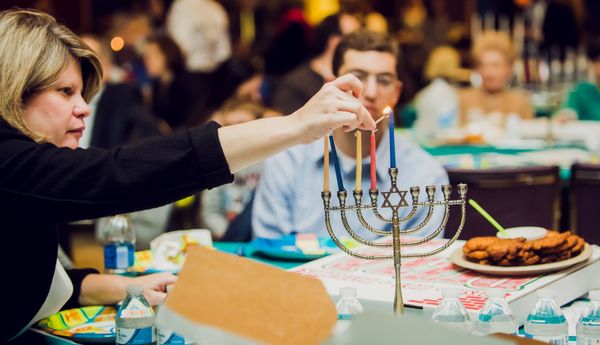
By Rabbi Debbie Pine, Vice President, Strategic Philanthropy This week during Chanukah, we are blessed with multiple opportunities to connect with extended family. In our Torah reading cycle we are reaching the climatic end of the book of Genesis as the drama between the generations comes to a somewhat satisfying close. Just as we are coming together to light the Menorah, we are confronted by the reality that in Genesis, our ancestors did not get along so well. In fact, the entire book highlights conflicted relationships between siblings, between parents and children, and between children and grandparents in every generation throughout this book. What do these troubled relationships come to teach us just at the moments when our children come home from college and we find ourselves with multiple generations under one roof? The Torah gives us a good dose of reality that family life is complex, reminding us that it is okay if our own families echo the challenges and complexities of the relationships in Genesis. Disagreement and conflict is a natural part of family life that can lead us to growth and deep thought. In our own Baltimore raised Sharna Goldseker’s recent book Generation Impact: How Next Gen Donors are Revolutionizing Giving, she emphasizes that this is a golden age of philanthropy. With the high-tech boom and other variables, 20- and 30-year olds have a remarkable capacity to give, unlike generations before. Goldesker beautifully points out how the landscape of philanthropy is changing, mostly for the better, with thoughtful, engaged young donors who truly want to impact the world. Goldseker describes dynamic families, some even within our own community, who are being led thoughtfully by the next generation toward new approaches to giving. As we look toward a new chapter in philanthropy in the world, I hope that we can learn from our ancestors that we can grow and change, as generations challenge each other, and the next generation leads the former. When you and your family come together to celebrate and give together at this most important time of year, may the messages of Torah, as well as the wisdom of the next generation, inspire us toward creativity, openness and impact. Reach out to Rabbi Debbie Pine, 410-369-9282, if you want to start a dialogue with your family, bringing generations together for a shared philanthropic purpose.
|
|
|
Baltimore Educators Mission to Odessa
|
|
|
|
|
Thursday, November 16, 2017
|
|

By Neil Rubin ODESSA, Ukraine – What does a dancing and colorful animated dreidel, young girls performing a Ladino dance from the Ottoman Empire, and a smiling 90-year-old watch repairman with one tooth have in common? They are fruits of the proverbial labors of the Baltimore-Odessa partnership, one that sees The Associated system fund an array of programs and facilities for a community slowly but optimistically emerging from seven decades of Soviet communism, Nazi genocide and now two decades plus of national self-rule wrapped in declining life expectancy and legendary corruption. An intensive day on the Baltimore Center for Jewish Education mission for educators has brought to fore ideas and energy for cooperation, particularly for the children of the communities. Talk among colleagues from both regions included simultaneous projects, joint websites, travel, competitions, book sharing and more. But first, the scenes painted above. The dreidel demonstration came during a visit to the ORT Zhabotinski School #94, named for Vladimir “Ze’ev” Jabotinsky, one of the city’s many significant Jewish figures from the late 19th and early 20th centuries Indeed, if he can, the charismatic writer and ultra-Jewish nationalist is smiling at the Israeli flags adorning the school, let alone the creative Hebrew lessons and exchanges with Israeli students. As for the Ladino dance, it came at the JCC Migdal Center, which like many non-profit efforts here sits in a large former mansion whose main entrance is at the end of an alley and not visible from the main street. There are similar approaches to the Holocaust Museum and the Jewish History Museum – both of watch cram a remarkable array of artifacts into their hodgepodge layouts. And that smiling watch maker? At age 90, he volunteers at Hesed somewhat of a JCC for senior citizens and housed at the Beit Grand JCC. He sits in a small room and repairs watches and other items that seniors bring him. That's because they do not embrace the technological gadgetry of the era and can no longer finds parts to repair the items upon which they depend. Finally, a Jewish trip to Odessa would not be complete without a visit to a kosher restaurant, pre-schools and the addresses of the titans of classic Jewish literature: personalities such as Chaim Nachman Bialek, the Hebrew poet laureate of the Jewish people whose poem about the Kishinev pogroms rocked the Jewish world; Sholem Aleichem, whose Yiddish stories of village life have entertained multiple generations; Jabotinsky, who organized Russia’s first Jewish defense leagues pogroms mounted in Russia; and so many more. It’s a complicated land, as is all of Jewish Eastern Europe. Scratch the surface and one finds nostalgia not for communism, but for the security that it brought. While there is much talk of young people leaving, one also hears stories of families who say that, well, they are not Jewish, but their parents or grandparents were. Some of them then get involved in JCC and other programs due to quality and slowly creep towards the label “Jew,” one once so natural in a city about 40% Jewish when the communists took power exactly a century ago this month. It all breathes new life into the once well-known Yiddish expression: “Ah, to die in Odessa.” In other words, Today, Odessa indeed is heaven on earth for not only those who love the Jewish past, but for those who understand the impact of aiding an increasingly vital small community reemerging in large ways. Neil Rubin, Ph.D., is Chair of the Jewish History Department at Beth Tfiloh High School.
|
|
|
Thanksgiving: A Time of Food, Family and Philanthropy
|
|
|
|
|
Tuesday, November 14, 2017
|
|

By Lauren Klein, Assistant Vice President, Funder Services It’s hard to believe Thanksgiving is right around the corner. If your holiday table is like mine, it’s abundant with food. We often go around the table sharing with each other what we are grateful for in our lives. What if we took it a step further this year and had meaningful conversation about food insecurity and hunger in our country? Repair the World, a national organization that engages young adults in hands-on volunteering and learning about social justice issues, has created discussion guides to spark conversations about food insecurity and Jewish values. Their guides contain suggested questions and readings about this issue, and you can learn more about it on their website, https://werepair.org/thanksgiving. The holiday season propels me even more to find meaningful opportunities to teach my children the important of giving back to those in need. Jewish Volunteer Connection (JVC), a program of The Associated, has launched the Casserole Challenge. They are collecting casseroles to be donated to families in Baltimore City. I am planning to make a few casseroles with my family and encourage you to learn more about this project at https://jvcbaltimore.org/casserole-challenge. Thanksgiving is also a perfect opportunity to share family stories. Sharing stories gives every family member a new and important connection to the past. It also enables you to capture stories, connect generations, and preserve legacies. There are a variety of tools available to help you get started. Being in the age of technology, there is now an app available to make the process of recording an interview easy and accessible. StoryCorps, an organization whose mission is to record, preserve and share stories, has created a free app that I have already downloaded to my iPhone. The app helps users prepare for interviews, and also allows users, if desired, to share it with other family members, including on social media sites. As we gather together to celebrate a holiday rich in traditions around football, food and family, I think it’s also an ideal opportunity to incorporate philanthropy into our rituals. If you would like more ideas, reach out to me directly at 410-369-9278 or [email protected]. I specialize in helping families design strategies for engaging their children and grandchildren in charitable giving.
|
|
|
Three Young Women Talk What It Means to Be Jewish
|
|
|
|
|
Friday, November 10, 2017
|
|

By Rochelle Eisenberg In 2013, the Pew Research Center released a landmark study, “A Portrait of Jewish Americans,” which asked Jews in 50 states what being Jewish means in America today. What it found was that 93 percent of Jews in the Greatest Generation (born 1930-1946) identified as Jewish on the basis of religion, whereas only 68 percent of Millennials did. Meanwhile 32 percent of Millennials described themselves as having no religion, identifying as Jewish on the basis of ancestry, ethnicity or culture. Yet, despite the changes in Jewish identity, 94 percent of U.S. Jews said they were proud to be Jewish. What about Baltimore’s Jewish women? As young Jewish families move outside the traditional Jewish zip codes to downtown, Lutherville-Timonium, even Harford County neighborhoods, many still connect to their Judaism, particularly after they had children. These three women talk about what Judaism means to them. LUCY LEIBOWITZ: “I grew up in St. Louis and Chicago. Today, I live in Locust Point with my husband, Steve, and our two young children, Jasper and Finn. Growing up, my family belonged to a reform temple. One of my favorite childhood memories was celebrating Jewish holidays together. We would often go to New York for Passover to spend Seder with my grandparents. When I went to college, I decided to keep kosher. For me, it was something I could do daily that would make me stop and think about being Jewish. It was not so much about following the kashrut laws perfectly, but about being mindful. We now keep a kosher home and enjoy having conversations with our sons about why we do what we do with respect to keeping kosher and celebrating holidays. When we moved to Baltimore, I was looking to connect with other Jewish families. I became involved with the [Macks Center for Jewish Education’s] Connector program when our family attended a Chanukah program hosted by Stacey [Harvey]. Since then, we have attended a few programs with the connectors, including Shabbat morning get-togethers, where we sing songs, eat bagels and mingle. I want my kids to have a strong Jewish identity and be educated about our religion’s rich history. I hope they will be well-versed in holidays and traditions — why we do what we do. We celebrate Shabbat with the blessings and we love how our older son now knows the prayers and has even made challah multiple times. My favorite Jewish holiday is Rosh Hashanah. It is the start of a New Year and both sides of our family gather together. My grandmother makes excellent latkes. She hand grates the potatoes and onions, and I think that is one of the secrets. Another key is that she makes them small and crispy. We often have to convince her that she needs to make more; she always thinks no one will eat all of them, but nevertheless they are always gobbled up. She has shared her recipe, and we’ve tried to make them, but they just never taste as good. Over the years, I have become more observant and our family currently is temple-hopping to find the right synagogue to join in Baltimore. I don’t speak Hebrew fluently so I want to make sure that the prayers are not exclusively in Hebrew so that I can understand what it is being said. AMY AKMAN: I live in Lutherville, MD with my husband, Jared and, daughters, Bryn (26-months-old) and Taylor (newborn). I grew up in Pikesville and my family were members of Beth El Congregation. I went to Hebrew school, had a bat mitzvah and a confirmation. (Rabbi Schwartz also married my husband and me. My husband’s family also belongs to Beth El.) For a while, Judaism wasn’t as important to me as it is now. I remember I didn’t go to synagogue much after high school and wasn’t too involved with my Judaism in college and as a young adult. Now that I have kids, I’m becoming involved again. My family celebrates Shabbat and the holidays. And I’m finding that everyone I know with young families feels similar to me. Many of us took a break, but are coming full circle again. And, we all want our children to go to Jewish preschool. I first got involved with a Connector program when I went to a challah demonstration where we learned about the meaning of challah. I’ve also been to numerous programs from a cooking demonstration around Passover, where we made different kinds of charoset, to Mom’s Night Out. I like meeting other Jewish families who I may not have been connected to otherwise. We also receive PJ Library books. My daughter loves getting PJ Library books. One of our favorites was a book about Rosh Hashanah called Rosh Hashanah is Coming!, which we read every night for three months straight. We also loved Shabbat Shalom. She knew the song and we would sing it together. I really like Rosh Hashanah. It’s the beginning of the New Year. I like the idea of a new start and a chance to reflect on what happened over the past year and think about what I might want to do differently. We try to invite people who don’t have a place to go to our holiday table. One year, we had my husband’s law school friend who couldn’t go home. Everyone is always welcome. Jewish traditions and values are very important to me. I really like that in the Jewish tradition we name our children after those who are no longer with us. My mom and Jared’s dad both passed away and our daughter, Bryn is named after both of them. My mother’s name was Shelley, Jared’s father was Bryan. My second child will be named after my grandparents, with whom I was very close. (Also named after Jared’s uncle… I never got to meet him as he passed away in the early 90s.) DEBORAH LEVI LOWY: I grew up in Baltimore County and went to Krieger Schechter Day School. I live in Baltimore City with my husband, Eric, who was confirmed at Temple Oheb Shalom, and our two young sons. I became involved with the Connector program because my family wanted to connect to other Jewish families and they offered downtown programming. The Connectors are a family-oriented Jewish experience. The relaxed environment and the warmth from the connectors and families feels like a local chavurah group. Families come as they are (chaos and all) and can enjoy a Shabbat or Havdalah with other families in the community. We see being Jewish as our ethnic background and culture. Both of our families were uprooted and heavily impacted by the Holocaust. Therefore, it is important to us that our boys know who they are, where their family came from and why. We want to instill Jewish values in our children. We want them to grow up, be good people, and help this world. Of course, no different than any other parent. I love a good bagel, lox and shmear. And I enjoy Break fast...not a holiday, I know...but it is when I can get my good shmear. This article originally appeared in Jewish Women, a partnership publication with the Baltimore Jewish Times.
|
|
|
Women Take Charge: Roz Cornblatt
|
|
|
|
|
Friday, November 10, 2017
|
|

By Sara Malinow For many, running a 5K is a rather challenging feat. For 73-year-old Roz Cornblatt, it was a goal that she was determined to complete. In June of 2016, Cornblatt, proud mother, grandmother and Edward A. Myerberg fitness center regular, crossed the finish line of the Charm City Women’s Classic, to the rousing cheers of family and friends. Euphoria is the one word Cornblatt used to describe that special moment. Recalling her lack of athleticism in school and her not-so-strong back, Cornblatt never saw running a 5K in her future, let alone finishing in 11th place for her age group. “I would have taken 20th place,” Cornblatt jokes. “But it’s not about where you finish, but that you finish.” Cornblatt first got the idea to run the race from Ross Wilson, her personal trainer at The Myerberg Center. For the past two years, she’s worked with Wilson, coming in three days a week for one-hour sessions. He inspired her to be active each day and even ran the race with her, side-by-side, from start to finish. “He changed my life completely with exercise,” Cornblatt says of Wilson. “I never would have thought I could have done it if it weren’t for Ross.” Besides training on her own, walking around Meadowood Park or her neighborhood every day, Cornblatt owes much of her fitness success to The Myerberg. “The Myerberg had a HUGE impact,” Cornblatt recalls. “It’s not just a gym, but a gym for seniors, and that makes a difference.” She remembers going to work out and seeing the trainers helping 80- and 90-year-olds reach their fitness goals. It was moments like these that inspired Cornblatt to set her own fitness goals and work to achieve them. One year later and Cornblatt has already run another 5K and plans to start training again for another. She says that despite daily feelings of doubt, she kept going to prove to others and to herself that she could achieve her goals. “Just do it,” she says. “Get off the sofa and move your body because the feeling is absolutely wonderful.” Learn more at myerberg.org. This article originally appeared in Jewish Women, a partnership publication with the Jewish Times.
|
|
|
Women Take Charge: Meet Sarah David
|
|
|
|
|
Friday, November 10, 2017
|
|

By Sara Malinow Attorney and new mother Sarah David was never one to get down on the floor with a group of kids and start teaching games. However, that is where she found herself when she visited the Kids Safe Zone in Baltimore City with The Associated’s Young Leadership Council (YLC). That visit caused her to realize the enormous potential of young children and the difference she could make in their lives. With the help of JVC and the Kids Safe Zone, David created a VolunTeam program that educates these youngsters about various job possibilities. Underlying this mission is the realization that many of these youngsters have little exposure to the wide range of jobs in our communities. Initially, David’s VolunTeam consisted of fellow prosecutors, members of the Baltimore City Bar Association, her YLC classmates and her own network. Over a six month period, they met bi-weekly with the group, talked about what they do and worked together on a mock trial that showcased a real world scenario. Through her newfound connections and growing network over the past year, David, with the help of VolunTeam lawyer, Mark Edelson, has since expanded its VolunTeams to include other professionals, such as dentists, nurses, financial workers, even Under Armour employees. “The idea is to try to expose these kids to as many jobs and opportunities as possible,” David says. “Networks are so important when it comes to success and we really want to build that for these kids and show them that ‘we have a connection for you.’” David has always been a volunteer, whether as an undergraduate student at Johns Hopkins University teaching civics in schools, tutoring English for Sudanese refugees while living in Cairo, mentoring children after school while working in the Counterterrorism Division of the New York City Police Department or tutoring at a Maryland prison for the Goucher Prison Education Partnership after law school. However, it was the children she met at the Kids Safe Zone, while simultaneously working as a prosecutor on a case that took place in the same neighborhood as the Kid Safe Zone, that inspired her to create a program where she could also make a lasting impact. Now a mother to a five-month-old, David hopes to expand the VolunTeam further and provide these children with inspiration from as many occupations and outlets as possible. “Every time I go, I’m impressed, excited and motivated by these kids and it is exciting to see what they take out of it each time,” she says. To learn more about Sarah David’s VolunTeam contact her at [email protected]. Go to jvcbaltimore.org for volunteer opportunities. This article originally appeared in Jewish Women, a partnership publication with the Jewish Times.
|
|
|
You Gotta Have Friends!
|
|
|
|
|
Friday, November 10, 2017
|
|

By Carol Sorgen “What would life be without friends?!” exclaims Randy Jacobs. “I’d be at a loss without my family and friends,” continues the 64-year-old Jacobs, who has known her best friend, Pam Schneider, virtually since birth. The two are just six months apart in age, grew up as next door neighbors, and now live around the corner from each other in Northwest Baltimore County. Not only are Jacobs and Schneider best friends, so too are their daughters. Though Jacobs is long divorced and Schneider long married, that makes no difference in their relationship. “I’m one of the family,” says Jacobs. The two families even take an annual beach trip together every summer (though these days, with everyone’s busy schedule, it’s usually just the adults). “She is my go-to person,” says Jacobs, director of operations at the University of Maryland School of Dentistry. “She knows everything — and more — about me, and vice versa. She’s my rock.” The two “besties,” as the young folks say, do have other friends as well. Jacobs has two pals whom she first met in fourth grade, and though she doesn’t see them as often as she sees Schneider, when she does, “time melts away.” “And there’s never been a family event that we haven’t shared together,” Jacobs adds. “We’ll always be Ellen/Laurie/Randy…all one word,” referring to her grade school friends. Jacobs has also always made it a priority to make new friends, especially since her married friends are not always available to join her on, say, a trip to Alaska. But it’s her longtime friends who share her history (“they knew me when”), are part of her present, and, hopefully, will be there in the future to share in both the good times, such as a child’s wedding, and the sad times, such as the deaths of parents. “Friends mean support,” says Jacobs. Good friends already know how helpful they can be to one another, but researchers are also extolling the benefits friendship can have on our health, observes Dr. Miriam Alexander, medical director of Employee Health and Wellness at LifeBridge Health. “There is strong evidence that there are many physiological benefits of friendships,” says Alexander, noting that: - Friends can inspire each other to adopt healthier lifestyles.
- Social ties reduce stress, which can lower blood pressure.
- Hanging out with friends lowers the risk of depression.
- Dementia is less common among folks who have strong social ties.
- Support from friends can lower your risk of heart disease.
Developmental psychologist Susan Pinker, author of The Village Effect: How Face-to-Face Contact Can Make Us Healthier, Happier and Smarter, also notes how friendships can give us more than just the “warm and fuzzies.” “Those with a tightly connected circle of friends who regularly gather…are likely to live an average of 15 years longer than a loner,” says Pinker. Pinker also observes that people with active social lives have greater physiological resilience and recover faster after an illness than those who are solitary. She cites a recent study of women with breast cancer which found that those with a large network of friends were four times as likely to survive as women with sparser social connections. What researchers are beginning to find, Pinker explains, is that social contact switches on and off the genes that regulate our immune responses to cancer and the rate of tumor growth. “Social connections are as protective as regular exercise,” says Pinker. “Those with the most face-to-face connections have a two-and-a-half-year survival advantage over those with the same disease who are isolated. “A hug, a squeeze on the arm or a pat on the back lowers one’s physiological stress responses, which in turn, helps the body fight infection and inflammation,” she continues. “Being there in person is key.” Which means, says Pinker, that while Facebook may help you reconnect with people from your past or even meet new friends, carrying on a friendship solely online will not provide you with the same physiological and emotional benefits that a night out with your BFF will. In discussing friendships in these hectic times, Helene Cooper, a therapist at Jewish Community Services, shares concerns that many of us may consider our online friends to be a satisfactory substitute for the friends we used to spend time with in the real world, but have lost touch with over time. “Online relationships have some value, but can’t take the place of spending time with people who genuinely care about us,” says Cooper. “The beauty of friendship is in tending to each other’s needs, sharing good times and hard times, feeling supported and valued, which is enhanced by spending time with the people who matter to us.” “Be open to new friendships at every stage of life,” Cooper says, adding that “you’re never too old to make new friends.” Volunteering (consider The Associated), taking a yoga class, joining a book group, or a knitting club are just a few of the options to meet potential new friends who share your interests. “The beauty of friendship is having people in our life who care about us,” Cooper says. That’s not to say that texting and social media don’t have their place. For community organizer Rachel Kutler, 29, who has spent the past year living in El Salvador, technology has helped her remain in almost constant contact with her friends in Baltimore and across the country. “I’m thousands of miles away but we haven’t lost touch at all.” That’s important, says Kutler, because as she gets older she finds that she treasures her longtime friends even more. “When I was younger, I had a lot of different circles of friends,” says Kutler. “Now I have a core group of friends I’ve known for years. … they’re people I know and love and can count on.” Kutler has also found that friendships go through stages; she’s now at the point where many of her friends have serious relationships — as does she — or are getting married, and they’re learning to incorporate the new partners and spouses into the friendship circle. “Being in a relationship means having friends in a way we haven’t experienced before,” she says. For Melissa Shear Langer, 42, having young children and a busy career as an optometrist influences the amount of time she can spend with her friends. “It’s hard for us to see each other,” she admits, so, like Kutler, she and her friends supplement their occasional get-togethers with texting and social media. While she’d like to spend more face-to-face time with her friends, Shear Langer says they all know that they’re there for each other, in happy times and in tough times. “My friends remind me of what’s important in life...to have fun, to laugh, and to realize we’re not alone.” Getting older can also bring an end to friendships, whether through illness, death or simply a friend moving out of town to begin a new chapter in life. For Nan Rosenthal, a special events planner, the past several years has seen the death of a very close friend she had had since their days together at Camp Louise, the illnesses and deaths of several other close friends, and the relocation out of state of other longtime friends. These difficult changes have made Rosenthal treasure even more the many friends she does have, from camp friends to high school and college friends to friends she has met through her public relations career, her dance, theater and television experience, as well as her board positions and many volunteer activities. “I have a wide range of friends,” says Rosenthal, “without regard to color, gender, sexual orientation, marital status, income or age … I choose my friends because I can trust them, have fun with them, learn from them and enjoy the many facets of these non-judgmental, interesting and loving relationships.” “I feel very lucky to have such loyal and trusted friends in my life,” Rosenthal continues. “They are my support system and I am theirs, for which I am most grateful.” The bottom line, says Cooper, is “to value the special and irreplaceable friends in your life, and to be open to growing in friendship with the new people you come across throughout the course of your daily living.” This article originally appeared in Jewish Women, a partnership publication with the Jewish Times.
|
|
|
Love, Marriage and Religion: How Interfaith Families are Finding Their Way
|
|
|
|
|
Friday, November 10, 2017
|
|

By Sally Wolf After 23 years of marriage to her husband Bill, Susan Fidel, who was raised Episcopalian, decided to take the Introduction to Judaism class, a seminar offered through the Jewish Community Center’s (JCC) Interfaith Baltimore program, prior to her formal conversion. Although she agreed to raise their two children, now 21 and 19, in the Jewish faith, it wasn’t until recently that Fidel felt the need to make it official herself. “The Jewish religion is amazing. I fell in love with Judaism. It’s very simple. As a Jew you should emulate G-d and help out when needed,” Fidel says. “At services, everyone seemed happy to have me and recently made me a cake that read ‘Welcome to the Tribe’ for the Oneg held in my honor after I became Jewish.” Fidel, who sits on the board of her synagogue, was given the Hebrew name Eliana, meaning my G-d has answered. She specifically chose the name for herself because she believes G-d really did answer her prayers. Fidel is hoping to have a Jewish ceremony to celebrate her 25th wedding anniversary. It used to be that marrying outside of your religion was rare, but in today’s society, outside of the Orthodox community, marrying partners with different faith and cultural backgrounds, like the Fidels’, has become more commonplace. Since 2010, interfaith unions have steadily increased; four in 10 Americans reported being in a religiously mixed marriage, according to the findings from the 2014 Pew Forum Religious Landscape Study. This number is up 20 percent from 1960. In 2013, recognizing the importance of addressing the needs of interfaith families, The Associated: Jewish Community Federation of Baltimore and the JCC jointly launched a task force to examine opportunities to welcome, support and connect interfaith couples and families to Jewish life in the Baltimore community. As a result, the JCC launched programming and services to help Jewish families of all backgrounds feel inclusive without feeling different. Now in her third year as program director for the Center for Jewish Life at the JCC, Lara Nicolson serves as a community concierge to those interfaith families who are looking for opportunities to explore and connect to Jewish life. “Couples come to me because they feel the door is being closed elsewhere,” says Nicolson, who is in an interfaith marriage herself. “As a professional, I see the value in helping and supporting interfaith couples make Jewish choices important to them. Finding a way to welcome them and include them in the Jewish community means they will feel more connected.” Navigating marriage and partnership, even in the best of times, often brings its fair share of challenges and compromises. So, what’s the secret to successfully merging families with two very different cultural and religious upbringings? According to Nicolson, communication from the beginning of any relationship is paramount. “For me personally, my husband and I spoke early on about how we were going to blend our families. It was important for us to keep lines of communication open between our families and ourselves. Most importantly however, is knowing that we share common life values,” she says. The Center for Jewish Life at the JCC offers a variety of classes about Judaism and Jewish family living and provides resources and support in a nurturing and inclusive environment to individuals and couples from all walks of life. In 2010, Mark and Debbie Davis enrolled in the Introduction to Judaism class, and two years later, married in St. Michaels, MD. When they first started dating, Debbie, a practicing Christian, was actively involved in a small women’s study group that explored topics of interest dealing with the bible and theology and encouraged faithful conversation. At the time, the women were discussing the book, The Faith Club by Ranya Idliby, a groundbreaking book about Americans searching for faith and mutual respect. It seemed almost beshert then that Mark, a young Jewish professional from the Pikesville area, came into her life. “Mark wanted to impress me when we first started seeing each other so he read The Faith Club in one week as a way of connecting to me through participation in our discussion group,” Debbie recalls. “I would represent the Jewish faith and answer the group’s questions that I knew and I followed up later on those that I wasn’t sure of myself,” Mark adds. According to Debbie, Mark instantly won them over and the two continued to challenge each other to personally apply the lessons they learned to daily life. This openness to inclusivity laid the foundation for what would become the cornerstone of their relationship — a union based on respect of their commonalities, as well as their differences. “We never look at it as who is right and who is wrong,” explains Debbie, “but rather what can we learn from one another so we can grow stronger together.” “We were then, and we are now, two people of faith with different religions. We feel lucky to have our families, on both sides, be supportive and open,” says Mark. Both Debbie and Mark feel connected to Interfaith Baltimore and are working with Nicolson to help expand the program’s resources. They are looking forward to participating in the Love and Religion class, a program designed for all life cycles, and continuing to network and learn from others on similar paths. Today, one-quarter of millennials (27 percent) say they were raised in a religiously mixed family. Recognizing the impact this can have on extended family members, particularly grandparents, makes programs such as those offered at the Center for Jewish Life even more relevant. Sharyn Stein, former director of the JCC’s preschool and kindergarten program, served as a facilitator to one of the early “Grandparents Circle” seminars. Stein, a recently retired school counselor and mother of three adult children — all of whom are in mixed faith marriages — stressed the importance of keeping an open mind. “It’s important to judge the choice of your child based on what you see in front of you, not by religion,” says Stein. “Get to know why your child chose the person they chose and have faith in your child.” The interfaith grandparents program today helps empower participants to share with their children and grandchildren their Jewish traditions and values in a loving and open manner without crossing boundaries. The three-session seminar provides support to Jewish seniors who may need guidance in dealing with sensitive issues regarding religion, heritage and culture. Stein says in her family they approach the holidays with a huge amount of sensitivity. “We try to make sure everyone is included and participates in all festivities, perhaps with a different cultural slant,” she explains. “It is important to all of us that diversity and acceptance be part of our value system and we respect everyone’s differences.” Visit the interfaith website at interfaithbaltimore.org for more information or questions about programming, resources and support. This article originally appeared in Jewish Women, a partnership publication with the Jewish Times.
|
|
|
Packing a Philanthropic Punch: Women as Influencers
|
|
|
|
|
Friday, November 10, 2017
|
|

By Melissa Gerr Twenty-first century women are a force to be reckoned with, wielding more financial power and holding high profile leadership roles now more than ever before. That status extends into the world of Jewish philanthropy too, where women’s giving is still “the jewel on the crown” of federation contributions, according to Andrea Wasserman, founder and president of Social Profit Ventures. For now, Wasserman says, conventional outreach strategies still work to keep women engaged, citing data from her nationwide delve into women’s gift giving trends. But it seems their daughters — the next generation of benefactors — approach the experience of “giving” within a community differently. She asserts institutions might be well served to customize philanthropic involvement so that younger women will stay involved. Emily Taylor is a case in point. The mother of toddler twins, Taylor opened her audiology practice in 2013, but didn’t simply hang up a shingle and invite patients in. She set out with the additional mission of giving back to the community. “I didn’t know what that would look like at the time, I just knew that was important to me,” she says. Now, Taylor Listening Center donates refurbished hearing aids to those for whom cost might be a barrier. Thy also donate the funds from every hearing aid test they perform to a different nonprofit each month. Recently, Taylor added The Associated: Jewish Community Federation of Baltimore’s collaborative giving fund, the Jewish Women’s Giving Foundation (JWGF), to her philanthropic list. A giving circle that empowers women as funders, decision makers and agents of change, JWGF members each contribute the same amount to a community fund, and each woman has an equal voice in directing the grant making decisions. JWGF focuses its grant-making on women and children. Taylor and her husband, Ross, give as a couple “but I wanted this to be a check [to JWGF] from me. I was excited to pick something that’s really important to me, making the decisions and seeing where [my donation] went.” Amy Harlan, a serial volunteer, a Lion of Judah level donor and 10-plus-year JWGF veteran, agrees. “JWGF is like, ‘ok team, we’ve got all this money, let’s make something happen,’” referring to how the group leverages the women’s donations into a larger sum. She loves going on visits to see nonprofits’ work and describes the caliber of women in the group as “intelligent and thoughtful.” But it’s important too, for Harlan to “get her hands dirty,” and she does, quite literally, volunteer gardening with aphasia patients. She also gives rides to seniors through CHAI’s Northwest Neighbors Connecting. “I like to spend my volunteer time with organizations that pull at my heartstrings and hopefully make a difference,” says Orlee Engler Kahn, a Jewish Community Services board member and its Associated liaison. Kahn also negotiates giving with her husband, Jeffrey, and says, “I think it’s very empowering, as a woman, to give as an individual. Even when you’re married, it’s important to make some philanthropic decisions in your own name.” A graduate of Chapter Two, The Associated’s 10-month educational and engagement program, Kahn is also the director of planned giving at the Kennedy Krieger Institute, so she offers a bilateral perspective. She notices women, including herself, gravitating toward philanthropy that “concerns families, women, children, education, domestic abuse and other issues that affect those populations.” “What I also see is women assuming more leadership and taking charge of their philanthropic dollars. With their own portfolios and their own investments, women are recognizing how they can truly affect change with their philanthropy and their resources,” she says. But, heeds Wasserman, “younger women who have more discretion and influence of how money is spent are saying, ‘I want my influence to be felt, I want my leadership to be felt. … The gift is emblematic of a commitment that I and my family are making, but I’m more than just a women’s gift.’” Wasserman also cites differences between men’s and women’s giving as “transactional versus relational,” so offering opportunities for deeper involvement to decide where dollars go is a big appeal all around. She also lauds federations for “building a sisterhood of women doing great things in the Jewish world,” from which Taylor feels the effects. “I’m learning from them and learning other ways to give back,” Taylor says. “And they’re busy women who are making time to do this too, because [giving back to the community] is so important to them.” Above all, “I think it’s important that everybody give,” Harlan says. “Whether you’re a millionaire or someone who’s struggling and can only give a little bit, it feels like you’re contributing to the greater good.” This article originally appeared in Jewish Women, a partnership publication with the Jewish Times.
|
|
|
Meet Sally Davis
|
|
|
|
|
Monday, November 06, 2017
|
|

In the excitement and anticipation of gift opening, we can all shamefully admit that the card, the most genuine and personalized part of any gift, is often the last thing on our minds in the birthday gift ripping race. But, for those living with so little, it is often not what is beneath the wrapping, ribbons, bows or cards that is important but simply the wrapping, ribbons, bows and cards themselves. For VolunTeam leader Sally Davis, it was this experience that fueled her desire to celebrate those who often go uncelebrated. Davis, a Philadelphia-raised, Goucher-graduate, part-time dentist and proud mother of two, started a VolunTeam effort through Jewish Volunteer Connection (JVC) to provide birthday parties to children living at the Sarah’s Hope Hannah More shelter. Her inspiration came from an article she read in a Southwest airplane magazine titled, “Birthday Party Project.” She described it as a piece about birthday parties at homeless shelters that are devoted to changing a child’s life. With several years of involvement, service and leadership under her belt, having been a part of ACHARAI cohort V, on the board and as the chair at Goucher College’s Hillel, a volunteer at Beth Tfiloh, and a board member and part of the VolunTeam at JVC, she reached out to Ashley Pressman and Erica Bloom to jumpstart her idea. Luckily, Bloom had a contact at Sarah’s Hope shelter and reached out to see if this was a concept that could be actualized. After months of preparation, coordinating with the shelter and approaching the community for donations, Davis and her VolunTeam held their first birthday party for those celebrating July birthdays at the Sarah’s Hope shelter. The party was filled with decorations donated from area retailers. Davis’ VolunTeam, whom she calls her ‘Party Pals,’ provided each child with a goodie bag filled with toys and treats. Davis recalls the smile on one birthday boy’s face when he received his very own present with a card reading “Happy Birthday Chris” in big, bold letters. “He was so excited his name was on it,” Davis remembers. “It wasn’t about what was beneath the wrapping but the fact that we had made him feel special.” For Davis and the other volunteers, that was the moment that validated all their time and effort.
|
|
|
Niki Barr Talks About Myerberg’s New Brain Fitness Class
|
|
|
|
|
Friday, November 03, 2017
|
|

For the past five years, Niki Barr has worked at the Edward A. Myerberg Center as a personal trainer for older adults. During this time, she’s gained numerous certifications to help her adapt exercise to meet the specific needs of her clients. For example, she is trained to instruct Rock Steady Boxing designed for individuals with Parkinson’s disease. Recognizing the prevalence of dementia and Alzheimer’s disease, Barr realized the huge need to promote physical activity to improve brain health. This summer, Barr became an Alzheimer’s disease prevention and intervention specialist with the Medical Fitness Network and Alzheimer’s Research and Prevention Foundation. The program, which focuses on brain health, spurred her to introduce brain fitness classes to The Myerberg Center to help members prevent or slow the progression of dementia. It’s one of the few such programs in the region. What did you learn this summer? We know that exercise is so important to brain health, but there is so much more we can be doing to prevent dementia. Research has shown that dementia prevention should focus on four key areas – diet, stress management, exercise and brain stimulation. For example, clinical research has shown that practicing relaxation techniques, specifically Kirtan Kriya, for 12 minutes a day activates parts of the brain essential to cognition. I heard that Myerberg is offering a brain health class that will include these four key areas. This 60-minute class, which will be held for 16 weeks, is unique in that it combines many of the components shown to preserve brain health. The class will include physical exercises and brain aerobics to improve neuroplasticity. There will also be a social component, which is a big part of brain health. What's the social component? We will encourage participants to interact and be social. If participants don’t currently volunteer, we will recommend local places to volunteer, as this is not only another social outlet, but it gives purpose and stimulates mood. Who is this class good for? Not only is this class good for older adults who want to preserve their brain health, but it’s great for those at risk of developing dementia and their loved ones. For those who have been diagnosed with early-stage dementia, this class may prevent the dementia from progressing as quickly. What else should we be doing to prevent Alzheimer’s? Diet is also very important. The Mediterranean or DASH Diet are healthy ways to eat. Walking is also great and it is recommended you walk at least 20 minutes a day. Research shows that walking with friends and talking keeps the mind stimulated. The brain fitness class will begin in January and registration will open in December. Go to Myerberg.org or call 410-358-6856 to learn more. The Myerberg Center is a program of CHAI, an agency of The Associated. This story originally appeared in the November issue of JMORE, a new publication that tells the vibrant story of Jewish Baltimore. Read today’s issue!
|
|
|
What to Expect from Your Infant Toddler Care Provider: A Day in the Life
|
|
|
|
|
Tuesday, October 31, 2017
|
|

A day in the life of an infant or toddler should be full of joy and wonder. When you arrive at your chosen childcare facility, check in and greet your child’s teachers. Inquiring providers will want to know: is everything ok with your child’s health, how was your child’s night, do you have any daily scheduling notes – for napping, feeding -- that you wish to share? The arrival and greeting at your child care center is of critical importance – here is when your child learns to separate from you and integrate into the group. Separation is a process, and not always an easy one. Following greetings and parent departure, your child may participate in feeding and engage in some free play with friends. He or she may also nap if necessary. This is always a great time for your provider to encourage self-help skills such as holding the bottle, tummy time, rolling over and sitting up. Sensory activities may often take place in the morning, as well as throughout the day. These may include exploring snow or crushing leaves. Or, your children explore a variety of new textures such as tape, sandpaper, warm or cold water, or ice cubes. They might finger paint or explore musical instruments and play with shakers that make different sounds. All of these activities are great for your child’s brain growth and development, experiential learning, making sense of the world around them, as well as building self-confidence and independence. Further opportunities for brain development, routine building, socialization, group participation and individual exploration abound with singing, puppets, instruments, music and movement. For these occasions, providers often try to keep the child with the group but they are allowed to explore on their own if they so wish. The provider’s goal, throughout the day, must be to have your child feel secure in an environment where his/her needs are met. Taking time out for gross motor activities are also so important. Your provider should encourage lots of developmentally appropriate activities that enable your baby to lie on their tummy, move their head from side to side, roll, scoot, crawl, pull up, reach for objects, walk, pick up toys, fill and dump. Anything goes: rolling on a yoga ball, clapping, dancing! Your child will develop at his/her own rate while working on appropriate milestones, with support as needed. Your child’s observation skills and sensory experiences should also include a great deal of outdoor exploration time, such as crawling or walking in an appropriate playground. This provides a great change of scenery, fresh air, and an opportunity to explore the environment. Children learn through play – so let them play! Sharon Seigel, interim director of the Stoler Early Childhood Education Center of the JCC of Greater Baltimore, is excited to welcome parents to the Stoler’s new Infant Toddler Center opening November 1, 2017. Seigel’s vision is “to create a community where teachers, children and families grow together, a community based on mutual respect, joy and wonder.” The J’s new infant/toddler program will be for children ages 3-24 months. It is a Maryland State Department of Education licensed school, staffed by MSDE-certified teachers and features beautiful, state-of-the-art furnishings. It is designed to provide seamless transitions to preschool. “Infant and toddler providers, here and elsewhere, know that each child is unique, and that their strengths, needs and interests must be addressed through an integrated, developmentally appropriate curriculum designed to promote positive self-esteem,” says Seigel, “It is our philosophy that learning through play, coupled with hands on experiences, creates a caring community of learners.”
|
|
|
New Baltimore Ashkelon Volunteer Team to Provide Help During Israeli Crises
|
|
|
|
|
Friday, October 27, 2017
|
|

When Scott Goldstein, Captain of the Pikesville Volunteer Fire Company, got the call from the director of U.S. operations for Israel’s Emergency Volunteers Project (EVP), he knew immediately what he had to do. He quickly packed his bags, cleared his schedule and within 24 hours was on a plane to Israel, prepared to fight the fires raging throughout the north of Israel. Goldstein, who is the EVP regional coordinator for Baltimore, will never forget the power of working alongside Israeli and U.S. first responders, 7,000 miles from home. Recognizing that Israel is a small country with limited resources, he knew that every firefighter made an enormous difference in the outcome and was grateful for the support of The Associated, which funded the deployment. “In Baltimore County, in times of crises, we can call on other jurisdictions like Baltimore City or Anne Arundel County to help out. Yet in Israel, there is no one else to call upon. That’s why EVP volunteers are so critical,” says Goldstein. This fall, firefighters, healthcare professionals (physicians, nurses, paramedics, physicians’ assistants) and community members are invited to become certified by EVP so they too can join a new Baltimore-Ashkelon Emergency Response Team, ready at a moment’s notice to respond to any crises in Ashkelon and throughout Israel. It’s all thanks to a grant by The Associated’s Baltimore-Ashkelon Partnership, which connects Baltimoreans to their counterparts in Ashkelon, Israel. If deployed, the Baltimore team will work closely with the community and their peers in Baltimore’s sister city, with medical professionals assigned to the Barzilai Hospital there. “We saw this as a wonderful opportunity to build upon the people-to-people connections between Baltimore and Ashkelon,” said Gail Green, funding chair of the Baltimore-Ashkelon Partnership. “While many of our programs in the past focused on connections between kids and teenagers, this is an exciting opportunity to connect adults from the two communities.” “When crises arise, many people want to do more than just give money,” adds Adi Zahavi, EVP founder and CEO. “This is a chance for them to put their feet on the ground, take action and save lives.” To become certified, participants must attend a day-long training on November 19 at the Carroll County Public Training Facility. The training will be conducted by emergency personnel from Ashkelon and across Israel, including medical professionals from Barzilai Hospital in Ashkelon, EVP trainers, senior officers of the Israel Defense Forces (IDF) Search and Rescue teams and firefighters from the Israeli Fire and Rescue Service. It will include an overview of Israeli emergency protocols and emergency work methods as well as hands-on simulations, geared toward each professional group in order to certify the volunteers as emergency responders in Israel. In addition, for the first time, EVP will create a mock “destruction site”— a rubble pile to simulate an earthquake or bomb—and professionals will work together in a critical search and rescue operation. This simulation, led by the IDF Search and Rescue officers, is expected to become a model and replicated in EVP trainings across the country. “We work closely with the Israeli government who know that they are getting well-trained volunteers who can hit the ground running when they arrive,” says Billy Hirth, U.S. chief of operations for EVP. Zahavi adds that the organization coordinates with U.S. government entities like the American embassy, the National Guard and others when the first responders are activated for deployments to Israel. EVP was established in 2009 to create trained and certified volunteer teams that will deploy to Israel in times of crises. Since then the non-profit organization has brought over 65 deployments to the State of Israel, during conflicts such as Operation Protective Edge, the Gaza conflict, and Operation Fire and Water, the 2016 fires. EVP currently operates in nine U.S. communities from California to New York. According to Goldstein, Baltimore’s team will be the second predominately Jewish volunteer group in the country. This speaks volumes about the various religions represented in the organization. Goldstein, cannot say enough about how grateful he is that The Associated is supporting this project. “I see this as a natural partnership between two organizations who are working toward a similar goal – to benefit and protect the State of Israel.” Adds Green, “For anyone who has a love of Israel, this is an amazing opportunity to really make a difference and save lives.” To learn more about the Baltimore-Ashkelon Emergency Response Team and to register, please click here.
|
|
|
Baby Boomers and Depression
|
|
|
|
|
Wednesday, October 25, 2017
|
|

By Lori Lickstein, MSW, LGSW
Therapist, Jewish Community Services, an agency of The Associated: Jewish Community Federation of Baltimore Did you know that one of the most chronic conditions that baby boomers are diagnosed with is depression? In fact, more boomers suffer from depression than hypertension, according to the National Institute on Mental Health (NIMH). Depression is often thought of as an invisible disease, yet it takes many forms such as insomnia, relationship difficulties, lack of hope and joy. Factors contributing to baby boomer depression include empty nest syndrome long work hours, reduced chances for career advancement, caring for children, grandchildren and elderly family members, health issues, worries about lack of resources for retirement, and isolation. As people age it is natural to look forward to retiring and focusing on things that are pleasurable. Yet, a recent study by the Institute of Economic Affairs found the likelihood someone will suffer from clinical depression increases by 40 percent after retirement. Aging includes physical changes, life changes and male and female hormonal changes all affecting mood and mental health. So, what can be done to head off depression as people age? It is natural to become distracted focusing on endless to do lists rather than being present in the moment. The challenge is finding a way to slow down. - Get enough sleep at night. Sleep hygiene is as important to our mental health and physical health as grooming and good nutrition, so create a sleep routine which includes turning off electronics at least 30 minutes before bed.
- Eat well-balanced meals. Skipping meals and poor nutrition can negatively impact health in many ways, both mental and physical.
- Avoid alcohol at least six hours before sleep. Alcohol prevents REM sleep, aggravates breathing problems and causes dehydration.
- Get up, get dressed, and get moving. Taking a daily walk increases circulation and releases hormones that make you feel better. Try some form of physical activity even if you can’t get to the gym.
- Get creative and explore interests. Take a trip, start writing, study photography or explore nature. Seeing the world, or even taking a car ride, helps keep the mind active.
- Reach out to friends or make new ones. Isolation can lead to loneliness and depression. Connecting with others can be exciting and can lead to a sense of community and belonging.
- Volunteer your time. Helping others improves mood and creates a purpose. Many people end up finding themselves by helping others, whether is it with animals, nature or people.
- Take time to be present and mindful. There are interesting and exciting new moments to experience every day. By engaging and being mindful people tend to feel better.
- Forgive and let go. Realize there’s no need to hold onto the pain. Letting go can help find a clearer connection with life and one’s purpose. Baby Boomers need to realize that although life has changed, it can still be worthwhile. It is natural to become distracted focusing on endless ‘to do’ lists rather than being present in the moment.
Concentrate on the here and now so that you’re not just hearing someone, but listening to them. Being present leads people to learning more about themselves and becoming a better friend to themselves and others. Jewish Community Services, an agency of The Associated, provides a broad range of services that meet the diverse, multi-dimensional needs of individuals and families throughout Central Maryland. We offer guidance and support when you are seeking solutions for emotional well-being, aging and caregiving, parenting, job seeking, employers and businesses, achieving financial stability, living with special needs, and preventing risky behaviors.
|
|
|
It's a Scary World
|
|
|
|
|
Wednesday, October 04, 2017
|
|

Gunfire from a high-rise hotel rains down on a crowd at an open air country music festival on the Las Vegas strip. The horror that played out late Sunday night is a nightmare you hope would never happen. If you’re the parent of a young child, all your protective instincts are on high alert. But when everyone is talking about the shootings, you can’t shield children from hearing about it. How in the world do you explain such random violence to children, and keep their natural fears from overwhelming them? We posed these questions to Loren Walsh, MA, at Jewish Community Services, an agency of The Associated: Jewish Community Federation of Baltimore, who shared excellent advice for parents. Listen: Violent incidents like the Las Vegas shooting that happen in places we normally perceive as safe (concerts, movie theatres, schools, stores) are very frightening to children. You first need to find out exactly what fears your children have.This means listening carefully, without jumping in to interpret or reassure them. Let them express what they are scared of in their own words. After a violent event, children most often worry that it could happen again anywhere, not only in the kind of place where it just happened. They also want to know: “Will it happen to us?” Every child reacts differently to fear or trauma, so talk to each of your children to learn what’s on their minds. Don’t dismiss or minimize their fears. Children also observe our reactions, and they’ll be more upset if we “lose our cool” or convey our own anxiety when discussing a violent event with them, or if they overhear us talking about it on the phone. How we portray the event affects how our kids react. Reassure: Without dwelling on the details with a young child, it’s fine to acknowledge that the Las Vegas shooting is frightening, and that we are sad for the victims, their families and the community. Tell your child that, yes, this did happen, and there are bad people in the world, but such occurrences are rare. Explain that many people are working to keep us safe, including parents, teachers, police, and neighbors. Be available to your child more than usual during the days after the incident to provide comfort and reassurance. Here are some tips: Take control of the information your child is getting and from what sources. All kinds of partial, inaccurate, and skewed information swirls around after a violent incident. Kids pick it up at school, on the playground, in playmates’ homes, as well as in the media. Ask your child, “What have you heard? Do you have questions?” Don’t make the media so accessible to young children. You can turn off the TV or radio, and tell your child the news yourself, in words appropriate for his/her ability to understand and absorb it. Think about how you would want bad news broken to you: with empathy and sensitivity. If you choose to allow your child to watch or listen, don’t leave him alone. Watch together, explain what is happening and talk about it. If your child is quiet, look for opportunities to bring up what has happened. Just because a child isn’t talking or asking doesn’t mean the child is unaware and unaffected. A good conversation starter is: “Have you heard about…?” or bring it up in the car, when you are together in an enclosed space. Look for signs of stress, especially changes in usual behavior.Watch for indications that your child may be fearful or anxious, such as trouble sleeping, bad dreams, changes in appetite, not wanting to be alone in the dark, difficulty concentrating, etc. Seek professional help if these problems persist and interfere with your child’s normal functioning, by consulting a physician, psychologist or social worker. In a scary world where we can’t control everything that happens, one thing we parents can do is to make home a safe haven for our children. Communication is the best form of reassurance. And don’t forget to give lots of hugs, no matter how old your child is.
|
|
|
Navigating School After an Adverse Life Event
|
|
|
|
|
Tuesday, October 03, 2017
|
|

Back to school season can be incredibly stressful but becomes even more complicated when a child is confronting an adverse life event. Whether it’s divorce, abuse, bullying or even a move to a new home, these events can impact school success. Experiencing traumatic events is surprisingly common. According to a report by the Center for Healthy Kids and School, 68 percent of children and adolescents experienced at least one potentially traumatic event by age 16, and data suggests that every classroom has at least one student affected by trauma. Unfortunately, research shows that these adverse life events impact behavior. Children may demonstrate a wide range of symptoms including irritability, aggressiveness and withdrawal. As many of these symptoms can mimic other behavioral diagnosis such as ADHD (attention deficit hyperactivity disorder) it’s important that parents inform teachers of what’s happening in their child’s lives to help them better navigate potential school issues. “Parents don’t need to let teachers know all the details of their family life,” explains Stacey Meadows, manager of child therapy services at Jewish Community Services (JCS), an agency of The Associated: Jewish Community Federation of Baltimore. “But by letting teachers know that there may be things going on in a student’s life that could cause he or she to be more irritable or withdrawn, and by providing them with insights into what works at home, it can help teachers be more understanding and respond more effectively to a situation.” “If something comes up in class, a teacher can be a student’s ally,” adds Shmuel Fischler, director of outreach and advocacy at CHANA. “And if they know that something is going on in the home, they can be responsive when a child may need to take a break, is clingy, acts out, or needs to step out of the classroom if a topic being discussed is distressing.” Three years ago CHANA partnered with the Magen Yeladim Safety Kid program to address how to protect students from abuse. One component of the program included training teachers and administrators in Jewish day schools on signs of trauma and abuse. Yet parents need to remember that teachers are not therapists. If a student is struggling because something is going on in his or her life, parents should seek professional help. Therapists also can become allies if the behaviors associated with a situational adverse life event, such as anxiety, becomes chronic. They often are advocates in a 504 plan or IEP (Individualized Educational Plan) to ensure that public school students with a disability receive the specialized services they need. JCS provides experienced professionals who can help children and parents navigate these challenges and CHANA’s Shofar Coalition is a network of therapists trained in trauma and sexual abuse. CHANA also is currently organizing parent support groups for parent(s) of children who have gone through crisis. The first one will take place toward the end of October. For more information go to jcsbaltimore.org or chanabaltimore.org or contact Shmuel Fischler at 410-234-0030 about the parent support groups.
|
|
|
Tammy and Fred Heyman Take on Super Sunday
|
|
|
|
|
Tuesday, October 03, 2017
|
|

From the first time they met, as part of the JCC Softball League, Fred and Tammy Heyman realized how similar their values were. Proud of their Jewish identity, as a young married couple they were committed to making Judaism a central part of their lives. Over the years the couple raised two children, Ethan and Adam, in a Jewish home filled with Jewish holiday celebrations and Jewish education. They also committed to Jewish philanthropy, and this year chair The Associated: Jewish Community Federation of Baltimore’s Super Sunday, the Baltimore Jewish community’s largest fundraiser, on Oct. 29. What shaped your Jewish identity? Fred: I grew up in Baltimore in a traditional Jewish home. My family attended Beth El Congregation and I went to Hebrew school where I became a bar mitzvah. However, most of my youth was spent on the baseball field playing with mostly non-Jewish athletes. It was very important for my parents that I maintained my Jewish identity. Tammy: I grew up in Pittsburgh in a strong Zionist home. Israel was always part of the discussion and my family supported it and made us realize why there needed to be a Jewish homeland. I was the first person in my family to go to Israel – I went when I was 15 – and my world shifted. I fell in love with the country and what it means to us as Jews. Tell me about Israel? Tammy: I love Israel and have been there five times. We went as a family and our children have also been there many times. We also hosted shinshinim (Israeli emissaries) as part of the [Macks] CJE program. You’ve been involved with The Associated for many years. When you talk to your friends, what surprised them most? Tammy: I don’t think everyone realizes how much The Associated touches our community. From the kid on the Maccabi team to the teen involved in leadership programs to the adult who needs help with vocational counseling, The Associated is there. Fred: It’s an organization that literally works 24/7, not just 9 to 5. Every day, The Associated and its agencies are providing lifelines to so many of our most vulnerable community members not just here in Baltimore, but around the world. You are co-chairs of this year’s Super Sunday. Tammy: This is such an important day for Jewish Baltimore. It’s the jump-start to The Associated’s Annual Campaign. I want people to realize that in today’s world of robo-calls and telemarketing calls that are easy to ignore, this call is important to take. The money raised makes a huge difference to our community. Fred: We want you to know that every dollar counts in terms of moving the needle. It is so important for Jews to help other Jews and it is reassuring to know that there is a safety net in our community. Lastly, you’re known for your holiday gatherings? Tammy and Fred: Nothing makes us happier than seeing a table filled with laughter and love celebrating the holidays!
|
|
|
Five PJ Library Books that Teach Values to Your Preschooler
|
|
|
|
|
Tuesday, October 03, 2017
|
|

By Gabrielle Burger, Director of PJ Library and PJ Our Way at the Macks Center for Jewish Education Children are easy to inspire, but sometimes difficult to keep inspired. Here are five PJ Library books with Jewish values that will continuously speak to our children. 1. Bagels from Benny by Aubry Davis offers many values for discussion, including the concept of being grateful, or Hakarat Hatov. When Benny notices that his grandfather does not take a compliment on the delicious bagels and breads in his bakery without thanking G-d, Benny starts thinking of ways in which he can thank G-d, and a wonderful story of gratitude unfolds. We strive to teach our children manners and constantly remind them to “say thank you,” but gratitude is more than that. It is something that children may express with a hug or a smile, rather than words. They may not yet have the vocabulary to express how they are feeling, but their emotions are genuine and clear. As parents we can watch for moments of gratitude and help them name these feelings. 2. Bear Feels Sick by Karma Wilson emphasizes the concept of visiting and caring for the sick, or bikur cholim. The theme unfolds through a group of forest animal friends helping their friend Bear get over a cold. Each friend takes a turn caring for Bear and bringing him food or a blanket. The story demonstrates that this value is something everyone can do. Preschool classrooms often make get well cards for children that are sick, or children call friends who were out of school that day. These acts of kindness towards others enforce the idea that we should try to take care of each other whenever we can. Children understand what it feels like to be sick, and they truly love bringing others joy when they are down. You can help your child package something special to give, like the forest friends. 3. My son once lost his favorite stuffed animal on a plane ride, and I cannot tell you the heartbreak that this caused, especially since it was never recovered. There are many books about losing a favorite toy, but in Found by Salina Yoon, a stuffed bunny is found by Bear, and he is then faced with the question—what can he do to reunite the owner with the lost item. The Jewish values of Hashavat aveidah are very helpful for children to understand. What happens if you start to love this lost toy, but know you have to try to return it? Children engage with this concept of “lost and found” on a daily basis. This book helps children move from only thinking about themselves to thinking about helping others. 4. Another phrase parents say on a loop is “say you’re sorry.” No matter if we do this to help them take responsibility for a mistake or make a hurt friend feel better, this is a concept that is difficult to inspire in young children. In The Hardest Wordby Jacqueline Jules, an extremely large mythical bird called the Ziz makes a mistake and then creates a huge mess. Over and over again Zin tries to fix it, all in an effort to say he is sorry. Instilling in our children the concept of asking for forgiveness, or teshuvah, is not an easy one and one that we must work on regularly. Asking for forgiveness or saying we are sorry is not any easier for children than it is for adults and we can lead by example so this value can resonate with our children. 5. Lastly, the value of staying connected to our family is something that is easy to say but not something we might make part of our everyday lives, especially if we don’t all live close. The Jewish concept of L’Dor V’Dor, or from generation to generation, is one that we find in Rise and Shine a Challah-Day Tale by Karen Ostrove. While playing in the attic of their home, a brother and sister find a piece of paper written in a language they don’t understand They decide to take it to their grandmother for help. It turns out to be the family challah recipe written in Yiddish. During their visit with their grandmother at the “Shalom House,” the kids, their grandmother and others living there make the challah to the delight of all – even grumpy Old Ned! Strengthening the connection between the generations is something of great importance for the continuity of the Jewish people. Even something as simple as a Skype date can anchor the relationship our children and parents or other special older adults have with each other in their lives. I hope that these five books and their values will help bring inspiration to you and your family! If you have any questions about these or any other PJ Library books, feel free to be in touch! [email protected] / 410-735-5004.
|
|
|
Meet Mindy and Jeff, Our Generosity Gala Chairs
|
|
|
|
|
Wednesday, September 27, 2017
|
|

Together, we can make an incredible IMPACT – through our 4th annual Generosity Gala. This year, Mindy and Jeff Rosen have decided to chair the Gala. Learn a little about why they took on this important role: Tell me about yourselves and your family. Are you originally from Baltimore? Jeff is a native Baltimorean, having grown up in Pikesville with his parents and two brothers. Mindy is from Wyomissing, PA, a suburb of Reading, PA (but according to Mindy, she’s from outside of Philadelphia – to each their own). She grew up with her parents and brother, all of whom still reside in PA. We have been married for 15 years and have two children, Evan (10) and Lexi (7). We are an active family – the kids have constant activities (although not too many) and we’re constantly on the move as a family. Evan is a typical boy, with an interest in various sports, while Lexi is also involved with sports as well as dance and cooking. A favorite pastime for our kids is family game night – Evan and Lexi’s favorites include Rummikub (Israel’s #1 exported game!), Qwerkle and Ticket to Ride. We are blessed that Evan and Lexi have a unique relationship – they get along famously and truly enjoy each other’s company. Jeff is a CPA and partner in the business consulting and accounting firm of Rosen, Sapperstein & Friedlander, LLC. Mindy is a mentor teacher for aspiring student teachers at Stevenson University and also a camp consultant with Camp Experts and Teen Summers. Both of us are very active in the community in a variety of capacities. Jeff is currently president of CHAI’s Board of Directors and has been involved with numerous committees at CHAI for about 15 years. Additionally, Jeff has served on various committees within the Associated and is a past participant and co-chair of the Young Leadership Council. Jeff’s other community endeavors include serving on the board of visitors for Towson University and board of governors for Woodholme Country Club. Mindy is currently on the Rabbinic Transition and Search Committee at Chizuk Amuno Congregation and enjoys volunteering through JVC. You’re chairing the Generosity Gala this year! What brought you to this decision? We were honored to be asked to chair this year’s Gala and nobody had to twist our arm. When asked to serve the community and take on leadership opportunities, it’s simply what we do. We were particularly excited by the opportunity to expand the reach of the Gala and build on its momentum as an already successful event. The Gala is a special opportunity to engage Jewish people in a social forum with a Jewish twist. It’s important to foster and celebrate giving when people are accelerating their career, growing their families and developing their personal passions. What are your hopes for the Gala? We hope the Gala will be successful in terms of number of attendees, but also serve to inspire people to get involved or more involved with the Jewish community as a donor and volunteer. At the event, we hope that attendees feel the energy and passion that exists within Jewish Baltimore. We’re in the middle of High Holiday season! Have any special traditions? We make sure our children spend time at synagogue and continue to get exposed to Jewish prayer and rituals. Besides these traditional activities, we visit a pick-your-own farm each year around the holiday season to pick apples. Evan and Lexi enjoy this tradition and we hope they have sweet new years. What does giving to The Associated mean to you? We are very fortunate to live in a dynamic and vibrant community. Giving to The Associated allows us to support this community and give to one place that makes a difference in the lives of so many people. It is cliché to say that we get much more out of our involvement with The Associated than we put in, but it’s true. We know that if we are ever in need, the community will be there for us, so we must be there for the community. Join us for a celebration of doing good, fundraising, dancing and live entertainment from improv comedy group, North Coast. Registration for the 4th Annual Generosity Gala is open now!
|
|
|
We Want People to Know They’re Still Women
|
|
|
|
|
Monday, September 25, 2017
|
|

It started, like so many revolutions these days, with a blog. Breast cancer is a taboo subject in much of Eastern Europe, and women there often feel alone in their struggles against the disease. Bori Halom started blogging in 2012, largely out of a need to break this silence. Soon the platform grew into a support group for fellow Hungarian breast cancer patients and survivors that now connects over 900 women on Facebook under Bori’s motto: “Together, it’s easier.” These words also describe her relationship with Associated partner the American Jewish Joint Distribution Committee (JDC). Her support group is a partner in JDC’s Women’s Health Empowerment Program (WHEP), which works in Hungary and Bosnia and Herzegovina to educate about the importance of early detection, offer mammograms and provide support for women currently wrestling with the disease. “We want people to know they’re still women,” she says. “My main goal is to break down the taboos, to shake the stigma, to end women being gawked at for wearing headscarves or having shaved heads. We never asked for cancer, it just happened.” In partnership with the Susan G. Komen ®, WHEP also provides survivors like Bori with leadership training, empowering them to start NGOs, run peer-support groups and become advocates for better women’s health services. Once a year, Bori’s group gathers at Budapest’s JDC-supported Jewish Community Center for a daylong summit of mutual comfort and support. Women swap stories of chemotherapy and tragedy, remission and resilience. From Zero to Recovery. About 350 miles away, Stoja-Mira Simic is standing adrift in a sea of pink. Growing up in a remote village in the former Yugoslavia, electricity was a late addition to her life, let alone mammograms. Besides, she had always had perfect health. So when a friend told her a WHEP mobile mammogram unit was coming to her village, she went because it was free. Ten days later, she got the results. “I had cancer. I had to keep saying it to myself over and over—I have cancer,” she recalls. A WHEP representative also led Stoja-Mira down the road to recovery, delivering first-aid packages and making sure she never felt alone. “It was as if we’d known each other our entire lives,” she says. Once healed, she learned that women from a nearby town were traveling to Sarajevo for the annual WHEP co-sponsored Race for the Cure ®. She immediately bought a ticket. “When we arrived in Sarajevo, I suddenly saw a sea of 500 other women in pink around me,” she says. “I felt sadness that there were so many of us, but also joy that I’d survived and that my life was saved. I’ll attend the Race every year.” For herself, Stoja-Mira and countless others affected by breast cancer, perhaps Bori says it best: “I’m very grateful to JDC. We started from zero. It’s amazing that they believed in my vision and were willing to follow me.” The American Jewish Joint Distribution Committee (JDC) is a partner organization of The Associated.
|
|
|
The Four Species of Sukkot
|
|
|
|
|
Wednesday, September 20, 2017
|
|

By Rabbi Dena Shaffer, Executive Director, 4Front It has been referred to as a “marathon,” this High Holy Day season. And indeed the flood of holidays that accompanies the transition from summer to fall can often leave us with the same exhilarated feeling that I would imagine 26.2 miles of pounding the pavement might illicit; that unique combination of sheer exhaustion and total fulfillment. After two days of Rosh HaShanah and a day of fasting and pouring out our souls before the Holy One on Yom Kippur, we might feel spiritually depleted, wanting nothing more than to take a long nap and recharge our religious batteries. And yet, at precisely that time, the Jewish calendar provides us with a spectacular array of festivals – Sukkot, Hoshana Rabbah, Shemini Atzeret, Simchat Torah – one after the other, within the space of a week, and each with its own set of rituals, symbolism, songs, foods and customs. Since my arrival in Jewish Baltimore just before this season last year, it has been the ritual of the Lulav and Etrog on the festival of Sukkot that has captivated my attention. There is almost a comical juxtaposition between the exhaustion of the high holy days already behind us and the frenetic energy of waving the four species in all directions – like a second wind at mile 13. There is also beautiful symbolism in this ritual and room for personal interpretation. Midrash Vayikra Rabbah for example, suggests that the etrog, myrtle and willow represent our three patriarchs, Abraham, Isaac and Jacob, while the single date palm, or Lulav symbolizes G-d. By holding the three against the One, we ritually role play our hope that the merits of our ancestors will count for us before G-d and we demonstrate, through the act of waving, our link to Jewish history and our individual place within it. A medieval compilation of commentary called Kad ha-Kemah offers that each of the plants refers to a different body part; the heart (etrog), the spine (lulav), the eyes (myrtle) and the lips (willow), thus suggesting that when it comes to making the world more holy, one must use one’s whole self. But my favorite explanation of these symbols, and the one that I feel is most relevant to our special community, comes from Pesikta D’Rav Kahana, a fifth century collection of Midrashim that were thought to have been preached in early synagogues during the Jewish holidays. Here we discover an interpretation that the lulav and etrog correspond to four different types of Jews. The etrog, because it has both taste and fragrance, symbolizes a Jew who has made both Torah and righteous deeds a part of his life. The palm, which produces a tasty fruit but has no smell, alludes to a Jew who is rich with Torah knowledge but not with righteous deeds. The myrtle leaf, which has a strong scent but no taste refers to a Jew who performs righteous deeds, but has no interest in Torah learning. And the willow, which has neither taste nor scent, suggests a Jew who has neither Torah knowledge nor performs righteous deeds. Our sages, contrary to what we might expect, never articulate that one part of the lulav is better than another, that one type of Jew is preferable to another. Rather, the authors of this passage articulate that one simply cannot perform the mitzvah without all four elements. It is a strong statement for inclusivity, for pluralism, for tolerance and shared existence. For how is this ritual physically performed? Only with both hands, tightly clasped together, clinging to each element so that none should fall from the bundle. The message of the Midrash is clear, it takes all types, tightly held, embraced by both hands, to make our Jewish community. We are blessed here, in this city, to enjoy a Jewish diversity that is unique. From shared sacred space to the wide spectrum of choices with which we are presented, the metaphor of the lulav and etrog from Pesikta d’rav Kahana is acted out and lived in this community more than in any other place I have ever called home. This Sukkot I pray that this ritual may continue to be an ever-relevant metaphor and communal goal for us to strive for. May we be inspired by the four species to live up to the symbolism it suggests – to demonstrate both our celebration of diversity, of individual Jewish expressions and choices, and our unity as a people.
|
|
|
Being Strategic In Our Living And In Our Giving
|
|
|
|
|
Tuesday, September 19, 2017
|
|

A message from Rabbi Debbie Pine, Vice President, Strategic Philanthropy The leaves are starting to turn, it’s finally getting cooler and our marathon of Jewish holidays is almost over. Soon we will turn the page in the Jewish calendar from the month of Tishri with holidays almost every week to Cheshvan. Jewish tradition calls Cheshvan “Mar Chesvan” the bitter month because it contains no holidays and none of the sweetness of the holidays of Tishri. By this time, most of us are ready for a break. The long cycle of the fall Jewish holidays actually extends beyond the full month of Tishri. This cycle of preparation and celebration can teach us how we might approach philanthropy as Jews. The cycle of the Jewish year calls upon us to look forward and be intentional. We do not just show up on Rosh Hashannah and engage in the process of repentance deciding to change our ways by Yom Kippur. The process of repentance for us as Jews is deep and drawn out. It starts in August when the month of Elul begins. We spend the entire month of Elul beginning the soul-searching process of repentance, so that when Rosh Hashannah finally arrives, we are really ready to begin. The Days of Awe stretch all the way through this week of Sukkot with the last day bringing themes of judgment and reflection. From the first day of Elul to the last day of Sukkot, we spend almost two months engaging in the process of reflection, renewal and repentance. The Hebrew word for sin is “chet” which also means arrow. Jewish tradition connects the concept of sinning to aiming at a target and missing the mark, as the arrow inevitably falls short of the bullseye. Assuming we have missed the mark and will continue to do so throughout our lives, every year, we wipe the slate clean and begin fresh. We don’t just step up and start shooting the arrows all over again, but rather Jewish tradition assumes that we first have to set the target. It makes no sense to shoot those arrows without a bullseye or a goal. The first step is carefully setting the target. Elul, Rosh Hashannah, Yom Kippur and Sukkot are not only about confronting our sins, but perhaps even more importantly, this significant time of our year is about setting that target, identifying our own personal goals and searching for what in life brings us the most meaning. Our philanthropy should be strategic and intentional like this time of the year. Just as we don’t shoot an arrow without a target, we can challenge ourselves to set our targets for philanthropy. The process of identifying what resonates with us in Judaism, what impact we want to have on our people, our community and our world can and should be as important and significant as writing the check. For us as Jews, the process of repentance shapes us as individuals. We can model our process for philanthropy on the thoughtful, deep, soul searching cycle of our year.  In my role at the Associated, I look forward to hearing what matters to you as I begin my work in Strategic Philanthropy. Before we identify together who needs our care, concern and support, I welcome the chance to pause, reflect and contemplate, hearing what motivates and inspires you and your family as human beings and as Jews. Together, we will create opportunities to learn from each other, to identify the needs of our city, our community and our people as we set out to meet those needs with intentionality and careful consideration. Like these fall holidays, philanthropy is a marathon and not a sprint. Now, after reflection and intention our important work can begin. May the significance of this time of year and the challenge of our tradition inspire us to be strategic and intentional in our living and in our giving. In my role at the Associated, I look forward to hearing what matters to you as I begin my work in Strategic Philanthropy. Before we identify together who needs our care, concern and support, I welcome the chance to pause, reflect and contemplate, hearing what motivates and inspires you and your family as human beings and as Jews. Together, we will create opportunities to learn from each other, to identify the needs of our city, our community and our people as we set out to meet those needs with intentionality and careful consideration. Like these fall holidays, philanthropy is a marathon and not a sprint. Now, after reflection and intention our important work can begin. May the significance of this time of year and the challenge of our tradition inspire us to be strategic and intentional in our living and in our giving.
|
|
|
Reflections of a Katrina Evacuee: Watching The Devastation in Texas and Florida
|
|
|
|
|
Wednesday, September 13, 2017
|
|

By Debbie Pine, Vice President, Strategic Philanthropy As we watch the aftermath of Hurricanes Harvey in Houston and now Irma in Florida and hope for recovery for these communities, I reflect on my experience as a Katrina evacuee in Houston. We had just moved to New Orleans and we were new to the Jewish community and the distinctive rhythms of the city. As I experienced the unique way that we as Jews care for one another, I thought of Maimonides’ teaching about Tzedakah. We learn in the Mishnah Torah (Gifts to the Poor 7:3) that “one is commanded to give to a poor person according to what he lacks. If he has no clothes, they clothe him. If he has no utensils for a house, they buy [them] for him. If he does not have a wife, they arrange a marriage for him.….Even if it was the custom of [a person who was rich but is now] a poor person to ride on a horse with a servant running in front of him, and this is a person who fell from his station, they buy him a horse to ride upon and a servant to run in front of him, as it is said (in Deuteronomy 15:8) ‘Sufficient for whatever he needs.’” We safely evacuated before Katrina hit and like so many New Orleanians, we thought we would be right back home in a matter of days. Just to be on the safe side, we brought five changes of clothes for each of us, and at the last minute my husband grabbed the “important random document” file including bank accounts, birth certificates and passports. We slowly learned that our kids’ schools would not open until January, that our house sustained $100,000 worth of damage but no major flooding, our other car was flooded, and we wouldn’t enter our house till over 3 weeks later when the water finally receded and a few weeks after that, the power came back on. When we did finally return, there were 30 refrigerators piled on our corner, as almost everyone, even if their homes did not flood, came home to a very stinky irreparable mess. In those days after the storm as we scrambled to figure out where to go, our colleagues in Houston summoned us to their city to help our fellow New Orleans Jews. By the time we arrived, most people were already situated with temporary housing. We were late to the game but our rabbinic colleague Rabbi David Lyon at Beth Israel promised us not to worry that he had a congregant that would find us a place to live. If all the apartments were rented, what could this place possibly be like? With three young kids, would there be room for all of us? I thought of Maimonides’ teaching and the rich person who was used to riding on a horse with a servant running in front of him. After all, I was accustomed to decent coffee, a firm bed and an o.k. bathroom. What could the last apartments in Houston actually be like? We didn’t have any furniture, nothing but our important random documents and five pairs of shorts and five t-shirts. Joe and Karen, sent to us from Beth Israel in Houston, got us a beautiful new two bedroom apartment in a building that had not yet opened but was owned by one of Joe’s fraternity brothers. Joe convinced him to open his building early to evacuees and we were first on the list. Joe and Karen also happened to own the Ethan Allen furniture stores around Houston and before we even arrived, the apartment was furnished with floor samples, far nicer than our own furniture. Between my mother’s over stocked kitchen and Karen’s, we quickly had enough dishes, silverware, pots, pans and even a coffee maker to last us the semester. In Karen and Joe’s incredible help and support, we felt the true meaning of Maimonides’ teaching. Tzedakah requires sensitivity and understanding the needs of recipients. Everyone’s needs are different and for many, accepting help is not easy. Before we collect socks and toiletries for those struggling in Houston and Florida today, we should think carefully about what they lack and what they need. It was the Jewish Federation of North America (JFNA) funding that enabled the New Orleans Jewish community to rebuild after Katrina, and that funding sustained the community far beyond the Target cards and cleaning supplies that were collected early on. Houston, Florida and surrounding communities will need our help now and in the weeks and months ahead. As Maimonides teaches us, we will have to listen carefully to the needs both now and in the future. Thankfully, Karen and Joe’s house did not flood and Karen is already busy volunteering in her own community all over again. I will never forget how Karen and Joe and the entire Houston Jewish community lived up to Maimonides’ understanding of Tzedakah. May we follow their lead and respond with graciousness, attention and generosity as these communities now engage in a long recovery process. Go to associated.org/texasrelief or associated.org/irmarelief to help.
|
|
|
My Child Has ADHD. Working with Teachers For a Great School Year
|
|
|
|
|
Wednesday, September 13, 2017
|
|

By Dr. Aviva Weisbord, executive director, SHEMESH With close to five million American children diagnosed with ADHD (Attention Deficit Hyperactivity Disorder), many parents are concerned about how their children will manage in school. They worry about the effects of ADHD in the classroom: the struggle to concentrate, difficulty controlling impulses, problems with organization of thoughts and papers and often a learning difference thrown into the mix. Against the backdrop of these challenges, there is the reality of the typical classroom, where the children are told to sit still, listen quietly, pay attention follow instructions and concentrate. Thankfully, there are several things SHEMESH, a program of The Associated: Jewish Community Federation of Baltimore that provides the educational support for children with learning differences, advises parents to do to make school life smoother for children with ADHD. The most important way parents can help is to become their child’s advocate. They can make sure to meet with the new teacher, bringing with them a list of their child’s strengths, special interests, learning style, and struggles, along with a few ideas that have worked in the past. This approach helps parents form a strong partnership with the teacher, making it clear that they understand the joys and pains of dealing with someone who has ADHD. There are some children who are helped greatly by technology. It’s easier for them to take notes on an iPad or laptop, for example. We advise parents to check with the school and the individual teacher if using these is permissible. At home, parents can help their child by setting up a quiet spot to read, do written homework and study. They can also help the child with executive function, the part of the brain that deals with organizing, managing time, planning and scheduling. Sometimes enlisting the services of an executive function coach can be offer the most help. Perhaps the best thing parents can do is reassess their expectations, bringing them in line with reality. While a child’s IQ might be very high, that same child may not be able to sustain a straight A average – something that almost all parents set as the standard. Children with ADHD have trouble working independently or finishing classwork within the time allotted, all things that may keep them from getting those A’s and B’s. Adopting a new definition of success can be a great gift for the child with ADHD: Instead of all A’s, success can be defined as a sense of competence, willingness to struggle and overall happiness. (That actually sounds good for everyone!) SHEMESH also recognizes that when children deal with ADHD, everyone around them must deal with it, too. To help parents with this fact of life, SHEMESH formed the Northwest Chapter of CHADD (Children and Adults with Attention Deficit Hyperactivity Disorder), with regular meetings, held on the first Wednesday of each month, offering support and tips for living with ADHD. Experts in the fields of developmental pediatrics, nutrition, psychiatry, occupational therapy and psychology have shared their knowledge and understanding with the group, providing insights and assurance to parents anxious to help their children navigate life successfully. In addition, we offer small-group opportunities for parents to focus on behavioral issues in the home, acquiring tools and information to create a peaceful family atmosphere that fosters the growth of each child. Living with someone who has ADHD is a 24-hour/365 day job from which there really is no vacation. With the help of SHEMESH and its multitude of programs, parents can tackle that job with more equanimity, less anxiety and greater chances of success. Learn more at shemeshbaltimore.org.
|
|
|
Meet the Getz Family
|
|
|
|
|
Friday, September 08, 2017
|
|

Grandparents Day celebrates the connections between the generations, honoring grandparents and giving them an opportunity to show love and guidance for their children’s children. When Carollee and Alan Getz’s daughter Lyn passed away at age 32, they wanted to honor her memory in a special way. Embracing Lyn’s love of children, the family honored her in many ways: they built a playground in our sister city Ashkelon, Israel and the Lyn Stacie Getz Creative Playground here in Bel Air, Maryland. They also established the Lyn Stacie Getz Foundation, dedicated to children’s health: "Our family is dedicated to helping people – all people. We have learned how important it is to have an organization dedicated to helping others, like The Associated, as a resource. Working together with input from our family – our sons Randy and Joel and our daughter-in-law Stacey – we set up the parameters of the Lyn Stacie Getz Foundation exactly as we wanted. Lyn would have been pleased with the mission of the foundation and how we can carry on with her wishes," says Alan. The Getz family makes charitable decisions across generations. Both Alan and Carollee come from a long line of family members whose mission was to give back and to help others. They both agree they want their grandchildren to have the same sense of giving their own parents and grandparents had. Below is a conversation with Carollee, Alan and their four grandchildren Sophie, Eli, Hannah and Noah. What family members influenced your giving? Carollee: My grandmother, Rebecca Block, was a homemaker. To supplement her income during The Depression, she took boarders into her home. She would also go to Jewish nursing homes to help take care of the patients, volunteering because she didn’t have the money to give. My father was a dentist – half of his patients were probably given service free of charge, because they couldn’t afford it. My father also spent most of his time during WWII helping widows through the American Legion, and was also active with the Red Cross. Alan: My parents owned a store and the family lived over the store. My father kept a ledger for what people owed because if they needed something, they were given it, even if they didn’t have the money to cover their expenses. When I was 26 or so, an older gentleman came in the store wanting to pay a bill for $700 dating back to 1929. He didn’t want to leave this world owing something and he paid in cash. Since his debt happened during my grandfather’s time, and he had since died, we divided the money among my grandfather’s heirs. What do you hope your grandchildren will say about you? Carollee and Alan: We do what we think is right. Follow the golden rule. What have your grandparents taught you about giving? Sophie – 15 years old: That as long as you can give something, you should, because even one person makes an impact. Eli – 15 years old: My grandparents have taught me a lot about giving. They taught me that giving is a very important thing to do in life. My grandparents always stress the Jewish moral that if you have the ability to give, give. Hannah – 13 years old: It is good to give something to someone you think is needy, and if you care about it. Noah – 10 years old: That it is a good thing to do. What are three words you would use to describe your grandparents? Sophie: Honest, giving and caring. Eli: Loving, kind and understanding. Hannah: Generous, kind and loving. Noah: Fun, funny and awesome. Do you have any words of wisdom to pass along to your children and grandchildren? Carollee and Alan: Be friendly, kind and help others. We have always believed in the “lead by example” adage and it has proven to be so true. As we sit together trying to do our best – old and young together; grandparents, parents and grandchildren – all of us with one thought: how we can help children who cannot help themselves. When the time comes every year for decisions to be made regarding requests for help by families and/or institutions, our children and grandchildren are involved. Requests through the Lyn Stacie Getz Foundation are read and discussed together as a family. Hopefully as our grandchildren mature, more decisions will be made entirely by them. For the moment, it’s great fun and very rewarding working together. Save Save Save
|
|
|
Meet Amy Rotenberg, Esq.
|
|
|
|
|
Thursday, September 07, 2017
|
|

Strategic communications expert: Helping her clients navigate issues at the intersection of law and media. As founder and president of Rotenberg Associates, Inc., Amy has more than 20 years of legal, crisis management, media relations and strategic communications experience. She began her career as a trial lawyer focused on First Amendment media law, but made a decisive career shift in 2001. Rather than defending media reporting negative stories about individuals and organizations, she now helps the targets of negative media communicate about their bad news and protect their reputations. Rotenberg Associates, a strategic communications firm with offices in Minneapolis and Baltimore, serves clients throughout the U.S. and in several foreign countries. What do you love most about the work that you do? I love helping individuals and organizations navigate through their most trying times. And I love that every day is different. The issues I deal with are complicated, diverse and honestly, you can’t make up half of what I have seen! What advice can you offer entrepreneurial women who are looking for a career in media and/or business? Network and build relationships like crazy! Opportunities develop when many people know what you do professionally and respect you. Being involved in the community (separate from work) is a good way to develop additional skills, gain credibility and meet people. In my experience, my big breaks professionally often came to me from unexpected relationships. As founder and president of your own company, how do you maintain a work/life balance? Finding work-life balance is always a challenge for professionals who are building their careers, raising families and also want to be involved in the community. The balance ebbs and flows at different points in your life and in the development of your family. Take stock each year of your personal goals and priorities and then pledge to live those values. Sometimes you have to say “no.” Tell me about your family. How does Jewish Baltimore play into your and your family’s lives? The Baltimore Jewish community has been a foundation of our new life in Baltimore and we feel profoundly grateful for that. The community was unbelievable warm and welcoming to our family when my husband Mark and I moved to Baltimore with our son Max in late 2013 from Minneapolis. We quickly continued our longtime involvement with AIPAC, joining the AIPAC Baltimore Leadership Counsel. I also serve on the AIPAC National Counsel and recently concluded my service on the Board of Johns Hopkins Hillel. Mark, Max and I are active members of Beth Tfiloh. During his high school years, Max was an active member of the Teen Minyan there. Mark has served on the Board of Beth Tfiloh, and I have recently been appointed to the Executive Committee of the Board. What is your Associated journey? How did you originally get involved, and how did that lead you to your current role on the Board? When I first arrived, I was invited to participate in the Chapter 2 Program of the Associated. This was a great introduction to the community and helped me learn more about all of the institutions that the Associated supports. I recently completed the Master Class Program and I currently serve on the Board of the Associated. All of this involvement has been so enriching for me and helped me feel part of this community. And of course I have also have made some extraordinary friends. You’re an Associated donor. What inspires you about the work The Associated does in Baltimore, Israel and around the world? I feel tremendously privileged to be Jewish and feel a strong sense of responsibility to the Jewish community here and abroad. I have spent most of my adult life working hard to protect Israel as an advocate, primarily with AIPAC. Over two decades, I developed longstanding relationships with members of Congress and other elected officials, and travelled with a number of them on their first visits to Israel. The work the Associated does is so important in supporting Israel’s many important social and educational institutions. When I arrived in Baltimore, I wanted to learn more and firsthand on the impact the Associated has on so many institutions in Baltimore and abroad. This has been a very broadening and enriching experience for me. If you could have a drink with any woman, alive or not, who would that be? What would you be drinking? I would love to meet Queen Esther – an extraordinary woman who used diplomacy and her marriage to the Persian King to save the Jewish people. I would like to hear her unpack that Purim story and also to say thank you. We would be drinking a fabulous Israeli wine, of course! If not this current career path, where else might you be doing today? Serving as the U.S. Ambassador to Israel! (Ha Ha) Finish this sentence: When I’m not working at Rotenberg Associates, Inc., I’m… Biking, running, cooking for Shabbat, binge watching Game of Thrones, or planning our next fun trip or family adventure.
|
|
|
Coffee, College and Jewish Conversation
|
|
|
|
|
Wednesday, September 06, 2017
|
|

By Rochelle Eisenberg For high school seniors, it’s that time of year when the college application process looms. Students begin the rush to finalize their lists of where they want to go to college, checking off considerations as varied as academic rigor, location and social environment. Yet many believe that Jewish students should add another criteria to that mix. “Having a Jewish presence on campus is critically important,” explains Rabbi Ari Israel, executive director of Maryland Hillel. “Not only will students find a built-in social network of like-minded peers but a strong Jewish presence often ensures that a campus is sensitive to Jewish issues, such as missing classes for holidays or supporting a pro-Israel environment.” At the same time, adds Rabbi Josh Snyder, executive director of Goucher Hillel, college is an important time in an emerging adult’s life. “This is when they begin to form an identity and figure out where Jewish ideas fit in. That’s why organizations such as Hillel have expanded, providing engaging programs that will excite Jewish students across the religious spectrum,” he says. More than a decade ago, Hillel International recognized that there were many Jewish students who were not connecting to traditional Hillel programs. Hillel developed a variety of leadership and involvement opportunities so students can connect to their Jewish identity through their passions and interests. Today, not only does Hillel offer Shabbat meals and services in its building but it hosts Shabbat dinners in fraternities and sororities, in campus dorms and with innovative offerings like the University of Maryland College Park’s Global Justice Shabbat. In addition, programs such as the Maryland Hillel’s National Hillel Basketball Tournament, Hackathons and social justice projects that focus on such far-ranging topics as hunger, immigration and interfaith relations, are reaching a diverse Jewish student body. And so are ambassador programs in which students engage their peers. Mia Kaufman, a sophomore at University of Maryland College Park, served as an ambassador last year. As part of that effort, she reached out to her peers, met them for coffee, talked over bagels, even organized freshman dorm events such as a ”Carb Loading Event” following Passover. “As an ambassador, I got to know other students and find out what is important to them. Hillel has so many opportunities that I could connect them to projects they might enjoy,” she says. Goucher College also engages students who get together with their Jewish peers at sporting events, over coffee, and for meals. They talk about what they enjoy and connect them to programs of interest. “College is a time when Jewish students are integrating with peers from many faiths,” says Snyder. “We want Jewish students to understand where their Jewish identity fits into the mix.” “When students own their Jewish journey, they will make Jewish-oriented decisions,” adds Israel. This story originally appeared in the September issue of JMORE, a new publication that tells the vibrant story of Jewish Baltimore. Read today’s issue!
|
|
|
Laury Scharff on Making a Difference for Women and Girls
|
|
|
|
|
Wednesday, September 06, 2017
|
|

About 10 years ago, Amy Harlan told Laury Scharff about the Jewish Women’s Giving Foundation of Baltimore (JWGF), a giving circle of women who leverage their dollars to make charitable contributions to improve the lives of women and girls locally and internationally. Harlan, a JWGF member, raved about the opportunity to effect real change and spoke about how wonderful it was to make these decisions with a group of women who are passionate about making a difference. Scharff signed on and today is chair of JWGF, a program of The Associated: Jewish Community Federation of Baltimore. What’s special about JWGF? First of all, our mission is to focus on women and girls. Did you know that funding for women and girls by private foundations is staggeringly low? It hovers around seven percent of all monies granted. Second, we are about the power of collective and democratic philanthropy. Each member contributes $1,000, which pooled together creates the donor fund of over $140,000, distributed to selected programs based on members’ votes. What have you learned? We all know there is tremendous need in our community. Attending site visits of prospective grantees and foundation-sponsored education programs is eye opening. For example, there are hundreds of elderly, Jewish women living alone in Baltimore with very limited resources. We are funding, for a second year, the JCC’s Senior Connection Initiative, which provides weekly lunches and programming for these otherwise isolated women. For many, this program is their only opportunity to socialize and be meaningfully engaged. Other programs? This year we are planning a Financial 101 workshop to provide our members with the tools to read financial data for making informed grant-making decisions. We are also hoping to participate in a Poverty Simulation. Poverty simulation? It’s an interactive activity where we each take on an assigned role so that we can begin to understand the realities of poverty. For example, we may focus on a case of a single mother who is struggling to raise five children, some of whom are struggling in school. Each of us takes a role in the family’s struggle – the mother, children, the teacher, even the cashier who has to explain to the mother that she doesn’t have enough money to buy what they need. You are tasked with making “things work.” How has it empowered you? It’s empowering to have a voice in how your charitable dollars are spent. It’s also incredibly empowering to be in a room with more than 100 intelligent, inquisitive women who care about their community and care about effecting change. To learn more about JWGF or to join, contact Jennifer Millman at 410-369-9205 or [email protected]. This story originally appeared in the September issue of JMORE, a new publication that tells the vibrant story of Jewish Baltimore. Read today’s issue!
|
|
|
Some Truths About Suicide
|
|
|
|
|
Tuesday, September 05, 2017
|
|

September: National Suicide Prevention Month By Karen James, LCSW-C, Jewish Community Services People in my generation are dying. By their own hands, according to a recent CDC report. The numbers are staggering. Did you know that 121 Americans die by suicide every day? Suicide now claims more lives than those lost in motor vehicle accidents. Twice as many people die from suicide than do from homicide. Between 1999 and 2014, the suicide rate for middle aged women rose by 63% and for middle aged men by 43%. Why is this happening? We never know exactly why a suicide occurs. That is part of the tragedy. Survivors are always left with unanswered questions as they grieve and rage over their loss. The reasons and emotions can be very complex, and may never come untangled. But what puts a whole generation at risk? It may be that the particular “life and times” of the Baby Boomer generation play a role in our higher suicide rates. We were generally born into “plenty” and things were only going to get better. And now, we realize that’s not always the case. Sometimes in the midst of job loss or economic hardship, we are also caring for our aging parents, growing children and some stumbling young adults. Some of us might even say that we’ve considered suicide as our only “out” from overwhelming circumstances: trauma, shame, humiliation or terrible loss. With easy access to firearms and strong prescription painkillers, no wonder suicides are increasing. What can be done? We need to debunk the myths and stereotypes. We need to know what puts someone at risk and recognize the warning signs, and then act to protect ourselves and those we love.
- Myth: Only an insane person would ever consider taking his or her own life.
Actually, only a person who sees no way out considers suicide. It is not usually a delusional thought, but instead, it may occur when a person feels overwhelmed by terrible circumstances. A despairing person is not necessarily ill. - Myth: Those who talk about it never do it or talking about it is just a cry for help.
Just? It may be a cry that needs to be heard. Survivors almost always realize that there were signs. Suicide talk must be taken seriously and is truly a red flag. - Myth: Don’t bring up the subject of suicide. It will give them the idea to do it.
Talking about suicide does not plant the idea. Instead, talking may create a connection and the outlet for fears and emotions. Do remain aware, though, of patterns of the suicide act itself within communities. This can affect how seriously other people then contemplate it. This is a real risk, especially among adolescents. Talk more, not less, when such tragedies occur. This kind of conversation can actually help someone control their impulses. - Myth: People in our community or our religion would never commit suicide.
Unfortunately, they have and they will. No community is untouched. Strong connections and religious beliefs are good protective factors, but even those strengths may not be enough for the despairing individual. All groups, ages and genders are at risk under the wrong circumstances. This remark could also be quite shaming to a distraught person. What puts a person at risk for committing suicide? Financial problems, professional setbacks or failures in life can increase the risk, as can other life events such as emotional trauma or loss of a loved one. Serious physical or psychiatric illness, a depressed mood and general feelings of hopelessness can put a person at risk. Dependence on drugs or alcohol, and a history of suicide in the family can also increase the chances. If you think someone close to you may be at risk for suicide, be especially alert for any of these warning signs: - Talking about no reason to live or the wish to die.
- Withdrawing from friends, family and activities.
- Taking unnecessary risks.
- Giving away possessions.
- Making out a will unexpectedly or “tying up loose ends.”
- A feeling of hopelessness, or conversely, seeming suddenly more relaxed after such a period (this could mean the decision has been made).
What can we do to prevent someone from taking his or her life? First, provide support. Feeling connected to others can be a powerful protection against many risks. Kindness and caring have even greater impact on people who are truly hurting. At the same time, someone who is expressing hopelessness and a wish to die really needs help, so urge the person to see a professional counselor. If the situation is heating up, remember that suicidal thoughts are a health emergency. Contact a hotline or a physician, who can provide the information and procedures needed in a crisis. Rather than hesitate, get the person to the hospital. In Myths about Suicide, Thomas Joiner shares personal experience and professional understanding. He says that we may desire and be more at risk for suicide if and when we believe two particular thoughts for too long: “We are a burden in this world,” and “We do not belong.” Fight against this lethal combination in your loved one. Resources 1-800-SUICIDE – 1-800-784-2433. 24-hour national crisis intervention hotline. National Suicide Prevention Lifeline – 1-800-273-TALK (1-800-273-8255). Nationwide network of local crisis centers committed to suicide prevention and intervention. 24 hours. Baltimore County Crisis Response System – Community Hotline 410-931-2214. Telephone triage for mental health needs. Linkage to psychiatric treatment services. Family intervention team. 24 hours. Baltimore Crisis Response Phone: (410) 433-5175. Area Served: Baltimore City. Provides crisis intervention and addiction treatment services. 24 hours. JCS provides a broad range of services that meet the diverse, multi-dimensional needs of individuals and families throughout Central Maryland. We offer guidance and support when you are seeking solutions for emotional well-being, aging and caregiving, parenting, job seeking, employers and businesses, achieving financial stability, living with special needs and preventing risky behaviors. To learn more, please visit our home page or call 410-466-9200.
|
|
|
Meet Jake Max, New Director of Charm City Tribe
|
|
|
|
|
Tuesday, August 29, 2017
|
|

Housed at the JCC, Charm City Tribe is a dynamic group of adults in their 20s and 30s exploring Judaism in the diverse backdrop of Baltimore City. This summer, Jake Max returned to his hometown to be the director of Charm City Tribe. You just finished your fellowship year at Repair the World in New York City. Tell us how you got there. I went to Emory University for undergrad, where I was a business major studying consulting. During my senior year I was applying to all kinds of jobs. But, then the election season came around, and I decided that I didn't want to go work for a bank right now. Instead, I applied for Repair the World. There, I focused on food justice. I spent my time in two soup kitchens and one food pantry volunteering as well as recruiting volunteers. We'd host educational and social events. It was a really motivational experience for me – from the professional development perspective, but also from the whole experience. I got to see a lot of things on the ground. So, what brought you back to Baltimore? I kept saying all year: this work really resonates with me, and it feels like the right to be doing. But if I'm going to be doing community organizing work, I feel like it should be in my own community, and not someone else's. That's why it was really important to me for my next job to come back to Baltimore. What attracted you to Charm City Tribe? There's such a huge opportunity for young people to make a difference today and the first step to that is building community. So many people my age are out here trying to do great things, but it's all disconnected. How do we get people back to here and now? This job is an incredible opportunity to really bring people together in a real way and also in a communal way that is much less common now. What are you most excited about working at Charm City Tribe? I'm most excited about bringing people together – it's the only way we can move forward. We need people to understand each other and to really appreciate our differences, not hate each other because of them. I'm in a unique position because I can connect people in a way that's more meaningful. I'm excited to see where this can go. Charm City Tribe has been doing awesome work for a number of years now, and I'd like to continue that and make it stronger in whatever way possible. More than anything, I would like to bring power to our peers to make what they want to happen, happen. That's going to start happening in a big way very soon. Keep an eye out for Charm City Tribe's next event – the Mobile Sukkah, happening this October! You can learn more about Charm City Tribe online. Questions? Reach out to Jake Max at [email protected].
|
|
|
Meet Jen Arman, CHAT Chair
|
|
|
|
|
Tuesday, August 22, 2017
|
|

CHAI-lights shine light on one of our young adult leaders. This week, meet Jen, a teacher from Baltimore who is chairing IMPACT's CHAT: Conversations Happening Around Town program this fall. Tell us a little about yourself. Where are you from? What do you do for work? I'm Jen Arman from Reisterstown. I am a 5th grade teacher at Baltimore Highlands Elementary School. I graduated from Muhlenberg College and am currently working towards a Masters in special education at Goucher College. What’s your favorite thing about Baltimore? I love how comforting Baltimore is. Everyone seems to know each other and is super friendly. I am also a very big fan of the Ravens! We know you did CHAT last year. What propelled you to join the program? What did you take away from it afterward? I wanted to join the program to make more connections with Jewish people living in the city. I love meeting and learning about others. From the program I learned that there are so many awesome events that occur each year for Jewish young adults. Now, you’re chairing CHAT! What excites you about this role? I am excited to get more people back involved with the Jewish community. I feel that many people come home from college and lose their Jewish roots. I am really looking forward to giving people the opportunity to reconnect and make new friends. What’s different about CHAT this year? CHAT is going to be awesome this year! We want to promote genuine conversations and give people the opportunity to see all the exciting events that The Associated and IMPACT have planned. It will create new friendships and get people excited to get connected. If you could invite anyone to your Shabbat dinner, who would it be and why? I would invite Adam Levine so he could sing all of the blessings! Rosh Hashanah is coming up! Do you have any special holiday traditions? I would if I didn't routinely dip my apples in honey throughout the year. Jokes aside, I absolutely love going to Rosh Hashanah Under the Stars. Finish this sentence: When I’m not working, I’m… planning school lessons, shopping, working out or hanging with my friends! Interested in joining CHAT? Register for our fall session now! Any questions? Email Rebecca Ellison at [email protected].
|
|
|
How to Let Your Kid Come Home after a Great Summer at Camp
|
|
|
|
|
Thursday, August 17, 2017
|
|

By Beth Rheingold My husband and I were late getting our kids into the summer camp gig. My son turned 15 during his first week at Jewish sleep away camp, so you see what I mean. I may have been behind the Jewish mother eight ball, but I did know that recent studies point to the importance of Jewish camp in shaping Jewish identity. I didn’t want my son to miss out on this rite of passage. And because there was a lot more at stake sending a rising high school freshman to camp for the first time, I researched best practices (my go-to: Pinterest). Pinterest taught me how to organize socks into Ziploc baggies by week, where to order a laundry stamp, and to include various arrays of bug sprays and toiletries I might not have thought of otherwise. Popsugar.com suggested mesh hampers for athletic gear (check) and how to pre-address and stamp stationary so your darling has no reason not to write home. Our camp provided a handy cheat sheet of Hebrew frequently used at camp, as well as a standard packing list and parent handbook. All of this was helpful. I marveled at how my parents did not have resources like this when I headed off to the B’nai B’rith Perlman Camp circa 1989. I’m pretty sure that I not only applied to the camp on my own, but packed my own duffle and did everything except drive myself to the Poconos. Visiting Day has since come and gone at Camp Mosh, and all of the Facebook stalking and fretting over whether or not our son is having a great time has ended. On Visiting Day, we saw firsthand that our son is flourishing in his ohel (tent), complete with bug-netting and overstuffed crates full of shoes and gear. He enjoys the community avodah (work). He has forged what promise to be lifelong friendships with the guys in his bunk, and pretty much everyone he has gotten to know. The counselors have had a major impact on his world view. Our reluctant camper begged for an extra week and wants to go to Israel next summer. My husband and I could tell that he’s had the transformative Jewish camp experience we hoped for. So now what? Our son comes home in just a few days. Things are going to be different. His sister will be competing for her big brother’s attention, and we will be at work. There is the summer grind of required reading, chores, and boredom, not to mention the menace of media and digital devices (which remarkably he’s been without). I’ve once again gone to the experts. How do we help our teen come home? Here’s what I’ve learned: 1. Let the kid sleep. I figure that my teenager, while on a good schedule and routine at camp, will have spent his last night trying to fit in everything and everyone before he comes home with us. I’m guessing that re-entry will require a day of sleep. 2. Be patient and don’t fuss. I try hard not to give in to my natural instincts to smother my teen with hugs and kisses. I fight it. So I am going to wait it out, take my cues from him (this is way easier for my husband). Does he want a hug? Does he want to hang out and tell us all about his friends and activities, what he’s learned? We will wait, and then we will listen. 3. Expect some mood shifts. Dr. Michael G. Thompson, author of Homesick and Happy, tells scarymommy.com that the happy camper who’s made strong friendships is going to miss her friends and counselors. A lot. So I plan to see some sadness, and I aim to take it in stride. After all, I remember coming home from camp and feeling a sense of loss and an inability to communicate to my parents all that had changed me in three weeks’ time. This is not a bad thing. It means your child has had a meaningful camp experience, and they’re going to miss that 24/7 schedule of friends and fun. 4. Dirty toenails and missing clothes. On Visitor’s Day, I couldn’t help but notice our son’s dirty toenails. Ick. So when I came across Lauren Kozloff Sinrod’s advice to parents “not to be too grossed out,” I laughed. She says that your kid “will be dirty, things will be missing, clothes will be ruined. Signs of a good summer, I’d say. Don’t give your camper a hard time for the fact that his or her feet are a permanent shade of dirt brown, their formerly white socks are now pink, or they came home without any of their sweatshirts.” When we visited with our son, he had already misplaced all his bath towels and was sharing his bunkmate’s towel. I shivered at the sight of that grubby beach towel, but I commended him on his newfound sense of communal sharing. After all, this is a kibbutz-style camp. And so it seems that all of us have not only survived sleepaway camp, but we’ve each learned some pretty important lessons: Ziploc baggies come in a variety of sizes, t-shirts will be lost, and your child is going to be OK. Kids will develop their independence no matter what. So what better place to give it a shot than at camp?
|
|
|
jLINK Connects Jewish Baltimore
|
|
|
|
|
Wednesday, August 02, 2017
|
|

By Rochelle Eisenberg Thanks to a new online resource, jLINK, individuals can find everything they need, from nonprofit services to Jewish resources, all in one click. The site, managed by Jewish Community Services, an agency of The Associated: Jewish Community Federation of Baltimore, is a compilation of more than 1,500 resources useful to the Baltimore community. Categories range from business services and education to health and wellness to Jewish life and more. Within each category, visitors will find resources such as preschools, human services or places to buy a menorah. “Anyone can find anything they want these days on Google,” says Calla B. Samuels, who chaired the task force to develop jLINK. “But this is a one-stop shop.” For example, she adds, “if you are interested in sending your child to Jewish camp, you no longer have to Google each one. By going to jLINK, you can find Jewish camps all in one place.” jLINK replaces JCS’s Jewish Information and Referral Services, an online database that needed updating. The development of the new tool was funded by a grant from the Herbert Bearman Foundation. “People are always asking about where to apply to CHAI’s Weinberg Senior Living facilities and where they can donate clothes. It’s all here on one site that is easy to navigate,” says Karen Nettler, Director of Community Connections at JCS. “We believe there is nothing else like this out there,” says Samuels. “And, because this is part of The Associated, it will have a Jewish fingerprint.” We’re your first contact – no matter the question. Call us: 410-466-9200, email us: [email protected]. This story originally appeared in the July issue of JMORE, a new publication that tells the vibrant story of Jewish Baltimore. Read today’s issue!
|
|
|
Summer Fun
|
|
|
|
|
Thursday, July 06, 2017
|
|

As the weather heats up, kick back, relax and check out these five activities around town hosted by The Associated: Jewish Community Federation of Baltimore and its agencies. Lounge, Swim and Get in Shape. Why not enjoy the long, lazy days of summer by the pool? The JCC has made it easy with its Red, White and Blue summer membership offer. Join now and get September free! Check out the JCC’s four outdoor pools, playgrounds and tennis courts. And for those who want to get out of the sun, membership includes access to the JCC’s numerous classes and programs. Learn more at jcc.org. Shabbat in the Park (or by the pool). Charm City Tribe is hosting several Shabbat Picnics in the Park for young adults. Bring your friends – and a picnic lunch – and enjoy a little Jewish learning, challah, grape juice and games at The Pagoda at Patterson Park. Charm City provides the tents, chairs, water, challah, grape juice and Frisbees. You provide the rest. Picnics are held on July 22 and August 12 at noon. Email Ellie Brown at [email protected] for more information. Read and Play. Thanks to the Macks Center for Jewish Education (CJE), you can enjoy the pleasure of reading and earn rewards with the Macks CJE’s summer reading program. Pick up a Book Zone bookmark at the CJE library and read five Jewish-themed books. Bring the bookmark to Sky Zone Trampoline Park in Timonium to receive one free 30-minute jump session. For information, go to cjebaltimore.org. Make a Difference. Before you know it, school will be right around the corner. Make a difference and start someone’s school year off with the tools they need to succeed. Join Jewish Volunteer Connection (JVC) on August 29 at 4:30 p.m. at the Woodholme Country Club to assemble backpacks, filled with school supplies for students at Cross Country Elementary Middle School. Visit associated.org/suppliesforsuccess or contact Erica Bloom at [email protected] to learn more. A Wedding for All Seasons. Stop by the Jewish Museum of Maryland (JMM) this summer for its newest exhibit, Just Married: Wedding Stories from Jewish Maryland. Running through September 17, Just Married! incorporates the JMM’s collections of wedding artifacts – including dresses, tuxedos, invitations, albums, ketubahs (Jewish wedding contracts), photos and more – to show how Jewish Marylanders navigated the demands of their particular religious and secular identities when planning and enjoying the wedding. Go to jewishmuseummd.org to learn more. This story originally appeared in the July issue of JMORE, a new publication that tells the vibrant story of Jewish Baltimore. Read today’s issue!
|
|
|
Jewish My Way
|
|
|
|
|
Tuesday, June 06, 2017
|
|

By Rochelle Eisenberg When Amy and Ben Goldberg decided to move from their downtown Baltimore apartment, they knew immediately where they wanted to live. Amy, who recently finished graduate studies in Jewish Education and Jewish Communal Service at Baltimore Hebrew Institute at Towson University, had spent countless hours in the Towson community and wanted to raise her family there. Towson, she felt, was a diverse community that didn’t feel too suburban. At the same time, this Jewish professional didn’t want to live in the same community in which she worked. For more than half a century, Jewish Baltimoreans put down roots in Northwest Baltimore. Jews concentrated in neighborhoods like Forest Park, then Pikesville and Randallstown, attending schools and synagogues in their communities. Yet over the past two decades, Baltimore’s Jewish community began spreading out, buying homes in nontraditional zip codes including downtown, Guilford, Ruxton, Lutherville, Timonium and Towson. According to The Associated: Jewish Community Federation of Baltimore 2010 Greater Baltimore Community Study, approximately 25 percent of the Jewish community lives outside the traditional five zip codes of Northwest Baltimore (Pikesville, Park Heights, Owings Mills, Reisterstown and Mt. Washington). More than 10 percent of Baltimore’s Jewish community live along the I-83 corridor. In the past seven years since the study was conducted, it is expected that number has increased. This year, The Associated undertook a 10-month Community Services Review Task Force to learn more about the interests of Jewish community members living in Guilford, Roland Park, Towson, Lutherville, Timonium and Hunt Valley. They conducted numerous focus groups with Jews living along the I-83 corridor. “As demographics shift and as people move to new communities, we wanted to make sure The Associated is providing programs and services of interest to Jews, no matter where they live,” says Katie Applefeld, who co-chaired the task force with Alan Edelman. What was found, says Edelman, is that those they spoke with wanted to be engaged and involved Jewishly. However, what that looks like may be different for each family. It could translate into Shabbat dinners with neighbors, wine and cheese under the sukkah or Mom’s Night Out with other Jewish mothers in the community. Goldberg, who hosted one of the focus groups in her home, wants to connect with other Jewish families in her Towson neighborhood. In part, that’s why she recently signed on to become a Community Connector, a program of the Macks Center for Jewish Education, an agency of The Associated. Community Connectors engage young Jewish families in their neighborhood, creating social – Jewish and non-Jewish-themed – programs. Currently there are 13 connectors scattered throughout the Baltimore community, four that focus on families living in the I-83 corridor. Goldberg will connect Jewish families who reside in Towson neighborhoods. One of the first projects she is planning to organize is “Shabbat in the Park” in local parks and playgrounds. The program will include songs, storytelling, an informal Shabbat celebration with challah and grape juice and informal time for families to get to know one another. This story originally appeared in the June issue of JMORE, a new publication that tells the vibrant story of Jewish Baltimore. Read today’s issue!
|
|
|
Ally Train, Consummate Camper
|
|
|
|
|
Tuesday, June 06, 2017
|
|

By Rochelle Eisenberg Camp is right around the corner and 17-year-old Ally Train can’t wait. She’s off to Wimberley, Texas, next month to become a CIT at a Jewish overnight camp. Ally, who got her first taste of camp at the age of 4 when attending Camp Milldale in Reisterstown, spent a number of years as a camper there. We spoke with this Franklin High School junior about why she loves camp. Why Texas? My family is originally from Texas. We moved to Baltimore when I was little; however my aunts, uncles, grandparents and cousins still live there. Going to Jewish camp in Texas meant having a chance to see them and attending camp with my cousins. Do you have favorite memories? I still remember when I was little. We learned about Jewish weddings by putting on a wedding ceremony. Everyone had a role. I was the bride’s mother and got to stand to the left of the chuppah. During my last year, we camped in the Southwest, in New Mexico, Arizona, Utah and Colorado. There were so many great adventures, like whitewater rafting, and we learned how to work together. Tell me about last summer? I went to a Jewish camp in upstate New York and I met Jewish kids from all over the world. We focused on social action issues from a Jewish perspective. We researched a topic – I focused on Syrian refugees. Then we traveled to D.C. and lobbied our congressmen and senators. It was an amazing experience, works with our close camp friends and feeling like we were making a difference. You mentioned camp friends. I made some of my best friends at camp. Even though I don’t see them often, we’re very close. I think when you spend extended time together in a bunk, and go through similar experiences, some good, some not – like living through bugs, thunderstorms and even homesickness – the bond gets stronger. A few years ago you went to The Associated’s Center for Jewish Camping Leadership Summit.* I had a chance to get an inside view on how things are done at camp, like how to make sure every camper feels at home for however long they are away. I’m going to use what I learned when I’m a CIT this summer. How has Jewish camp influenced you? I’m very involved with USY (United Synagogue Youth). I don’t think I would have been as interested in getting involved if not for camp. USY is very similar to camp – we sing the same songs; we have an incredible bond and it’s a place you feel accepted. Camp has taught me about being Jewish, and it did so in fun ways. Interested in finding the right Jewish day or overnight camp for your child? Contact Janna Zuckerman at The Associated’s Center for Jewish Camping for a FREE camp consultation. Email her at [email protected] or visit us at livecamp.org. *The Jewish Camping Leadership Summit was funded by The Jacob & Hilda Blaustein Fund for the Enrichment of Jewish Education. This story originally appeared in the June issue of JMORE, a new publication that tells the vibrant story of Jewish Baltimore. Read today’s issue!
|
|
|
Odessa Teens Travel to Maryland to Attend Jewish Camps
|
|
|
|
|
Monday, June 05, 2017
|
|
According to a 2011 study conducted by the Foundation for Jewish Camp, Jewish camping has been proven to be a very effective tool in building a teen’s Jewish identity. The opportunity to make friends with Jews from around the world and learn about the different ways each connects to Judaism also helps shape and strengthen one’s Jewish faith. That is why both the Odessa and Ashkelon Partnership committees decided to combine these two life changing experiences. This summer, eight campers from Odessa and two Jewish Agency for Israel (JAFI) Camp Counselors will travel from Odessa, Ukraine to attend Camps Airy & Louise in Western Maryland. These teens will join ten of their peers from Ashkelon, Israel for two-weeks of action-packed fun. It is one of the first projects subsidized by the Partnership Committees to connect youth from our three cities – Ashkelon, Baltimore, and Odessa – all together. Jonathan Gerstl, Executive Director of Camps Airy & Louise recently had the opportunity to travel to Odessa to meet the teens and counselors who will be attending camp. He was impressed by the strong Jewish community in Odessa and overwhelmed by the excellent teens who interviewed to be a part of the program. They brought a fresh enthusiasm for connecting with other Jewish teens from around the world and making new friends for life. We had a chance to sit down with some of the teens in Odessa and learn a bit about them… 
Svitlana Berina, 14 years old. Favorite Hobbies: Dancing, painting, speaking Spanish, playing the Piano. Favorite Camp Activities: Arts & crafts, dancing, playing musical instruments. What are you most looking forward to about attending camp in the U.S.? I am excited to play a variety of sports, meet new friends from all over the world, practice speaking English, and learn about American culture.  Vladyslav Drezels, 14 years old. Favorite Hobbies: Playing sports (baseball, ping-pong, football, basketball), watching movies. Favorite Camp Activities: Any and all sports, Israeli and Jewish culture. What are you most looking forward to about attending camp in the U.S.? I'm looking forward to meeting new friends from Israel and the U.S. and excited to try new activities like art! 
Izolda Zogranian, 14 years old. Favorite Hobbies: Playing guitar, singing, reading, dancing, art. Favorite Camp Activities: Meeting new people, arts & crafts, being outdoors. What are you most looking forward to about attending camp in the U.S.? I'm most excited to meet new friends and stay in-touch with them after the camp season ends. It will be interesting to learn how our upbringings are similar or different. 
Dmytro Mariash, 14 years old. Favorite Hobbies:Acrobatics, computers/electronics and reading/writing. Favorite Camp Activities: All types of sports. What are you most looking forward to about attending camp in the U.S.? I'm looking forward to meeting new friends and learning more about the culture of the U.S. and the Jewish Community. Meet the campers on June 29th at Camps Airy & Louise. If you are interested in participating in this visit to camp, please contact Janna Zuckerman at [email protected].
|
|
|
Not Just Your Average Joe
|
|
|
|
|
Friday, May 12, 2017
|
|

By Lawrence Ziffer
This week we celebrate the holiday of Shavuot, which commences immediately after Shabbat Parashat Bemidbar. Shavuot is a holiday with many facets. It has several names and several explanations associated with its celebration. It is the conclusion of seven weeks since Pesach (Chag HaShavuot, the celebration of weeks), it is the time for bringing first fruits to Jerusalem in order to give thanks for agricultural bounty (Chag HaBikkurim, the celebration of first fruits) and, perhaps most importantly, it is the time designated to commemorate the giving of the Torah at Mt. Sinai 3,300 years ago (Zman Matan Torateinu, the time of the giving of our Torah). The Talmud, in tractate Pesachim, (68b) tells the following terse story: Every year, on the festival of Shavuot, Rav Yosef would say to his servants: "Prepare for me a particularly well-developed calf for a sumptuous holiday celebration." He explained the reason for such a lavish celebration by saying: "If it were not for 'this day,' then I would be indistinguishable from all the other Joes (he really said 'Yosi's) in the shuk (market place)." Rashi*, in his Talmud commentary, explains the reason for Rav Yosef's celebration: Rav Yosef recognized that it was his mastery of the Torah (which the Jewish people received on Shavuot) that distinguished and elevated him over other Yosefs (i.e. other people who did not have Torah learning). But Rashi's comment here seems to be a non-sequitur to the Talmud's statement. We already know from other sources that Rav Yosef was an outstanding scholar, so what does the explanation add? To strengthen the question, we know from another Talmudic passage (Sotah 49) that Rav Yosef was the quintessential humble person. Why would he "brag" that his Torah knowledge elevated him over other people who pursue more mundane day-to-day activities? One way to understand this story is to get a better picture of Rav Yosef from other Talmudic sources. In tractate Horayot (14a) we learn that Rav Yosef was a brilliant scholar who at one point in his life fell seriously ill and suffered profound amnesia, forgetting all the Torah that he had learned. His devoted student, Abayei, who later succeeded him as a leading Talmudic scholar and head of the academy at Pumbeditha, dedicated himself to re-teaching his master all he had learned from him. There is something else we know about Rav Yosef from the Talmud in Menachot (99a): Rav Yosef taught an important lesson about the tablets on which the ten commandments were inscribed. The first tablets were smashed when Moshe/Moses brought them down from Mt. Sinai at Shavuotand found the Israelites worshiping a golden calf. The second tablets were brought down by Moshe the following Yom Kippur and they replaced the smashed tablets. But both the smashed pieces of the first tablets and the second tablets were kept in the aron/ark that accompanied the people through their desert journey and into Canaan. (This point is not self-evident from the ambiguous verse in Devarim/ Deuteronomy 10:2, but Rav Yosef interprets it as such). Rav Yosef explains that the reason for keeping the smashed pieces together with the intact tablets was to teach us a valuable lesson. Someone who was once a scholar but involuntarily forgot his knowledge still deserves respect (note the significance of this being quoted in Rav Yosef's name!). Just as the first tablets retained their sanctity even after they were no longer legible, so too, a scholar should be honored as when he was at his peak, even if he has lost his knowledge. We might have thought that once Rav Yosef suffered his illness and loss of Torah learning, he was indeed just like all the other Yosefs in the shuk. But despite suffering the despair of his amnesia, he retained his love of Torah. That love was based on the Sinai experience and the fact that Rav Yosef felt he had a timeless connection to that historic event. We can assume that Rav Yosef actually relived the event every year at Shavuot; it would not have been sufficient for him to merely celebrate the holiday and recall the event. That is why he attributed his status as a unique Yosef to "this day." It was not merely his scholarship, but his love of and connection to the Torah that was given on Shavuot that elevated him. No one could mistake such a statement for immodesty! And so it is for us on Shavuot. We have an opportunity to reconnect to the Torah. Our essential connection need not be through profound scholarship (although that helps!). Rather it is can be through any learning commitment we may have, as long as we realize how special it is to be a descendant of those who received the Torah at Mt Sinai. Jewish education has the ability to help us understand more deeply the lessons of life as seen through uniquely Jewish eyes and to teach us the importance of maintaining our special identity and traditions. Jewish educators must focus on transmitting a love of Torah and a love for the Jewish people, all of whom share in receiving the Torah, now in the present as in the past. In the journal New Scientist (May 21, 1964), Psychologist B. F. Skinner wrote, "Education is what survives when what has been learned has been forgotten." On Shavuot we have an opportunity to rededicate ourselves to the Jewish educational tradition that has distinguished us as a people through ups and downs, celebrations and tribulations, good times and bad times, for the past three thousand years. Sources: Peninim; Likutei Sichot; Sefer Mareh Kohen. *Rabbi Shlomo Yitzchaki (Hebrew: רבי שלמה יצחקי), today generally known by the acronym Rashi (Hebrew: רש"י); (February 22, 1040 - July 13, 1105), was a medieval French rabbi famed as the author of a comprehensive commentary on the Talmud, as well as a comprehensive commentary on the Tanach (Hebrew Bible). He is considered the "father" of all commentaries that followed on the Talmud (i.e., the Baalei Tosafot) and the Tanach.
|
|
|
Samuel G. and Margaret A. Gorn’s Enduring Legacy
|
|
|
|
|
Thursday, May 04, 2017
|
|

"It is more blessed to give than to receive." Never having children of their own, but enjoying the blessing of more than six decades of shared life and love, Sam and Maggie Gorn cared deeply for the most vulnerable members of our community – young families in financial distress and the elderly. The Gorns left behind a significant legacy to provide needed financial assistance to families with young children in crisis. Additionally, their legacy for the elderly allows members of our Jewish community to age in place and with dignity. The Gorn's enduring generosity allows The Associated and its agencies to find the most innovative and effective ways to support our community in need. An excerpt, in their own words, from The Associated's Endowment Book of Life, August 2003: “I have always felt that a man has an obligation to provide amply for his family, but also to assist those less fortunate. In giving charity one gives more than money, one gives a bit of heart to the future. Charity is a trait taught early in the Jewish household. Even though my family was far from wealthy, I remember the Tetley Tea carton with a slot in the top, which served as the “pushke” in the kitchen. There was always something available for those in need. This year my wife and I will make our 54th contribution to The Associated. We have chosen The Associated to continue our legacy of giving because we feel that our desire to have the funds help the indigent aged and sick children will be honored and carefully monitored.” Leaving a legacy ensures succeeding generations will live in a strong and vibrant Jewish community. While each family’s situation is different, there are some planning strategies that can help you provide for your heirs and create your Jewish legacy. Click here to request your free Planning Your Legacy wills guide and to learn more. Contact Jacqueline Fuchs Yahr, Esq., Director of Charitable Planning at [email protected] or call 410-369-9248 with questions. Or visit associated.giftlegacy.com for more information.
|
|
|
Sports and Competition: Are We Pushing Our Kids?
|
|
|
|
|
Wednesday, May 03, 2017
|
|

By Rochelle Eisenberg
If you have young children in sports, you know the deal. Game day. The pressure to win. The desire to be the best. It often happens as early as four or five years old, as parents begin to enroll their children in rec leagues. Later, if they are not part of a travel team, there’s worry they won’t succeed. Yet, this desire to push our children too early may be impacting their enjoyment of sports. According to a poll by the National Alliance for Youth Sports, 70 percent of kids in the United States stop playing organized sports by age 13 because “it’s just not fun anymore.” That’s not to say parents shouldn’t sign their kids up early for sports. The benefits are enormous: from better health to opportunities for socialization. It just means it may be time to rethink how sports programs are designed. That’s one of the reasons the JCC, an agency of The Associated: Jewish Community Federation of Baltimore, recently introduced a new program that incorporates learning the basic skills in a clinic environment, in addition to playing the game. “I was finding that many kids who were in sports leagues lacked many of the basic skills to be successful. They often grew frustrated. They lost confidence in their abilities and began to not enjoy the game,” says Rebecca Chinsky, senior director of recreation and JCC Maccabi at the Rosenbloom Owings Mills JCC, an agency of The Associated: Jewish Community Federation of Baltimore. This new program teaches everything from kicking, passing and goalkeeping in soccer to dribbling and shooting in basketball. Kids even learn the rules. The more they learn, the more proficient they become and confidence rises. “In an era of sport specialization, at the youngest ages, finding the balance is not easy. A modest schedule of year-round activity that focuses on basic skills that are common to most sports promotes an active lifestyle. It also promotes the skill development necessary to compete at a higher level once the sports that they love are chosen in adolescence,” explains Wendell Lee, youth wellness coordinator at the JCC. One of the biggest fans of the program is Esther Jandorf. Her son Ian signed up for the youth basketball league at the JCC this past winter. As the shortest kid on the team, Ian often had trouble making a basket. But thanks to Coach Lee, what could have been a negative sports experience turned positive. “Wendell was so calm. He didn’t yell. He just guided my son. Ian often would stay late after clinic to practice. And Wendell stayed late watching him until he was done,” says Jandorf. The JCC program is based on the National Alliance for Youth Sports’ Nine National Standards which serve as a blueprint on how organizations should conduct youth sports programs. These standards emphasize teaching developmentally-appropriate skills and age-appropriate competitive environments. “Participating in sports provides so many benefits for children, from cutting down on body fat to providing an outlet for stress. It provides opportunities for interacting with peers and teaches self-control and time management. That’s why it’s important to make these programs positive experiences so that our kids will continue to find ways to participate as they grow,” says Chinsky. “This JCC program was a great way for my son to have fun in a relaxed atmosphere, one in which he was constantly being assessed. I think that’s why he learned more than he ever thought,” says Jandorf. Visit jcc.org/leagues to learn more. Top photo: These youngsters participated in the JCC’s basketball clinic where they learned skills that would help them gain confidence and enjoy the game.
|
|
|
Volunteering with Jennifer Grossman
|
|
|
|
|
Wednesday, May 03, 2017
|
|

By Rochelle Eisenberg
A little over 10 years ago, Jennifer Grossman reached out to The Associated: Jewish Community Federation of Baltimore to become more involved in her community. She quickly realized how interested she was in the work of Jewish Volunteer Connection (JVC). In 2007, she became chair of JVC’s signature event, Community Mitzvah Day, and served in that capacity for three years. Since then, she’s made JVC her passion – serving in a variety of roles, including chair of the board. She’s engaged her family; husband Andy and children Matthew, Alexa and Kate, involving them along the way. This May, Grossman will move on after 10 years of volunteering with JVC. Your first involvement was Mitzvah Day? I became chair in 2007. The idea of mobilizing a large group of people with one goal in mind intrigued me. We had people of all ages, from all parts of our community, coming together to help those in need. We made sandwiches, prepared and delivered winter care packages, served meals to the homeless and brought gifts to children less fortunate. To be so hands-on was incredibly empowering. I know you always involved your children on Mitzvah Day. It was important to Andy and I that we open our kids’ eyes to the larger community and ways they could impact it. One year we delivered the winter care packages. The streets were empty except one very frail gentleman who had just received a bag. He reached into it and pulled out the hand colored card before even checking what was inside and smiled. What an incredible lesson for the kids to see, to realize about giving things with dignity and the power of humanity and kindness. Volunteering and Israel? Right before I became chair, I spent 10 days in Israel traveling the country through the lens of JVC. Two years ago, I visited again as part of the Baltimore-Ashkelon Partnership mission. One of the most powerful days was when we painted bedrooms for at risk children at Orr Shalom* and helped construct their playground. Watching their excitement when they saw what we did was probably one of the most gratifying times in my life. My dream was to run a Mitzvah Mission to Israel for families and create these kinds of experiences for them. Last December, as a culmination of chairing JVC, I was given the honor with my husband to chair The Associated’s Family Mitzvah Mission. What did you do? For 10 days we traveled Israel and participated in different volunteer projects in each city we visited. We did everything from making chocolate in a factory created for youth at risk as a means to teach them vocational skills, to spending a magical day with foster families at the Jerusalem Biblical Zoo, to refurbishing the grounds of a low income school in Ashkelon, making it usable again for hundreds of kids. What’s next? My work with JVC and The Associated rooted me in my Jewish identity and made me realize I want to continue to be part of the Jewish community and find ways to strengthen it. I am currently in the process, with a longtime colleague of mine, of launching a non-profit organization focusing on improving the lives of Jewish children who have been negatively impacted by stressors in the home. * Orr Shalom rescues Israeli children suffering from abuse, neglect or tragedy and provides them with a safe home and educational material and psychological support. Learn more at jvcbaltimore.org. This story originally appeared in the May issue of JMORE, a new publication that tells the vibrant story of Jewish Baltimore. Read today’s issue! Top Photo: Jennifer Grossman (middle) involves her family (left to right) Matthew, Andy, Kate and Alexa in her volunteer projects. (Courtesy photo)
|
|
|
Navigating the News
|
|
|
|
|
Tuesday, May 02, 2017
|
|

By Karen Nettler, MSW
Reading the morning newspaper and watching the evening news was a “habit” I picked up as a child. Even when I was young, I enjoyed learning about the world around me. Looking back on those years, I do not remember being terrified by what I read and watched. Fast forward to today, and it’s an entirely different experience. Over the decades, access to information and communication has developed at an incredibly rapid pace. Any news organization that is not prepared to showcase Live, Local, Late-Breaking news will not survive. The more visual images that accompany the stories – the better for their ratings! Further, we are exposed to graphic images on a regular basis – both in print, on-line and on television. Social media has also become a popular media to re-transmit these stories and images. I know I am not alone when I recognize the negative effects these stories and images have on my daily outlook. I struggle to find the balance between staying informed and protecting myself from such disturbing (and often depressing) news. Natural disasters; destruction of our environment; war across the globe; the plight of the poor in our country and around the world; victims of political and fanatic ideologies; and targeted and random aggression in our streets -- all these stories and images appear up in my living room and on my computer and smartphone. Wanting to be a caring, concerned and educated member of society should not mean I have to be consumed by the never-ending stream that is put out there. Finding the right balance for me means that I set aside 30 minutes in the early morning to catch up on the overnight news and I watch only one 30-minute national news story in the evening. I refuse to subscribe to “breaking news” alerts coming to my smartphone which are offered by all the media outlets. By doing so, I choose to contain these fear and sadness provoking stories to small windows in my daily routine. Here are a few additional tips to consider when balancing the need to know with the need not to know too much: - Look for news summaries. Many news outlets daily emails that recap world events. Sign up to have them sent to your inbox or look for the edited version of the day’s events at the beginning of certain news programs.
- Limit exposure to social media. Some people like to share disturbing news clips on their social media feed, so if you’re avoiding the nightly news, you might want to stay completely unplugged.
- Protect your children. If graphic pictures and details of tragic events are disturbing to you, imagine what they’re doing to your kids. Try to avoid as much as you can when the little ones are around.
The key to remember -- you are in charge. You can’t control what they send out, but you can limit what you and your family allows in. Taking back control of my viewing habits has freed me to enjoy the blessings of each day and to be more productive in the work I enjoy doing.
|
|
|
Four Ways to Get Involved this Summer
|
|
|
|
|
Monday, May 01, 2017
|
|

Your twenties and thirties are filled with life changes – landing your first “real” job, connecting with new friends and neighbors, buying a home in your favorite neighborhood and starting a family. Luckily, you’re not alone – you have a place in Jewish Baltimore with IMPACT, the young adult division (ages 22 – 39) of The Associated: Jewish Community Federation of Baltimore. We host social happy hours, volunteer days to give back, professional networking events, philanthropic opportunities, young family programming and so much more. Here are a couple of ways you can get involved this summer! Meet Up. No matter how long you’ve lived here, you’re invited to our next social event. Make new friends, reconnect with old ones and bring others along! Make sure to check out our event calendar for what’s coming up – hands-on happy hours, gatherings at Orioles games and more. Volunteer. Cleaning up our neighborhoods, providing meals to the homeless, visiting seniors in assisted living facilities – find a volunteer opportunity that speaks to you! Our partner, Repair the World Baltimore, oversees two young adult VolunTeams (volunteer teams) that meet and serve at different locations around Baltimore. (Learn more about the young adult VolunTeams here!) Lead. Take the next step and learn how to become a leader within the community. Applications are now open for Young Leadership Council (YLC), a two-year leadership development program featuring fundraising, educational programs, community-service projects and agency observation experiences. You’ll walk away an understanding of Baltimore’s organized Jewish community and the importance of philanthropy. Give Back. What can you do with $18? Grab an Uber. Buy some lattes. See an Orioles game. Change a life. With The Associated, there are so many ways your gift can improve the quality of Jewish life right here in Baltimore. Want to get involved with IMPACT? Send Rebecca Ellison an email at [email protected].
|
|
|
Technology and Stalking: Why We Need To Be Concerned
|
|
|
|
|
Tuesday, April 25, 2017
|
|

By Rochelle Eisenberg
The numbers are staggering. Each year, more than 7.5 million women and men find themselves victims of stalking, resulting in serious emotional and physical ramifications. Stalking affects approximately 15 percent of women and six percent of men in their lifetime. Half of all victims are stalked before the age of 25. According to Lauren Shaivitz, program director at CHANA, a program of The Associated: Jewish Community of Baltimore, there is a strong correlation between stalking and homicide. Also, a recent study in the American Journal of Preventive Medicine found that teens who were stalked were more likely to report symptoms linked to depression and engage in risky behaviors such as binge drinking and sexting. We asked Shaivitz to talk about the issue and how CHANA can help. How has stalking changed? The stereotypical view of stalking is that of the ex-boyfriend who destroys property or sends threatening notes. Although that still happens, stalking has moved to the cyber world. Today, with the advent of technology, stalkers may use it to learn more information about their victims than was previously available. Through vehicles such as social media, cell phones and the internet, they may spread rumors as well as harass and defame a person’s character. We’ve even seen an increase in stalkers placing tracking and listening devices in cars and phones so victims are not aware they are being stalked. Devices? Yes. The stalker can monitor what’s going on in their victim’s lives, listening to conversations through cell phones and reading personal texts and emails. They may even use cameras to watch what one is doing. And tracking devices tell stalkers where their victims are at any given time. What can stalking victims do? Organizations like CHANA can help. We will look at each person’s situation, individually, evaluate the facts, as well as the type of stalking experience, to determine the best approach to take. Sometimes a protective order might work yet other times it can escalate the danger. For example, we tell victims not to cut off all contact at once, like blocking them from text messages, social media and phone conversations because that can increase the potential for real danger. At CHANA, trained professionals can help develop a safety plan. Should you get friends involved? I think it’s always a good idea to share your situation with people you trust, including friends, family members, your rabbi. That way those who care won’t share your whereabouts with the stalker. However, sometimes, these people become victims of the stalker themselves, getting pulled into the situation. Agencies like CHANA may need to get involved. I understand CHANA was involved with changing Maryland's stalking law? Yes. Last year, CHANA testified in the Maryland General Assembly on behalf of a bill to redefine stalking to also include behavior that causes an individual serious emotional distress. The bill also expanded the list of harassing and stalking behaviors to include newer technologies such as misuse of electronic communications and interactive computer services, as well as visual surveillance. The bill passed and was enacted last fall. If you know someone who may be a victim of stalking, contact CHANA at 410-234-0023 or go to chanabaltimore.org.
|
|
|
Moving A Parent To Assisted Living
|
|
|
|
|
Monday, April 24, 2017
|
|

By Rochelle Eisenberg Moshe Englander remembers when his mother, Edith, first moved to assisted living. She had gone to convalesce at Weinberg Park following hip replacement surgery. Her husband, Sidney, was already living there. Unfortunately, he passed away a week and a half after Edith arrived. “I remember my mom said to me at the time, ‘I’m here. Why should I go back to an empty house?’” recalls Englander. For eight years, Edith lived at Weinberg Park. “In the beginning, my mother was alert and could get around with a walker. Then she was diagnosed with dementia and began to deteriorate. Weinberg Park adjusted her care accordingly, bending over backward to make sure she was happy and never had to move to another facility or nursing home.” For Englander, the move to assisted living was made easier by his mother’s attitude. But for many families, it’s not so simple. It’s not easy for parents and children to reach the conclusion that it’s time for assisted living says Shoshana Zuckerbrod, a social worker with the Patient Care Connection Program at Jewish Community Services, an agency of The Associated: Jewish Community Federation of Baltimore. But, when they reach that conclusion, it’s important for them to approach this major lifestyle change in the right way. “Don’t come in and say, ‘This is what we are doing,’” Zuckerbrod says. “Instead, begin by planting the seed about why this move is important for their health and safety.” In addition, finding the right person to make the case is critical. It might not be the adult child. “If you know a parent listens to a sibling or grandchild more, enlist their help,” she says. One of the best approaches to getting buy-in is to check out the facility with one’s parent during an activity they would enjoy. And says, Zuckerbrod, “If you know someone in assisted living having a positive experience, visit their living space and talk to them.” Picking the right assisted living facility should include a tour. And one of the things families should pay attention to is the atmosphere, says Penina Berman, housing asset specialist at CHAI: Comprehensive Housing Assistance, Inc., an agency of The Associated. “When touring facilities, ask yourself if you could live there. And pay attention to the friendliness of the staff, the entire staff,” Berman says. Berman also recommends asking about staff turnover, the number of hours a nurse is on duty and the size of facility. “Sometimes, your family member can get more personal attention in a smaller facility,” she says. And, of course, one should consider what programming a parent might like. For example, at Weinberg Park, which is owned by CHAI, much of what they do is based on Jewish traditions. There are Shabbat meals, with gefilte fish, matzoh ball soup and roast chicken. And, for those who are interested, the Jewish holidays are celebrated. For Englander, the Jewish traditions, from megillah reading at Purim to meals in the Sukkah were important to his mother, a Holocaust survivor. But most important was the care. “The staff loved my mother and always made her feel comfortable. My family have such gratitude for the love and care they gave my mother, all the way to the end.” Learn more at weinbergpark.com. This story originally appeared in the March issue of JMORE, a new publication that tells the vibrant story of Jewish Baltimore. Read today’s issue!
|
|
|
Music from Hell: World ORT Compiles Largest Archive of Music from the Shoah
|
|
|
|
|
Friday, April 21, 2017
|
|

It was the perfect assignment for a lifelong music aficionado – compose a note for the London Symphony Orchestra about the famous German conductor who had been invited to perform. But Clive Marks just couldn't do it. “I didn’t know how he acted during World War II,” Clive says. “Did he refuse to play the Nazi anthem? How did he feel when the Nazis fired the Jewish members of his orchestra?” An orchestra official told him to just get over it, “It happened a long time ago!” But Clive couldn’t. This was in 1965. But through his frustration came a revelation: studying the Holocaust through music could spark new interest among Jews inured to stories of death and destruction. “From then on, I knew the subject of music and the Holocaust was one I had to pursue,” he says. His quest received a huge boost following a life-changing trip with Federation partner World ORT. World ORT took Clive – a former chair of the London College of Music and London School of Jewish Studies, and a lecturer on music and the Third Reich for over 40 years – on what he calls “one of the most incredible experiences of my life”: a whirlwind tour of ORT’s cutting-edge Jewish day schools in ten countries around the world. “Tremendously impressed,” he realized World ORT’s global reach and emphasis on Jewish education made them the perfect partner to spearhead his unique approach within Holocaust studies. Together with Dr. Shirli Gilbert – a history professor at the University of Southampton as well as a musician and a grandchild of survivors – he curates World ORT’s Music and the Holocaust website. It’s now the world’s largest archive of such materials, including information on hundreds of composers, places, and themes, plus hours of sound and video clips. Now, anyone in the world can learn about Aleksander Kulisiewicz, who composed 54 songs over five years in the Sachsenhausen concentration camp; Herman Sachnowitz, a trumpeter in one of the six orchestras at Auschwitz; or any of the hundreds of other people who took the worst experience in human history and—willingly or not—turned it into art. “You listen to it and realize how much we’ve lost,” Clive says. No matter how much one learns about the Holocaust, listening to it is of vital importance to any Jew and lover of 20th century music. “People are moved by the rawness of the early recordings, and the voices of the young survivors freshly liberated from the camps. It opens their minds to a different perspective on the Holocaust,” Shirli says. Their dedication is paying off. On International Holocaust Remembrance Day, BBC 3 Radio aired a major London concert of music from the Holocaust to great success. “The radio concerts have generated a huge amount of publicity and interest,” says Shirli. “Most people were not aware of this.” It’s also prompted the creation of 20 fellowships for post-graduate students to explore new avenues such as the role of Sephardic music in the Holocaust and the effect it had on sacred music. “People ask me, ‘Why do you want to be involved with this tragic music all day?’ but I find it inspiring that it was composed against such long odds,” Clive says. “You can’t describe the hunger or the cold or how it feels to know you’ll never see your loved ones again. But when you hear the music, you begin to realize the savagery of what happened. World ORT’s work explains that the Holocaust is deeper and more far-reaching than anyone could imagine.” World ORT is a partner organization of The Associated.
|
|
|
Meet Andrew Finkelstein
|
|
|
|
|
Thursday, April 20, 2017
|
|

Real Estate Industry Group (REIG) Chair Andrew Finkelstein works in the Capital Markets Group of JLL as an investment sales broker, primarily selling office assets in the Baltimore Metro area and south into the Baltimore Washington corridor. Andrew, a 4th generation Baltimorean, attended McDonogh and grew up on Gerard Court off of Pimlico Road until moving to Owings Mills when he was six. Andrew was a 2017 recipient of the Fred Walpert Award, recognizing young leaders within The Associated community for their involvement and effective leadership. How did you first get involved with The Associated? I went to work at David S. Brown Enterprises in 2004 after coming back to Baltimore from college in Philly. I was looking to get involved in the community and Arthur Adler suggested The Associated’s Young Leadership Council (YLC) as a great place to start. Has the Real Estate Industry Group (REIG) helped to increase your professional network? Yes. I have been attending REIG events since its inception about 10 years ago, and joined the committee a few years ago, taking over the leadership reins from Geoffrey Mackler and Sam Polakoff as chair two years ago. I have absolutely increased the reach of my professional network, and more importantly, have had the opportunity to strengthen relationships with many individuals within my network through attendance of committee meetings, lunch and learns, and the annual events. What do you love about the work that you do? I get to tell Baltimore’s story to real estate investors from all over the country. Baltimore has all the potential in the world, and has a foundation comprised of some of the most important assets a city can have – from large institutions (Johns Hopkins, University of Maryland, LifeBridge Health), to elite corporations (Under Armour, TRowe Price, Legg Mason), a huge talent pool of employees, and possibly most importantly, Baltimore has an amazing food scene that is constantly producing great new concepts. The momentum in downtown Baltimore continues to pick up every second of every day. Do you have a favorite Baltimore institution? One of my favorite Baltimore institutions has to be the Science Center. I loved it as a kid, and now taking my boys there is one of my favorite weekend activities. They run from exhibit to activity with huge smiles on their faces. I love it. How have your life experiences and career made you the community leader you are today? I realized a long time ago that I was very blessed to have the upbringing that I did, to grow up in the community that I did, and to have access to the resources that I did. My goal, since taking on my first leadership role at The Associated, has been to inspire anyone that would listen to want to help others – by getting involved with an organization whose mission is to help others, or by financially supporting those institutions. What advice can you offer others looking for a career in commercial real estate? Tough question. I think the best advice I can give is to suggest that anyone looking to break into commercial real estate should seek out experience. The industry is tough in general, and takes a significant amount of expertise to navigate successfully. Find a successful firm, or individual, that is willing to teach you in exchange for your effort and you may have a path to a great career. Finish this sentence: When I’m not at work, I’m… eating. And sometimes when I’m at work I’m eating. And sometimes when I’m out eating, I’m working. Aside from that I’m spending time with my family and friends. And we’re usually eating. Join Andrew and other real estate professionals at the Real Estate Industry Group's Annual Event on June 26! Registration is now open.
|
|
|
Meet Elise Rubenstein
|
|
|
|
|
Thursday, April 06, 2017
|
|

For the past 13 years, Elise Rubenstein has been making a difference as a member of the Jewish Women’s Giving Foundation (JWGF), a giving circle that empowers women to make funding decisions for programs that affect women and girls. She’s played a major role in determining how grants will be allocated and for the past two years, she has served as chair of JWGF. As she winds down her two-year term as chair, Elise talks about the role she’s played and how important the program is to the community. How did you first become involved in JWGF? Fourteen years ago, my dear friend Alyson Friedman told me that she was starting a new program with The Associated and asked me to join. I told her that it sounded interesting, but that I wanted to see how the first year went. What piqued my interest was the fact that all types of women were being asked to come around a table and make a difference together. The next year, I joined JWGF and have been a member ever since! How has the group responded to community needs? With the way our grant cycle works, our site visits of potential grant recipients take place in the early spring followed by a voting session in May. Two years ago, we encountered the Baltimore riots during the time of our site visits. As we met with executive directors of different organizations here in Baltimore, I knew that we had the ability to make a big impact. As we came around the voting table, we made the decision to keep 80 percent of our dollars in Baltimore. It was inspiring to see how our group came together to recognize an immediate need and respond. Why was it important to participate in a giving opportunity that targeted women and girls? Unfortunately, there are fewer opportunities available to women and girls. We are helping women in all walks of life get the support and skills they need to make it on their own. Our grants have helped women overcome homelessness and abuse to become financially independent. Our work with middle and high school girls often funds mentoring and skill building programs that will enable many of these girls to be the first in their families to go to college. What have you learned from the other women in JWGF? These women around the table are so passionate, intelligent, committed and dedicated to making the lives of women and girls better. Through the work of JWGF, members are not only philanthropists, but businesswomen. Many of us would not have the evaluation and financial acumen without this experience. I’d be remiss if I did not mention that we have all learned so much about our Jewish community and greater Baltimore community through the grantmaking process. This knowledge has been eye-opening and inspiring for us all. What did you hope to accomplish in your term as chair of JWGF? As my term comes to an end, I feel proud of what we have accomplished over the past two years. I am thrilled that we could make our first multi-year grant last year. I have worked to make our grantmaking process more strategic and equitable. We have also grown by 50 members since I began my term! It has been a joy and privilege to serve as chair and I am confident that JWGF will continue to do great things as it moves forward. It has also been great to work with such a dynamic professional partner as Jennifer Millman. Why do you feel philanthropy is so important? Does your family practice philanthropy together? Since joining JWGF I have discovered my passion for philanthropy. There is no feeling quite like the one I have after giving and helping others. I can’t contain myself when I come home from a site visit – I must tell my family all about what I saw and learned. In fact, after having visited an organization that tutors middle school-aged girls, I encouraged my daughter to seek a similar organization in her community. And she did! She has been tutoring the same girl for the past two years and hopes to continue through the student’s high school years. If you are interested in learning more about JWGF, contact Jennifer Millman at [email protected] or 410-369-9205.
|
|
|
Shlicha Michal Wetzler Shares Life Experiences at Pearlstone
|
|
|
|
|
Wednesday, April 05, 2017
|
|

With her contagious smile and passion for everything she does, Michal Wetzler, the Israeli shlicha (emissary) at The Pearlstone Center, clearly is a woman with a mission. Her mission and drive come from a deep love for the land of Israel and the Jewish people – and her own family history. Originally from Hungary, Michal’s grandparents were taken to Bergen-Belsen concentration camp in Germany in 1944. Michal’s grandmother was pregnant at the time they arrived at Bergen-Belson, and three months after being liberated from the concentration camp, gave birth to Michal’s father. The new family then went on to fulfill a lifelong dream to immigrate to Israel. Her grandparents became part of the founders of Kfar HaChoresh, a kibbutz in the north near Nazareth, established to help plant trees for the newly formed State of Israel. Life in Israel wasn’t always easy for the Wetzler family. Michal’s uncle, the youngest of the three Wetzler brothers, was killed in 1969 in battle. Michal shares how losing a family member who was fighting to protect the people of Israel continues to affect her family and the kibbutz. “This tragic and unfortunate loss for my family, community and country gives me a really deep connection to the land and people.” One of five children, four whom still live on the kibbutz with their spouses and families, Michal was always surrounded by a strong community. Growing up on a kibbutz and being very active in her youth movement, Michal discovered the importance of volunteering and responsibility for one’s community. When she had the opportunity as a solider to participate on a Birthright bus of students, she learned about Jews all over the world and instantly wanted to continue to contribute to the global Jewish community. “At that point my understanding and my connection to Jews all over the world began. I fell in love with Jewish life and Jewish people around the world.” Following her army service, she immediately enrolled as a shlicha at a summer camp and spent the summer in California. Returning to Israel, she attended college, trained to be a tour guide, as well as a teacher, and knew she would return to America. Upon finishing college, she applied to be a shlicha, and found herself a dream position at Pearlstone. “There is nowhere else in the world, like Pearlstone, that currently has a shaliach. Deepening the connection between the Jewish people, land, nature and Israel is something that is groundbreaking.” Michal’s goal for her time in Baltimore is to show that Judaism, nature and Israel is a very powerful combination. Nature is a big part of the Jewish culture – holidays are built around seasons, the moon, agriculture, etc., - and the land of Israel is an important part of the Jewish people. At Pearlstone, Michal has created and expanded programs that connect people to Israel and Judaism through nature. She works with people who visit Pearlstone, the Baltimore community and the staff. At Pearlstone, Michal helped create and facilitate a very successful Israeli Family Farm Day on the Farm in partnership with The Macks Center for Jewish Education (CJE). The day served as an opportunity for 30 Hebrew-speaking families to have fun, learn and meet other Israeli families. The day included Israeli music, make your own pita over a fire pit, time with Pearlstone’s goats and chickens, shofar blowing and a nature hike. One of the popular activities that day, was making your own hummus….on a bicycle blender! Michal also runs monthly programs for Israeli families, called Shomeri HaAretz. Participants have the opportunity to take part in many fun activities at Pearlstone, much like the recent Israeli Family Farm Day - all while speaking Hebrew. Throughout the year, Michal interacts with many different groups at Pearlstone including facilitating the Tiyul Outdoor Adventures, year-round and summer immersive farm and forest experiences with daytime and overnight summer options for 2nd to 8th graders. At Tiyul Outdoor Adventures, an out-of-the-box, inspirational, earth-based Jewish educational program, children learn about nature and Judaism while having fun, being safe, and challenging themselves. She has also created monthly Havdalah bonfires for young adult and an immersive Hebrew language program called Ivrit B’aretz. Beyond Israel educational programs, Michal has begun leading Israel dialogues, creating safe space for young adults at Pearlstone, and working in Partnership with the Associated’s IMPACT young adults. Michal recently got engaged and will return in the summer to live on the kibbutz with her family and her grandmother who is currently 96 years old. The kibbutz is not the same as when it was established in the 1940s. Today the kibbutz runs a bakery that supplies the majority of bread for the north of Israel and raises chickens. It even has farms that produce almonds, olives, wheat, cotton, sunflower seeds and oranges. “I know my Shlichut will never end. When I go back home, I will take inspiration back to Israel. We take Judaism for granted in Israel, so I will take the strong Jewish identity that I have learned back to Israel with me and continue to share it with others.”
|
|
|
IMPACT Passover Traditions
|
|
|
|
|
Tuesday, April 04, 2017
|
|

Each year for Passover, families across the country gather to abstain from eating foods with leaven, participate in the Seder, read from the Haggadah and more. Although we have these rituals, many families have their own special traditions for their Seder tables. We spoke with a few members of the IMPACT Board and discovered what makes their Seders so special. Julie Blumenfeld: Every year I travel home to Savannah, Georgia for Passover. My parents' first Seder is always a special one in which they invite people who don't have family to be with for the Seder or might not necessarily have another Seder to go to. My dad welcomes everyone to add their own words of Torah to share so that we can all benefit from learning new things! It is truly my favorite holiday! Sarah David: My Jewish holidays have always been celebrated with my immediate family and our closest family friends, the Salzbergs. For Passover, our families each host one of the Seders and our families have each written our own Haggadot – comprised of all the required elements of the Seder as well as some fun Passover songs (last years' were Hamilton themed) and personal family stories (we watch a recording of Steve's uncle, a Holocaust survivor, discuss making matzah in the concentration camp). Instead of searching for the afikoman – all the children make demands and engage in a negotiation – gifts from the adults in exchange for the afikomen. While we never got the cruises or cars we demanded as children, we worked well as a team before handing the adults the afikomen and ending the Seder. This year, both families have a third generation to celebrate Passover together! While at four weeks old my son might need some help with the four questions, I am thrilled he will grow up with our wonderful extended family and traditions! Joel Fink: We have an interfaith family, and Passover is really special for us. We invite my wife's family, some friends and our interfaith neighbors, so we have a really inclusive Seder. What's nice is that, for Passover, you can customize the experience for what is special to your family. So, we found different verses of the prayers that speak to everybody, that are inclusive, that are modern and that reflect the times in which we live. We don't stick to anything super traditional – we try to make it so that everybody is included. It's something where everybody can – whether it's their first time or their hundreth time – just sit and participate and not feel excluded. Harel Turkel: Our Passover tradition includes two nights of seders with both sides of the family and then a Passover lunch, which we host, on the first day. For generations, my mother’s family would make Kubeh, a matzo meal ball that is filled with ground beef and onions and then fried, which is prepared a week before Passover and served at this lunch. They are accompanied by Arak, an anise liquor from Israel, as well as hard boiled eggs and chopped liver which rounds out the best meal of the holiday. Since our children started attending Jewish day school their spring break falls over Passover, so after the second seder we usually leave for a 4-5 night vacation where we keep Passover by having a strict diet. Looking forward to another great holiday! Chag Sameach from all of us at IMPACT! Want to dive in to some leavened goodness post-Passover? Join us, Repair the World and Moishe House for CarbFest on April 19! Registration is now open.
|
|
|
How Much Do You Know About Passover?
|
|
|
|
|
Monday, April 03, 2017
|
|

You’ve learned about the Exodus from Egypt countless times in congregational school, attended numerous mock and real Seders, eaten your share of Matzah and macaroons, but how much do you really know about the holiday? Test your knowledge of Passover and see if you lead family and friends in the ultimate Seder this year.
|
|
|
A Trip of a Lifetime
|
|
|
|
|
Monday, March 27, 2017
|
|

By Remi A. Kessler
Hopkins Hillel
As a college student who had never visited Israel before my trip on Birthright in January 2017, I didn’t know what to expect. Still recovering from my final exams in late December, I hadn’t even glanced at the itinerary before the trip nor did I know anyone traveling with me. The ten days that would follow would be transformative - intellectually, personally and spiritually - and the sensibilities Israel awakened within me forever changed my worldview. Traveling with 39 other peers from Johns Hopkins University from the northernmost point in Israel all the way to the Dead Sea and the Negev Desert was incredible. The biblical and historical sites, spending time getting to know the Israeli people and the other students as well as the excursions – made me appreciate Israel in a way I never previously conceived possible. However, the most influential aspect of the trip was the six Israel Defense Forces (IDF) soldiers who accompanied us throughout our journey. Questions about Israel, its politics and policies overwhelmed me when I arrived in Israel. I realized how much I didn’t know and didn’t fully understand. One of the soldiers, Guy, the only combat soldier of the six, explained his perception of the situation at hand. I would ask him question after question about patrolling the Gaza border. He explained how Hamas used money it received from the United Nations to construct tunnels into Israel to conduct acts of terror. He described his inconceivable shock when he first observed just how sophisticated these tunnels were – constructed out of huge, high quality stones with full electricity and full air-conditioning – and how these underground passages were used for terrorist black market trading. Guy also spoke of the interactions between Israelis and Palestinians, and that in fact, most wanted peace. Having Guy there to explain these issues was helpful to my understanding of Israel, the threats it faces on a daily basis, what it must do to protect itself from aggressors on all sides and how it can continue to work towards peace. Soldiers on the trip described how they are all incredibly proud of Israel, to represent the IDF, and to defend its democratic values in a region where no other democracy exists. On the last day of our trip, the entire group spent the morning at Yad Vashem and the afternoon in the military cemetery. For me, this was the most significant part of the trip. Our tour guide, Ari, lead the way, pointing out Golda Meir’s grave among other formidable contributors to Israel. We visited the tombstone of a young American named Max Steinberg, who had been on a Birthright trip and had loved Israel to such an extent, that he joined the IDF. He ultimately fell in battle fighting Hamas. According to Ari, Israelis were so grateful for his service that 30,000 people attended his funeral. As we continued our walk past tombstones, Ari announced that Guy would like to pay a tribute to a fallen comrade. We followed him up several flights of stairs, passing rows of graves of fallen soldiers. The most shocking part was that these soldiers were our age. Israeli and American flags draped several graves, and I later learned that multiple Americans, not only Max Steinberg, had come to Israel and joined the IDF. Guy stopped in front of a grave, and spoke to us about his fallen comrade. He described his friend, a 20-year-old man with a wife and a baby at home, who was in the supermarket one evening last year. Across several aisles, he heard the sound of violence, and immediately rushed over to help. A Palestinian armed with a knife had stabbed a customer. Guy’s friend immediately intervened to subdue the attacker. He was successful, but in the midst, the Palestinian stabbed his neck. He died shortly thereafter. Guy spoke of this man’s selflessness, his honor and courage, his deep-hearted desire to always serve and protect others even though he had much at stake with a young family at home. At the end of this speech he took his pin off his beret and placed it on the beret of his fallen comrade, which lay upon his tombstone. Engraved into the edge of the stone was a quote, “Live for yourself and you will live in vain; Live for others and you will live again.” Following a group prayer for both the fallen soldiers and those still serving, the IDF soldiers changed tone. They described how we should not be melancholic, because these individuals were so proud to serve Israel, the Jewish state and only democracy in the Middle East. Guy explained that he trusted his fellow soldiers with his life, and that this bond – in the defense of Israel and its values – was unbreakable. The presence of these six remarkable people left me with a sense of awe, admiration and pride for Israel. In that moment in the cemetery, never had I felt more connected to this land and more devoted to supporting Israel. I take this experience and I now apply it back home – I use every opportunity I have to educate classmates, colleagues and friends about the oasis in the Middle East – Israel - the nation of freedom, democracy and tikkun olam.
|
|
|
How Would Hogwarts Host a Seder: Inclusive Passover Traditions for the Modern Muggle Jewish Family
|
|
|
|
|
Monday, March 20, 2017
|
|

By Lara Nicolson, Interfaith Engagement Director at the JCC
As a child, Passover was my favorite family holiday. We hosted Seders with my extended family, including my two living grandmothers, my aunts and my three girl cousins; so our celebrations always involved beautiful and confident female voices leading the songs, asking the questions and making lots of jokes. Our mothers were amazing hosts and cooks and hand-made all the Passover foods from their Lithuanian roots, including herring, Imberlach (ginger candy), and of course, matzah ball soup. They would adapt the recipes using ingredients they found in South Africa, and would make their own Kosher for Passover wine with grapes from the local vineyards. Fast forward 40 years to Baltimore, Maryland and my immediate and extended family here represents a new Jewish reality – we are diverse in Jewish denominations, nationalities, gender orientation and faith backgrounds. My husband is not Jewish and though we are raising our children in a Jewish home, their connections and interests are far from my homogenous upbringing. Over the last 12 years, we have adapted our Passover traditions to ensure that they are meaningful to everyone. We’ll include vegan-friendly dishes, and compare the Passover story to current political issues, while still singing our closing song in Yiddish. This year I even bought the Hogwarts Haggadah for my children, hoping it will help them to connect the Exodus story to their current fascination with Harry Potter. This Passover, I will be with my sister’s family and my mother for their more traditional Seder. I know that my interfaith family should be able to participate fully, so I thought I would write a few guidelines that we can all use to make our modern family Seders more inclusive: 1. Make your Seder interactive to learn from and with the children: When my children were younger, we had great Passover gimmicks collected from their JCC preschool (Plague masks, velcro Seder plates and coloring books) and later PJ Library books. Plays and cooking contests were critical tools for keeping them engaged in the Seder and before dinner. Now, I realize that my husband and other guests new to Passover were learning together with them. Maybe even more than the Haggadah and song sheets, the games were informal Jewish education tools. Rabbi Robyn Frisch of Interfaith family also has some useful suggestions on how to make your Passover Seder fun for kids of all ages. 2. Find themes that are meaningful and relevant for all: For my children the message of Harry Potter (Moses) and his values of truth and good conquering evil Voldemort (Pharaoh) will resonate at the Seder this year. A few years ago, my cousin created her own version of a Human Rights Haggadah that we used to add modern relevance to our age-old ‘slavery to freedom’ story. On March 26, 2017, Jews United for Justice will be hosting a Labor Seder and focus on the need to support the oppressed in our Baltimore community. 3. Add some pink to your Passover: Women play an important role in the Exodus story including Moses’ mother and sister, Miriam, the midwives and Pharaoh’s daughter who defies his order to kill the first-born Jews and save Moses. For the past few years, my friends and I have attended the Women’s Seder hosted by Associated Women in Baltimore, where we gained a new appreciation of the strong women in our lives and their role in our Jewish journeys. It was inspiring to dance with community leaders, female rabbis and generations of families- while dancing with Miriam’s tambourine, drinking from her cup and adding an orange to the Seder plate- for all who are marginalized in society. You can also add Girl Power to your Seder. 4. Ask the Tough Questions: During the Seder, we are obligated to recite the four questions and we learn about the four sons, including “the one who doesn’t know how to ask.” All night we are encouraged to engage with the Passover story through thought-provoking questions. For Interfaith couples challenging issues may come to the fore when Easter and Passover fall at the same time. You need to decide how to celebrate, explains interfaith expert Marion Usher. She encourages couples to plan ahead by reflecting on past experiences and making changes that work for their new lives together. Now more than ever, the holiday of Passover is symbolic of our obligations to stand up for all who are marginalized, welcome strangers into our community and make a place at our tables for all. If you are new to celebrating Passover or just want a refreshed approach, you can sign up for a Passover email series with an overview of the story, Seder plate and how to make the holiday relevant to our lives today. If you are looking for more resources for interfaith families, visit www.interfaithbaltimore.org
|
|
|
Strictly Business
|
|
|
|
|
Wednesday, March 15, 2017
|
|

By Rochelle Eisenberg
Win-win. It’s a phrase you’ve certainly heard, but there doesn’t seem to be many scenarios to which it truly applies. It’s a circumstance in which each party benefits in some way, as in a win-win situation. At Jewish Community Services (JCS), the workforce services provided through our Career Center are win-win because they benefit both job seekers and local employers. Word is spreading about the amazing work being done at the JCS Career Center. Clients are learning what they need to do to get a job in this very competitive market. The JCS Career Center helps them succeed by offering professional career coaching plus workshops on resume writing, interviewing skills, and social media recommendations for networking. Last year more than 800 people benefitted from career services at JCS’s two locations in Baltimore and Owings Mills. The combined total salary of those who found employment with the help of the Career Center was more than five million dollars. Those looking for work aren’t the only ones who benefit. JCS partners with employers to help them fill their positions with qualified candidates who are current clients of the Career Center. What’s even more impressive is that the service is free to employers. All they do is alert the career center about current openings, and a JCS Account Representative will provide them with personalized service. Acme Paper & Supply Company CEO Ronald Attman understands the need for an agency like JCS in the community. “Whenever we get an opening at our business, we always post it with the JCS Career Center,” he explains. “We have had a number of Career Center clients who have come through here, they’ve done and still do a great job for us. The JCS Career Center saves employers time and money by screening job candidates before they send them to us. That means we don’t have to do as much of a background check as we do with typical job applicants.” Acme Paper is one of the many employers who will be attending Strictly Business, a networking breakfast for local business leaders designed to highlight the win-win that comes from partnering with the JCS Career Center. Strictly Business is in its second year here in Baltimore. Last year 275 people attended the inaugural event. This year, the event is nearly sold out so 350 guests will be on hand to hear featured speakers Scott Burger, president of Pandora Jewelry and Erin Chamberlin, general manager of Horseshoe Casino. Laura Bristow, JCS director of economic Services, sees the purpose of Strictly Business as twofold. “Not only are we engaging employers with JCS, we are providing a venue for employers to engage and network with each other.” She and her staff are encouraging employers to submit openings for a variety of positions. “We work with people at any stage in their career,” she says. “The JCS Career Center is helping people move forward in the workplace. We like to say we meet them where they are – understand their needs and help them take the next step.” That next step leads to a brighter future for everyone – job seekers looking for work and the employers who hire them. The connection is the JCS Career Center – truly a win-win for everyone. For more information on the JCS Career Center visit us online at JCSbaltimore.org or call 410-466-9200. To find out more about Strictly Business, visit strictlybusinessbalt.org.
|
|
|
Finding Common Ground
|
|
|
|
|
Thursday, March 09, 2017
|
|

By Rochelle Eisenberg
For more than a decade, Martha Weiman has been part of a group of Jewish and Muslim women, sharing Passover communal Seders, breaking fast following Ramadan and discussing what’s important to both communities. Over the years as they’ve developed a bond, they’ve come to cherish these conversations, while recognizing how much they share in common. The get-togethers were first conceived when Weiman chaired Baltimore Jewish Council’s (BJC) Jewish/Muslim Dialogue group. It’s one of many BJC initiatives organized over the years that focus on dialogue to build stronger communities. Recognizing a need to engage younger adults in the conversation, BJC relaunched its programming last year with an interfaith trialogue series geared toward younger adults. Led by clergy from the three faiths –Charm City Tribe’s Rabbi Jessy Gross, Muslim Community Cultural Center of Baltimore’s (MCCCB) Imam Tariq Najee-ullah and Canton Church on the Square’s Pastor Jim Hamilton – this year’s topics include a tour and post-election discussion on the intersection of politics and religion at the MCCCB and a discussion on gentrification at the Church on the Square. In addition, on March 30, participants are invited to Stories from the Fringe, a stage production featuring the voices of 18 women rabbis exploring their commitment to Judaism. Held at the Rosenbloom Owings Mills JCC, Gross will lead a private pre-performance workshop for trialogue attendees. Already, these dialogues are paying off. “When I talk to participants they are telling me they are going out and having coffee with people they never would have connected with before. They are talking about various viewpoints. It’s beginning to build trust,” says Madeline Suggs, director of public affairs at BJC. First conceived in January 2015, these three clergy met to discuss how religion could be helpful in strengthening relationships across race and faith lines through learning and dialogue. Following Freddie Gray’s death and the riots later that spring, they kept talking. In the spring of 2016, they led a discussion on the intersection between faith and social justice at the Station North Arts Café. “We want to educate and create relationships across faiths,” explains Najee-ullah. “We can’t grow and change if we are insular. By presenting different narratives from each of the faiths, we broaden our perspectives.” “In our day-to-day lives, some of us may work or share other spaces with people of different backgrounds. Yet how often do we really take time to share our lives and intentionally build bridges?” asks Gabriel Pickus, who participated in the program. In addition to BJC’s trialogue series, Muslim and Jewish community members are coming together through Repair the World, a program of Jewish Volunteer Connection. Recently, on Dr. Martin Luther King, Jr. Day., BJC, Repair the World and the MCCCB discussed the legacy of interfaith partnership in the civil rights movement. “Meeting Rabbi Jessy, I realize that although we are of different faiths, we share very similar ideals and passions,” says Najee-ullah. Ultimately, explains Suggs, “If we want to combat anti-Semitism, we must get to really know diverse groups of people.” Featured image: Rabbi Jessy Gross (middle) joins her counterparts, Pastor Jim Hamilton (left) and Imam Tariq Najee-ullah, for interfaith dialogues outside traditional institutions. This story originally appeared in the March issue of JMORE, a new publication that tells the vibrant story of Jewish Baltimore. Read today’s issue!
|
|
|
Prepping for Purim
|
|
|
|
|
Monday, March 06, 2017
|
|

By Rochelle Eisenberg
As a young child in French Morocco, Tsipi Renbaum remembers how much she looked forward to Purim each year. From the thrill of putting on lipstick, to the fun of dressing up as Queen Esther, to the bonding over baking hamantaschen with her mother, Purim evoked some of her most wonderful childhood memories. Later, when her family moved to Israel, Renbaum was amazed at how the holiday was celebrated by the entire country. The streets, the schools and the homes were filled with jubilation and acted out in school plays, city parades, street festivals and parties. It is her desire to share her childhood Jewish memories and pass down those traditions that motivated Renbaum to co-chair Associated Women’s upcoming Prep for Purim at the Weinberg Park Heights JCC, March 7, 7:00 p.m. Women and children will gather to make hamantaschen and then take them home for holiday baking and sharing with their families. Attendees also are encouraged to bring a donation of canned vegetables to be included in mishloach manot (Purim baskets), which will be assembled for residents of Weinberg Woods and Weinberg Gardens & Terrace. The project is being led by The Associated’s Jewish Volunteer Connection. “When I was asked to co-chair this event, I remembered the beautiful experiences I had with my mother celebrating the holiday and I wanted to share this with my children and grandchildren,” says Renbaum, who is co-chairing the event with her daughter-in-law, Stephani Renbaum, and another intergenerational pair, Sora Greenlinger and her daughter, Rena. “What’s been most special to me is the excitement I’ve seen from my granddaughter, Sarah. When she heard I was co-chairing this project, she wanted to be a part of it, presenting ideas and recruiting Rena Greenlinger her friends. This is why I do it.” Purim commemorates the time the Jews living in Persia were saved from death by Mordecai and Queen Esther. When learning about Haman’s plot to kill the Jews, Mordecai alerted his cousin, Esther, who was Queen, to talk to the King and persuade him to change his order. It begins the evening of March 11. “I see mothers, daughters, sisters, grandchildren, cousins coming out to this event to share in the Jewish traditions of Purim,” says Renbaum. “For me, it’s about l’dor v’dor (generation to generation).” HAMANTASCHEN RECIPE. Ingredients: 1 1/2 cups butter or margarine, softened. 1 cup white sugar. 2 eggs. 6 tablespoons orange juice. 1 tablespoon vanilla extract. 2 teaspoons baking powder. 4 1/2 cups all-purpose flour. 1 (12 ounce) strawberry, raspberry, apricot, chocolate or poppy seed filling. Directions: 1. In a large bowl, cream together butter and sugar until smooth. Beat in eggs one at a time. Stir in orange juice and vanilla. Mix in baking powder, then gradually stir in flour until dough forms a ball. Cover and refrigerate at least 2 hours. 2. Preheat oven to 375 degrees. Grease cookie sheets. 3. On a lightly floured surface, roll the dough to ¼-inch thickness. Cut into 3-inch circles using a cookie cutter or drinking glass. Place circles on the prepared cookie sheets. Spoon 1 teaspoon filling onto the center of each circle. Pinch circle sides to form a triangle, covering as much of the filling as possible. 4. Bake 8 to 10 minutes, until light golden brown. Cool before serving. This story originally appeared in the March issue of JMORE, a new publication that tells the vibrant story of Jewish Baltimore. Read today’s issue!
|
|
|
Disclosing a Disability
|
|
|
|
|
Friday, February 17, 2017
|
|

By Andrea Fenwick
Manager of Supported Employment, JCS, an agency of The Associated: Jewish Community Federation of Baltimore When you’re looking for a job, one of the things most people worry about is saying the wrong thing during an interview. For people with disabilities, it’s even more of a concern, especially, if your disability is something not apparent to the average person, like low vision, gastro intestinal issues, anxiety disorders or learning disabilities like dyslexia. It’s easy to understand why someone would not want to disclose their disability to a potential employer. People want to present themselves in the best light when interviewing. That’s how you secure the job. Deciding whether or not to disclose your disability can be stressful. Legally, you don’t have to reveal it, the law is on your side, but is that really fair to the employer? Ethically, is it fair to withhold information that may or may not affect your ability to do the job? The bottom line is that it’s a personal decision. You have to examine the pros and cons. The Pros. The main benefit to disclosing your disability is to secure accommodations from the employer to help you perform the job. Once you choose to disclose, the question becomes when to do it. This can be prior to your interview, during the interview, or once you’re working on the job. - Prior to the interview – If you are going to need an accommodation for the interview, then you will need to disclose early. For example, if you are in a wheelchair you will need to ask ahead of time if the building is handicap accessible. Additionally, if you have a condition that may be uncomfortable or distracting during the interview, you might want to make it known to the interviewer.
- During the interview – If it becomes apparent that you would not able to perform the job functions because of your disability, you may want to disclose this. It will allow you to bring accommodations into the conversation and there by show the employer that you are still qualified to do the job.
- On the job – Once the employer has been made aware that you need an accommodation, they are legally obligated to provide it for you. Accommodations can range from making a building more handicap accessible to providing software or other assistive technology at your individual work space.
The Cons. Depending on the nature of your disability, some people can find it embarrassing to reveal or talk about it. Not knowing the workplace culture only adds to apprehension. You don’t know how you will be perceived by the employer and other employees. The fear of discrimination based on your disability is a real concern. Making your disability known may lead to misconceptions, negativity and pre-judgment of your ability to handle job duties and responsibilities. This is especially true when the hidden disability is related to a mental health condition. You may chose not to disclose for a very simple reason, the right to privacy. Job coaches will tell you only disclose if it’s going to impact your ability to do your job. But if the employer does not know, then they are not obligated to make accommodations. And that might cause you to struggle in the position. Only mention it if it’s actually going to affect your job performance. And if it is, tell them you would need accommodations. So, if you have low vision and are interviewing for a stock clerk position, you would benefit from using a Ruby magnifying device, assistive technology to enhance the size of print. One very important thing to remember is that no matter what you decide to reveal to a potential employer, always make sure your disability and need for accommodations is secondary to your qualifications and ability to do the essential functions of the job. If your disability won’t affect your job, then skip it, and focus on what you CAN do. Make sure they know all your strengths and qualifications that make you a good candidate. Many employers will offer accommodations if they are convinced you’re the best person for the job.
|
|
|
Keeping Kids Fit and Fitness Fun!
|
|
|
|
|
Tuesday, February 14, 2017
|
|

A Q & A with Alek Groopman, Youth Fitness Coordinator
Rosenbloom Owings Mills JCC 1.) Why is it so important for children to stay active and what are the advantages gained from exercising? So many studies have shown that there is a positive correlation between exercise and overall physical health regardless of age, as well as a profound effect on one’s emotional well-being. At this age it’s so important to create healthy habits that will lead to life-long wellness. Additionally, children who exercise are calmer throughout the rest of their day. Exercise provides children a sense of accomplishment. If a child is struggling in school or elsewhere, having an outlet via exercise can provide a huge benefit. 2.) What are parents’ main concerns about their kids becoming involved in fitness training, like lifting too much weight, stunting their growth, etc.? The two most common misconceptions there are about kids becoming involved in a fitness regimen, and especially resistance training, are that it can stunt their growth and that they shouldn’t do any lifting until they are 12. The truth is resistance training actually helps with development when it’s properly done. Under the proper supervision of one of the J’s certified personal trainers, we make appropriate modifications in children’s programs and teach kids how to be safe in the gym and have fun. 3.) Not all children take to participating in organized sports and team activities, what else can they do to stay active and healthy? Not everyone takes to playing sports, true, but everyone benefits from moving around and exercising. This is why the J offers a broad range of fitness classes for youth and teens and we are always trying to expand our offerings. Outside of the gym itself kids can be encouraged to play around outside, go to the pool and swim, or just walk around the neighborhood with friends. Even when children are resistant to doing some of these activities, things like Wii Fit or Pokemon GO can be attractive alternatives as something is better than nothing. 4.) What is the J Fitness team’s philosophy towards motivating kids to work out and about youth fitness as a whole? As JCC Fitness Director Raychel Setless always says about youth fitness, ‘The goal with this age group is to enjoy fitness and get this group to create healthy habits." I wholeheartedly support this notion. The most important thing for me to do as a trainer working with kids is to get them to have fun and make the fact that they are working and sweating a 'happy accident.’ If the kids are having fun they’ll keep coming back. They’ll be motivated to try new things in fitness they find enjoyable – exercises they may not have found enjoyable before. 5.) How can parents and fitness instructors work together to educate children and teens about the benefits of fitness? My job is to make things fun and really encourage children and teens to become engaged in fitness not only at the J, but as part of an active lifestyle that carries with them wherever they go in life. The best thing parents can do is make healthy activities positive. They should encourage their children to be outside with their friends, let children help with healthy meal preparations, and bring their children and teens to the J to swim, play basketball, and run around on the playground -- ideally together. And that last part is so important -- If parents are coming into the gym and participating in fitness programs with their children everyone is more motivated and everyone benefits. 6.) What youth fitness classes are offered through the JCC’s Youth and Teen Programs? Over the last several months, the J’s Fitness Team has been working with other departments at the JCC to provide fitness offerings for many of our programs including School’s Out, TNT, and J Camps. On the heels of a successful summer bookended by fitness instruction during our three Specialty Camps, we will be offering four fitness classes for our 9 -12 year-olds; Junior Weight Training for our 12 – 15 year olds; as well as a number of classes and enhanced fitness offerings for the fall. Questions? Contact Alek Groopman, Youth Fitness Coordinator, JCC of Greater Baltimore | 410.559.3539 | [email protected]
|
|
|
Local JBIG Grants Spur Grassroots Projects
|
|
|
|
|
Monday, February 13, 2017
|
|

When best friends Jenny Green and David BenMoshe attended a Shabbaton in Washington, D.C. last year, they happened to strike up a conversation with Lisa Kaneff, a young woman who told them about a program she was organizing, Jews on Bikes. Part exercise, part social, part spiritual – Jews on Bikes brought Jews together for a bike ride throughout DC, followed by Havdallah services and happy hour. Why not, they thought, take that idea and bring it to Baltimore, a city boasting a thriving bike culture and a growing Jewish young adult presence? With that in mind, this spring, the two will launch a Baltimore version of Jews on Bikes. Beginning with a leisurely bike ride along Baltimore City bike paths, it will culminate at a downtown bar for Havdallah and drinks. “Havdallah is one of my favorite parts of Shabbat,” says Green. “It’s a beautiful way to start the beginning of the week – from the singing to the wine to the aroma of the spices.” “It’s also a great way to build Jewish community,” adds BenMoshe. Jews on Bikes is one of several grassroots projects being launched in Baltimore, thanks to microgrants from The Associated’s JBIG initiative. These grants, up to $1,000 each, fund new ideas to foster Jewish community and Jewish identity. Last year, JBIG supported 11 projects, ranging from a back-to-the-land, all-night Shavuot celebration to a Shabbaton themed around technology and Jewish identity. The grants were made available through the generosity of the Grandchildren of Harvey M. and Lyn P. Meyerhoff Philanthropic Fund and the Nathan & Lillian Weinberg Family Foundation. Liz Simon-Higgs, another grant recipient, learned about the grants from the Macks Center for Jewish Education, where she formerly volunteered as a community connector before returning to work full-time. As a connector, Simon-Higgs started bringing downtown families together for Havdallah and now wanted to expand the experience. “Havdallah is a great way to end Shabbat – to mark Jewish time with family and neighbors in a friendly setting, it’s a beautiful service that is great for the senses,” she says. Through JBIG, Simon-Higgs has organized Havdallah events at the Downtown Baltimore JCC. Each evening includes the service, a vegetarian pizza dinner and a craft – in one instance families made their own Havdallah candles for home observance. There is talk of bringing in a local rabbi for informal learning. Since she started the program, it’s become a central gathering for the downtown Jewish families in the community. Not only has the experience provided meaning to Shabbat, it’s had an unintended, yet positive outcome for the Simon-Higgs family. The service has been an accessible way for her older son, who is on the autism spectrum, to learn about Jewish observance. I’m hoping these Havdallah programs continue and that families can tailor them to be meaningful as their children grow,” she says. Learn how you can seed your own grassroots program. Go to associated.org/jbig for more information. Applications for this year close March 15, 2017. This story originally appeared in the February issue of JMORE, a new publication that tells the vibrant story of Jewish Baltimore. Read today’s issue!
|
|
|
Hallie Miller Tackles Israel
|
|
|
|
|
Thursday, February 09, 2017
|
|

Last summer, Hallie Miller, a University of Maryland, College Park student, joined 16 other local college students and recent college graduates for Baltimore Onward Israel, an eight-week internship program in Israel. During the summer, she worked at Newshound Media International, an international news production company, while living in Tel Aviv. Miller talked about her once-in-a-lifetime experience on Baltimore Onward Israel, subsidized by The Associated’s Israel Engagement Center. Tell me about the company you worked for. My boss, Paula Slier, founded Newshound Media, headquartered in Tel Aviv. She, along with her freelancers, produce video packages all over the world, which are syndicated on such news sites as Channel News Asia and Russia Today. What was your job? I edited video packages and went on shoots with the photographer. In addition, I did a lot of research on her projects. For example, she was traveling to Denmark to moderate a debate on Syrian refugees, and all of the participants on the panel were members of the APF (The Alliance for Peace and Freedom), a European nationalist party within the EU. I provided her with profiles of the debaters, what they were likely to say and the platform they were espousing. Most interesting experience? I got to live stream the Jerusalem gay pride parade. Paula provided commentary and I offered pointers on what she should talk about. Difference between working in Israel and the U.S.? I felt like there wasn’t a traditional internship culture in Israel, the way there is in America. I didn’t expect to be so immersed in my work and treated like an employee and given so much responsibility. How was Tel Aviv? Amazing. We lived in the heart of the city, a five-minute walk to the beach, 10 minutes to the Shuk Ha’Carmel (the Carmel Market). I spent weekends at the beach. We would often enjoy Kabbalat Shabbat on the beach with a live band playing. I also loved the boutiques. Tel Aviv is like New York if it were also a beach town. Did you travel? Mondays were our travel day and the group would go all over Israel. We went to the Negev, Haifa, Ashkelon, Safed. I have relatives in Jerusalem so I got to see them at least once a week. What would you tell others about the Onward experience? I loved it. I wasn’t sure what I wanted to do with my journalism degree. This internship made me realize how much I want to produce. Learn about the 2017 summer Baltimore Onward Israel program at associated.org/experienceisrael. This story originally appeared in the February issue of JMORE, a new publication that tells the vibrant story of Jewish Baltimore. Read today’s issue!
|
|
|
Meet Randi Hertzberg
|
|
|
|
|
Monday, February 06, 2017
|
|

Since moving to Baltimore in 1999, Randi Hertzberg has been volunteering in the Jewish community. She was president of the JCC’s Parent Association (where her children attended) and has been serving on the JCC board for the past 11 years. She even was a founding member of The Associated’s Jewish Women’s Giving Foundation (then the Initiative). Now, this mother of four is chairing The Associated Inspired Women’s Project, a new women’s engagement and leadership program designed for women to find inspiration and meaning through Jewish values, and bring it back to their families and the community. The program includes a highly subsidized eight day trip to Israel that includes inspired Jewish learning. Randi talks about the program, traveling to Israel and her family’s special connection to the Jewish State. Tell me about the Inspired Women’s Project. It’s a chance for women in our community to engage in an immersive Jewish experience. The first half features Associated-related content. Sessions include Modern Day Miriam: What Makes a Great Female Leader and Pesach – Passing on Identity and Value to the Next Generation. The second half features content from the Jewish Women’s Renaissance Project and includes programs such as Raising Generous Children and Teens and Shalom in the Home: Staying Connected to Your Spouse. In the middle of the program, we all travel to Israel. Sounds fascinating. I’m really looking forward to learning more about Jewish women and Jewish leaders. And I’m excited about meeting new women who share common interests. I’m sure I’ll learn a lot from them. And of course, there’s the trip to Israel. I’ve never been there and am excited to share this experience with a group of women. I understand you recently found out you have a unique connection to Israel. Yes. I was participating in The Associated’s Dor Tikvah program and we were at Pearlstone Center. The executive director, Dick Goldman at the time, was interested in Jewish ancestral history. He told us to hand in our family names. It turns out, when he came back to me, he told me that my great great-great-great grandparents were some of the original founders of Tel Aviv. I never had any idea. Their names are listed on a monument there! You seem to really be connected to your Judaism. Do you have a favorite Jewish memory? Growing up, each year, I spent a week at USY’s Encampment in the Poconos. I still remember Havdalah there – everyone arms around each other, singing. We have this special bond, having grown up together. Even today, the friends I made in USY are my dearest friends. Do you keep in touch? I do. We are all over the world and Facebook makes it easier. In fact, we held a reunion in New York several years ago. One of my USY friends lives in Israel and I am planning to extend my trip to spend a few days with him.
|
|
|
The Patient Navigator
|
|
|
|
|
Monday, February 06, 2017
|
|

By Rochelle Eisenberg Jill Mull understands how overwhelming a breast cancer diagnosis can be. Ten years ago, at the age of 32, she was diagnosed with an aggressive form of the disease. Suddenly, this young mother found herself facing a number of decisions that would impact her life. What treatment was best for her? Should she test for the BRCA1 and BRCA2 gene mutation? How about the best place to buy a wig? And how would she still manage the day-to-day routines of her young children’s lives? Today, Mull, a breast cancer survivor, has a lot to share about navigating the myriad decisions faced when getting a breast cancer diagnosis. She is using that knowledge as an education outreach patient navigator at Johns Hopkins Breast Center at Greenspring Station, providing much needed advice for women 45 and younger. “Although I may not have a medical degree, I can go with patients to their initial appointment with the medical oncologist as they go over the pathology report. I can provide social and psychological guidance and support.” For example, having gone through chemotherapy herself, she understands the regime. “I know there are good days and not so good ones. I can help the patients establish a routine. You begin to learn what days will be good to get groceries, what days you can take the kids to their soccer games, and which days you need to rest.” Working with younger women, she says, is important because they often have a diff erent experience. They may be working and raising young children while facing treatment. They may not have peers who had breast cancer to talk to for advice. Mull also can provide them with resources, help them fi nd a wig and connect them to discussion groups with others going through similar experiences. In addition to working with women with a new diagnosis of breast cancer, Mull and her colleagues at Johns Hopkins are promoting educational activities regarding breast cancer risk in the Jewish community. “I think it would be nice to share this with the Jewish community, if possible.” She adds, “It’s hard to see the light at the end of the journey. Or if you see it, the light is so dim, it may as well be dark. I can say, ‘I’ve done this and this is how it works.’ It gives comfort.” “Patients can look at me. I try to bring hope. I’m 10 years out from my diagnosis and living life to the fullest.” Leslie Ries hoped that as a mother, lawyer, law school professor and community volunteer, the legacy she would leave for her two daughters was as a loving mother who had a life filled with hard work and care for family, friends, clients and the community. And perhaps a gift for baking with a penchant for anything chocolate. Then, 11 years ago, Ries was diagnosed with aggressive breast cancer. The third daughter in her family, she was the first to receive a cancer diagnosis. Ries recalls a conversation with her mother and a nurse as she prepared for her first chemotherapy treatment after her lumpectomy. “My mother said that my father’s mother died of breast cancer before my parents were married. She said she had been told by doctors that since it was only the mother’s side that put children at higher risk, and she did not need to be concerned that her children had an increased risk of getting cancer.” When her mother added that it was not just Ries’ paternal grandmother who had breast cancer but also the grandmother’s sister and niece, Ries knew immediately there was likely a family genetic connection. The test for genetic mutations for breast and ovarian cancer was recently approved, and Ries’ oncologist sent her for genetic counseling and testing. The result: Ries learned she had the BRCA1 genetic mutation. BRCA1 and BRCA2 are two genetic mutations identified by scientists as increasing the risk of breast and ovarian cancer. These mutations are more prevalent in the Ashkenazi Jewish population than the general population. “When I learned I had a genetic mutation, I elected to have a double mastectomy with reconstruction after chemotherapy. Since I was done having children, I decided to have my ovaries removed.” The testing and her surgical choices afterwards may have saved her life and dramatically reduced her chances of getting cancer related to the BRCA1 mutation. Although still at risk for a recurrence of the cancer for which she had originally been treated, Ries’ greater concern was her daughters. She learned they should be tested for the BRCA1 and BRCA2 mutations in their mid-twenties. Worried about her children and many people, especially in the Jewish community, who were not educated about their increased risk, she and her husband, Tom, started a foundation to fund research and education on breast cancer prevention risks. It’s important, she says, to learn about your family history, and if you are an Ashkenazi Jew, to consider testing for known mutations. “Ask questions, find out what your relatives may have died from. If relatives say, ‘female problems’ (which is what people often called any gynecological or breast issue), it could mean breast or ovarian cancer.” She urges internists, gynecologists and even urologists (men can have the BRCA1 and BRCA2 gene mutation, too) to ask questions to determine if a patient should be tested. "I don’t want people to be paralyzed by fear to get information.Knowing you have the mutation can simply mean being monitored more frequently and earlier in life.” “I was very lucky,” she says. “But if I had known sooner that I was at risk, I would have had the test. I could have been monitored differently and possibly avoided chemotherapy and the trauma of surgery.”
|
|
|
Winning Strategies for Tackling the IEP Process
|
|
|
|
|
Thursday, February 02, 2017
|
|

By Martha Goodman
Macks Center for Jewish Education, an agency of The Associated: Jewish Community Federation of Baltimore As football season begins, we can turn to many of its lessons to help us make our IEP team meetings victorious ones. What are the first things any coach wants you to know? That it’s all about teamwork. Working to reach a common goal. Respect. Communication. Preparation. The most important thing I want you to know is that you are a full member of team. So how can you prepare for your IEP game day? There’s a fascinating list of preparations for NFL games available at operations.nfl.com. For example, did you know that teams travelling by air must be in the host city 18 hours in advance of the game? Similarly, did you know that parents have the right to notification 10 days in advance of the meeting? That notification must include the roster of team members. Teams must include a general educator, a special educator, the parent, an administrator, and a representative from any additional areas on concern. (Lack of any of these team members constitutes an illegal formation.) “Success requires an organized, rigorous system that clearly defines where everyone needs to be, what tasks need to be done, and when they need to be started and completed.” (ibid.) Success in school requires the same thing, and for students with disabilities that system is the Individualized Education Program (IEP), which is a legally enforceable document. In Maryland, the draft IEP and all documents to be discussed at an IEP meeting must be shared with the parents five days in advance. This is what creates a level playing field for all team members. Read the materials thoroughly, and prepare your strategy. The team must respond to any request made by a parent at the meeting, in writing. What should you focus on? How the student is performing, what does he need to improve, and how that is going to be accomplished. “Football is a game of numbers, and the study of statistics is essential for analyzing and understanding the game. Also, statistics can diagnose potential performance problems in players.” (49ers Museum Education Program) The same is true in special education, and the student performance data is recorded in a section of the IEP called Present Levels of Academic Achievement and Functional Performance, or PLAAFP. Each area must have a multifaceted description of the student’s performance, and specify any gap between that level and the grade level standards. “When analyzing player performance, coaches typically look at the change in statistics over a period of time… perhaps further coaching support or change in strategy is needed..(ibid) IEP teams do the same thing, targeting areas for development. In football, there are four downs to move the ball 10 yards, IEP goals are broken down into objectives to move the student toward the annual goal. Winning University of Alabama Coach Bear Bryant gave this advice: “Set a goal and don’t quit until you attain it. When you do attain it, set another goal, and don’t quit until you reach it. Never quit.” The next big element of the plan is the services, which outlines the special teams that will be responsible for accomplishing the goals, and how many hours of service students will receive, and in what setting. Finally, teams must decide in what arena all this will play out, whether it is the student’s zoned school, or a more specialized setting. Of course there are football rules and referees, and in the IEP process teams must follow the rules too, which are laid out in the Procedural Safeguards. No delay of game. No equipment violations. No unsportsmanlike conduct. There are various methods to address violations, should they arise. First, one can always request a new meeting, and input from central office. Beyond that, one can file a state complaint, a request for mediation, and, finally, a due process hearing. The first line of defense, though, is an informed parent, and an effective advocate, who can coach you along the way. To reach Martha Goodman, coordinator Maryland Special Needs Advocacy Project (MDSNAP), at the Macks CJE, call 410-735-5012 or [email protected].
|
|
|
Abby Sullivan Talks About Overnight Camp and Being a CIT
|
|
|
|
|
Wednesday, February 01, 2017
|
|

It was very fitting that when I spoke to Abby Sullivan, a junior at Beth Tfiloh Dahan Community Day School, she was in route to Philadelphia for a camp reunion – one of the many trips she will take to visit camp friends this year. Abby has attended Camp Ramah in the Poconos for the past seven summers and doesn’t plan to stop anytime soon. “I’m going to be going back to Camp Ramah for the rest of my life,” she said. I asked Abby what made camp so special for her and she said, "Camp is a place where you develop who you are. You take risks, try new activities and find your passion. My second summer at camp I tried ceramics for the first time. I had no idea what I was doing, but I tried making a mezuzah for my mom because hers broke right before I left for camp. I remember giving it to her on visiting day and she was so happy. It’s been hanging on the door to her bedroom ever since and it always reminds me camp.” Last summer Abby was in Gesher, the oldest camper division at Camp Ramah, which meant she also worked as a counselor-in-training (CIT). She spent her eight weeks at camp as a CIT to the youngest campers and participated in leadership development classes with her peers. Her favorite part of working as a CIT with a cabin of 9-year-old girls was helping to shape their camp experience. "I loved watching my campers grow and mature throughout the summer...they really understood the beauty of Camp Ramah early on, and I felt like I had 12 younger sisters that I was really influencing.” Being a CIT came with challenges as well. Abby had some campers that had a tough time at camp and she shared her camp experiences to help them feel better. "Even when I wasn't with my bunk, my girls were watching me. I had to find a medium between being a camper and being a counselor, because I wanted my campers to look up to me and aspire to be a CIT someday themselves." In summer, 2017, most of Abby's peers will be attending Ramah Israel Seminar, a six-week travel program, designed for rising 12th graders who are former campers of the eight Ramah overnight camps in North America. Since Abby will be traveling to Israel on a very similar trip with her school during her senior year, she's decided to spend her summer giving back to camp instead. She called the Camp Ramah office and asked what jobs needed to be filled and that she'd be willing to do anything to be back at camp. This summer Abby will work as a babysitter for staff kids who are too young to be in a camper bunk and she already has plans for summer 2018 where she plans to be on staff. Abby concluded our conversation by saying that she always associates camp as her happy place, but as she has gotten older, she realized it’s not just camp itself that she loves, but the people there. 
“Ramanicks believe everyone is special, unique, and different. We value each other’s differences and always find the beauty in each other. I’ve made friends from up and down the East Coast because of camp and I truly treasure all the relationships and the memories I have because of this amazing place.” Abby Sullivan works at Camp Ramah in the Poconos and is a Camp ambassador with The Associated’s Center for Jewish Camping. To learn more about Jewish camp visit livecamp.org or contact Janna Zuckerman at (410)-369-9237 or [email protected] for a FREE camp consultation.
|
|
|
Meet Community Leader Laurie M. Wasserman
|
|
|
|
|
Tuesday, January 31, 2017
|
|

A family law attorney making a real difference in other's lives.
Laurie Wasserman was born and raised in Baltimore and currently lives in Pikesville. A graduate of Owings Mills High School, where she first met her husband, Andy, she is the mother of two children, ages 6 and 8. Laurie is a family law attorney in Offit Kurman’s Baltimore office and will be co-chairing The Associated’s upcoming Jewish Professional Women’s LeadHERship Panel on March 30. Tell us your Associated story? When I first decided to get involved with The Associated it was through Young Leadership Council, about five years ago. As a lawyer, I wanted to be engaged in a program with my professional contemporaries. I had young kids and was looking for something that would not only compliment my family life but also my professional life. That is why I really wanted to join a group for Jewish professional women. How has Jewish Professional Women (JPW) helped to increase your network? Being a professional woman, there is a need to find a balance in your life. I wanted to be part of a group that speaks to both my business and personal life. JPW is both a sisterhood and a support network. A lot of us in JPW are working moms, raising our families, balancing work and home and taking care of ourselves. JPW has programming on all of those issues. It has also reconnected me to people I had lost touch with and strengthened some of my current friendships. I’ve also met new people and created business opportunities. I’m actually co-counsel in a family law case right now with someone I met through JPW. Tell us about the upcoming LeadHERship Panel you are co-chairing. The speakers we have lined up – Lynn Abeshouse, Laura Black, and Amy Elias – are the Baltimore celebrities of women professionals. It’s great to have these women come and talk to us about their experiences. I think that everyone will be able to take at least one lesson away from these seasoned women, who not only are connected to and leaders in the Jewish community, but are also leaders in their profession. What inspires you about the work you do? Knowing I can help somebody. I have been practicing family law for more than a decade. Family law has a little bit of a bad reputation because of the nature of our work. We are dealing with families going through a difficult transition, whether it is a divorce, custody or a property division. But if you are skilled at practicing family law, it’s a profession in which you can really make a difference in others’ lives. I help my clients through the process as painlessly as possible and show them creative solutions for moving forward with their lives. I often tell my clients that today may not be okay, but tomorrow will be. I love being a part of my client’s transformation. I also do a lot of work that affects children, whether I represent a mom or dad in a custody case, or am appointed as an attorney for a child. I have some cases where I really feel that I have made a difference in somebody’s life. I recently represented a child who was in a terrible home situation and now he is thriving. Those are the victories that drive me to work hard for my clients. Why is it important for you to give of your time? I try to find activities that I can do with my family, like JVC’s Mitzvah Day, where I can teach my kids about the importance of doing good deeds. In terms of the community, I do a lot of work for Disability Rights Maryland; I am on their board of directors. I am a strong advocate for those in the disabled community and I think they deserve a voice. Families with special needs have a higher incidence of divorce because of the stress a child with special needs puts on a marriage. When I find an opportunity that allows me to feel fulfilled, I’m going to go for it. Whether it’s at my temple or a professional activity or a program through The Associated, time is precious – when you can do something and feel good about it, I think it’s worth it.
|
|
|
Networking Rules You Need to Know
|
|
|
|
|
Friday, January 27, 2017
|
|

In the current job market, networking is a necessary part of your job search or career-building. Networking is somewhat of an art, and not everyone finds it easy to walk into a room and start talking. You can get your practice with The Associate through initiatives such as Real Estate Industry Group (REIG) where real estate professionals can network at Baltimore's most innovative development projects. Often held on-site at real estate projects in various stages of development, these networking and educational opportunities bring together professionals interested in deepening their relationships with one another and the Baltimore Jewish community. We touched base with Ari Abramson, Vice President of Acquisitions for Continental Realty Corporation and a member of the REIG committee, for his tips and tricks on how to work a room. Many people find networking events intimidating. What would you advise to someone like this? To overcome networking anxiety, you have to have a solid elevator pitch. This includes a concise overview of your professional role and brief overview of your personal background. After you’ve practiced your pitch, remember to be an active listener and modify your pitch depending on your audience. The ability to control or guide the conversation will create confidence. Dale Carnegie once said, “Face the thing that seems overwhelming and you will be surprised how your fears will melt away.” How do you start a conversation in a way that doesn’t sound awkward or forced? People attend networking events to network, so be confident and comfortable engaging people. Usually, at those kind of events, attendees have name tags, so a low risk opener would be to address the person by name and ask him or her about their role at their company or about what brought them to this particular event. Let’s say you made a connection at a networking event – what are the most pertinent next steps? If you had an interesting conversation or would like to learn more about a new connection, ask for their business card. Following the event, send a follow-up email stating where you met, recap the conversation and either look to make arrangements to speak again or leave open the possibility to connect at an appropriate time in the future. Without a follow-up, the connection will be lost. Relationship building requires personal follow-up. If you could go back, what advice would you give yourself when you were first starting out in your career? You can get interested about different roles, by reaching out to connects (alumni, friend's parents, former professors, etc.) and asking questions about different industries. Given technology today, I would encourage young professionals or job seekers to do their research in order to prepare for these networking conversations. Often times, you have one shot to make an impression and that current conversation can lead to an expanded network of conversations. Anyone can send an email or make a call, but to differentiate yourself, you have to be the most prepared in terms of knowledge and your goal. People are willing to assist you, but you need to know how you’d like them to assist you. Know what questions you want to ask and know what specific role interests you. People, in general, want to be helpful and offer advice; however, I have found that people are more willing to assist when the advice seeker can clearly articulate how the advice giver can provide assist. If you could sum up your networking rules, what would it be? Be genuinely interested in other people, ask good questions and look people in the eye when speaking. Getting to know a connection should always be mutually beneficial. Catalogue the conversation, follow-up and everything else will follow. Head to the next REIG Lunch & Learn on Thursday, February 16 for your next networking opportunity. Register online today!
|
|
|
Exterior Home Tips from CHAI: Comprehensive Housing Assistance, Inc.
|
|
|
|
|
Tuesday, January 24, 2017
|
|

By Rochelle Eisenberg Spring is just around the corner. Now is the time to start planning and saving for exterior home improvements. Whether you’re ready to sell your home or just want to boost its curb appeal, the front façade of your home is an important element that should receive regular upkeep and attention. Enhancing the façade of your home is relatively inexpensive and there’s much creativity involved in picking out materials. Here are six cost-effective ways to spruce up the front appearance of your home, from CHAI: Comprehensive Housing Assistance Inc., an agency of The Associated: Jewish Community Federation of Baltimore. 1. Touch up on Paint. Peeling paint is just not a good look and takes away from the initial impression of a home. While a fresh coat of paint may not always be necessary, it’s a good idea to touch up on any peeling spots. If your façade has mildew or heavy dirt accumulation, we suggest power washing before painting. 2. Consider Large, Visible Address Numbering. The numbers on your home provide another outlet for you to be creative and customize the look of the front façade. However, number plaques can easily go wrong — hard-to-read numerals, hard-to-read painted numbers, or plaques with pictures generally should be avoided. Consider numbers that are large, easy to read and have a simple design. Not only is this more practical and attractive, but it’s also a matter of safety. Emergency services can locate your house much faster if it the numbering is clearly marked. 3. Create Visual Interest Through Landscaping. A front facade is greatly enhanced with shrubbery, flowering trees, plants and evergreens. No matter how small of a space you may have, try to add some greenery to liven up the space. If you have no space in the front, you can be creative with window planter boxes or potted plants. Remember to remove vines growing on any part of your house because they will damage your façade. 4. Get Creative with Lighting. Lighting is an essential component to the overall look of your home. Lighting key paths and steps is essential for safety. There are energy efficient outdoor bulbs that will last up to 20 years. There also are low voltage LED super high efficiency options. If you don’t have electricity nearby, consider solar-powered lights which are easily movable if you want to change up the look. 5. Freshen up Doors and Windows. While you can choose to replace your front door with a grand-looking one, you can also enhance old doors by painting them or simply changing handles. Note: many doors from 50+ years ago will outlast some new doors, so before you go shopping, think about saving your money! If your windows are well maintained, they might only need a fresh coat of paint. Some windows, however, will require more work than it would cost to buy new ones so we suggest consulting a trusted contractor who will give an honest suggestion. 6. Always Put Safety First. Maintaining front walkway steps and rails is key to your family’s and visitors’ safety. Repair or replace these vital areas to not only boost curb appeal but to also ensure that no one gets hurt entering or leaving your house. If your steps don’t have a handrail, consider adding one. Home centers or contractors can help. Need a place to start? CHAI has a contractor referral list! CHAI's Senior Home Repair department has also started a new program to combat contractor fraud and incompetency. If you have questions about contractors or work needed, call CHAI at 410-500-5316 and Ed Schaffer will be happy to advise.
|
|
|
Are You Connected?
|
|
|
|
|
Thursday, January 19, 2017
|
|
By Lawrence Ziffer
Chief Executive Officer, Macks Center for Jewish Education We are presently reading the weekly portions (parashiot) in the book of Exodus (Shemot), the second book of the bible (Chumash). The book of Shemot opens with the verse: “These are the names of the children of Israel who came to Egypt with Jacob (Yaakov), each person with his household.” Throughout the book of Shemot, we watch the transformation of Yaakov’s descendants from a nuclear family into an extended family, from a family to a tribe, from one tribe into twelve tribes, and eventually, with the exodus from Egypt and the divine encounter at Sinai, into a people: from Bnei Yisrael (children of Israel) to Am Yisrael (people of Israel). The dictionary definition of a people is “a plurality of persons considered as a whole, as is the case with an ethnic group or nation.” This plurality must have some sense of commonality, of connection. They do not necessarily need to have a single geographic location. They do not even have to have identical beliefs or views. So what is it that binds people together as a People? We Jews have formed many kinds of connections throughout the ages. In some cases, the lowest common denominator connection was anti-Semitism, a phenomenon that forced us to realize that we were neither welcomed nor part of the mainstream (no matter how hard we tried or how much we professed our loyalties). In the past, finding positive forms of connection to each other was not so hard. We had common appearances, common names, common language(s), common values, etc. More recently, we have been beneficiaries of growth and progress in our Western Democracies. We have experienced unparalleled freedom and the ability to assimilate into our home environment more than was ever possible before. As such, it has become more difficult to find the connections that can reach all Jews. We tend to blend into our surrounding and dispersed neighborhoods and social circles. Jewish identity factors that used to be celebrated as unique and special can sometimes seem like an impediment or burden to full integration. At CJE, we place considerable emphasis on Jewish educational engagement and connections. We develop programs that enhance connections for people who want to feel connected, but just don’t quite know how to take the first steps. Our approach to connection has three modalities, and those modalities have a specific sequence as well as distinct stages. Stage one is about my connections to me. What does being Jewish really mean to me? How do I define myself as a Jew? There are obviously many possibilities, but if this question is not at least explored seriously, then Jewish identity ends up being an artifact, a characteristic with about the same significance as the color of my hair or eyes. I can change the color of my hair with dye, I can change the color of my eyes with contacts, and I can change my external image by just blending in and not behaving as a Jew. We must find new, interesting, deeply meaningful ways for people to explore and define their internal, personal Jewish connections. Stage two is about connecting to other Jews. Judaism has never been a monastic religion. Prayer is best fulfilled with a minyan (quorum). Our life-cycle events are always celebrated together with others. Jews doing things together with other Jews is a fundamental part of our culture. This does not mean that our connections need be exclusively Jewish, but it does mean that we find meaningful fulfillment when we experience things together with others who share our values and history (and destiny!). Stage two has two components. The first is social and the second is educational. Our goal is to combine them and have Jews joining with other Jews for accessible educational programs that are also socially meaningful and reinforcing. Stage three is about connecting to the larger Jewish community. Once we get people to focus on what it means to be part of a community, we can talk about collective responsibility, the needs of others and how we respond to meet those needs. When our connections are complex and intersecting, as a community, we can explore what it means to be a global Jewish people in the 21st century, as well as the centrality of Israel to our Jewish identity, even in the Diaspora. In the past, we might have taken stages one and two for granted. They were part of our identity as a sub-culture. They shaped our feelings of “otherness” in a world that often forced us to think about our Jewish identity. They often led us to behave in clannish ways (we created fraternal organizations like B’nai B’rith and Hadassah, organizations for teens like NCSY, NFTY and USY, and Zionist advocacy organizations like BZD and Young Judea). We learned all about stages one and two at home and in our neighborhoods. Most of our communal and educational efforts were focused on stage three, on building a sense of community and collective responsibility (e.g. synagogues and temples, federations, national service organizations, etc.) We can no longer take the first two stages for granted. It seems abundantly clear that most Jews are not prepared to jump directly to stage three. We need to meet them where they are and help them develop stage one and stage two Jewish identities. This is one of the most important challenges facing our community. It is a challenge that will require human and financial resources. It will require new and creative alliances among many divergent organizations and entities. If we succeed, we will have a newly energized, creatively engaged Jewish community. If we fail… We cannot fail!
|
|
|
Meeting Global Crisis
|
|
|
|
|
Tuesday, January 17, 2017
|
|

Venezuela. France. Ukraine. Israel. How do we respond when Jews face emergencies around the world? The Associated continues to respond quickly in the most pressing global crises, strategically through national and international partnerships. Supported through The Associated’s Annual Campaign, the American Jewish Joint Distribution Committee (JDC)’s dual mission is to both save Jewish lives and to revive Jewish life in 70 countries around the world. Last month, when the Syrian refugee crisis reached epic proportions and more than 11 million innocent civilians were forced to flee, JDC and the Jewish Coalition for Disaster Relief, delivered humanitarian assistance. Food, medicine and clean water were sent as quickly as possible to ensure that those suffering tragically would find some relief. As the political climate in Venezuela continues to become more complex and anti-Semitism continues to rise, JDC has been a lifeline for the Jewish community there, enabling the Jewish community to move to safety. For some, this also means working with the Jewish Agency for Israel (JAFI) for assistance in moving to Israel. JAFI is also a partner supported by The Associated’s Annual Campaign, with a goal of connecting Jewish outside of Israel to the Jewish State. JDC is also strengthened through partnerships, including through the work of the Israel Trauma Coalition (ITC), another partner of The Associated, an organization that creates a continuum of care in the trauma field, response and emergency preparedness. JDC has taken ITC’s lessons learned on emergency preparedness and resilience in Israel and applied them in other areas of the world, including Venezuela and France. In Israel, in addition to working with ITC, The Associated worked closely with EVP, the Emergency Volunteers Project, (EVP), a network of over 950 American volunteers and professional first responders. Just months ago, when fires ravaged Northern Israel, some as a result of arson, local firefighters dropped everything to rush to the Jewish State, responding to a call from EVP. Yet they lacked the funds for travel. Thanks to the quick thinking of Yossi Kelemer, who serves on the board of The Associated, and Linda A. Hurwitz, Chair of the Board, within 24 hours, funds were secured through The Associated. It’s the flexibility of our unrestricted Annual Campaign that enables The Associated to be nimble, allocating funds to be utilized when crises arise. And through strategic, ongoing partnerships The Associated extends a caring hand to those in crisis around the world.
|
|
|
Meet Camp Expert Janna Zuckerman
|
|
|
|
|
Monday, January 09, 2017
|
|

By Rochelle Eisenberg Janna Zuckerman understands how transformative Jewish camp can be. Ask her where she developed her Jewish Identity – and made life-long friends – and she’ll point to her 15 years at JCC Camp, Yom Tov, and JCCA overnight camp, NJY Camps in the Poconos. Now, this young woman is hoping other Baltimore families discover this same love for Jewish camp. As manager of The Associated’s Center for Jewish Camping, she provides free guidance to families on the best Jewish camp for their children. We asked Zuckerman to share her insights. WHAT'S A GOOD AGE TO START OVERNIGHT CAMP? If your child is confident spending time away from home and enjoys sleepovers, it’s a sign they could be ready. If they’ve expressed interest, you may want to start researching and even enroll them in a week-long Rookie camp. HOW DO YOU FIND THE RIGHT FIT? Call me. I talk to parents to get an understanding of what they and their children want from the experience. Do they want a co-ed or single-sex environment? How far away do they want to be from home? Do they prefer arts and crafts or sports or science? Do they need an inclusive environment? What’s their personality? I’ll help narrow it down to three to four camps to investigate. WHY JEWISH CAMP? It’s unlike any other camp experience. You connect with other Jewish kids like you. You get to enjoy all the great programming that a secular camp offers – from arts and crafts and dance to rock climbing and sports. And, you connect to your Jewish identity in ways that are fun – in ways different from the experiences you may get in Hebrew school or Jewish day school. FUN? Yes. You may create a menorah in arts and crafts bake challah in culinary or enjoy Israeli dancing. You’ll learn gaga (Israeli dodge ball) from Israeli Shlichim (Israel emissaries) or participate in camp-wide Maccabiah (Jewish Olympics). Some of my favorite memories from camp are the Shabbats I celebrated with my friends and counselors – surrounded by nature, singing, dancing, celebrating being Jewish – it’s hard to explain the magic. ISN'T CAMP EXPENSIVE? I can help identify scholarships to defray some of the costs. We are fortunate in this community that many camps offer scholarships. Funds are also available from local synagogues for congregants’ children. The Foundation for Jewish Camp partners with the Harold Grinspoon Foundation to encourage attendance at Jewish overnight camp through the PJ Goes to Camp incentive grant program. WHAT'S NEXT? Visit the camp. Talk to staff. Ask questions to get a better understanding of how they operate. Questions such as ‘What makes your camp different from others?’ Or, ‘What skills and values do you want the campers to take away? Call me at 410-369-9237 or email me at [email protected]. We work with Jewish camps around the country and I’ll help you find the right fit. This story originally appeared in the December issue of JMORE, a new publication that tells the vibrant story of Jewish Baltimore. Read today’s issue!
|
|
|
PJ Library: 200,000 and Counting
|
|
|
|
|
Monday, January 09, 2017
|
|

By Rochelle Eisenberg For those old enough to remember, it was like the Publisher’s Clearing House Sweepstakes. You know, the one where the Prize Patrol showed up at the door of a family with the surprise that they had won millions of dollars. So perhaps it wasn’t a giant check. Yet it seemed close to that for young Zachary Wynn of Pikesville. For when this two-year-old opened the front door last spring, he and his family found themselves at the center of a big celebration. They had been selected as the recipient of Baltimore’s 200,000th PJ Library book. “It was such a great surprise,” says Kimberly Wynn, his mother. “The PJ Library team knocked on the door, envelope in hand, balloons surrounding them, and gave him his book. Linda Hurwitz [chair of the board of The Associated] read to him and we had a small party.” Since 2008, thanks, in part, to the support of The Associated: Jewish Community Federation of Baltimore, free Jewish-themed PJ Library books have been landing in the mailboxes of local Jewish families with children, six months through age eight. These books, an international initiative of the Harold Grinspoon Foundation, are distributed monthly by the Macks Center for Jewish Education (CJE), an Associated agency. The monthly package is something that Zachary looks forward to. He loves to open it and listen to the stories. And his mother really appreciates the Jewish themes, as well as the educational information for parents included in each book. “I grew up in an involved Jewish family and was president of my youth group at my Reform synagogue,” says Wynn. “My husband grew up in a Virginia suburb outside of D.C. where he was one of only four Jewish kids in his high school. We were both immersed in Jewish life, yet these books broadened our Jewish understanding of Jewish holidays and culture and added to what our child is learning in Jewish preschool.” “In fact,” says Gabrielle Burger, director of CJE’s PJ Library program,” PJ Library has been a huge success, not only because of the free books. Many parents are excited they are learning something new about Judaism.” CJE often supplements PJ Library through hands-on programming at area retailers and holds events throughout town. “One mother told me she attended a PJ event where they made Havdalah candles and learned about Havdalah. At the conclusion we gave them a Havdalah kit. Not only did she start making Havdalah at home, but she began bringing her friends to CJE’s weekly Tot Shabbats.” Wynn can’t wait for her younger son, Asher, to be old enough to get his own book. “It’s been a wonderful experience sharing these Jewish stories with my child. And it’s helped us build a library, while developing a foundation for Jewish learning.” Learn more at pjlibrary.org. This story originally appeared in the December issue of JMORE, a new publication that tells the vibrant story of Jewish Baltimore. Read today’s issue!
|
|
|
Sara Malinow Explores Israel: Baltimore Onward Israel Experience
|
|
|
|
|
Wednesday, December 28, 2016
|
|

By Sara Malinow This summer I am working for an online magazine called Happy in Tel Aviv. In addition to writing articles, running social media accounts, translating content from French and Hebrew, and taking videos around Tel Aviv for a current project, I recently taught myself French. While I would not say I have mastered the language (yet), I know how to say ‘It sounds better in French’ in French, and with two French people as your bosses, that’s really all that matters. The Israelis I’ve met are unlike any breed of human that can be encountered on the planet. Not only have the people I’ve met been straightforward and blunt but they’ve been charming and overall nicer than the majority of Americans I’ve met. The quality of life in Israel is, in my opinion, simply happier than in the States and from them, I’ve learned to live each day fully. Surely I can appreciate the American political correctness that seems to be a myth here in Israel. However, Israelis know how to get what they want, a quality I appreciate very much! If you’re expecting to come to Israel and lose weight (HAH), are you in for a treat! I would regard myself as a health nut back home, however, I decided that I wanted to get the full Tel Aviv experience, abandon my old eating habits and fully immerse myself in the unique cuisine of Tel Aviv. For the brunch of your life, there is nowhere better than Benedict. With no shame, I admit I’ve been there three times already. From eggs benedict to shakshuka to Oreo pancakes, they have it all. For the burger of your life, Vitrina is the answer. California-style burgers with sweet potato fries with lemon zest (yeah, I’m drooling also). Oh, and I couldn’t forget the falafel and shawarma. I’m a shawarma girl myself and would say my favorite so far has been the stand across from Shuk Hacarmel (Carmel Market). Now, I feel like it’s my duty to actually tell you all the must-see, must-do things besides eating. Obviously if you’re in Tel Aviv, you’re going to the beach. There’s just no question. Imagine a tropical Caribbean beach with less coral reefs and more people. Nothing beats the beaches in Tel Aviv. For my fair-skin friends (or those of you trying to avoid wrinkles), Tel Aviv has some of the best shopping I’ve seen. Check out the Dizengoff mall and all of the surrounding streets for the best shops and boutiques. But in all seriousness, if you’re planning to take a trip to Tel Aviv, you may as well just bring me with you since I can take you everywhere and anywhere you want to go :) Baltimore Onward Israel provided me with an opportunity unlike any other. Instead of simply visiting Tel Aviv and exploring for a day or two, I was given the gift to live in Tel Aviv for two months. I was given the opportunity to immerse myself in the Tel Aviv culture and lifestyle, whether it be through work, food or daily activities. I was provided with the chance to go to other places in Israel and gain a greater understanding and perspective of what makes Israel holy and what makes it so special. Although I did of course miss the home-cooked meals that hot plates and microwaves do not supply, I was prompted to therefore explore and experience all that Tel Aviv has to offer. My experience with Onward Israel has been simply unforgettable and one I wish was not so close to being over. I would recommend Baltimore Onward Israel to anyone with a desire to further their connection with Israel, a strong sense-of-self, a thirst for adventure, a passion for trying new things and a love for this country. And for a more realistic answer: I’d recommend the program to anyone who isn’t allergic to sesame seeds, doesn’t mind if their hair looks like Mufasa from The Lion King, has little taste for fancy living, speaks/reads some Hebrew, understands public transportation easily and is great at making new friends! Want to spend your summer living and working in Tel Aviv? Registration is now open for Baltimore Onward Israel Summer 2017! Learn more and apply online today. You can also check out more stories from Onward Israel.
|
|
|
Meet Lauren Ades
|
|
|
|
|
Wednesday, December 28, 2016
|
|

Canton Resident, Macks Center for Jewish Education (CJE) Connector WHAT'S YOUR BACKGROUND? I am from Baltimore and grew up in Owings Mills. I have always been in the community and have been involved in The Associated for the last 10 years as the co-chair of IMPACT (The Associated’s young adult division) and have taken a campaign role. This is the first time I have taken a grassroots engagement role and it has been so wonderful and enriching for me. It has opened my eyes to the power of our dollars and what we can do to bring people together and fulfill a need in the community. WHY DID YOU DECIDE TO BE A CONNECTOR? I decided to be a connector because when I had my daughter last year I participated in CJE’s Ahava Baby program and went to so many great events. The last event was a challah bake downtown and that is when I said ‘I would like to do this!’ I was so inspired by what the other connectors were doing. DESCRIBE YOUR BEST "CONNECTOR" MOMENT? Probably the best connector moment is really a series of moments! We have been holding monthly family Havdalah gatherings downtown at the JCC. I am just overwhelmed by how many people are coming! we have 25- 40 people at every gathering. It is not easy to get out of the house on a Saturday evening, but they are making the effort. At each event, we see people who are exchanging telephone numbers - for example, they meet and did not even know that their kids were in the same day care. It’s really served as a catalyst to bring people together. HOW HAS BEING A CONNECTOR INFLUENCED YOUR FAMILY? It has made us mindful of how we want to bring up our daughter. We want her to grow up with Jewish traditions. For example, we never celebrated Havdalah before and now we are gathering with our community to do that monthly. We have family Shabbats. It has made us more mindful of instilling Jewish traditions in our daughter. ANY GREAT INSIGHTS ABOUT BALTIMORE AS A RESULT OF BEING A CONNECTOR? What’s been really eye opening is how many Jewish people are downtown and how hungry everybody was for this program. Blockbuster attendance and selling out our events (like our recent Family Fundays) has made us even more aware of the community. And probably the best thing is that people are saying: ‘I don’t have to move to the suburbs to get this. I can get it downtown!' Interested in becoming a connector or meeting a connector, Liz Rozmaryn, CJE connector coordinator at [email protected].
|
|
|
Surviving An Abusive Relationship
|
|
|
|
|
Monday, December 19, 2016
|
|

By Simone Ellin When she married her ex-husband in 1999, Lauren,* a mother of three, never dreamed she would find herself needing the services of CHANA. “In the beginning, my husband seemed like a nice guy. He seemed devoted, had a lovely, welcoming family and got along great with my son,” she recalls. “I was a single mother and wanted to give my son a daddy.” Lauren says it took about two years before her husband began to show signs of abusive behavior. Unable to find support through her husband’s family and not wanting to burden her own family who lived across the country, Lauren turned to Jewish Community Services (JCS) and was referred to CHANA. The healing process for her and her children began there. “CHANA is the ultimate Jewish mother,” she says. “They take you in, feed you, get you any help you need and completely validate your feelings.” CHANA helps victims and survivors of physical, sexual, financial, verbal and emotional abuse, neglect and trauma by providing crisis intervention services, legal aid, individual and group counseling and prevention education. “We provide services that enhance self-worth, give options and support,” says CHANA’s Director, Dr. Nancy Aiken. “We want you to be safe, emotionally and physically. Sometimes people think that if they don’t need a shelter, are financially well off or aren’t planning to get a divorce, they don’t need CHANA. That isn’t true. We can offer support and education, whether you stay or go.” While physical and sexual abuse are the most commonly recognized forms of domestic violence, many of us are less familiar with financial, verbal and emotional abuse. These types of abuse may be more difficult to identify, but can be devastating to their victims. “Being controlling about money, not sharing financial information, asking a lot about what things cost, wanting to see receipts, even when the money being spent belongs to the woman … these are some warning signs that a relationship is unhealthy,” says Aiken. Lauren, who experienced financial abuse, verbal and emotional abuse with her former husband, agrees. “[Financial abuse] is horrific. Someone is controlling you by withholding grocery money. Sometimes there was no money unless I agreed to have sex with him. I tried to work outside the home but my ex would always change his schedule so that I would have to call in and tell my job I couldn’t come. I constantly suffered the stress of being fired. At the beginning of the marriage, I first attended medical massage therapy school, but after I finished and passed the national board exam, he refused to give me the money for my license, so I wasn’t able to practice,” she recalls. “Financial abuse is debilitating. It weakens your self-esteem and causes you to do things you wouldn’t ordinarily do. And it is harder for other people to understand. But when I went to CHANA, they weren’t shocked at all. They helped me to name it.” Adina* was also surprised to find that CHANA had heard stories similar to her own many times over. Adina met her ex-husband through a matchmaker, and after a brief courtship, the couple married and soon had a baby. “The relationship was abusive from the beginning,” says the 36-year-old mother of four. “But I didn’t recognize it. I didn’t see how he was controlling me, twisting my words, manipulating me. I was taught to bend to my husband’s will and told never to complain to friends. When you don’t talk to friends, you don’t know when something’s wrong.” In her marriage, Adina experienced both physical and emotional abuse, but says the emotional abuse was most scarring. Adina went to the rabbis, but soon learned that her husband was consulting them and invalidating her story. “He convinced all the rabbis I was crazy and a bad mother and I lost every one of the friends I made through my marriage. When I asked them to testify for me during the divorce, they all said they couldn’t. ‘It was over their heads.’” She felt stuck, hopeless and alone. Although she had heard about CHANA, Adina didn’t contact them for many years. She assumed they wouldn’t believe her story of abuse either. Finally, on a colleague’s recommendation, Adina decided to give CHANA a try. “I met with Naomi and she validated me. She sent me to Cynthia [Ohana], who explained the legal aspects to me, and I saw a therapist. When you go through your story, you feel like it is unique. Then you find out it’s not. It took my therapist four years to convince me I wasn’t crazy.” CHANA also helped Adina regain her confidence as a mother. “I remember one Mother’s Day — I was feeling so bad and the doorbell rang and it was someone from CHANA. She brought a package with all kinds of gifts — a cookbook, perfumes, jewelry — I just burst into tears. It was so meaningful to know that someone thought of me and made me feel like a good mother.” Nowadays, Adina, who is divorced and shares custody of their children with her ex-husband, says that though he still tries to control her, she now has the tools to cope. Lauren’s life also changed for the better. She completed certification in pediatric massage therapy for trauma victims and is working in her field. Lauren also volunteers as a speaker for CHANA. “I’m in a new relationship with an old college boyfriend,” she says. “He was always my best friend, and we have a deep bond.” Life isn’t always easy for her and her three children; they struggle with financial issues because her ex still creates problems by withholding alimony and child support. “My children and I love each other and we still receive help from CHANA. All of us have developed coping skills and healing tools. We know how to recognize red flags [in relationships] and we know what to do about them. We aren’t victims anymore. I have taken my experience and turned it around to heal myself and other people. CHANA is completely unique and a precious gem in our community.” Warning signs that a relationship may be abusive, from The National Domestic Violence Hotline: - Telling you that you never do anything right
- Showing jealousy of your friends and time spent away and/or discouraging you from seeing friends or family members
- Embarrassing or shaming you with put-downs
- Controlling every penny spent in the household
- Looking at you or acting in ways that scare you
- Controlling who you see, where you go or what you do
- Telling you that you are a bad parent or threatening to harm or take away your children
- Preventing you from working or attending school
- Destroying your property or threatening to hurt or kill your pets
- Intimidating you with guns, knives or other weapons
- Pressuring you to have sex when you don’t want to or do things sexually you’re not comfortable with
To learn more about domestic abuse, visit chanabaltimore.org, call the CHANA office at 410-234-0030, or call CHANA’s confidential helpline at 410-234-0023. * Names have been changed to protect the safety of these women. This story originally appeared in Jewish Women. Read the rest of the publication now!
|
|
|
Tailgate With A Purpose
|
|
|
|
|
Thursday, December 08, 2016
|
|

By Rochelle Eisenberg When Dori Chait moved to Baltimore in 2005, she quickly discovered that in the fall, everything revolves around the Ravens. So today, the former New Yorker is incorporating what she’s learned about her adopted community into a volunteer project she hopes others get behind. You turned something uniquely Baltimore into a way to give back? During football season, it seems as if everyone is either at or watching a Ravens game. It’s hard to get many Baltimoreans engaged in other things. So I thought why not create a volunteer project that you could do as a group right before or after the game. Or during halftime? You kicked it off on September 11th? I was chairing Day to Unite for Jewish Volunteer Connection (JVC) in conjunction with the Governor’s Day to Serve. That happened to be the Ravens’ opener. With Tailgate with a Purpose, we encouraged people to volunteer in between watching the game. This is the second year of Tailgate. What's new? This year, JVC will be hosting a Community Tailgate with a Purpose at the Park Heights JCC on Sunday, September 10! We will be streaming the game, doing service projects and learning how to incorporate service throughout the year. Ilene Schwartz is chairing Day to Unite this year and I am so excited for her to take the reins and expand on last year’s Tailgate with a Purpose program! What makes these projects special? An important piece of JVC is service learning, and each tailgate bag includes a list of volunteer projects and guided questions to make it meaningful. Why is this a great program for young children? We believe volunteerism can begin at any age! JVC provides projects and opportunities that even our youngest volunteers can participate in. From our Volunteam Playdate Together, where families with young children visit local senior facilities, to coloring cards for Mitzvah Day, we have projects for every interest and ability. What are you bringing? I will be donating The Rainbow Fish because it teaches the importance of giving to others and how it makes a person feel when they share a piece of themselves. I also will donate something funny like Confessions of a Scary Mommy because it really normalizes the transition into motherhood for people. Has volunteering impacted your children? There’s more awareness of the community at large. When they know we are going to the city, they suggest we bring a blessing bag. It’s created an awareness of the world outside of them. How can people get involved? Check out www.jvcbaltimore.org/daytounite to sign up for specific opportunities or reach out to JVC any time to learn more! This story originally appeared in the December issue of JMORE, a new publication that tells the vibrant story of Jewish Baltimore. Read today’s issue!
|
|
|
Connecting Interfaith Families to Jewish Community
|
|
|
|
|
Thursday, December 08, 2016
|
|

By Rochelle Eisenberg Diana Coyle grew up Catholic. Her husband, Michael Fishman, is Jewish. When the two decided they wanted to get married, one of the first things they did was talk about how to raise the children. It wasn’t a decision Coyle took lightly. She knew how important it was for her husband that their kids were Jewish. So after a lot of thought, and a number of conversations, she knew it was the right move for her future family. From the beginning she felt comfortable in her decision. “I was always fortunate,” she says. “I had a great support system and whenever I had questions, my husband was always able to answer them.” Yet sometimes she felt like an outsider, looking at the world through a different lens, worried she might ask or do something that might offend. That’s when she learned about the Mother’s Circle, where she could find support with other non-Jewish mothers raising Jewish children. The JCC Mother’s Circle is a three-week education and support group that focuses on Jewish rituals, ethics, holidays and Jewish life cycles. In addition to educating, it is a place where mothers share challenges and discuss situations in a non-threatening environment. “It’s a chance to be with a group of people who grew up similarly, to make connections and to validate your experiences,” Coyle explains. The rate of intermarriage has been steadily rising in this country. Just last month, the Pew Research Center released a study that found that roughly one-in-five U.S. adults were raised with a mixed religious background. Broken down even further, one-quarter of Millennials (27 percent) were raised in a religiously mixed family, while 20 percent of Generation Xers and 19 percent of Boomers were. The results were not surprising for those who have been looking at the Jewish community. In 2010, when The Associated: Jewish Community Federation of Baltimore conducted its community study, it found that 42 percent of 18-34 non-Orthodox Jews indicated they were intermarried. Those trends, and the fact that many interfaith couples didn’t feel as welcome as they could in the Jewish community, led The Associated to create an interfaith task force to understand the best ways to make interfaith families feel connected. One of the recommendations was to hire an interfaith engagement director for the Baltimore Jewish community. Last year, Lara Nicolson took on that role. “I’m taking a community-wide approach to making interfaith families feel welcome,” she says. “I can help provide resources, support and programs that help them find their place in the community so they have positive Jewish experiences.” And Nicolson can relate to those she speaks with – she is Jewish, her husband is not, and they are raising their kids Jewish. Chantelle Terrillion, who co-chaired the interfaith task force with Kevin Keane and her husband Joel Fink, learned about the Mother’s Circle from Nicolson. “It was great to hear other people’s experiences. Some were similar to mine, others were different. Yet it gave us a chance to explore our situations in a non-judgmental space,” she says. In addition to the Mother’s Circle, other programs include a revamped Introduction to Judaism, taught by local rabbis and sponsored by the JCC and the Baltimore Board of Rabbis. The Board of Rabbis has been supportive of the interfaith initiative. And, the JCC and Jewish Community Services have teamed up for a workshop for interfaith couples, called Love and Religion. And Coyle has become an interfaith connector, meeting with non-Jewish mothers, providing them with ways to get answers, as well as other resources, and helping them to connect to other families. As for Terrillion, the connections she’s made have been invaluable. “I’m so happy The Associated is putting into action the recommendations from our interfaith task force. It’s providing interfaith families ways to feel connected and welcome in Baltimore’s Jewish community,” she says. This story originally appeared in the December issue of JMORE, a new publication that tells the vibrant story of Jewish Baltimore. Read today’s issue!
|
|
|
Chanukah Family Fun!
|
|
|
|
|
Monday, December 05, 2016
|
|

By: Lisa Bodziner As the days become shorter, darker and more difficult to stay up for we are reminded to embrace light and hope during this holiday season. Chanukah soon approaches and our rich Jewish heritage provides so many wonderful opportunities to create light together as a family. Here are five great ways to celebrate: Reading PJ library books during bedtime is certainly an incredible way to create light in your family. If you haven’t read or received Potatoes at Turtle Rock come visit the CJE to get your own copy. This PJ library book is an incredible way to share and make your own family Chanukah traditions as this family shares to start the book “when it comes to Chanukah, if it’s snowing, we celebrate in the woods…” and you will have to come get your own copy to hear what happens at Turtle Rock. If you are looking for hands on Chanukah activities to do in your own home or with family and friends over winter break, check out some cool activities below: before you purchase crafts be sure to visit the CJE crafts room for materials you can take! Here’s one craft idea we love. It’s a fabric menorah. You will need: felt (yellow and other colors); fabric for the back of your hanging; fabric glue (older children may like to sew instead); fabric paints; hook and eye fastening tape or buttons. - Using this template, cut out a menorah shape and nine candles from the felt.
- Using fabric glue stick these shapes to your backing fabric.
- Cut out nine flames from yellow felt. Stick the ‘eye’ of nine hook and eye fasteners just above each candle and the ‘hooks’ to the flames.
- Decorate your menorah hanging with fabric paints.
Join us for Winter Fun Days. These days of activities are scheduled the week between Christmas and New Years Day when parents and caregivers are looking for fun, safe and educational things to do with young children. Winter Fun Days will be filled with puppet shows, crafts and community service projects while encouraging families to get to know one another by playing in various locations throughout the city. Learn more online. Try this latke recipe from kveller. You will need: 5 potatoes; 1 onion; 3 eggs; 1 cup flour; 1 ½ tsp. salt; ½ tsp pepper. Peel potatoes and grate with onion in the food processor using the s blade (for mushed potato) or grating blade (for grated potato). Mix with other ingredients and fry until golden. Then flip over and fry the other side until golden. This recipe can be multiplied. It is very versatile and potatoes can be substituted for sweet potatoes, apples, spinach, or tuna. For more ideas, go to our Chanukah portal or check out additional programs. As always, we hope to see you around town and be sure to be in touch if you have any questions about family programs during the holiday season or year round!
|
|
|
Use It or Lose It
|
|
|
|
|
Tuesday, November 29, 2016
|
|

By Melissa Gerr Brain games such as Lumosity, CogniFit and Fit Brains are engaging, stimulating and pass the time, but when it comes to some of the associated cognitive health claims, such as staving off the onset of Alzheimer’s Disease or aging-related dementia, that’s when the scoreboard doesn’t quite add up. “What we consistently have found that appears to be [cognitively] beneficial are exercise, social support and continuing social interactions like volunteering,” says Jessica McWhorter, Ph.D., a rehabilitation neuropsychologist at LifeBridge Health’s Sandra and Malcolm Berman Brain and Spine Institute. “Things we don’t have evidence for are things like brain games and brain computer training, but it’s not going to hurt you,” she added. “Given the research, [playing computer brain games] means you can get better at a specific task, but doesn’t necessarily apply to the real world. However, we are learning more each day, and we may come to find that some of these brain games have some utility.” Given a choice between attending a local community center class and sitting hunched over a computer or smart phone tapping keys or a screen, McWhorter implores, “Go to the class.” Whether it’s learning a new instrument, a new dance step or playing new games, “If you’re using your brain in new ways it’s a beneficial thing,” she says. “Even going out with people and having conversations helps. Use it or lose it — it’s kind of true.” Bev Rosen, 66, a member of the Edward A. Myerberg Center, subscribes to that philosophy. “I give a lot of thought to how to stimulate my brain and engage in creative problem solving. And I look for activities that help do that. It’s a conscious thing to stay engaged, to stay sharp. I don’t sit still.” Rosen certainly doesn’t. She participates in the Broadway Dance class at the Myerberg and attends the History of Comics course. In her semi-retirement from work as a licensed clinician, certified executive coach and owner of Work Wonders, which specializes in workplace training, she also studies French, participates in two book clubs, a drama club and plays tennis. She volunteers as a docent at the Jewish Museum of Maryland, as a walking tour leader for Baltimore Heritage and organizes events for Senior Box Office through the Baltimore County Department of Aging, which range from behind the scenes tours of Maryland Public Television and Wockenfuss Candies to naturalist-led hikes. “I think the reality is that with our careers, we [had] structures which provided opportunities to stay sharp, and now we’re finishing those chapters,” Rosen says, “so it’s up to us to find [other] things because it’s not being handed to you. And give yourself permission to change, and to have the guts to try something you haven’t done. And if you don’t like it, it’s ok, move on and try something else.” That seems to illustrate Myerberg member Vicki Coronel’s approach, too. At age 61, she’s dedicated to her weight and circuit training but also experiments with Zumba, Nia, ballet, yoga and tai chi. “It takes a lot of coordination, otherwise I would trip over myself. I can’t let my mind wander. I have to be really focused on what I’m doing,” Coronel, who retired first from information technology then spent 11 years as an English for Speakers of Other Languages teacher, says of the classes. She appreciates the physicality but “I like the brain thinking part of it as well. Following the teacher makes me coordinated, and emotionally, I feel really good after I do anything.” “Because I feel better and I’m less stressed then it’s easier to grasp things,” she says. “It’s like your brain is more open. I’m not worried; my brain isn’t occupied by stressful things.” McWhorter says that Coronel’s experience has clinical proof. “First, exercise has been shown to help improve attention. Second, exercise is a very good treatment for depression and depression is associated with cognitive functioning, so if someone is depressed, if they exercise, then their cognition can improve. It’s shocking to people how much depression can impact cognition.” McWhorter adds it’s not uncommon to misdiagnose the two. “The other thought is that [physical and mental engagement] can help with fatigue, so [a person] might be able to remember more or think more clearly” when not feeling so tired. McWhorter laments the fact that many people “are looking for the fastest, shiniest and most exciting way to combat aging and cognitive changes. What I try to teach my patients is it’s important to take a step back, and sometimes the most basic of things are the most powerful,” she says, such as a commitment to eating balanced meals, exercise and managing stress. “They’re not as exciting and shiny and they don’t make big claims in commercials, but they work and we have the research to back it up.” Longtime co-chair of Bookworms through the Jewish Volunteer Connection, canasta enthusiast and devoted grandmother Jane Siegel says she doesn’t necessarily consider her volunteering and social activities from a health standpoint, but she’s aware of research claims that they can help prevent cognitive loss. “Does this help keep you sharp? I’m only 59,” Siegel says, “but it’s all a natural progression of aging and menopause. Things slow down. I don’t know how sharp it keeps me but it can’t hurt!” Top photo: Jane Siegel volunteers at Bookworms, where she reads to elementary-age students. This story originally appeared in Jewish Boomer, a collaboration between The Associated and Mid-Atlantic Media. Read the full publication today!
|
|
|
Body Works
|
|
|
|
|
Tuesday, November 29, 2016
|
|

By Rochelle Eisenberg As adults enter their 50s and 60s, fitness needs begin to change. With metabolism slowing down and increased pain or injuries from long-term use, individuals need to rethink their fitness routines if they want to stay healthy longer. And staying fit over the long haul has long-term benefits, in particular, increasing the time one can live independently in one’s home. The JCC and the Edward A. Myerberg Center offer fitness and health programs to help boomers live a healthier life. From exercise classes to personal trainers who understand their needs, they can help boomers reach their healthiest potential. In addition, they offer classes for those with movement disorders, such as Parkinson’s, to help increase balance, flexibility and endurance. Here are a few tips from the experts: INJURIES. According to Niki Barr, certified personal trainer at the Myerberg Center, certain injuries are more prevalent as one ages. She sees a lot of shoulder pain, often a result of years of slouching while sitting at a desk or computer. “Even when we drive,” she says, “we tend to sit forward instead of using our headrest. That increases our risk for shoulder and neck pain.” Over time, the upper back muscles become weakened, causing tension in the cervical spine and general postural weaknesses. A personal trainer can develop appropriate exercises to strengthen muscles. A few simple exercises that can be done at home include: - Scapular Retraction: Squeeze the shoulder blades together. Hold for 30 seconds, relax and repeat.
- Walk the Wall: Facing a wall, walk the finger tips slowly up the wall as far as you can go. Repeat 10 times on each arm.
- Resisted External Rotation: Sit or stand with a resistance band in your hands. Keep elbows at sides, bent to 90 degrees, forearms forward. Pinch shoulder blades together and press forearms away from the body (in a backhand motion), keeping elbows at your sides. Repeat 10 times.
If you’ve had a hip replacement or knee surgery, it’s important to tailor your routine to strengthen the parts of the body that are weak. Following a course of physical therapy, a personal trainer can help with strengthening those body parts, beginning with more simple exercises and moving to more advanced ones. BALANCE. Another concern is balance. Often, legs become weaker and individuals begin to have trouble with basic daily tasks, like standing up from a chair. Their risk for falling is greatly increased at this point. It is critical to engage in weight-bearing exercises to build muscle in the legs. Ankle mobility is also a major part of balance and stability, so calf raises and calf stretches are important to include in your exercise routine. Fall prevention exercises will help individuals live longer, alone and unassisted. What to do to increase balance: - Squats w/ Dumbbells: With a dumbbell in each hand, stand with feet hip distance apart, weights at your side. Bend the knees and drop the hips back, as if about to sit in a chair. Try to maintain a straight spine, with your chest facing forward as you squat. Return to standing and repeat 10 times.
- Box Stepping: Place a box/step in front of you and near a balance barre for safety. Step up and down on the box, leading with your right foot. Repeat 10 times and then repeat on your left foot. To advance this exercise, time yourself and try to beat your time.
- Join a class that works on balance and core strength, such as tai chi, Otago, yoga or boxing
Try this: Can you stand up off the floor without using your hands? If you can, you are on the right track for flexibility and balance. If you need help with one hand or two to lift off the floor, you may want to work on your balance for long-term health. NUTRITION. “Nutrition is as important as exercise,” says Barr. “As we age, we become deficient in certain vitamins and minerals, and that takes a toll on the body.” For example, vitamin D deficiency, common to many, increases as we get older. Not only is it a result of not getting enough sun or eating enough foods with vitamin D in them, such as greens, it could be a factor of thinning skin, which makes vitamin D harder to absorb. When you get older, you sometimes find that certain foods become harder to digest. “You may not be able to eat some things you used to enjoy because they don’t make you feel well. For example, you may not have celiac disease, but you may develop gluten sensitivity,” says Amy R. Schwartz, senior director, fitness & wellness, at the JCC. “Adding more natural items, like fruits and vegetables, may be easier to digest.” WOMEN AND MEN. As we enter our 50s and 60s, metabolism slows down, making it harder to lose weight. Women see an increase in mid-belly fat. Women and men often have different exercise needs at this point in their lives. Women need to think about adding more muscle to their bodies (which increases metabolism), while men should begin to add more cardio to their routines. Balance and flexibility training are really important as well. With reduced flexibility, people tend to lose their balance. Loss of balance can result in falls. It doesn’t require a lot of time — 10 minutes of daily stretching and five minutes of balance. Women: The higher the percentage of muscle, the higher one’s metabolism, explains Schwartz. Having more lean muscle means your body will burn more calories at rest. Having more muscle increases your basal metabolic rate, or BMR (that is, how many calories your body burns just to keep itself running). The more muscle you have, the more calories you burn throughout the day. On average, women tend to focus on cardio exercise in their younger years. As they get older, in addition to adding muscle, they need to think about their bones, modifying their exercise routine to include more strength training. That goes for women of all shapes and sizes. “Have you ever head of the skinny, but fat syndrome?” Schwartz asks. “Women who have low, normal BMIs (body mass indexes), but no muscle tone. As they lose estrogen and progesterone, they become thicker around the middle.” To counteract that try squats and lunges, which work on the quadriceps, hamstrings and glutes, and lifting weights to build the biceps, triceps and shoulders. In addition, weight training, lifting dumbbells or using weight machines help. When looking for classes to join, BODYVIVE, BodyPump and Barre are excellent ways to build strength. Men: When they are younger, men’s fitness routines typically focus more on strength training. As they age, they need to add cardio to their routine. “Luckily for them, when men add just a little cardio, they tend to lose weight fast,” says Schwartz. JCC and LIFEBRIDGE. In the spring of 2015 the Jewish Community Center of Greater Baltimore and LifeBridge Health entered into a new partnership designed to provide community members with wellness support and physical therapy services, conveniently located at the JCC. LifeBridge Health and the JCC see this partnership as a way to offer new opportunities to focus on living healthy lifestyles by participating in programs that emphasize fit bodies and minds. For information on health and fitness events at the JCC, visit their website. This story originally appeared in Jewish Boomer, a collaboration between The Associated and Mid-Atlantic Media. Read the full publication today!
|
|
|
No Time to Stand on the Sidelines
|
|
|
|
|
Tuesday, November 29, 2016
|
|

By Elinor Spokes The kids are all grown and the house is eerily quiet. With the nest empty, perhaps this is a time you have looked forward to for many years. With more time on your hands, you are looking for ways to fill it by re-engaging in your community in new ways. So now what? Volunteering for Empty Nesters. “I realized that this time gave me an opportunity to get to know myself again,” says Deana Gaister. “Instead of being someone’s mom or wife, it was time to do things for myself and explore new opportunities.” With her sons grown, Gaister, who had volunteered for a number of organizations on her own, in addition to having a busy professional life for many years, was looking to connect with other women in a similar phase of life. One of her sons suggested she join Chapter Two, a 10-month program of Associated Women. “Chapter Two pulled me back into the Jewish community and opened my eyes to its great needs and the many ways The Associated is addressing them. It also surrounded me with like-minded women searching for purpose and meaning and a way to help others.” Standing on the sidelines of the community is just not an option for businessman David Kuntz. Involved over the years with the Jewish community, he says that there is too much critical work to be done not be involved. With a desire to be engaged in a more intimate way, Kuntz joined The Associated’s Solomon Society, a group of men 45 and older focused on gaining insight into issues impacting Baltimore, Maryland, the United States and Israel from a Jewish perspective. “Being a part of this group has given me the opportunity to learn more about the community I live in and care deeply about, and surround myself with people who have a shared interest to challenge themselves and learn and grow.” Attorney Susan Flax Posner’s ties to Judaism evolved through her experience living on a kibbutz after college and through family observances and synagogue life. But it was her son’s participation in the Diller Teen Fellows Program which sparked her interest in becoming involved in the larger Jewish community. In 2009, with more time on her hands, she joined Chapter Two which exposed her to the myriad needs in the community and the many opportunities to engage and contribute through its programs and powerful speakers. But it was the knowledge that she gained about the Israel and Overseas work of The Associated which compelled her to get more involved. “I was most impressed with what I learned about the work being done overseas and I wanted to be a part of the excellence,” she says. She became a member of the Baltimore-Ashkelon Partnership Committee and is its current co-chair. “My volunteer work has taught me compassion for others, that philanthropy can change lives. It made me a better person and I’ve made a lot of new friends. It has been a wonderful addition at this stage in my life,” she adds. After many years in the business world, Susan Manekin stepped out of her professional life and into volunteering when she joined Chapter Two. Although she had been involved with a few Federation agencies and nonprofits, it was her participation in Chapter Two which spurred her passion for involvement in the Jewish community. “I found my calling and am so happy and fulfilled with the work that I do,” she reflects. “I feel it is so important to pay it forward, participate in tikkun olam and set an example for my children, even though they are grown,” she adds. Since Chapter Two, Manekin has became involved with Jewish Volunteer Connection, co-chaired the Women’s Seder and joined the Jewish Women’s Giving Foundation. “These opportunities have drawn me back to my Jewish roots. I have made wonderful friends and I love giving back.” Learning Opportunities. Volunteer work is just one way to reengage. Baltimore also is teeming with educational opportunities to enhance your Jewish knowledge base and find community with other adult learners. Lisa Bodziner, director of educational engagement at the Macks Center for Jewish Education (CJE), suggests exploring their programs for grandparents who are looking for ways to engage with their grandchildren. “Increasingly, grandparents are providing childcare, and they are looking for things to do and ways to connect,” she says. Ranging from the Florence Melton School multi-year courses, to a class about the history of Jewish denominations, to a four-week course called Modern Living: Maintaining Balance, CJE provides engagement for learners from all backgrounds. Of the Melton courses, Adam Kruger, director of educational initiatives at CJE notes, “classes become not only about learning but about creating community, which is a beautiful thing. The students are there for each other as learners but also become a support for each other when their world is changing.” “Jewish learning is very interactive, and just like Judaism itself, Jewish learning is a communal activity,” says Ellen Kahan Zager, past chair of the board of CJE. “It’s a known phenomenon that people who study together tend to develop real friendships. Jewish study brings meaning to one’s life — but also brings a sense of belonging that may not have been there before.” “To anyone looking to get involved,” says Kuntz, “I would say that community involvement is critical to the overall health of the community and that involvement on any level is good for not only the community but for them and their family, too.” This story originally appeared in Jewish Boomer, a collaboration between The Associated and Mid-Atlantic Media. Read the full publication today!
|
|
|
Where We Came From
|
|
|
|
|
Monday, November 28, 2016
|
|

By Abe Novick Pop culture has helped fuel an interest in genealogy with TV shows ranging from Genealogy Roadshow on PBS, where participants embark on emotional journeys that uncover family and community secrets across the United States, to Who Do You Think You Are? You may even recall an episode on that show in which Gwyneth Paltrow traces her lineage to distinguished rabbis. In fact, according to USA Today, genealogy is one of the most popular hobbies in America – second only to gardening. Although searching for one’s roots can seem overwhelming, the Jewish Museum of Maryland (JMM) is often a helpful resource for those on their ancestral quest. According to Joanna Church, collections manager at the JMM, “Our archives can help genealogists, and part of my job is to guide them with their research.” Typically, Church says they’ve already done some work on their own, but the JMM can help people access records online — including burial records, funeral home records and marriage information. Also, the JMM can provide on-site access with online searches, too, including Ancestry.com. The Jewish Museum of Maryland is not only connecting boomers and older generations to their past, it is also creating an opportunity for families to talk about their histories with their children in a project called My Family Story. The program involves students at day and religious schools with Beit Hatfutsot (The Museum of the Jewish People) in Israel with the help of a grant through the Jacob & Hilda Blaustein Fund for the Enrichment of Jewish Education through The Associated: Jewish Community Federation of Baltimore. “Families are talking about their past and where they come from,” says Deborah Cardin, deputy director for programs and development at the JMM. “The project brings kids to the museum to research their individual histories, then has them talk to their parents and grandparents about their family. They begin to get a picture of who they are, it strengthens their feeling of belonging.” According to Ilene Dackman-Alon, director of education at the JMM, this project encourages families to talk about the family stories that connect them. Children will learn about the stories from parents and relatives and how their families got here today— and it wasn’t always so easy.” The project involves interviewing relatives, and is then expressed and ultimately manifested through an art project. Some projects are judged and selected to go on to Israel to be displayed with other projects from Jewish students from communities around the world. One young girl from the Kesher School at Beit Tikvah this year created a project called Around the Shabbat Table. “The reason it was so important to her,” according to Dackman-Alon “was not only that it tied her to the past, but she realized when she grows up and when she has her own family, that’s what she wants to be there.” Elizabeth Strouse, a sixth-grader at Bolton Street Synagogue, created a sculpture of the globe held in a hand, symbolic of her ancestors’ travels from the old world to the United States. She named it “Trust” and writes, “Their travels were difficult across the Atlantic Ocean to their entrance at Ellis Island. Their futures were unknown, yet my ancestors were hopeful and put their trust in G-d. This trust is represented in my artwork by G-d’s hand.” Elizabeth’s mom, Lisa Strouse, whose mom and dad came to Baltimore in 1964, says, “It was pretty amazing to see in her this connection to Israel and to other students internationally. This project encourages students to think beyond just themselves. It made them think of their family and their family history but also the history of the Jewish people and the much larger Jewish community around the world.” Even if not part of the project, Dackman-Alon says grandparents and parents should use the opportunity to pass down their stories. Tell them about their childhood, share what life was like growing up, how they celebrated the holidays and how they met. Photo books are wonderful ways to prompt family conversations. Dick Goldman, a leader with the Jewish Genealogy Society of Maryland and the former general manager of Pearlstone Center, recently took his two children to Eastern Europe, including Poland, Lithuania and Belaurus, to visit the towns and cities where his ancestors came from. Helping to explain the popularity of genealogy, Mr. Goldman says, “It’s a pursuit they can do individually. And particularly for Jews, it brings all backgrounds together.” As for baby boomers, according to Goldman, it often hits them after they are retired and kids are out of the house and they want to learn about what they always wondered, “Where, for example, did I come from?” But what about those who aren’t caught up in the trend or put it off until much older? The main regret Mr. Goldman hears is, “I wish I did this when my parents were still alive.” JMM Archival Resources. The JMM has a wealth of resources, particularly for those whose relatives came from Baltimore. These include: - Family Trees: JMM has a number of family trees people have completed that can be used for genealogical research.
- Baltimore Jewish Times: The JMM has a nearly-complete run of this weekly newspaper, from 1919 to the present-day, containing birth, marriage and death notices; index projects are ongoing.
- Cemetery Records: Most Baltimore-area Jewish cemeteries have been inventoried by volunteers, resulting in searchable lists
- City Directories: A forerunner to the phone book, these directories list businesses and help individuals track down more information about where business was located; the JMM has several years’ worth for Baltimore City.
- Other Resources: Because the JMM archival, photographic and artifact collections have been donated by members of the community, there’s often material on the people, businesses, congregations and organizations that researchers are seeking. Highlights include the Jack Lewis Funeral Home records, which cover select years in the mid-20th century; records of several midwives and mohels in the early-mid 20th century; and manuscript collections containing material on a variety of charitable organizations.
The JMM collections database is available online, as are many of their research indices and databases. Research at the JMM is by appointment; a small fee applies. Visit jewishmuseummd.org/collections for more information. Dick Goldman (right) learned about his third cousin, Asia Guterman (second from left) prior to leaving for Europe with his son, Jeremy and daughter Sharon Wallach. They met her on their trip to Eastern Europe. Prior to that, Dick Goldman thought that side of the family had perished in the Holocaust. This story originally appeared in Jewish Boomer. Read the full publication today!
|
|
|
Boom Times: Growing Up in Jewish Baltimore
|
|
|
|
|
Monday, November 28, 2016
|
|

By Rochelle Eisenberg In the years following World War II, Jewish families joined the exodus from the cities, seeking out the “good life” of suburbia. Like their national counterparts, the Jews in Baltimore joined this trend. New suburban communities, replete with ranchers and split levels, sprang up along Park Heights Avenue, Reisterstown Road and Liberty Road, with Jews moving to Woodmoor, Milford Mill, Pikesville and Randallstown. Jewish institutions, including the JCC and Sinai Hospital (1959), followed, as well as many of the synagogues. By 1968, about 80 percent of Jews lived in northwest Baltimore from upper Park Heights to deep into Baltimore County. Twenty-six schools opened in suburban northwest Baltimore between 1949 and 1969, including Milford Mill (1949), Pikesville (1964), Northwestern (1967) and Randallstown (1969). Here are a few boomer stories of growing up in Baltimore's Jewish suburbia: Nancy Surosky. Grew up on: Forest Garden Avenue, off Liberty Road in Lochearn, then moved to Pikesville. Went to: Campfield Elementary, Sudbrook Junior High and Pikesville. High Memories: The Lotus Inn, the egg rolls and profiteroles at Pimlico Restaurant, where you went on special occasions, and ordering the 106 on rye (corned beef, cole slaw and Russian dressing) at Sid Mandel’s Like many boomers of the time, Nancy Surosky looks back on her childhood growing up in Jewish Baltimore with a particular fondness for her old neighborhood. Back then, she recalls, you knew everyone on your block, and probably 80 percent of the neighborhood was Jewish. There was a special bond among the children as they spent all day either outside or in and out of friends’ homes. “We’d be out until dark when our mother would come to the front door and call for you,” she recalls. Social events, from barbecues, riding bikes and sledding down hills on snow days to even babysitting one another when parents played card games, revolved around these neighborhood friendships. “When I run into people who lived in my neighborhoods, we share a bond, a sense of history. These people were all there as we shaped our personalities.” Surosky moved to Pikesville when she was a teenager. She attended Pikesville High, and joined a high school sorority, which provided her with a group of new, ready-made friends. Although Surosky went to Hebrew school at Beth El Congregation, her most vivid Jewish memories are rooted in the rituals. She remembers her mother’s honey cake on Rosh Hashanah and opening the door for Elijah during the Passover seders, surrounded by extended family. Having lived in Jewish Baltimore her whole life, Surosky feels a kinship every time she sees someone from her past. “There is this thread running through my life with everyone who played a different part, from my first neighborhood to my school to my work.” Shelley Hendler. Grew up on: Silver Creek across the street from Willow Glen. Attended: Milford Mill High School. Memory: As a teen, going to Reisterstown Road Plaza with friends It was a time when life was not so scheduled, when summer didn’t mean eight weeks of camp, when children simply went outside and came back in time for dinner. For Shelley Hendler, growing up in the late ’60s in Jewish Baltimore, it was a time that revolved around the neighborhood. “We weren’t controlled by schedules. Much of our play was spontaneous. In fact, in the summers I didn’t go to camp. Instead, I spent half a day at a local school rec center and the rest hanging out or going to Milford Mill Swim Club, where I learned to swim.” Most of her friends were Jewish. Jewish holidays meant walking to Moses Montefiore with other neighborhood families. “My world was pretty Jewish, and many of my friends were Jewish. Even today, I can say many of my best friends are those I grew up with, even though some don’t even live here anymore.” In some ways, the all-Jewish environment has changed somewhat in the years that followed, even for those who still grew up in Jewish neighborhoods. “Even though my kids grew up surrounded by many Jewish friends and neighbors, their friends are broader than the Jewish community,” she says. David Spitz. Lived on: Finney Avenue until age six, then moved to Randallstown. Attended: Woodlawn Senior as an annex to an overcrowded Milford Mill High. Recalls: Stopping at Price’s Dairy on the way to see the new house being built David Spitz’s earliest memories include pickles, birthday cake and comic books. It was back when he was living on Finney Avenue, near Pall Mall Circle, in the late 1950s. The pickles were a nickel and the birthday cake was purchased by his mother and father, who braved the elements, walking to Silber’s Bakery on his birthday in the blizzard of ’58. As for that comic book store, it was on the other side of Falls Road, the side, Spitz recalls, that was “off limits” for Jews. There was an underlying anti-Semitism at the time, Spitz explains, when Jews didn’t cross Falls Road. It was an anti-Semitism he encountered briefly after moving to Randallstown as one of the first Jewish families to reside in this section of Liberty Road. “I remember we were one of the first Jews in our area and the Rusty Rock Swim Club, which was nearby, was restricted to Jews, at that time” says Spitz. “After a number of years, it seemed like half its membership was Jewish.” Growing up off Allenswood Road, near Old Court, Spitz recalls Sunday runs to Sid Mandel’s in the Woodmoor Shopping Center for bagels, lox, cream cheese and Kaiser rolls, and, of course, a stop at Silber’s for honey-dip donuts and Danish. That was before Liberty Court Shopping Center and Caplan’s Deli opened. He also remembers riding his bike to what is now Northwest Hospital to play ball and being upset when they “stole the baseball fields” to build what would become Baltimore County General Hospital. “It was a time when we were gone all day and didn’t return until dinner,” he says. Top photo: Nancy Finstein Surosky holds a photo of herself and her mother, the former Alma Sollod Finstein. This story originally appeared in Jewish Boomer. Read the full publication today!
|
|
|
5 Key Conversations with Your Parents
|
|
|
|
|
Monday, November 28, 2016
|
|

By Janet B. Kurland, LCSW-C, and Gail Lipsitz, Jewish Community Services Are there conversations you’d like to have with your parents as they age, but you just don’t know how to start? Maybe you see changes that concern you, or you just want to get some peace of mind about the future. How do you bring up important topics such as driving, finances and independent living? Many find it difficult to approach their parents about sensitive matters. Here are some guidelines for making conversations easier. Driving. This is one of the toughest issues to discuss. The car keys represent independence. Who wants to give that up and have to depend on others to get around? But if Dad or Mom has had an accident or a close call, it’s a matter of their and others’ safety. Can you live with yourself if your parent is angry with you if you take away the keys? Can you live with yourself if something terrible happens to parent? What to do? Tell your parents what you’ve noticed: dents in the car, slower reaction time, going through a stop sign or red light. When did they last have their hearing or vision tested? Take them for a driving evaluation or test. Talk to their doctor about your concerns. Elders are sometimes better able to hear a recommendation from a professional they know and trust. If the evidence indicates that it’s time to stop driving, express empathy and acknowledge the loss, but tell them you are concerned about their safety. Offer either to drive them or find them transportation to medical appointments, errands and activities in the community. Finances. Do you know what your parents’ financial resources are? They may not have a totally clear idea themselves or have chosen to keep this information private. Or perhaps you have felt it would be intrusive to ask. All of you need to know whether they have enough funds to take care of their needs. What to do? Find out what your parents’ wishes are. Ask: “Where do you want to be? If you can’t manage completely on your own now, or at some time in the future, what kind of living arrangement can you afford?” See if he or she has a long-term care policy. If your parents want to remain in place, but will need some additional support, ask, “How can I help you stay here if I don’t know whether you have enough money?” If your parents choose not to share this information with you, ask them to speak to a trusted family member or a financial advisor, if they have one, and to make a plan that will give them access to the funds they may need for their care. Moving. Bringing up the idea of moving can be one of the most difficult conversations to have with an aging parent. You may feel that a move is either necessary or desirable, whether for financial, health, safety, social or other reasons. However, many people resist the idea of moving from their homes, and this sometimes causes frustration, anger and hurt feelings. The best scenario is one where there is time to talk about and plan for a move, but sometimes circumstances change quickly and we don’t have that luxury. The idea of moving is fine if you could just walk out the door and close it behind you. The reason elders most frequently give for resisting is that the thought of moving – the physical work involved – feels overwhelming. What to do? If your parents find the whole idea of moving too daunting, assure them that you will help. Outline a plan with specific steps to accomplish this huge job. There are companies that help people organize a move. Ask your parents, “What are you really giving up and what are you gaining?” They may see that they can leave behind the steps, outdoor maintenance and being alone most of the day. If they are downsizing, they still can choose which possessions and family photos to bring. Something that may feel harder to leave is the history tied up in a home – the holidays celebrated together, the children’s height charts on the wall, the hopes, dreams, laughter and tears shared as a family. Tell them, “The history goes with you. You leave walls, but the history is in you.” Know where important information is. If your parents became ill or incapacitated, would you know where to find their doctors’ names and numbers, medications, healthcare policies, Medicare and Social Security numbers, bank accounts and safe deposit box key? Who has power of attorney? You don’t want to be rummaging through files and drawers looking for vital documents, especially in an emergency situation. What to do? Ask your parents now to record all the important information they or you may need in the future in one safe place. It can be in the form of a binder or folder. Jewish Community Services can provide a document called “The F.I.L.E.” where your parents can record financial information, insurance, legal documents and more on their own or with your help. Ask your parents to tell you where they are putting this information in case you should need it or who they trust to keep a copy of this information — an adult child, a lawyer, accountant or good friend. Staying engaged. Isolation is the number one enemy of successful aging. It often leads to depression, physical health problems and loss of social skills. We all need to be with other people, and this is especially true for older people who cannot come and go on their own. Even when elders move from living alone to an independent or assisted living community, they may find it difficult to make new friends at first. What to do? Be alert for signs of depression, such as loss of interest in social contact and usual activities, changes in eating or sleeping habits and persistent sadness or irritability. Encourage your parents to stay involved in what they really enjoy — playing mah jong, going to synagogue, attending meetings of organizations and clubs. Also, help them find new social outlets and interests such as senior centers. JCS offers short-term (one to three sessions) Elder Care Family Consultations with a senior specialist to help families understand the changes aging brings, explore options and start to plan. Other resources include agencies on aging, senior centers, places of worship and in-home care providers.
|
|
|
My Incredible Diller Journey
|
|
|
|
|
Monday, November 28, 2016
|
|

By Laura Denick When people ask me what I did this summer, I struggle to describe the incredible journey I took to Israel through the Diller program. Diller is an international Jewish teen leadership program that focuses on community service, leadership and strengthening Jewish identity. Diller to me has allowed me to reconnect with my Jewish heritage, something I am incredibly thankful for. After celebrating my bat mitzvah and finishing Hebrew school, I struggled to continue feeling linked to Judaism. Diller allowed me to explore what it meant to be Jewish and how I personally felt as a Jew. I was challenged throughout the program with being asked questions I had never even considered such as, should you love your neighbor as commanded even when they are trying to harm you. Diller strengthened my leadership skills, helped me develop a bold voice and encouraged me to gain confidence when expressing myself. I grew throughout the program, but never so much as I did when I traveled to Israel. Diller is across the United States as well as in Australia, South Africa, Canada, Israel and soon South America and Europe. I met Jews from across the globe, sharing our experiences as Jews from all parts of the world. Israel embraced me and I finally understood why this country was the true motherland of the Jewish people. I stood in awe as I looked at my surroundings and its rich history. I felt blessed to be a part of the program and a part of the international Jewish community. This summer was unforgettable and helped to grow my Jewish pride. As a Jewish minority at my high school, I have been sharing my experience as a Jew and my time in Israel to educate my community. I am incredibly thankful for the opportunity Diller provided me with and to The Associated for all the support they give to this amazing program. The friends I have made throughout the program will be friends for life, and I know that the memories I have made will never disappear. When people ask what I did this summer, I simply answer: I fell in love with my identity.
|
|
|
Photo Story: IMPACT's Generosity Gala
|
|
|
|
|
Friday, November 25, 2016
|
|

On November 19, more than 220 young adults gathered at Horseshoe Casino for IMPACT's 3rd Annual Generosity Gala – a night of doing good, drinking, dancing and having fun. We're proud to say that the young adults in attendance contributed more than $59,000 to The Associated's 2017 Annual Campaign! 
The Generosity Gala host committee – led by chairs Dov Hoffman, Randi Turkel, Harel Turkel, Marni Yoffe and Jon Yoffe – worked tirelessly to ensure a great Gala. We're so inspired by their commitment to IMPACT! 
Gala attendees had the opportunity to mix and mingle with other young adults in Jewish Baltimore – all while enjoying heavy hors d'oeuvres and an open bar. 
Between the performances and speeches, guests chatted, laughed and Instagrammed every single moment. 
Comedian Nick Turner – who has appeared on NBC's Late Night with Seth Meyers, Jimmy Fallon and Comedy Central's John Oliver Show, among other things – traveled from New York City to perform a set – touching on everything from what united the crowd to interacting with passersby in the city. 
Pixilated joined us for our after party – giving guests the opportunity to get a little goofy with props and poses. 
Guests dominated the dance floor until 1:00 a.m. You can check out more dancing pictures on IMPACT's Facebook! All of the Gala guests contributed to The Associated's Annual Campaign, which allows us to feed, care for, nurture, educate and inspire everyone in our community. You can always give back and help the most vulnerable by donating online.
|
|
|
GPA, SAT & BDS: The College List Alphabet Soup
|
|
|
|
|
Tuesday, November 22, 2016
|
|

By Rona Sue London When Lauren* and her high school teen, Caren,* were looking at colleges they had several criteria in mind. Good academics, a Jewish presence on campus and an open-minded atmosphere. Little did they know when Caren selected a small liberal arts college in New York with a sizable Jewish population that campus life would not be as ideal for Jews as it first seemed. During the winter of Caren’s freshman year, anti-Semitic and anti-Israeli sentiment became pervasive on campus. Two swastika were found – one drawn on a paper posted on a dorm room door and another carved into a door. Eight campus departments and programs sponsored a speaker, Jasbir Puar, an associate professor at Rutgers University, who espoused anti-Israel propaganda. She made false and inflammatory claims of Israelis harvesting the Palestinians’ organs for experimentation – statements eerily similar to blood libel. Later that year, the student government passed a resolution endorsing an anti-Israel resolution supporting the Boycott, Divestment and Sanctions (BDS) movement, which calls for economic, cultural and academic isolation of Israel. It was ultimately revoked by the student body. For Lauren, it was an eye-opening experience. “I did a lot of research looking into schools. It never occurred to me to see if any BDS-related organizations were strong on campus.” The BDS Movement, formalized in 2005 by the Palestinian Civil Society, calls for the end of Israeli occupation and colonization of all Arab lands, including dismantling the Wall, referring to the wall surrounding the West Bank. At the same time, the BDS Movement calls for Israel to guarantee full equality to Arab-Palestinian citizens and to honor the rights of Palestinian refugees to return to their homes, essentially thereby making the existence of a Jewish state impossible. Using inflammatory rhetoric to delegitimize Israel, the BDS Movement’s most successful attempts have occurred on college campuses. Tactics include erecting apartheid walls, staging “die-in” protests and protesting Israeli speakers. One of the more aggressive strategies is to bring referendums before student councils calling for the college or university to divest from Israel. A more insidious tactic is when professors espouse disparaging views against Israel in the classroom. The core organization on campus is often Students for Justice in Palestine, who build coalitions with groups like Black Lives Matter, LGBTQ and environmental committees. Jewish Voice for Peace also supports the BDS Movement. It’s important to note that organizations that might be critical of some of Israel’s policies still strive toward a two-state solution or a solution achieved through negotiations. Even when the BDS Movement hasn’t introduced a resolution at a student government or publicly planned anything on campus, anti-Israel feelings expressed by fellow students and teachers can be just as uncomfortable and troublesome for students and their parents. For those that have encountered BDS and anti-Israel sentiment, the results can range from mildly inconvenient to traumatic. Rabbi Ron Shulman of Chizuk Amuno knows of two students who are transferring colleges because negative attitudes toward Jews were so pervasive. Counteracting BDS. “Communication, knowledge and education are the secret ingredients to counteract BDS,” says Amalia Phillips, director of Israel and Overseas Education at the Macks Center for Jewish Education (CJE), an agency of The Associated. “Make certain students have the information needed if they want to defend their position, but also that they have the ability and tools to ignore, navigate or extricate depending on the particulars.” One of the programs Phillips oversees at CJE is Israel High, a program for high school students in public, private and independent schools who may be (or not) enrolled in Hebrew school. Funded by The Jacob and Hilda Blaustein Fund for the Enrichment of Jewish Education of The Associated, the sessions provide students with tools to face the growing upsurge in anti-Israel activities. Sessions introduce students to what is happening on college campuses and investigate topics such as media bias and the origin of the Palestinian refugee crisis. To counteract potential anti-Israel rhetoric on local campuses, The Associated, through its Israel Engagement Center, funds four local Israel Campus Fellows. These post-army educators employed by Hillel strengthen connections to Israel on campus through educational and cultural programming, and provide students with knowledge and tools to address anti-Israel sentiment from professors or peers. Amir Bavler, Israel Campus Fellow at Johns Hopkins Hillel, has found that partnering with other student organizations raises the level of Israel knowledge and understanding with a broader community. In particular, Bavler helped organize two programs with the Black Student Union, one with Pnina Agenyahu, spokeswoman and champion for Ethiopian Jews, and Idan Reichel, Israeli singer/songwriter. The programs were designed to discuss critical issues of identity that speak to the common experiences of Jewish and African-American students. “It was inspiring to see Jewish and black students crying, laughing and asking questions of the speakers. The experience brought together these two student communities and helped them relate to one another in a deeply authentic and empathetic way,” says Bavler. With the understanding that parents also need to understand what is happening and what they can do to help their college student navigate this new landscape, The Associated held its first of several discussions for parents of college-age students. “I think parents have to know about this when looking for colleges,” says Lauren, Caren’s mom. Goucher student, Jasmine Hubara, believes teens should understand the history of the conflict — especially the Palestinian view. “The best you can do is to not be blindsided. I’m the child of an Israeli immigrant and an American-Israeli citizen, and I still questioned everything I knew and loved about Israel ... you cannot change people’s minds. You will hear things that will shake you to your innermost beliefs, but do your research and come to your own conclusions. Listen to everyone, both those who agree with you and those who don’t ... But most importantly, don’t apologize for your beliefs, and don’t be embarrassed to give your opinion.” For Caren who encountered BDS on college campus, something positive did come out of the experience. “When someone questioned my identity, I realized just how important it was to me. It made me think about what it means to be Jewish and what Israel means to me.” *In an effort to preserve their anonymity, Lauren and Caren are not their real names. This story originally appeared in Jewish Boomer. Read the full publication today!
|
|
|
Learning Jewish Tenets Through Nature
|
|
|
|
|
Tuesday, November 15, 2016
|
|

Through immersive, hands-on experiences, The Pearlstone Center is inspiring a generation of Jewish children by connecting Jewish tenets with nature. We talk to Casey Yurow, program director at Pearlstone, about how two of its newest programs, Hebrew School on the Farm and Tiyul, are engaging students by making Jewish learning fun. What is the Jewish framework for Hebrew School on the Farm? It’s based on the concept Shomrei Adamah (guardians of the earth). In the beginning of the Torah, when Adam and Eve are in the Garden of Eden, G-d tells them that their special job as humans is to serve and protect the natural world. How did you adapt that concept to the program? We look at three subthemes. First is Tzedekah (justice) which we broaden to include all species. We talk about being guardians of the earth and the fair and equitable sharing of resources. Second, we look at Tza’ar Ba’alei Chayim, to take compassionate care of animals, be it domestic, farm or wild animals. Finally, there’s Bal Tashchit. Do not destroy or waste. We focus on how we should conserve our natural resources. What does a lesson look like? It’s a choice-based program, and the lessons depend on what’s happening in the Jewish calendar or on the land at the time of year. The students have different options and then choose the activity they want. For example, students may want to explore Judaic text in conjunction with animals. We give them a quote from the Talmud, such as you shouldn’t bring an animal into the house until you have a good stock of food that animal likes to eat. The students read these cards and prepare a skit exploring what it means. Then they meet our sheep, goats and chickens, and perhaps harvest wild food for them or collect eggs. What are students often surprised at? We ask them if they can name prominent Jewish doctors and businessmen and they can always come up with answers. But when we ask them to name prominent Jewish farmers or shepherds, they can’t think of any. But in our tradition, many of our prominent leaders were shepherds, like King David, Abraham and Moses. For thousands of years, Jews have taken care of animals. Why does this work? It’s a multi-sensory program that embodies hands-on experiences to make learning fun. It’s something they are doing with their whole selves. What’s next? Currently we work with four congregational schools (Beth Israel, Har Sinai, Baltimore Hebrew Congregation and Beth El). Students come three Sundays in a row in the fall, and three in the spring. For students who are not enrolled in one of those congregational schools, or who want more, we just introduced Tiyul Outdoor Adventures. It’s a three hour Sunday afternoon journey in the fall and spring where participants can adventure further through the forests and fields at Pearlstone and enjoy an even more fun and immersive experience. Who leads these programs? We have an amazing, talented staff of educators including Shauna Leavey, Mira Menyuk, Michal Wetzler and Joe Murray. Together, they bring many years of experience facilitating and coordinating dynamic and fun experiential Jewish learning adventures that integrate wilderness skills, farming and Hebrew language with Jewish values and stories.
|
|
|
Meet Karen Singer
|
|
|
|
|
Wednesday, November 09, 2016
|
|

On February 1-10, 2017, Associated Women is bringing a delegation of women to Israel through Heart to Heart, A Woman’s Journey to Israel. The delegation is being led by Karen Singer – attorney, volunteer, wife and mom. Take a minute or two and get to know Karen. What does it mean to chair the upcoming Heart to Heart mission? I took my first trip to Israel with my mother, grandparents and sister when I was six. I then returned on an Associated young adult mission with my husband before we became parents. Now, 23 years later, my children are grown (22 and 20) and I am in a different stage in my life. So is Israel. I look forward to seeing the country with a fresh perspective and joining others, some of whom will be visiting for the first time. You’ll get to travel with all women. I’m excited. We’ll be with other women from Jewish Federations of North America (JFNA). It’s always inspiring to get similarly-minded women together and to see the synergies and relationships we cultivate. My hope is that we will take time to focus on ourselves as individuals, as well as the other roles we hold back home – wives, mothers, professionals. What do you hope to accomplish? I’d like to deepen existing relationships with the women on the trip after we return to Baltimore. Through our shared experiences, I hope that each of us will be motivated to continue and increase our support and involvement in the Jewish community, whether here in Baltimore or in Israel. Are you looking forward to anything? Visiting Ashkelon, Baltimore’s sister city. I have heard so much of about it, yet I’ve never been there. Tell us about your VolunTeam, Something Good, with Jewish Volunteer Connection (JVC)? I started Something Good with JVC in 2014 with my friends and family to commemorate a milestone birthday. In its third year, the list of potential volunteers has grown to 320 – friends and then new friends who they have referred (I know no strangers, just friends I have not yet met). The projects focus on basic needs of social service, food stability, environmental and housing. The volunteers come in all shapes and size, from the youngest who is four to the oldest at 80+ years young. I love that it is inter-generational! Why is it important to give of your time in addition to money? The satisfaction of rolling up your sleeves and volunteering fills a different part of my soul than writing a check. Both are mitzvot and, together, complement the Jewish value of tikkun olam. Neither is better or worse, so I have enjoyed creating a very easy way for people to access the hands-on aspect of philanthropy. How do you and your family connect with each other throughout the week? We are good texters and talkers with our children – Charlie is 22 and lives in New York and works a busy job as an investment banker and Amy is 20, in her third year at University of Virginia. My parents live a half mile down the street and we visit my father-in-law weekly.
|
|
|
The 70 Faces of Diversity and Inclusion
|
|
|
|
|
Thursday, November 03, 2016
|
|

By Miriam Gross, Engagement Coordinator at the DFI When we explore our relationship with the diversity within and around the Jewish community, the idea of Shivim Panim Latorah stands out as a perspective altering tool in that process. The midrash lets us know, in the midst of a discussion regarding measurements in the Temple service, that there are 70 faces or 70 ways to understand each part of the Torah. Jewish discourse depends on this concept – we require diversity of opinions, perspectives and values. Affirming the legitimacy of multiple perspectives, our sages take a step further and maintain this stance even when ideas conflict: the principle of Elu Velu Divrei Elokim Chayim – ‘these and [also] these are the words of the living G-d' – is the reality that when one side of a legal argument has officially been adopted as law, the dissenting opinion is stored away, and not discarded. It is documented and preserved for a time when perhaps the circumstances might call for a reconsideration of that particular decision. There is humility in this process as well as a prerequisite that the argument be Leshem Shamayim, for the sake of heaven. In other words it works only when intentions are noble, and in the service of a higher good for all. While we have so much work to do regarding attitude and acceptance, our communities have consolidated. Jews from all cultural and national backgrounds live together in communities around the world. Jewish families are blended and defined in ways unimaginable even 30 years ago. We can no longer make jokes about Jewish mothers or Jewish food without first identifying which Jewish community we are a part of or commenting about. In fact, when we define Jewish culture by Ashkenazi American standards, we risk truly alienating so many members of our community, perhaps even the majority. How can we do more to embrace diversity in our community? The answer is woven into the concept of Shivim Panim Latorah. Identity can be multifaceted in ways we may never expect. One person could be black, gay, Chassidic, French, Sephardic and maybe even 70 other identifications making up his or her Jewish identity. There is a popular term for this – a Jewish concept at its core – intersectionality. The term emerges from feminist philosophy but can be applied everywhere when we speak of identity and diversity. It is the idea that one person can enjoy or suffer membership in multiple communities of identity. When we discuss diversity, it is not appropriate to identify our fellow Jews in familiar and comfortable categories such as: gay or straight, black or white, Orthodox or Reform or Conservative. Unfortunately, with our words and assumptions, we can unintentionally invite members of our community to leave parts of themselves at the door when participating in Jewish communal life. This happens in every denomination and in every Jewish establishment. When we embrace diversity, the first step is to invite each Jew to bring their full selves into Jewish communal life, all 70 facets, and in all of our endeavors strive to do our work for the sake of heaven. The Darrell Friedman Institute for Professional Development is proud to be exploring these issues as part of our Diversity and Inclusion Cohort, a passionate group of Jewish communal professionals committed to creating inviting spaces for all of the members of the Jewish community.
|
|
|
Listen Now: Generosity Gala Playlist
|
|
|
|
|
Tuesday, November 01, 2016
|
|

IMPACT's Generosity Gala is right around the corner! It's a night full of dancing, doing good and having a ball at the Horseshoe Casino. So, even though the actual night isn't until Saturday, November 19, we thought we'd get in the Gala spirit with these 36 songs! Didn't reserve your ticket to the third annual Generosity Gala yet? There's still time! Register online.
|
|
|
Holocaust Visions
|
|
|
|
|
Thursday, October 27, 2016
|
|

By Oksana Nelina, Coordinator, Baltimore-Odessa Partnership On Sunday, September 18, 2016, as part of The Associated’s Super Week and to kick-off 25 years of The Associated’s Baltimore-Odessa Partnership, The Associated’s Russian Speaking Jewry Initiative and the Gordon Center for Performing Arts at the Jewish Community Center hosted a unique concert with Tatiana Amirova, an Odessa-native with a powerful story about her Jewish identity. Tatiana, a finalist on The Voice in Ukraine, performed a diverse repertoire of Russian, English and Yiddish songs for a Russian and English-speaking audience. A true testament to connections formed through the Baltimore-Odessa Partnership, the Baltimore Jewish community received beautiful artwork from the Holocaust Museum in Odessa which was displayed before the concert. Attendees viewed paintings created by students who commemorated the Holocaust and sent personal thank you cards to the students. We are thrilled that the Holocaust Museum in Ukraine has gifted the Baltimore community the paintings. The Odessa Holocaust Museum opened in June 2009 in Odessa, Ukraine. The opening of the Museum was very important for Holocaust survivors living in Odessa and Ukrainian Jews as three million Jews in the former Soviet Union were killed by the Nazis during World War II, including 247,000 Jews — 22,000 children — in Odessa and the surrounding region (according to the JTA, 2009). The Museum showcases the history of the Holocaust with documents, photographs, artifacts and oral and video documentation of the Holocaust. Additionally, there is a research library, memorial space and an educational center attached to the museum. The educational center is used as a space to educate students about the events of the Holocaust and to help ensure all children, regardless of their religion, understand what happened to thousands of Jews during the Holocaust. An important component of the mission of the Museum is to provide education for non-Jewish children about respect, peace and the value of every human life. The museum developed a curriculum about tolerance, understanding and acceptance to help students understand and ensure it will never happen again. At the conclusion of the program the students are asked to share a lesson they have learned through artwork. Christina, 12, said, "I think that there should be peace in the world. Everybody should be free and happy. The Holocaust was the most terrible thing.” Added Liza, 10: "The world without war means peaceful sky and harmony, joy and happiness everywhere now and in the future for every nation and every child of the earth."
|
|
|
Meet the Turkels
|
|
|
|
|
Friday, October 21, 2016
|
|

CHAI-lights shine light on one of our young adult leaders. This week, meet Randi and Harel Turkel, Baltimore natives who are often found spending time outdoors, trying the best eats in Baltimore and raising their two children. Tell us a little about yourselves. We are both born and raised in Baltimore and have two children, Elan (3) and Maia (6). We have a technology consulting firm called SOS Technology Group that is 13-years-old. In our spare time we love to cook, spend time outdoors and travel with our children. We hear you are co-chairing the Generosity Gala! Can you tell us about that? What are you most excited about? Why did you choose to take that role? This is our second year co-chairing the Generosity Gala and it's truly a pleasure. We love working with our co-chairs and Associated professionals and take pleasure in seeing how much the Gala has grown. We have something big in store for this year and hope that you all come attend! What is your favorite spot to grab a bite in Baltimore? There are so many restaurants these days but a few favorites are: Azumi, La Food Marketa and Spice and Dice, which has the best Thai food in town! What is your favorite city or country to visit and why? Thailand is our favorite destination and we hope to take the kids there in coming years. It has such a great mixture of culture, history and cuisine that you really can’t go wrong. The exquisite beaches are a plus, too! If you could invite one person to your Shabbat table, who would it be and why? Our table is usually quite full on Shabbat, but we would make an exception and invite you if you're interested! Finish this sentence: You should come to the Gala... because it’s going to be a night to remember! With great food, drink and entertainment, you’ll wish it happened more than once a year! Join Randi, Harel and other young adults at IMPACT's Generosity Gala on November 19! Buy your tickets today. IMPACT, The Associated's division for young adults in their 20s and 30s, is a diverse group of men and women who are traveling on their Jewish journeys in Baltimore together.
|
|
|
Meet Ian Lever
|
|
|
|
|
Wednesday, October 19, 2016
|
|

Baltimore native, Ian Lever, was all set. Upon graduating from Washington University in St. Louis, he was starting a consulting job in Chicago in January, 2017. But knowing he had a few months open before he began, he decided to look into an opportunity with Israel Story, a podcast inspired by This American Life. We caught up with Ian in Israel to learn about his internship and the upcoming Israel Story LIVE: That’s What She Said, a program based on the podcast that combines radio-style storytelling with multimedia effects. Featuring stories of Israeli women, the show is coming to the Gordon Center on November 7. How did you learn about My Israel Story? I first became interested in podcasts after listening to Serial. A friend of mine recommended that I listen to Israel Story because he knew I was interested in podcasts and the Middle East. When I learned I had time before I started my first job, I decided to send an email to see if they needed extra help. Before I knew it, I was on my way to Israel. What does a typical workday look like? It’s so varied. On any given day, I could be pitching a story idea, researching and helping produce an existing story. I’m also involved with promoting Israel Story and getting the live show ready for its tour in the United States where it will travel to Baltimore, New York, Washington, DC, Madison, Wisconsin and Chicago. You mention you pitch story ideas. Anything you’re interested in seeing produced? When I studied in Amman, Jordon during my junior year abroad, I went to Israel on spring break. I remember there was a story about two Jordanian children who were playing on the Jordanian side of the Dead Sea. A current lifted them to the Israel side and they were trapped on an inner tube for 16 hours. What’s the next step? So far I’ve pitched it to the host and the producer and they are interested. Now I have to find a way to talk to individuals in Jordan. That’s my challenge. Do you have a favorite My Israel Story podcast? I really like the Birthstory, where Israel Story documents the journey of an Israeli gay couple through the surrogacy process. The episode has lots of twists and turns and takes you other unexpected places takes the listener to unexpected places like Ukraine, and rural villages in Nepal, and India. Tell me about the show in Baltimore. It’s a unique mix of audio, visuals, singing and dancing. It focuses on the audio stories, but is supplemented by media and visuals. The show is called “That’s What She Said” and focuses on strong, funny, pioneering Israeli women that most people probably haven’t heard of. One of the stories is about the unlikely friendship between Moshe Dayan's 99-year-old ex-wife and Yasser Arafat's mother-in-law. There’s also a piece about a Bedouin woman who is businesswomen. She talks about life in a traditional Bedouin community and the cultural, political and social challenges she faces. I interviewed her and am currently editing it, as well as searching for music and visuals to go with the story. Where did you get your love of Israel? My family. My grandfather was always involved in Jewish causes and he had a strong connection working with Baltimore and Israel on the Exodus project. My love was reinforced when I went to Jewish day school and in college I visited Israel a few times. After studying in Jordan, I really began to appreciate what Israel has accomplished.
|
|
|
Sukkot – The Big Rest
|
|
|
|
|
Thursday, October 13, 2016
|
|

By Psachyah Lichtenstein, Pearlstone Center Our world is over-worked and we are a reflection of that. In our demanding lives we can begin to think of rest as the absence of work. Makes sense, right? The Torah however has a very different understanding of rest. Rest, known as Shabbat, is what the world was created for and work is the absence of that rest. So relax already! What? Easier said than done, you say? You are right. Rest doesn’t mean turning a blind eye to “the work” that has to be done in our world. Ignoring “the work” would mean to fail ourselves and our children. “The Work” of our generation is to create a world capable of resting. A world in which the cycles of nature and the resources she provides are healthy and abundant and, yes, even restful. This is what we are working for. The Jewish calendar reflects this ideal and sanctifies rhythms of rest and rejuvenation in cycles of seven: just as the seventh day (Shabbat) is a day of rest, the seventh week (Shavuot) is the holiday of weeks, the seventh month (Tishrei) is the month of holidays, the seventh year is the year of rest called Shmita, and the seventh Shmita cycle (Yovel) is the Jubilee – the ultimate rest. According to the Torah, these cycles allow the land, the plants, the animals and the people to rest. We let down our fences, share our harvest, release land ownership, stop working and just relax. Resting really is a powerful agent for change. Sukkot, beginning on the full moon of the seventh month, is the big rest. The harvest is finished and processed. The wood is cut, the wine is made, the oil is pressed, the veggies are pickled, the wheat is stored and the long days are over. So we set up a simple hut and live in it for a week. Why? In this simple hut surrounded by family and friends we learn the lesson of Shabbat – less is definitely more. Our fondest memories are of the simplest settings, a walk, a conversation, a smile, eating the simplest bread at the Pesach Seder or living in the simplest dwelling on Sukkot – more than that would spoil it. We have worked to create a state of rest. In the very same way our earth needs Shabbat, and more than that will spoil it. Shabbat is something to work for and rest for. Baltimore’s Pearlstone Center is a growing resource for “the work” and the rest with many earth-based programs. Family Farm Day at Pearlstone Center is on Sunday, Oct 23 from 2:00 – 4:00 p.m. We will be celebrating Sukkot with sheep shearing, face painting and hands-on farm fun. This is one of the many great ways to learn about the land in the context of the Jewish calendar!
|
|
|
The Drawing Board
|
|
|
|
|
Tuesday, October 04, 2016
|
|

By Rochelle Eisenberg Drawing is not a prerequisite for art classes at the Edward A. Myerberg Center. Just ask Paul Timin, who walked into a class a few years ago not knowing how to draw and has since become an amateur painter. We talked with Paul, and two of his classmates, David and Bonny Walker, about the art program at the Myerberg and the friendships they’ve developed there. What made you take up art? David: My sister-in-law had an art party and I really had a good time painting. Bonny was taking art classes at the Myerberg and I started a year or two later. Paul: When I began, I had no art experience. I’m an amateur photographer and I wanted to paint some of my photos. At first, I couldn’t draw but I realized you don’t have to draw to be a reasonably good artist. And the funny thing is – I learned to draw along the way. What do you enjoy most? David: I enjoy painting people, pets and still lifes, some of which are hanging in our home and homes of our family members, and others are resting in our basement! I understand you get to show off your work to the public? Bonny: The Myerberg holds an art exhibit several times a year. Everyone has a chance to select up to three pieces of their art. The teachers also exhibit. There are multi-media pieces, ceramics, paintings. If you want, you can put prices on your work and see if they sell. I know you’ve sold a few pieces. Tell me about the Balloon Man. Paul: It’s actually a funny story. Several years ago I took a photo of a gentleman, a “balloon” man when I was at the Farmer’s Market under I-83. He was making balloon animals for kids. There was a little girl in front of him and I photographed her with a doll in her knapsack. A few years later, I took a look at the picture and thought, ‘I bet I can paint it.’ After I did, I decided to showcase it at the Myerberg’s art exhibit. A staff member saw the painting, recognized the balloon man as her friend’s husband. The painting was purchased by the balloon man’s wife. I heard your class travels together? Paul: Yes. We take trips to galleries and museums. We’ve been to New York, Philadelphia and the Eastern Shore. Bonny: We’ve taken some great trips together to visit artists in their studios as well as art galleries, the BMA and museums in the D.C. area. David: I really enjoyed our art class trip to the Phillips Collection in Dupont Circle, where there is a wonderful collection of American and European, modern and impressionistic art. It sounds like you’re all friends. Bonny: The class has become a social outlet for us. We often go to lunch afterwards. There’s great camaraderie, we have similar interests and we love getting together. This story originally appeared in the October issue of JMORE, a new publication that tells the vibrant story of Jewish Baltimore. Read today’s issue!
|
|
|
Making a Lutherville Connection
|
|
|
|
|
Monday, October 03, 2016
|
|

By Rochelle Eisenberg When Pikesville native Jayne Havens returned to the Baltimore area, after living in Washington, D.C. for a number of years, she was hoping to expand her social circle. A young mother of two children, Sid, 4, and Ivy, eight weeks old, she wanted to connect with other young Jewish families in and around Lutherville. Like most young mothers, she knew the value of meeting other moms who would share their experiences, while offering valuable advice along the way. She wanted to provide playmates for her young son, and later, daughter, as she grew. She admitted it would be great if the families she met lived nearby. And, she loved the idea of sharing Jewish experiences with other local families. Her childhood friend, Lauren Ades, had became a Macks Center for Jewish Education (CJE) Community Connector in Canton, in Baltimore City, where she lives with her husband and daughter. She recommended Lauren look into it. Community Connectors engage young Jewish families in their neighborhood, creating social – Jewish and non-Jewish-themed – programs. “This sounded like a perfect way for me to get involved,” says Jayne, a former high-end social and corporate events planner in D.C., who executed a number of notable affairs including Google’s inaugural party. “I love the idea of connecting with other young families, particularly since I am new to Lutherville.” Currently, there are seven connectors, working in Canton, Lutherville, Pikesville, Mt. Washington and Southeast Baltimore. CJE plans to expand to Towson and Roland Park later this year. A Mom’s Challah Bake at the Ritz Carlton and a Dad’s Malt Night to drink scotch and learn Torah are just a few Community Connector programs. Connectors bring together families with children, ages three to six. There is a separate Ahava Baby program for families with children, birth to age two. In the past year, connectors have hosted a range of programs from a Mom’s Night Out Challah Bake at The Ritz Carlton in Baltimore to family Havdalah programs at the Downtown Baltimore JCC. For the past two years one of the Mt. Washington connectors created a fantasy football draft – women only. There was even a night for Dads. Twenty men turned out for Malt Men – a night in which Dads drank scotch while learning Torah. Jayne is planning several intimate events, such as a play date at the park and an ice cream outing, so friends can get to know one another on a personal level. As she grows the group, Jayne sees herself becoming a Jewish resource for Lutherville families, helping them navigate preschool and camp options, as well as directing them to Jewish programming throughout the community. “Although I’m from Baltimore, I think this is a wonderful way for me to meet friends in my new community who have similar interests and who face similar challenges,” she says. CJE is an agency of The Associated. For more information about the connector program or to find a connector in your area visit cjebaltimore.org. This story originally appeared in the October issue of JMORE, a new publication that tells the vibrant story of Jewish Baltimore. Read today’s issue!
|
|
|
Meet Dena Shaffer
|
|
|
|
|
Monday, September 26, 2016
|
|

Rabbi Dena Shaffer is the new director of the Center for Teen Engagement, a community-wide initiative supported by The Associated and the Jim Joseph Foundation and managed by the JCC of Greater Baltimiore. We caught up with Rabbi Dena recently and got to know this dynamic woman who will be creating new opportunities for Baltimore teens to engage in Jewish life. Tell me what you enjoyed doing as a teen. I’ve been training in martial arts since I was three and I was super active in our school as a teen. This was my main social network and we often spent our weekends training together, working with younger students to grow in our own abilities as teachers or hanging out. Did you have a favorite subject in school? I was a history and English kid! I loved reading the classics (I still do) and history I think spoke to my Jewish obsession with knowing the past in order to improve our future. Speaking about being Jewish, when did you decide to become a Rabbi? My parents, who moved to Washington DC recently, found my composition notebook from second grade as they were packing our house. There I had written that I wanted to be a rabbi … or a lawyer or a veterinarian! But around 13 or so the idea stuck and never really strayed from that path. I heard martial arts played some role in that decision? I remember that soon after my bat mitzvah (which was a wonderful experience), I had a conversation with my Taekwondo instructor (who is not Jewish) that had a profound impact on me. He asked me to cover one of his classes and I didn’t want to do it – I had never taught before and it really scared me. He pulled me into his office and told me a proverb that his instructor had once shared with him: “When someone whispers the truth into your let ear,” he said, “and someone else asks for it from your right, you have an obligation to share that truth." I was blessed to have known a lot of rabbis and Jewish educators mostly through Jewish summer camp and youth group and I felt this intense sense of responsibility to pass on what they had given me. You must have a favorite Jewish holiday? My favorite holiday is actually Purim. I love the emphasis on what it means to be a leader and taking advantage of opportunities to help others. So often, we, like Esther, find ourselves in a position to do something to help others and it takes a lot of courage to recognize these moments and step up to the challenge. How about a Jewish food? That’s a tough one. Older Jews, like my grandparents, always lamented that Jews of my generation didn’t appreciate our culinary heritage more. I never really got into whitefish or lox or any of these other Eastern European methods of preservation! My mom’s noodle kugel is probably my favorite and recently I’ve become really interested in the Sephardic/Israeli food scene. I heard you opened the door for Elijah during a Seder and saw someone unexpected standing there. I couldn’t have been older than four or five but I was finally allowed to follow my older sister/cousins to open the door for Elijah during seder. Due to really odd timing or perhaps a higher power, I opened the door to find a nun on the other side – her hand poised, ready to knock. It turned out her car had broken down at the end of our street and she wanted to use our phone. I was terrified, having not expected to actually see anyone. It was such a funny, interreligious moment and as I got older and heard all the famous Jewish stories of how Elijah would visit people disguised as someone else, I became convinced (I still am!) that he really had come to our house that night! What music do you enjoy listening to? I have a pretty eclectic taste I think … I’m into everything from Rush to the Avett Brothers, to Phish to old school hip-hop, to Broadway cast albums and I’m always trying to expand my playlist! If you could have dinner with anyone, who would it be? I just finished reading the Chernow biography on Alexander Hamilton (yes, I’m totally into the hype!) and I found it to be really profound. I’m inspired by Hamilton’s sense of the importance of legacy, his recognition that life is short (in his case, too short) and his desire to make the biggest impact he could on the world in the amount of time that he had.
|
|
|
The Upside of Sibling Rivalry
|
|
|
|
|
Monday, September 19, 2016
|
|

By Rachael Abrams, LCSW-C Ask anyone with more than one child if their kids get along and you’re likely to hear some version of “they get along great when they get along, but they can fight over the most ridiculous things.” I’d say the same about my own two boys who regularly play beautifully together but certainly know how to push each other’s buttons. Rarely does a day go by when they don’t argue over who sits at a particular seat at the counter. There are many different types of families and each one is unique and has its benefits. Some people feel that no bond is typically longer, often stronger and hopefully more comforting than the relationship between siblings. Siblings know you in a way that others don’t, simply because of the time spent together. The by-product of this is an intimacy and a familiarity that often can’t be replicated. Resolving conflicts, negotiating and vying for attention – all things we do with our siblings – are things we do as adults. An older sibling who is used to taking care of a younger brothers and sisters might show nurturing ways in adulthood. A younger sibling may be more apt to go with the flow in later years. Parents with two or more children can’t help but be concerned about sibling rivalry, described as jealousy, competition and fighting between brothers and sisters. These behaviors happen for many reasons, some of which include competing for attention, feeling that a situation is unfair, or reacting to a host of different family dynamics. What parents should remember is that sibling rivalry is natural and can yield positive results. The skills that siblings develop through interactions with one another often stay with them through adulthood. For instance, arguing with one another allows siblings to express their feelings and practice empathy as they learn to consider another’s viewpoint. Siblings also come to understand that not everyone operates, thinks and behaves in the same way. Disagreeing helps them develop conflict resolution skills, while realizing that life isn’t always fair. Living with a sibling hones social skills like compromising, taking turns, and sharing a parent’s attention. Here are a few helpful reminders when it comes to promoting successful sibling relationships and managing sibling rivalry: - Show your kids how you want them to act. Model polite behaviors in your personal relationships with others.
- Don’t tolerate negative and harmful behaviors amongst siblings. Teach them how to negotiate, compromise and to look for beneficial solutions.
- Promote a sense of responsibility for one another. Help children be aware of their siblings’ needs and encourage them to have each other’s backs.
- When your children argue, don’t take sides. Allow them to work out minor disagreements on their own and only step in for serious situations.
- Resist pressure to treat your children equally, instead, treat them individually. Each child has different needs and interests.
- Avoid showing favoritism. Let your children know that you value each of them on their own merits.
- As children get older, encourage them to maintain a connection with each other. Build in monthly family time to encourage this relationship.
Be realistic – siblings won’t ever get along 100 percent of the time and that’s okay. Nonetheless, there are many ways parents can do their part to help children see the gift they have in their sibling. Because parenting doesn’t come with an instruction manual, JCS offers a variety of programs, services, education and support for parents and families with children of all ages. Click here or call 410-466-9200 to learn more.
|
|
|
Living With Shadows of the Past
|
|
|
|
|
Wednesday, September 07, 2016
|
|

By Karen James, LCSW-C I recently read a novel about a concentration camp with my book group. Several group members could not finish the book. Yet so much of Jewish identity is affected by the horrific events of the Holocaust and the responsibility to ensure it is never forgotten. Those who lived it, though, have little choice in what they choose to bear. For them, the Holocaust can never be forgotten. It is a constant undercurrent in their lives. And like a current, the impact of those events can sometimes ebb and flow. Yet that current can also carry them away. The survivors of the Holocaust had many different experiences and not all can be compared or even understood. One thing shared, though, is that something mind-numbingly catastrophic happened to them, their families and the world. They experienced severe trauma, and many pray and work toward making sure such a thing never occurs again. Yet there is still terror and genocide in this modern world. Survivors can experience aspects of their trauma again when other catastrophes occur. Memories are carried and other events can re-awaken them. What is the impact of such mental and physical trauma on our survivors as they age? What happened to each of them and how does it now affect them? Aging itself is a time of many losses and a challenge to personal resilience. It can seem a terrible mimicry of those earlier experiences. And again, those outside that experience may never really know what has been endured and what is causing current suffering. Our communities are becoming more aware of the effects of living with such trauma on the survivors, their families and others close to them. Human service agencies like JCS are becoming more aware of how trauma affects behavior and the ability to connect with others. Organizations are now looking at the populations they serve with the awareness that sometimes what seems ordinary or everyday can affect or in some cases re-traumatize Holocaust survivors. Families and caregivers can grapple with this too as they try to understand their elder’s reactions. When I worked in a nursing facility for elders with severe memory loss, one woman began to be agitated and inconsolable when she saw other patients being wheeled into the facility’s shower room. Unfortunately, those around her did not know her personal past and some even had little knowledge of the Holocaust itself. It took some time for staff to understand that seemingly innocent scenes that Survivors witness today could bring back horrific memories of innocent people unknowingly being herded to the “showers” which were actually gas chambers. Once caregivers understand the history, they are able to change the routine. To increase this knowledge of trauma and its long-term effects on lives, JCS will be presenting Shadows of the Past: How the Trauma of the Holocaust Impacts Survivors Today. The free program will take place at 6:30 p.m. at the Edward A. Myerberg Center and is open to survivors, their families, caregivers and professionals. This community-wide program was made possible by a grant from the JFNA Center for Advancing Holocaust Survivor Care. In addition, JCS staff members who have been specially trained will be sharing their knowledge with other professionals in the community who work with or care for survivors in an effort to help as many Holocaust Survivors as possible cope with the Shadows of the Past. JCS provides multiple services and supports to Holocaust Survivors and their families in the Baltimore community, with the primary goal to allow Holocaust Survivors to remain in their homes and within their communities as they age. Social services for Nazi victims have been supported by a grant from the Conference on Jewish Material Claims Against Germany and a grant from the Maryland Department of Aging. To learn more, click here or call 410-466-9200.
|
|
|
When School Does Not Come Easy
|
|
|
|
|
Wednesday, September 07, 2016
|
|

Julie Warren understands how frustrating school can sometimes be. When her oldest son, Anthony, was in first grade, he struggled to learn to read. Attending a Jewish day school at the time, Anthony was offered the services of SHEMESH, a program of The Associated: Jewish Community Federation of Baltimore. Eileen Himmelrich, a SHEMESH reading specialist, worked with him on his reading skills and helped navigate testing, which diagnosed Anthony with both dyslexia and dysgraphia. Knowing that learning differences sometimes run in families, Warren and her husband worked with SHEMESH to have their younger daughter screened early on. “When we realized she needed a little more processing time, Eileen pulled her out in a small group, providing a more effective multi-sensory approach to reading,” Warren says. Students sometimes shape letters in shaving cream to help them “feel” how a letter looks – in case the visual is not enough – or draw pictures on the board to increase their understanding of the story being read to them. “It’s been incredible, what they have been able to do. They provide the support services that schools don’t have the funding for,” says Warren. Is your child struggling? Sometimes, it’s easy to recognize your child has learning issues but at times, the early signs are not so obvious. According to Dr. Aviva Weisbord, executive director of SHEMESH, a child who is resistant to learning, unmotivated or who refuses to read, may have learning difficulties. “It’s in their DNA to want to develop, grow and learn new things,” Weisbord says. “After all, you don’t have to push them to learn to crawl, walk or speak their first words. So if you have to plead with them to read or do schoolwork, it may be because they are struggling.” Don’t panic, she adds. It may mean they need a little more time to mature. But you should think about having your child checked out. Supporting Our Kids with Free Services. To help spot issues early on, parents should establish a good communication system with their child’s teacher at the start of the school year, explains Rachel Turniansky, director of the Macks Center of Jewish Education’s (CJE) disability and inclusion services. While SHEMESH provides support in Jewish day schools, Jewish preschools and some congregational preschools, children with learning differences in public or secular private schools can turn to CJE’s MDSNAP (Maryland Special Needs Advocacy Program) for help. MDSNAP provides free advocacy to the Jewish community. Accessing academic support services depend on documentation of learning issues, not solely anecdotal information, Martha Goodman, coordinator of MDSNAP will help consult about testing. She is well-versed in special education law and will attend team meetings so students get the services they need. “Goodman is so knowledgeable about the law that she once found something in the law that the City schools were not doing and was able to get the Maryland School Department of Education (MSDE) to encourage change in the City policies,” says Amian Kelemer, chief operating officer of CJE. In addition, if a child needs more services than a traditional school can provide, Goodman will help find the best public or private school placement, navigating the system so students succeed. In particular, both Turniansky and Weisbord advise families to start early if they have concerns. The longer you wait, they say, the more likely your child will fall behind, damaging their self-esteem. “Having these free options is so important so our children don’t get lost in the system,” says Warren. “SHEMESH has been a huge help in providing the tools my children need to succeed.” Macks Center for Jewish Education is an agency of The Associated. To learn more about MDSNAP, go to cjebaltimore.org. To learn about SHEMESH services, visit shemeshbaltimore.org.
|
|
|
Day Schools Fortify A Child’s Jewish Future
|
|
|
|
|
Wednesday, September 07, 2016
|
|

By Rochelle Eisenberg With two children at Krieger Schechter Day School (KSDS) and two high schoolers at Beth Tfiloh Dahan Community School (BT), Randy Getz, along with his wife, Stacey, understand the importance of providing a day school education to their children. They see it as a chance to provide their kids with Jewish values, a love of Israel and a passion for their Jewish heritage, without compromising on academics. But Getz also knows that for many who share the same values, a day school education may not be affordable. And he also worries that others may not appreciate the many benefits of a Jewish day school education. That’s why he co-chairs The Associated’s Day School Commission, which advocates for day schools, supports initiatives to strengthen school operations and approves funding for the day schools to use for financial assistance. Many studies demonstrate the importance of day school education to the long-term commitment to Judaism. A 2007 Brandeis survey shows that 70 percent of non-Orthodox college students who completed at least six years of day school were committed to Jewish life. Only 45 percent who didn’t attend day school felt that way. And other studies show that day school, Jewish camp and trips to Israel are the three pillars that create Jewish identity in kids. “We’ve made it a priority to get young people to Israel.” says Getz. “But we also need to make day school education a community priority across the denominational spectrum.” Recognizing the impact of Jewish day schools to the community’s Jewish future, The Associated has a long-standing commitment to providing Jewish day schools with the resources for success. In addition to providing allocations to the day schools, The Associated has worked closely with these schools to create long-term sustainability. In 2012, with a lead gift from the Russel family and a matching grant from the AVI CHAI Foundation, The Associated launched the Russel Generations Day School Endowment Project to help six participating schools establish their legacy and endowment program. Creating endowments ensures that day schools will offer affordable and excellent education well into the future. “Jewish students from diverse populations have many choices,” says Michael Friedman, senior vice president of The Associated. “Not only are they looking for affordability but they want a high-quality, academic experience and other amenities available at the finest independent schools. The Russel Generations Project allowed us to create a culture of giving, annually and long-term.” “The Associated recognizes that Jewish day schools are an integral part of providing Baltimore’s future leaders,” say Janine Frier, who sits on The Associated’s Day School Commission. Frier should know. Her four children graduated from KSDS. “The Schechter graduates are highly sought out,” she says. “My children received an excellent secular and Jewish education, infused with strong values. They were encouraged to become their best selves both academically and personally. And the community became as important to us as family.” Allison Magat, who also sits on the Commission, is a mother of two boys who graduated from BT. She sent her boys to day school because she wanted her children to be knowledgeable and comfortable with their Judaism. “As parents, my husband and I will never have to wonder whether our sons know how important it is to us that they live a life with Jewish values and traditions,” she says. “Our Jewish communal future depends on the next generation knowing and caring about Judaism and its values. What better way to support that goal than prioritizing day school education, especially in the segment of our community where it is under-utilized,” says Getz. This story originally appeared in the September issue of JMORE, a new publication that tells the vibrant story of Jewish Baltimore. Read today’s issue!
|
|
|
Great Schools Mean Great Neighborhoods
|
|
|
|
|
Tuesday, September 06, 2016
|
|

By Rochelle Eisenberg Neighborhood preservation has always been at the core of CHAI’s mission, and for more than 30 years the organization has worked to stabilize northwest Baltimore City’s Jewish population and institutions. Now it’s bringing its expertise to the Pikesville community. In one of its newest initiatives, CHAI is working with Pikesville public schools to ensure that they continue to provide high quality education in exceptional learning environments. We know, explains Mitch Posner, executive director of CHAI, that strong schools mean strong neighborhoods. “We want to keep Pikesville vibrant,” adds Jeffrey Rosen, parent of a Summit Park Elementary School girl and president of the board of CHAI, an agency of The Associated: Jewish Community Federation of Baltimore. “We want people to see this as a place where they want to move, raise a family and take advantage of community amenities.” Thirty-three percent of Baltimore’s Jewish population resides in Pikesville, making it the geographic and communal core of Jewish Baltimore. This concentration, says Posner, is a primary reason why our community is one of the most vibrant and connected in the country. Since it was first launched, CHAI has embarked on a number of efforts to strengthen the schools. This work has been coordinated by two professionals with extensive experience in the field of education who assist with parent and community engagement. Initially, CHAI worked with residents, neighborhood and school leaders, and elected officials to launch the Pikesville Schools Coalition, a broad-based volunteer organization committed to securing resources for and advocating for the area’s schools. Working closely with the schools, the Coalition has successfully advocated for the full renovation of Pikesville High, created a structured forum to give the community a voice in their schools and helped bring Pikesville Middle and Pikesville High into the era of digital learning by advocating for them to be one of the first adopters of the Lighthouse schools program. Jeff Jerome, chair of the Pikesville Schools Coalition, works closely with CHAI professionals who bring their expertise to help reach the community’s goals. “CHAI graciously provides us with the staff to help us do our work,” explains Jerome. “We are a volunteer organization and it is too much work just for volunteers.” The impetus for the initiative began in 2014 when, at the bequest of The Associated, CHAI began looking at the challenges facing Pikesville. It soon became apparent that the best way CHAI could utilize its expertise and resources was by making an impact on the schools. “Schools are the anchor of the community,” says Jerome, who graduated, along with his son, from Pikesville High. “When people buy houses, schools are often the second question young families ask about.” Moving forward, Rosen says, CHAI would be interested in exploring partnerships with community groups who share a similar vision of keeping the Pikesville community stable and thriving. “We’ve only just scraped the surface,” says Posner. “We’re just getting started.” This story originally appeared in the September issue of JMORE, a new publication that tells the vibrant story of Jewish Baltimore. Read today’s issue!
|
|
|
The Big Squeeze
|
|
|
|
|
Monday, August 29, 2016
|
|

By Elinor Spokes Heidi Fisher’s father, George Korzec, a Holocaust survivor who, by her account, is a “tough 90,” was in the midst of a health crisis requiring hospitalization the same week her daughter was due to return to college in South Carolina. Faced with the dilemma of staying at her father’s bedside or assisting her daughter with moving back, Fisher felt completely torn. She decided to wake at the crack of dawn, drive to South Carolina, help her daughter settle in and then fly back to Baltimore; all within 24 hours. Such is the life of a member of the “sandwich generation”: adults in their 40s and 50s with kids living at home and with parents who also need their care and attention. The feeling of being “sandwiched” can be more akin to being squeezed by trying to accommodate the needs of two generations. Feeling that squeeze? You are not alone. In fact, Baby Boomers, the largest segment of the population, are hitting the “sandwich” phase of their lives, with their parents, 85 years or older, who comprise the fastest growing segment of the population. A 2013 report from the Pew Research Center revealed that nearly half of adults in the sandwich generation have a parent 65 or older and are either raising a young child or financially supporting an adult child. Support is available to help cope, navigate and manage the care for two generations, says Debbie Schwartz, LCSW-C, a social worker with Jewish Community Services (JCS), an agency of The Associated. JCS is dedicated to helping older adults age-in-place with maximum independence and dignity, offering elder care management, counseling and therapy, grief and bereavement and services for Holocaust survivors. Assessing the needs of a parent to determine whether they can age in place or would be better served in a senior community is a good first step, says Schwartz. While this question can be a difficult one, she advises that ideally these conversations involve children with their parents. During these conversations, she suggests children provide options for them, while respecting their parent’s independence as much as possible. “Sometimes the parent doesn’t want to listen to their children, so involving their doctor in decisions regarding their housing or whether they should continue driving can alleviate the pressure,” she adds. In addition, Schwartz suggests educating yourself on elder care, prioritizing tasks you can handle, delegating ones you cannot, staying organized and finding time in your schedule for yourself. “We are all going to feel some guilt about spending enough time with our parents, but you have to come to terms with that. If you can’t, counseling might help,” she says. “Taking it day-by-day is the only way to manage this phase of my life,” explains Fisher. Assisting her father and her mother, Anneliese, who, at 84, is battling cancer, has become practically a full-time job. “As time goes on, they have become more dependent on me,” she says. “They try to be as independent as possible, but they have limited ability to be so. I have talked to them about moving out of the house, but they know what makes them happy and I want to respect that.” “I take my parents to most doctors’ appointments because I want to be there to hear what the doctors are saying, remind the doctors of allergies to medications and other potential issues,” she adds. To relieve stress, Fisher works out as much as she can. In fact, out of concern for her well-being, both parents will ask her if she taken time to go to the gym as they recognize the stress she is under. “They sacrificed and did so much for me all those years I was growing up, I want to keep them happy,” she says. Janet Livingston’s 96-year-old father lives in the home where she was raised and now requires 24-hour care. “I feel lucky to have my dad still with us,” she says. “He took care of me for all these years, now it is my turn.” Using a private agency, Livingston hired home care providers, giving her peace of mind. She speaks with her father every day, visits him five to six times a week, manages his finances and oversees his general well-being. Despite knowing her father is being well cared for, she says she doesn’t like to travel more than a plane ride away just in case of an emergency. She and husband, Richard, are also involved with overseeing care for Richard’s mother who lives in Florida. Coordinating the health care for an aging parent at a distance adds another layer to that already demanding job. A local contact at the Association of Jewish Family & Children’s Agencies (AJFCA) put the Livingstons in touch with Norman and Ruth Rales Jewish Family Services in Boca Raton, Florida, which provided them with a geriatric case manager. The case manager helped assemble a team of health care providers who visit her five to six days a week; monitors the team and Mrs. Livingston’s well-being; and is the family’s point of contact for issues as they arise. “This is a challenging phase of our lives,” Livingston says. “Managing another life while keeping your own household going is stressful.” She adds, “I am very blessed to have a supportive family and to be able to provide a life for my father. Every day I say goodbye I also say ‘I love you Dad.’ I have done everything a daughter could do and I have no regrets.” This article originally appeared in Jewish Women. Read the full publication here!
|
|
|
Meet Dr. Joanne Block Rief
|
|
|
|
|
Monday, August 29, 2016
|
|

Practices: General and Cosmetic Dentistry. Originally from: Annapolis. Moved to Baltimore: to attend Baltimore College of Dental Surgery, University of Maryland. Mother of: Erika, 25, and Austin, 22. Lives in: Owings Mills with her husband, Marshall. Participated in: Chapter Two, a 10-month, high-level engagement program for women. What surprised you about Jewish Baltimore? When our Chapter Two group visited CHANA I was so surprised at the magnitude of domestic violence in the Jewish community. I had no idea beforehand how much we needed a place to help abused women move on and heal. So now you are involved in a volunteer project, through The Associated’s Jewish Volunteer Connection (JVC) that incorporates your professional skills. Yes. I was inspired to do something else from Chapter Two and really wanted to incorporate my professional skills in a project that helped the community. Erica Bloom (from JVC) matched me with Sarah’s Hope, which has locations at Hannah Moore in Reisterstown and downtown. My staff and I split the two locations and we talked about dental hygiene, tooth decay and healthy snacks. It’s really important for children to have good oral health for long-term health benefits. You mentioned enjoying the Jewish Museum. I understand your family has history preserved there. I loved the Jewish Museum and learning about how to research family history. In fact, when my daughter interned at the Jewish Museum, she saw scissors in their collection from my grandfather who was a custom tailor in Baltimore. She also saw a cash register from my relative’s jewelry store in Bel Air. It’s amazing – the history of Baltimore that is preserved there. Was Chapter Two your first Associated experience? Actually, my kids have been involved in a number of Associated programs for a while. Both did Maccabi. My daughter went to Odessa when she was a teen – it’s amazing how much I understand Odessa has changed. When she went it was really grassroots work in the Jewish community there. From what I hear now, Odessa has a thriving Jewish community. Anything else? Yes, she went on Birthright and is involved in Moishe House. My son did Teen Giving Initiative and Onward Israel, where he held an internship at Tel Aviv University. Have you been to Israel? Twice. I remember the first time I saw Independence Hall in Tel Aviv. Watching them sign (for the hearing impaired) Hatikvah and learning how Israel became a state. I couldn’t hold back the tears. What else did you enjoy in Israel? We went to the underground bullet factory which was interesting. And I loved everyone we met. The Israelis are such great people. And who can forget the food. The hummus and pita. And the fresh fish! On another note, we’re almost at the High Holidays. I love the High Holidays, walking to synagogue from where we park the car. You see people in synagogue you haven’t seen in a while. We see families who have sat next to us for years. I love watching the kids grow up – one moment they are two and now they’re in college. And I love to cook for the holidays! What do you cook? I make great matzoh balls. And I make baked gefilte fish in loaves. It’s a family tradition from my husband’s family. It’s served cold over lettuce with cucumber and a cherry tomato, stuck with a toothpick, on top. My daughter loves helping me make it.
|
|
|
Your Summer Reading List
|
|
|
|
|
Thursday, July 07, 2016
|
|

Summer is a time to relax – and to catch up on some reading. Here are seven books with a Jewish twist, recommended by the Macks Center for Jewish Education. These interesting reads range from a collection of short stories that delve into Israeli society – to be discussed at a Baltimore-Ashkelon book club in July – to a nonfiction account on Israel’s solution to the water crisis. Running the Books: The Adventures of an Accidental Prison Librarian by Avi Steinberg. Avi Steinberg, a Yeshiva and Harvard graduate, takes on his next challenge in the prison library. This memoir pushes the reader to face the gap between preconceived notions and reality, not only of what it means to grow up with a Yeshiva background, but also about how we understand the individuals we incarcerate. Let There Be Water: Israel’s solution for a Water – Starved World by Seth M. Siegel. Feeling parched in the summer heat? Try this refreshing book interspersed with stories and photographs of real people. The lack of water almost prevented Israel from being granted statehood and the presence of water, due to amazing technology, visionary leaders and creative thinkers has ensured Israel‘s status as a role model. The Best Place on Earth by Ayelet Tzabari. This book interweaves a range of viewpoints and facets of Israeli society in a collection of short stories that explore love, violence, faith and identity in a personal and compelling way. Join us for the Baltimore- Ashkelon Book Club on Thursday, July 14 from 7:00 – 8:00 p.m. Single Jewish Male Seeking Soulmate by Letty Cottin Pogrebin. Sweeping through history of survival and the Jewish connection to the African American story, this book inspires thought. Zach Levy promises his Holocaust survivor mother on her deathbed that he will marry Jewish and then falls in love with an African American activist. A great read full of moral and spiritual dilemmas. No Better Time: The Brief Remarkable Life of Danny Lewin, the Genius Who Transformed the Internet by Molly Knight Raskin. This is the true story of the life of Danny Lewin. An American who grew up in Israel and served in an elite IDF unit, studied at the Technion and MIT, helped found a sophisticated internet content delivery system and then tragically lost his life in one of the planes that crashed on 9/11. The Mathematician's Shiva by Stuart Rojstaczer. The irreverent and funny fictional novel tells the story of a famous female mathematician, a Russian born émigré who defects at a conference and ultimately dies before she has time to publish her theorem. Her (all male) fellow mathematicians are suspicious that she has chosen to take the secret with her to the grave and they drop in on the funeral and shiva to learn what they can. The Blessing of a Skinned Knee: Using Jewish Teachings to Raise Self-Reliant Children by Wendy Mogel. An eminently readable parenting book steeped in Jewish tradition. Help your children become more resilient this summer! Do your children love to read? Check out CJE’s Summer Reading Program for kids.
|
|
|
IMPACT's CHAI-light: Taylor Ann Gonzalez
|
|
|
|
|
Thursday, April 21, 2016
|
|

CHAI-lights shine light on one of our young adult leaders. This week, meet Taylor, a Florida native who now works at an education non-profit. What do you do for a living? Currently, I am a recruitment manager for Teach For America. TFA is an education non profit where we strongly believe all children – regardless of their zip code – deserve an equitable education. We hear you participated as a CHAT host and are now a co-chair of Young Pros Countering BDS! Can you tell us about that? Yeah! Being a CHAT host was a really cool experience. We met over the course of a few weeks and created a close-knit group discussing various aspect of our community. We all have different backgrounds, careers, et cetera, and seeing how we all have a personal conviction for supporting Jewish community and Israel was inspirational. It’s really awesome to see folks outside of CHAT and the new friendships forming through this cohort. The chance to co-chair Young Pros Countering BDS is such an honor. Across college campuses and our country, we are seeing a rise in anti-Israel and anti-semitic propaganda. In our cohort, we are grounding ourselves in the history of Israel prior to moving forward to learn how to intelligently counter false claims made. We have had the unique opportunity to learn and hear from scholars all across our community and it has been an enlightening experience. I am excited to see what the next few sessions have in store for our cohort and the discussions that will take place. What is your favorite spot to grab a bite in Baltimore? This is a toughie because I love so many places and consider myself a veg foodie. If I’m staying in Fed, I love Pure Raw Juice – they have delicious acai and pitaya bowls. Sticky Rice also has yum options for veg/vegan sushi – their Mock Chicken Szechuan is legit. For brunch, Iron Rooster and their homemade pop tarts are top notch! If you could invite one person to your Shabbat table, who would it be and why? I would definitely invite Rachel Bloom. She’s absolutely hilarious and I can only imagine what it would be like to sit down with her at a Shabbat dinner. On a serious note, I would invite Asaf Banner who is the CEO for Teach For Israel (Chotam). Prior to this work, he has founded many organizations aligned with service work and marginalized communities. Finish this sentence: When I’m not at work, I’m… Practicing yoga, reading, dominating in kickball on Thursdays, running (or really any form of exercise), watching Flip or Flop, baking and cooking – subsequently eating. What is your favorite thing about Israel? Aside from the falafel and Bamba snacks? I love the culture, our history, being home. There’s an ambiance when you step off the plane and you’re welcomed home – it’s hard to put this feeling into words. My abuelo (grandfather) boarded the Altalena at 17 to fight in the Independence War of ’48, and he felt this intrinsic feeling and yearning for Israel. I don’t think I can choose just one favorite tangible thing – but being home is my absolute favorite thing about Israel. Join Taylor and other young adults at IMPACT and Charm City Tribe's Yom Ha'atzmaut Celebration on May 12! And, to help us get in the partying mood, she created a playlist of her top 18 party songs. IMPACT, The Associated's division for young adults in their 20s and 30s, is a diverse group of men and women who are traveling on their Jewish journeys in Baltimore together.
|
|
|
Passover in Israel
|
|
|
|
|
Wednesday, April 20, 2016
|
|

Ask Este, a teacher at a Jewish day school in Ashkelon, Israel, about celebrating Passover in Ashkelon and she talks about community. How everyone comes together for the holiday and how everyone makes sure there is a place at the Seder table for friends, family and neighbors. Like the beautiful story she shares about a family who suddenly found themselves with nowhere to go for Seder. Like many Israelis, this family had planned to spend the holiday at a hotel, but when they checked in, their credit card was not accepted. They had no food prepared at home. “It was one hour before Passover and my parents were coming from the hospital. They met this family and took them to my house to celebrate Seder. Seder not just about reading from the Haggadah. It’s about hospitality and being part of a community,” says Este, whose school is part of Shevat Achim, that partners five Jewish day schools in Baltimore and Ashkelon to build relationships between students and educators. The program is funded by The Associated’s Baltimore-Ashkelon Partnership. So, how is Passover celebrated in Israel? We may know that Israelis celebrate Passover for seven days versus eight. How else is it different? - Every year, Este joins her friends and neighbors for a giant barbecue the night before Passover. It’s a festive celebration, filled with friends, family and plenty of bread and meat! It’s an Ashkelon tradition for many families.
- Families, friends and neighbors gather for Seder the first night of the holiday. For Este, it’s a night for kids and many of them have their own books, such as comic books about Egypt. Food is similar, although different ethnic cultures bring different culinary traditions, which may be blended at the Seder table. Ashkenazic Jews enjoy matzoh ball soup, gefilte fish and other Ashkenazic fare while those from Sephardic countries may incorporate their culinary traditions such as Morrocan fish.
- Unlike Kosher bakeries in Baltimore, which close for the holiday, Kosher bakeries in Israel stay open, but they only sell matzoh and Kosher for Passover baked goods.
- In Israel, there is only one Seder, celebrated on the first evening.
- For Passover, a lot of families invite lone soldiers to spend the Seder with their families. The army puts an ad with phone numbers you can call to invite one or more soldiers and very quickly they " run out " of soldiers, because so many people open their homes and hearts to host them.
- Kosher restaurants are also open throughout the holiday, but again they are all Kosher for Passover.
- In Ashkelon, and in Israel, if you sell bread in Jewish stores, you can be fined.
- In Israel, because the diverse cultures have different culinary rules (for example, Sephardic Jews can eat rice while Ashkenazic Jews can’t), both are sold in the stores as kosher for Passover. Ashkenazic Jews need to be more careful when shopping than in the United States.
- Some products here are just made Kosher for Passover all year long (like Coke). Instead of high-fructose corn syrup, they use sugar and then there is no issue.
- Everyone is off during the interim days, so there is a lot of traveling (vacation time and family time). Those who can afford it enjoy celebrating Passover in resorts where someone else can cook and clean.
|
|
|
Explaining This Mad, Mad World to You Kids
|
|
|
|
|
Wednesday, April 06, 2016
|
|

By Stacey Meadows, LCSW-C, JCS Manager of Child Therapy In a modern world, we parents cannot help but constantly worry about the safety of our children. We are bombarded with stories and images of terrorism and violence in our communities and across the globe. As the manager of child therapy for Jewish Community Services, I hear parents ask time and time again, ‘How do I protect my children in this 21st century world?’ A few weeks ago, JCS hosted a parenting program, “It’s a Mad, Mad World,” in which I presented strategies for helping parents deal with this topic. Some of my presentation was information I had shared before, most recently in 2014 following a deadly shooting at a local shopping mall. The advice I shared then is similar to today, because our world, between terrorist attacks and mass shootings, isn’t getting any easier for us, or our children, to understand. Meeting with parents in person allowed for the opportunity to dialogue about how this issue presents in our homes – from kids catching clips of the news between their regularly scheduled programming, to children witnessing protesters downtown, to students experiencing lockdowns or their schools closing early due to the Baltimore riots. I’d like to share some of the topics and questions that came up during that Parenting Series discussion. How has technology impacted our children’s exposure to these issues, and how does that access impact the way that we need to talk to our children about these issues? Technology has completely changed the way that we and our children learn about, and interact with, the world around us. For better or for worse, television and news stations tend to become hyper-focused on tragedies, especially those that occur locally. Young children are not in a position to understand what is being presented to them through media. Media coverage often replays footage of distressing images alongside repeated accountings of the events. Children watching these images can become confused and increasingly upset, believing that the event is occurring over and over again. Although I strongly recommend limiting media coverage for younger children, you and your teen may benefit from this advice as well. Research has shown that this kind of media coverage can induce significant, and sometime clinical, trauma response in both adults and children. Additionally, by allowing children to witness media coverage, you are no longer in control of what information they obtain and how they get it. In the age of cell phones and internet, news travels fast! The older and more technologically-savvy your child is, the more information they are likely to have before they even have a chance to speak with you. As such, it may be a good idea to ask your child what they know before you tell them what you think they should know. How do I talk to my children about these issues when they are varying ages? In my original blog post, I discussed ways to talk to your children about such difficult events. This is a great question that does tend to come up a lot as we talk about issues that impact a family as a whole. When talking with your children in a group, it’s important to speak using language on the youngest developmental level in the audience. For example, if you have three children, ages 5, 7 and 11, make sure to talk in such a way that the 5 year old understands. You can always have additional conversations at a higher level with your older ones at a later time. In speaking with your children individually, it’s important to consider their ages and developmental levels. Younger children, such as preschoolers, may be blissfully unaware of what has occurred in the world around them, even after they have been told. The younger the child, the less information they need from you. Pre-schoolers and elementary schoolers need basic facts presented in broad strokes. Though they may ask for more detailed information, generally these children are really asking, “Am I safe?” and “Are you safe?” As children grow older they are better able to understand the context of these major events, and often require more detailed information in order to feel that they can figure out what happened. Middle Schoolers straddle the line between their younger and older counterparts – they often seek more information, though still share the need to feel safe and protected. This age group more than any other may need you to assess how much information is too much. By the time our children reach high school, they have critical thinking skills that allow them to process information in a much more mature way. These children are likely to seek out information if we can’t provide it, so we may find conversations to be more valuable when we ask them, “what do you think about….” rather than telling them where we stand. Remember that some responses transcend age and language. Spending extra time together is a huge support to your children whether you actually say a little or a lot. How can I help my child to feel more safe? - Have a plan. You don’t have to wait for a safety issue to have a safety plan. Make sure that your child’s school and extracurricular programming identifies safety protocol with you and your child. While these protocols and drills may sometimes feel scary, they help our children to feel confident and empowered in event of an emergency.
- Make sure that your child knows how to reach you. Do they know your contact information or that of emergency services? Do they know how to access and use a phone? If you can’t call or pick them up, who will? How will they know that person is a safe person to go with?
- Lead by example and teach them to be mindful of their surroundings. Report or call emergency assistance when identifying unattended packages.
- Help them to trust their instincts, and trust that you are their ally. If a situation feels unsafe to them, help them to come to a more comfortable solution. Let them know that you are there to support them and to help them figure out tough situations, no matter what.
- Focus on the helpers. Should your child see increased police presence, make sure they know that these police are there to help keep them safe, not to indicate that they are unsafe. If your child accesses media footage, or witnesses a tragedy, help them identify the helpers – police and citizens – who are helping, rather than those that are hurt or hurting.
Should you feel that you or your child are experiencing trauma, or are in need of additional clinical support or intervention, please contact JCS Intake at 410-466-9200, or another mental health practitioner.
|
|
|
The Best Story I Know About Giving
|
|
|
|
|
Wednesday, April 06, 2016
|
|

By Beth Goldsmith For years, when I’ve been asked to talk about giving, I tell this simple, powerful story. To me, it symbolizes hope and optimism – for our children, their children and generations who will never know us. I think everyone has a story and each of us has a responsibility to share and inspire. Maybe you know this story: One day, a young man was walking along the road. He stopped when he saw a gray-haired gentleman, slightly stooped from age, carefully dig into the ground to plant a carob tree. The young man, curious, watched for a few minutes and asked, “How long will it take this tree to bear fruit?” “Seventy years,” the older man said and continued to dig. Even more curious, the young man wondered aloud: “Do you think you will live another 70 years and eat the fruit of this tree?” The older man put down his shovel and looked directly at the young man. “Perhaps not. Still, when I was born into this world, I found many carob trees planted by my father and grandfather.” Spreading his arms, the older man said, “Just as they planted trees for me, I am planting trees for my children and grandchildren so they will be able to eat the fruit of these trees.” With that, the older man returned to his task. And the young man understood. The story of the carob tree reminds us that generations are linked, one to the next. We have a responsibility to plant trees for all who follow. Today, right now, your legacy is your opportunity to share your values with your children and grandchildren. Today, is the best time to share your perspective about giving. It’s your chance to leave the world a better place than how you found it … from generation to generation. How do you want to be remembered? Begin by telling your story. Share your values and think about how your involvement and support of our Jewish community has enriched your life and that of your family. Your story is the greatest legacy you can leave your friends. It's the longest-lasting legacy you will leave your family and the generations that follow. And like the wise man planting the carob tree, your work will care for and inspire generations to come.
|
|
|
The Passover Seder for Children with Disabilities: Turning Agony Into Ectasy
|
|
|
|
|
Monday, April 04, 2016
|
|

The Passover Seder is a challenge under the best of circumstances. The late starting hour, the long Haggadah reading, capped by a meal everyone is too tired to eat – it’s a bit much for adults and children alike, and even more so for kids with Attention Deficit Disorder or other learning disabilities. There are several things everyone can do turn the potentially tiresome evening into a night of excitement and belonging. While all of the tips you’ll read apply to everyone, they are especially helpful for children with learning issues. Some ideas are pretty obvious, but bear repeating year after year, and the one about being well-rested tops the list. While it may seem to require another Passover miracle, everyone can rest for a bit before the Seder. For some children, an actual nap will give them the energy to be part of the evening festivities and the grown-ups in their lives can sit still for a half hour after candlelighting. Some families with small children put the kids to sleep at normal bedtime and wake them up when it’s time to talk about the ten plagues and eat the Matzah. Be sure to serve a small meal at normal time, between 5:00 and 6:00 p.m., so no one comes to the table too famished to focus. Maintaining a calm atmosphere helps, too, so have books or quiet games handy and avoid scolding. In the weeks leading up to Passover, read stories about the holiday (PJ Library is a wonderful resource for this). These stories will keep the children thinking about the holiday and ready to share what they have read. Closer to Passover, or even early that day, let each child choose one part of the Haggadah to present. Let the children rehearse their parts and feel really comfortable with them. If reading is something your child struggles with, let him or her present the idea without actually reading the words of the Haggadah. And be sure that each person at the table is recognized for asking a good question, presenting a significant idea or providing the answer to a Passover query. The goal is to eliminate competition and that alone will reduce stress. One family I know prepares a seven-ounce plastic cup at each seat. Anyone who participates with a question, comment or answer gets a piece of chocolate or other Passover treat; by the end of the evening, everyone walks away with a cup of treats that symbolizes their meaningful participation. You want to have plenty of visuals, whether pictures or actual items. A bag of plastic frogs, finger puppets and anything the children can think of will keep them at the table, ready to participate and enjoy. Have some age-appropriate, “soft” questions prepared – questions that you know the children will be able to answer. And build in breaks for the kids; they do not have to sit like little angels throughout the entire time. (Ever notice how the adults find reasons to get up and walk around a bit?) Provide easy-to-read Haggadahs and be sure to summarize as you go along. Interspersing the readings with songs is another way to keep children interested and participating. Most important of all: Watch your expectations! Let the children see your pleasure when they sing or speak about the Yom Tov. Be sure to value whatever they contribute to the evening. The Haggadah tells us about four sons, each one different from the other. They range from quite smart and knowledgeable to being unable even to formulate a coherent question. And the message of the Haggadah is that each one is worthwhile. As we reinforce the children’s participation on any level, they will feel that they themselves are an integral part of the Seder, knowing they truly belong. And that is pure ecstasy! Have a wonderful Passover and be sure to enjoy each moment of the Seder.
|
|
|
Do You Know These Famous Jewish Women?
|
|
|
|
|
Monday, March 07, 2016
|
|
March 8 is International Women's Day. How well do you know these famous Jewish women?
|
|
|
Double the Adar, Double the Fun on Jewish Leap Year
|
|
|
|
|
Friday, March 04, 2016
|
|

In the Jewish calendar, years don’t leap – they get pregnant. How so? Well, every once in a while the Jewish year contains an extra month of Adar, and the year is “pregnant” with this 13th month. This year is such a year. Why does it contain an extra month? Well, calculating the Jewish calendar is an intricate balance between the seasons of the sun and the cycles of the moon. The sun and the moon dance to the beat of a different drum. Which means the moon doesn’t actually and perfectly cycle through 12 months each solar year. Because of this, if we followed a strictly lunar calendar our seasons would be off. Who cares? We care, big time, and to get them to dance together we are willing to add an entire extra month to our busy schedules. In Hebrew, adding this extra month, is called the Sod Ha’ Ibbur, which means “The Secret of Pregnancy.” Why is it a secret? The simple explanation is that it was never known in advance which year would get the 13th month. At times the month was added for winter needs, or spring needs, such as unripe barley, the growth of fruit, wet earth on the roads or even when young pigeons had not become fledged. Whatever the particular reason for that year, the intent was always clear – to align our lives, moment to moment and day to day, with the natural world. The deeper secret is … that it’s more than just a mitzvah, it’s the mitzvah. A mitzvah is a type of law, like a law of nature, from Creator to Creation, and the calculation of the moon is the very first mitzvah. In fact, Exodus describes this mitzvah as being given to people immediately upon leaving Egypt even before the giving of the Ten Commandments. Rashi, the famous medieval commentator, asserts that the Torah as a whole should have started with this mitzvah. For it is this deep knowledge of, and alignment with, the natural world and its cycles that we are famously described as being taken out of Egypt and made a “Chosen People.” It is the explicit answer to what many Jews have undoubtedly asked over the centuries – chosen for what? When we speak of being Chosen, it is in the sense of Isiah’s “Light Unto the Nations,” which is as Deuteronomy declares, “Observe therefore and do them; for this is your wisdom and your understanding in the sight of the nations, that, when they hear these decrees, shall say: 'Surely this great nation is a wise and understanding people.” Our tradition is clear as it what these decrees are, as the Talmud says, “what is the wisdom and understanding in the sight of the peoples? It is the science of the cycles and the planets.” We are chosen because we choose to align ourselves with a deep knowledge of the natural world and its cycles. Huh? Haven’t we lost that? Perkei D’Rabbi Eliezer, an ancient Midrashic source, grappled with this same question and explained that the Sod Ha’ibbur, the deep understanding and alignment with the natural world, had been lost during earlier exiles and returned, and foretold that it would be lost again during our exile and would surely return once again. For everything is a revolution – a cycle – like the monthly waxing and waning of the moon. In our own time, we are witnessing a revolution and rebirth of the deep desire to understand the natural world and to be in alignment with it, the return of the Sod Ha’Ibbur, the Secret of Pregnancy. In the Baltimore area, Pearlstone Center is a growing resource for that rebirth, with an array of exiting earth-based programs. Pearlstone’s Passover Family Farm Festival is on Tuesday, April 26 from 10:00 a.m. to 3:00 p.m., and will be celebrating spring thanks to the extra 13th month this year. Festival-goers will be learning different ways of natural building, making bike-blender smoothies, learning about wild edibles, spending time with our animals and enjoying a farm-to-table, kosher for Passover lunch. This is one of the many great ways to learn about the land in the context of the Jewish calendar! Pearlstone will also being hosting The Shavout Beit Midrash on June 10-14, which will include all night Torah study, a beautiful Shabbat experience, cheese-caking and much more! For a fully immersive multi-day family experience, Family Farm Camp, June 30-July 4, offers campfires, music, harvesting veggies, milking goats, collecting eggs, cheese making, pickling, pita baking and a warm spirited Shabbat!
|
|
|
IMPACT's CHAI-light: Julie Blumenfeld
|
|
|
|
|
Wednesday, March 02, 2016
|
|

CHAI-lights shine light on one of our young adult leaders. This week, meet Julie, a transplant from Savannah, Georgia, who works as a Pediatric Dentist. We hear you are the IMPACT365 Chair! Can you tell us about that and why you chose to take that role? The importance of taking an active role in my community was ingrained in me from a very young age. On Christmas Day every year, my friends and I would participate in our Federation’s “Trading Places” program. The program paired up volunteers with organizations needing help on the holiday so that non-Jewish employees and regular volunteers could spend the day with their families. Moving from a small city like Savannah to a vibrant Jewish community such as Baltimore was intimidating. The Associated offers so much to so many different types of people and makes our very large Jewish population feel much more like my small hometown. I chose to be part of IMPACT365 because I truly believe in the importance of empowering other young professionals to get involved. I want to help the young adult population realize the importance of philanthropy and leadership and how vital they are to ensuring our future. What is your favorite thing to do in Baltimore? My favorite thing to do in Baltimore is to go downtown to Harbor East and sit outside by the water in the summer time. Being outside near the water reminds me of home and I love that even though Baltimore is so far away from my hometown, I can still experience that feeling! If you could invite one person to your Shabbat table, who would it be and why? My great-grandfather. After immigrating to the United States from the Ukraine, he devoted himself to studies of Torah, history, philosophy and literature. He believed that the Jewish people needed a state to call their own and he worked very hard to help turn that dream into a reality. He was a community leader and activist – involved in the Mizrachi movement, the Jewish World Congress, the Jewish Agency, the Jewish National Fund among other organizations. He was a pioneer in helping to establish the State of Israel and lived there as a proud Jew. So many members of my family took an active role in their Jewish communal life and it has helped shaped who I am today. Finish this sentence: When I'm not at work, I'm: With my family! My husband Jacob and my two children bring me so much happiness and I love our time spent doing things all together as a family. I also love exercising and really enjoy cooking for and hosting friends in my house. My husband and I love to travel but with a two-year-old and a four-year-old that is not always possible. Join Julie and the rest of the IMPACT community at the 41st Annual Irving Blum Memorial Seminar with Gerry Sandusky! Using his own experiences, Gerry Sandusky, voice of the Baltimore Ravens, will demonstrate a new way of thinking to acquire the skills to find courage, balance and success. Register today! IMPACT, The Associated's division for young adults in their 20s and 30s, is a diverse group of men and women who are traveling on their Jewish journeys in Baltimore together.
|
|
|
Teen Dating Violence Awareness Month: Be Aware of Warning Signs
|
|
|
|
|
Monday, February 01, 2016
|
|

By Barbi Hyman, RJE, Prevention Educator One in three high school students will experience some form of dating violence. An astounding statistic! In order to break the cycle of abuse, communication and knowledge are key. Here are a few myths and facts to help shed some light on the topic: - Fact: 80% of girls who have been physically abused continue dating their abuser. Among the reasons for this are: fear of retaliation, thinking they can “fix” their partner, fear of not having a partner at all, false hopes that it will get better and feeling that they are completely powerless.
- Myth: Boys do not experience abuse. While it is true that the majority of victims of abuse are girls, boys do indeed experience abuse. It is usually in the form of verbal/emotional abuse or electronic abuse.
- Myth: There is less dating violence in the LGBT community than in the heterosexual community. Actually, recent statistics from the Department of Justice reveal that LGBT teens are at a higher risk of dating abuse than their heterosexual counterparts.
- Fact: In an abusive relationship, one person typically uses power and control to gain the upper hand physically, verbally and/or sexually over their partner.
- Fact: 50 to 80% of teens report knowing someone involved in an abusive or unhealthy relationship.
There are several types of abusive dating relationships: - There are relationships that are physically abusive. This is the intentional use of force to gain power and control. One in 11 adolescents reports being a victim of physical violence each year.
- Another form of dating abuse is verbal/emotional abuse. This occurs when one partner wears down the other partner’s self-esteem or self-worth. One in five adolescents reports being the victim of verbal abuse.
- Digital abuse is the newest form of unhealthy behavior in relationships. This is the use of texting or social networking to bully, harass, stalk or intimidate a partner. More than one in three teens report that their partner used electronic devices to know their whereabouts and who they were with at all times. Sexting and cyber bullying are two behaviors considered digital or electronic abuse.
- Sexual abuse in a relationship is ANY sexual act that is forced against someone’s will. This brings “consent” into the conversation. Without consent sexual activity in a dating relationship is unhealthy and abusive. In a high school survey almost 11% of girls and 4.2% of boys say they were forced to have sexual intercourse at some time in their lives.
More important than knowing facts and stats is knowing the warning signs of an abusive relationship. These include: extreme jealousy, constant put downs often in front of friends, always telling a partner what to do, an explosive temper, verbal threats, preventing a partner from doing what they like to do, isolating a partner from family and friends, constant texting, calling or emailing to check up and monitoring electronic devices to see with whom a partner is communicating. It is important to note that all of these behaviors do not have to exist in a relationship to consider it unhealthy or abusive, nor does the existence of one or two. If a dating relationship is unhealthy there will be a pattern of these behaviors that occur over time. If you know someone in an unhealthy or abusive dating relationship, tell someone. Don’t be a silent bystander. CHANA is there to help.
|
|
|
Jewish Foods You Must Try
|
|
|
|
|
Tuesday, January 26, 2016
|
|

These traditional Jewish foods pack a flavor punch for your tastebuds and Jewish neshama (soul). Want savory? Got it. Prefer sweet? Done. Missing your babushka? Remember her with our apple cake recipe. Whether you want a nosh or a main course, here’s the intel on Jewish foods you simply must try. Brisket: Made with a cut from the front of the cow, brisket is simmered, bathed in herbs and vegetables. Some cooks swear by a ketchup and onion soup mix. No matter the ingredients, the secret is to roast brisket at a low temperature for hours to achieve tender, savory flavor. Challah: Sweet and golden, this braided bread is traditionally served during Shabbat and holidays. Though you can pick up one readymade at most bakeries or supermarkets, you’ll love the taste, smell and sense of accomplishment when you make your own. Bring your children into the experience by letting them roll, knead and add flavors they love. Knish: Reminiscent of a pirajok, a knish is a baked flour dumpling filled with your choice of mashed potato and onion, chopped liver, kasha (buckwheat), spinach, mushroom, or cheese. These traditional treats are great as an appetizer or side. Buy them or bake your own. Jewish apple cake: Known to many of us as Sharlotka, this treat is light, spongy and bursting with apple chunks. The traditional Jewish apple cake is pareve, meaning it contains neither meat nor dairy. It’s an ideal dessert year-round, though you’ll often enjoy it during the High Holidays in the fall. Shakshuka: Thought to come from Tunisia, this egg dish is popular in many North African and Middle Eastern countries, especially Israel. At the heart of it, the dish is composed of sunny-side up eggs poached in tomato sauce, though there are numerous, savory variations. Can’t wait! Hamantaschen, a delicious Purim holiday staple, are triangular pastries laden with your choice of fruit, jellies or other yummy fillings. Just ask us about mun (poppyseed)! Make your own during Prep for Purim: Make & Take Hamantaschen on March 9. Ready to add to kissel and kishka meals? Check out our recipes for the High Holidays, Chanukah and Passover.
|
|
|
Why Learn?
|
|
|
|
|
Tuesday, January 19, 2016
|
|

By Maureen Walsh David, Adult Education Committee Chair and Executive Committee member at the Louise D. and Morton J. Macks Center for Jewish Education Why? I’ve been thinking a lot about motivation — what gets people to make time for adult education courses and learning for its own sake. It’s easy to see the reasons adult education degree programs are so much in demand. People who complete a program are awarded a degree or certificate that will advance their careers. Some popular non-credit classes also provide tangible rewards — when you finish you can understand how your computer works, decorate a cake or change the oil in your car. But what draws people to adult Jewish education? I’ve had the benefit of access to excellent adult Jewish education classes for all my adult life. When my children were growing up, I took advantage of many of these programs at my synagogue and in the community. I learned how to see the world through Jewish lenses by studying Jewish texts. I deepened my religious connection through adult bat mitzvah classes. I broadened my knowledge by completing the two year Melton program. I made time for this learning because it was so valuable to me – it truly enriched my life. And then I gradually stopped taking classes. Why? Like many empty-nesters, I devoted more time to my career and found myself with less free time. The world has also become full of demands and distractions from electronic devices that are on 24/7. It seemed too difficult to commit to a class that met more than once. I know that many people, whether they are in my demographic or a different stage of life, feel the same way. We seem to have forgotten the great value and enrichment found in learning for its own sake. Luckily for me, I have had the opportunity to remember why I love studying with other adult learners. I’ve been part of another Melton program — this one centering on leadership. The classes and discussions have inspired me and really made me think. I leave each one having gained something that I am eager to share. I am once again motivated to make time for this learning because it is so valuable.
|
|
|
Behind the Scenes with J Camps Director, Emily Peisach Stern
|
|
|
|
|
Monday, January 11, 2016
|
|

Camp is less than six months away and behind the scenes, Emily Peisach Stern is in planning mode on this first really cold day of winter. It may be 32 degrees out, but she’s already thinking like it is 92. From the moment she arrives at her desk, she can tell it’s going to be a busy day. A quick check of her emails reveals questions from parents, suggestions for programming and a few requests from potential counselors about employment this summer. She responds to her inbox, including following up on a request from Jewish Volunteer Connection. The two organizations have been discussing ways to incorporate community service in a fun and meaningful way. They are planning engaging mitzvah projects that integrate with J Day’s Jewish life themes. Emails done, she pulls her notes together for her first meeting. Right before she leaves her office, the phone rings. It’s a parent, wondering which J Camp would be best for her young children this summer. Emily listens closely, then asks a few questions. How do they like to spend their day? Are sports of interest or arts more a priority? Do they have a specialty they hope to dive into, like drama, or do they prefer variety? After taking notes, she shoots off a few recommendations, gets an address and promises to send specific information about the upcoming camp programs. Hanging up, she arrives at the meeting with her fellow J Camp directors, including the directors of Maccabi Sports Camp and Habimah Arts. Together they brainstorm programming ideas for the upcoming summer. “I want the kids to come out of their camp experience feeling that they learned something, – although in an engaging way,” she tells the group. “I want the soccer campers to learn new skills, the Jewish life programming to engage our campers and our Habimah youngsters to fine-tune their talents.” The group discusses several ideas, including merging elective programming to give older campers a wide variety of activities to choose from. Emily loves her job. A former camper herself, she attended and worked at JCC camps all her life, so she understands what inspires kids – and what makes a camp great. She holds a Master’s in Education from Loyola University Maryland and previously ran the JCC Noah’s Arts camp, among other responsibilities. “People always joke around that there are those who can call themselves ‘J Lifers.’ Well, I have to admit, I probably would call myself one,” she says. She then goes on to talk about what made her camp days great. "I always felt that camp was a magical place where as a kid you didn’t have a worry in the world. I remember the excitement and anticipation of getting up in the morning and looking forward to a great day at camp. That is the feeling I want to give each of our J campers.” Although Emily knows the next few months will be busy she is looking forward to making the summer of ’16 one of the best ever for JCC campers. As the day winds down, she knows she’s already on the way to doing just that.
|
|
|
Savoring Shabbat
|
|
|
|
|
Friday, December 18, 2015
|
|

By Amy Landsman When it’s her turn to host Shabbat, Vanina Wolf of Roland Park brings out her good china, her best linens and anything else that might remind her of her family back in France. For her, preparing for Shabbat meals strengthens her connection to her family and heritage. “I feel wrapped in this cloak of warmth. It’s as if all the elder women in my family were with me in the kitchen preparing the meal, and I love that feeling. So I use all the things, not only that I inherited, but also received as wedding gifts.” Wolf, the director of the Five Stones Integrative Health Clinic in Towson, and her husband Josh, principal of the Park School Middle School, have a tradition of lively Shabbat dinners with friends dating back nearly 20 years, to even before they were married. “He grew up with this core group of guy friends,” she says of her husband, who was raised in Pikesville. “They have been very close. It turns out they all married fabulous women that I love! We get along really, really well. We clicked. I think because there’s history. Not just because we started this in 1995, but because the guys have this deep history in Baltimore.” “I’m not from Baltimore originally and neither is another mom, but they made the time for us and they have a lot of stories to share and there’s a lot of jovial conviviality. The moms have a lot of shared values in terms of parenting and cultural interests. And we all love food!” The Wolfs’ three kids, 15-year-old Nöe and 9-year-old twins Jacob and Daniel have been raised with the Shabbat dinners and know all the prayers and traditions by heart. The group started out with about four to six people, at one point it grew to 10. Then the couples started having children, and these days there can be up to 25 people at the meal, depending on who is in town. The kids range in age from six to 15. In the early years, the babies stayed in their car seats while the parents enjoyed an adult meal. For a while, they fed the kids first — perhaps chicken with homemade French fries and salad, or spaghetti or penne — then the parents would eat. Now everyone eats together. The families share hosting responsibilities. And they like trying new ideas, from backyard bar-b-ques, to picnics at Meadowood Park in Lutherville. “Everybody will bring food and wine and we’ll play kickball with the kids.” Wolf’s picnic basket always holds wine, challah and candles, and at different times there might be quinoa salad, bean salad, a colorful beet and carrot salad or even fried chicken. Shabbat and family meals hold a special place in Wolf ’s heart. “My great-aunt used to host Saturday lunches in her large apartment on Avenue Kléber, the entire family, we were like 30, 38 people and though food played a central part, it’s not what I remember best. I remember loving hearing the adults laugh and talk and linger at the table. I loved having lots of afternoon time to play with all my cousins. What I treasure now is the multi-generational connection of those events and how it felt so anchoring.” The Miller Family. While the Wolf family is in the thick of their child-raising years, another local family has moved on, but finds just as much pleasure in their now-quieter Shabbat dinners. Wendy Miller’s two oldest kids are grown and flown — Josh, 27, lives in Los Angeles, and Adam, 25, lives in Baltimore. Her youngest, Erin, 21, is a senior at Indiana University at Bloomington. After many years of big Shabbat dinners at their Pikesville home, most Fridays it’s now just Miller, who stayed home to raise the kids, and her orthodontist husband, Jeffrey. “When our youngest went to college, truthfully we thought we’d have these grand plans about having other couples in the same situation,” laughs Miller. “Come Friday, it’s just nice for my husband and me to have dinner together ourselves.” Since Adam lives in Baltimore, he and his girlfriend occasionally join them. Her kids are where they should be in life, and Miller enjoys being an empty-nester. “I still make the challah. I still light the candles. We still have our traditional Shabbat dinner even though it’s just the two of us.” Miller is co-chair of this year’s Associated Women Lion of Judah Campaign and previous chair of Chapter Two, as well as having served on the Baltimore-Ashkelon Partnership committee and the Jewish Volunteer Connection Teen committee. Miller likes to cook fairly traditional meals, with brisket and homemade challah. She’s a big fan of her slow-cooker, and likes to grill year round. While the Millers love their time together, they also love when their children are home, and they can have grandparents, family and friends join them for Shabbat. However many people you have at your table, preparing for Shabbat can take a lot of effort. Because she enjoys it, Wolf says it doesn’t feel like work. “It is something we really look forward to, marking the beginning of Shabbat. Immediately, we can start enjoying being present and not feeling the stress of the week.” As her kids get older, there are some conflicts with sporting events or plays; nevertheless, Wolf tries to keep the time sacred, continuing it as an anchoring part of the daily rhythm of the week. Wendy Miller's Slow Cooker Moroccan Chicken. Ingredients: 6 – 8 boneless skinless chicken thighs; 1 cup canned chickpeas, rinsed; ⅓ cup dried apricots, sliced; ⅓ cup raisins; ½ cup chicken or vegetable stock; 1 tsp extra virgin olive oil; ½ tsp ginger; ½ tsp salt; ½ tsp cinnamon; ¼ tsp coriander; and ¼ tsp pepper. - In a slow cooker, combine all ingredients. Cook on high for 4 hours or low for 8 hours.
- Serve over cooked rice or couscous.
Vanina's Wolf Homemade French Fries. Ingredients: 5 cups cooking oil; 5 lbs Yukon Gold potatoes; and 2 Tbsp Fleur de Sel or Sea Salt. - Peel potatoes and cut into 1 inch cubes. Rinse with cold water, drain and pat dry.
- Heat oil to 350 – 375 degrees in tall, narrow pot. Oil should be filled ⅓ of the way.
- Insert potato cubes carefully so not to burn yourself. Oil should cover all potatoes for deep-fry.
- Stir potatoes to make sure oil can get to every surface (but careful not to over stir or will become mushy).
- When reach a golden brown color, remove with a strainer. Place in dish covered with paper towels to absorb excess oil. Salt to taste and serve immediately.
This article was originally found in Jewish Women. Read the rest of the publication now!
|
|
|
Let's Talk About FOMO - the Fear of Missing Out
|
|
|
|
|
Thursday, December 03, 2015
|
|

By Serena Shapero, JCS Health Educator Even with close friends, we can still feel isolated on a regular basis. Because we get to hear about them online, read their blog posts, check out their Instagrams and see their Vines, we are constantly reminded that we are not there and it can make us worried that we are losing touch. It gives us instant FOMO – Fear of Missing Out. There are lots of red flags that could signal FOMO. Do you struggle with being alone? Are you worried that you might miss out if you don’t hang out with your friends all the time? Do you get anxious if you aren’t included? Do you feel compelled to open social networking or text messages at inappropriate times throughout your day? Do you get yelled at for being on your phone while at a restaurant or while driving in the car? Well, you may just be a victim of FOMO. Wikipedia defines FOMO as, “A form of social anxiety – a compulsive concern that one might miss an opportunity for social interaction, a novel experience, profitable investment or other satisfying events. It is also often aroused by posts seen on social media websites.” Fear of missing out is a real, toxic thing that can disrupt your schedule and life but it doesn’t have to take you over. - The people who love you aren’t going to slip away because you don’t “like” all of their statuses or because you don’t show up to every happy hour they host. The people who judge you for those things are the people who you can leave behind because true friends don’t guilt trip you into hanging out. Don’t feel obligated to comment on every post or like every Instagram online.
- It’s unlikely that one of the things you’ll regret when you’re older is not having consumed enough beer in your 20s, not having bought enough $5 lattes or not having spent enough time on the internet. You’ve figured out drinking and going out. You’ve gotten your fill of internet memes. Figure something else out. The things you’ve always done are not your only options. Try doing new activities and getting out of your old routine.
- People will be open to you connecting with them on your terms. Find a way to tell your friends how much you care about them. Writing letters (which seems kind of old school) is once again becoming a great way to share how you feel. A simple thank you can reconnect you to people you care about and ease your worry about your connection.
- Find friends who respect your boundaries and needs. You are just as important as anyone else.
- Pick and choose what you do but know how to listen to your body if it ever feels like you are doing too much. If you start to get sick, it means you have overexerted yourself.
- Remember that you aren’t in college anymore and everyone no longer lives in the same city. For better or worse, we now have to prioritize the friendships that mean the most to us and spend time with those people first. Consciously keep up on the relationships you truly want and you will feel more satisfied with your close friends and feel more taken care of as a friend.
The Fear of Missing Out is definitely a real syndrome and shouldn’t be ignored. Sometimes just being aware of FOMO can be the first step to avoiding it.
|
|
|
Smart Tax Planning for Year-End Begins Now
|
|
|
|
|
Thursday, December 03, 2015
|
|

By Michael I. Friedman, J.D., CAP, Senior Vice President, Philanthropic Planning and Services In between gift shopping and New Year’s Eve planning, take time to make smart money moves now to stretch your dollars into 2016 and beyond. Here are three ways to help others and be tax-wise: - Open a donor-advised fund: With $10,000 or more in cash, appreciated securities or property, you can set up a donor-advised fund to use for all your charitable giving. Receive immediate year-end tax savings with a gift that will have impact for years to come. A donor-advised fund is a great way to reduce taxes in a year with unexpectedly high earnings or to address the tax implications of a year-end bonus.
- Give marketable securities: When you give securities that have appreciated in value instead of cash, you’ll avoid the tax on capital gains. If the property has been held for more than one year, you will obtain a deduction for the full market value of the security while any income tax on the gain will be avoided.
- Build charitable giving into your estate plan: Why wait? Talk with your family about philanthropy and causes that matter to you. Build your legacy of giving for the next generation.
Your generosity in gifting time and money to worthwhile causes can have a significant impact on your tax liability. While tax considerations may not be a main driver of your charitable giving, it doesn’t hurt to structure your gifting to maximize the tax benefits. Before you make those New Year’s plans, turn to The Associated’s Philanthropic Planning and Services team at 410-369-9288 or associated.org/philanthropy to learn more about incorporating giving into your financial planning. This message is for informational purposes only and should not be construed as legal, tax, or financial advice. When considering gift planning strategies, you should always consult with your legal and tax advisors.
|
|
|
CJE Book Roundup: Meaningful Jewish Children's Books
|
|
|
|
|
Thursday, December 03, 2015
|
|

By Jessica Blatt Press PJ Library continues to be an amazing gift – for children and parents. Oh, the thrill of seeing that oversized blue and white envelope in your mailbox each month, and watching as your kid gleefully tears it open! Because, sure, bedtime may not always be a picnic –but beautiful new books make it a more relaxing, more exciting and more meaningful time of day for everyone. (If you’re not already receiving free monthly books, sign up at pjlibrary.org.) Here are some PJ Library standouts: That’s a Mitzvah – By Liz Suneby and Diane Heiman, Illustrations by Laurel Molk. All parents want their children to be good to others – and with this spirited, song-like book, children can see how many varied, and simple, ways there are to make a difference: Monkeys are “nice to someone new,” polar bears “share food with others,” beavers say “I forgive you,” and various other critters visit the sick, return lost items and show “family love.” Netta and Her Plant – By Ellie B. Gellman, Illustrations by Natascia Ugliano. Netta’s facing a lot of change: a new bed, a new house and the arrival of a baby sister. She gets through these milestones with the support of her family – and with the example of the seedling she plants on Tu B’Shevat, which grows, changes and blossoms along with her. It’s a touching story that children going through any kind of transition will feel connected to and reassured by. Joseph Had a Little Overcoat – By Simms Taback. First published in 1977, there’s a reason this winner of the prestigious Caldecott Medal has had such staying power: Its message, that “you can always make something out of nothing,” is timeless. Little fingers will delight in exploring the strategic cutouts throughout the pages and taking in the image-rich drawings, which Taback updated in ’99. Good Night, Laila Tov – By Laurel Snyder, Illustrations by Jui Ishida. Beautiful watercolor-like images accompany this sweet rhyming tale of a Jewish family enjoying outdoor adventures for the day – playing at the beach, gathering berries in a meadow, planting trees in the spirit of tikkun olam (healing the world). Kids always giggle at the ever-relatable line, “We stopped for dinner, stopped to see…Stopped again so I could pee” – while adults relish the ending, when the parents fall asleep on the couch and the kids tuck them in after a long day. All of Me: A Book of Thanks – By Molly Bang. One of the most moving PJ Library selections of all, this poetic story, with its collage-style and mixed-material images, highlights for children how wondrous their bodies – and feelings – are. One part reads: “Today I felt so many feelings. I felt curious, and excited, and angry, and brave, and sad, and scared, and shy, and happy, and thankful, and calm.” It’s a book that fosters a special opportunity for all of us to take a moment to be grateful for everything we have, everything we can do and how altogether amazing each day really is.
|
|
|
Women and Exercise: It's Really Important As You Get Older
|
|
|
|
|
Friday, November 20, 2015
|
|

By Amy Schwartz, Senior Director, Fitness & Wellness, Jewish Community Center "Use it or lose it," the old saying goes. When you were young, you probably exercised regularly – riding a bicycle, running around with friends, swimming, dancing, playing sports and taking part in many other activities. As you got older, career and family responsibilities may have limited your exercising, and now you may not have exercised for a few years. But as you age, exercise should be at the top of your "to do" list. Why? You'll be healthier, your brain will be sharper, you'll be happier and you'll live longer. Numerous studies have shown all of these benefits — and more. Even if you haven’t exercised in years, it’s never too late to get started! Women of all ages should participate in an exercise regime, but it’s particularly important for women as they age. Around the time they reach their 50s, their bodies begin to lose muscle mass, causing metabolism to slow down. Resistance and strength training, such as lifting weights, using resistance tubing and taking strength-based classes, are crucial components of a regular exercise routine. Lifting weights improves strength and posture, maintains bone mass and reduces the risk of lower back injury. Like women of all ages, women in their 50s should include cardiovascular exercise, such as walking, swimming, stretching exercise and fitness classes, which work the large muscles in their bodies. Stretching classes, such as yoga and Pilates, help maintain flexibility and range of motion in joint and build core strength and increase stability. Physical activity also may minimize the symptoms of menopause and lower the risk of developing heart disease, diabetes and osteoporosis. Women in their 60s should not let the aches and pains of arthritis or bad knees be an excuse for giving up on exercise. A decline in strength and fitness isn’t entirely a natural consequence of the aging process – it’s also due to lack of use. Women still need to exercise; however, the activity may need to be altered. For example, walking may need to replace running. Resistance training, stretching and balance are absolute musts! Think of it this way – exercise needs to become second nature like brushing your teeth, then you’ll feel younger than your actual age! Check out the fitness programs for women at the JCC, particularly those such as Les Mills BODYVIVE 3.1. which combine cardio, core and strength training. The JCC also partners with Lifebridge to offer health programs throughout the year for boomer women.
|
|
|
Photo Essay: IMPACT's Generosity Gala
|
|
|
|
|
Wednesday, November 18, 2015
|
|

Dancing, drinking, magic – there was all that and more at IMPACT’s second annual Generosity Gala. A night to celebrate the generosity of IMPACT’s donors, more than 200 young adults gathered at Horseshoe Casino on November 14, 2015 to commend their achievements. All in all, a total of $116,000 was contributed to the Annual Campaign. 
During his speech, Jon Yoffe (one of the co-chairs of the Gala; pictured here with Marni Yoffe, Harel Turkel, Randi Turkel, Dov Hoffman, Brad Hecht, Melissa Hecht, Brett Cohen and Julie Cohen) thanked all of the donors and remarked how their dollars gave meaningful experiences to Jews in Baltimore, Israel and around the world. 
Jon invited the crowd to raise their glasses for a toast – to each person in the room, a member of the next generation of Jewish Baltimore, for the incredible impact that they are already making within the community. 
Once the speeches were done, guests began to dance and have fun – Instagramming each and every moment, of course. 
Entertainment wasn’t hard to find in the ballroom. A contortionist mystified guests with body movements and a magician wowed crowds with his tricks. On top of that, dancing went until the lights turned on. Did you miss IMPACT's video presentation of Yoffe on the Street? Like us on Facebook to watch it! To learn more about IMPACT and upcoming events, click here.
|
|
|
Can Anxiety Be Healthy?
|
|
|
|
|
Monday, November 02, 2015
|
|

By Dr. Aviva Weisbord When my aunt died after a long illness, our four-year-old son asked a lot of questions about death, trying to understand its meaning and finality. At one point, it seemed that he was worried that he, too, might die, so I told him, “You will be here for many, many years.” With a serious, sweet expression on his face, he looked at me and said, “Yes, but will YOU?” There it was: He was anxious about having his parents with him, not about his own life. Once we caught on, we were able to offer reassurance and support. That’s an example of normal anxiety, where a child exhibits worry, fear or distress based on his or her perception of an event or situation. There’s no such thing as a life free of anxiety; the only person with no anxiety has a completely flat EKG! It’s perfectly normal, then, for every child to experience anxiety when facing a stressful situation or a new set of circumstances. A move to a new city and school, taking a tough exam, confronting a very large dog – any of these can trigger dread or nervousness. The job of the parents is to accept the child’s concerns without minimizing or belittling them. How many of us remember being told, “Stop worrying – everything will be fine!” Or, “You’re not afraid of a little ‘ol needle, are you?” The message of acceptance is more like this: “I see this is scary for you. I get that.” Along with that acceptance comes simply listening. There is often misinformation or misperception and by listening carefully, parents can gently correct those mistakes: “You thought the needle was going to stay in your arm a long time. It’ll be quick, with a little pinch.” For some larger fears, parents can help by describing a step-by-step approach: “Let’s try a few of those math problems and see where the rough spots are,” or, for the child anxious about social situations, set up some play time with just one friend, instead of pushing a child to join a large crowd. It’s natural for us as parents to wonder when anxiety is TOO much. Rather than focus on the source of the anxiety (social or academic), ask yourself how much the anxiety is interfering with your child’s life. Do you see your child avoiding the situations that induce anxiety? Is anxiety keeping your child from being part of school life, making friends or trying new academic challenges? If you see that the anxiety doesn’t subside, or your child complains constantly of headaches, stomachaches, nausea or sleep issues, becomes unusually clingy or easily frustrated, that’s the time to check in with your pediatrician and look for a long-term approach, whether a behavioral program or some counseling. SHEMESH presents a special program about this topic, Growing Pains and Strains: Helping Kids Deal with Anxiety, on December 1 at 7:00 p.m. Dr. Philip Kendall will share his groundbreaking research and techniques for understanding what children worry about today, when stress is too much and what parents and educators can do to help. Register now; admission is $5 in advance, $10 at the door. Keep in mind that worry, anxiety and some nervousness are part of life. Healthy anxiety can protect us from harm and can offer opportunities to grow and flex our emotional/social muscles. If we can get that concept across to our children, we will help them cope with the vicissitudes of living and equip them with the tools to face their fears and live fully and happily!
|
|
|
Finding the Right Fit
|
|
|
|
|
Thursday, October 08, 2015
|
|
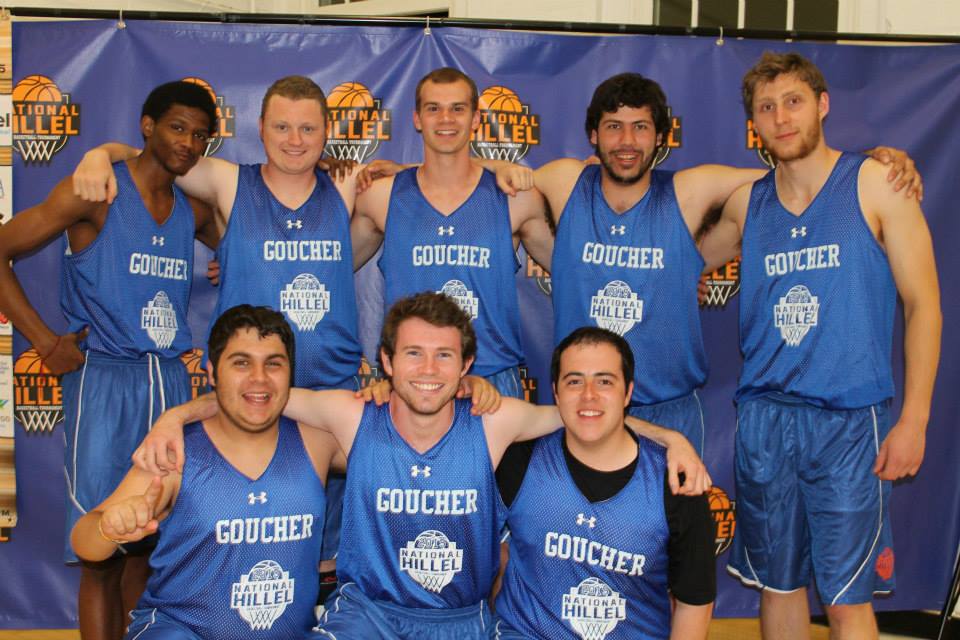
By Eli Kaufman Today more than ever, high school juniors and seniors are visiting colleges. High school students and their families flock to college campuses to tour, hear information sessions and sit in on classes. After spending long weekends and spring breaks flying and driving to different schools, it can be hard to distinguish one school from another. When I was looking at schools, I was very focused on the Jewish community. I always asked questions about Friday night Shabbat services and dinner. As a 17-year-old, I was impressed with the schools that had the largest number of attendees at events. It was purely a numbers game. I wanted my college Jewish experience to match my wonderful experiences with USY and Camp Ramah throughout middle and high school. At the end of the college search process, I chose Goucher College because I felt that it was a good fit and a great decision. The Jewish community on campus was everything I could ask for and more, but I realized that I was focused on the wrong things during the search process. I asked the wrong questions. Sure, it is nice to know that services could have 20-30 participants and Friday night Shabbat dinners could be filled with 40 or more people, but my Hillel and Jewish experience in college was nothing like I thought it would be when I was 17. And you know what? That is 100 percent okay. Throughout my time in college, my Hillel priorities changed. I realized that not everything is about the numbers. While some activities are great with large groups, you can’t usually have meaningful, enriching discussions with hordes of people. As a former college tour guide, I heard all of the questions in the book. Everything about communal bathrooms to library hours to career services to religious life on campus. After four years in this position, I came to realize that prospective students who asked thoughtful and intentional questions were the ones who made the best choices and ended up the happiest with their important college decision. Here are three questions to ask that should offer insight into the campus Jewish community: - Does the Jewish community participate in social justice work? Tikun Olam (repairing the world) is a fundamental Jewish value. For many, giving back and making the world a better place is a way that they express their Judaism. College Jewish communities can offer many opportunities to go out into the community and make a difference. Anything from alternative Spring Break service trips to volunteering at a food pantry are signs of a strong campus Jewish community.
- Is Hillel an isolated organization on campus or is there collaboration between Hillel and other organizations? The last thing you want is to be a part of a community that is isolated from the rest of campus. A strong Jewish community is integral and a main element of campus life. A way to tell this is based on the amount of co-sponsored events or events that are open to the entire campus.
- Is there a wide variety of programming available through the Jewish community and, if so, are religious and non-religious students welcome? If the only programming are religious services and dinners, then the Jewish community may not be one that brings in many people. A strong campus Jewish community has a variety of events, which could be discussion-based, socially-oriented or religious programming. A diverse group of programs shows strength. The campus Jewish community should be open and inclusive. Jews of all denominations should feel comfortable associating with the community as a whole.
Choosing a college is not an easy decision. It is a decision that will determine where tuition will be paid for four years. It is a decision about where you will be living for the foreseeable future. And it is a decision that will change your life and shape your future. A Jewish community in college should be a place that makes you comfortable and serves as a home-away-from-home. If the campus Jewish community is important to you then these questions will help make that decision a little easier. Happy searching!
|
|
|
My Child, A Bully? The Culture of Mean
|
|
|
|
|
Friday, October 02, 2015
|
|

By Joan Grayson Cohen, Esq., LCSW-C Although it’s been a few years, I remember being devastated when I learned that 12-year-old Rebecca Sedwick went to an abandoned concrete plant in Bartow, Florida, climbed a tower and threw herself off to her death. Rebecca had been bullied and harassed for months by as many as 15 girls who sent her electronic messages urging her to kill herself. As we approach National Stop Bullying Day, are you also shocked and horrified by the reality that a child can be driven to take her own life to escape bullying? Yet this is not an isolated incident. Bullying has become an epidemic. We can’t ignore it when more than 3.2 million students are affected each year. What is new is our use of social media. In a click of a button, damaging information about another person can be spread everywhere, anonymously, and it doesn’t ever go away. Twelve-year-old Gabrielle Molina hung herself in her bedroom in Queens, NY, after she was called “a slut and a whore” online and a video of her was put on YouTube. Gabby’s parents knew she was having some issues with bullies at school, but they did not know about the cyberbullying. Gabby’s sister knew about it, and also knew that she had harmed (cut) herself a lot, but Gabby asked her sister not to tell anyone. And we are wondering: could anything have been done to prevent this tragedy? The urgent question is: What is our responsibility as parents when bullying is taking place? Isn’t it time for us to face the truth that every child (yes, even our own) has the potential to be a bully, and every child is at risk of being a target. Sheriff Grady Judd in Polk County, Florida, sent a strong message when he ordered the arrest of two girls, ages 12 and 14, and charged them with felony aggravated stalking in the Rebecca Sedwick case. Judd said, “… the parents [of these girls] aren’t doing what parents should do. Responsible parents take disciplinary action.” The 14-year-old wrote on Facebook, “I know I bullied Rebecca and she killed herself. IDGAF (I don’t give a ____.)” Her father took no responsibility for his daughter’s actions, calling her “a good girl” and saying the charges were untrue. Just as troubling, he allowed her to go back on Facebook, giving her access to do further damage. Sheriff Judd’s action signals to parents that if we don’t monitor what is going on, there are potential repercussions for our child and for what happens once our child is accused, or even charged with a crime. How we choose to respond, once we know our child has been involved in a bullying situation, has consequences. We may be aware that our child has been the target of bullying, but we are less likely to recognize or intervene when our child is being the aggressor. Our tendency is to think “not my child.” No parent wants to acknowledge a painful truth. But we need to take off our blinders and be alert to signs that our child might be behaving in a hurtful and cruel way toward another. By responding responsibly we protect our children or another who could be a victim. Our response could also prevent us as parents from being held criminally responsible. How do we know if our child is bullying? Maybe we hear it from other parents or from a teacher. But we all need to set up our own early warning system and recognize red flags, such as when our child: - Shows disrespect for others, talking negatively about them or calling them names
- Acts as the dominant force among friends, the one who decides what they do and where they go
- Blames others for his/her problems
- Hangs around people who are disrespectful or act tough
- Shows little empathy for others
- Craves attention
- Is hot tempered, and both a poor winner (boastful, arrogant) and a poor loser.
As parents we have more responsibility then ever to be watchful, to acknowledge if our child is bullying, and if so, to take immediate and appropriate action. JCS offers support for parents who find themselves on either side of this troubling situation. For more information, call 410-466-9200.
|
|
|
Six Family Sukkot Projects
|
|
|
|
|
Tuesday, September 22, 2015
|
|

By Billy Treger, JCC of Greater Baltimore Rosh Hashanah and Yom Kippur have passed and we all have a fresh start on a New Year. Now, it’s time to put up our sukkah and enjoy our first harvest festival. During Sukkot we can enjoy meals and family fun beneath this temporary ‘booth,’ or hut, that many of us erect on our porches or backyards. Sukkot is a community-focused celebration yet also a very introspective period when we remember the time G-d freed us from slavery in Egypt, to wander 40 years in the desert before reaching the Promised Land of Israel. So along the way to Israel, we built huts out of dried palms and branches. We took crops and fruits into our sukkah and celebrated the fruits of nature’s sustenance. Mom and dad – kids love Sukkot! So as you build and decorate your sukkah, here are six projects that everyone can enjoy participating in: - Create a Sukkot party diorama. Get a shoebox for your child and help cut small slits in the top. Have your children cut out small-ish fruit shapes and using glue sticks hang paper fruit chains from the inside top of the box. Add Lego people and tables to compliment the decor.
- Make prayer flags. Go to a crafts store and purchase some burlap. Cut the burlap into strips and using markers and other decorations, write a prayer for Sukkot describing what the holiday means to your child. Hang all the prayers in your sukkah. Save your old flags, and see what you and your children wrote from year to year.
- As this is a gorgeous time of year, take a nature walk and collect pinecones. Paint the pinecones in whatever colors you choose. You can tie the pinecones together to make a chain and staple or tape the chain to the sukkah wall.
- Kids (and moms and dads) – take construction paper and either popsicle sticks or twigs. See if you can build your own sukkah with the help of glue sticks or glue guns. Affix the paper to the sides of a twig or popsicle stick structure, and then decorate the structures with gold stars and stickers.
- Here’s a simple activity, but mom and dad will need to help: celebrate the harvest and make a delicious, colorful fruit salad! Serve it up to all the guests in your sukkah!
- Finally, camp out in your sukkah! Remember, these were meant to be temporary shelters. See how many nights you can sleep in your sukkah.
|
|
|
Planning Your Career Path
|
|
|
|
|
Thursday, September 10, 2015
|
|

By Jamie Leboe As a Career Coach and Vocational Evaluator you may think that I was one of those people who I’ve always envied, those who knew exactly what they wanted to do when they grew up. They would apply to the college that offered the program they knew they wanted to study. After college they’d go straight to graduate or professional school and then start a job. On the contrary, I took the long route to finding my perfect career. I went to an art college because I loved art, but not with a real end goal in mind. I applied to graduate school, but decided to defer a year, which turned into 15 years. I took the career path of trial and error. I worked in retail, first in a clothing department and then transferring to the makeup department. Makeup was enjoyable, but sales were not my thing, so I took a job as a traveling makeup artist, but did not enjoy the long hours in the car and being stuck in traffic. I apprenticed as a cosmetologist and really liked working in a salon, but after the birth of my first daughter the long weekend hours were tough. All of my experiences helped me to figure out what I liked and didn’t like about the world of work. Fortunately, the years of experimenting ended up well and I now have a career that I love, but it took me a little longer to get to this place than it needed to. I ended up in my field through a happy accident. A friend who was a Career Assessment Consultant told me about her job and it seemed like a really interesting field. She was moving away and her position became available right at the time I was ready to go back to work after staying home to raise my children when they were very young. I observed my friend and knew this was the job for me. That job has turned a career that I enjoy and feel good about. While for me this method of arriving at an appropriate career path was ultimately successful, there is a much easier and more effective way of planning your career path! Here are some steps to help you do this successfully: - Get a career assessment. This is a process that includes a variety of evaluations and career explorations to help you plan your career. Assessments can be done in person by a career coach and online.
- Do online research to find out what careers are growing. Try this website or this one.
- Talk to friends and family and list careers that attract you, as well as parts of jobs that you find interesting.
- Ask people you know who work in these fields if you can spend some time observing or shadowing them at work.
- Visit websites (like this one) to watch videos about a variety of jobs.
- When researching careers, keep your everyday interests in mind. Research shows that people who enter careers in keeping with their interests are more successful in their jobs.
- Identify your transferable skills, i.e., skills that you have learned in a job, volunteer position, internship, school, or daily life that can transition into another position.
- Look at the schooling and training needed to enter the field and decide how much time and money you want to spend becoming educated before going to work.
Planning your job search and directing it towards your end goal streamlines the process, saving you time, energy, frustration, and dead ends. It also makes you more motivated, confident, and more likely to find a job that is a good fit for you. Call 410-466-9200 or visit the JCS website to find out how the JCS Career Center can help you plan your career path.
|
|
|
The Transition to Middle School: From Minors to the Big League
|
|
|
|
|
Friday, August 21, 2015
|
|

By Stacey Meadows, LCSW-C Middle School. Just saying the words stirs up a mix of emotions in most of us. Do you remember your first day of middle school? I certainly do. I caught the bus (for the first time) to a huge building, off a busy street, filled with big loud kids I didn’t know. I was excited but also terrified. I wanted to run into my first class but also detour in the nurse’s office to hide and sob for my mom! For most children, middle school is a huge transition. They go from being the biggest and coolest kids in elementary, to being the littlest in what’s usually a bigger and busier environment. Our middle schoolers get lockers, the responsibility of multiple classes and teachers, increased access to technology and social media. Developmentally, this age group straddles the line between kid and young adult – seeking independence and demanding privacy, while also cuddling up for family movie nights and playing with Barbies. During the three short years of middle school, children’s bodies begin to change, social relationships become more complex, and academic responsibilities become more demanding. It’s no wonder that middle school is an emotionally complex time. While all of this change can be intimidating, it sets the path for our kids to mature into confident and capable young adults. There’s no doubt that the transition to middle school can be tough, but it’s also a really fun and exciting time! Middle schoolers enjoy having more freedom and independence. Middle schools usually have a lot more students and offer social and sport activities that afford new opportunities for friendships and fun. In all of the confusion of swirling hormones and changing environments, our middle schoolers can truly thrive when they have the support of a caring and dedicated family. Here are some ways you can support your child’s in making a successful transition to middle school: Understand how your child feels about this transition. Take time to ask questions about their readiness and enthusiasm for middle school. Find out what they’re most excited or worried about. Validate their feelings of anxiety, and work together to identify ways to manage them. Get to know the campus. Before school starts, take a tour of the new school or campus. Give your child a map of the building, and help them to map out their route between classes, cafeteria, bathrooms and lockers. To prepare for lockers, practice on similar locks at home and consider getting magnets or other decorations that will make lockers feel more like their personal space. Connect with faculty. At your earliest opportunity connect with the teachers and administrators. Arrange for you and your child to meet with key players at the school. If there is an orientation day before school starts, make sure to use that opportunity to get a feel for the campus and to meet teachers, guidance counselors or other people who may be able to support your child in this transition once school starts. Obtain contact information for faculty – email addresses or electronic academic monitoring programs (like Blackboard) – so that you can keep on top of how your child is adapting, and establish opportunities for collaboration with teachers around your child’s strengths and needs. Encourage social opportunities while helping your child negotiate the challenges. Sports, clubs and study groups are a wonderful way for your child to meet new friends in a casual and meaningful environment. Establishing new relationships and getting involved in school programming will assist in making their new school feel like home in no time! In addition, these activities cultivate responsibility and self-esteem, and expose your child to new and valuable experiences. Social opportunities often also aid children to build mentoring relationships with older kids who can also help them to adjust to middle school. But, be mindful of the social challenges that can trip kids up. Take time to talk with your child about internet and social media safety and be mindful of bullying behavior – whether you suspect your child is the target, the bully or a bystander. Get to know the kids they hang out with and connect with their parents. This is also a time to have a heart to heart about peer pressure and how to handle it, especially around drug and alcohol use. Support your child in learning new skills. This will continue to be valuable throughout the rest of your child’s academic career! With more homework, assignments and tests, time management and organizational skills become critical and often aren’t taught in school. Help them organize their notebooks, build good study habits to plan for their afterschool activities and learn to balance school work with extracurricular and social activities. Middle school marks a milestone in your child’s life that is both exciting and scary. Stay in tune with their world and keep tabs on their mood and how they seem to be adjusting. Talk with them—about new friendships, their workload, what they like and what they don’t, the cafeteria food—anything that is important to your child! If you need some tips on getting your child to open up more, read this JCS Parent Talk blog post. By establishing open lines of communication, your child will know that you are there to support to them and help navigate all of the ups and downs of this new chapter!
|
|
|
A Healthy & Sweet New Year
|
|
|
|
|
Tuesday, August 18, 2015
|
|

The high holidays are approaching, so you know what that means – platters of sweet treats awaiting you at family gatherings. You don’t have to stress about indulging in your favorite sweets – try these healthier recipes! Roasted Apple Slices with Date Honey. These are a quick, easy treat for any time of day. Gather your ingredients: 4 apples, peeled and sliced thin; 1 Tbsp. lemon juice; 3 Tbsp. date syrup; 1 tsp. cinnamon; ¼ tsp. cardamom; 1 tsp. cornstarch; pinch of salt; 1 Tbsp. Earth Balance Margarine, cut into small pieces. - Preheat oven to 400 degrees.
- Line a baking sheet with parchment, spray with cooking spray.
- Mix apples with lemon juice, date syrup, cinnamon, cardamom, cornstarch and salt in a deep bowl.
- Spread on baking sheet, top with pieces of Earth Balance. Bake 15 to 20 minutes until golden and soft.
Cranberry-Apricot Delicata Squash. Get your ingredients: 1 lb. delicata squash (about 1 large); 2 Tbsp. extra-virgin olive oil; 1 Tbsp. apple cider or apple juice; ¼ tsp. salt; ¼ tsp. freshly ground pepper; ¼ cup chopped dried apricots; ¼ cup dried cranberries; 2 Tbsp. finely chopped chives; and 2 Tbsp. toasted sliced almonds. - Cut squash in quarters lengthwise; scoop out the seeds. Very thinly slice crosswise.
- Bring 1 inch of water to a boil in a saucepan fitted with a steamer basket. Steam the squash until just tender, 5-7 minutes.
- Whisk oil, cider (or juice), salt and pepper in a large bowl. Add the squash, apricots cranberries and chives; toss to coat. Serve sprinkled with almonds.
Rosemary Apple Chicken. This delicious fruited chicken dish is great for guests, with a good dose of protein. Ingredients: 1 whole chicken (2-3 pounds); ¼ cup grapeseed or olive oil; ¼ cup balsamic vinegar; 1 Tbsp. sea salt; 4 apples, cored and sliced; and 4 sprigs rosemary. - Rinse the chicken, pat dry with a paper towel and place in a 9 x 13 baking dish.
- Drizzle with oil and vinegar, then sprinkle with salt.
- Arrange the apples around the chicken in the baking dish.
- Place sprigs of rosemary under the chicken.
- Bake at 350 degrees for 90 minutes, until browned on the outside.
Gluten Free S’mores. Ingredients: 8 ounce box Manischewitz gluten free crackers; 1/3 cup brown sugar; 2 tsp. cinnamon; 4 Tbsp. coconut oil, melted; 2 Tbsp. unsweetened almond milk; 1 1/2 cup dark chocolate chips; 3 Tbsp. unsweetened cocoa powder; 1 cup canned light coconut milk; and 3.5 ounce mini marshmallows. - Preheat oven to 375F.
- Combine crackers, brown sugar and cinnamon in the food processor. Pulse until the crackers turn into fine crumbs. Add coconut oil and almond milk and pulse a few more times until well combined.
- Press cracker mixture into a 9x9 square non-stick pan. Bake at 375F for 12 to 15 minutes.
- In the meantime, prepare the chocolate layer. Place chocolate chips and cocoa powder in a large heatproof bowl. Bring coconut milk to a simmer and pour over the chocolate, whisking constantly until it melts completely. Set aside to cool slightly.
- Pour chocolate over cracker crust. Arrange marshmallows on top. Place the pan back in the oven and broil for 45 seconds to a minute, until the marshmallows start to brown (keep an eye on it the whole time!).
- Refrigerate for at least 3 hours
|
|
|
Eight Ways Rosh Hashanah Is Unique in Israel
|
|
|
|
|
Monday, August 17, 2015
|
|

By Chana Siff, Assistant Director, Israel & Overseas Living in the United States, I always knew the “New Year” was coming. From the end of December through the beginning of January, I could walk into a store and see plenty of new calendars. I’d read magazines and blogs about making New Year’s resolutions, while discovering countless discounts to gyms for those of us who feel like this is the perfect time to get healthy and stay fit. At the same time, although I had celebrated Rosh Hashanah, the Jewish New Year, for 18 years in America, I had never thought about the holiday as real national New Year where a whole country is preparing together to welcome in the New Year. It wasn’t until I spent a year in Israel, landing in the country in September, 2006, just weeks before Rosh Hashanah in the Hebrew month of Elul, that I was taken by surprise. I found a whole country celebrating and preparing for a special time – a chance truly to begin a New Year! Imagine the following: - Signs and advertisements all over the country, on busses and billboards wishing everyone a “Shanah Tovah” (Good Year). Even the coke bottles with the words wishing you a “Shanah Tovah U’Mituka” (Good and Sweet Year) on them!
- Hearing Shofar sounds as you walk down the street from all the synagogues every morning during the month of Elul to remind everyone that Rosh Hashanah is coming and to work on yourselves to become better people.
- Apples, pomegranates, dates and other special produce of Israel sold everywhere – fruit stands, the shuk (outdoor market) and in the supermarkets.
- Free honey sticks in 50 different flavors at the supermarket!
- Little kids playing outside with a shofar seeing who could blow it the “best.”
- New calendars being sold in all the stores.
- Bus drivers and taxi drivers wishing you Shanah Tovah – including Arab and Christian drivers.
- An entire country together preparing for a time of reflection and to spend time with family and friends.
In Israel, Rosh Hashanah isn’t just a wonderful Jewish holiday and a time for personal reflection, it is a time for a whole country to start fresh with a new year together! L'shanah tovah! May we all be inscribed and sealed for a good year!
|
|
|
The Empty Place at the Table
|
|
|
|
|
Monday, August 17, 2015
|
|

By Jacki Post Ashkin, LCSW-C Holidays are meant to be a time of joy, but when someone you love has recently died, the thought of gathering around the family table can fill you with dread. After all, holidays are meant to be special occasions that we celebrate with our loved ones and we become faced with the harsh reality of their absence. The Jewish High Holidays are a time of introspection, reflection and renewal. We look back on our lives and contemplate where we have been as we prepare to move forward into the new year. During this time, we pray that we and those we love will be inscribed in the Book of Life for another year. No wonder we become painfully aware that an important person in our lives is missing, no longer here to share both the solemn and joyful aspects of the holiday with us. We can’t help but wonder whether the traditions that we’ve been observing for years will feel different, and what will that do to our sense of identity and continuity? As the High Holidays draw near, we may find ourselves wondering, “how am I going to get through this?” Bereavement experts at Jewish Community Services offer these suggestions. - Acknowledge the loss. Everyone is aware that someone important is missing, so don’t avoid the obvious. Talk about how you miss your loved one and invite others around the table to share memories, too.
- Find support from family and friends. You do not have to “be strong” for others.
- Set an “empty place” at the table in honor of your loved one. Some may instead find comfort in sitting in the chair that was their loved one’s spot.
- Place a picture near where you are seated.
- Make a memorial for your loved one.
- Use your spiritual and/or religious practices to find comfort.
- Reflect on your loved one as you light the yahrzeit candle erev Yom Kippur and at sundown prior to the last day of Succot.
- Attend Yizkor, the memorial service. Experience the shared communal bond of grief, which reminds us that no one grieves alone.
- Allow yourself to cry when the tears want to come.
- In your private moments, it may be comforting to talk to the person who has died.
- Think ahead about what rituals and traditions may change in your family gathering. For example, who will light the holiday candles or say Kiddush if the person who always did is no longer there? Plan with your family and guests, and acknowledge the changes.
- If it feels too overwhelming or painful to have your traditional celebration this year (whether you are usually a guest or the host), you may find it helpful to make a change. Consider accepting an invitation from friends or scaling back on your own guest list.
- Don’t be afraid to laugh. You are not dishonoring your loved one by laughing; he or she would surely want to see you enjoying life.
- If your emotions feel overwhelming, as may happen as the holidays approach or even after, it can be helpful to talk with a therapist, bereavement counselor, rabbi, or other trusted professional, or to join a support group to help cope with your loss.
The High Holidays are a time to reflect on our past, acknowledge our present, and consider our future. Thinking about the people whom we’ve loved and lost is a natural part of that process and affirms their continued presence in our lives. May their memories be for a blessing. Jewish Community Services is holding several bereavement programs this fall. All the programs are free and open to the community: - Grief Support Group for Adults Grieving the Death of a Loved One 8 weeks – Thursday Evenings, September 6 – October 25.
- Tashlich Program to Cast off Resentments and Setbacks from the Past September 16, 10:00am – 11:30am
- Coping with the Grief of an Addiction Death: Support Group for Parents 8 Weeks – Thursday Evenings, December 13, 2018 – January 31, 2019
To learn more information about these programs, visit JCS' website or call 410-466-9200.
|
|
|
Israel's Culinary Scene
|
|
|
|
|
Thursday, August 13, 2015
|
|

By Rochelle Eisenberg Walking through the Lewinsky Market in Tel Aviv is a feast, literally, for the senses. Barrels of dried fruits and brightly-colored rice and grain mixtures tempt the eyes, while the tangy olives and aromatic spices entice the nose. Then there are the tastes. Flavorful cheese, three varieties of savory hummus, six varieties of burekas, the sweetness of creamy Malabi, made of corn flour, vanilla bean, rose water and coconut milk topped with fresh pomegranate seeds – it’s a foodie’s dream. On this beautiful spring day, I’m lucky enough to be tasting my way through this almost 100-year-old market on a Delicious Israel Tour, led by Israeli Inbal Baum, who grew up outside Washington, DC. The food I’m tasting is delicious. Yet, what comes out of this tour, and, perhaps, is the most astonishing to me, is that the answer to the question — “what is Israeli food?” — is not what I expected. “Israel is a nation of immigrants and each group brought their culinary traditions with them. As such, Israeli food is a melting pot of flavors from all over the world. There is no one Israeli food,” says Baum. “For example,” she adds, “shakshuka (eggs baked in a spicy tomato sauce), which we’ve come to associate with Israel was originally brought to this country by North African immigrants.” Huppit Bartov, a native of Ashkelon who now lives in Baltimore with her family, agrees. “The definition of what is Israeli food is a tricky question.” Bartov, whose grandparents arrived in Israel from Tunisia adds, “Street food is often thought of as Israeli — falafel, schwarma (which, by the way, is often served with French fries), hummus. But, in reality, like much of ‘Israeli’ food, its origins are in other parts of the world.” Jews from Arab countries brought shabach, falafel and schwarma; Jews from Turkey added burekas to the mix. Jews from Europe brought rugalach and schnitzel; Russian Jews incorporated borscht and herring, while the Northern African Jews of Tunisia and Yemen also contributed malawach and couscous to Israeli cuisine. A case in point. Aliza Friedman recalls that growing up in Israel, her family table was filled with foods that originated from different Sephardic countries. There was Middle Eastern favorites such as shakshuka, hummus and kebobs, Moroccan specialties like chicken with celery, onions and currants. And a special meat dish made with prunes, apricots, carrots and onions. There was also fish made with olives, garlic, sweet pepper, saffron and cilantro. And always there were the salads. “There were a lot of salads. We probably had Israeli salad almost every night,” Friedman says. In fact, if there is one food that is quintessentially Israeli, says Bartov, it is the chopped salad, which consists of finely chopped cucumber, tomato and onion, dressed with lemon and salt. “It’s very basic, but most families eat it at least once a day,” she says. “Men often get into the act. They are often proud of how fine they chop their vegetables.” Yet, although some foods may not originally hail from Israel, many have been become a point of pride for most Israelis. Take hummus. “Everyone has their own recipe and everyone thinks theirs is the best,” laughs Bartov. “It’s like a friendly competition.” No one is sure exactly where hummus originated, but it is central to many Middle Eastern cuisines. The word “hummus” means chickpea in Arabic. In Israel, I’m told, as I dip into a warm, freshly-made version on my tour (I also eat one mixed with foul, an Egyptian fava bean), is served for breakfast, lunch and dinner. It’s served fresh and warm and often doesn’t last more than a few hours. And it has to be made with chickpeas. “Avocado and black bean versions are not hummus,” Baum says. Some foods brought to Israel have been adapted to the culture such as the bureka. Brought to Israel by Turkish immigrants, this pastry is often filled with such items as eggplant, mushrooms and spinach. Immigrants, often adhering to the rules of Kashrut, substituted oil for the butter so that these savory pastries could be eaten with meat. Today, Israeli cuisine continues to evolve, with many Israeli chefs integrating these ethnic cuisines with local Israeli ingredients, fruits and vegetables, to create their own style of Israeli fusion cooking. “Even the classic shakshuka,” laughs Baum, “has become trendy. It used to be something one made at home. Now people go out to eat and it’s become expensive. You can even find versions with cream and spinach.” Make your own tabouleh salad! A simple and delicious salad from Ashkelon resident, June Narunsky Ingredients: 1 cup Israeli couscous; 1 lemon, zested and juiced; 3 Tbsp. olive oil; kosher salt; freshly ground black pepper; 1 cup finely chopped parsley; ½ cup finely chopped cilantro; 2 Tbsp. chopped fresh mint; 2 ripe tomatoes, seeded and diced; and 3 scallions, chopped. - Bring a medium-size saucepan of salted water to a boil over medium heat. Add the couscous and cook until al dente, 7 to 8 minutes. Drain couscous and cool.
- In a small bowl, whisk together the lemon juice and zest with the olive oil to make a vinaigrette. Season with salt and pepper to taste.
- In a large serving bowl, mix together the couscous, parsley, cilantro, mint, tomatoes and scallions. Toss with the vinaigrette and season to taste. Allow to sit for at least a half hour so the flavors can marry.
This article originally appeared in the Connect to Israel publication. Read it to get more recipes, explore Ashkelon and learn about the BDS movement.
|
|
|
From Holon to Holot
|
|
|
|
|
Thursday, July 30, 2015
|
|

By Sophia Farruggia “Israel was not created in order to disappear – Israel will endure & flourish. It is the child of hope & the home of the brave. It can neither be broken by adversity nor demoralized by success. It carries the shield of democracy & it honors the sword of freedom.” -John F. Kennedy As an American Jew in Israel I feel the experience I am currently having has been painted and sculpted years before my plane ever landed. Growing up one learns about Israel in an almost idealistic and utopian way. And coming to Israel to stay for these few months is a lot like the first time you see your parents cry. You question how something so incredible could have anything wrong with it, and slowly each layer is peeled away and what is shown before you is a country like any other. For some, it is this realization of normality that crushes them and their experiences. Yet for me the moment I realized that Israel was a real place with real problems was the moment I began to fall in love. For loving someone’s flaws means loving wholly. The first flaw I discovered was less attributed to Israel and more honestly caused by my own anxieties. This week I found myself on a day trip to Jerusalem, and with the words “Day Trip to Jerusalem” one imagines the standard Kotel/Old City Jewish experience. Yet we decided to take a different turn, spending time in the Arab quarter and enjoying a heated debate between an Ultra-Orthodox man and an active member of the progressive feminist group Women of the Wall. And while all of the above resonated with me deeply, it wasn’t until we reached the City of David tour that I was forced to face my own flaws, and shortcomings galore. The thought of an underground cave tour sounded lovely, and immediately reminded me of the cave tours I had taken in Slovenia. The caves were massive, so large that European groups would hold special concerts in these Slovenian caves for their wonderful acoustics. With that past image in mind, I was a bit shocked at what I found…  Claustrophobia is not just a fun word to say, but it’s also a super fun worry to have when walking through a six foot underground cave for three miles with water up to your thighs. While, in typical Jewish fashion, I kvetched the whole way through, I can honestly say it was one of the most interesting experiences I have had thus far. My mind was constantly running, convincing myself I had unknowingly gone into a “Final Destination” world that would ultimately cause my demise. Fortunately I was wrong, and even more fortunately I can now say I walked three miles through the underground City of David. What stuck out to me most was just how much my handling of the cave time so perfectly represented my handling of life. I was absolutely terrified, yet I never stopped walking. I guess Israel has shown me that 98% I am far too hard on myself. That even though I may not have any clue where my journey will end, and even though I am not nearly as perfect as I want to be yet, I have never stopped moving forward. Not once. And for that, some credit is deserved. Claustrophobia is not just a fun word to say, but it’s also a super fun worry to have when walking through a six foot underground cave for three miles with water up to your thighs. While, in typical Jewish fashion, I kvetched the whole way through, I can honestly say it was one of the most interesting experiences I have had thus far. My mind was constantly running, convincing myself I had unknowingly gone into a “Final Destination” world that would ultimately cause my demise. Fortunately I was wrong, and even more fortunately I can now say I walked three miles through the underground City of David. What stuck out to me most was just how much my handling of the cave time so perfectly represented my handling of life. I was absolutely terrified, yet I never stopped walking. I guess Israel has shown me that 98% I am far too hard on myself. That even though I may not have any clue where my journey will end, and even though I am not nearly as perfect as I want to be yet, I have never stopped moving forward. Not once. And for that, some credit is deserved.
It was a Wednesday evening that I found myself surrounded by fellow Jewish Hopkins students. But for once, I was not at the Smokler Center as I am every Friday. This time I was in Holon, at a wonderful family BBQ that our amazing Israeli fellow was kind enough to invite us to. After being picked up in our very own Israeli Blue Jay Shuttle of sorts, the four Hopkins students and our favorite Israeli fellow left the bounds of busy Tel Aviv to a quiet and beautiful suburb. We were immediately welcomed as family, with food and drinks and conversation thrown our way. In typical Jewish fashion, a few of us were jokingly set up with other Jews of the same age people happened to know. For once, I was not sitting in Tel Aviv with the craziness of a busy city around me at all times. I found solace in this loving family unit who treated four American students as if we had been part of their family for years. It was a night of laughter, of wine, and of a peaceful wholeness in knowing that no matter where in the world I was I could find not only a Hopkins community, but a Jewish community to take me in.  Fast forward 24 hours, and I found myself in a tiny cafe decorated with colorful art and the expected decorum of any hipster establishment. The murals on the wall came to life in blues and reds and yellows, and provided the perfect ambiance for a night of open discussion and even controversial learning. Who stood before me were some of the bravest people I have had the honor of hearing speak. Two refugees spoke, one from Eritrea and the other from Darfur. They spoke of pain so nonchalantly, pain that would cripple or nearly end anyone else. Their voices were firm, and they never wavered despite speaking of torture, death, and the agony of family separation. It was the man above who struck me first, who spoke of his dream to go to school for Economics. A dream he was finally setting in motion, having been recently accepted to school in Israel. And then I heard it, Holot. Fast forward 24 hours, and I found myself in a tiny cafe decorated with colorful art and the expected decorum of any hipster establishment. The murals on the wall came to life in blues and reds and yellows, and provided the perfect ambiance for a night of open discussion and even controversial learning. Who stood before me were some of the bravest people I have had the honor of hearing speak. Two refugees spoke, one from Eritrea and the other from Darfur. They spoke of pain so nonchalantly, pain that would cripple or nearly end anyone else. Their voices were firm, and they never wavered despite speaking of torture, death, and the agony of family separation. It was the man above who struck me first, who spoke of his dream to go to school for Economics. A dream he was finally setting in motion, having been recently accepted to school in Israel. And then I heard it, Holot.
Coming from the most wonderful family BBQ in Holon, hearing the eerily similar word of Holot made me stop in my tracks. Working in the refugee community for the past month has made me very much aware of Holot. Aware of the government’s intentions, grave injustices, and huge flaws. I thought how lucky i was to be able to enjoy a peaceful evening in Holon, when this young man who stood before me was facing three months in Holot for simply standing on the same ground that I was. It did not make me dislike Israel, but it made me passionate about helping create a change to make this land I love so much a place that all people can feel the same solace I felt only twenty-four hours before. As he shared his stories, I wrote note after note of what he said to ensure I didn’t forget this man’s story. What stood out to me most was his way of making hugely complex and painful issues and making them seemingly simple. “I was not born to take 15 kilo of wheat from the UNHCR.” Those words echoed inside of me, for reasons I still am not quite sure of. This stranger who stood before me, who had escaped from Darfur only to endure more torture physically and emotionally from his travel through Sudan and Egypt before finally reaching Israel. This person before me was me. He was a young adult who wanted to learn, to study in University and make something of himself. He was someone who wanted to contribute, to make the world a better place for everyone. He was someone who was destined for greatness, someone who wasn’t born to take humanitarian aid as a livable income. I thought so critically about the world’s treatment of refugees in situations like his, in the infantilization occurring via aid without education. The man who stood before could change the world, and I wholeheartedly believe he will, but faces first three months in prison for trying to find a safe place in Israel. And here is where my realization of Israel’s flaws became most palpable. As a Jew, and as an American interested in making Aliyah, I feel personally responsible for the Tikkun Olam which each and every one of us should be doing. The man who stood before me didn’t deserve three months in a “voluntary” prison, he was a student just like me. He was someone who missed his family, someone who wanted so badly to go home but had no home to go to, someone who wanted nothing more than basic safety and the right to make his life as good as he possibly could. Persecuted in the past, we as Jews should be doing all we can to assist those the world deems inhuman or unworthy. For when hate is present, it does not discriminate. Hate is the virus that knows no skin color, no language or accent, and no religion. It destroys us all. And if we allow this type of heinous discrimination to prosper, who says it won’t come for us next? Once again I find my verbose nature taking over, and I feel the only people still following this long blog post are probably either my mother or Courtney. But I find when anything happens to me in this land of holies, I have about fifteen different reactions to it and two hundred different feelings. Most importantly it has been my realization of what Israel does versus what I expected that meant the most to me in these last few weeks. I love absolutely every part of this country, every nook and cranny and crevice I have found. I would defend this nation to the end, and will forever advocate on the importance of a Jewish states existence in this increasingly hostile and anti-Semitic world. Yet my support for my country does not translate into my complete promotion of each policy and piece of legislature. This is a country, like any other, which engages in very questionable practices at times. Coming from the United States, I am quite familiar with the phenomenon. But just because something isn’t perfect does not mean it should be abandoned. In fact, it means just the opposite. It is because Israel is so flawed that I know I need to love it even more. It takes people passionate about change to better the world, and I know for a fact the Jewish community has no shortage of that as long as we never forget tikkun olam. This post originally appeared on Sophia's blog – Schlepping Around the World: One Nomad’s Attempt to Save the Universe.
|
|
|
Camp Friends Are the Best Friends
|
|
|
|
|
Thursday, July 30, 2015
|
|

By Janna Zuckerman Anyone who has attended a Jewish camp will tell you that zip lining, kayaking and ceramics are a blast, but the highlight of camp is the friendships. I experienced this first-hand from my summers at New Jersey-Y overnight camps in Milford, PA. When I was going into third grade, my parents dropped me off at the bus stop to head to Camp Nah-Jee-Wah for my first overnight camp experience. I was terrified. I was going away for four weeks without having spent any time away from home before. The only person I would know at camp was my brother (who probably wanted nothing to do with his little sister). While waiting for the bus, my mom introduced me to her friend’s daughter who would be in the same division as me at camp. We spoke briefly, and then found two seats next to each other once we climbed on. During the two hour bus ride, I learned that we had a lot in common – we both played soccer and tennis, loved theater and our favorite color was pink. When we arrived at camp, I learned that by some chance, we were placed in the same bunk. I was ecstatic. We carried our duffle bags to the bunk we would call home for the next four weeks, and picked bunk beds next to each other. I never would have thought that a bus ride to camp would be the beginning of an incredible friendship. Our summers at camp are unfortunately over, but our friendship has remained just as strong for over 18 years. This year, International Friendship Day is August 2, and I thought it would be a great time to learn about other friendships that were formed at Jewish camp. After all, there really aren’t friendships that are deeper than camp friends. Right?  Andrew and Ethan met at Capital Camps in the summer going into fourth grade. Friends for nearly eight years, they are the epitome of “camp best friends.” Andrew remembers meeting Ethan during one of the first few days of camp … he was supposed to be going to a particular chuggim (elective), but decided to skip his and go with Ethan to work on the backstage crew for the camp musical production. Andrew had never tried building a set before, but figured it would be fun. Andrew and Ethan met at Capital Camps in the summer going into fourth grade. Friends for nearly eight years, they are the epitome of “camp best friends.” Andrew remembers meeting Ethan during one of the first few days of camp … he was supposed to be going to a particular chuggim (elective), but decided to skip his and go with Ethan to work on the backstage crew for the camp musical production. Andrew had never tried building a set before, but figured it would be fun.
Since then, Andrew has taken an interest in theater and even works backstage on his high school performances! Ethan also is involved in theater at his school. Their love of musical theater and comedy was just one of the many links to their strong friendship. Ethan says, “Andrew has a way about himself – he can be very serious at times, but then suddenly provide everyone with comic relief … it’s amazing how he can tell a funny joke and then is able to comfort you a moment later.”  Andrew said his favorite thing about his friendship was Ethan is that wherever they are they are able to have a good time together – it doesn’t matter what they are doing. Andrew shared that “Ethan is very determined ... he’s going to be successful in whatever he wants to do, and he’s a perfect friend because he’s always open to everything – ready to try new things and have fun.” Andrew said his favorite thing about his friendship was Ethan is that wherever they are they are able to have a good time together – it doesn’t matter what they are doing. Andrew shared that “Ethan is very determined ... he’s going to be successful in whatever he wants to do, and he’s a perfect friend because he’s always open to everything – ready to try new things and have fun.”
It has always been their dream to go to Israel together, so this summer they took a one-year break from camp and went on the BZD Israel trip together. Next summer, their goal is to work together as counselors at Capital Camps!  I also interviewed Laurie Rauseo, who goes by “Rauseo” to camp friends, and her best friend, Missy Sachs-Kohen. Missy was actually someone she met while working at Camp Louise as staff in 2000 – see, it’s true that being a staff member at camp is more fun than being a camper! Missy was a Unit Leader and Rauseo a first-year counselor, but their 15 year age gap didn’t faze them. I asked Missy and Rauseo to describe the first time they met, and they both remembered the day perfectly. Missy recalls watching Rauseo jump into the Camp Louise swimming pool (even though she hated swimming) to help her team win during color games. Missy watched Rauseo volunteer to participate in this wacky pool game, even though she could tell Rauseo was dreading it. “That’s how I knew she was special … she showed total camp spirit and was a team player,” said Missy. I also interviewed Laurie Rauseo, who goes by “Rauseo” to camp friends, and her best friend, Missy Sachs-Kohen. Missy was actually someone she met while working at Camp Louise as staff in 2000 – see, it’s true that being a staff member at camp is more fun than being a camper! Missy was a Unit Leader and Rauseo a first-year counselor, but their 15 year age gap didn’t faze them. I asked Missy and Rauseo to describe the first time they met, and they both remembered the day perfectly. Missy recalls watching Rauseo jump into the Camp Louise swimming pool (even though she hated swimming) to help her team win during color games. Missy watched Rauseo volunteer to participate in this wacky pool game, even though she could tell Rauseo was dreading it. “That’s how I knew she was special … she showed total camp spirit and was a team player,” said Missy.
The rest was history – Missy admired Rauseo for her leadership and caring personality while Rauseo admired Missy for her generosity and supportive advice. It is obvious Rauseo and Missy have a mutual love and respect for each other – just the way they talk about each other is a testament of their friendship. Rauseo was fortunate to attend Missy’s wedding and has been a part of Missy’s family ever since …. celebrating Jewish holidays and birthdays together and even becoming involved in raising her kids. Missy’s family has also been involved in Rauseo’s life, too. Missy watched Rauseo grow up; from a young first-year counselor at camp to a loving mom to her daughter, Piper. Missy’s wife, Rabbi Elissa Sachs Kohen married Rauseo and her husband several years ago. The stories are different, yet their camp friendships are the link that make them all similar. Rauseo offered this advice to current campers at camp – “you never know who you’ll come across and who you’ll meet so take advantage of every opportunity.” Ethan’s advice: “Keep an open mind when you’re at camp – the people that you meet could become your best friends even if you don’t think you have a lot in common at first.” “Friendship is the most special thing ever. You don’t know what it’s like until you have something like it,” adds Andrew.
|
|
|
Back to School on a Budget
|
|
|
|
|
Sunday, July 26, 2015
|
|

By Rochelle Eisenberg It’s that time of year already! It’s 95 degrees out, summer is in full swing, the beach is beckoning … and stores have begun enticing parents with back-to-school supply sales. Already, you ask? As you pull together each child’s list – which seems to get longer every year as schools now ask for everything from flash drives to paper towels to hand sanitizers – you stop counting how much this is going to cost you. Last year, families spent an average of $100 per student on school supplies alone (not including backpacks, shoes and clothes). That’s a huge chunk of money. And according to the National Retail Federation’s annual Back-To-School Spending Survey, the average family with children in grades K- 12, will spend a $630.36 on electronics, apparel and other back-to-school needs this year. The bad news – back-to-school spending is up 42 percent in the past 10 years. The good news, I guess, is that spending is expected to be down from last year. For some families, back-to-school spending can be a heavy burden. That’s why Jewish Community Services, CHAI, Jewish Volunteer Connection, all agencies of The Associated: Jewish Community Federation of Baltimore, have teamed up to help those students whose families can’t afford it, begin the school year on the right foot. This year, these organizations are holding a Community School Supply Drive, July 27 – Sept 11, to benefit children of Jewish Community Services (JCS) client families and students attending Fallstaff and Cross Country Elementary Middle Schools, along with Milbrook Elementary, who lack funds to purchase items to start the school year. So while you are running around in search of the perfect binders and pencil cases for your third-grader, the locker accessories for your middle school student or simply the basics, such as scissors and notebook paper, pick up one extra item. A jumbo glue stick, a pack of crayons, some pocket folders. For as little as 50 cents, you can make a huge difference. Drop off supplies at the JCS offices on the Park Heights campus, the Weinberg Park Heights JCC or the Rosenbloom Owings Mills JCC. Go to jcsbaltimore.org/schoolsupplies for a complete list of needs. Volunteers also are needed to assist with organizing the supplies and delivering them to area schools.
|
|
|
Letters Home From Camp
|
|
|
|
|
Thursday, July 09, 2015
|
|
By Rochelle Eisenberg I was sorting through childhood memories the other day and came across my camp letters. I still remember going to the store before camp began to pick out my stationery. Would it be the checklist version – you know the one that had questions like, camp food is a) yucky, b) yummy or c) I don’t know, I haven’t eaten anything yet? Or the one with colorful flowers and lots of space to write glowing accounts of my days filled with exciting activities, from boating to swimming to matzoh ball soup on Friday night? I’m sure my parents couldn’t wait to receive these letters. Back then, that was the only way they knew if we were having a good time. After all, we didn’t have email and certainly no Internet photos in which they could analyze each expression to see if we were having fun. When I sent my own kids to camp, I realized how valuable those letters must have been to my parents. I would run home each day to check the mailbox, disappointed if nothing was there, thrilled when I saw their handwriting. Camp is such an important part of our young one’s lives and hearing about the everlasting friends they are making, the values they are learning, the activities they are enjoying and the independence they are gaining is so rewarding. Here are some camp letters from Baltimore youngsters: 

Send us your camp letters and learn more about camp at the Center for Jewish Camping.
|
|
|
It Takes A Village
|
|
|
|
|
Saturday, July 04, 2015
|
|

As we age, many of us wonder how long we will be able to remain in our homes. What will happen if suddenly we find we cannot drive? How will we get to our doctor’s appointments? Will we have a social life if we don’t live with other seniors? And who will take care of basics, like changing our lightbulbs, so we don’t fall? When we look at our options, it’s great to know that there are organizations, like CHAI, who are organizing “villages” where seniors can remain in their homes as long as possible. Volunteers take care of making sure they seniors get rides they need, the social activity they crave and the home repairs they require. So who are those volunteers? Esther Weiner, a former trial lawyer, and Eileen Rosenbaum, a retired occupational therapist, are two dedicated women – empty nesters, themselves -- who volunteer for CHAI’s Northwest Neighbors Connecting (NNC), a self-sustaining “village” in Northwest Baltimore. What do you do? Eileen: I’m a care partner. I visit a woman about once a week and we lunch together in her apartment. We’ll talk about all kinds of things … her life, her concerns about aging. Sometimes, I’ll take her to a doctor’s appointment. Esther: I’m president of the board of NNC and I’ve done a lot of things; but, in particular, I lead the development of systems and governance to make sure NNC meets the needs of its members while sustaining membership growth. I, along with other Board members and Chava Ball, as director of Northwest Neighbors Connecting will plan monthly village gatherings, brainstorming issues that we think the residents will like. For example, we’ve developed programs around health and wellness, had partners come in to speak to NNC members and planned exercise programs. We’ve had tai- chi, balance exercises, for example. Eileen: I also work in the NNC office once a week, inputting data that connects volunteers with the seniors, based on what services they might need. How did you get involved? Esther: It’s funny. I had just had a conversation with a friend who had read an article in AARP about the village movement. We discussed what an interesting concept that was. Then Lane [Levine] came to me during the early stages of NNC’s development and I decided to become involved. What do you enjoy about NNC? Eileen: It’s been a great opportunity to meet someone from another city – I’m originally from New York and she is from Baltimore. It’s wonderful to talk to someone who grew up in another time. I love learning about her life and her perspective on Judaism. She has great insights. She always tells me to accept people where they are and not expect them to live the life that you do. Have you learned anything? Eileen: Volunteering for NNC has given me the opportunity to meet someone in Baltimore I may never have normally met; someone who lives in my community. On another note, I get to do data entry and connect volunteers with what people need. It’s actually ironic. I came from being computer-challenged. Now it’s one of the things I do. Last thoughts? Esther: NNC provides a safe place for people to meet and become active. We offer a nurturing environment for aging in one’s own home. Eileen: I want to encourage people to get involved and help those who are older and less independent. When we get older, 15-20 years from now, and can’t drive, hopefully the organization will still be around and someone will volunteer and help us. Hear from other volunteers like Iris Pressman on what they do to make a difference.
|
|
|
Ashkelon and Beyond
|
|
|
|
|
Wednesday, June 24, 2015
|
|

By Becca Vail This past weekend, we had the privilege of traveling to Baltimore’s sister city of Ashkelon, south of Tel Aviv and still on the coast. In my previous times in Israel, I had never been to Ashkelon so I was looking forward to this trip. We left Friday morning and met some of the staff at the volunteer center who are in contact directly with Baltimore. Einav (one of the staff members) explained what our day was going to look like and went over security procedures. Ashkelon, being more in the south and closer to the Gaza Strip, is more susceptible to potential rocket fire. Security is thus something that has to be taken quite seriously, especially since we are not native to the area. Einav told us, however, that while this goes on, it is still home to many many people- they do not uproot their lives because of it, they adapt. Everyone has access to a safe room and they are prepared. (I am pleased to say we had no security issues while staying there.) Our first activity Friday was going to a place for troubled youth, where these teens had learned a skill, candle making for our purposes, and were to teach us how to perform it. Making our own candles was a fun start to the morning, but getting the different techniques down is a lot harder than you would think. If the candle is too dry, it will break, but if it is too wet, it will mush. These teens really knew what they were doing. We made one candle for ourselves and we made four others to be given to the kindergarten class we were visiting after. Every Friday, the kindergarten class does a Kabbalat Shabbat and this week, we had the honor of joining them. If there is anytime that I really wish I could speak Hebrew, it is when I am with little kids that do not speak an ounce of English. Their innocence and enthusiasm could put a smile on anyone’s face, and that is quite literally all i did, was smile at them since I could not understand them. They were so cute and happy, they kept me in such a good mood. Giving them their new Shabbat candles at the end was so exciting for them as they saw all the different colors and designs. After this, we went back to the volunteer center where we all waited for our host families. I was staying with Nikki (a girl from my trip) at Tamir’s house, a soldier who is in fact younger than I am. His family was so welcoming upon our arrival, and we definitely spoiled our dinner a little bit with Tamir’s eima’s (mother’s) baking (it is impossible to pass up chocolate filled challah bites). Shabbat dinner was absolutely amazing. Shabbat in Israel is one thing, Shabbat with a family and home cooked food is by far one of the best experiences you can get. We prayed, we blessed, we ate, we talked, we sang. Oh did we sing. They wanted to make sure we were included and asked which songs we were familiar with. Having just done this with the kindergartners, we pulled out the packet of songs from earlier. We started with Shalom Aleichem, or Peace be Upon You. I learned this song while I was still in Hebrew school as a little girl and I have always found it to be so simple yet so powerful. Shalom Aleichem mak’achei hashalom mal’achei elyon. Mimelech mal’achei ham’lachim Hakadosh baruch Hu. Peace upon you, ministering angels, messengers of the Most High, of the Supreme King of Kings, the Holy One, blessed be He. Music has been a very important factor in my life and certain songs, such as the one above, can, in my opinion, resonate a feeling. Having Shabbat dinner with this family who welcomed us in whole-heartedly (with delicious food I will add), brought so much to that song that night. No shyness, no holding back; just me and my voice. Singing is how I bring peace upon myself.
|
|
|
Summer Health Tips: Exercising in the Heat
|
|
|
|
|
Sunday, June 21, 2015
|
|

Summer has arrived and it’s time for outdoor sports, swimming, and spending time with friends and family outside. However, with fun in the sun comes the danger of developing a heat-related illness. It’s important to remember that the best outdoor experiences come with the knowledge and preparation of keeping everyone safe and healthy. Hydration. Throughout the longer and warmer days of summer, it is much easier to exercise outdoors. In order to beat the heat, it is important to pay attention to your hydration! The amount of liquid needed to stay hydrated depends on many factors including the type of exercise being performed, the environment, including the humidity and temperature, and the presence of illness or other health conditions. Follow the tips below to avoid dehydration: Exercise: During exercise, perspiration increases. It is important to compensate for the fluid losses. For short-term exercise, an extra 1.5 - 2.5 cups of fluid should suffice. For longer duration exercise of an hour or more, water or sports drinks should be consumed throughout exercise to maintain water balance. It is recommended to drink before, during and after a workout. The amount needed depends highly on the amount perspired. Environment: Hot and humid weather causes excess perspiration; therefore it is important to replace the water loss throughout the entire workout. Approximately 4 - 6 ounces is recommended for every 15 minutes. Pay attention to your thirst level. Thirst is an indication of slight dehydration. Illness: With fever, vomiting or diarrhea, your body loses additional fluids. Focus on drinking water and eating fluid-rich foods. It may be beneficial to drink a sports drink to make up for electrolytes lost. Best Liquids for Hydration: Good old-fashioned water usually does the trick to stay hydrated. If you are participating in an activity or exercise lasting over an hour or in hot and humid conditions, it may be beneficial to have a sports drink or juice diluted with water on hand. These drinks not only replenish the electrolytes lost in sweat, but also keep your energy levels up by replacing carbohydrates. Beyond Hydration: It is equally important to maintain blood sugar levels. Be sure to have a small snack (at least 100 calories) before participating in exercise to avoid exhaustion. Having a light snack will also help you to perform better and keep energy levels up. The Center for Disease Control and Prevention defines heat-related illnesses as “illnesses [that] occur when heat exposure or physical exertion increases to the point at which the body’s attempts to cool itself are no longer effective.” There are four different types of heat-related illnesses that range from minor to very serious and require medical attention immediately. Heat Rash. A heat rash develops when the body produces excess amounts of sweat in hot temperatures. This excess sweat can irritate the skin and produce clusters of red blisters or pimples. Individuals experiencing a heat rash should take measures to keep the affected area dry. Heat Cramps. Heat cramps can develop after periods of strenuous activity in hot or humid temperatures. These painful muscle cramps or spasms are the result of depleted salt stores in the muscles and are most commonly felt in the abdomen, arms, or legs. Individuals experiencing heat cramps should cease activity and get to a cooler area. Consuming clear beverages or sport drinks is also suggested. Individuals should wait until cramps have subsided before continuing activity to avoid developing heat exhaustion. Heat Exhaustion. Heat exhaustion occurs when the body loses excessive amounts of water and salt during activity in hot temperatures and is unable to cool itself. Persons who are older or have high blood pressure are at an increased risk. Individuals experiencing heat exhaustion will usually display symptoms of heavy sweating, extreme weakness/fatigue, clammy or moist skin, and show signs of dizziness or confusion. Recommended first aid consists of getting the person to rest in a cool area, consuming clear non-alcoholic liquids, and having them take a cool bath or shower. Heat Stroke. Heat stroke is the most dangerous type of heat-related illness. A heat stroke occurs when the body can no longer regulate its internal temperature. During a heat stroke, the body’s temperature can rise very quickly to temperatures above 106 degrees Fahrenheit. Emergency treatment must be administered immediately to avoid death or permanent disability. Individuals experiencing a heat stroke will display symptoms of chills, hallucinations, high body temperature, slurred speech, dizziness or confusion. Recommended first aid consists of calling 911, moving the individual to a cool and/or shaded area, and using cooling methods such as: fanning, spraying cool water, and soaking victim’s clothes with cool water. Be Safe, Be Prepared! Heat- related illnesses are preventable. Here are some tips on how to keep yourself safe: - Wear light, loose-fitting, breathable clothing.
- Schedule outside activity during the coolest parts of the day.
- Take multiple breaks in the shade or a cooler area.
- Take frequent water breaks - about 8 oz. every 15-20 minutes.
- Avoid consuming beverages with high amounts of caffeine, sugar, or alcohol.
- Check the local weather forecast for the day’s Heat Index.
Keep yourself and others safe, you’re almost ready for some safe fun in the sun! Check out the JCC Health Fair on June 28.
|
|
|
CHANA: A History
|
|
|
|
|
Thursday, June 18, 2015
|
|

Domestic abuse. Certainly not in the Baltimore Jewish community. Except it was. “Through our network, we learned that one rebbitzin had hidden away nine women in one year. These women had nowhere to go,” recalled Brenda Brown Rever. Though The House of Ruth existed in East Baltimore, Jewish women in the community did not use it. Through a strategic plan of the Women’s Department, it was decided that domestic violence needed to be addressed in the community. CHANA (Counseling, Helpline and Aid Network) launched in 1995 with Shelly Hettleman as the first executive director. CHANA was named in honor of Annette S. Lieberman, a community leader. “CHANA needed to be in the community. We needed to protect women. If we didn’t protect our own, who would?” said Brenda. Executive Director Nancy Aiken began at CHANA in 2001. “The initial vision for CHANA was to serve clients who were so needy and to break the intergenerational cycle of abuse,” she said. CHANA gave women the opportunity to put action behind the value of tikkun olam. “We never thought about how we were saving a life. We thought that Jewish men didn’t kill their wives. Not us,” added Brenda. Originally, CHANA focused on Jewish women and their children who were victims of domestic abuse. In 2009, CHANA’s mission expanded with The Shofar Coalition, which helped victims of abuse, children exposed to domestic violence and adult survivors of trauma, especially sexual abuse in the Jewish community. Recognizing the incidence of elder abuse, in 2013, CHANA initiated SAFE: Stop Abuse of Elders, in partnership with Levindale Hebrew Geriatric Home and Hospital, and Jewish Community Services. “We use as many community resources within the Jewish community as needed,” said Nancy. We have helped people we have never met, but our impact is there.” Alyson Friedman, current CHANA board chair, remembered working as a Helpline volunteer. “We are geared toward Jewish clients, yet offer services to all members of the community and provide the accommodations they need to feel cared for and safe. I am proud of the way CHANA has grown to accommodate changing needs in our Jewish community.” This article was originally published in the Associated Women's History Book in June 2015. Learn more about CHANA by visiting their website and liking CHANA on Facebook.
|
|
|
The Talk That Adult Children and Parents Need to Have
|
|
|
|
|
Monday, June 15, 2015
|
|

By Janet Kurland, LCSW-C, Senior Care Specialist, Jewish Community Services Talk about awkward subjects! Let’s say you’re in the Baby Boomer generation. Are there conversations you’d like to have with your parents as they age, but just don’t know how to start? How do you bring up important topics like finances, health and medications, independent living, driving, end-of-life wishes and relationships? Seniors, do you wish you could raise some of these matters with your adult children, and are there others you’d rather not discuss with them? If you’re finding it difficult to open a conversation about sensitive subjects, you’re not alone. Most of us are uncomfortable and struggle with this, and there are so many barriers to communication. We may fear losing our independence. We want to protect our own privacy or to respect another’s privacy. Sometimes there’s a reluctance or inability to acknowledge the changes that aging brings, and a tendency to remain in our parent-child roles instead of relating as adults. It sure would help if we had some clear guidelines for these difficult conversations. Each family has its own patterns and ways of relating, but one thing families do have in common is love. Parents and their adult children care about each other. As they age, their roles evolve, and often they are also trying to take care of each other. Can you relate to any of these situations? - A daughter is worrying because she notices that Mom has mixed up her pills, or gone out and left the stove on, or forgotten to pay her bills.
- Dad has had a car accident. His children are concerned for his and others’ safety.
- Mom has recently been diagnosed with a serious illness. How is she going to tell the children? She has not written down her end-of-life wishes, and her children change the subject when she tries to bring this up.
- Dad has recently died. Will Mom have enough income, and how she will manage living on her own? She and Dad have never had a frank conversation with their adult children about their financial resources.
- Mom is starting to feel pressured by the family to move to an assisted living facility, but she really wants to remain in her own home.
If you are an adult child, age 40 or older, or a senior age 70 or older, this is the time to start discussing important topics with each other because sometimes situations like the ones above can arise with little or no warning. How to you approach these sensitive subjects? We like these suggestions offered by Home Instead Senior Care and communication expert Jake Harwood, Ph.D., of the University of Arizona: - Don’t draw a conclusion or make a decision based on a single incident. Take time to observe and talk with your parents. You may want to consult other resources, such as your parents’ physician or a geriatric specialist who can assess and address some of the changes you are noticing.
- If you observe a problem, open a conversation with your parents. Mention what you’ve noticed and ask what they think is going on. If they acknowledge the situation, ask them to suggest some solutions and come up with a plan together. If your parents do not recognize the problem, give them specific factual examples. You may need to plant a seed, wait a while, and return to the topic after everyone has had time to reflect.
- An informal or light tone, rather than an accusatory approach, can be a good conversation opener. Some examples: “Goodness, Mom, how do you keep all these pills straight?” “The fridge looks pretty empty. What are you guys eating these days?” “Dad and Mom, I recently updated my will. Have you looked over yours recently?”
- Limit family meetings to immediate family members, and adults only. It may be helpful to have a trusted relative, who has your parent’s “ear,” lay the groundwork or begin the conversation. This could be a son or daughter, grandchild, son-in-law or daughter-in-law, sibling, neighbor or professional.
- Address and try to resolve one issue at a time.
- Treat your parents like adults and with respect. Think of how you would like to be addressed in this situation.
- Look for solutions, resources and supports that maximize your parents’ strengths and that promote independence.
- Be aware. Stay tuned in to your parents’ situation and any changes.
- Ask for help. Many resources are available through your community’s family services, agencies on aging, senior centers, places of worship and in-home care providers. Jewish Community Services in Baltimore offers an Eldercare Family Consultation that gives families the opportunity to meet with an expert, discuss options and start to plan. Call 410-466-9200 or visit jcsbaltimore.org.
And, seniors, Dr. Harwood has tips to help you communicate with your adult children: - Be assertive. Say clearly and firmly what you need and want. Treat your family members with respect, and insist that they respect your dignity.
- Focus on the issues that are most important to you. It may be easier to let less important points go.
- Optimize your energy. Choose the times and places that work best for you to have serious conversations.
- Compensate for weaknesses. Have your vision and hearing checked if you notice difficulties. Keep notes or lists to help you remember important items.
- Foster your own independence. Look for mental and physical challenges and do as much as you can safely do for yourself.
- Raise important issues that are on your mind; your adult child may be looking for a way to have a frank conversation.
- Look for points of agreement and compromises; avoid defensiveness, anger and accusations.
- Listen and try to understand the other person’s point of view. Express appreciation and love. Keep specific issues in perspective, and remember that what’s most important is your relationship with your family.
It is also important to make sure that vital documents like wills, powers of attorney, living wills and health care proxies are up-to-date and can be easily located when needed along with important information such as insurance policies, bank accounts, key contacts, etc. The last thing you want to be doing during a difficult time is searching through years of documents trying to piece things together. We recommend creating a binder to hold the information that will be needed. Learn more by reading “The Greatest Gift.” Instead of waiting for a crisis, now is the time to start a family discussion about important topics, to gather information, make appropriate changes and decisions and plan for the future. Honesty and mutually respectful communication are the keys to overcoming the barriers; the reward is peace of mind for everyone involved. JCS offers a range of services and solutions for older adults and caregivers, including Elder Care Management. To learn more, visit jcsbaltimore.org/aging-caregiving or call 410-466-9200. Jewish Community Services is an agency of The Associated: Jewish Community Federation of Baltimore.
|
|
|
The Kale and Kiwi Kids
|
|
|
|
|
Monday, June 08, 2015
|
|

On any given day the students at the Stoler Early Childhood Education Center at the Rosenbloom Owings Mills JCC eagerly test out new foods such as kale, quinoa and kiwi. They analyze the new foods together, family-style, and after each food is prepped and served, they discuss how the food grows. They’ll smell it, survey its fantastic healthfulness and at the count of three – crunch! A few years ago, during the 2011/2012 school year, the Stoler ECE program took on Michelle Obama's Let's Move! Childcare Program Challenge and was recognized in Washington, DC for Exceptional Work to Prevent Childhood Obesity, the only preschool in Maryland to receive this honor. Indeed, students at the JCC even do art projects based on themes like "anytime foods" (fruits and veggies) and "sometimes food" (ice cream, cake, candy) and also learn the difficult science of "listening to their bodies" so they know when they have eaten enough... but not too much. "By the time our children enter grade school," says Chris Sigman, RN, ECE health educator, "they know how to make a healthy plate. They'll come back here for a visit and they may not remember my name, but they remember to eat at least five fruits and vegetables each day." Here are three basic tips for parents based on ChooseMyPlate.gov, issued by the United States Department of Agriculture Center for Nutrition Policy and Promotion. - Make half your child’s plate fruit and vegetables – add red, orange, and dark-green vegetables like tomatoes, sweet potatoes, and broccoli, along with other vegetables to your meals. Add fruit to meals as part of main or side dishes or as dessert.
- Switch to fat-free or low-fat (1%) milk. They have the same amount of calcium and other essential nutrients as whole milk, but fewer calories and less saturated fat.
- Drink water instead of sugary drinks. Cut calories by drinking water or unsweetened beverages. Soda, energy drinks and sports drinks are a major source of added sugar and calories in American diets.
For fun at home with your child, try out this delicious recipe for Homemade Fig Bars – ready in under an hour! Start by gathering the ingredients: - 1 cup roughly chopped dried figs, stems removed
- 1 tablespoon honey
- 6 tablespoons unsalted butter, softened
- ½ cup sugar
- 1 large egg
- 1 teaspoon vanilla extract
- 1½ cups white whole wheat flour.
Once all of your ingredients are gathered, it's time to start baking! - Preheat oven to 350.
- Place the figs in a small bowl, cover with hot water, and soak for 10 minutes.
- Remove the figs from the water with a slotted spoon and place in the bowl of a food processor. Add the honey and 1 tablespoon of the soaking liquid. Puree until smooth and spreadable.
- In the bowl of a standing mixer, or with a hand mixer, cream together the butter and sugar for 2 minutes, or until smooth. Add the egg and vanilla and mix until incorporated.
- Add the flour and mix until a dough forms.
- Roll dough between two pieces of parchment paper into two 12 x 4 inch rectangles. Spread the fig mixture on one half of each rectangle – spreading up the 12-inch side and leaving a ¼ - ½ inch border.
- Fold the dough over on top of itself and gently press the dough together at the edges. Cut each log into 10 cookies and place on parchment-lined cookie sheet.
- Bake 15-20 minutes, or until golden.
|
|
|
10 Ways to Prepare Your Child And Yourself for Camp
|
|
|
|
|
Monday, June 01, 2015
|
|

By Janna Zuckerman, Program Manager, Center for Jewish Camping Introduce the fun. Explaining the benefits of camp to your child through books, movies and music is an easy way to get them excited for summer camp. Many of these resources have been developed for children and will help them to look forward to the adventures they will have. Prepare your child. Camp is less structured than the environment most kids are used to, so talking to your child before the start of the summer to help them understand what to expect may help make the transition easier. - If possible, introduce them to the staff that will be working at camp – the camp director, the nurse, their counselors – this will make them feel at ease when they get to camp on the first day.
- Try and bring your children to visit the camp site before the start of the summer to get a feel for the environment and culture of the camp.
- Help your child understand the structure of camp by sharing a "typical camp day" schedule so they will be aware of the activities that will take place.
Prepare the camp. We know filling out all the paperwork and forms can be exhausting, but it's incredibly important that the camp knows anything and everything about your camper before the summer begins. Providing camp with valuable information like your child’s health history, likes and dislikes, allergies to be aware of, medication they need to take or any special notes you want the camp to know will ensure that the camp is prepared for your child and can provide them with the most meaningful and enjoyable summer of their life. Share your enthusiasm. Your enthusiasm about your children attending Jewish summer camp will increase their excitement. Make sure to share positive stories/camp songs about your own camp experience or those of your friends or family members to gain your children’s attention. If they know you are happy about their attendance at camp, they will immediately feel more at ease and comfortable in the new environment. Educate them. Your children may not understand why they are going to camp during the summer so educating them about the reasons why camp is important and fun will make the transition easier. Here are some of our favorite explanations: - Hours of nonstop fun in an outdoor environment
- Opportunity to create a greater network of Jewish friends
- Participation in sports and activities that can’t happen at home (ropes course, boating, gaga)!
Suggest they try new activities. At camp your children will have the opportunity to try new activities that may introduce them to new skills, interests and hobbies. Encouraging your children to try a new sport, audition for the camp play or perform in the camp talent show will help deepen their camp experience and increase their confidence and self-esteem. Encourage them to make new friends. Most children will attend camp with friends from school, synagogue or sports leagues, but as parents it’s important to encourage them to branch out and make new friends. After all, camp is a place for children to discover themselves, grow social skills and deepen their connection to other Jewish peers. Some parents even recommend children be placed in separate bunks from their friends so they have the opportunity to meet new people. Discuss Camp Rules. Although a camp environment may be less structured than at school, there are still rules that children need to follow to ensure they have a safe and happy summer. It’s important to remind your child that they need to: - Stay with their camp group/bunk at all times
- Listen to camp staffFollow directions
- Ask for help when needed
- Stay hydrated throughout the day by drinking plenty of water
Practice life skills. Now is the perfect time for your children to grow their independence before departing for day camp. Although counselors and staff are always there to lend a helping hand, it’s important that you help children prepare for the upcoming summer by working with them on a few important skills: - Teach them how to keep their belongings together (backpacks are typically used to carry sunscreen, towels, googles, etc.). Remember not to dress your child in a new wardrobe for camp; clothes are bound to get misplaced and dirty – it’s part of the fun they are going to have!
- Show them how to put on sunscreen! Although counselors are always available to reapply throughout the day, it’s helpful if you show them how to cover their skin from head to toe so they are aware of the places where it should be reapplied multiple times throughout the day.
- Practice changing in/out of clothes for swimming. At day camp, it is typical that campers won’t stay in their bathing suits throughout the entire day. Preparing your child for this activity before/after swim will make the act less tedious and help them be more prepared for camp.
Embrace their growth. Jewish camp provides spiritual, emotional and physical growth for campers. Children will have the opportunity to explore their Jewish values, culture and tradition through song, music, art, dance and celebration. Hone in your children’s excitement and enable them to deepen their connection to Judaism in their own way when the summer ends. To learn more about Jewish camping, click here.
|
|
|
From Baltimore to Rishon LeZion: A Masa Israel Teaching Fellow’s Journey
|
|
|
|
|
Wednesday, May 27, 2015
|
|

Growing up in Baltimore, Blake Yospa, 26, felt connected to Judaism through the Reform synagogue where his mother worked and he attended Hebrew school. However, after his bar mitzvah, Blake grew less affiliated. "Being part of a religious minority, I considered myself an outcast," Blake explains. However, that all changed in the winter of 2014, when Blake traveled to Israel for the first time with Birthright-Taglit Israel. "I honestly did not feel a connection to Israel or any Jewish community until I went on Birthright," the Towson University alum remembers. Blake extended his trip to stay with a friend from home who was living in Netanya as a Masa Israel Teaching Fellow. During his stay in Netanya, Blake spent a day in school with his friend, and decided that he too wanted to come back to Israel and teach for a year. Dissatisfied with his career path and looking to make a difference, Blake had nothing holding him back; Masa Israel Teaching Fellows made sense at that point in his life. "This teaching program offered me a chance to live abroad for an extended period of time, while giving back to those in need," Blake explains. Now, over a year later, Blake lives in Rishon LeZion as a Masa Israel Teaching Fellow. He teaches at a primary school in a mid-to-low socioeconomic neighborhood right outside of Rishon LeZion, where his students make him laugh and the faculty members are warm and welcoming. "I come to school with a smile on my face every day," Blake says. Outside of the classroom, Blake tutors some of his students, which allows for him to grow extremely close with both the children and their families. "I have developed such a close relationship with them that I’ve been invited over for the Pesach seder." On top of the tutoring, Blake volunteers at a school running sports programs for the students. In his spare time, he explores Israel on organized tours with Masa Israel Teaching Fellows, and on spontaneous adventures with his friends. Today, after several months as a Masa Israel Teaching Fellow, Blake feels that his experience on the Masa Israel program has changed him in many ways. "After living here for almost seven months, I'm happy to associate myself with Israel and being Jewish," Blake says. He also feels that this experience has been self-enriching and has helped him grow spiritually and mature as a person. Blake's transformational Israel experience was made possible through Masa Israel Journey's close partnership with The Associated: Jewish Community Federation of Baltimore and its Israel Engagement Center. "The core mission of The Associated's Israel Engagement Center is to facilitate the creation of strong connections to Israel and Israelis with young adults in the Baltimore Jewish community," explains Jill Max, Chair of The Associated's Israel Engagement Center. "Through programs like Masa Israel Teaching Fellows, we enable participants to create and strengthen those important, meaningful connections." When Masa Israel Teaching Fellows ends in June, Blake plans to return to the States to pursue a career in the field in which he earned his degree, sports management. "I would love to get a job with my local JCC in the recreational sports department and then perhaps move to minor or professional sports," Blake says. Still, Blake remains open to any interesting opportunity that comes his way, which is something he would have never said that two years ago. This blog post was originally published by Masa Israel.
|
|
|
We Are One Baltimore
|
|
|
|
|
Wednesday, May 27, 2015
|
|

By Alan M. Elkin It was a Wednesday in the middle of May, and in the middle of my work day. But, there are some things more important than work, and this was one of them. I was at a meeting a week earlier, listening to the JVC (Jewish Volunteer Connection) talking about how they responded with assistance to the cleanup efforts from the Baltimore riots. They announced another effort, a 'One Baltimore' volunteer day to support several local Baltimore communities. I knew I wanted to participate. I showed up Wednesday, participated in the prep briefing, and proceeded with several others to Baltimore's Sandtown to the Habitat for Humanity ReStore. When we arrived, the two amazing people that worked there told us about the work they do and answered some of our questions. We moved on to the warehouse in the back of the store to sort through and price some of the recent donations. Now here we were in the heart of the city, just a block or two from where the protests and riots took place days earlier. We were going through what was obviously the donations from an estate. It was the priceless treasures of a family’s lifetime. Everything from multiple sets of china, glassware, vases and ornaments to toasters and ashtrays. The most interesting thing for me, was that the estate was obviously from a Jewish family as we came across dishes labeled for meat and some for dairy. Included with the Chanukah decorations and the many old unopened gift boxes of glassware and trays was a beautiful brand new mezuzah. As we talk about the fact that it was unlikely that this store would have Jewish customers, one volunteer on our team decided to purchase it to donate it to her shul. The day was inspiring and eye-opening. Of course, I always leave these type of events with the same feeling, glad that I could help and wanting to do more. And I know that there is always more to do which is why I am glad to be affiliated with the JVC that organizes, coordinates and makes these opportunities available to me and many other volunteers throughout the year.
|
|
|
Seeing Is Believing
|
|
|
|
|
Friday, May 15, 2015
|
|

By Lawrence M. Ziffer The holiday of Shavuot is nearly upon us. One can only begin to imagine what it was like for the Jewish people to have the divine encounter that is described for us in the Torah. In fact, the account is quite evocative. An estimated three million people gathered together at the foot of Mt. Sinai in a spectacular show of unity "as one person with one heart." If Jewish unity were not in itself sufficiently surprising, the text goes on to surprise us even more. In Shemot/Exodus 20:15 the Torah states, "And all the people saw the thunder and the flames, the sound of the shofar and the smoking mountain…" The Mechilta (Midrash on Shemot) quotes two views in response to the strange statement that the people "saw the thunder." Rabbi Yishmael said that the people saw what is normally seen (the flames) and heard what is normally heard (the thunder). Rabbi Akiva said that the people saw what is normally heard (thunder) and heard what is normally seen (flames). Rashi quotes Rabbi Akiva's view in his classic commentary and asserts that the people actually saw that which is normally heard, and which would be impossible to see at any other place or time. This raises a perplexing question. We have a general principle that G-d does not cause unnecessary miracles to happen. What possible purpose or lesson was there for this miraculous one-time event where sound could be seen? Perhaps an answer lies in a core difference between the senses of sight and hearing. When we see something, we know that we have seen it (with our own eyes). When we only hear something (or hear about something), no matter how sure we think we are, there is always some uncertainty. From this perspective, seeing is superior to hearing, because it leaves much less room for doubt. No wonder we have expressions like "seeing is believing." On the other hand, when we see something, we are, in fact, limited to what we see. We can see the physical (i.e. facts on the ground), but we cannot see the meta-physical. From this perspective, hearing is superior to seeing, because it is not constrained by the physical or practical; we can hear (and learn) about things that are spiritual in nature, even though they are not visible. We tend to take for granted the things that we see and we do not require proofs for their existence. In contrast, spiritual matters by their nature are more abstract, lacking observable proof. Recognizing or understanding spiritual matters requires thought, reflection, complex contemplation…and even then, there is still no physical proof. Such matters remain the stuff of “hearing” or “accepting” and are not subject to observable evidence. A prime example: most of us are not at a level of perceiving G-d’s presence in the world as empirical reality. It is something we must study and then accept through a leap of faith. This, then, could be why Rashi chooses the view of Rabbi Akiva and asserts that there was a miraculous event at Mt. Sinai. The people “saw” that which is normally hearable and “heard” that which is normally visible. The spiritual experience was, for them, as real and perceptible as that which we see every day. At that very moment, things that are observable and physical took on a secondary level of significance for them, as if they were suddenly subject to a much greater level of uncertainty. From this vantage point, what happened at Sinai was singular and an essential manifestation of the divine encounter. At that moment, the physical world (which comprises our highest level of certainty) was less a part of the people’s reality than the G-dly presence in which they stood. So intense was the spiritual experience at that brief point in time, it was as if the physical world did not exist for them. This was, however, only a transitory experience. Once the revelation event was over, everything returned to “normal,” where a physical environment is seen and a spiritual environment needs to be explained, contemplated and internalized. This is how we exist in our conventional state, the way we interact with the world on a daily basis as humans. One of our goals as Jews is to recreate the revelatory experience to the extent possible. We are commanded to be partners in the creation, doing good deeds, studying Torah, transmitting the timeless Jewish lessons and values that instill spirituality into this “limited” physical world. The Jewish messianic vision is of a world in which spirituality is much more obvious and available to everyone. People will no longer seek proofs for the spiritual answers that Judaism and its Torah have offered for millennia. We will have perfected this imperfect world to the extent that everyone can acknowledge its spiritual dimensions. During that brief Sinai experience, the esoteric aspect and meaning of life was as observable and real to the people as the physical things we see and feel every day. One lesson we can take away from Shavuot is that we must strive to recover that momentary experience and get in touch with our spiritual roots. Learning Torah – and using its wisdom to make our lives Jewishly meaningful – is a great start! Source: Likutei Sichot 6:119
|
|
|
Cyber Security – The Constant Challenge
|
|
|
|
|
Friday, May 15, 2015
|
|

By Barry Bogage, Executive Director, Maryland/Israel Development Center Cyber security is going to be with us a long time. The bad guys will always probe vulnerabilities to steal your personal credit card number or your country’s secrets. So the good guys will always need to be a step ahead with new techniques to keep them out. Fortunately we have a lot of very talented good guys in Maryland and Israel working on advanced cyber security technologies to keep our data safe. And they know about each other’s capabilities. That's why the MIDC will be hosting a delegation of Israeli cyber security companies on July 14 to meet their Maryland counterparts. Recognizing the market opportunities and talented cyber security workforce in Maryland, three new Israeli cyber security companies have recently moved here, Portnox, GreenSQL and NSO Group. Portnox is a market leader for network access control and management. It addresses the challenge organizations face to accommodate an ever-changing environment of users and devices. As this variety and complexity grows, it stresses organizations’ abilities to maintain policy and compliance while delivering technology, productivity and efficiency improvements. The Portnox Platform is a software solution that crosses all network layers – whether physical, virtual or in the cloud – to illuminate, visualize, analyze and control all connected devices and users. Its unmatched ability to reach every fragment of the network, regardless of the layer or location, results in the most accurate and real-time control of any network. Since it does not require hardware or changes to existing infrastructure, Portnox’s solutions are rapidly deployed in any environment, regardless of size and scale. By spanning the diversity of devices and network technologies in use today, the Portnox platform allows companies to grow and optimize their infrastructure while ensuring security and compliance. GreenSQL believes that information is critical to all organizations; in many establishments, it is their primary asset. FBI research substantiates this: Data theft is a larger criminal activity than illegal drugs. Moreover, contrary to popular belief, a Verizon study found that devices such as laptops, USB drives and mobile phones, etc., accounted for only a small portion of the source of data breaches. Fully 96 percent of data breaches come from database servers. GreenSQL provides unified database security and compliance for enterprises running their databases on onsite servers or in the cloud. The company’s all-in-one approach helps organizations by protecting databases from so-called "SQL injection attacks," which is the most common data breach method, securing sensitive information from unauthorized access, enforcing separation-of-duties and meeting regulatory compliance requirements. With more than 150,000 copies downloaded in 198 countries, GreenSQL is the most-used product for eliminating database vulnerabilities in the face of modern day cyber-attacks. NSO Group is a unique company in the field of Internet security software solutions and security research. It is responsible for many unique developments on both mobile and PC environments. The company also specializes in creating highly sought solutions for defending and securing mobile and PC-controlled environments. Maryland companies are also recognizing Israel's unique talents in cyber-security with major Maryland corporations such as Lockheed Martin and SafeNet seeking out Israeli cyber opportunities. Lockheed Martin is setting up a cyber-security R&D center in Beersheva, the designated cyber capital of Israel. (The government recognized the opportunity to create a cyber-security center of excellence in Beersheva by moving the Israel Defense Forces high tech units to southern Israel near Ben Gurion University. They are calling it CyberSpark to house Israeli cyber-security startups, multinational high tech and defense companies, like Lockheed Martin and EMC, and a cyber-security incubator run by Israeli venture capital firm, Jerusalem Venture Partners.) A few years ago SafeNet of Harford County, Maryland, acquired Aladdin Knowledge Systems of Israel for $160 million. SafeNet’s technology secures 80 percent of all electronic banking transfers, the equivalent of $1 trillion daily. Aladdin’s abilities to protect copyrighted software, known as “software rights management and authentication,” strategically fit into SafeNet’s product offerings. Today, Aladdin is the largest division in SafeNet.
|
|
|
Rebuild Baltimore
|
|
|
|
|
Thursday, May 07, 2015
|
|

By Marc B. Terrill It was hard to be a Baltimorean last week on so many levels. If you watched the news and followed posts on social media during the violent protests that shut down our city, you know just how difficult it was. There were angry crowds spilling into the streets and horrific images in the media of a city on fire. The pictures of the protests sparked by the death of 25-year-old Freddie Gray following his arrest did not put forward the charming side of our city to the rest of the world while all eyes were on Baltimore. But, in the end, this is not about appearances. That said, throughout the unrest, there were moments of healing and hope emanating from the neighborhoods hardest hit and offers of help pouring in from surrounding areas. It is sometimes in the darkest moments that we see the best in people. If we are to rebuild together as a city, it is those moments on which we must focus. The Jewish community has long stepped forward as advocates and activists for the entire community. We simply must speak up when we feel there is injustice and do what we can to lift others when there is despair and suffering. It is part of our tradition to act; it is who we are as Jews. This time is no different from how we have approached matters in the past. Immediately following the night of looting and fires on April 27, The Associated: Jewish Community Federation of Baltimore reached out to those in the faith-based community and civic organizations to see how we could help. Our Jewish Volunteer Connection (JVC) is working with the No Boundaries Coalition, a coalition of organizations, churches and schools representing West Baltimore and striving to build a strong and unified community. JVC has mobilized volunteers who want to help residents reclaim their neighborhoods and, probably most importantly, be part of the conversation in moving our city and nation forward. We set up drives to collect supplies needed for schools and community centers tasked with keeping children safe and engaged when their schools were closed amid safety concerns. And we collected non-perishable food items for those vulnerable older adults whose lifeline to supplies was cut off by the destruction in their community. We have also set up mechanisms for fellow community members to give their time and money, in aid of recovery. For many in our city, last week’s tense protests harkened back to early April 1968 when the city erupted into violence following the assassination of Dr. Martin Luther King. The rioting lasted four days and resulted in six deaths, 700 injuries and 1,000 businesses destroyed. Then, as today, The Associated stepped forward to help rebuild the city and restore to calm. Our Jewish tradition teaches that we are all responsible for each other and that certainly extends into neighborhoods where people are now hurting and in need of help. We must all realize that recovery is not simply about sweeping away debris and reconstruction of buildings – it's about the issues that are complex, difficult and require thought, action and tenacious resolve. Marc B. Terrill is president of The Associated: Jewish Community Federation of Baltimore. To find out how you can help rebuild Baltimore, click here. This blog recently appeared in the Jewish Times.
|
|
|
Senior Week
|
|
|
|
|
Thursday, May 07, 2015
|
|

By Susan Kurlander, M.Ed., Jacki Post Ashkin, LCSW-C, and Robin Sweeney, Jewish Community Services, Baltimore, MD To My Child: I am letting you go to Senior Week, but that doesn't mean I won’t worry. I know you want me to start treating you like an adult by giving you some space and some trust. But I also know that sometimes people your age think that nothing can ever happen to them; they don't really think about some of the risks they are taking and how the consequences can haunt them forever. I love you and don't want to lose you. I don't want to be one of those parents who get the nightmare call in the middle of the night from the police, the hospital, or G-d forbid, the morgue. So, here are my Senior Week Commandments. Please read them, take them seriously, and come home to me safely. 1. Always have someone with you, even if it’s just a quick walk to the store. You will probably meet new people, but do not get into cars or go off alone with people you don’t know. 2. Always keep your drink, of any kind, with you. Don’t ever leave your drink unattended. If you ever do, get a new one. Don’t take the chance that while your back is turned, someone may slip something into your drink. 3. If someone you are with “passes out,” do not just leave the person to sleep it off. Sometimes a black-out or stupor induced by alcohol or another drug can be life threatening. You may be saving a life if you let someone else know what’s going on. 4. Do not, for any reason, take someone else’s prescription medication or mix any medication with alcohol. Besides decreasing your ability to make healthy decisions, it could kill you. 5. Drinking alcohol under the age of 21 is illegal. The police will suspend your license. And, the police will not be fooled by someone drinking beer out of a soda cup. The fine for this offense is $500 plus a court date in the fall. Using a fake ID or altering a real ID can lead to 12 points on a driver’s license (almost enough to have your license revoked). 6. Make sure your purse, money, iPod, camera or anything valuable is in a safe place in your room. You can't keep track of everybody who comes to your room, and not everyone, even people you know, can be trusted. Also, if you let more than the registered number of people stay in your room, you could be evicted and possibly lose your security deposit. 7. Be safe when going from one place to another. Don't take chances crossing those crazy high traffic streets. It only costs a few dollars to ride the bus. Use it! If you absolutely must ride in someone’s car, make sure you wear your seatbelt and ABSOLUTELY NEVER get into a car with someone who has been drinking. 8. ABSOLUTELY NEVER go swimming while under the influence of alcohol or any other drug. Don't swim alone and don't swim at night. 9. It is even illegal to ride a bike when you've been drinking. You’ll be charged with the same offense (DWI, DUI) as if you were driving a car. 10. If you are 18, the police can charge you as an adult, which means that you will have a criminal record. The police do not call parents to come and get you. 11. People do stupid things when they are "in the moment," like "hook up" with people they don’t really know or other things that put them at risk for getting hurt. Think about the consequences of what you’re doing and the possibility that you will have to live with those kinds of regrets for the rest of your life. 12. Please remember to keep in touch with us regularly. For us, out of sight is definitely NOT out of mind. A brief phone call or text message reassures us that you are okay. You may be rolling your eyes by now. I just hope you understand that I want you to have fun, but as your parent, I am going to worry and I want to help you stay safe. After all, that’s my job! Love, Your Parent (who loves you very much) Acknowledgement to the Ocean City Police Department for some material. For more information about how to help your child avoid risky behaviors, click here. To learn more about how JCS can help you solve life's puzzles, visit our website or call 410-466-9200. Jewish Community Services is an agency of The Associated: Jewish Community Federation of Baltimore.
|
|
|
Sharing the Associated Women Story, Note by Note
|
|
|
|
|
Thursday, May 07, 2015
|
|

Nina Rosenzwog is all heart when it comes to The Associated. A longtime volunteer and leader, Nina has seen firsthand the work of Associated agencies and the power of community members working together to shape the future of Jewish Baltimore. As the incoming 2016 Women’s Campaign Chair, Nina has a message for every woman: "We’re here for you and welcome you in whatever role you would like; in whatever fashion you would like to be involved. Our goal is to ensure that you feel good, connected and empowered as Jewish women in our community." For Nina, these words are ingrained in her volunteer ethic. A former chair of the Baltimore-Ashkelon Partnership Committee and the current co-chair of the Baltimore-Odessa Partnership Committee, Nina previously lent her expertise to the Center for Jewish Education and now serves on the board of the Jewish Community Center and as vice chair of its Arts Council. Additionally, Nina has served in many other roles within Associated Women and The Associated. Nina’s involvement grew by happenstance. Decades ago, Nina agreed to join a group of women who sang songs at area events, including programs at Associated agencies. Thanks to the camaraderie of the women, led by the incomparable late Carole Sibel, Nina soon found herself immersed in the Associated story. "Carole brought me into The Associated through my singing. I didn't know about the work we did." With every performance, including holding puppet shows for area children, her knowledge grew. It wasn’t long before another influential leader in Associated Women, Rosalie Davison, asked Nina to join the Young Women’s Leadership Council. "YWLC started my deep involvement with The Associated," she says. "It was the right time, the right place and the right leadership – people I respected so much." Because of YLC, Nina decided to join a women’s mission to Israel. The experience transformed her life. "In Israel, I made some of my closest friends to this day. That mission – every mission – leaves you open to possibility," she says. "These women are like my sisters, they became like family. We support each other and protect each other." By way of example, Nina adds that she's supported a friend's nonprofit organization – an organization she learned about while on that first mission – since it was a wishful idea. Nina's 1992 mission cemented her commitment to Jewish Baltimore and beyond. "I was at the Wall and made a promise to put all my energy into reinforcing my Jewish commitment," she recalls. When she returned to Israel on a family mission some 10 years later with her husband and two sons, then 12 and 24, she had another goal. "My job is to give my children their past. Their job is to ensure their future,” she says. “I needed to get them to Israel and instill the importance of being Jewish. I wanted to emphasize that wherever life takes you, you will always be Jewish." It worked. Today, both sons are connected to Jewish Baltimore through their work and volunteerism. As she embarks on her next role leading the Women’s Campaign, Nina remains as enthusiastic and passionate as ever. "Everything we do is a labor of love. It’s an honor to empower every woman to feel good about her involvement in The Associated." For Nina, a dedicated Associated Women leader who never forgot her start as a singer, this opportunity is music to her ears.
|
|
|
I Love Baltimore
|
|
|
|
|
Friday, May 01, 2015
|
|
By Marc B. Terrill I love Baltimore. I love its unique charm, its passionate, and compassionate people, its quirkiness and its gritty determination to make things positive happen. That’s why it was so heartbreaking for me to watch the tragic events unfold recently following the death of Freddie Gray. At the same time, I was heartened by the tremendous spirit of community members who came together to clean up neighborhoods following the events of Monday evening. And, by the hundreds of peaceful residents who marched and rallied for change to make Baltimore, our cities and our nation better. For generations, The Associated has been interwoven into the fabric of the city, dedicated to social justice and collaboration with our neighbors. We are a part of Baltimore and, as such, we are committed to rebuilding. Because of this commitment, we acted quickly in coordinating a response to deploy both human and financial resources. We are working with area churches, community centers and civic organizations as well as public entities so that we can collectively heal, learn, act and strengthen. These are incredible first steps. But, what we know is that the underlying needs in these communities are still huge, complicated and very real. Further, some of the most basic of things cannot be taken for granted. Many of the residents living in the affected neighborhoods lack stores where they can purchase food and toiletries, and the recent violence took away some of their few options. Not only that, but the disruption of transportation has made it even harder to get to those few stores still operating. Understanding how difficult this is, Jewish Volunteer Connection (JVC), an Associated program, will be collecting nonperishable food to distribute to residents who cannot get to a store. Bins have been placed at both the Park Heights and Owings Mills JCCs. JVC will continue to work with the city and other community organizations looking to them to give direction on mobilizing our volunteers so that we can best help our fellow Baltimore neighbors. As we move forward, we pledge to be part of the ongoing conversations that address the underlying issues in our City. Issues that go beyond Freddie Gray. For generations, The Associated has been there in the good times and bad. We know that soon, with everyone playing a role, we will rebuild Baltimore into the community of strength and charm for which it is known. Let's make our "Charm City" stronger.
|
|
|
IMPACT's CHAI-light: Jeff Sadri
|
|
|
|
|
Tuesday, April 28, 2015
|
|

CHAI-lights shine light on one of our young adult leaders. This week, meet Jeff, an attorney from New York who has made Baltimore his home. Where are you from? I am from New York City, but moved to New Jersey when I was 10-years-old. What do you do for a living? I am an attorney with Bennett & Associates, P.C. in Annapolis, Maryland. I am also an Adjunct Faculty member at the University of Baltimore School of Law. You just went to Israel on Birthright! Tell us about some of the highlights. There are too many to name! Hiking the Eilat Mountains and watching the sunrise on the top of Masada were incredible experiences. I love to read about Israeli foreign policy and US-Israel relations and was able to apply these interests while visiting Independence Hall in Tel Aviv, the Old City of Jerusalem, and the Golan Heights. Taking a tour of the Holocaust Museum was an emotional and humbling experience. Although Birthright only lasted 10 days, the friendships I have developed with people on the trip will be everlasting; those of us who live in the Mid-Atlantic region have been regularly getting together! The bond between us is unique and I am truly fortunate to have had the opportunity to embark on an unforgettable journey. If you have not yet had the opportunity to experience Birthright, I highly recommend it! What is your favorite spot to grab a bite in Baltimore? If I am looking to grab a quick bite, I will go to Never on Sunday in Mount Vernon. They have great sandwiches, salads, gyros and souvlaki. However, for a nice dinner, Baltimore has so many good choices. Some of my favorites are The Food Market, Tio Pepe and Jack's Bistro. If you could invite one person to your Shabbat table, who would it be and why? Rabbi Eric B. Wisnia from Congregation Beth Chaim in Princeton Junction, New Jersey. He was my rabbi throughout my Sunday schooling, and prepared me and presided over my Bar Mitzvah. Until I left NJ for college in Washington, D.C., I haven't been able to enjoy his famous, heartfelt sermons. Inviting him to my Shabbat table would be a wonderful way to catch up with him and speak to him about all aspects of life! Finish this sentence: When I’m not in the office, I'm… …spending time with friends or exercising. Maintaining friendships is a very important part of my life. I also like to exercise as a stress reliever. I go to the gym in my apartment building as much as I can and also play in a competitive soccer league in Baltimore City. IMPACT, The Associated's division for young adults in their 20s and 30s, is a diverse group of men and women who are traveling on their Jewish journeys in Baltimore together.
|
|
|
Erica Bergstein's Masa Israel Experience
|
|
|
|
|
Wednesday, April 22, 2015
|
|

About Erica: age – 27; hometown – Columbia, MD; undergrad – Towson University with a degree in Communications and Public Relations; graduate school – University of Maryland Baltimore County (UMBC) with a degree in Emergency Health Policy, Planning and Administration; Masa program – Israel Government Fellows sponsored by the Menachem Begin Heritage Center; previous Israel experience – Birthright in January 2014 with Taglit Israel Outdoors; favorite Israeli food: falafel; favorite city: Tel Aviv How did you learn about MASA? In winter, 2014 I visited Israel for the first time on a Birthright trip with my sister, Sherri. During my 10-day adventure I fell in love with the land, people, culture and even the food. I knew I needed to go back to truly experience what it would be like to live in Israel. When I returned home I started researching how to make this dream a reality and found the Israel Government Fellows (IGF) Program, a MASA-sponsored program. What was it about the program that appealed to you? IGF seemed exactly what I was looking for: it was a 10-month long professional program that allowed me to meet other young Jewish leaders from all over the world. The program, endorsed by the Prime Minister, places you in a prestigious internship with the Israeli government, policy organization or think tank. Fellows range in cultural, academic and professional backgrounds and this session represent the USA, Canada, UK, France, Bulgaria, Argentina and Brazil. We have backgrounds in political science, economics, law, medicine, science, business and international relations. What makes this experience special? Alongside work experience and leadership development, a large component of IGF is learning about key Israeli issues, including politics, economics, religion, the peace process, etc. IGF organizes weekly seminars and trips throughout the country where fellows meet with Israeli officials, policy makers, journalists and other public figures to give a global perspective on many issues affecting Israel. Work/Project highlights? I work at the Ministry of Foreign Affairs (MFA) at MASHAV, Israel's Agency for International Development Cooperation, as their Global Development Fellow. MASHAV is responsible for designing, implementing and monitoring Israel's international development assistance program, where projects are implemented in Israel and throughout the developing world. MASHAV serves as a consultant and provides training in fields such as public health, emergency and disaster medicine, water resource management and irrigation, education, rural and community development, empowerment of women and many others. I serve as the MASHAV liaison to multiple international development organizations, including the Organisation for Economic Co-operation and Development (OECD) and the United Nations (UN) where I work with experts to create Israeli position documents on OECD and UN policy. My days are also spent researching international best practices on development issues and working on MASHAV's five year strategic plan. What does a typical day look like? Every day is different – sometimes my days are filled with meetings or field trips to our affiliate capacity building centers. Other days are spent at my desk writing proposals or working on research. It is not untypical to be in meetings and/or working with diplomats, ambassadors and high ranking Israeli officials. I love that every day is different and that I am constantly meeting and working with new people from all over the globe. What do you do in your free time? Living in Jerusalem makes weekends very easy – when Shabbat starts the city shuts down and you take a moment out of your busy week to share time with friends. We spend Shabbat together cooking with fresh food purchased at the shuk, taking walks, playing ping-pong in our courtyard and just relaxing. Sometimes we take trips to Tel Aviv and spend time at the beach, try new restaurants and tour the city. What have you learned about Israeli government that you didn’t know before? Working in the Israeli government has been an experience in and of itself. As you can imagine business here is extremely casual – the dress code, chatter during meetings, and hallway "water cooler" decision making. Co-workers here act as if they are family. You are always greeted with a hug or a warm hello. There is a sense of community in the work place and everyone is friendly and approachable. Any advice you would give someone thinking of applying for a Masa program? Taking the first step and applying for any international program can be intimidating. For me it was extremely difficult because at 27 years old I knew I would be leaving my life in Baltimore; a life I loved. I had a wonderful job at the University of Maryland Medical Center, was active in the Baltimore Jewish community, and was very close with my friends and family, most of whom I would not be seeing for ten months while abroad. But applying and being accepted into the IGF program has changed my life. I have grown so much in the past seven months since I've been here. Any advice you wish someone had given you about Israel before you went there? I am extremely close with my parents and sister. For the first few months I surprised myself - I was not homesick at all. I thought about my family a lot and we were constantly Skyping and talking on the phone but I was so preoccupied with living my new life in Israel it never crossed my mind that I was missing my old life in Maryland. Then December rolled around and I started feeling the absence of my family, friends, and the life I knew. I eventually got through it with the help of the other IGF fellows and many Skype calls home but it wasn't easy. So, that being said, I would tell anyone traveling abroad for an extended period of time that it is normal to miss home in the middle of your stay. And the best way to alleviate the homesickness is to reach out to fellow participants in your program - just by sharing with them will make you feel a whole lot better. I would also mention not to forget a warm coat, mittens and a hat – we had a record breaking amount of snow this winter. It can get quite cold here in the desert!
|
|
|
Discovering Abundance: Farm to Table and Beyond
|
|
|
|
|
Monday, April 20, 2015
|
|

By Greg Strella, Pearlstone Center Abundance is all around us here in Baltimore. Next time you walk out your door take note of the plants growing in your yard, sidewalk or landscaping. There is a very good chance that those plants include some of the dozens of delicious and nutritious wild edibles that live right under our feet each day. Next time you look in your compost bucket – or trashcan if that is where your vegetable trimmings go – consider that those leaves or skins were likely the beginnings of another deeply nourishing meal. Noticing these virtuous cycles awakens us to the abundance that is here already. The Pearlstone Center in Reisterstown, MD has focused on demonstrating, sharing, and celebrating this abundance with Baltimore's Jewish community. Walk out our door here today and you will find a diverse landscape of abundance including vegetable fields, fruit orchards, berries, herbs, asparagus and gourmet mushrooms on just over two acres of land. Like your yard, our pathways are practically salad bars with clover, dandelion, plantain, cress, sorrel, chickweed, and the list is as long as the list of vegetables and grains we plant in the fields each season. For years, students, campers and guests have been connecting the dots between their own experience and our teachings and traditions by discovering abundance through this land. Bringing the pleasure and inspiration of those discoveries home to the kitchen and table in the food, and meals we create. Pearlstone Center makes this possible in many ways including sharing our harvests with community members, serving these foods in our dining room and donating fresh produce to a local homeless shelter each season. Another example is Pearlstone's Family Farm Camp, (August 19th – 23rd, 2015) where children, parents and grandparents can participate in the harvest and preparation of a farm-to-table meal. Two dependable ways to experience this spring's abundance anytime are seasonal salads and stock. The ingredients can come from anywhere clean – a local farm, farmers market, garden, or lawn for example. These are not narrow recipes, but rather flexible abilities that allow you to capture whatever abundance is at hand in your place and time. We wish you many discoveries and great abundance this season! Seasonal Salad. This unbelievably quick and simple salad can knock the socks off of gourmands, carnivores and picky eaters alike. The best part is that it this salad can be made with any leafy green, be it spinach, kale, chard, lettuce, mizuna, mustard, pac choi, cabbage, broccoli leaves, radish leaves, turnip greens, wild edibles and more. If it is leafy, edible, and you like the taste, use it in your seasonal salad. If you or your children are not huge salad fans, I encourage you to give this a spin (parents can brand this "confetti salad" or drop the word salad altogether and just market it as "confetti"). On the nutritional side, eating these greens raw instead of cooking them preserves the full integrity of sensitive goodies like vitamin C. Ingredients: Leafy green(s) of your choice. Greens with a slight crisp work best. Process: Wash leaves and arrange in a bunch so that stems are all on the same end. Hold the bunch firmly together on a cutting board with the stems by your palm and your fingertips near the tops of the bunched leaves. Using a sharp knife and aligning it perpendicular to the stem of the leaves, cut the thinnest strips you are able to while keeping the leaves tightly bunched as you chop. Think of how you would cut a cabbage to make cole slaw – same idea. When you are finished, you will have a pile of thin, crinkled strips of greens (⅙ to ⅛ of an inch wide) that are very light and fun to handle (almost like little spaghetti noodles). That's it. There is something about slicing greens this way that transforms them. Dress this with whatever dressing you prefer (simple oil and vinegar with a bit of lemon is excellent) and season to taste with salt and/or pepper. Toss the greens with the dressing in a large bowl before serving. If you like, you may top this with thinly sliced scallions, radishes, herbs or strawberries that are abundant this spring. Stock. "The bones and shells and peels of things are where a lot of their goodness resides. It's no more or less lamb for being meat or bone; it's no more or less pea for being pea or pod. The skins from onions, green tops from leeks, stems from herbs must all be sept directly into a pot instead of into the garbage. Along with the bones from a chicken, raw or cooked, they are what it takes to make chicken stock, which you need never buy, once you decide to keep its ingredients instead of throwing them away. If you have the bones of fish, it's fish stock. If there are bones of lamb, it's lamb stock." – Tamar Alder, An Everlasting Meal Stock is what is left on the cutting board after you've made your meal. Stems, leaves, pods, skins, bones all can be used fresh or saved in a sealed bag in the freezer until you have enough for a pot. The relationship between your volume of ingredients (see how quickly we transformed your scraps into ingredients?), the size of your pot, and how much water you use is simple. Use a pot that is bigger than your collection of ingredients and add enough water to cover the ingredients. Salt the water to taste (in this case this actually means salt the water until it tastes good). There is nothing else that is mandatory to begin. Bring the pot to a simmer and taste it along the way. The longer you simmer, the more concentrated the stock will become. An hour will make a light broth. Strain the liquid into a container (press the ingredients to squeeze out extra flavor if you wish). Cool the container and refrigerate for one week or freeze for a few months. This is the basis of your next soup, stew or grain dish. Typically stock is a combination of a protein, fat, aromatic vegetables like onions, carrots, celery, and herbs like parsley and bay leaf. You can certainly add complementary ingredients to whatever abundance you have on hand, but it is not necessary to achieve a worthy result. Here is a short list of odds and ends you can use in this way: carrot tops, broccoli/cauliflower stems, celery leaves, onion-garlic-shallot-leek-scallion roots/skins/leaves/tops, mushroom stems, garlic skins, the tough parts of asparagus, tomato cores and there is so much more to discover.
|
|
|
Is There A True Israeli Food?
|
|
|
|
|
Wednesday, April 15, 2015
|
|

What is Israeli food? Ask experts, such as Imbal Baum who runs Delicious Israel tours and she admits that because Israel is a nation of immigrants, its food is a melting pot of flavors from all over the world. Jews from Arab countries brought shabach, falafel and schwarma; Jews from Turkey added burekas to the mix. Jews from Europe brought rugalach and schnitzel; Russian Jews incorporated borscht and herring while the Northern African Jews of Tunisia and Yemen also contributed malawach and couscous to Israeli cuisine. Yet even though there is no one Israeli food, the culinary melting pot found in Israeli cooking is delicious. Here are some recipes from residents of our sister city, Asheklon: Moroccan Carrot Salad, from Doris Seaberg. This recipe yields 4 – 6 servings when used as a side dish. Ingredients: 6 carrots, peeled; 2 cloves garlic, minced;1 teaspoon chili powder or cayenne pepper; 3 tablespoons freshly squeezed lemon juice; ½ teaspoon ground cumin; ½ teaspoon hot paprika; ¼ cup chopped cilantro or parsley; ½ to 1 teaspoon harissa or chopped chili pepper (optional); and salt. Cook carrots in boiling water until just tender, about 10 minutes. Drain and rinse under cold water. Slice on a bias into thin coin-shaped slices (or slice first and then boil, either way). Mix together the garlic, chili powder, lemon juice, cumin, paprika, parsley (or cilantro) and harissa (if using) and toss with the sliced carrots. Season with salt. Let stand at room temperature or in the fridge at least 1 hour, or in the fridge up to two days.  Tahina Dip, from Doris Seaberg. The uses for tahina are many – a dip for pita, a topping for falafel or shwarma, a cooking sauce for meat or fish. It can even be used in dessert to make cookies! Tahina Dip, from Doris Seaberg. The uses for tahina are many – a dip for pita, a topping for falafel or shwarma, a cooking sauce for meat or fish. It can even be used in dessert to make cookies!
Ingredients: ½ cup tahina; 4 tablespoons lemon juice; 2 cloves garlic, minced; 2 tablespoons to ½ cup water; ½ cup chopped cilantro or parsley (optional); and salt. Whisk together the tahina, lemon juice and garlic (you can also do this in a food processor, but a whisk is preferable). If mixture becomes too thick and dry stir in cold water a few drops at a time until the tahina dip is the consistency you want. It should be thin enough to drizzle but thick enough to dip. Pulse or stir in cilantro or parsley, if using. Season with salt to taste. Serve at room temperature.  Baba Ganoush, from June Narunsky. Fire roasted then mashed, this popular dish can be served on a plate or in a bowl with a side of pita. Baba Ganoush, from June Narunsky. Fire roasted then mashed, this popular dish can be served on a plate or in a bowl with a side of pita.
Ingredients: 1 large eggplant; ¼ cup tahini; 3 garlic cloves, minced; ¼ cup lemon juice; 1 pinch ground cumin; salt to taste; 1 tablespoon extra virgin olive oil; and 1 tablespoon chopped fresh flat-leaf parsley. Prepare a medium-hot fire in a charcoal grill. Preheat oven to 375ºF. Prick the eggplant with a fork in several places and place on the grill rack 4-5 inches from the fire. Grill, turning frequently, until the skin blackens and blisters and the flesh just begins to feel soft, 10-15 minutes. Transfer eggplant to a baking sheet and bake until very soft, 15-20 minutes. Remove from the oven, let cool slightly. Peel off and discard the skin. Place the eggplant flesh in a bowl. Using a fork, mash the eggplant to a paste. Add the cup tahini, garlic, lemon juice and cumin. Mix well. Season with salt, then taste and add more tahini and/or lemon juice, if needed. Transfer mixture to a serving bowl and spread with the back of a spoon to form a shallow well. Drizzle the olive oil over the top and sprinkle it with parsley. Serve at room temperature.
|
|
|
Photo Essay: BGS Perfect Pairing
|
|
|
|
|
Wednesday, March 25, 2015
|
|

Members of IMPACT'S Ben-Gurion Society (BGS) had fun pairing snacks with the unique blend of flavors in Union Craft Brewing’s microbrews. They toured the brewery to learn the ins and outs of making great tasting brew! 
Brad Hecht (IMPACT Chair) and Joel Fink (BGS Chair) enjoyed a great night out with their fellow BGS members! 
Guests were encouraged to find their "perfect pairing" – tasty hors d'oeuvres with unique craft beers! Union Craft Brewing Co-Founder, Adam Benesch, demonstrates that there is much more that goes into brewing the perfect beer than meets the eye! 
Guests listen carefully as they wander through the brewery, enjoying their craft beers. 
Lindsay Klatsky and Randi Turkel are all smiles after they finally found their perfect pairing!
|
|
|
Passover Craft Ideas from Macks Center for Jewish Education
|
|
|
|
|
Wednesday, March 25, 2015
|
|

Are your kids home with nothing to do? Try one or two of the following crafts for your Passover playtime! Make your own seder plate! You'll need: - Clear plastic dessert-sized plates (one per Seder attendee)
- Colorful tissue paper, cut into one-inch squares or a little larger
- Foam brushes
- White glue mixed with water (50-50 mix)
- Plastic bowl (for mixing glue with water)
- Newspaper (for underneath your project)
- Sharpies, glitter glue (optional)
Once you have all of your supplies gathered, here's what to do: - Turn plates face-down. You will be working entirely on the “underside” of the plate.
- If you'd like, decorate the underside of the plate with Sharpies or glitter glue. Be sure to let glitter glue dry before proceeding to the next step.
- Cover your work space in newspaper, since this part can be messy. Paint a small area of the plate with your glue-water mixture and place squares of tissue paper randomly on top. After a few tissue squares have been applied, add a final coat of the glue mixture. Continue until the underside of the plate is completely covered, creating a "stained glass" or mosaic effect.
- Put plates on clean newspaper to dry completely.
- When plates are dry, trim around the edges with a scissors.
Make a pillow! We demonstrate the fact that we are free from bondage in Egypt by leaning on a pillow when we drink the four cups of wine. Here are three decorating ideas: - Make a pillow with decorated felt and stuffed with cotton to lean on at the Seder. (Use fabric glue or sew together with big yarn)
- Embroider a pillow case for Dad's pillow.
- Decorate pillow case with fabric paint.
|
|
|
Beyond Masks and Frogs
|
|
|
|
|
Monday, March 23, 2015
|
|

By Lauren Klein, Director of Family Philanthropy As I begin to prepare for Passover this year, I feel confident with the meal. I've perfected it over the years... soup, brisket, even the desserts. However, I find myself thinking more and more about how to make the Seder relevant to my children, who are 10 and 12 years old. I have a captive audience at the table, and I want to make the discussion meaningful for them. How can I go beyond having fun with the masks, plastic frogs and toy plagues, and link the Seder to tzedekah and tikkun olam? I have a few ideas. During the Seder we tell the story of our people's liberation from slavery. Each of us is encouraged to feel as though we were personally freed from slavery. What does that mean to the children at the table? As you read the story of the Exodus in the Haggadah, ask the kids to think about what responsibilities they have now that we are free to help those that are less fortunate. The Four Questions are another important part of the Seder that highlights ways in which Passover customs distinguish the holiday from other times of the year. Think about adding the following four new questions this year that prompt a discussion about tzedekah and tikkun olam. - What issues are you passionate about?
- What is your favorite organization to support with your time and money?
- If you could solve any problem, what would it be?
- If you had $1 million to give away, how would you allocate it?
As the Seder winds down, the kids have a chance to search for the afikomen. Traditionally, the Seder leader hides the afikomen and the kids find it or vice versa. A prize is often given to whomever finds it. This year, instead of paying for the afikomen ransom in silver dollars or regular bills, make your own "tzedakah dollars" like the one below. Ask each child (or only the "finder," depending on your family's tradition) to tell you what they care about and where they want to donate their "tzedakah dollars." Then make a donation on his/her behalf after the Seder and have the thank you letter sent to the child. 
Don't worry – there will still be toys at the table for the kids. Let's face it: the adults enjoy the masks and plastic frogs, too. A seder without them would be like having a seder without matzah ball soup!
|
|
|
Building Memories and Connections in Israel
|
|
|
|
|
Thursday, March 19, 2015
|
|

By Barbara and Michael Hettleman – with a little help from Stephen This past December, our family traveled to Israel for a breathtaking, 8-day trip. It was everything we hoped it would be and more. Few people would imagine that the planning for it took almost a year, spearheaded by Maia Hoffman, a "gift" to us from The Associated. Her attention to detail and her willingness to really listen to what we wanted to make of the trip led to the creation of "Building Memories and Connections." The most important factor for us was to make this a kid-centered experience, something that our 10-year-old grandson and 12-year-old granddaughter would remember for the rest of their lives. The cornerstone of that experience was the guide that Maia found for us. Jules Kramer is a 28-year-old young man from Denver who made Aliyah nine years ago. His intellect, his creativity, his warmth and his unending enthusiasm and passion for all things Israel affected all of us in memorable ways. Just the mere mention of Jules got the kids moving every morning of our trip. Maia explored her vast resources to put together meaningful experiences for us every day. We visited a cooking school and made Chanukah jelly-filled donuts to celebrate the eighth night of the holiday. We made menorahs at a local crafts shop. We made oil lamps and hand-pressed olive oil from olives we picked right from the trees. Maia found a local internet entrepreneur from Start-Up Nation who designed a travel app game for us to play. We dug and sifted through ancient soil and uncovered pottery from 3000 years ago. We rappelled off the face of a makhtesh (crater) and took a jeep ride in the crater. The list goes on and on and includes so many traditional sites. Every moment of the trip went off without a hitch, another tribute to Maia's wonderful planning and partnerships in Israel. In the end, it was the people who mattered most to us: Jules and Maia, of course. But also Eli, our driver (also a licensed tour guide!) who found a fan in our grandson, Ray, because Eli drove a luxurious Mercedes Benz passenger van. We met people from all over the world who have made their home in Israel and shared their love of the land with us. We are infected with their enthusiasm. If you're on the fence about going to Israel, we shared those concerns, but don't be. We felt safe and invigorated the whole time. Go now! And let Maia be your partner from the first step. Interested in taking a trip to Israel? Contact Maia Hoffman today!
|
|
|
9 Reasons to Move to Northwest Baltimore
|
|
|
|
|
Thursday, March 19, 2015
|
|

By Rachel Moses and Rachel Elliott Northwest Baltimore City is an exciting place to live and raise your family. From baby to Bubbe, there are activities and amenities that will enrich your life. Here are nine reasons why you should live in Northwest Baltimore: 1. Safe. The close-knit community of residents, combined with strong Neighborhood Associations and community patrols, work together with law enforcement and each other to ensure the safety of residents. Our neighborhoods report some of the lowest crime rates in the city. 2. Diverse. Northwest Baltimore enjoys being one of the most ethnically, economically, socially and religiously diverse communities in the Baltimore region. Residents of all ages and backgrounds are afforded numerous cultural, social and community engagement opportunities and activities in order to cultivate community synergy. 3. Convenient. When you live in Northwest Baltimore, your travel needs are made easy. Our neighborhoods are close to I-83 and 695 as well as situated between Baltimore Metro stops and the Mt Washington Light Rail station. It only takes 15 minutes to get downtown and 15 minutes to enjoy the great outdoors in the bucolic countryside. Boutique shops in Mt. Washington Village, Cross Keys and Quarry Lake as well as easy access to the Reisterstown Road shopping corridor will keep you looking stylish, no matter what your tastes may be. 4. Housing Options. Whether you choose to rent or own, there are a variety of housing opportunities of which you can take advantage. Northwest Baltimore is home to single family homes, semi-detached homes, townhomes, condos, market-rate rental communities and affordable senior living communities. You really can live your whole life in our neighborhoods. 5. Green. Northwest Baltimore is proud to be the home of the thickest tree canopy in all of Baltimore City. It really feels like suburban living in the city. With the beautiful Western Run greenway, the expansive Northwest Park, the newly rebuilt Luckman Park and the modern playgrounds at the local schoolyards, there are endless outdoor recreation options for you and your family. 6. School Options. With a variety of public and private school options, your children won't have to travel far to get a great education. 7. Connected Community. Every neighborhood has its own strong community association that brings neighbors together to strengthen and enhance both the physical structure of the neighborhoods as well as foster deeper relationships between neighbors. Older adults thrive in our neighborhoods by enjoying activities at the Edward A. Myerberg Center or by participating in Northwest Neighbors Connecting, a self-sustaining village of interdependent, diverse, caring individuals who give and receive services so that they can age in place. 8. Hub of Jewish Community Life. All of your Jewish community needs will be met in our neighborhoods. Northwest Baltimore is home to more than 30 synagogues of every denomination. The Jewish Community Center (JCC) gives residents and visitors abundant opportunities to enrich their lives through fitness, culture, creative arts and education. The JCC is also the home of the PJ Library and the Macks Center for Jewish Education which boasts its own library for all ages. Jewish Community Services (JCS) serves older adults, teens, people with disabilities and families in need through career and mental health counseling, case management, legal services and much more. Beyond social and community services, Northwest Baltimore offers a variety of restaurants including copious kosher options as well as kosher markets. 9. CHAI: Comprehensive Housing Assistance, Inc. CHAI helps to ensure that the Northwest Baltimore Jewish Community that is the hub of Jewish life will stay stable, thriving and growing for many years to come. As an agency of The Associated: Jewish Community Federation of Baltimore, CHAI connects the community and enhances community assets through a variety of community organizing activities. CHAI promotes sustainable homeownership through homebuyer education workshops as well as offers special loans and grants to promote homeownership and home upgrades within the Northwest Baltimore neighborhoods. CHAI also helps stabilize the community in numerous other ways... What can CHAI do for you? To learn more about CHAI, visit their website or call 410-500-5300.
|
|
|
Passover - Freedom From Exile
|
|
|
|
|
Wednesday, March 18, 2015
|
|

By Lawrence M. Ziffer, CEO, The Macks Center for Jewish Education Pesach. Passover. It is our annual commemoration of our ancestors leaving Egypt over 3,300 years ago. That was the signal event that transformed our position from slavery to freedom. We left the exile of Egypt and set out on our way for the Promised Land where we would later establish our status as a nation. Pesach is called in our prayers and literature זמן חירותנו zman cheiruteinu, the time of our freedom from exile. In fact, there are two different kinds of exile. We are most familiar with the state of physical exile, known in Hebrew as גלות הגוף galut ha-guf (literally, exile of the body). Physical exile is external. It is the state of being somewhere that is not one’s natural setting. There is a second kind of exile that is more internal. It is known in Hebrew as גלות הנפש galut ha-nefesh (literally, exile of the soul). This internal, spiritual exile reflects a person’s emotional and attitudinal status. One can be living right at home and feel the despair of emotional exile. In the Talmud, Rabbi Meir was known for his ability to intuit characteristics of people, places and things from their Hebrew names. He believed that no person or place had a name that did not reflect the ultimate divine plan. The Hebrew name for Egypt is מצרים Mitzrayim. The root of that Hebrew word is “mem-tzadi-reish” which refers to straits, narrow places or boundaries. Egypt was the place where everyone except the ruling class experienced hardship. Egypt represented the paradigm of total exile. It had both the physical and emotional aspects of being not in one’s normal status. The Midrash indicates that no slave ever escaped from Egypt (i.e. hardship/boundaries). Egypt was the archetype for physical and spiritual exile during most of the 210 years that the Jewish people were there. Our sages teach us that there are 50 levels of spiritual degradation, and the Israelites of the time were at level 49, just one rung away from total obliteration as a people! This explains why we needed to depart Egypt suddenly (so quickly that our bread did not have time to rise, providing us with the mitzvah of eating matzoh—unleavened bread—on Pesach). One more moment of enslavement in that depraved land and we might never have left (as the Haggadah states, “…we, our children and our children’s children might still be slaves unto Pharaoh in Egypt…”). It is often said that we Jews do not really have a sense of history. We have a sense of memory. Whenever we refer to the important dates and events in our past we use the term זכור zachor, remember! When we call Pesach zman cheiruteinu, the time of our deliverance from exile, we are not just commemorating the anniversary of a historic date. It becomes an annual opportunity for us to plug in to our people’s ultimate source of spiritual and emotional deliverance, not just our physical deliverance. It is a time to reflect upon the value of both forms of freedom, and it should not ever be taken for granted. Fortunately, most of us are not suffering from physical exile today. But how many of us can truly say that we never experience a sense of spiritual or emotional exile? How can we ensure that we are not in such an exile? Pirkei Avot, chapter 6, suggests an answer to this question: “There is no one who is truly free but the one who studies Torah. How do we know this? The Torah tells us that the letters were charut (engraved) on the tablets of the Ten Commandments. Don’t read the word as ‘charut,’ rather read it as ‘cheirut’ (freedom).” Just as the Hebrew letters of the Commandments were physically engraved on the stone tablets, we are encouraged to have the benefits of Jewish education figuratively engraved on our hearts. How many of us are bogged down with the material concerns that preoccupy us? How many of us devote time and effort to address our spiritual and emotional needs? Pesach is a wonderful time for making (and keeping!) new resolutions to engage in some form of Jewish education, some form of feeding the soul for spiritual enlightenment. Our community offers so many options for formal and informal learning. There are books, journals, classes, online resources … it has never been easier to study. There are organizations in Baltimore that will connect you with a study partner to make the experience personal and fulfilling. This Pesach, resolve to add Jewish education to your bucket list for 2015-2016. Experience the deliverance from exile to freedom for yourself! For more information about Passover, Jewish Learning and more, please visit cjebaltimore.org or call 410-735-5000. Source: Michtav M’Eliiyahu, vol. 2, p.17
|
|
|
How Well Do You Know Associated Women?
|
|
|
|
|
Tuesday, March 10, 2015
|
|
We’ve come a long way, baby. Sure, the quote is cringe-worthy, but there is truth in that pithy statement. Pictured here, past Associated women presidents and campaign chairs, collectively, have seen a lot of history. Think you know Associated Women? Test your knowledge with these questions, culled from the 70 years of Associated Women doing good. Powered by Interact
|
|
|
Greetings from Ashkelon
|
|
|
|
|
Monday, March 09, 2015
|
|

By Rochelle Eisenberg From March 8th to March 12th, more than 20 people are journeying on the Baltimore-Ashkelon Partnership Mission to Israel. During the trip, participants will explore Ashkelon's beautiful Mediterranean coastline, build strong relationships with friends in Ashkelon, partake in meaningful service projects and visit our primary partner organizations to see the impact we are making in Asheklon. One participant, Rochelle Eisenberg, will be blogging throughout the week about her experiences during her first visit to Ashkelon. Check back for more of Rochelle's journey! Monday, March 9. I had never been to Ashkelon; only heard about it from those who had traveled to our sister city on partnership missions, teen programs and volunteer projects. Each time I spoke to those who had the opportunity to visit, I would hear glowingly about the warmth of the people, their incredible spirit and the special bond they felt with Baltimore. Needless to say, I was thrilled to have the opportunity to get to know these wonderful people and see how our work was making a difference. So on a beautiful Monday, under clear blue skies and summer temperatures, I arrived with the Baltimore-Ashkelon Partnership, stunned almost immediately by the crystal clear water of the Mediterranean as it washed upon the pristine beaches. Our first stop was Ashkelon National Park, where one can see the ruins of a city going back more than 5,000 years. First we step through an arched gate, purportedly the oldest in the world, then walk over to a small field, where teens from the AMEN program (a program for teen volunteers with an emphasis on those at risk which is funded by The Baltimore-Ashkelon Partnership) are growing shallots. What's interesting about this project is that, through extensive research, they are trying to reconstruct the shallot that was grown back in Biblical times. The project began two years ago – it will take a few more seasons. These volunteer teens, says our guide, are trying to restore the cultural and physical history of this site. They are working to preserve our heritage. Not only are they volunteering on the gardens – they expect to recreate the seven Biblical species – but they are cleaning headstones from a cemetery, working on archeological projects and in a nod to more recent history – collecting the stories of the elder Ashkelonians who were living in Israel at the time of Independence. These AMEN volunteer projects are just two of the many projects that engage more than 6,000 teens. Speaking of modern Ashkelon, we met with young adults who are teaching lacrosse to Ashkelon teens. They are part of the Israel Lacrosse Association, supported through the Baltimore-Ashkelon Partnership, and they have a successful track record of using the sport to contribute to the emotional, social and physical development of Ashkelon's at-risk youth. The Americans, now living in Israel, have committed to teaching the sport – and entering an Israeli team in the European Lacrosse Championships – are truly dedicated to their mission. As the day winds down, I get a tour of the city, from the Lyn Stacie Getz playground (a.k.a Park Baltimore) to the glittering marina. Yet it's the spirit of the people, from the enthusiasm of the teen volunteers to the spirit of the young adult lacrosse teachers that will stay with me when I am asked to describe Ashkelon.  Tuesday, March 10. In light of the recent rise in anti-Semitism in Europe over the past year, the tens of thousands of Jews scared about their future, I started to think, "What does it mean to have hope?" Tuesday, March 10. In light of the recent rise in anti-Semitism in Europe over the past year, the tens of thousands of Jews scared about their future, I started to think, "What does it mean to have hope?"
And that brings me to my second day in Ashkelon. In some ways, it was all about hope. From the moment I stepped foot in the Barnea Absorption Center, supported by The Associated through its allocation to the Jewish Agency for Israel (JAFI), I realized the meaning of hope. As I listened to the stories of three recent women, who had recently arrived in Israel, I heard optimism in their voices. There was Elena, a new immigrant from the Ukraine. Standing with her newborn infant, cradled in her arms, she told us how a hi-tech program she completed through the Center led to jobs for both her husband and herself. And how those jobs meant hope of self-sufficiency and a new life. And there was Sashi, originally from Argentinia. Speaking with tears in her eyes and a quivering voice, she talked about the pre-academic course she just completed. It would enable her to move forward in her new land and get a degree. Sashi couldn't begin to thank everyone enough for supporting this amazing place. "Now I can get a degree in special education and work with children with autism," she said. These young Jews – and many more who are taking classes at the Center, come from all over – from Italy, from Cuba, the Former Soviet Union, from Iran and France. It's a melting pot of Jewish immigrants. Some have baggage, others must learn a new culture, most must learn a new language. But programs like the Absorption Center give them hope that they will find a new life. After lunch, we moved to our next sight where we met a young man who was paralyzed from the waist down. Despite his disability, this web designer with an entrepreneurial spirit, only wanted to move from his parent’s house and work on his own. He came to talk to us about an American Joint Distribution Committee (JDC) program that provides resources to help those with disabilities find and transition into a new home. This was a program that gave him, and many others with disabilities, that hope for a more independent life in the future. And then we witnessed the groundbreaking of the Ashkelon Youth Adult Center, part of JDC's network of young adult vocational and resource centers around Israel. The center will include a Start Up Center, a Youth Center and a Community Center in one building. It will combine a full social service center for Ashkelon's young adults, 18 to 34. To me, this defined hope. Hope for the teens of Ashkelon who would have a place to gather, hope for the young adults who are looking for a job, hope for the future of Ashkelon. So despite all the difficulties we as Jews face in the world, the difficulties we as individuals face on a day-to-day basis, there is plenty of reason to hope. And it only took one day in Ashkelon for me to figure that out.  Today's installment from Ashkelon comes from Jewish Volunteer Connection (JVC) Chair, Jennifer Grossman. Today's installment from Ashkelon comes from Jewish Volunteer Connection (JVC) Chair, Jennifer Grossman.
Wednesday, March 11. Today we visited Orr Shalom, a therapeutic group home in Ashkelon. Through a series of group homes throughout Israel, Orr Shalom has cared for 1400 of the most at-risk children in Israel. Orr Shalom's goal is to enable these at-risk youth to realize their potential and their right to grow up loved, protected and respected. It hopes to break the cycle of abuse, thus contributing to the resilience and moral fiber of Israel society. Today, we painted the rooms of the young boys and girls who recently moved into Orr Shalom's newest home. We also built a playground. There is a verse from Proverb 3:27 that I find to be relevant about this experience. The words 'deserve' and 'do it for them' spoke to me so deeply. Doesn't every child deserve a safe and nurturing home; doesn't every child deserve to not wake up in fear every day? Doesn't every child deserve to be taken care of? How does painting a room translate to this? A few years ago I heard a story that helped me understand the difference between pretty and beautiful. A mother and her daughter were talking and the daughter asked her mother if she was pretty. The mother replied, "Of course. I think you are pretty, very, very pretty. But pretty is a weak word because it means different things to everyone. You have no control over what others think and you'll have to keep changing yourself. You won't know who you are." The mother went on. "I want you to be beautiful. Beautiful is not about your appearance on the outside. Beautiful is about what you are made of." These children of Orr Shalom are missing the opportunity to find beauty. They've grown up in homes without laughter and friendship, music and dance. If they wanted to fill themselves up in beauty they would have nowhere to find it. Those of us with children know you would never ask them to cook their own meals protect themselves from danger, create their own homes. We want them to feel safe, loved and filled with everyday beauty. Today, our group of Associated volunteers did that for them. Watching their excitement when they returned home from school, as they grabbed their roommates by the hand to show them their beautiful new pink and blue rooms, as they ran outside to check out the playground with giant smiles on their face, I realized how easy it was to make someone else's life beautiful. Thursday, March 12. It's hard to believe my time in Ashkelon is up. Three amazing days of touring this beautiful seaside city, meeting its residents (including the newest from all over the world), enjoying conversation with some of the most generous people around, eating delicious Israeli food and most important, seeing how much the Baltimore-Ashkelon Partnership has, and is, making a difference to the city. So here are five things I learned. (There are many more to come!) - The source of the word shallot actually comes from the word Ashkelon.
- Ashkelon is one of the oldest cities in Israel. It was thriving (and sat on 150 acres) when Jerusalem was merely a village of 14 acres. You can see remnants of the ancient city at Ashkelon National Park.
- Ashkelon is a melting pot of Jewish immigrants. There are large South African, Ethiopian and Former Soviet Union populations. Even today, after visiting the Barnea Absorption Center, we saw immigrants from Cuba, France, Italy and Argentinia. Today, I am told there are individuals making Aliya from more than 20 countries currently taking courses at the Center.
- The bond between the Ashkelon and Baltimore residents is unshakable. The two communities are learning about each other through school programs, which pair Jewish students from day schools between the two communities, PJ Library programs, Pearlstone programs and Jewish Volunteer Connection programs, including the Diller Teen Fellows. Years after they hosting a Shinshin from Ashkelon, Dixie and Neil Leikach and their two sons, are still returning to Ashkelon (even when they are not on the Partnership missions) to spend time together. They call their Ashkelon friends their second family.
- We have two amazing Shinshinim from Ashkelon coming this fall. One is a former Diller participant. Learn more about them in a future blog!
|
|
|
The Selfie Generation
|
|
|
|
|
Wednesday, February 25, 2015
|
|

By Susan Kurlander As the parent of adult children, I look back to their growing up years. I realize how different my concerns were then about my children's exposure to media as compared to parents' concerns today. Back then, "social media" wasn't even on my radar screen. I worried that cartoons on TV were too violent, that my children might watch an "R" rated movie at a friend's house, that they might hear profanity on an "adult" television show or that that they might abuse phone privileges if they had a phone in their room. It never entered my mind that they might take a picture of themselves in less than appropriate clothing and send that picture to a "friend." I don't remember if they even had their own camera. I always made sure they had quarters in case they needed to call us as cell phones weren't in the picture. They couldn't buy anything without my knowing about it as nothing could be ordered without my credit card. I could go on and on, but suffice it to say, social media is incredibly different today. Our children have access to myriad opportunities to converse with people they don't know, to engage in risky behaviors such as sexting, to purchase items not approved by their parents and to remain anonymous while being hurtful or critical of others. Children today are far more likely to use social media as a way to take control of their own lives sometimes for the good, but sometimes not. For parents who want their kids to have nothing to do with it, the reality is that social media is not going away. If anything, social media opportunities will continue to grow at an exponential rate. How do we, as responsible parents, monitor our children's use of social media while empowering them to use these technological advances in constructive ways? One way is to talk to them about the difference between "intent" and "impact." What we may regard as a benign comment, when put on social media and instantaneously sent to hundreds of people, may wind up having a different impact than intended. Along with a discussion about intent and impact, parents need to make sure their children understand both the positive and negative consequences of their actions.Their request for specific information from a friend about a homework assignment may be helpful, but making fun of a disliked teacher or a peer may cause ongoing ramifications. Some additional monitoring tips which appeared in the article, "13 Tips for Mentoring Kids' Social Media," in Parenting magazine: - Keep the computer in a central location.
- Create ground rules perhaps through a contract that could be set up as a family.
- Check that privacy settings for the Internet and Facebook are set to the strictest levels.
- Make sure your kids know to avoid questionnaires, free giveaways and contests.
- Limit cell phone use.
- Be informed about new apps, etc.
- Be a good role model of how to use social media. You don't want your children to follow in your footsteps if you're checking messages while stopping at a red light.
We, as parents, need to embrace the advent of social media so that our children don't feel isolated from their world. Empowering them to use social media responsibly and to its best advantage is necessary for their growth and development as young people. Social media is here to stay. We need to work together to promote its benefits and minimize its liabilities. JCS is offering a breakout session program, also sponsored by Associated Women, on social media at the Community Parent Symposium at Krieger Schechter Day School on Monday, March 9 at 6:00 p.m.
|
|
|
Red Flags for Learning Disabilities in Children
|
|
|
|
|
Tuesday, February 10, 2015
|
|

By Rachel Turniansky, Coordinator of Special Needs Programming, Macks Center for Jewish Education Children develop and learn at different rates and with different styles. The preschool and kindergarten years are a time when parents and teachers often start to see the beginnings of learning differences that may eventually lead to a diagnosis of learning disabilities. Learning disabilities are a category of disorders that impact how the brain processes information. A child with a learning disability usually has typical or above average intelligence, but the way the information is processed causes him or her to struggle in school. Parents and teachers develop a sense of what's "typical" when it comes to development. Trust your intuition when you see a "red flag." While it's true that all students develop on their own timeline, spotting a potential barrier to learning as early as possible can help address the issue. There are some important things to remember about Red Flags. Red flags are a cause for ACTION, not alarm! When determining if an "odd" behavior is a red flag, it is CRITICAL to examine the whole picture. If you do see something that concerns you, there are some important steps to take. Parents should talk to their child's teacher to determine if they've seen similar red flags in the classroom. Teachers should share their concerns with an assistant, principal or other school administrator. Two heads are better than one, and four eyes are better than two. The next step is to gather data. Document your observations and record data on post-it notes, using a clipboard or small pad of paper. Relying on your memory is not realistic and by the end of a lesson, or the end of the day you WILL forget important information. Gather materials that reflect academic concerns, such as work samples and tests as well as behavioral issues. Keep track of any interventions you have tried and what the results have been. All this information will be very valuable if concerns end up leading to formal assessments. Don't diagnose! Only qualified specialists can do that. Here are some red flags that could signal cause for concern: Delayed speech and language skills. Consistent trouble communicating could signal a problem. Difficulty learning or remembering new words, articulation difficulty and trouble finding the right word while talking can be red flags. Difficulty learning letters and their sounds. Lack of phonemic awareness, or difficulty associating letters with sounds, is one of the most common indications of a learning disability. Difficulty with rhyming and distinguishing one phoneme from another, as well as difficulty staying on-topic and answering questions can also be red flags. Trouble memorizing facts. Early mathematical concepts, such as counting, recognizing numbers and basic addition and subtraction should be starting to develop with repeated practice. The same holds for basic memory skills, such as colors, shapes and days of the week. Delay or difficulty with fine motor skills. Using a crayon or buttoning and zipping clothing should be developing into fairly smooth movement. For older children, difficulty learning to copy words and cut paper into shapes can be indicators of a possible red flag. Difficulty following directions. Language processing difficulties may show up as problems with listening skills. For older children difficulty following more complex, multi-step directions can be a red flag. Reading, language and writing tests administered by a professional are the only way to confirm a diagnosis of a learning disability. If assessments reveal a disability, early intervention can make a big difference in a child's academic future. CJE's Maryland Special Needs Advocacy Project helps families access testing and services through the public school systems, whether the students are in public or private schools, from newborn to age 21. MDSNAP can offer IEP (Individualized Education Plan) and IFSP (Individualized Family Services Plan) preplanning and accompaniment to IEP and IFSP meetings. In addition, funding on a needs-based system is available for private assessments if they are warranted. Email MDSNAP or call 410-735-5012.
|
|
|
Job Tips for Adults with Disabilities
|
|
|
|
|
Monday, February 09, 2015
|
|

By Mary Blake, Associate Senior Manager of Supported Employment, Jewish Community Services Although the economy is starting to bounce back, searching for a job is still not easy, especially if you have a disability or any barrier to employment. But here are five things you can do to improve your chances of getting a job. Get Help. We all need a helping hand from time to time and luckily there are many resources, both public and private, that can be of assistance. Here are a few local resources: Division of Rehabilitation Services (DORS), Unemployment Office (DLLR), Mayor's Office of Employment Development (MOED), Maryland Department of Disabilities (MDOD) and American Job Centers. Some of these resources are specific to the type of disability such as: Developmental Disabilities Administration (DDA), Behavioral Health Administration (BHA), Governor's Office of the Deaf and Hard of Hearing and National Federation of the Blind. There are also many not-for-profit organizations that can assist you in your search: Jewish Community Services Career Center, Maryland Works, Inc., The IMAGE Center for People with Disabilities and Association of Persons in Supported Employment. Have a plan. Everyone needs a plan to have a successful job search so make sure you know what resources you have available to you. It is almost impossible to do a job search today without a computer and internet access. If you don't have one at home, visit the library or ask a friend. The JCS Career Center has a resource room with several computers with internet access, fax, printer and other resources both in Park Heights and Owings Mills. Also, ask yourself, Do you have reliable transportation to work? Is childcare set up? These all need to be considered when planning a job search so you will know where to look for work and what times you can work. Define your search. You may have many different interests and abilities but you need to focus on a primary target. What skills and abilities do you have that are needed in today's marketplace? You may need to do some research to see what jobs and companies might be a good fit. The O*Net site or The Maryland Workforce Exchange can provide this type of information. If you are unsure about your skills then you may want to do a career assessment. The Division of Rehabilitation Services (DORS) provides this service so you can contact your local office to set up an appointment. This will help point out your interests, strengths and skills and help list some career fields that could use your skills. If you want to enhance your skills, DORS can help with that, too. Train Baltimore also has many resources for training and apprenticeships. Be prepared. You must prepare and organize before starting your job search. Is your resume up-to-date? Do you have a log where you can track all the places you contact and apply for jobs? This could be in a notebook or on a spreadsheet. Have you practiced interviewing and answering some of the tough questions employers ask? Many persons with a disability struggle with the question of whether to disclose their disability to potential employers. Even though there are many laws to protect against discrimination such as the Americans with Disabilities Act (ADA), many still worry that employers will not want to hire them. JCS has Career Coaches that can help you practice answering these types of questions. Know yourself. What about areas you need assistance in due to your disability? If you need special accommodations to do part of a job because of your disability, then you need to know what type of help works best for you. Be prepared to answer questions about your ability to do the "essential functions" of the job. If you have questions about what is an equal playing field when it comes to finding the best person to fill a position, and what constitutes a "reasonable accommodation," the ADA website has good information and resources on this topic. A clear plan and organized search can make a big difference in targeting the best employers and jobs for you. There are still jobs available and many employers are hiring for multiple positions, so it is important not to give up. Your disability does not have to be a barrier. You just need to know how to emphasize your strengths and skills and your ability to do the job. Learn to sell yourself and tell others how you would be a benefit to the employer. If you stay motivated in your job search and market your strengths, your hard work will pay off.
|
|
|
My Child Has A Disability
|
|
|
|
|
Wednesday, February 04, 2015
|
|

By A Baltimore Mom and Educator I'm a special educator and I run a learning center in a local Jewish day school. I'm highly trained, with many years of experience. When parents, administrators and teachers want help understanding the difficulties a particular child is having finding success in school, they turn to me for competent, expert guidance. I get tremendous satisfaction from my job, knowing that I am helping children move forward academically, socially and emotionally. Maybe that's why I was totally blindsided when, suddenly, I found myself on the other side of the desk. Our six-year-old son Jacob was a delight from the moment he was born. He reached all his milestones right on time, crawling, speaking, walking, feeding himself (okay, maybe the floor, too) just as expected. He also was quick to grasp new concepts and asked terrific questions - questions that showed he understood a storyline or a new set of facts. Was it because I worked with children who have some serious learning disabilities that I missed key signs? Or was it because, with my own child, my expertise got checked at the door for at home, I was my child's mother, not a special educator? Looking back, my guess is, it probably was a bit of both. All I know is once his teachers told us Jacob was having trouble reading, I felt lost, confused and frightened for him, unsure what the next step should be. All my expertise seemed to fly out the window and all my years of study failed to keep me from experiencing exactly what every other parent feels when discovering there is trouble in the land of learning. After taking a deep breath and getting my initial panic under a modicum of control, the next step became quite obvious: Call SHEMESH. I had already been working with members of the SHEMESH team and they were clearly knowledgeable, extremely competent and always thorough. Now I needed them, not to confirm a hypothesis about one of my students and not to help me create a plan for another. Now I needed them to guide me through the process of figuring out what was keeping Jacob, a highly intelligent child with a good dose of motivation and intellectual curiosity - what was keeping MY son from reaching his academic potential?? It's difficult to describe the relief I felt when putting my quandary into the capable, compassionate hands of the SHEMESH staff. The number one thing a parent needs when discovering there's a learning problem is validation. It doesn't help to hear that my child will “grow out of it,” or even that “he's just a slow kid and there's nothing wrong with that.” Mrs. Friedman, the SHEMESH program director, was amazingly supportive, first by simply listening to my concerns about Jacob's academic difficulties. She gathered information from me as a parent, from Jacob's teachers, and from testing that she did herself with him. When she had a more complete picture, Mrs. Friedman formulated a plan and met with my husband and me to share her insights. She gave us invaluable assistance in navigating the new path with the school administrators, meeting with teachers and principals to explain how a truly bright child could be doing poorly because of a learning disability. We needed her to assure the school that this was not an unmotivated child, but rather a child who needed to learn in a different way from the other students in the class. And when the new program was set up, Mrs. Friedman continued to serve as a resource for us and to monitor Jacob's progress. I learned a lot from this entire process: I learned how it feels on the other side of the desk; how an empathic expert can make all the difference. And I was reminded that children have different styles of learning and that once we tap into their strengths, they can achieve even beyond the dreams of their parents. Looking for more stories? Check out other education stories in Jewish Abilities.
|
|
|
10 Reasons Why Volunteering Is Good For You
|
|
|
|
|
Tuesday, January 20, 2015
|
|

By Jennifer Noparstak, Assistant Vice-President of the General Campaign and Mimi Rozmaryn, Director of the Center for Community Engagement and Leadership (CCEL) Like many community-based organizations, The Associated and its family of agencies rely on the participation of volunteers in all aspects of their operations. From hands-on opportunities, like making peanut butter and jelly sandwiches for the homeless, to governance opportunities, like serving on a board of directors, volunteer experiences are critical to Baltimore's Jewish community. Equally, volunteer experiences are important for you. Here's why: 10. It's good for you. Volunteering provides physical and mental rewards. It reduces stress: experts report that when you focus on someone other than yourself, it interrupts usual tension-producing patterns. It also makes you healthier: moods and emotions, like optimism, joy and control over one's fate, strengthen the immune system. 9. It saves resources. Volunteering provides valuable community services so more money can be spent on local improvements. (The estimated value of a volunteer's time is $15.39 per hour.) 8. Volunteers gain professional experience. You can test out a career or build a new skill set. 7. It brings people together. Volunteering unites people from diverse backgrounds to work toward a common goal, building camaraderie and teamwork. 6. It promotes personal growth and self-esteem. Understanding community needs helps foster empathy and self-efficacy. 5. Volunteering strengthens your community. Volunteers support families (childcare and eldercare), improve schools (tutoring and literacy), support youth (mentoring and youth groups), et cetera. 4. You learn a lot. Volunteers learn about: self – volunteers discover hidden talents that may change their views on self-worth; government – through working with local non-profit agencies, volunteers learn about the functions and operation of local, state-wide and federal governments; and community – volunteers gain knowledge of local resources available to solve community problems. 3. You get a chance to give back. People like to support community resources that they use themselves or that benefit people they care about. 2. Volunteering encourages civic responsibility. Community service and volunteerism are an investment in our community and the people who live in it. 1. You make a difference. Every person’s efforts make an impact on our community.
To learn more about how you can serve the Jewish community in Baltimore, please visit our website or contact Mimi Rozmaryn. Adapted from UC San Diego’s website.
|
|
|
Our PJ Top Five
|
|
|
|
|
Friday, January 16, 2015
|
|

By Jen Berman We started receiving PJ Library books around the time my son Jack turned two years old. Once our daughter Abby was born, we already enjoyed a steady diet of PJ books and made sure to enroll her right away! From the first book we received for Jack through the most recent book our family received, we loved PJ Library for the values it helps us bring into our home. There are so many amazing books that it is hard to choose our favorites, but here are our top five: 1. Goodnight Shema (board book). This was the biggest hit in my house. Like most families, it was always part of our evening routine to read Jack a story before bedtime. When Jack received Goodnight Shema, Josh and I started to read it to him every night. Initially, it was just another bedtime book. But Goodnight Shema has become something we always think about when we think about our family. Even though we eventually stopped reading the book and just started reciting the shema every night, this book is one of our family treasures. This little board book has become a way for Josh and me to reconnect to the idea of daily prayer. We love that one little board book brought such a big concept into our home. 2. Biscuit's Chanukah (2-3 year olds). For the uninitiated (what, do you live under a rock?), there is a whole series of Biscuit books. Biscuit is an adorable dog. Did I mention that Jack loves animals? Well, he really loves dogs. So that is the first part of our love affair with this book. The other reason is that there is an entire Biscuit series just about Christmas. When we were in Wegman's over the holidays and saw the series, it made Jack feel good to know that he has a Biscuit book at home that is about Chanukah. That is special for him. Even though Jack is already six, he pulls out this book again and again. As a struggling reader, it is a book he has mastered and it is so relevant to his own life that it just inspires him to read. We are grateful for that gift, and the book holds a special place in our hearts because of that. 3. My Jewish Colors (2-3 year old). Literally about the colors of the rainbow, it teaches the colors based on Jewish themes. Jack and Abby love it for all the reasons that children love any early literature; it is repetitive and easy to relate to with real life application in their lives – helping them learn colors. Normally, it would be just the sort of book that is completely secular. The Jewish element is a sort of a surprise addition and we really like it because it emphasizes themes and values that are important to us. 4. Tzedakah box. Well, this one isn't a book at all but it was another major hit in my house – we just received it last month. Both Jack and Abby loved to receive something so beautiful and interactive – and it even included a cute card game! The tzedakah box arrived around Chanukah and the timing was perfect! Both children had learned about tzedakah in Hebrew school and it had recently been Giving Tuesday. In our family, we decided to give each child $10, and they could choose a charity in which to donate. They are really excited to be able to save their own money for the purposes of donating it, rather than being handed money from us. We love that our children are feeling enthusiastic about being givers. 5. Entire Sammy Spider series (3-4 years). Just because Sammy Spider is. that. awesome!
|
|
|
Helene's Journey into the Jewish Community
|
|
|
|
|
Monday, January 05, 2015
|
|

Helene Kahn admits there is something special about Baltimore’s Jewish community. Having grown up in the heart of Pikesville, she saw how connected everyone was and how much they cared about helping one another. After attending Syracuse University and working there for a few years, the specialness of Baltimore’s Jewish community hit home. Having recently returned to her native city, Helene knew she wanted to become more involved to ensure this vibrant community continues for generations. Today, this 26-year-old volunteers with The Associated and is a member of its Young Leadership Council. Helene talks about being Jewish in Baltimore and why it’s important to be engaged. Tell me about being Jewish while growing up in Baltimore. I always took pride in being Jewish. When I went to Bryn Mawr, I was one of only a few Jewish girls in my class. I became a source of information about Judaism for my non-Jewish friends. They used to ask me questions about the holidays, for example. I remember my mother would bring in latkes for Chanukah. My family was always community-minded. They were pretty active in our synagogue and our values were rooted in Tikkun Olam. It was always important as Jewish people to take care of those we cared about. How did you get involved with The Associated? I went to college at Syracuse and was involved with Hillel. I then stayed there for three years after graduating, working for the University. Syracuse is a great college town, but it doesn’t have a vibrant young community so I moved back to Baltimore. At that point, I was really hungry to be involved in a Jewish community – it was another thing that had been missing when working in Syracuse. If I think about it, the Jewish community in Baltimore defines so much of who I am today. That’s why I reached out to The Associated and Marissa Danto encouraged me to get involved with the Young Leadership Council. What are you doing now? As part of the Young Leadership Council (it’s a two-year program), I’m learning about the educational programs, community projects and agencies of The Associated, as well as broad-based leadership skills. As part of that program, you are an observer on a board and I’m observing the IMPACT Board. (IMPACT is the young adult division of The Associated.) I also volunteered at Moveable Feast – it was a young adult volunteer project through Jewish Volunteer Connection. It was the best volunteer experience I ever had. Why do you think some young adults in Baltimore aren’t connected? I think that we’re very lucky in Baltimore. It’s easy to take the Jewish community for granted, especially if you grew up here. You don’t need to exert yourself. Just go into Goldberg’s for a bagel and you feel part of that community. In smaller towns, you need to make more of an effort. What would you tell other Jewish young adults about The Associated? The Associated offers so many opportunities, whether you care about helping the vulnerable or providing social services. You get to feel the impact you are having. It’s also a great place to be part of a networked community, professionally and socially. Message for Jewish young adults? It’s on us. If we want our children and grandchildren to have the benefits of a vibrant Jewish community, we need to get involved.
|
|
|
Why I Love JCC Maccabi
|
|
|
|
|
Wednesday, September 17, 2014
|
|
By Nolan Plant JCC Maccabi - the Jewish teen Olympics. It creates an atmosphere unlike anything I have ever experienced before. Maccabi has taken me around the country, competing, meeting and forging bonds with other Jewish kids with different backgrounds from around the world. When Baltimore hosted Maccabi in 2010, I was eligible to compete as a 12 year old. That year, something clicked, something about Maccabi. Seeing over 1,000 Jewish teens compete in different sports or relaxing and partying together at night, forgetting about the competition, made me feel a part of a bigger community. Maccabi made me realize that there are kids, just like me, all around the country and even the world. Over the course of my five years at Maccabi, I have met hundreds of kids and still stay in touch with many of them. By the end of each week I was able to simply recognize people and say ‘hi.’ Kids around me were amazed at how many people I said hi to, but in reality, everyone there just wanted to have fun and meet new kids every day. Some people have the misconception that Maccabi focuses on the daily sports tournaments. But that’s because they don’t know anyone that’s participated. Yes, the competition is exhilarating and everyone wants gold, but kids don’t let sports take over Maccabi. Sports take up at most, three hours of a day; the rest of the day is filled with community service, hang time activities, cheering on your delegation or meeting other participants. Maccabi is about forming bonds and relationships that will last the rest of your life. My 2014 Maccabi lacrosse team was formed with kids from six different schools and two Israelis. I would have never met most of the kids on my team if it were not for Maccabi.  Being part of the biggest traveling delegation, Being part of the biggest traveling delegation,
I was fortunate to meet teens from all over Maryland. I was reunited with old friends and had the pleasure of meeting kids from different schools all over Baltimore. My friend who played baseball misses Maccabi so much that he is helping to organize a Baltimore reunion. Bonds formed at Maccabi are unlike any friendship a kid will find at school.
My advice to teens that are thinking about participating in Maccabi - don’t think about it, just sign up. You will not regret it. Take advantage. The coaches, the delegation heads, the athletes, everyone, is amazing. I wish I could sign up again for another year. Maccabi host families are the nicest people and so are the people there. If you think something might not work out, just talk to the Baltimore delegation head or chair of Maccabi and they will make everything ok. Trust me. You will not regret doing Maccabi. It is a week you will never forget. Tryouts will begin in early 2015. Email Paul Lurie for more information.
|
|
|
Preparing for A New School Year
|
|
|
|
|
Thursday, August 21, 2014
|
|

By Rachel Turniansky
Coordinator of Special Needs Programming
Macks Center for Jewish Education For some parents the end of the summer is the most wonderful time of the year. For others it’s a bittersweet time where the low-key routine of sleeping in a bit and unplanned fun slips away into the hustle and bustle of the routine of back to school. For families with special needs this time can be one of anxiety for parents as well as children. The start of the school year coincides with the start of the new Jewish year. Many similar themes can be expressed as we get ready to start another year of learning. The start of the Jewish year is a time of reflecting on the past and thinking ahead. The new school year is the chance for a fresh start full of potential. With simple planning and a few tips, the transition can be smoother. Start with a positive attitude. The new school year is one of possibilities. Even if you know there will be challenges, try to project an air of hopefulness and positive anticipation to your child. Talk about all the great things to look forward to. Take care of business. Review back-to-school packets. Take care of forms or tasks as early as you can so as to avoid any last-minute scrambling. Buy school supplies early. Checking off items on the list can be a fun way to stir up enthusiasm for the first day of school. Establish an open line of communication with your child’s school and teachers. Set the stage for working as a team. Arrange a conversation with the teacher(s) to let them know as much about your child as you can. Not only does this give valuable information to the teacher, it lets him/her know that you’re an active, involved parent who is willing to be a strong partner. Visit the school before classes begin. If you can arrange for your child to meet with the teacher, even for a short time, that would be ideal. If your child is starting a new school or even a new classroom, this will give your child the chance to have a mental image of the physical space. If it’s not possible, set aside time to drive past the building so your child has some frame of reference. Social stories can be a great way to set the stage for a smooth start to the school year. Social stories are written by parents and/or teachers to describe social situations and help children understand what to expect in unknown situations. For more information about writing and using social stories, see thegraycenter.org/social-stories. You can also find books about going back to school and include them in your regular summer reading routine. Arrange play dates with classmates. If your child will be returning to school with old friends, this can be a way to get him/her excited about going back to school. If s/he will be meeting new classmates, and you can meet them before class starts, it can be a great way to support a new friendship. Ease back into structure if your summer has featured a relaxed daily routine. It’s a good idea to get back into a more structured schedule before the first day of school. Wake up a little earlier and stick to a consistent bedtime routine. Create a visual schedule for the morning routine by using pictures, icons and photographs to show your child what steps s/he needs to get done each morning. Create a family calendar for all to see with everyone’s events marked: back-to-school night, first day of school, etc. Using this visual aid can cut down on chaos. Take the opportunity to look at a Jewish calendar and talk about how the cycle of holidays works throughout the school calendar. Making a family calendar a useful tool throughout the year can be a lifesaver. Set up the environment to make things run as smoothly as possible. Select a spot to keep backpacks, lunch boxes, coats and shoes to avoid scrambling around in the morning. Check to make sure school clothes from last year fit. Even if last year’s clothes fit, getting a few new items can give your child something else to look forward to. You and your child can take the opportunity to say the Shechianu blessing, a tradition when wearing new clothes. The night before the first day, plan ahead. Set the breakfast table as you clear the dinner dishes, and plan what breakfast foods will be served. Have the kids lay out their clothes the night before. Make lunches the night before. Leave plenty of extra time in the morning to start the day off on a calm note and allow for any last minute things that might come up. Keep that first week of school simple, both at home and work, to allow for flexibility and make things more relaxed. Get involved in your child’s school. Volunteering can be a way to develop a good relationship with the teachers and staff as well as building connections between school and home. It’s another way to show your child that you care about his/her learning environment. Extracurricular activities can be a great opportunity to have fun, learn new skills and develop social skills in a low stress setting outside of the classroom. Choose one or two worthwhile activities. Shared experiences with friends and classmates can help maintain interest in the activity and build connections that deepen the friendship. Whether it’s the first day of school or the last, one of the most important keys to success is open communication between home and school, as well as between you and your child. By building a relationship and working together towards the same goal, the year ahead will be sure to be one of not just learning, but real growth. Learn about CJE’s special needs educational programming.
|
|
|