Skip to content ↓

Top News

📬 Want a dose of MIT in your inbox? Subscribe to the MIT Daily and/or MIT Weekly newsletters.

Recent Highlights

More MIT News articles

In the Media

Popular Science

MIT researchers developed a new system to build gravity-defying spare parts in space that is currently being tested aboard the International Space Station, reports Rahul Rao for Popular Science. “The MIT group’s process involves taking a flexible silicone skin, shaped like the part it will eventually create, and filling it with a liquid resin,” writes Rao. “These are going to be our first results for a really novel process in microgravity,” explains Ariel Ekblaw SM ’17, PhD ’20, director of the Space Exploration Initiative.

The Atlantic

Prof. Evelina Fedorenko speaks with Atlantic reporter Matteo Wong about her research exploring how “the brain behaves when an individual speaks different languages.” Fedorenko explains that “it seems like languages provide us with mappings between forms and meanings.”

Los Angeles Times

Writing for The Los Angeles Times, Prof. Simon Johnson predicts that Russia has entered a period of secular decline, noting that the “direct economic impact will be reflected in the world energy market.” Johnson writes: “In 2023 and beyond, the West needs to focus more intently on reducing demand for fossil fuels, particularly oil, and increasing the supply of alternative energy sources outside the control of Russia and OPEC.”

The Hill

Alex Padilla ’94 has become the first Latino from California to be sworn into a full Senate term, reports Rafael Bernal for The Hill.

Associated Press

Sampriti Bhattacharyya PhD ’17, co-founder and CEO of electric hydrofoil startup Navier, speaks with AP reporter Matt O’Brien about the future of the company. “Our goal is to be the longest range-electric boat at cruising speed,” says Bhattacharyya.

Forbes

Harry McNamara PhD ’19, David Heller ’18, and Shara Ticku co-founded C16 Biosciences, a biotechnology company that uses synthetic biology to address environmental concerns, reports John Cumbers for Forbes. The company “wants to replace conflict palm oil with a sustainable alternative made in yeast using precision fermentation,” writes Cumbers.

Boston Magazine

Sally Kornbluth, the 18th president of MIT, speaks with Boston Magazine reporter Jonathan Soroff about why she is excited to lead MIT, Smoots, Boston weather and sports, and how to encourage more girls and women to pursue STEM careers.

HealthDay News

A study by Prof. Amy Finkelstein finds that physicians and their families are less likely to comply with medication guidelines, reports Dennis Thompson for HealthDay. The researchers found that “people tend to adhere to medication guidelines about 54% of the time, while doctors and their families lag about 4 percentage points behind that.”

The Hill

Writing for The Hill, President L. Rafael Reif emphasizes the importance of “enabling universities to undertake the use-inspired research that will seed future innovations.” He adds: “To secure national leadership and prosperity over time, the U.S. needs to be the birthplace of the new ideas that will determine the future — including the future of semiconductor technology, design, and manufacturing.”

Scientific American

Writing for Scientific American, John Fialka spotlights Form Energy, an MIT spinout designing an iron-air battery that “could help decarbonize the nation’s power sector more cheaply than lithium-ion storage systems.” Fialka explains that “unlike current lithium-ion batteries that require expensive materials mostly from other countries such as lithium, cobalt, nickel and graphite, the proposed battery stores electricity using widely available iron metal.” 

Fortune

Prof. Kripa Varanasi and Vishnu Jayaprakash PhD ’21, MS ’19 have launched AgZen, a company that is trying to reduce pesticide use through the development of additives that allow more pesticide droplets to stick to plants, reports Ian Mount for Fortune. “Globally, farms are spending about $60 billion a year on these pesticides, and our goal is to try to get them to cut that down while still not compromising on pest control,” says Jayaprakash.

Featured Videos

MIT MechE innovates the traditional Mechanics and Materials II class by exposing students to leading-edge concepts of nanotechnology, nanomechanics, and metamaterials.

Gradient, a company cofounded by Anurag Bajpayee SM ’08, PhD ’12 and Prakash Govindan PhD ’12, is a pioneer in sustainable—or “cleantech”—water projects.

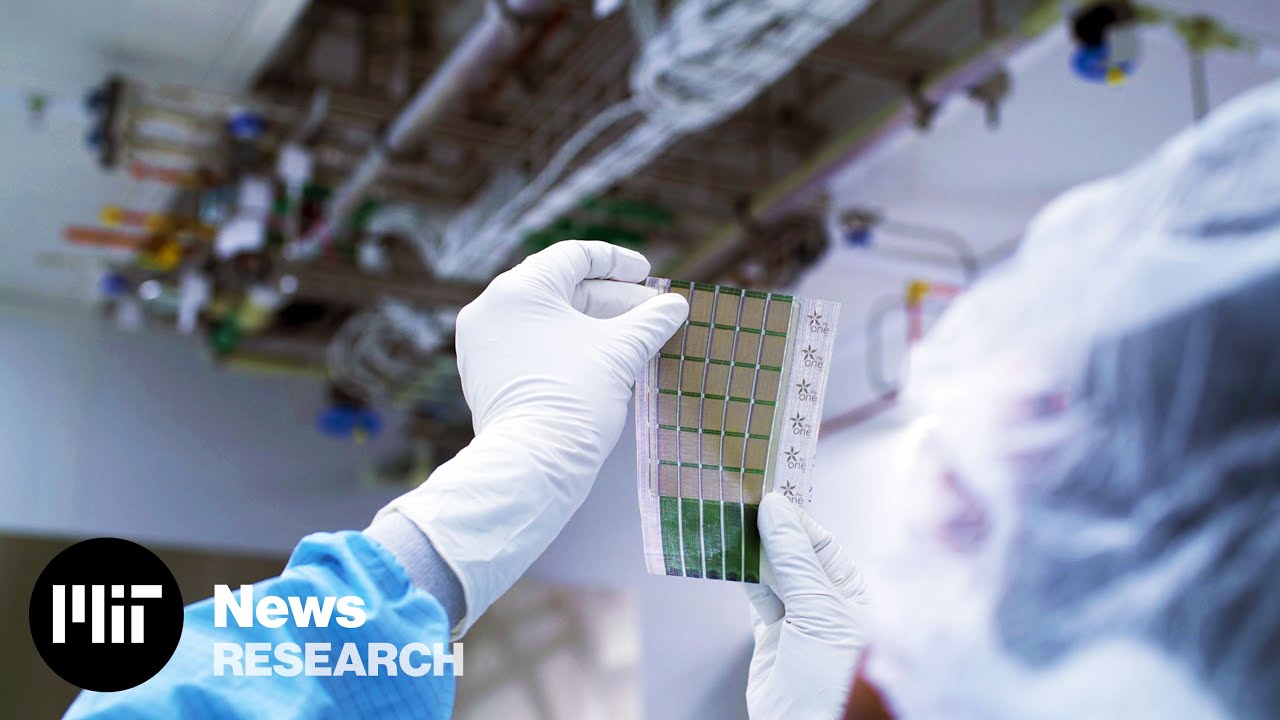
A team of engineers out of MIT's ONE Lab have developed a scalable fabrication technique to produce ultrathin, lightweight solar cells that can quickly and easily turn any surface into a power source.

Located in the new MIT Welcome Center MIT Illuminations is a new, colorful installation with custom software written by an MIT-alumni founded experiential design firm SOSO, and is used as the foundation of an introduction to programming seminar for first-year students.

As a biomedical engineer and a dancer, Research Affiliate Shriya Srinivasan is dedicated to investigating the body’s movements and sensations. Whether in the lab or on stage, “I’m thinking about how we create a sense of feeling,” she says.

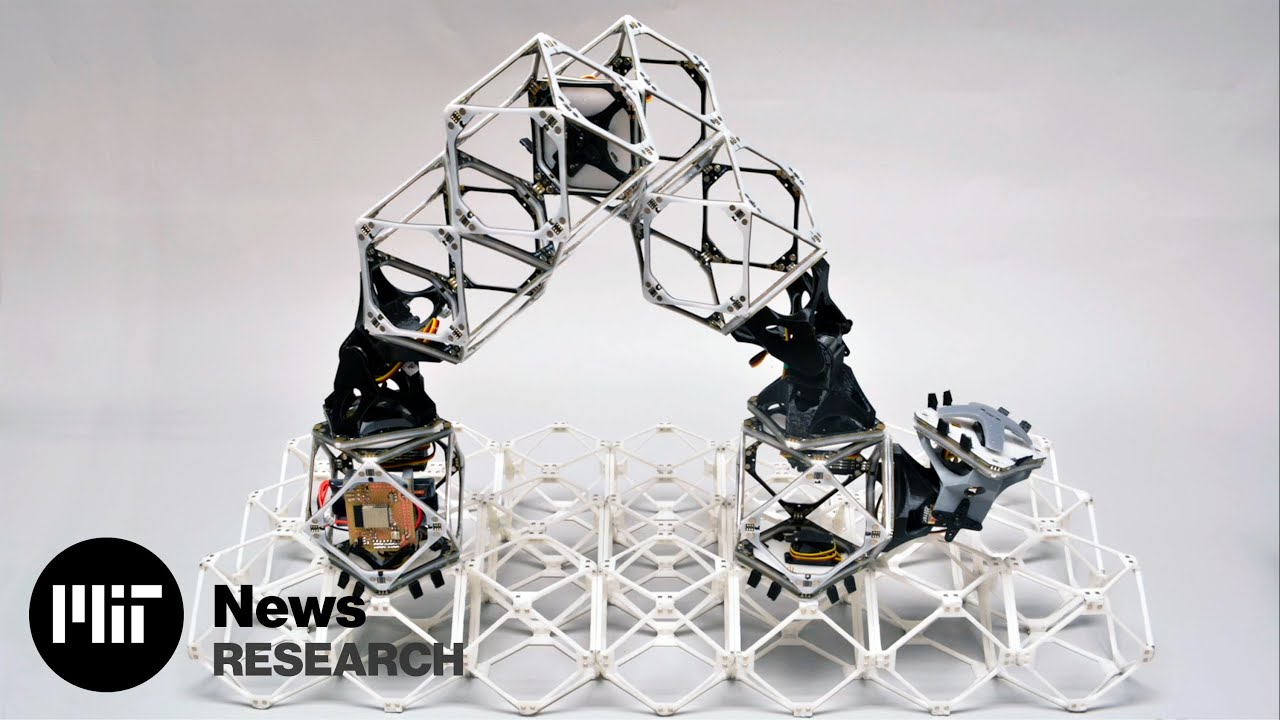
Researchers at MIT's Center for Bits and Atoms have made significant progress toward creating robots that could build nearly anything, including things much larger than themselves, from vehicles to buildings to larger robots.

More News