


Standing Still at Sinai: A Journey of Choice
Ruth’s story is not about conversion as a moment. It is about covenant as a life. Her geirus is not described as a ceremony. It is described as a relationship.

Can You Take In Shavuot Early?
It is surprising, then, that this practice is so entrenched, especially since it has no basis in Chazal or the Rishonim. … In the late 16th century, however, two Eastern European authorities record a tradition not to recite Kiddush on the first night of Shavuot until nightfall.

Seeing the Pattern: What Passover Teaches Us About the War with Iran
In that sense, this article is itself an act of haggadah. The goal is to point at what is happening around us and say: look, this is what the hand of G-d looks like in history. That obligation falls on every Jewish parent and teacher…whenever history offers a teaching moment. And this year, history is not being subtle.

The Courage of the Quiet Seder
The truth is that adults do not come to the Seder as blank slates. They come carrying the year. They come carrying whatever Egypt they have been walking through quietly.

The Responsibilities (and Possibilities) of Education
If we’re asking questions solely for the purpose of receiving answers, we’re missing the point.

Pesach: The Night We Remember, The War We Are Living
The past month has carried a similar urgency. We feel history lurching forward. Wars are unfolding in compressed timeframes, and the landscape shifts almost daily. Once again, events outpace us, and we are being hurried along.

We Are Living the Haggadah
As we recite the fifteen stanzas of Dayeinu, tracing the miracles of Yetziat Mitzrayim, we might also think of the Dayeinu we would offer for the past two and a half years. Without softening the pain or ignoring the strain, we can still give thanks for Hashem's care and protection.

Rav Moshe’s Mashiach Mentality
On Tisha B’Av, Rav Moshe would wear a threadbare garment that was beginning to tear. One could see the grief in his eyes and his longing for the yeshuah with all of his soul.

So May It Be for Us
The Jews of Shushan did not change their location. They changed the way they carried their covenant. For a moment, they stopped guarding it and started living it.

An Encounter with a King
Haman and Achashverosh have effectively lobbed a figurative grenade into the streets of Shushan, creating great consternation among the city’s entire population. The two architects of the impending horror, however, remain removed and unaffected by the turmoil in the streets. While Shushan is in an uproar, its king is busy drinking.

Purim, Language, and Jewish Identity
Because letter-based communication became so central to imperial rule, letter writing emerged as a prestigious craft. Composers of royal correspondence were trained in language, form, and official convention so that the king’s will would be expressed with clarity.

Megillat Esther: Models of Leadership
Though Mordechai received no prophecy regarding the correct course of action – hence the term perhaps – this does not prevent him from issuing clear directives to Esther. He reflects on the situation and discerns what action Hashem expects from both of them.

Sukkot: Walking with Strength
The sukkah is a reminder of Hashem’s constant care in our everyday lives. Commemorating a concept rather than a specific event reflects a more complex reality.

Sukkah Sleeping: Exemptions or Excuses?
The Rema, however, is unconvinced by weather-based excuses (Darkei Moshe, O.C. 639:3). He maintains that it is generally not sufficiently cold even in Europe to constitute a blanket exemption (pun intended) from sleeping in the sukkah.

Standing Inside the Ache
Rabbi Nachman of Breslov, zt”l, teaches that when we cry out woe is me, we begin to take stock; not just of our actions, but of our presence. Where am I? Who is it who is crying out this way? This is not confession as ritual. It is rupture, it is awakening, it is the guttural cry that breaks through inherited silence.

Do You Feel Lucky?
As Yom Kippur approaches, we are called to reflect not only on our choices, but also on the apparent randomness that shapes our lives.

Sefer Yonah and the Belief in Teshuvah
Hashem realizes that the commitment to improve does not always last, but He chooses to accept teshuvah because He cares for His creations and their survival.

Rosh Hashana: The Art of Standing
Rosh Hashana is very much a gray zone because it’s the day on which we stand between what was and what can be. It’s the day on which we judge, and are judged, for how great our future can look tomorrow.

The Veil of G-d
If one were to ask: was it worth experiencing a Holocaust which decimated one third of our people in order to attain a State of Israel? – not only would an affirmative answer be blasphemous, but so is the question.
Shavuot and the “Pintele Yid”
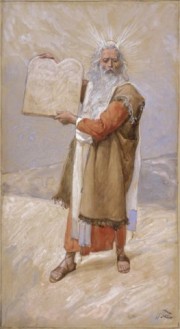
Shavuot commemorates the day when we all gathered at Har Sinai to receive the Torah, “as one person with one heart", meaning that we stood together in perfect unity. How tragic it is that it takes an attack from our enemies to make us feel unified.

An Early Second Night of Shavuot?
Since the case of early second night Yom Tov involves infringing on a holier day for the sake of a less holy one, it seems more analogous to davening Motzaei Shabbat Maariv and reciting havdalah after plag on Shabbat afternoon.

Yeru and Shalem – Yerushalayim
Yerushalayim was and always will be a city of unity — but unity of what? What do “Yeru” and “Shalem” each represent?

Lag B’Omer: A Time of Joy, Resilience and Hope for the Future
Have an enjoyable Lag B’Omer, beautiful Shabbat and a joyous and safe Chag Shavuot.

Leaping Locusts! Why is this bug different from all other bugs?
Preparing grasshoppers for consumption is very easy. No shechitah is required. And while there is a dispute among the rabbis whether they must be killed before they are eaten, this debate can be easily circumvented by freezing and killing them, ensuring that they die painlessly.

The Ride Home
Trauma therapists speak about the difference between acute trauma, brought about as a result of one traumatic event, and complex trauma, brought about over a period of time, almost imperceptibly, due to a constellation of factors. If trauma can develop gradually, healing can too.
Protektzia
We are living through exceptionally challenging times, and we need Hashem’s mercy now more than ever. The best way to reach Hashem is by making sure that His children are cared for.

Achdut, Purim and Parshat Ki Tisa
What was Moshe Rabbeinu was doing for those 40 days?

Preparing for a Spring Wedding… to God
It seems like no coincidence, then, that we read Esther and Ruth at the beginning and end of this period in the year.

Purim: The Power of Masks and Hidden Miracles
There is a deeper meaning behind the custom of dressing up on Purim.

Israel and Amalek
Judaism is about making distinctions and Israel and Amalek are polar opposites.