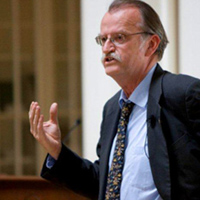
The “Miladin Životić” Award 2024
18Dec


 recipient of the Award for critical theoretical engagement
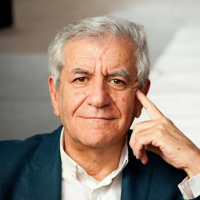
The Institute for Philosophy and Social Theory awards the 2024 Prize for Critical Engagement to Maria Todorova, a prominent historian from the Balkans. Her work deconstructed stereotypes about the Balkans in the West, advocating for an inclusive and equitable approach to the region, with significant societal impact.
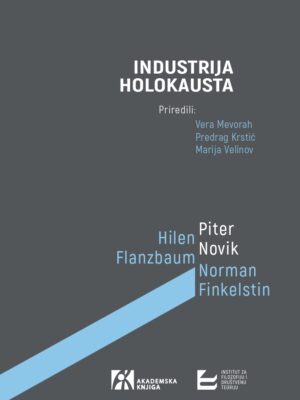


This issue features a thematic section entitled “Contemporary Islamic Political and Social Thought Before and After the Arab Spring: Mapping the Field,” as well as three original articles on just war theory in the context of Ukraine, the ethical framework for non-territorial autonomy, and on values, norms, and social dynamics. Moreover, this issue also includes a review of Zlatko Hadžidedić’s book titled “Nations and Capital: The Missing Link in Global Expansion.”
We single out a Theme Section on Media and Violence by Guest Editor Čedomir Markov, as well as thematic block of translations of significant texts on antimilitarism by Adriana Zaharijević and Predrag Krstić.
The journal is dedicated to the dialogue between architecture and philosophy through the problematization of key concepts and protocols that make the connection between these disciplines possible.
The first-ever monograph dedicated to the work of renowned critical theorist Nancy Fraser, authored by Zona Zarić and Marjan Ivković (Edinburgh University Press) will be got off the press this December 2024 and is already available for pre-order. This comprehensive study systematically reconstructs Fraser’s influential contributions to critical theory, Marxism, and socialist feminism, offering an in-depth analysis of her theories on social justice, recognition, and redistribution. The book delves into Fraser’s critical engagement with contemporary political challenges, providing a vital resource for scholars and students interested in understanding her impact on the future directions of critical theory.

The project aims to explore the thesis regarding the existence of two competing approaches to the Serbian national identity during the Yugoslav period, in which the new socialist state attempted to oppose the traditional, ethno-religious concept of the Serbian nation with a different understanding of national identity that would fit into a broader, pluralistic concept of the new society and complex state.
Building on the scholarship programs of IFDT and CAS, the project expands the program to the Western Balkans and establishes a regional program for researchers. The aim is to connect academics with public policy actors and civil society, supported by the universities in Rijeka and Belgrade, with opportunities for visits to universities in Skopje, Sarajevo, Pristina, Tirana, and Podgorica. The focus is on European integration, social and economic justice, digital transformation, and managing consequences.
Nets4Dem connects European experts in democracy, strengthening ties among existing actors for more effective collaboration. With a focus on networking in the democratic field, the project aims to link knowledge in democracy and governance, making it more accessible to policymakers. The goal is to support addressing complex challenges in developing a more inclusive society and resilient democracy.


Open Society University Network is a global network of to 41 institutions across five continents advancing cooperation in themes of democratic practice, sustainability, inequalities, human rights, global justice, arts and society, and liberal arts and sciences.

Circle U is a research-intensive and interdisciplinary alliance of nine universities from across Europe, working to provide outstanding education, research and innovation to contribute to more sustainable, democratic and healthier societies.

Regional Network of Centres for Advanced Studies in Southeast Europe induces societal change by enabling early career researchers to conduct socially engaging and policy-relevant research in the region.