


Why Do So Many Sephardic Jews Have Christian Lastnames?
Forced exile, forced conversion, assimilation and Jewish resurgence all had a big impact on Sephardic Jewish surnames.

How Did Ashkenazi Jews End Up With Famous Non-Jewish Last Names?
It’s a fact: Ashkenazi Jews often bear surnames also used by Christians.
What, if anything, does that tell us?

How Old Is Yiddish? It’s Not As Old As You Think.
Yiddish is much younger than you may have thought. Though many think it’s 1,000 years old, the evidence suggests it’s much younger.

No, Yiddish Is Not A Corruption Of German
Like man and ape are both descended from a common ancestor, Yiddish and modern German co-evolved from an older version of German.

Who Are The Jews Of France? Their Last Names Give A Clue
A significant number of Jews from the territories of the former Ottoman Empire, mainly from Turkey and usually of Sephardic origin, moved to France.

Neither Ashkenazi Nor Sephardi, Italian Jews Are A Mystery
Geographical and linguistic history reveals that the question is much more complicated than it seems.

How Important Are The Meanings Of Jewish Names?
Throughout history, male Jewish names have been selected for both their Biblical symbolism and their literal meaning.

Why Did Jewish Women Traditionally Have Secular Names, But Not Men?
Why, in traditional Jewish communities, women tend to have secular names and men tend to have Hebrew names? It’s all about the Bible.

No, Sephardic Pronunciation Is Not More ‘Correct’ Than Ashkenazi
Many people believe that when it comes to the Hebrew language, the Sephardic pronunciation is the correct one. This is wrong.
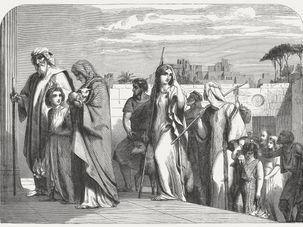
Why Do So Many Jewish Last Names Come From Women?
The existence of last names like Belkin, Dvorkin, Malkin, and Rivkin, were extremely common and represent a real idiosyncrasy.
