The Real Risk to the Global Economy
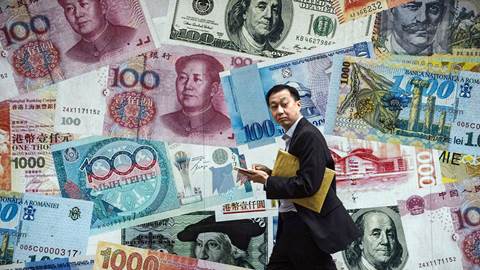
argues that institutional drift and decay are far more dangerous than even the most dramatic political crises.


Christopher Smart is a senior fellow at the Carnegie Endowment for International Peace and the Mossavar-Rahmani Center for Business at Harvard University’s Kennedy School of Government. He was a special assistant to the US president for International Economics, Trade, and Investment (2013-2015) and Deputy Assistant Secretary of the Treasury for Europe and Eurasia (2009-13).
argues that institutional drift and decay are far more dangerous than even the most dramatic political crises.

of Chatham House worries that the US and Europe are parting ways on this century’s most important economic-policy issue.
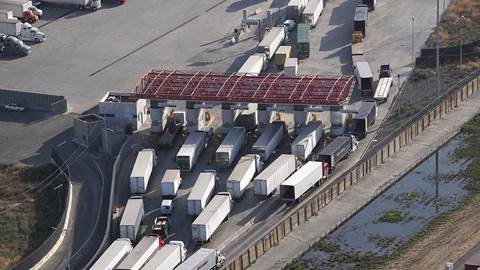
points out three fundamental flaws in the US administration's approach to globalization.
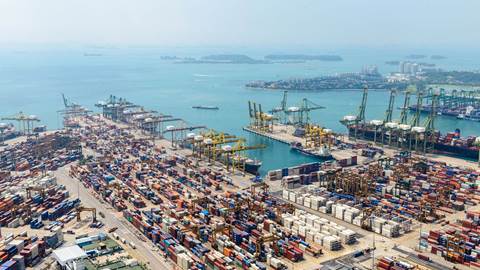
weighs in on arguments by Project Syndicate commentators about the proper role of industrial policy in the twenty-first century.

shows how bank and financial-market interdependence can be a source of resilience for the eurozone.
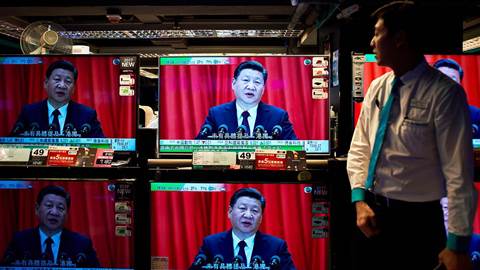
China’s success in the next five years will depend largely on how well the government manages the tensions underlying its complex agenda. In particular, China’s leaders will need to balance a muscular Communist Party, setting standards and protecting the public interest, with an empowered market, driving the economy into the future.
The preference of some countries to isolate themselves within their borders is anachronistic and self-defeating, but it would be a serious mistake for others, fearing contagion, to respond by imposing strict isolation. Even in states that have succumbed to reductionist discourses, much of the population has not.

When the Bretton Woods Agreement was hashed out in 1944, it was agreed that countries with current-account deficits should be able to limit temporarily purchases of goods from countries running surpluses. In the ensuing 73 years, the so-called "scarce-currency clause" has been largely forgotten; but it may be time to bring it back.

Republican leaders have a choice: they can either continue to collaborate with President Donald Trump, thereby courting disaster, or they can renounce him, finally putting their country’s democracy ahead of loyalty to their party tribe. They are hardly the first politicians to face such a decision.

As the global economic recovery strengthens, and central banks move to raise interest rates, they need to improve their communication with the general public. To do that, they should follow the trail blazed by Donald Trump.

With talks on the UK's withdrawal from the EU stalled, negotiators should shift to the temporary “transition” Prime Minister Theresa May officially requested last month. Above all, the negotiators should focus immediately on the British budget contributions that will be required to make an orderly transition possible.

In recent decades, as President Vladimir Putin has entrenched his authority, Russia has seemed to be moving backward socially and economically. But while the Kremlin knows that it must reverse this trajectory, genuine reform would be incompatible with the kleptocratic character of Putin’s regime.

Global Bookmark:
Distinguished thinkers review the world’s most important new books on politics, economics, and international affairs.

As a part of their efforts to roll back the 2010 Dodd-Frank Act, congressional Republicans have approved a measure that would have courts, rather than regulators, oversee megabank bankruptcies. It is now up to the Trump administration to decide if it wants to set the stage for a repeat of the Lehman Brothers collapse in 2008.
