Like the MamaLand Empire!

Have you Liked the AliyahLand adventure?
      ...and sign up for weekly aliyah tips by email (it's free).

Showing posts with label happy. Show all posts

Say Shalom... and other lies of Hebrew school

image

Hey, there, long time no see!
You know, I could give you a whole bunch of excuses, about how things are busy busy busy and I'm working hard to both make a living and write creatively - and ideally get published someday soon.
But I won't.

I'll just share with you something I just realized almost NOBODY tells olim.
When you start learning Hebrew, they begin with hello and goodbye, which -- almost everybody will tell you -- is the exact same word: שלום / Shalom.
Handy, right?

Except that much of the time you probably won't use it for either.

Shalom is definitely a word, and you will certainly use it often.
But maybe not the way you think.

First of all, I don't know if I've ever heard any Israeli actually say Shalom as goodbye. I honestly think people would look at you weird if you tried. It IS used in formal contexts, like in an add reading, "Say Goodbye to Dandruff," you might use the word "Shalom." I've only ever seen this in a negative context - things you don't want, like cockroaches.

Things that are cool in Israel #12: Boureka Laws (with boureka and freezer puff pastry dough vocab lists)


Every once in a while, just when we start feeling Israeli, something new comes along that honestly charms the pants off of me all over again. Something like… the Boureka Law.

Yup, that’s really a thing. Read on to find out.

Tummy rumbles 

For supper tonight, at NR's request, we're making homemade bourekas. We bought the pastry and now we just have to make a bunch of fillings and bake them up. In case you're wondering, there are a million kinds of freezer pastry here. Probably in North America as well, but there, most of them weren't kosher. Usually, we just

Little Minyans Everywhere

So we moved!  And one of the greatest unsung features of our building is a very regular minyan.

This is temporary, due to corona. Building minyans are nothing new in Israel, but usually they're "lobby minyans" held only for "quickie" davening, like maariv after Shabbos, not on a regular basis, with a Torah, for longer davening. And definitely not Shabbos morning, when everybody tends to go off in their own direction.

Until now.
And one of the joys of life in a Jewish country, I've decided, is waking up Shabbos morning surrounded by prayer.
Not just mumbling, but all-out singing, with gusto.

(This picture has been making the rounds of social media... best guesses seem to suggest it's somewhere in England.  It’s definitely not Israel, so I guess this phenomenon has spread out a little.)

image

Last Shabbos, our last in our old apartment, I went out for a walk with the kids after we lit candles (with masks on!).  We passed at least a dozen little minyanim, so we started

Weird, wacky, wonderful (Hebrew) words: I'm already (כְּבָר) lying to you...

Running out to the car to get something?  Just popping out to the makolet?
Just let folks know you'll be right back... like by saying you'll be right back.
Right?

Wrong.
Not in Hebrew.  In Hebrew, you don't say, "I'll be right back."

(Okay, you can, before everybody rushes in to correct me -- there IS an expression, אני תכף חוזר / ani techef chozer / "I will immediately return," or תכף אשוב / techef ashuv / which literally means this very thing. But I would argue that few people use these expressions in real life, just write them on signs in shop windows.)

Instead, usually, you say, אני כבר חוזר / ani kvar chozeir / "I'm already on my way back."
Even while you're turning around and walking the other way.

This expression has been tickling my

To every fruit, there is a season (with helpful seasonal Hebrew vocabulary!)


In Canada, there are seasons. Lots and lots of them. Well, four, but they’re all exciting and distinctly different. You’re probably familiar with them: winter, spring, summer, and fall.

Israel doesn’t have seasons, as such, a fact which has been driven home by this long, warm fall. And been hammered into our skulls with a recent two-week November heatwave חמסין / chamseen (hot wind from the eastern deserts) that’s left us parched and sweating, and left my plants wilting at a time of year when they’re usually starting to soak up the first downpours of the year.

(Interestingly, as this article points out, most Israelis probably call the chamseen by that name because it’s hot, which is חם / cham in Hebrew, in fact it comes from the Arabic word for fifty – meaning fifty days a year of icky sandy hot and dry conditions.)

Spring and fall are often called עונות המעבר / onot hama’avar, the transitional season. Meaning they’re neither here nor there – just seasons that get you from one place to another. (When you sit on the aisle in a movie theatre or airplane, you’re also sitting on the מעבר / ma’avar – exactly the same word.)

The term onot hama’avar usually crops up when we’re talking about health, and other problems, that come up during spring, and especially fall. Colds, allergies, migraines, skin problems – most Israelis are suffering from some combination of all these at the moment, compounded by the current hot, dry wind which has meant I can’t smile or my lips will crack.

Normally, the fall עונת המעבר / onat hama’avar (singular) is also the time to get immunized with this year’s flu vaccine, a fact driven into my head by my ulpan teacher. But this year the vaccines were late (for various international reasons and not due to a conspiracy and/or the fact we have no government!) and we haven’t gotten ours yet.

But however you feel about the weather, that’s actually NOT what a want to talk about. Because there are even more important seasons in Israel: seasons you must be aware of, seasons people argue heatedly about on Facebook, seasons you need to prepare for before you leave the house.

I’m talking about fruit seasons, of course.

I’ve already said many times that we’re huge fans of Israeli fruit. It’s cheap and more delicious than anything I ever

Shutting Down, Starting Anew (guest post)


Sometimes, someone else says it better than I ever could.  Leonie Lachamish is a 41-year olah from the UK who lives near Jerusalem.

Every Erev Yom Kippur, while we were bringing up young children, I'd make sure the radio was on for the 2pm news so we could all hear the announcement that Israel's National Airport, Ben Gurion Airport (that functions 24/7) was closing down until after Yom Kippur (around 30 hours later) and then that all the radio stations were ceasing their broadcasts until

Coming to Israel? You NEED these comprehensive travel tips! (guest post)

Summer tourism and aliyah season is almost here, and whether it’s your first trip to Israel or your eightieth, don’t you wish you could have a list of all the little things everybody else wishes they’d thought of? 

This comprehensive travel guide was written by Debra Nussbaum Stepen.  She’s a Licensed Tour Guide in Israel (no mean feat, as it takes years of study and deep historical and geographical knowledge!) and you can find out more about her and her services at debratours.com.

Comprehensive Travel Tips for Tourists

1. Do not throw out the little slip of paper that they give you at the airport. This is your entry visa and entitles you to exemption of the 17% VAT tax on

Seriously, Dude?


This is another great topic for a winter blog post, as it turns out, because for about ten months of the year, we don't have to think about the dude.

Who is the dude?  Well, actually, the dude is a WHAT, as I’m sure you already know if you've spent any serious time in Israel.

First of all, the technical definition:
Dude = דוּד / dude = boiler, pot, kettle, tank, vat…
In other words, what many people in North America at least refer to redundantly as a “hot-water heater.”

Except that, while in North America our house had a big huge water heater in the basement, powered by natural gas, that kept the water at a nice cozy high temperature 24/7/365 (unless we went on vacation and left just the pilot light on), Israelis (and some others) have figured out that that doesn’t make much sense, because for 20-some-odd hours of the day we simply don’t need hot water.

Therefore, most homes in Israel have a switch for the dude, somewhere near the bathroom, so you plan ahead and turn on the dude, which is electric, about 15-20 minutes before you need hot water.  It heats up, you take your shower, end of story.  It can be a hassle to remember this ahead of time, but lots of things in life are the exact same kind of hassle.  Most of us don’t keep a kettle full of boiling water on the counter in case we want tea or coffee, we fill up the kettle and plug it in and cool our heels while we wait patiently for our drink.

Now, I mentioned that the dude is electric, but I also said that for about ten months of the year, we don’t have to think about turning

Feeling under the WEATHER...? Two things making me happy in the rain!

image

Feeling under the weather…?

And I do mean that literally, by the way.  I wouldn't blame you if you were.  We've had a LOT of weather to be under this winter so far.  The great news is that water levels in the Kinneret (Sea of Galilee) are on their way back up to where they're supposed to be, which is one measure of how relatively water-secure this country is.

[QUICK ASIDE FOR ISRAEL WATER LESSON!]

The Kinneret was once Israel’s main source of fresh water.  Today, thanks to desalination, it is apparently only responsible for 10%.  Still a considerable chunk.  Water level in the Kinneret is measured against 3 lines: 

  • UPPER RED = Full.  The level hasn’t reached this point since about 2002.
  • LOWER RED = Lowest “normal” level.  Below this point will have environmental consequences.
  • BLACK = Serious drought / environmental crisis.  The line dipped down below this round about October following 5 years of drought and insufficient winter rain.

image

(check a live version of this graph)

Oh, yeah, and because the whole lake is below sea level, the numbers run down – a “bigger,” i.e., more negative, number is WORSE, not better.

As you can see from this graph, we’re back above the black line thanks to this winter’s prodigious rain, but not all the way back up to that slightly more comfy lower red line. 

[END OF LESSON]

But while we're feeling flush (ahem) when it comes to water, we're also being deluged in a desert country that's ill-prepared to deal with an excess of water.  When it’s raining, the streets flood, programs and trips get cancelled, and it can be very dangerous to be out on the roads.

All of which means, it’s a lot better to stay home if you possibly can.  (Even though, without central heating, surrounded by dank concrete walls, it can get pretty miserable inside the house as well…)

So I wanted to share two things that I really

What’s the best age to make aliyah? (Spoiler: There isn’t one.)

image

What's the best age to make aliyah?  What's the worst age?  The truth is, there is no perfect age.  It’s always hard.

You read that right: making aliyah can be tough at any age, but I also believe it can be great at any age.  So much depends on you, and where you are in your life, and how flexible you are and ready for change and challenge (and growth, and we all know growth is painful!).

Yes, aliyah is tough.  HOWEVER.  Since there are no clouds without a silver lining, there’s always a flipside... so I thought it would be fun to put together three reasons it's tougher to make aliyah when you're older, along with three reasons it’s easier... and then the flipside: three reasons it’s tougher when you're younger and three reasons it’s easier. 

Whew!  It sounds complicated to explain, but I think it’ll be clear

Israel: It’s for the birds (and for you)

image

When I met my first husband, I told him about our family's annual camping trips to provincial parks where we'd drive in, park on the site, pitch the tent, and head to the beach or river or forest or whatever to enjoy nature.  Sometimes, those campsites would have running water, other times, you had to walk somewhere else to get water.  My father's strategy was sending the kids to wash dishes in the bathroom -- strictly forbidden according to all provincial campground rules, but you know.  Someone has to be an exception to the rules.

So that was camping.

But my first husband quickly declared, "It doesn't count if you can get to it with a car."

He would have had a hard time with Israel.

Here, camping sometimes means that your tent is just a few feet away from the next person's…

image

(© Tiberias municipality via Wikimedia)

… and hiking usually means taking one of quite a few well-used routes, like the Israel Trail, a 1025 km. (look it up!) route – nothing to sneeze at, really, given that National Geographic has called one of the world's 20 most "epic trails."  But there certainly isn’t the variety, and from what I’ve heard, you’re very likely, in most stretches and hiking-friendly seasons, to bump into a number of fellow travellers.

image

(It’s also perhaps the only one that apparently features a lending library so you can pick up reading material along the way -- People of the Book, indeed.)

image

(photo credit © royisoko via Wikimedia)

Finding a nature getaway definitely isn't hard in Israel.  But as with so many things when you make aliyah, you may have to (slightly) redefine what you mean by the term. 

Since almost every spot is within half an hour's drive of a big city, and there are factories and processing plants of all kinds everywhere from north to south, you're probably not going to get total solitude and silence to commune with nature unless you take to the deep south.

But that has its upside, too, like the fact that you can hop in a bus in Nahariya and within not very long, be standing in the middle of one of the world's most extraordinary bird sanctuaries -- the Hula Valley.  A crucial migration spot between Europe and Africa (and back), the Hula Valley hosts about 500 million migrating birds every single year, and an incredible range of birds as well.

And it happens to be crane season RIGHT NOW.  Well, okay, as our guide explained, these days, it's crane season all winter long, at least until March.

That's because of the Strange History of the Hula Valley, which I'll sum up here very briefly.
Maybe in Hebrew school you learned how

Three things that are better in Israel since we came

image

A few months ago I was interviewing longtime olim and they all talked about the different ways that Israel was different since they came 20, 30, or even 40 years ago.  Which is nice, to think that the general trend is onward and upward, but not always so encouraging for those of us who are coming now (for example, hearing that you don’t have to wait a year to get a phone line when we’re already used to it being practically instant back wherever we came from!).

But things aren’t just changing in the long term.  We’ve only been here for 5 years (Five?!  How did that happen??!?) and already there are things that I’m noticing that have changed in little ways, making life better and better still…

Here are 3 of my favourites.  If you’re here in Israel already, I’d love to hear yours in the Comments!

1) Fruit

Actually, I didn’t think the fruit situation here COULD get much better.  Except for the fact that a) fruit here is so seasonal, and b) we sometimes like frozen fruit for baking and smoothies.  In Toronto, we used to just keep a tub of blueberries, some strawberries, mangos, whatever, in the freezer to toss into things.  Here, we couldn’t really do that, creating the irony of a bounty of strawberries davka (exactly) during the chilly winter season when you really don’t feel like an icy smoothie.  Where were the strawberries during the summer when I desperately wanted them? I wondered.

And now, guess what?  FROZEN fruit has come along to solve some of our fruit problems including strawberries, blueberries (impossible to get fresh where we live), and more. 

image

There are even these smoothie-oriented mixes, though they all have “weird” stuff in them like

What’s cheaper??? Three things you’ll love paying less for in Israel

image

We all love to kvetch.  Or maybe I’m just speaking for myself.  I definitely love to kvetch!  But sometimes, it’s worth stepping back and looking around at how much is truly wonderful about this unbelievable place we live.

Here are three that I’m really enjoying this week:

1. Public Transportation

This is my number one.  In fact, this was what caught my eye on Facebook today.  Someone was kvetching about the high cost of buying and renting a car—and they were right.

True, cars are expensive, but public transit is almost laughably cheap.   It’s even cheaper than when we arrived in 2013.  In an era when nothing goes down in price, fares were actually LOWERED around most of the country a couple of years ago!

Here’s what I’m talking about:

I took the kiddies to Jerusalem two days ago.  The three of us went from north of Haifa to Jerusalem and back, taking local buses in both cities, inter-city buses, and trains.  The train was an hour, a one-hour bus ride, then several local trips within Jerusalem.  Then, five hours later, an inter-city bus ride back to Haifa and one local trip to get home.

Total cost?  ₪60 per person. That’s under $20 (US).

Oh, and we could have traveled for another 12+ hours on the same fare, had we been so inclined, because it’s good for 24 hours from purchase.

Where, outside of Israel, can you get around cheaper than that?

(NOTE:  This isn’t what trains look like in Israel nowadays!  This is an authentic 1970s-era train on display in the Railway Museum here in Haifa.  Photo © Deror Avi via Wikimedia)

Two years ago, we were in Ottawa and I wanted to leave my family there and get back to Toronto by bus.  It’s a five-hour train ride, so farther

Weird, wacky, wonderful (Hebrew) words: Time (זְמַן) after Time (פַּעַם) and more…

image

I figured it was time for a new post!  I know, I haven't posted anything in so long, and now this is like 3 in a 2-week period.  Blogging is like that sometimes.

And speaking of TIME... this post is all about time.  Specifically, the words we use to talk about it in Hebrew.

We use words for time a lot, which makes them extremely useful.
We say things to each other like:

  • "What time is the party?"
  • "How much time do you have?"
  • "How many times have you eaten blue cheese?"
  • "I sometimes think I'll try it someday."

In English, all four of those are the same word: time.
Not so in Hebrew.

  • What time is the party? / be’eyzo sha’ah hamesiba / באיזו שעה המסיבה
  • How much time do you have? / kama zman yesh lach / כמה זמן יש לך
  • How many times have you eaten blue cheese? / kama pe’amim achalt gevina kechula / כמה פעמים אכלת גבינה כחולה
  • I sometimes think I’ll try it someday. / leefameem ani choshevet she-anaseh yom echad / לפעמים אני חושבת שאנסה יום אחד

What are the time words I’ve used here?

  • Sha’ah / שעה – usually, hour
  • Pa’am / פעם – usually, time as in “how many times” (think of it as “occurrence”)
  • Zman / זמן – usually, time as in the abstract noun, like “we don’t have much time.”

For the fourth sentence, with sometimes, you're going to need a

Weird, wacky, wonderful (Hebrew) words: אֶפְשָׁר / Possible (efshar)

image

You've been reading these posts for a while.  How about I reward you with a gift?

It's a single word that works as a magic key, opening doors here like no other word can do -- including "please" (בבקשה), which really doesn't go a long way at all in Israel.

Actually, I’ve come to believe that saying please is actually a cue for whoever is supposed to be helping you--in restaurants, government offices, or wherever--to ignore you for a certain period of time.  Like counting to 10 when you're angry.  At least, they kind of stare at me cluelessly when I do it.  I’m not kidding.  It will only slow you down here.  Try it!

So what's the word?
Well, it's a little word that makes everything POSSIBLE...

Because it means "possible"!
And the word is... אפשר / efshar.

(And okay, since I’m not the grammar maven that you might be—technically it means something a lot more like “possibly,” but for the rest of this post, you and I are going to agree to overlook  grammar and technicalities almost entirely… if you want a more linguistically inclined site, check out Balashon – currently on hiatus but nonetheless packed with great info!  Also a terrific pun: balash means detective, lashon means language.)

Now, in English, the word “possible” isn’t used nearly as often in Hebrew. Here, you can use this little word instead of “please” in a huge variety of situations.

For example, in a restaurant:

  • Efshar ketchup? / Literally, “possibly ketchup?” but it means

Two countries, two passport offices: Israeli bureaucracy in 2018

image

Let's play a game: see if you can guess which country is which!  Two countries, two passport offices.  One of these experiences took place in Canada; the other in Israel.  Let’s let them go head to head.

PASSPORT EXPERIENCE #1:

Walk into passport office, get in line.  Wait in line an hour, reach wicket.  Lady inspects documents: birth certificate, passport application, passport photos, signatures, guarantor form and signatures, old passport, miscellaneous other ID.  "Great," she says, "Here's your number.  You can go get in line in the other room."  Half an hour in line in the real passport room waiting for the number to be called, go up, hand in documents, pay fee, leave.  In and out in under two hours!

PASSPORT EXPERIENCE #2:

Walk into passport office five minutes early for appointment made online.  Enter info into computer at entrance, receive a number.  Sit down for 2 minutes until number is called.  Go up to wicket, hand over old passport and ID.  "Great," she says, "Here's the price."  Tell her I already paid online.  "Oh, right, no problem.  Here's your receipt."  In and out in under ten minutes!

Now... in which country did I have which experience?

You probably already guessed, but

Weird, wacky, wonderful (Hebrew) words: לְהִתגַעגֵעַ / To Miss

image

When you move to Israel, there’s inevitably going to be stuff you miss: people, places, things. So it’s important to be able to talk about missing stuff in Hebrew. On the oral part of the ulpan exam, that was one of the things they asked us about: how we’re getting used to life in Israel.

In English, we talk about missing stuff all the time. When I say “missing,” I mean the feeling of longing when you’re not around.

What do we mean when we talk about MISSING?

We do have other types of “miss” in English, more than one, in fact, like...

  • Missing a train, which is לְפַסְפֵּס / le’faspeis in Hebrew, lo aleinu (we should never know such sorrow).
  • Or missing out, לְהַחמִיץ / le’hachmitz, as in the FOMO (fear of missing out) when all your family back in Toronto is going to see The Book of Mormon while I’m stuck here in Israel going to see some two-bit circus (you may recognize the root of this word from the word chametz at the seder... it also means when something ferments, or goes sour, meaning you’ve missed the best-before date).
  • Or missing the mark, לְהַחטִיא / le’hachtiy, as in a blog post which promises to talk about one thing and then goes on and on about all kinds of irrelevant homonyms.
  • There’s even the kind of missing where you’re just about to make challah late, late, late on a Thursday night and discover that you’re missing flour – לַחסוֹר / la’chsor, meaning “to lack.” (You can also use it as in: חסר לי הקמח / chaser li hakemach / “I’m missing the flour”.) This is the kind of missing that is sometimes translated as “want,” as in, “for want of a point, this blog post was lost.”

Ahem.

But none of those is what I’m talking about here. I’m talking about missing your mother, your sisters, your son in Toronto—they don’t call, they don’t write (except when they do, but I’m practicing to be a bubby someday), and some weeks we are reduced to merely clicking Like on each others’ things to remember that we are all out in the world somewhere.

In English, the word “to miss” is nicely transitive, meaning you can’t just miss, in the same way you can’t say, “I love” or “I admire.” You have to miss something; you miss somebody.

Hebrew has that word too, fortunately. Unfortunately, it’s a silly word. A word you might not be able to say without giggling, and which in fact sounds a heck of a lot LIKE giggling when you say it. Here it is: לְהִתגַעגֵעַ / le’hitgageya.

(What? I put it in the headline so the surprise was ruined? Drat, drat, drat... my

Seasons Change: Dreaming of Spring in Israel

image

Moving to Israel, everybody told us, I’d have to give up on spring – there are no seasons here. I wish I didn’t love spring so much – it’s such a cliché – but how could I not? The smell of rain clinging to everything in sight, the soft bounce of the dirt underfoot. Mud everywhere, but also life.

I only learned to love the seasons when I started gardening in our last home, a tiny Toronto bungalow with an equally tiny lot.

The backyard was a mix of sand and shade – a gardener’s nightmare where only ants could play. Grass refused to grow, though many attempts had been made over the years.

But over the eight years we lived there, with the help of two compost piles and countless experiments with hardy native species (and countless hours weeding out perennial sunflowers), things improved, slowly.

I knew it was getting better when I spotted snails. Though many gardeners are horrified at the thought of snails, chomping up pretty hosta leaves and oozing slime trails, I took them as a compliment. Where there are snails, there is moisture and decay. And where there is moisture and decay, there is life.

My backyard had come to life.

When we moved to Israel in August of 2013, it was more of a nightmare than a season. Back in Toronto, it was also the full heat of the summer, but there was hope of fall, and the ripening of tomatoes to console us from the heat, or what we called heat.

In Toronto, the heat isn’t an enemy. It doesn’t leap on your chest and keep you down for two months, three months, four. It doesn’t make you stop, panting, for water, every block on the way to the grocery store. It doesn’t make you duck into banks just to enjoy the air conditioning. It doesn’t make the kids cry as you weave drunkenly down the sidewalk, in and out of every patch of shade. It goes away at night and lets you sleep, or at least sit on the porch with a glass of wine.

Here, it was hot. And it wasn’t summer as I knew it. Nothing was growing – well, nasty-looking succulent plants with bulbous, waxy leaves, or spikes, or unattractive protuberances. Lizards skittered in the dappled light beneath trees. When lizards are happy to play in the shade, it’s truly a hot day.

But one day, well into what I used to think of as fall, it rained. Just a little – the random specks they call teef-toof. But then it happened again, and another evening, I had to buy the kids umbrellas. The rain had stopped by the time we got out of the store, but everyone around us knew – winter was on its way.

And suddenly, suddenly, the world came alive.

Another day, a sandy front yard I passed every day on our way to my son’s kindergarten was full of green stubble – grass! The next, all the bushes, it seemed, had new, pale-green leaves; a few, here and there. The ground was awakening at last.

Now, months later, we’re nearing the end of winter. We haven’t had enough rain, everybody agrees, but all is green and lovely. Cool breezes blow through the window, citrus trees exuberantly flaunt their colourful baubles: lemons, oranges, kumquats.

It turns out there are seasons in Israel, just not the ones I’m used to. Every Israeli knows them intimately.

Things that are cool in Israel #11: Milk Bags (& their awesomely smart holders!)

image

What???  Four years in Israel and only 10 things are cool?  Impossible!

(And yes, shocking but true; another aliyahversary has passed, marking another year for us living in this amazing Holy Land!)

So here we are with a long-belated #11 – something we’ve been enjoying since our first few days here: milk in bags.

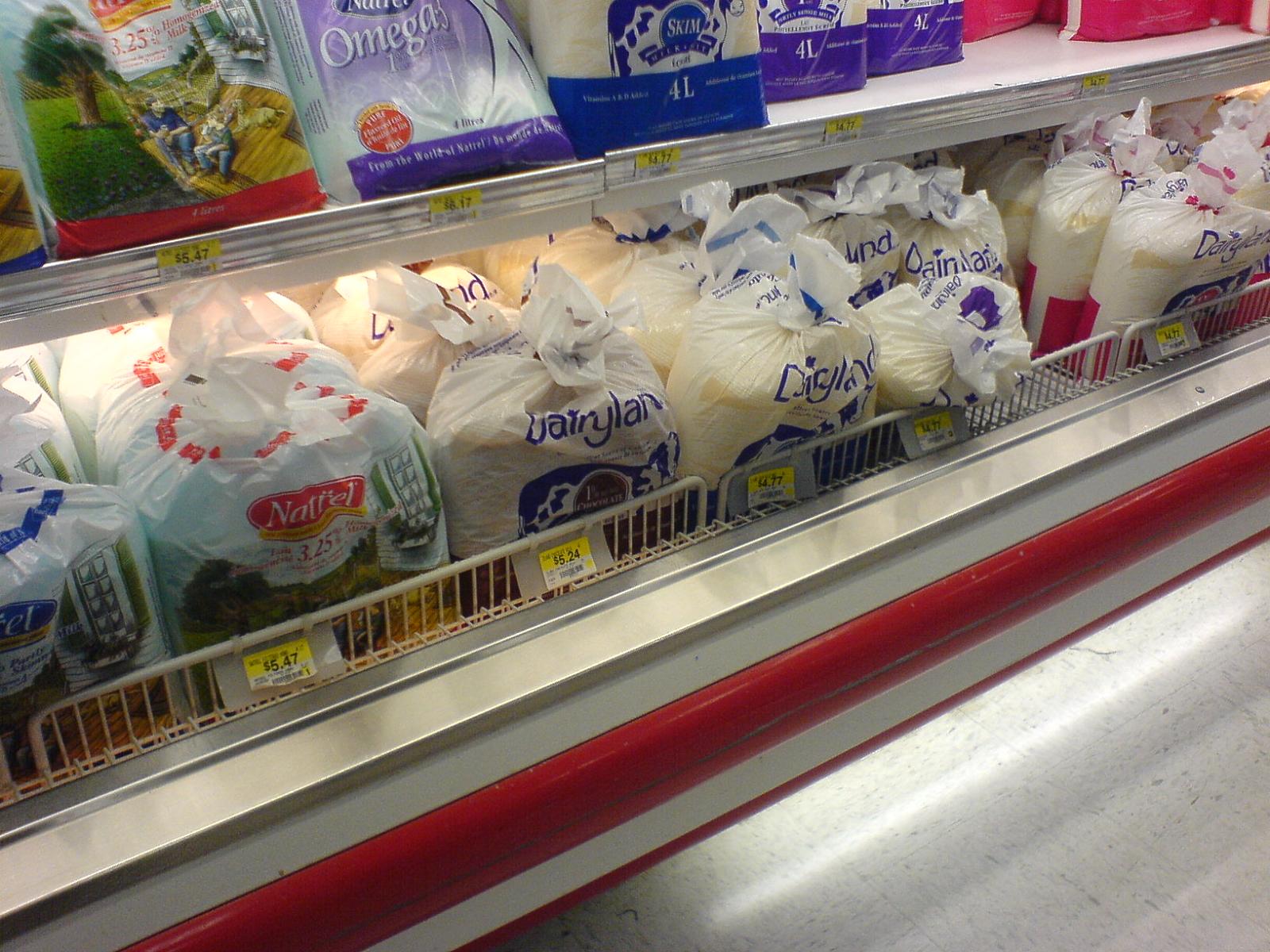
Now, as Canadians, milk bags and their cute rectangular plastic holders were not new to us as they are for many olim from the U.S. and elsewhere.  Coast to coast in Canada, walk into any supermarket and you’ll see a huge display of them:

Image result for canada milk

Photo © Alex Dawson via Wikimedia

So I grew up using milk bags, both loving and hating them.  They’re very handy to keep around, they don’t hog space in your fridge, you can pop them in the freezer if you bought too many.  But on the other hand… when you need to open them, you have to run around looking for a pair of scissors.

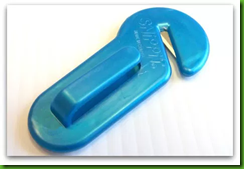
(So much so that in 1979, a Toronto inventor created the “Snippit,” a little device that hangs on the freezer and cuts milk bags open.)

image

(photo credit © Tangibles, the Snippit company)

But no need for a Snippit in Israel!

Here in Israel, there isn’t

When NOT to come on your Israel pilot trip…

image

I never thought I’d be saying this.  Keep in mind:  I’m not saying don’t come at all!  A pilot trip is one of the best investments you can make in your own aliyah!  Please come visit before you move here. 

But what I’m saying is… think before you plan.  Be nice to those of us hosting and welcoming you to our communities.  Pretty please?

Why mention this now?

We’re in the middle of the last week of school, and also, I suppose, the start of the aliyah season, because we have several pilot-trip families converging on KShmu over the next couple of weeks.  Which is terrific – I’m always so, so,  happy to show off our community if I can.

Google