Dances on the Footpath

  • About – 2012 Edition
  • About My Images and Avatar
  • About Page from 2009

Cuckoo Did Get A Mention Here On Her Birthday This Year…

Posted by Richard S. on February 5, 2017
Posted in: Uncategorized. Leave a comment

Well, it’s February 5, so it’s no longer Cuckoo’s birthday, and I didn’t get a Cuckoo birthday post up in time. But she did actually get a mention here on her birthday. If you go to the comments listed in the sidebar (though I should add, this will apply only if you’re reading this post while it’s relatively new), you’ll see new comments to the old post Discussion, Info and Great Pics Related to the Earliest Appearances of Cuckoo (thanks to Mel!), This is because there is a new person visiting the post who is going to try to follow a new lead (from family sources) to find out more information quite possibly regarding Cuckoo’s husband, K.S. More (or Moray).

It will be great if we end up getting some new information to add to the huge amount of Cuckoo-related info that’s accumulated in this post (and prior ones), but even if that doesn’t work, I am delighted that people keep returning to the Cuckoo post(s), and I’d be happy to see that go on forever.

But meanwhile, as I have said, I have ideas for some more new posts going in a slightly different direction from the old movie topics, and I think another one will be up soon…


Odd(itie)s and Ends, Joys of Fusion, and Blogging Restlessness

Posted by Richard S. on December 23, 2016
Posted in: Uncategorized. Leave a comment

Within the past year, I think I have written about half a dozen posts that I didn’t ever finish. One problem I have had, as I see it, is that I have gotten too stuck on the idea that I have to write a comprehensive – or at least cohesive – post on one thing that is somehow related to the area where this blog has been most concentrated over the past few years. But, at the same time, I guess I have gotten a little restless. I post a lot of different things on Facebook (in addition to the things related to the stuff people are so used to here), but Facebook posts are by nature very fleeting. The answer to this problem, I think, is either to start a new blog (in addition to this one, that is) or to change the direction of this blog somewhat. Well, actually, I already have started changing it again; the question is how far to go.

For this month, I have decided to write a post that is a little more scattered and eclectic than usual, which may signal a direction for other posts to come. I also decided that I don’t have to work around one coherent theme, but it seems that I actually did end up with a theme (which I hope you also will see) . . .

For a long time, I have wanted to write a post about Tanya Wells. Ms. Wells is a British woman who has become somewhat renowned for her performance of ghazals and other music from the traditions of India and Pakistan. She is a great singer and deserves recognition just for that. But, of course, some people also make a big deal about the fact that a “white” woman has become so knowledgeable and accomplished in these styles. I have read interviews with Tanya in which she talked about how she has ghazals and other Indian or Pakistani music playing through her headphones all the time and doesn’t even want to listen to anything else. And I know exactly what that is like, because I was close to being that way for a while, myself. The big difference between us, of course, is that I can’t sing to save my life. (And that is kind of ironic, considering that my last name is Singer!) But one big thing that I do have in common with Tanya is that I also have this special kind of musical appreciation that some people have told me is “amazing” (though what they really might have meant was “freaky”), considering my own nationality and origins. I don’t really know why it should strike anybody as amazing, because it is very easy to find ghazals and old Indian and Pakistani film music – especially these days – even if you live in the U.S. or U.K. or in any of a whole lot of other countries far away from India. But anyway…

Here is Tanya Wells singing “Gulon Mein Rang Bhare” by Faiz Ahmed Faiz (and Mehdi Hassan).

By the way, if this makes you think about a North American qawwali group that I have written about previously called Fanna-Fi-Allah Sufi Qawwali, I believe they and Tanya have actually shared some of the same promotion and/or booking agents. So, they actually have more in common than their seemingly unusual musical affinities.

Of course, there are also a few contemporary “white” dancers who became famous for their accomplishments in Indian classical dance, and I might write about them or include them in another post sometime. But for now, I wanted to mention a phenomenon that is almost a converse of that (if not exactly): There are quite a few people of Indian origin who have been doing Indian classical dances to modern Western pop music. If you go to YouTube, you can probably find hundreds of examples of that.

More than a few people can be found on YouTube doing Bharatanatyam dances to Sia, who happens to be one of my favorite contemporary pop singers (at least among those who are very popular right now). I guess part of the reason for that is that Sia is an obvious choice for someone who wants to try out dance moves in general. Sia’s hits are intended to be dance music, and her videos and live performances are focused on dance. In fact, they feature excellent modern dancers, and they almost always star the highly talented – and now world-famous – American prodigy named Maddie Ziegler. (I can’t quite picture Maddie doing Bharatanatyam, but she still is very young, so I wouldn’t rule out the possibility – if she were given the right training.)

The Sia-based Bharatanatyam dance performances that I have seen cover a pretty wide range, too. I can think of one that I saw that combines Bharatanatyam with a very modern kind of dance and modern clothing, and another one in which the dancer is dressed in very full Indian dance attire. The one below falls somewhere in between, and it is my favorite. I like the way it combines a traditional Bharatanatyam approach (including very well performed storytelling elements) with a nice, gritty urban backdrop. I also like the fact that this dancer (identified on YouTube as Tanvi Karekar) keeps the focus on her dance, not depending on props, costuming, etc. And there is something very sweet about her performance, too; in fact, she’s damn near adorable.

I have recently read another book on dance and dance history (thanks again to the NY Public Library for the Performing Arts at Lincoln Center), but this one isn’t about Indian dance or modern dance; it’s about Arab dance. Arab dance, of course, is another style that I have become very fond of, thanks in great part to my viewing of Golden Age films from Egypt. (As you may know, I always refer to this style as “belly dance” – which seems OK in most circles, though I understand that it is basically a Western and “colonialist” term.)

serpent-of-the-nile

The book is Serpent of the Nile: Women and Dance in the Arab World, by Wendy Buonaventura. And it is quite informative about the history of that subject, though I wish it discussed the technique(s) a little more (like some of the books I’ve read on Indian dance). The writing also is not quite as intellectually intriguing to me as in some of the books that I’ve read on Indian dance, but it does make very interesting points, with highly quotable passages. Sometime in the future, I might write a more full review of this book and provide a few quotes. (I’ll do that right after I write the other longer reviews that I said I would write.) But right now I would like to include just one quote, because this is where Ms. Buonaventura makes a good point about the intermingling of Arab and Western cultures over the centuries. This quote makes for a very good answer to those who want to spend all their time talking about Western “colonialist” “appropriation” and the evils of Orientalism. Contradicting this sort of orthodoxy – which I have heard a lot of, myself, in recent times – Ms. Buonaventura says:

The current, widely held view of Orientalism derives from Edward Said’s thesis that the West has exploited, misunderstood and even invented the East for its own sinister purposes. From the wealth of material available, it is easy to select examples to suit this theory and ignore those which do not. However, Orientalist attitudes to the Middle East are as varied as human beings. An obsession with European colonialism has unfortunately blinded many critics to the complex interrelationship which has existed between Europe and the Arab-Islamic world for hundreds of years. This obsession has merely served to prolong the misunderstanding which exists between them. Many Europeans who went to the Arab world compared the life they found there favorably with that of Europe.

It is not that I would deny a lot of the evils of colonialism (nor imperialism or capitalism – your blogger here happens to be a leftist), but I am strongly opposed to those who are always protesting against artists in the West who adapt forms or genres that do not belong to their “own” (perceived or supposed) heritage. Unfortunately, some of those protesters are especially eager to target artists who are motivated (often by a love of multiple cultures) to attempt some kind of fusion.

Contemporary fusion actually contributed a lot to my own discovery of older, Eastern genres. Of course, Bollywood is, itself, a constant experiment in fusion. But I might not have gotten so much of a taste for old Indian film music had I not heard it being emulated and sampled so much in rock music and dance music originating in the U.S. and U.K. And I might never have grown up with a taste for Indian music in general if I had not heard George Harrison bringing it to the U.S. and U.K. when I was a small child.

When I first started a blog at this URL – all the way back in the summer of 2007 – my main intention was to blog about fusion music, especially the kind of fusion that mixes very contemporary pop (usually electronica) with the classical and folk music found in different parts of South Asia. (As some people know, this blog’s URL and original title were named after a line in an M.I.A. song. And there was actually a direct connection between M.I.A. and some of the Indian film music that I discovered. Never mind “Jimmy Aaja”; I would not have discovered Ilaiyaraaja in the summer of 2007 had I not traced a sample of his music from M.I.A.’s “Bamboo Banga.”) But then I became so enamored with old Indian films and film music – and also so caught up in talking about these things with other bloggers – that within six months, this became an Indian film blog. And by 2009, it became a blog devoted very much to Indian films from the Vintage Era and the Golden Age.

More recently, though (as I was saying above), I’ve gotten the urge to diversify again – at least somewhat. But unlike with some of my fellow “Bolly” bloggers, that doesn’t mean writing more about contemporary films or Hollywood films. I guess that’s because my primary interest was never cinema as much as it was music and dance. So, I might delve a little more into contemporary music, with a more eclectic range. That might mean taking this blog full circle, more or less (though in a much more informed way this time around). Or, it might mean avoiding so much disruption to the present blog by creating a new one that picks up where this one left off nine years ago. I haven’t predicted which way I’ll go in the long run because I have no idea yet, myself. If anyone out there has any opinions regarding how I should proceed, I’ll be happy to see them, whether in comments here or in private e-mail. But I’m not guaranteeing that I will follow anyone’s ideas because, ultimately, I do all of this blogging for one person – namely, me. And when other people get interested, too, that’s more or less a coincidence – though it has generally been happy one.

More Delicious Chutney Covers of Hindi Film Songs

Posted by Richard S. on December 2, 2016
Posted in: Uncategorized. Leave a comment

At the height of the heat last summer, I wrote my introductory post on the delicious mix of Indian and Caribbean sounds known as Chutney. Since that time, I have enjoyed a lot more Chutney, and I hope to make it an ongoing subject in this blog. This time around, though, I just wanted to post a few more Chutney music or dance covers of Hindi film songs.

I am going to start out with the cover that inspired me to do this post. This is a real gem! Shirvani Sookhai (aka the Sunshine Girl) does a marvelously charming version of a song from one of the best Hindi films of the 1960s.

I decided not to post the originals for all the Hindi film songs that I’m including here (which would actually take a lot of effort, especially for the clips that include multiple songs). But in a couple of cases, I just can’t resist. Here is the classic original, from Teesri Kasam:

The Sunshine Girl is from Trinidad, and most Chutney music that I have found comes from either Trinidad or Guyana. But, of course, the Chutney performers don’t always have to be located in the Caribbean. There are several nice dances on YouTube from the Nrityarupa Dance Group in New York. They perform quite a few dances to Chutney music, but they are also obviously fond of Hindi film songs. Here’s their take on “Bumbro”:

This next video is form another event in New York, benefiting a charity in Guyana, I like this dancer a lot. It’s too bad I can’t identify the dancer right now (because neither does the video), but I will add her name to this post if/when I find out who she is. She dances to snippets of a few Hindi film songs, which may be somewhat Caribbeanized – or at least they are made to seem so via the bass-heavy sound system.

Drupatee (from Trinidad) is one of the major Chutney artists of the past few decades. In this contemporary live performance, she performs a few of her hits. At the beginning, though, she also performs a song made famous by Nazia Hassan. Unfortunately, the video is far from perfect – at one point, it even freezes up for a number of seconds – but it’s still well worth a look and listen.

Kavita Ramkissoon is referred to on several videos as the “Chutney Empress.” But unlike most of her Chutney numbers, this next one is not very Caribbean-sounding at all. On the other hand, I thought it would be great for a post in this blog, because it is an interesting cover of a beautiful classic Hindi film song from 1965.

And this, of course, is another case where I must post the original!

That’s about it for the present post, but there will be more Chutney soon enough. And one day, I might just write a whole post devoted to the Sunshine Girl.

A Few Words About the NYPL Library for the Performing Arts and Reviews of A Few Books That I Got There

Posted by Richard S. on November 5, 2016
Posted in: Uncategorized. 2 Comments

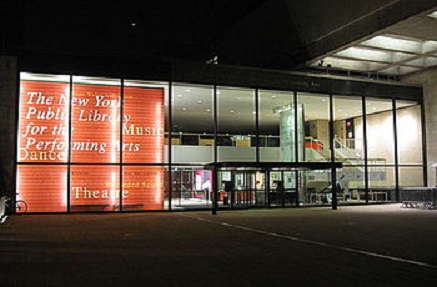
lincoln-center-library

I. The Library

I know I’ve posted about the vintage films I’ve been able to find at the New York Public Library’s Mid-Manhattan branch, but I am not sure I’ve given an appropriate tribute to the NYPL’s Library for the Performing Arts at Lincoln Center. I have found a very good bunch of books at this library, and I am never disappointed by it.

I know that the Library for the Performing Arts was given deserved praise in an a blog post a couple of years ago – in Cinema Nryta Gharana, that is, where Cassidy Minai talked about her once-in-a-lifetime (so far) trip there, when she spent a whole day researching the library’s archives with Ragothaman of Bharatanatyam and the World Wide Web. I actually met them during that visit, but I arrived only for the last half hour, which is the usual amount of time that I give myself.

I will have to set aside a good several hours for that library sometime. It is a very nice environment to be in, much more aesthetically pleasing and comfortable than the branch at Midtown (as one would expect, since it is at Lincoln Center). But my visits usually end up being for no more than half an hour (and sometimes less than that) because I always end up rushing in too late after having to do other things and underestimating the time I would have and then having to check my stuff out in a hurry because it’s closing time. The “check my stuff out” part of that is also something significantly different from the experience of someone who goes there to research. I have spent time in the research room upstairs once in a long while (again, without giving myself enough time), but my main purpose for going there usually is to rush in to get something that I can read at home or, more importantly, read on the buses and subways. And, much to my surprise, even in those rushed visits, I always find good things.

II. The Books

Possibly by coincidence – or maybe as cause and effect – my increase in visits to the Library for Performing Arts has coincided with my desire to try to contribute a little more space on this blog to talking about things that I read. Of course, this is mainly a music, film, and dance blog, but sometimes my knowledge about all these things gets enhanced by a lot of reading, and sometimes it actually comes from old fashioned hard copy with a nice cover and a spine. So, I’d like to devote the second half of this post to just a few books that I have picked up at this library in the past year. These are not all books about Indian films (in fact, only one is, and it’s my least favorite), but three out of the four are mostly about Indian dance (and dancers) which I often consider to be just as important.

Actually, the first book that I want to write about discusses Indian dance and dancers in ways that are not only important but also unique…

sweating-saris

1. Sweating Saris: Indian Dance as Transnational Labor by Priya Srinivasan: I had been planning to write a more full review of this book, and one day I will. But I need to set aside the time to write a review that will do it justice, because I was highly impressed by much of the splendid writing as well as the fascinating mix of social themes and the sometimes dazzling leaps of internal thought association. The book centers on a century or so of the social history of Indian classical dancers visiting the United States, performing in this country, and immigrating here (with different levels of difficulty, depending on the time in history). In its relation of that social history, it delves quite a lot into how much Indian classical dancing in the U.S. is a kind of immigrant labor (for the most part), unique in special ways but also very much like other kinds of immigrant labor. Sometimes the analysis touches on Marxism (even paraphrasing lines from Capital  at one point),  but other times, Srinivasan refers to the ideas of various more contemporary or postmodern social theorists who’ve written about national and ethnic identities.

One good chunk of the book actually is a kind of social mystery story, involving a search for the true roots of the dances of Ruth St. Denis, especially the sources of her dance education. The solution to this mystery turns out to be very different from the usual legends surrounding Ruth St. Denis; in fact, it turns into a kind of expose revealing likely blatant appropriation. (The nature of that appropriation is cultural and then some: We learn that some male Indian dancers who apparently tutored St. Denis were not at all recognized for the effort and were probably paid poorly and employed under bad conditions. The story does not reflect well on this pioneer of American modern dance.)

riuth-st-denis
[Ruth St. Denis]

The chapter about St. Denis probably contains the most interesting factual content in this book, but the quality of the book comes less from the facts it relates than from Srinivasan’s imaginative analytical observations, which she often relates as thoughts that came into her mind while she was involved in very unspectacular activities, such as researching in the library, buying a sari, or watching a colleague’s dance performance. (A dance performance can be spectacular to watch, but she relates one instance in which she was actually half asleep while watching one, and she shows how her mind drifted in a half-dreamlike state into very interesting range of memories and associations.) Once in a while, the writing gets a bit too academic, but it seems that this was done deliberately in order to satisfy the demands of colleagues or maybe “superiors” from the university (something that I have seen happen a few times before). Fortunately, though, there is little of the repetition that we see in other academic works. The writing is surprisingly economical, as though Ms. Srinivasan really did contemplate the meaning and usefulness of every word.

Sometime in the future, when I am able to take time to review the book more thoroughly, I will bring out a bunch of quotes to illustrate why I like the writing here so much. But right now – especially since I am trying to stick to (relatively) short reviews – you’ll have to take my word for it – and/or try to find a copy of the book to look at, yourself, which I highly recommend.
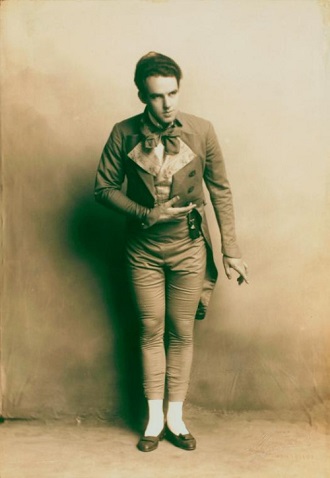
ted-shawn
[Ted Shawn]

2. Gods Who Dance by Ted Shawn: Speaking of Ruth St. Denis, I was pleased to find this book written in the mid to late 1920s by Ted Shawn, Ms. St. Denis’ then-husband as well as partner in dance and choreography. It is a somewhat quaint chronicle by Shawn of a tour with St. Denis’ dance company through Asia, North Africa, and Spain. A theme runs through the book about how all these cultures had dancing gods because dance was the first great art form of civilization (or something like that), but it’s related pretty minimally and is prominent out only in the first chapter, when Shawn talks a little about the dancing god Shiva. There are three chapters focused specifically on dances on the Indian mainland and a couple of more chapters on related countries (such as the one that was called Ceylon at the time). Out of all the dances, Shawn seemed to be most disappointed in the “nautch girls” of North India, probably because he expected so much of them (they had been a big inspiration for his work with Ruth St. Denis). Also, it’s clear that he wrote this book prior to the great 20th century revival of Indian classical dance and the production of so many films that featured it.

Shawn seems to have the most affection for Adivasi dancers such as the Santals and Kurukhs, as well as for some of the Devadasis in the Hindu temples. It’s clear that he has greater affection for dancers from societies that he considers more primitive, and in his descriptions of the Adivasi dancers, he clearly praises these tribes in terms of their being noble savages. His descriptions would be considered politically incorrect in the present day, but anybody reading this book will be very much aware that it’s a product of its times, and these descriptions add to the quaintness. Additionally, Shawn expresses a sense of wonder at the sight of all these dances that was probably very different from what any famous American dancer/choreographer would feel today, due to the fact today, any one of us (famous or not) could find these traditional dances on a video, or, if we’re lucky, witness them in some “global” show on a stage. Shawn actually was a good writer overall, so when we read his expressions of wonder, the wonder becomes contagious, helping to make many parts of this book enjoyable.

indian-film-barnouw

3. Indian Film by Erik Barnouw and S. Krishnaswamy: This is apparently a famous book. My blogging and Facebook friend Surjit Singh said that it was considered the main academic source on Indian films before a “flood” of other academic works that occurred in recent decades. It does contain a lot of information, but I found the writing to be very dry, and the book is cluttered with too many intricate details about the economics of the industry. I actually am someone who is interested in how the workers fare in any industry (hence my strong interest in the approach of Sweating Saris), but I am not that captivated by the sight of tedious charts showing the proportion of money going to each kind of worker and other charts listing every production company for numerous different languages and the company’s output, etc. Actually, I could have gotten more interested if the writing around those charts had some more life to it. I was happy to see details about some of the developing trends in periods that most interested me, like the ‘30s and ‘40s (and these decades are also the most extensively chronicled, even though this book was written in the early ‘60s). I was therefore glad to get all the information that I got from it, but at the same time, I wasn’t that unhappy when I had to part with it to check it back into the library.

shovana-narayan-kathak

4. Kathak by Shovana Narayan. This is actually one of several in a small series, Dances of India, published by Wisdom Tree. I saw some others in the series, and each was in the same nicely put together format, combining the text with very pretty photos by Avinash Pasricha. I flipped through the book on Bharatanatyam, but the Kathak edition was the one that caught my attention the most. Partly, I guess it is because I know about the author (she is renowned) and I had watched videos of her dances. But part of the reason is that Kathak really has become my favorite Indian classical dance, and I am very happy to learn all I can about it. The book informs about Kathak in a direct and basic way: It tells about the different features of the dance, and it also tells a little about the history. I must admit that I don’t remember any high points in the writing – no particular passages that really impressed me, etc. – but maybe that is partly because I borrowed this book close to a year ago, before all the others that I’m mentioning here. On the other hand, I know that I did learn from it. Shovana Narayan has apparently written quite a few books on Indian dance, so obviously, a good number of people like to read her (no doubt including some of the good number who like to see her dance). Thinking about this, I guess I would like to see some of the other books that she’s written. Maybe I will find them in future trips to this excellent library, where I will try, at least once, to set aside a more substantial amount of time to browse and even do research.

Ten Songs with Lata Mangeshkar Singing for Padmini

Posted by Richard S. on September 28, 2016
Posted in: Uncategorized. 6 Comments

Happy 87th birthday to Lata Mangeshkar. And here’s to the great Padmini, who left this world ten years ago last Saturday.

Below are ten songs sung by Lata for Padmini. I have decided to list songs that were sung by Lata solo or with chorus but not in duets, trios, etc., and to use only one song from any film. So, this list covers a pretty wide range of movies spread over a rapidly changing period of 15 years, starting at the peak of the Golden Age. But there are two great things they all have in common – Lata and Padmini!

——————
P.S. For the sake of timing, I am giving you one of my all-video specials, bit I may add a little text sometime later.

For Noor Jehan’s 90th Birthday, Here’s a Lovely Performance by Her from 40 Years Ago

Posted by Richard S. on September 21, 2016
Posted in: Uncategorized. 2 Comments

About a month ago, I had the pleasure of receiving and uploading a wonderful Noor Jehan performance that she gave for the BBC (in the Pebble Mill Studios in Birmingham, UK) in 1976, which was apparently viewed (and taped) by many people in a broadcast a several years later (dated 1983). Most of the songs from this broadcast have been available as single-song clips on YouTube over the past few years (and I know I’ve posted some before – if not to this blog, then to Facebook), but this is the first time I had the chance to see a continuous half-hour segment from this show, including an introduction and an interview. And I was particularly delighted to view such a big segment in one sitting, but I also knew that this did not include the complete show – which is why I was delighted again a couple of weeks later, when I received the two songs that I knew were missing.

Of course, the source of these videos is Tom Daniel, who had worked with tapes originally sent to him by Jamal and Muz. So, a big thanks to all of them for making it possible for me to make these videos part of the latest batch on my YouTube channel.

I am also glad that my receipt of these videos was so well timed, because September 21 is Noor Jehan’s 90th birthday. So if you want to do some special things to honor Noor Jehan on her birthday, one thing you can do is watch these videos!

Here is the half-hour segment (or 29-minute segment, to be more exact):

And here is the list of songs (and other things), along with the times in the video when they appear:

1. 0:00 Awaaz De Kahan Hai
2. 5:06 Talk and Interview
3. 9:17 Sanu Nehar Waley Pul Te Bulake
4. 13:59 Mujhse Pehli Si Mohabbat
5. 20:04 Chithi Zara Saiyaanji
6. 24:30 Bhoolnewale Se Koi Keh De

By the way, if you want to go directly to any particular song (or, for that matter, the interview), you can go to this same list on the YouTube channel, click the corresponding time, and it will take you right there. (Although,speaking for myself, as I may have said, I love sitting back and watching all of this at once).

Here are the two songs that were left out of the clip above:

Happy birthday, Noor Jehan!

—————————-

P.S. This time around, I am not posting links to all the prior Noor Jehan birthday posts that I’ve done (going back to 2009), but you can find those links in the post I wrote last year. And for anyone who doesn’t know this yet, some of those older posts are pretty big and comprehensive, too.

A Brief Appreciation of Musarrat Nazir (along with a bit for Noor Jehan, too)

Posted by Richard S. on August 28, 2016
Posted in: Uncategorized. Leave a comment

Among the Pakistani singers in the batch of ’70s-80s performances from BBC TV that I was recently able to upload to YouTube, one of my favorites is the Punjabi woman named Musarrat Nazir. Her singing voice is moving, often soothing, and always melodious, and her visual presentation is very enjoyable, too. She is quite expressive when she presents her songs, and she is certainly pretty also. Maybe part of the reason that she can make such a nice visual presentation in her song performances is that, like Noor Jehan, for a long time, she was a film actress, too. Speaking for myself, I can think of only one film in which I have seen her as an actress (which I will get to shortly), while I am a little more familiar with her music. But I intend to look for her films a little more in the near future, and I know there are quite a few. (According to one list I saw, there are almost 50.) I also intend to look for more of her music.

Probably the first time I became aware of Musarrat Nazir, it was from her playback performance of “Mera Laung Gawacha,” the famous Pujabi folk song about the woman who lost her nose ring. Actually, the first time I heard that song, it was probably in a remix collection by Bally Sagoo, in the 1990s. More recently – in the 2000s – I became aware of the Noor Jehan rendition of this song in the 1987 film Allah Rakha. (And that, by the way, is the version that I posted in this blog in 2009 and in 2011.) But much as I love Noor Jehan, I’ve come to realize that the singing of this song by the somewhat latter-day Noor Jehan isn’t as pleasing as the vocal performance by Musarrat Nazir in the film Dulari, which also came out in 1987. (Plus, I think the picturization in Dulari is a little better, too, though both sequences are quite weird and both star Anjuman.)

Noor Jehan and Musarrat Nazir had actually worked together before in some prominent ways. In fact, in the 1955 film Patay Khan, Noor Jehan served as playback singer for Musarrat Nazir. This film starred Noor Jehan, but Musarrat Nazir was the supporting actress, playing the vamp who stole the boyfriend of Noor Jehan’s endlessly forlorn character.

I reviewed Patay Khan on June 9, 2013, and, looking back at it, I see that I didn’t like the film much at all, but I loved the songs and the song sequences. I was also pretty critical of the parts involving Musarrat Nazir (which I called an “unconvincing seduction”), but I think that was due to a weak script and not-so-great direction. Musarrat does a perfectly fine job acting and dancing in those song sequences.

The first Patay Khan song that comes to my mind is “Do Rahi Rasta Bhool Gaye.” Here, Noor Jehan sings for both herself and Musarrat, and she did a famous job with that, switching between two characters, two different languages (Urdu and Punjabi), and completely opposite moods. Noor Jehan’s on-screen performance is very good in this song, too – but so is Musarrat Nazir’s, and if I were to review that film today, I think I would give Musarrat a lot more credit. (Incidentally, the guy whom both women adore is played by Aslam Pervaiz. I haven’t praised him because I found him quite forgettable.)

There is also a song sequence in the film that completely stars Musarrat Nazir, in which she does some nice dancing along with a chorus behind her. She is fun to watch here – certainly expressive, as always. But once again, the beautiful singing voice belongs to Noor Jehan.

I find it strange that Musarrat Nazir didn’t get to sing for herself in Patay Khan, because she probably would have done a fine job there. (There are other female singers in this film, including Zubaida Khanum, who actually does get to sing for herself.) Of course, though, there is no way that Musarrat would have sung better in these songs than Noor Jehan… Not in 1955, that is. But in a way, she did better Noor Jehan in 1987.

I want to return to “Mera Laung Gawacha” in order to show another performance that she did of this song, this time on Pakistani TV. It is rendered quite differently here – more softly, I think – but it is still very good. In fact, in this scene, she proved again that it should really be regarded her song more than anyone else’s.

And I get the impression that Musarrat Nazir gave many of her best musical performances on TV. I guess I get that impression because I am so enamored with those BBC TV performances.

Below, I’m including all three of the song performances that I had the pleasure of uploading to YouTube. My favorite of these is the first, “Main Kamil Da Dhola,” but the other two are almost equally enjoyable, for both watching and listening. And by the way, in the second and third song, she is wearing a very nice nose ring.

I guess that will have to do for this installment of my posts about Musarrat Nazir. I say “this installment” because, believe me, I will definitely be writing and posting more about this fine singer and actress in the future.

Posts navigation

← Older Entries
  • Pages

    • About – 2012 Edition
    • About My Images and Avatar
    • About Page from 2009
  • Recent Comments

    • Richard S. on Discussion, Info and Great Pics Related to the Earliest Appearances of Cuckooo (thanks to Mel!)
    • Jaya on Discussion, Info and Great Pics Related to the Earliest Appearances of Cuckooo (thanks to Mel!)
    • Richard S. on Discussion, Info and Great Pics Related to the Earliest Appearances of Cuckooo (thanks to Mel!)
    • Jaya on Discussion, Info and Great Pics Related to the Earliest Appearances of Cuckooo (thanks to Mel!)
    • Deepa Somasekharapillai on Sai-Subbulaxmi
    • Akshay on Discussion, Info and Great Pics Related to the Earliest Appearances of Cuckooo (thanks to Mel!)
    • Richard S. on Three Songs By Manik Varma
    • R Ansari on Three Songs By Manik Varma
    • Richard S. on Back to Rajkumari and “The Lost Thumris of Pakeezah”
    • Pritha Hajra on Back to Rajkumari and “The Lost Thumris of Pakeezah”
    • Richard S. on About Those Mujras
    • Richard S. on Kamala Lakshman in Yahudi (1958)
  • Blogroll

    • Atul's Bollywood Song A Day
    • Beth Loves Bollywood
    • Bhooli Bisri Sunheri Yaadein
    • Bitten By Bollywood
    • Bolly Meaning
    • Bollystalgia
    • Bollywood Deewana
    • Bollywood DVD Restoration Project
    • Bollywood Food Club
    • Bombay Noir
    • Carlito's Blog
    • Cineplot
    • Conversations Over Chai
    • CrazyLassi's Hindi Lessons
    • Dancing Queen Padmini
    • Dishoom Dishoom
    • Doc Bollywood
    • Dusted Off
    • Filmi Geek
    • Filmi-Contrast
    • Gaddeswarup's Blog
    • Harmonium
    • Harveypam's Blog
    • In Back & White
    • Indian Baja
    • Indian Dance Group Mayuri
    • Indian Music Album Review
    • Indian Raga
    • Indian Rasa
    • Indian Screen Stars
    • Indian Vintage Songs
    • Indiancine.ma Wiki
    • Kanan Devi
    • Kerala People's Arts Club
    • Lakshmisubramanianbarlow
    • Let's talk about Bollywood!
    • Life and Music
    • Madam Noor Jehan
    • Main Pratap Hoon
    • Melody Queen Madam Noor Jehan
    • MemsaabStory
    • Minai's Cinema Nritya Gharana
    • Mister Naidu's Bollywood Blog
    • Moments of Tranquility
    • Mr. and Mrs. 55
    • Murad's Music Hub
    • Music from the Third Floor
    • Music To My Ears
    • My Music, Movies and Mutterings
    • njrabe
    • Old films and me
    • Old Is Gold
    • Old Malayalam Cinema
    • Parties, Sarees and Melodies
    • Pedro (The Ape Bomb) Blog
    • Phar'aat
    • Philip'sfil-ums
    • Radio Bastet – Vintage Belly Dance Music
    • Snap, Crackle & Pop
    • Some Vintage Bollywood Fun
    • Songs of Yore
    • Surjit Singh's Hindi / Urdu / Panjabi Film / Movie / Photo /Song Area
    • Tamil Film Story
    • Tangled Up In Blue
    • The Bollywood Fan
    • The Cinema Corridor
    • The Pink Bee
    • Totally Filmi
    • Vintage Bolly Blog
    • Women on Record
  • Sources for Movie, Music, and Dance Clips

    • Ajayuv
    • Alaknanda2007
    • c3p10
    • Down Melody Lane
    • IMIRZA777
    • Inaam2
    • Madam Noor Jehan
    • Manjubhashini
    • Rare Movies Songs
    • Suraiya
    • Tommydan1 at Dailymotion
    • Tommydan333
    • Tommydan55
    • Tribute to Great Old Singers
    • Tripmonk0
    • Video Guy
  • This Is My YouTube Channel:

    • LifeIsaTrain
  • Archives

    • February 2017
    • December 2016
    • November 2016
    • September 2016
    • August 2016
    • July 2016
    • June 2016
    • May 2016
    • April 2016
    • February 2016
    • January 2016
    • December 2015
    • November 2015
    • October 2015
    • September 2015
    • August 2015
    • July 2015
    • June 2015
    • May 2015
    • March 2015
    • February 2015
    • January 2015
    • December 2014
    • November 2014
    • September 2014
    • August 2014
    • July 2014
    • June 2014
    • May 2014
    • April 2014
    • March 2014
    • February 2014
    • January 2014
    • December 2013
    • November 2013
    • October 2013
    • September 2013
    • August 2013
    • July 2013
    • June 2013
    • May 2013
    • April 2013
    • March 2013
    • February 2013
    • January 2013
    • December 2012
    • November 2012
    • October 2012
    • September 2012
    • August 2012
    • July 2012
    • June 2012
    • May 2012
    • April 2012
    • March 2012
    • February 2012
    • January 2012
    • December 2011
    • November 2011
    • October 2011
    • September 2011
    • August 2011
    • July 2011
    • June 2011
    • May 2011
    • April 2011
    • March 2011
    • February 2011
    • January 2011
    • December 2010
    • November 2010
    • October 2010
    • September 2010
    • August 2010
    • July 2010
    • June 2010
    • May 2010
    • April 2010
    • March 2010
    • February 2010
    • January 2010
    • December 2009
    • November 2009
    • October 2009
    • September 2009
    • August 2009
    • July 2009
    • June 2009
    • May 2009
    • April 2009
    • March 2009
    • February 2009
    • January 2009
    • December 2008
    • November 2008
    • October 2008
    • September 2008
    • August 2008
    • July 2008
    • June 2008
    • May 2008
    • April 2008
    • March 2008
    • February 2008
    • January 2008
    • December 2007
    • November 2007
    • October 2007
    • September 2007
    • August 2007
    • July 2007
  • Join 86 other followers

  • wordpress stat
  • Contact:

    If you would like to contact me, e-mail to chardsinger [at] yahoo.com. I also have a Facebook timeline, where I have been spending too much time. (But it is only partially like this blog in terms of subject matter.) Anyway, especially if you know me somewhat, and you are on Facebook, you might want to connect there. Send an e-mail so that we can talk more about it and maybe exchange URLs to "friend."
Blog at WordPress.com.
Dances on the Footpath
Blog at WordPress.com.
Cancel