Tuesday, 3 September 2019

Film: 'Mrs Lowry & Son'

It's about time I saw a film and wish to praise it, and here it is. A number of reviews I've seen are of the opinion that it's inert and doesn't live up to its promise. I beg to differ.

Firstly, I'm not sure how much the artist L.S.Lowry (1887-1976) is known outside these shores. My guess is that he's one of those localised talents whose reputation hasn't travelled far. Indeed, even in this country he was hardly a presence at all in general consciousness until, two years after his own death, it was boosted by a hit pop record on the subject of his life ("Matchstalk Men and Matchstalk Cats and Dogs" by 'Brian and Michael'). It was a spectacular hit, one of the biggest of 1978 when it spent three weeks at Number One, and from that time till now his fame was assured and he's never faded from public appreciation. Nearly every British adult will recognise the artist behind a lot of his paintings, they being so distinctive, his speciality being  scenes of a northern industrial town (he lived in Lancashire) often outside smoke-belching factories, with crowds of spindly-painted, working class people - and occasionally featuring the odd dog (mostly). I find his works more interesting rather than actively likeable. Here's a typical one showing his unique trademark style:- 


Now back to this film. It's set in 1934 as Lowry (Timothy Spall) is struggling to be recognised, living in a terraced house in a small industrial Lancashire town, alone with his aged and ailing, practically bed-confined, mother (Vanessa Redgrave). 
Spall was only five years ago portraying another painter, J.M.W.Turner, in the superb 'Mr Turner' and in this he pulls off the feat once more though here playing a completely different personality. But it's Redgrave, now 83, who gets star billing in this, her most substantial role in decades, perhaps all the way back to that Ken Russell horror-fest 'The Devils' in 1971.

Much of the film takes place in the mother's bedroom where her late-middle-aged son has to bring her meals, brush her hair, do whatever's necessary for her which she can't manage herself. But in return for his sacrifice which he carries out with a patience which would put to shame many in the same position, his mother is constantly argumentative, peevish and, at times, downright nasty.  In particular she is cruelly demeaning about his paintings and implores him to give it up and find something else to do. Despite his evident hurt he carries on with his 'hobby' (as she puts it) - until there's a mighty row.
The film is at least as much about the relationship between these two as it is about his painting - it is, after all, set in just that key year of 1934.
I didn't know much about Lowry's life and if this film is anything to go by he had no romantic interest, at least in this particular year.
The only other significant role is that of the couple's upper-class neighbour, barely surviving in an unhappy marriage. But Mrs Lowry feels it's an honour to have such a 'well-bred' lady actually living next door, unlikely as that is.

There are substantial conversations between the artist and his mother (the latter dying five years after the time this film is set) and it's that which propels the film forward, albeit in first gear. It's true that little of great moment actually happens until the pair's 'frank exchange' but I didn't mind that.

This is only director Adrian Noble's third feature film but I'm sure he's brought to the screen all he wanted to - and it's a joy. If you go without high expectations that would be the best frame of mind to appreciating it. But you couldn't get much further from an 'action-movie' than this little gem - and only an hour and a half long too!......................7.5.

(IMDb..................7.3 / Rott. Toms [critics only] ................5.3 )


Monday, 2 September 2019

Film: 'The Souvenir'

Every so often comes a film which seems intended to test one's patience, in this case for a purposeless two full hours. I honestly start to wonder if the makers are in reality laughing up their sleeves at what superficially some might take to be an 'artistic' masterwork, though they are fully  conscious of having come out with a product of pure junk to demonstrate just how gullible some are. There is always, of course, another possibility, namely that I am simply too dim to appreciate this film's 'grace' and 'subtleties'. In which case I'm the loser. I'll leave this potential explanation hanging in the air.   

I'm almost too bored to give a precis of this, but the bare bones of it are that a mid-20s film student (Honor Swinton Byrne) is in a live-in chalk-and-cheese relationship with a slightly older man (Tom Burke) in London, the latter always cadging money off her - and worse, as a development shows.  He falls prey to a drug habit while she tries to keep them together (Why? - one is bound to ask) as well as juggling with her film work. Also in the cast is Tilda Swinton, playing the young woman's mother, something she actually is in real life. 

There seems to be no clearly aimed direction of the film. It could have ended at any point and it wouldn't have made much difference. Indeed, if it had shut down after a regular 90 mins then that could have been an advantage.  

Director and screenplay writer Joanna Hogg seems to be about as bored with the whole affair as I was. A big mystery is how someone of the eminence of Martin Scorsese came to be roped in as executive producer, though I'm not going to lose any sleep over it. The film is already forgotten..................3.

(IMDb..............6.6 / Rott. Toms..................2.1 )

Monday, 19 August 2019

Film: 'Once Upon a Time ......in Hollywood'

Quentin Tarantino's new film (Final one? Yet again?) was, at just 20 mins shy of three hours long, something of an endurance test for me. It wouldn't have mattered so much if the first couple of hours had been really gripping -  or even plain moderately interesting - but, apart from a very few moments of wry humour plus a little dash of violence (most of which is reserved for the final twenty minutes, and fairly graphic, as is only to be expected from Tarantino), I found it all something of a drag. 
The set-up is okay, quite original as far as I know, but hardly substantial enough to sustain interest for a period of what is longer than a lot of other entire feature films. 

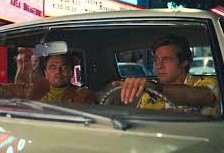
!969, mainly in Hollywood - fading film star (Leonardo DiCaprio) whose usual screen appearances as sharp-shooter cowboy is now reduced to guest slot appearances on TV. He and his stand-in stunt double (Brad Pitt) are practically joined at the hip, mooching around, drinking their idle time away in fraternal amity (and both smoking like chimneys), living in plush Hollywood celebrity-area residences. Pitt's character lives with his dog next door to director Roman Polanski's and his wife, film star Sharon Tate's, spacious home (she played by Margot Robbie). The film starts a few months before and leads up to the time of the Charles Manson 'Helter Skelter' murders. We recall from the news at the time of a group of Manson's 'hippy' followers, high on drugs, who'd got into Polanski's house (he himself being in Europe at the time), committing several grisly murders including that of the heavily pregnant Sharon Tate. I'll say no more on that score.

Although Margot Robbie as Tate gets third place billing, she doesn't really have that much to do. Probably her longest scene is when she goes alone into a cinema to watch, with great pride and satisfaction, one of her own films, pleased at the positive response to her screen appearances by the surrounding audience.

I am a fan of Tarantino's films but I'd definitely say that this is his weakest one of all, not exactly a good one to go out on if that is what is intended. Overall, it's nowhere near as violent as his other films and though I was tensing myself up expecting to see a finale of major bloodbath dimensions when it came he didn't go quite as far over the top as I was anticipating. 
A major compression of the film by reducing its playing time by one full hour would, in my opinion, not go amiss. It can take it, and there'd be the gain of taking out those many intervals of ennui. However, yet again (as you can see by ratings from other sites) my view is not widely shared, so in disagreeing with how I feel you'd be part of a majority. 
Oh, and by the way, Brad Pitt's dog doesn't come to any serious harm - only some rather cruel teasing...............6.

(IMDb...............8.2 / Rott. Toms..........3.77/5 )


Monday, 12 August 2019

Film: 'Blinded by the Light'

Here we have yet another in what has become a sequence of films revolving around pop music of decades past.  This time, however improbable (though based on a true story), it concerns a 16/17-year old student  (Viveik Kaira) in a Pakistani family living in Luton  (one of the large British towns with the highest proportion of Asian-origin population) in 1987 with an obsession for the songs of....... Bruce Springsteen (yes, really!)  It's based on the true life experience of Sarfraz Mansoor, who, in recent years, has become quite well known in British media circles - and whom, I do believe I very briefly encountered (amiably) in Luton in the early 90s, though he won't recall it.

Director is Gurinder Chadha who has created a notable niche for herself in British-Asian based films in the last two dozen or so years - 'Bhaji on the Beach', 'Bride and Prejudice', 'Angus, Thongs and Perfect Snogging'  - and her best known to date, 2002's likeable 'Bend it like Beckham'.  

In this film, with a talent for writing articles and poems, the young aspiring writer is floating directionless under the concerned eye of his strict Muslim father (Kulvinder Ghir) who wants him to have a steady, reliable job with regular income, and with whom he lives along with his keeping-head-down mother and socially aware teenage sister, superficially conformist.  At college he meets a young Sikh (Aaron Phagura) who introduces him to the songs of Springsteen - and which brings him to a 'lightbulb' moment!   
All this is set against a very evident background of Mrs Thatcher's divisive premiership in a town where, in particular, anti-Asian prejudice is rife (though basically anything non-white English) seen through racist graffiti on homes, openly hostile conduct, intimidating presence of the National Front (now morphed into the 'English Defence League') and some appalling and disgusting behaviour from the latter and their sympathisers.

The young man's epiphanous moment of awareness of Springsteen's lyrics is during the hurricane night of October 1987, when he puts on a tape he'd been given - a night when I, living in Oxford at the time and not having heard the warnings, had simply slept through those hours of the strongest and most destructive winds to hit Britain in a century!
Springsteen's lyrics (seen floating on-screen and swirling round his head, which is just as well as I found them not easy to decipher by ear alone) give him the confidence to acquire a regular girlfriend (Nell Williams) the untypical daughter of hoity-toity Tory parents.  

Much of the drama of the story lies in the conflict between father and son over the latter's writing ambitions, his down-to-earth father preferring to see his son in a secure, steady-income occupation, the situation being exacerbated by the father himself being laid off with hundreds of others from the nearby car-making plant, leaving the mother as the family's sole bread-winner through her home sewing work. Of course the young man continues to aspire towards his own dreams, encouraged by his sympathetic college tutor (Hayley Atwell).   

I thought the first hour of this two hour film (too long by at least 20 mins) was first-class. Then it not only sags conspicuously but gets very bleak with a drastic mood change when racial matters come right to the fore. Also I felt let down by, despite it being true story-based, how in predictably filmic style, the conflict between father and son is finally resolved by the cheesiest of developments when the father comes round to seeing his own error - something we've witnessed countless times on film before  - and in revelatory mode he turns into being proud of his son's achievements, accepting him as a talented writer. Wince-inducing stuff!  

Overall I did like the film. If it hadn't been based on reality I'd have laughingly dismissed the unlikely premise of a young Pakistani kid being so influenced by Springsteen, a singer who was already considered as getting 'past it' at the time this film is set. But given how it is I must accept that this was near to what actually had happened.

I wish I could have rated this film higher but that over-extended second half did have some nasty edges to it, and that unbelievably banal ending devalued much of what had gone before. Still, by no means a bad watch........6.5.

(IMDb...........6.2 / Rott.Toms (critics only)............7.4 )


Monday, 5 August 2019

Film: 'The Current War'

I found this an oddity, and not a terribly satisfactory one either.
As far as I know it's virgin territory for this particular story in the cinema - the competition between Thomas A. Edison, played by Benedict Cumbersome (sorry, couldn't resist!) and one George Westinghouse (Michael Shannon) as to which of them would be the one to install a nationwide system of electric power in the U.S.A. 
One particularly unsavoury feature I wasn't expecting is that an inordinate proportion of the film deals with who would design the first electric chair for capital punishment.  Eventually we see not only the first 'occupier' of that means of execution but, leading up to it, a demonstration of a horse being electrocuted.  All this was a prequel to my leaving the cinema with a nasty aftertaste lingering.   If this kind of thing simply washes over you, fine, but I was left almost wishing I hadn't seen the film.   

It's an exceedingly busy feature with very few shots lasting more than, perhaps, five seconds.  If this was a technique to insure against one getting bored it didn't work in my case as, despite its visual flitting here and there like a hyper-active butterfly, it was peculiarly stodgy in a convoluted story which quickly lost me and my interest.
The rivalry between the two men is so bitter throughout that I was only surprised they didn't challenge each other to a duel.  There's also some betrayal in what passes between the respective assistants of both of them in stealing each other's secrets, all making for a thorough unpleasantness with frayed tempers on display,   Cumberbatch's Edison being the more cerebral of the two, and feeling particularly hard done by as the film progresses.  Both the latter and Shannon as Westinghouse represent two towering intellects burning up with jealousy against the other in a strangely stolid film. 
As nearly all of the action takes place before widespread electricity is in use, much of it involves inadequate gas-lit scenes, not always easy to decipher.

During the film I had the leisure to ask myself what was wrong with it to explain my lack of engagement.  I thought at first that it might be the screenplay, though listening carefully, that aspect wasn't especially weak. 
The photography was generally good or very good, befitting of the subject matter, with some impressive vistas now and again. 
I failed to pin down the fault other than identifying the underlying repugnance I had towards certain aspects of the story which I've mentioned earlier, so my partiality may be at least some way to blame.

Director Alfonso Gomez-Rejon has made a few cinema features before but nothing to have got him especially noticed.  Maybe he was trying too hard with this one with all those tricksy visuals?  I don't know. I only throw out the thought.

I don't think it's a film to warm to.  Might be useful as an historical representation of a little-documented episode, little represented at least in popular culture.  And was this matter of creating an electric chair truthfully so pivotal as this film seems to imply?  

Not a film I can whole-heartedly recommend, though others may differ from my very personal appraisal.  I can safely say that I for one won't be watching it again...............5. 

(IMDb..................6.2 / Rott.Toms (critics only)......31% )

Monday, 29 July 2019

Film: 'The Keeper' / 'Trautmann'

Here's yet another film I would have allowed to pass were it not that I'm still trying to make a dash for the 'finish line' of 5,000 films, and anyway it now being the school hols there's precious little else on right now which seems deserving of the expense and effort. It transpired, though, that given the (to me) uninspiring subject matter - football - this might have been considerably worse than it was.

The name of Bert Trautmann remains familiar to me because it was in my pre-teen years (mid-1950s) that he was oft talked of in glowing terms by my soccer-mad brothers. I retain the fact that he was a renowned and internationally acclaimed goalkeeper of great distinction, though which team he played for I couldn't have said. Still less did I know that not only was he German, but he'd actually fought on the Nazi side until captured in early 1946 - and was held at a prisoner-of-war camp in Lancashire until his talent as player was spotted and he was let out to play in a local team then returned to incarceration - eventually being signed up in 1949 to play as goalie in the top division for none other than Manchester City. 

The rather likeable German actor David Kross plays the title character in this largely German production (99% in English), which starts at the end of WWII and follows his 'discovery' as a footballing marvel, from where his career takes off, very gradually at first, then right up to his playing in the 1956 FA Cup Final at Wembley when he suffered a broken neck yet continued to play on heroically in indescribable agony, ensuring his team's victory of 3-1 against Birmingham City. But what I was completely oblivious about, then being but a young boy myself, was the hostility he received from all directions right through almost until that Wembley game, because of his invidious war record, which he tried to play down ("I had no choice!") though he did carry a particular baggage (or two) of guilt through certain of his experiences. 
When he became a national figure so did the outcry about his allowing to participate at all become a nationwide clamour, fed by media hostility whipping up unforgiving anti-German sentiment. Some scenes illustrating this really did make me cringe, though in the post-war climate of the time such might be considered as more understandable than had war been not so recent.

While he still plays for the local team Trautmann falls for the daughter (Freya Mavor) of the local team manager (John Henshaw) who'd spotted him, her initial cold, even hostile, responses (she having lost relatives in the war) finally melting until he marries her, yet still not telling his bride the full story of his war-service.
It was when he was in hospital recovering from his broken neck injury that he undergoes a family tragedy which marks both him and his wife for life.

I really didn't think I was going to like this at all. The very fact that I quite did so means that real addicts of the game are likely to get more out of it even than I did.
Bavarian director Marcus Rosenmuller doesn't hold back in depicting nasty aspects of Trautmann's fellow Germans in the war as well as the anti-German British sentiments in the decade following the war's end. He does manage to play it all quite even-handedly in a film which gallops along with very few 'boring bits'. However, maybe two hours is stretching it a bit, though even so I got the feeling that more was being left out rather than an excessive amount being put in.
I was surprised to find out that Trautmann himself died only six years ago at the age of 89.

Not at all a bad film, then, though I think you well might need a good reason to be wanting to see it in the first place.................6.

( IMDb...........7.2 / Rott. Toms...........4.5 / 5 )


Monday, 22 July 2019

Film: 'Armstrong';

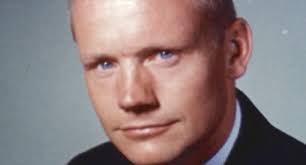
(If there's really someone around who doesn't recognise the name or photo, this film is about Neil A.)
After yesterday's viewing here's another film related to the current 50th anniversary which I might have let pass me by, but as I'm now within spitting distance of the pre-determined tally after which I start to wind down my cinema-going frequency, thought "Might as well!" just to get there all the sooner. 

This film will be of most value to those who know little about the man though I gleaned nothing new of major import, certainly no revelatory facts.
Armstrong's own words are voiced through the warm, agreeable tones of Harrison Ford.
It's an impressive, fairly comprehensive overview of the subject's life from his birth in 1930 up to his death in 2012 - including a fair bit about his pre-astronaut days, then onto his training up to the moon landing and a further section on his post-space years, including his hardships in dealing with fame and the effect on his family. There's considerable contribution from his then wife, Janet, who died shortly before the release of this film. There are also generous contemporary inserts from his two sons. 
Although his divorce in 1994 is covered there's strangely no mention of his second marriage to Carol. 
Quite a bit of home movie footage is shown of his family when his children were infants - including a daughter who died of a brain tumour at the age of three, something I hadn't known. 

If the film's intention was to inform and to fill in what might otherwise have been no more than a sketchy knowledge of the man's life then director David Fairhead has succeeded admirably.   
But I think that the less you know then, obviously, the more you'll get out of this film - and you really have to be sufficiently interested in the man in the first place............6.

(IMDb......................7.2 / Rott. Toms.........N/A )