Friday, August 23, 2019

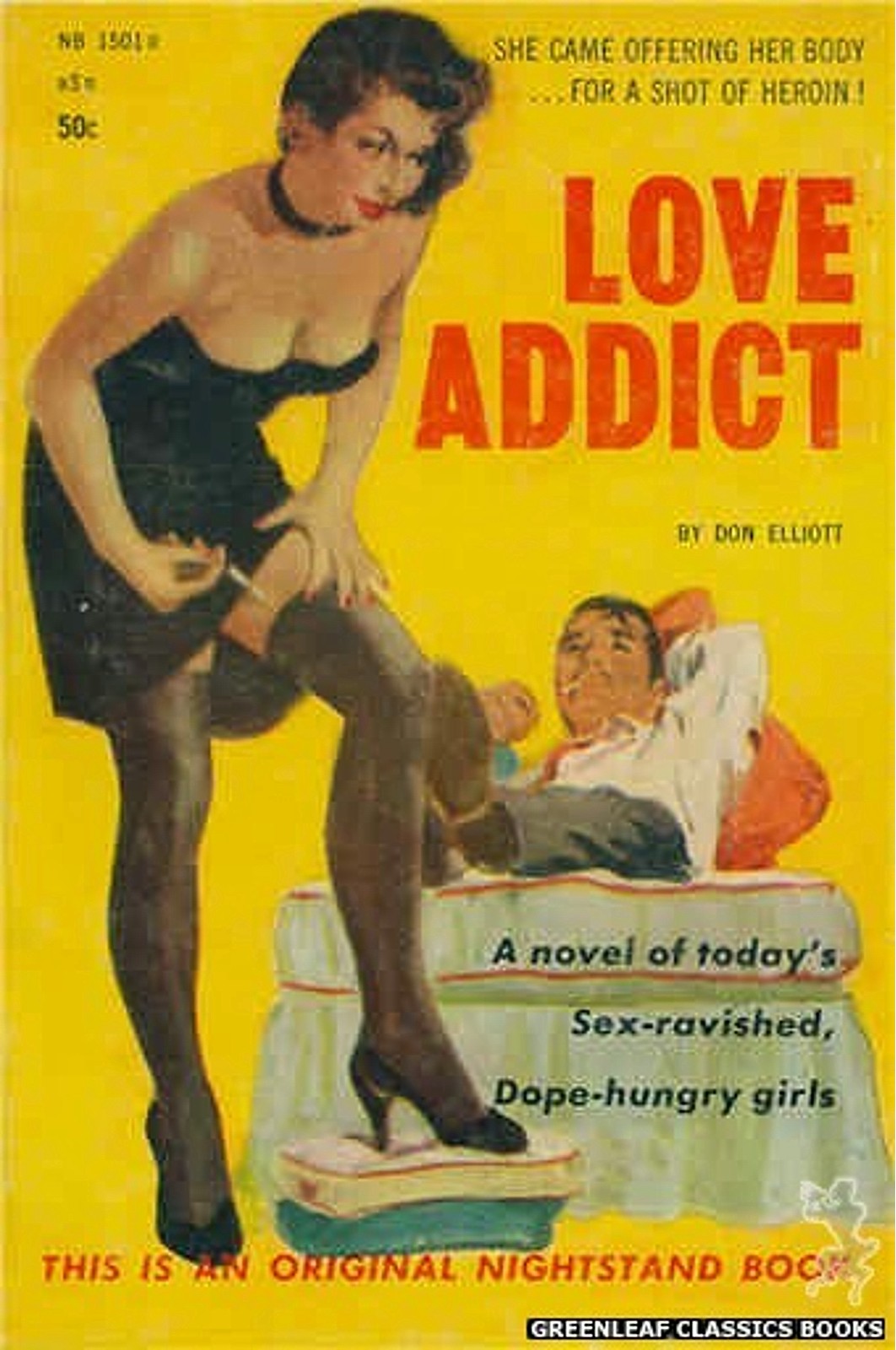
Forgotten Books: Love Addict - Don Elliott (Robert Silverberg)


A lot of the Nightstand books by Lawrence Block, Donald Westlake, and others are really crime novels masquerading as soft-core, early Sixties porn. Although there are some drug pushers in it, LOVE ADDICT, Robert Silverberg's first novel under the Don Elliott pseudonym, doesn't really qualify as a crime novel. It's more of a noir-tinged romance, as nice guy hero Jim Holman, who is being divorced by his shrew of a wife, falls for nightclub singer Helene Raymond. Helene was hooked on heroin by her musician ex-boyfriend, but Jim thinks he can save her from her addiction. Not much actually happens in this book, but it races by anyway thanks to Silverberg's clean, polished prose and his evocative portrayal of New York City as both glittering metropolis and squalid hellhole. I thoroughly enjoyed this novel and intend to dig out more of the Nightstand books that I own.

(This post originally appeared in different form on March 15, 2005. I have indeed read more Nightstand books in the years since then, but not as many as I would have liked to. I need more hours in the day . . .)

Wednesday, August 21, 2019

43 Years Ago Today


I know I've posted this picture before . . . but, dang, isn't Livia beautiful? We keep inching toward 50 years together.

Tuesday, August 20, 2019

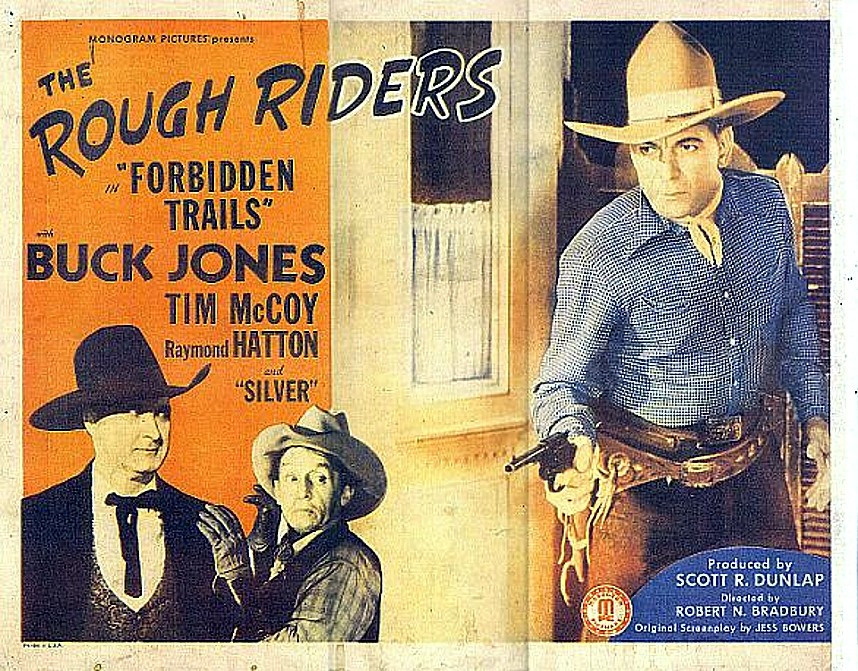
Overlooked Movies: Forbidden Trails (1941)


FORBIDDEN TRAILS is the third (of eight) B-Westerns in the Rough Riders series, starring Buck Jones, Tim McCoy, and Raymond Hatton as U.S. Marshals who often operate undercover. In this one, which also happens to be the final film directed by the prolific Robert N. Bradbury (father of B-Western star Bob Steele), Buck is targeted for revenge by two outlaws he sent to the pen (played by the ubiquitous and always entertaining Charles King and Bud Osborne). The bad guys' scheme nearly works, and as a result Buck is laid up for a while, but the other two Rough Riders pitch in to save the day and keep villainous Tristam Coffin from taking over the freight line run by stalwart young Dave O'Brien.

The script is kind of muddled, but the real appeal of these movies is watching all the old pros at work, playing off each other and appearing to have a genuinely good time. Buck's heroism, Tim's gravitas, and Sandy's comedy relief mesh well most of the time. And all three of the Rough Riders have great hats. I'm slowly working my way through this series and eventually will watch all of them. They may not be the Three Mesquiteers, but they'll do.

Sunday, August 18, 2019

Sunday Morning Bonus Pulp: Detective Novels, August 1940


This issue of DETECTIVE NOVELS has some historical significance because it marks the first appearance of The Crimson Mask, another masked crimefighter whose adventures were chronicled by the amazingly prolific Norman A. Daniels, this time under the pseudonym Frank Johnson. The Crimson Mask is actually pharmacist Bob Clarke (that's right, a two-fisted, crime-busting pharmacist) and the stories I've read starring him are pretty good. Daniels was also the author of the other lead story in this issue, a Candid Camera Kid yarn under the name John L. Benton. The Candid Camera Kid was crime photographer Jerry Wade. I've read several of these and really like them. I think this series is some of Daniels' best work and hope that it's reprinted in its entirety someday. Daniels didn't write the entire issue. Also on hand are veteran pulpster Robert Sidney Bowen and a couple of authors I hadn't heard of, Kenneth Kerriton and Arthur W. Phillips. It's mostly Daniels' show this time around, though.

Saturday, August 17, 2019

Saturday Morning Western Pulp: Frontier Stories, Summer 1950


I'm not really sure what's happening on this cover, but I like it quite a bit anyway. As with many other Fiction House covers, it makes me want to write a story based on it. Les Savage Jr. is the only well-known author in this issue, although there's no telling who's behind the house-names John Starr and Wilton Hazzard. Others contributing stories are Norman B. Wiltsey, Alexander Wallace, Charles Dickson, and Theodore Cutting. I think I've seen Wiltsey's name before on other pulp TOCs, but the rest are new to me. Even so, I probably would have bought this issue for the cover alone.

Friday, August 16, 2019

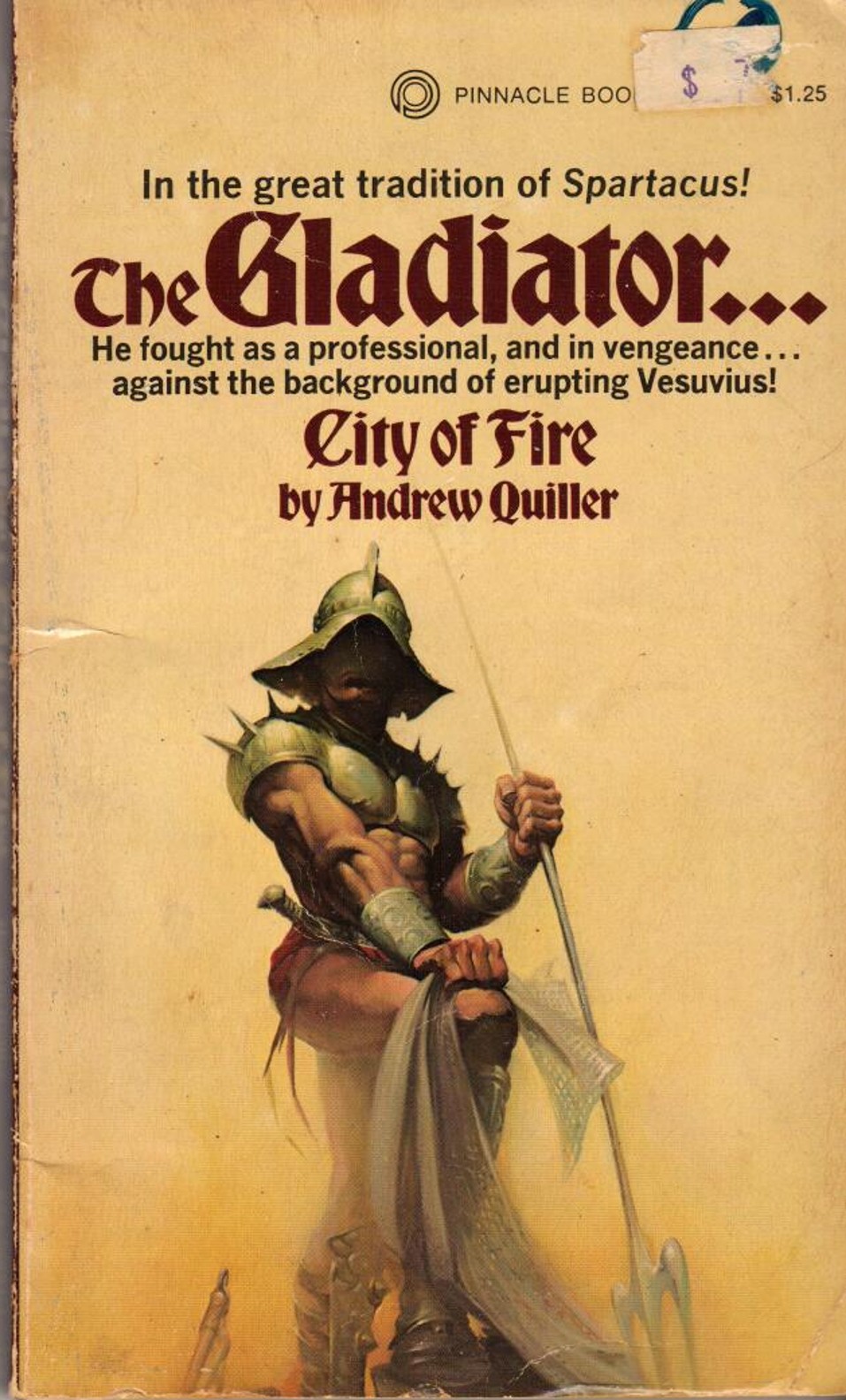
Forgotten Books: The Gladiator #3: City of Fire - Andrew Quiller (Angus Wells)


Moving on to the third book of the GLADIATOR series (or THE EAGLES, as it was known in the original English editions), CITY OF FIRE is the only one in this series written by Angus Wells, one of the prolific British paperbackers of that era. And that’s kind of a shame, because it’s an excellent novel and my favorite tale of Vulpus the Fox so far.

The famous gladiator Vulpus is really the half-British former Roman soldier Marcus Julius Britannicus. Sticking to the structure of the first two books written by Laurence James and Kenneth Bulmer under the house-name Andrew Quiller, CITY OF FIRE begins with a scene in the arena. This time Vulpus is fighting a tiger, and just when it looks like things are about to go really bad for him, the story flashes back and picks up the storyline where it left off in the previous book. Marcus is on a vengeance quest, hunting down and killing the men who planned and carried out his mother’s murder, but while he’s doing that, he also gets involved in some political intrigue that takes him back to Italy. Luckily for him, he wanted to go there anyway, and it’s an even bigger stroke of luck that the mission he’s given will provide him with a chance to kill two of the men he’s after.

But that’s where his luck looks like it’s going to run out, because where does his mission/quest take him? To the city of Pompeii, where nearby volcano Mount Vesuvius has started rumbling recently, although no one in the city takes it seriously. So . . . what do you think is going to happen? Let’s see . . . Pompeii . . . Vesuvius . . . You might as well go to San Francisco in 1906 or take in an opera or a ball game with Ellery Queen. It ain’t gonna end well.

But our boy Marcus isn’t going to let a little thing like an apocalyptic volcanic eruption stop him from going after the guys he wants to kill, and Wells does a fantastic job of capturing the chaos of that deadly natural disaster. The whole book is well-written, with vivid, flowing prose and plenty of graphic action, but Wells really shines in the last section. This is the first book I’ve read by him, but I was pretty impressed with his writing. Enough so that I ordered more books by him.

If you’ve read and liked the first two books in this series, you’re probably going to want to go on with it, and I give CITY OF FIRE a high recommendation. But if you haven’t read the series, don’t start with this one. It’s not absolutely necessary to read the books in order, but I think it’s probably much better that way.

Sunday, August 11, 2019

Sunday Morning Bonus Pulp: Famous Detective Stories, August 1950


I think this may be the first "beautiful blonde in slinky red dress plus skeleton in diving costume" cover I've ever seen on a pulp. But of course I could be wrong about that. All I know is I like this cover quite a bit and it would certainly intrigue me enough to plunk down a quarter, if I had one. The lineup of authors inside is intriguing, too, since they're mostly better known for science fiction rather than detective stories: Murray Leinster, Ray Cummings, James MacCreigh (Frederik Pohl), and Oscar J. Friend, who was pretty well-known as a Western writer, too. Also on hand are Norman A. Daniels, who wrote everything, and Robert Sidney Bowen, who I always think of as an aviation writer, even though he wrote a lot of other things, too. I suspect it's a pretty entertaining issue.

Saturday, August 10, 2019

Saturday Morning Western Pulp: Western Short Stories, July 1953


The cover on this issue of WESTERN SHORT STORIES combines two of my favorite elements for Western pulp covers, a gunfight and a train. And a pretty girl, so I guess it's actually three of my favorite Western pulp cover elements. And it's by Norman Saunders, so, well, there you go. No wonder I like it. Inside are some top-notch authors, such as Noel Loomis, Will C. Brown, Giles Lutz, Lauran Paine, Arthur J. Burks, and Walt Sheldon, along with a few little-known authors such as Dev Klapp and Orville G. Hextell.

Friday, August 09, 2019

Forgotten Novellas: A Soldier and a Gentleman - Talbot Mundy


It’s been a while since I read anything by Talbot Mundy, and I was in the mood to sample some of his work again. The novella “A Soldier and a Gentlemen” was published in the January 1914 issue of the iconic pulp ADVENTURE, where much of Mundy’s work first appeared. It’s been reprinted numerous times since, including in THE TALBOT MUNDY MEGAPACK from Wildside Press, which is where I read it.

This is an important story because it’s the first one to feature Mundy’s series character Princess Yasmini, who appears in a couple of novellas and several novels, sometimes crossing over with other series characters. It’s not the first story chronologically in her history, however. That would be the novel THE WINDS OF THE WORLD. I haven’t read that one yet, but “A Soldier and a Gentleman” is a good introduction to the character.

It’s set in India and involves a regiment of Sikh lancers commanded by British officers. They’re given the job of tracking down the notorious bandit chief Gopi Lall, since the corrupt local police have been unable to do so—or paid off to fail in that task. At the same time, a young British officer falls under the spell of the beautiful but mysterious and possibly sinister Princess Yasmini, who lives in an abandoned palace in the jungle with a number of nubile young female servants. Is the place actually a brothel? Well, Mundy takes pains to make it seem like it’s not, but this story was written and published more than a hundred years ago when writers were a lot more reserved about such things, so I’m not prepared to say either way. I think it’s fairly well established that Yasmini herself is not a prostitute, although it’s open to question what else she’s capable of and why she’s really living in this rundown jungle palace.

The two storylines eventually converge, of course, and things come to a fairly satisfying climax, although it could have been a little more dramatic if some of it hadn’t happened off-screen. Yasmini is an interesting character, and so is Dost Mohammed, a stalwart Sikh officer who’s not actually the protagonist but maybe should have been. Mundy’s style tends to be long-winded at times and heavy on the telling instead of showing, but again, that’s to be expected in a story written more than a century ago. And honestly, I kind of like that lush, slower-paced style at times. Too much modern fiction I’ve read comes across as shallow. That’s certainly not the case here. Mundy really immerses the reader in what’s going on.

Despite that quibble about the ending, I really enjoyed “A Soldier and a Gentleman”. I plan to read more by Mundy soon, and if you’re a fan of good old-fashioned adventure yarns, I recommend his work.

Tuesday, August 06, 2019

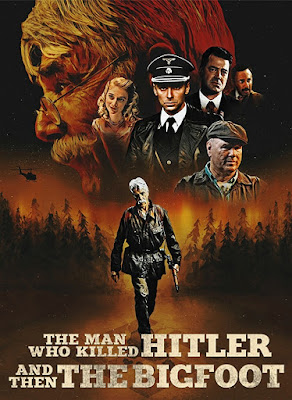
Overlooked Movies: The Man Who Killed Hitler and Then the Bigfoot (2018)


I suspect this is one of those love-it-or-hate-it movies. I love it. THE MAN WHO KILLED HITLER AND THEN THE BIGFOOT has such a goofy title that you really don’t know what to expect, and it asks the viewer to accept a lot of odd things that are played with an absolutely straight face, but for me, it works.

The story moves back and forth between the 1940s and the middle 70s. Calvin Barr is a young man from a small town who goes off to war, becomes an intelligence agent, and winds up assassinating Adolf Hitler a few months before the end of the war. (The “Hitler” who died in the bunker in Berlin was one of the doubles, of course.) It’s hinted that Barr carried out other dangerous and important missions after the war, but we never get any details about those. But by the mid-70s, he’s just an old man, back in that small town living in the same house he grew up in, leading a quiet existence with his only friends being his dog, his younger brother (who’s the local barber), and the bartender at the little bar where he drinks. He’s still a dangerous guy, though, as three punks who try to mug him find out to their regret.

Then agents from the U.S. and Canadian governments show up and try to recruit him for one last mission: hunt down and kill the Bigfoot, who’s come down with some sort of nightmare virus that could wipe out the entire population of Earth.

Yes, it’s a crazy concept, but writer/director/producer Robert J. Kryzkowski makes something unexpected and very satisfying out of it. This is his first feature, but I’ll sure be interested to see what he comes up with in the future. Instead of the cheesy B-movie you might expect from the title, for the most part this film is a leisurely paced character study, and another reason it’s successful is a great performance from Sam Elliott, one of my all-time favorite actors, as the older Calvin Barr. The younger, World War II version of Calvin is played in flashbacks by Aidan Turner, and he does a fine job, too, although he doesn’t carry the movie the way Elliott does. Character actor and comedian Larry Miller, who I also like, plays Calvin Barr’s younger brother.

I’m not sure any of this would have worked without a good ending, and THE MAN WHO KILLED HITLER AND THEN THE BIGFOOT delivers that, too. It’s poignant and old-fashioned and very effective. Not every question the movie raises is answered, but they don’t have to be in order to bring the viewer closure. I understand if some of you watch this and fall into the hate-it camp, but I think it’s the best movie I’ve seen in quite a while.