Martin Landau, M:I’s disguise artist, dies

Martin Landau as Rollin Hand in an IMF dossier photo

Martin Landau, who gained fame as Mission: Impossible disguise expert Rollin Hand, has died at 89, the TMZ website said.

Landau died Saturday at the UCLA Medical Center “after a short hospitalization where he suffered unexpected complications,” TMZ said.

Landau enjoyed a long career that began in the early 1950s. It included a number of espionage-related stories, including portraying Leonard, a henchman in the Alfred Hitchcock-directed North by Northwest (1959); a Cold War themed episode of The Twilight Zone; and playing Thrush operative Count Zark in The Bat Cave Affair, a second-season episode of The Man From U.N.C.L.E.

But he was most famous for Mission: Impossible, where he appeared during the show’s first three seasons.

M:I producer Bruce Geller wrote the part of Rollin Hand (originally named Martin Land) in his pilot script especially for Landau. Landau didn’t want to sign a series deal. Geller wanted the actor for the pilot badly enough he proceeded anyway.

It would be a decision that would have a major impact on the series.

Initially, the idea was Rollin would only appear occasionally. However, series star Steven Hill, for religious reasons, insisted on leaving work at sundown on Friday.
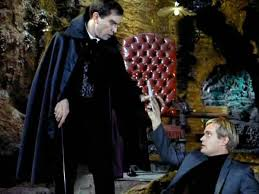
Count Zark (Martin Landau) menaces Illya Kuryakin (David McCallum) in The Bat Cave Affair

As a result, scripts were revised to de-emphasize Hill’s Dan Briggs and to keep bringing back Rollin. Throughout the first season, Landau was listed as either a guest star or making a “special guest appearance.”

After the first season, Hill was fired, with Peter Graves replacing him as a new Impossible Missions Force mastermind, Jim Phelps. Landau was now joint star with Graves.

However, Landau would only agree to do one season at a time. This gave him enormous leverage in his contract negotiations.

After three seasons, Paramount executives wanted to cap costs on Mission: Impossible. The studio had tough negotiations with Landau.

According to Patrick J. White’s The Complete Mission: Impossible Dossier, Paramount offered a small raise (to $7,000 an episode from $6,500 in the third season) while the actor wanted $11,000 per episode for the fourth season and $12,500 for season five.

Meanwhile, according to the book, Peter Graves had a clause in his contract that nobody else on the show could be paid more than he was. A raise for Landau also meant a raise for Graves.

Eventually, Landau departed, replaced by Leonard Nimoy as a new disguise expert, Paris. That led to Barbara Bain, Landau’s real-life spouse, exiting the series as well.

Landau and Bain years later starred in Space: 1999, a syndicated Gerry Anderson science fiction series that ran two seasons. The couple divorced in 1993.

Landau eventually secured three nominations for a Best Supporting Actor Oscar, with one win for 1994’s Ed Wood as Bela Lugosi. His turn as Count Zark in The Bat Cave Affair decades earlier (where he spoke with the same Lugosi accent) was a sort of warm up.

Neverthless, Landau retained his association as Rollin Hand. In 2014, the MeTV cable channel produced promos for M:I with Landau urging viewers to “watch me on Me…MeTV,” while it was running the series as part of a Sunday night block of spy shows.

Remembering that 1989-95 007 hiatus

GoldenEye’s poster

Our post the other day about the anniversary of Licence to Kill’s release got the blog to thinking about what followed: The six-year hiatus in James Bond film production.

Like the earlier post, this is more of a personal take on the events.

The thing is, in those pre-internet days, the news was much slower in getting around. During much of this period, I saw a number of items in The Wall Street Journal. I had a subscription at the time.

Also, the extent of what was going on wasn’t immediately evident.

There were reports in the trade press that director John Glen and screenwriter Richard Maibaum wouldn’t be returning to the series. This was the first indication (at least to me) that a big makeover, rather than minor tweaks, was in store.

There were occasional stories about potential new directors and screenwriters. Things got more serious when it was announced that Danjaq, parent company of Eon Productions, was putting itself up for sale. Eventually, no sale occurred, but seeing the original announcement was an eye-opener.

What’s more, the soap opera at Metro-Goldwyn-Mayer, Bond’s home studio, went into overdrive. MGM was bought and sold again, with a bank (Credit Lyonnais) taking over the operation. Bond fans now needed to read the business pages of newspapers just to keep things straight.

Also, Danjaq/Eon filed a lawsuit related to what was going on with MGM. It was clear the next James Bond film wouldn’t be made soon. Even when the lawsuit was settled (I had a chance to read the press release at my office), it still wasn’t clear when production would resume.

Timothy Dalton

During this period, there were questions about what would happen with the incumbent 007, Timothy Dalton. Geraldo Rivera had a syndicated U.S. television show at the time and one broadcast was devoted to Bond. Some Bond experts participated. Rivera asked if Dalton would be back. The experts said they expected him to return.

Finally came the announcement that Dalton was gone. What was going to happen next?

Attention turned to Pierce Brosnan, who lost out on his chance to play Bond in 1986, when Dalton got the nod.

Eon maintained in a 1987 television interview that Dalton was always its No. 1 choice. In that interview, Albert R. Broccoli and Michael G. Wilson said Brosnan had never been signed to play Bond.

Brosnan had been signed (and it’s detailed in the Inside The Living Daylights documentary that’s part of home video release), but NBC reacted by ordering more episodes of Remington Steele. That, of course, was what gave Dalton his opportunity to play Bond.

In 1994, shortly before the casting decision was announced, The Wall Street Journal weighed in with a long front-page story about the Bond search and that it was not a clear-cut choice.

Regardless, Brosnan got the node. Many fans, no doubt, thought, “Finally!”

Advertisement for 1994 James Bond convention

Still, Bond had been away from theater screens for quite a while. Eon did something it had never done — having an official James Bond fan conventions in the fall of 1994 and 1995 (the latter days before the premiere of GoldenEye).

That was part of an effort to revive interest in Bond. For hard-core fans, they were anxiously waiting all along. Still, both conventions were interesting to attend. For some fans, it was a chance to meet like-minded people they had never had a chance to encounter before.

In the end, Bond resumed production. 007 even maintained an every-other-year schedule until the end of the 1990s.

Still, looking back at the hiatus, it’s a reminder that film franchises — for fans, for productions companies, for studios — can’t be taken for granted.

Licence to Kill: Odd opening day in 1989

Licence to Kill’s poster

Twenty-eight years ago today, Licence to Kill, the 16th James Bond film had its U.S. opening.

It didn’t go well, financially. Licence to Kill finished No. 4 at the U.S.-Canada box office that weekend, behind even Honey, I Shrunk the Kids.

But even leaving that aside, it was an odd day for various reasons. This is a more personal post about that day.

I had arranged to take the day off from work. Back then, you didn’t really have the Thursday night preview showings (starting at 7 p.m.) that are common today. You’d have to show up late and the movie would begin just after midnight. It was technically a Friday showing.

Anyway, Mrs. Spy Commander and myself went to the first showing. It was after 1 p.m. Today, multiplexes start their day at 10 a.m. or earlier.

I knew ahead of time there was a scene (“He disagreed with something that ate him”) based on the Live And Let Die novel that had gone unused when the book was adapted by Eon in the early 1970s. I knew Licence to Kill was supposed to be a grittier Bond film and was more than ready to view it.

My initial reaction was the movie probably needed another draft for its script. It didn’t have the polish of previous Bond adventures. But I was also aware that a Writers Guild strike meant Richard Maibaum hadn’t fully participated in the proceedings despite the fact he shared the writer’s credit with Michael G. Wilson.

Anyway, after it was over, I asked Mrs. Spy Commander what she thought.

“It was….fine,” she replied.

Uh-oh. This was my first sign she didn’t like it. I pressed for more of a reaction.

“No, it’s OK,” she said. “They got their revenge story.”

When things really got odd was when we got home. I turned on TV and began “channel surfing.”

Suddenly, on Nickelodeon of all places, there was a Licence to Kill special. Kid anchors from the network were interviewing the principals of Licence to Kill. Clearly, the interviews had been done months before when the crew was filming in Key West, Florida.

The most unusual sequence was a joint interview of producer-screenwriter Michael G. Wilson and character actor Anthony Zerbe, who played secondary villain Milton Krest.

The kid interviewer asked about the increased violence in Licence to Kill. Wilson said something about how Bambi was emotionally intense.

Zerbe reacted by pretending he was about to cry. “I never got over Bambi,” he said.

That was the highlight of the show, such as it was. Timothy Dalton also did an interview for the Nickelodeon special, but it wasn’t nearly as memorable as Zerbe’s bit of comedy.

The thing was, I had no idea it would be more than six years before I’d have a chance to see another new James Bond film.

As Eon’s non-007 portfolio expands, what about Bond 25?

Image for the official James Bond feed on Twitter

Eon Productions is going to make a spy movie without James Bond. Naturally, that raises some questions. So here goes.

Does anybody think Bond 25 is coming out in late 2018?

There are always some die-hard believers. After all, Linus believed the Great Pumpkin was coming.

Still, the evidence available to outsiders suggest 2018 is no longer operative, if it ever was.

Eon announced July 12 it would make The Rhythm Section, a spy thriller featuring a female lead played by Blake Lively. According to the announcement, filming is to begin later this year.

The last two Bond films, Skyfall (2012) and SPECTRE (2015) began filming in November and December respectively of the years before they were released.

Bond 25, with no confirmed leading man, no director and no script, doesn’t seem to be on track for 2018.

At this point, the question is whether 2019 is realistic. Eon is supposed to be producing a historical war movie starting late this year, according to the James Bond MI6 website.

So when does Bond 25 actually get into production and come out?

Who knows? We won’t get much information until at least Metro-Goldwyn-Mayer reaches a deal with another studio to release Bond 25. As of today, there’s no such deal.

What does this mean?

It means this is not your father’s (or grandfather’s) James Bond film series.

Albert R. Broccoli and Harry Saltzman, the founders of Eon, had various non-Bond film projects. But, aside from 1963’s Call Me Bwana, Broccoli and Saltzman didn’t do them through Eon. They did them through separate production companies.

Eon has a lot on its plate. Not all of its various projects have become reality. In the early 2000s, a proposed Jinx movie was junked, for example.

But, for now, things are more complicated than the days (say 1977-1989) when Cubby Broccoli produced Bond movies every two years. Maybe every three years.

Eon to produce non-Bond spy thriller

Barbara Broccoli

Eon Productions will produce a non-007 spy movie, The Rhythm Section, which will star Blake Lively, The Hollywood Reporter said.

Financing the film is independent studio IM Global, according to the entertainment news website. Production will begin later this year, THR reported.

Another entertainment news site, The Wrap, carried the full text of the project’s press release. Here is an excerpt:

THE RHYTHM SECTION is a contemporary adaptation of the first of British thriller writer Mark Burnell’s “Stephanie Patrick” series of four novels. Heroine, Stephanie Patrick (Blake Lively) is on a path of self-destruction after the death of her family in an airplane crash, a flight that she was meant to be on. After discovering that the crash was not an accident, her anger awakens a new sense of purpose and she rises to uncover the truth by adapting the identity of an assassin to track down those responsible. The new, and lethal, Stephanie Patrick is on a mission to fill the void between what she knows and what she is told. Other novels in Burnell’s popular series include “Gemini”, “The Third Woman” and “Chameleon”.

The project adds to Eon’s move to diversify its film portfolio. The film production company has been involved with dramas such as the upcoming Film Stars Don’t Die in Liverpool. The last 007 film, SPECTRE, wrapped production two years ago and was released in the fall of 2015. Timing for the next Bond film is uncertain.

Eon’s Barbara Broccoli and Michael G. Wilson will be producers of The Rhythm Section while IM Global’s Stuart Ford and Greg Shapiro and Burnell, who also is adapting his novel, will be titled as executive producers, according to the statement.

Late July: The new hot spy movie release date

Atomic Blonde poster

Through a series of unrelated events, the last weekend of July has emerged as a hot release date in the U.S. for spy movies.

This year’s entry is Atomic Blonde, with Charlize Theron as Lorraine Broughton, an operative adept at both gunplay and hand-to-hand combat. It opens in the U.S. on July 28.

Atomic Blonde is the third spy film in a row to open during the final July weekend.

The streak began with Mission: Impossible Rogue Nation, the fifth installment in star-producer Tom Cruise’s film series.

Rogue Nation originally was set to open on Christmas Day 2015. However, Paramount moved up Rogue Nation’s release to get it out of the way of Star Wars: The Force Awakens, which had a Dec. 18, 2015 release date.

The strategy worked. Rogue Nation ended up with a box office of $195 million in the U.S. and Canada and $682.7 million globally.

Rogue Nation also affected another spy movie, The Man From U.N.C.L.E., which came out just two weeks later. Rogue Nation was still going strong and U.N.C.L.E. was No. 3 its opening weekend.

In 2016, both star Matt Damon and director Paul Greengrass returned to the Bourne franchise with Jason Bourne. Universal slotted the movie for a July 29 release date.

Jason Bourne didn’t do quite as well as Rogue Nation, with a U.S.-Canada box office of $162.4 million and $415.5 million worldwide.

Regardless of Atomic Blonde’s box office results later this month, the July spy movie streak already is guaranteed to continue. Paramount has Mission: Impossible 6 scheduled for July 27, 2018. The movie currently is in production.

To a degree, this makes a lot of sense. The “summer” movie release in the U.S. begins in May. Many of the biggest summer films already have been in theaters and late July is a chance for spy films to find an audience.

If you haven’t seen it, here’s one of the trailers of Atomic Blonde.

How not to write a Bond 25 story

Poster for SPECTRE

Like a cancer metastasizing throughout the body, The Mirror’s July 8 story saying Daniel Craig is definitely returning as James Bond is spreading through the media.

Various outlets, including the Los Angeles Times,  Fox News and Esquire have summarized the Mirror story.

However, The Mirror’s original and the stories based on it have mostly overlooked some key facts. Very important facts. Here are some of them.

There’s nobody to pay Daniel Craig — yet. The Mirror & Co. depict Eon Productions boss Barbara Broccoli as having a firm lock on his services.

Problem: Eon doesn’t pay the bills of a Bond movie. The studio or studios involved do.

Metro-Goldwyn-Mayer is Bond’s home studio. But it can’t release its own movies. It needs a studio partner to co-finance and distribute MGM films. And, for the moment, there is no Bond 25 distributor.

Maybe MGM reaches an agreement later this year. Maybe a commitment from Craig (even a verbal commitment) helps that process. But until it happens, nobody is available to actually pay Daniel Craig if he, indeed, is coming back.

There’s no director yet. You can’t have a movie without a director calling the shots. Maybe Bond 25 will get a director later this year. But until it does, not much is going to happen.

There’s no script yet. Neal Purvis and Robert Wade were hired to come up with a story, according to the Daily Mail’s Baz Bamigboye, who has had a number of 007 scripts proven correct this decade.

The duo have had more than four months (and perhaps longer) to work up a story. But until a director comes on board, things can only go so far. Directors love to tweak story elements, etc. And that process can’t begin until you have a director, etc.

What’s this John Logan reference? The Mirror says John Logan, who worked on Skyfall and SPECTRE, is working on Bond 25. There’s no evidence that’s the case.

If it really is true, that would be a big turnaround. Thanks to the Sony hacks of 2014 (Sony Pictures released the last four 007 films), it’s known that Eon was unhappy with Logan’s first draft for SPECTRE, something that eventually led to the return of Purvis and Wade.

If (and that’s a HUGE if) Logan really is involved with Bond 25 that’s a major change. But, of course, you’d have to be familiar with the history to make note of that.

Has anything changed the past three months? In April, Page Six, the gossip operation of the New York Post also said Barbara Broccoli pretty much had Daniel Craig committed.

Has something actually changed since that report? The Page Six story got nowhere near the attention the Mirror has. Regardless, it’s a notable piece of background.