Economists at the World Bank and International Monetary Fund must feel pretty lucky these days. They work for just about the only institutions set up in the aftermath of Word War II that aren't in the middle of an identity crisis. From Turtle Bay to Brussels, from Washington to Vienna, the decay of the economic and security infrastructure of the postwar world has accelerated in recent weeks. The bad news: As the legacy of the twentieth century recedes into the past, the only twenty-first century alternatives on offer come from an authoritarian surveillance state.
Pundits have a ready explanation when one of their favorites loses or ends a campaign: The voters just didn't get to know the candidate the way media do. He or she was too wonky, or eager to please, or insular, or revealing, or uncertain for the masses. The electoral process made it impossible for him or her to connect with voters. The classic example is Hillary Clinton, who has re-introduced herself to the public umpteen times over the decades. A friend who knows her once told me I would like Clinton if only I got to meet her informally. I had a good laugh at that one.
You see it in the maps. In 2015, 1.4 million Hong Kongers voted in elections in which pro-Beijing candidates swept the city's 18 district councils. Last week 2.9 million Hong Kongers voted and pro-democracy candidates won every district but one. That is an increase in turnout of more than 100 percent and a stunning rebuke both of Beijing and of chief executive Carrie Lam, who has failed to respond adequately to the demands of the pro-democracy movement that has disrupted Hong Kong for the past six months. Maps of the city once shaded pro-mainland blue are now pro-liberty yellow.
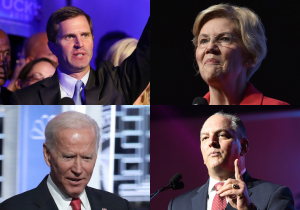
Next year you will enter the Twilight Zone where the governors of Vermont, Massachusetts, and Maryland are Republicans and the governors of North Carolina, Kentucky, and Louisiana are Democrats. It is the middle ground between working-class realignment and the rising American electorate, between polarized parties and disaffected independents, and it lies between the pit of man's ideology and the summit of his pragmatism. This is the dimension of American politics that reveals the overriding importance of a candidate's personal qualities and issue positions.
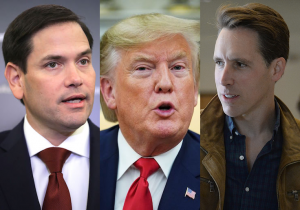
The latest entry in the post-Trump conservatism sweepstakes was Marco Rubio's speech at the Catholic University of America in early November. The Florida senator made the case for a "common-good capitalism" that looks on markets in the light of Catholic social thought. "We must remember that our nation does not exist to serve the interests of the market," he said. "The market exists to serve our nation."
So this is what it feels like to live in a lab experiment. As a native Virginian, I've watched my state come full circle. The last time Democrats enjoyed the amount of power in the Old Dominion that they won on Tuesday, I was entering middle school in Fairfax County.
At first glance, President Trump's reelection chances don't look good. Stories about impeachment and presidential misbehavior dominate the news. Trump's disapproval rating is high. Independent voters are against him. GOP congressmen are retiring from suburban districts that trend Democratic. The generic ballot is about where it was last cycle. Trump's win in 2016, when some 78,000 voters in three states gave him the Electoral College, was a close-run thing. Seems hard to repeat.
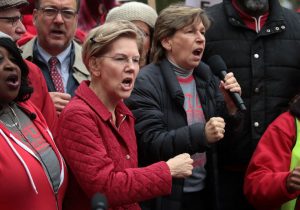
"The fact is there is no more money. Period," says Chicago mayor Lori Lightfoot. She's talking about the teachers' strike that has paralyzed her city's public schools—enrollment 360,000—for the past week. The public employee union is demanding more: more money for salaries (only eight states pay teachers more than Illinois), more support staff (Illinois ranks first in spending on administrators), more teachers per student. Their cause has attracted national attention. Elizabeth Warren joined the picket line.
The slaughter going on in Syria is not a consequence of American presence. It's a consequence of a withdrawal and a betrayal by this president of American allies and American values.
—Pete Buttigieg, October 15
Mr. Mayor has a point. For 75 years, from Fulda Gap to the 38th Parallel, the American soldier has been the last line of defense against violence, chaos, and oppression. From Kosovo to Anbar, he has kept a lid on cauldrons of bloodlust. Remove him, and the poison boils over.
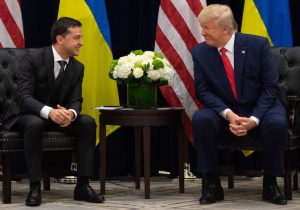
Ironies pile up. Both participants in the July 25 call between President Trump and Ukrainian president Volodymyr Zelensky are outsiders whose fame catapulted them to high office. Foreign policy experts assumed their similar profile would promote goodwill and understanding. That was incorrect. This star-crossed encounter has damaged the careers of both men. It also has thrown light on the nature of their societies.