EU unable to fully trace €1bn spent on refugees in Turkey
-

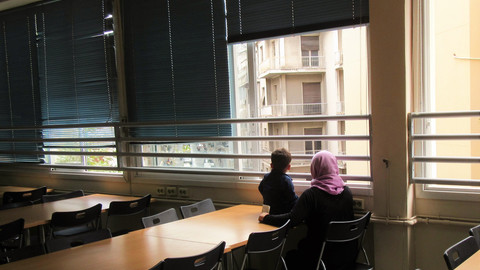
EU funded programmes in Turkey are helping Syrian refugee children and others (Photo: EU/ECHO/Abdurrahman Antakyali)

The EU is unable to verify with certainty how over €1bn of European taxpayer money was spent on Syrian refugees in Turkey because of Ankara's data protection laws.
"I can say that this is a serious situation," chief European auditor Bettina Jakobsen told reporters in Brussels on Monday (12 November).
Join EUobserver today
Support quality EU news
Get instant access to all articles — and 18 year's of archives. 30 days free trial.
Choose your plan
... or join as a group
Don't miss out on
EUobserver's coverage of the 2019 European election. Investigative. Independent. Influential. Try us.

Why join?
Watch our founder Lisbeth Kirk explain the reasons in this 30 seconds video.
"Normally as an auditor you would say you would like to follow the flow of money from the cradle to the grave. And we cannot do that here," she said.
Although money still ended up helping the Syrian refugees, the auditors say doubts have been raised given Turkey's refusal to provide access to documents.
Jakobsen's comments follow a report by the European Court of Auditors, a spending watchdog based in Luxembourg, on how EU funds in Turkey were spent to help Syrian refugees.
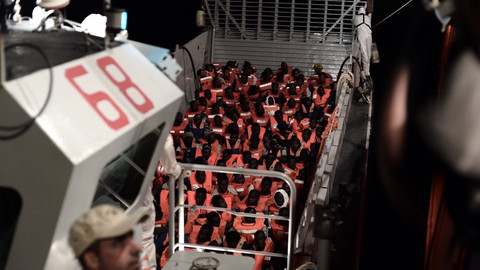
The EU in 2015 agreed to provide €3bn of funds to help refugees in Turkey as part of an agreement to prevent them from leaving on boats to reach the Greek islands.
But neither the European Commission nor the European Court of Auditors is able to fully trace how over €1bn was spent on two humanitarian programmes designed to provide cash assistance to Syrian refugees.
The auditors had wanted to compare Turkey's registration list of refugees with the list of refugees getting the EU cash but were refused access by Turkey's ministry of family and social policies, citing Turkey's data protection laws.
They were instead given anonymised banking details, which they were unable to check against the list of beneficiaries receiving the cash assistance.
"When you fund things, you would expect to have full access to documents," said Jakobsen.
Most of the EU funding is shuffled through UN agencies that then disperse it through local NGOs and other humanitarian partners via banks.
This includes the two cash assistance programmes known as the Conditional Cash Transfer for Education (CCTE) and Emergency Social Safety Network (ESSN).
CCTE helps Syrian children pay for school supplies and is funded mostly by the EU. The programme is also funded through grants from Norway and the United States.
The ESSN provides money for things like food and rent. Both issue the funds through special cards.
The personal information of the beneficiaries of the two programmes is first given to Turkey's ministry of family and social policies but who then refuse to share it with the UN and the commission.
The auditors point out that the UN had created additional internal controls to mitigate risks but still cannot guarantee zero errors or mistakes.
"We can say that the money goes to refugees, but we cannot concretely say that all money goes there," said Jakobsen.
Philippe Duamelle, who heads the UN agency for children (Unicef) in Turkey, explained to this website in May how they verify and control conditional cash transfers for education.
He said beneficiaries first need to register at local branches of the ministry of family and social policies. They then fill out a form, which then goes into the ministry's system to assess eligibility criteria.
Syrian children are required to have an 80 percent school attendance rate to remain within the programme.
The attendance rate is monitored by Turkey's ministry of education, which is then data mined by the ministry of family and social policy.
"Then the information is provided for Unicef and if the children who are eligible for the payments, based on that and our verification process, we make the payment to the bank which has a partnership with the Turkish Red Crescent," he said.
He said the families are then informed via text message when money has been uploaded to their cash assistance cards.
Big UN bill?
But the auditors pointed that this payment system may contain other perils.
They found cases where the interest generated on the money at the banks was handed over to the implementing partners. It means the interest is not going to help the refugees nor being returned to the EU taxpayer.
They also pointed out that the UN had charged a €64m administrative fee to roll out the two programmes, described by the auditors as "quite a substantial amount of money for just administration."