EU to restrict refugee resettlement options
-
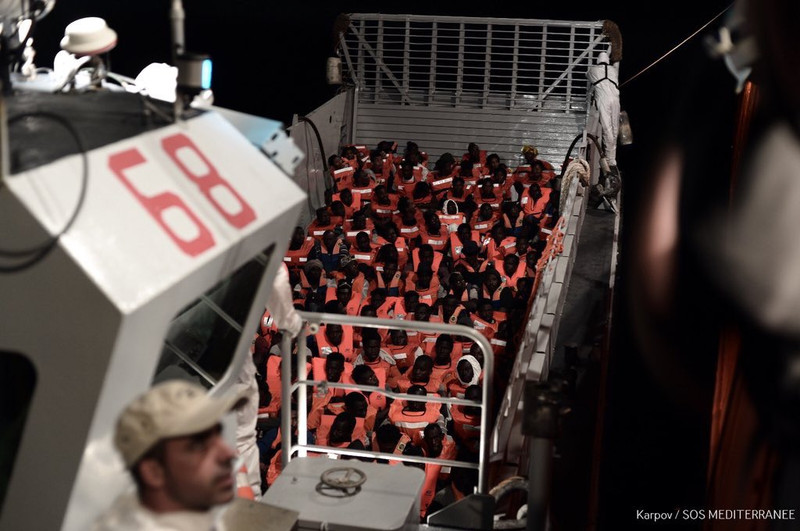
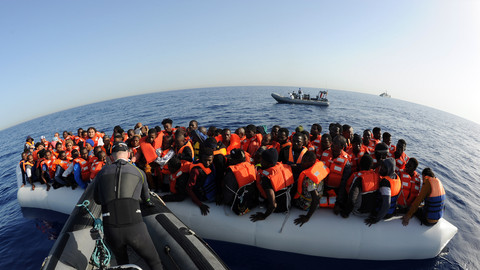
EU set to pay governments €6,000 per migrant taken in from Mediterranean boat rescues (Photo: SOS Mediterranee)

The EU wants to make it more difficult for people in need of international protection from ever reaching Europe by denying them options to 'resettle' - that is, leave UNHCR sites for the EU.
On Tuesday (24 July) it unveiled two concept papers, to create 'centres' in Europe and 'platforms' in Africa, as part of a wider effort to prevent people from taking boats to reach Italy and Spain.
Join EUobserver today
Support quality EU news
Get instant access to all articles — and 18 year's of archives. 30 days free trial.
Choose your plan
... our join as a group
Don't miss out on
Did you know that 65 percent of EU institution staff find EUobserver influential in terms of EU news? We provide the deep context to make informed decisions. Try us.

Why join?
Watch our reporter Eszter Zalan explain the reasons in this 30 seconds video.
That means, among other things, that "resettlement possibilities will not be available to all disembarked persons in need of international protection" at platforms set up in north African states. The idea is dissuade others from attempting the same fate.
In the EU jargon for the migration debacle, "relocation" is for people, already in EU territory, with a high chance of getting asylum status in an EU state. "Resettlement" is for UNHCR refugees that are in foreign countries but can be sent to an EU state.
Details of overall costs, who will host them or what the centres and platforms will look like remain unclear.
Instead, the European Commission says its proposals are the start of a process to be discussed among EU states on Wednesday in Brussels, following a recent EU summit among heads of state and government where the vague plans were first revealed to the public.
Italy's new hardline government has given the EU five weeks to reach a deal before sealing off its ports to all rescue boats, despite the sharp fall in arrivals.
'Camps' or 'centres'?
The commission wants a pilot project to test the concept of what they call 'controlled centres' - a term meant to obscure notions of 'camps', given the image they may provoke following the disastrous treatment of people stuck in overcrowded hotspots on the Greek islands, and dispel any notions of permanence behind the centres.
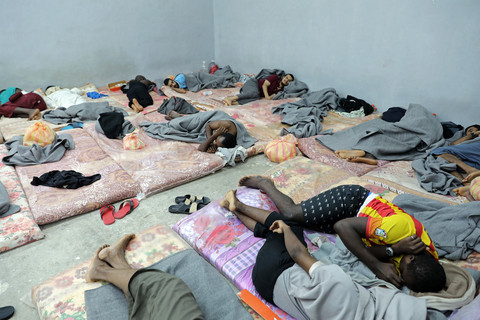
Earlier this month, Oxfam in a report detailed the continued abuse of asylum seekers on the Greek islands, noting most are "stranded in inhumane conditions". The islands are now host to a record high of 17,800 people.
While such hotspots were first launched in 2015 in Italy and Greece, the centres could presumably be erected in any EU state on an ad-hoc and volunteer basis.
As an extra incentive, the EU would finance all costs linked to the centres and equip them with teams from various EU agencies.
€6,000 per person
It also proposes to pay EU governments €6,000 per person taken in from the boats, a sum dismissed by Italy's far-right interior minister Matteo Salvini.
"If they want to give money to someone else let them do so, Italy doesn't need charity," he said in response to the commission's plan.
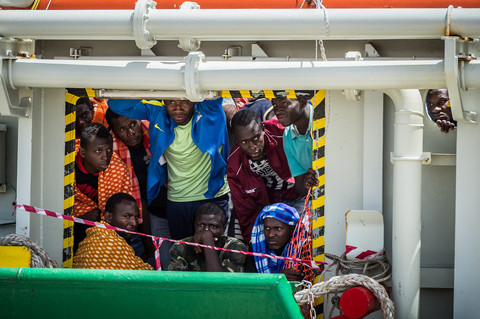
It means people rescued at sea would be offloaded at the new, yet-to-be-created centres, in an effort to quickly screen them in a process that should take 72 hours. Those that qualify for protection would have their status determined within eight weeks.
Others will be sent home, in a move likely to generate complications given many origin countries refuse to accept them.
Such complications point to a wider legal tangle and tensions with origin countries - amid calls to leverage development aid, and visa restrictions, to get them to respect and sign off on readmission agreements.
Disembarkation platforms
No country in north Africa has yet to agreed to host such platforms, first proposed by the UN refugee agency (UNHCR) and the International Organization for Migration.
Tunisia has turned down the plan. Libya is excluded from the programme, leaving Algeria, Egypt, and Morocco as possible candidates.
But the European Commission remains persistent, noting that its latest schemes with north African states will be done in "partnerships on an equal footing".
Those efforts, including getting the Libyan coastguard to return people from the sea, have already made the Mediterranean deadly.
"In June alone, one person died for every seven who crossed the central Mediterranean, compared to one in 19 in the first half of this year and one in 38 in the first half of 2017," said UNHCR.
Europe's track record on settlement from Africa is also poor, posing questions on why any foreign state would agree to the EU proposal.
Niger earlier this year threatened to scrap a similar scheme run by UNHCR given so few had actually left for Europe.
Figures from mid-July show that only 207 have actually resettled from Niger to France, the Netherlands, Sweden and Switzerland since the programme's launch late last year. Another 312 were taken to Italy directly from Libya. Romania also took ten.
Libya has over 54,000 asylum seekers and refugees registered with the UNHCR.