Magazine
'Integration' - the missing factor in new EU migration fund
-

NGOs drive integration projects in Athens (Photo: Nikolaj Nielsen)

Earlier this year, Athens' mayor Georgios Kaminis was in Brussels to plead his case on how to best integrate migrants, refugees, and asylum seekers.
"We have the responsibility, we have the burden, so I think we deserve to have the right to direct access of European funds," he told EUobserver, following the public hearing at the European Parliament in mid-May.
Join EUobserver today
Support quality EU news
Get instant access to all articles — and 18 year's of archives. 30 days free trial.
Choose your plan
... or join as a group
Don't miss out on
Did you know that 65 percent of EU institution staff find EUobserver influential in terms of EU news? We provide the deep context to make informed decisions. Try us.

Why join?
Watch our founder Lisbeth Kirk explain the reasons in this 30 seconds video.
-
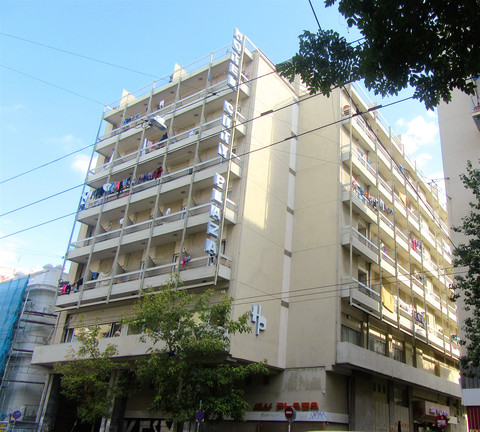
An abandoned hotel in Athens turned into a refuge. (Photo: Nikolaj Nielsen)

With an estimated 80 percent of Syrian refugees in the EU unemployed, the integration of migrants and refugees remains a big issue for cities and regions.
Because of it, Kaminis says EU funding needs to be organised in such a way that local authorities are entitled to distribute it.
"It would lead to more efficient cooperation between governments and regional and local authorities," he said.
The Greek mayor's comments came a few weeks before the commission announced the new EU 'multi-annual financial framework' budget for the next seven years, that will include migration as a new criteria when assessing how much will be allocated from the cohesion fund.
Show me the money
None of the objectives under the new cohesion funds proposal highlight integration as a policy goal, but instead focus on things like innovation and clean energy.
The European commission in its new budget proposals for regional development and cohesion policy has promised local authorities greater involvement and ownership of EU funded projects - but as yet no direct access.
It also says local and regional levels of government, including civil society, should receive as much support as possible when it comes to integration.
The commission is instead proposing a new €10.4bn asylum and migration fund (AMF), to address immediate needs like reception and healthcare.
The AMF plan is to support long-term integration under the EU's cohesion funds, and in particular the regional development fund. Some six percent of the fund has been earmarked for urban development, which can also include integration programmes.
The commission also promised less red tape. It means, among other things, that a small percentage of the money can be shuffled around to different priorities without any paper work.
But whether such initiatives will trickle down to the people most in need remains to be seen.
Many face poverty, social exclusion, and segregation as some grapple with language and unemployment. Austria earlier this year proposed lowering monthly refugees' benefit payments if they don't speak German.
Some asylum seekers and refugees are also located to rural areas of Europe, far away from the big cities where they are more likely to find a fellow diaspora.
Meanwhile, an Eurobarometer on integration in April found that most people tend to overestimate the number of non-EU immigrants.
Hostile locals?
It also found local populations with few immigrants are the most unlikely to think integration is a success, and that immigrants have had a positive impact.
"The more unemployment among the native-born people, the more reluctant they will be vis-a-vis migrant arrivals," said Claire Charbit, who oversees regional development policy at the OECD, at a June conference organised by the Council of European Municipalities and Regions.
A survey of migrant-integration policies across 10 European cities, conducted by the OECD, found more than two-thirds of foreign-born people live in metropolitan areas, while asylum seekers are more dispersed.
Charbit, who conducted the research, said the biggest problem facing local authorities when it comes to integration is a lack of information sharing among different levels of government.
"There will be no integration if you do not take into account the differences among places. The issues are not the same, the questions and the realities are not the same, so you need to adopt a placed-based approach," she said.
The second biggest headache is making sure integration policies and work programmes are widespread, she said, noting "you cannot just offer them [migrants] a house and nothing else."
Such a long-term and local approach requires dedicated policy and political commitment. Some efforts are under way.
Last December, the commission had signed a 'European Partnership for Integration' with the European Trade Union Confederation and BusinessEurope, among others to help refugees find jobs more quickly.
"All actors – public and private - need to do their part to successfully integrate refugees and this is why we want to join forces," said EU migration commissioner Dimitris Avramopoulos at the time.
The pact is part of the Urban Agenda for the EU, launched in May 2016, to better coordinate cooperation between the different levels of government.
This story was originally published in EUobserver's 2018 Regions & Cities Magazine.