Happy Holidays!
24 Saturday Dec 2016
Posted in Gothic Gaming, Ghastly Affair, Historical Gaming

24 Saturday Dec 2016
Posted in Gothic Gaming, Ghastly Affair, Historical Gaming
21 Wednesday Dec 2016
Posted in Ghastly Affair, Gothic Gaming, Historical Gaming
08 Thursday Dec 2016
Posted in Ghastly Affair, Gothic Gaming, Historical Gaming, Reviews
Tags
18th Century, dreadpunk, Eighteenth Century, First Empire, French Directory, French Revolution, Georgian, Ghastly Affair, gothic game, Gothic Gaming, Gothic Horror, Gothic Literature, Gothic Romance, Gothick, mannerpunk, Napoleonic, Regency, role-playing game, Romantic Age, Romantic Horror, Romantic-era, Romanticism, rpg
Here’s a recent review of the Ghastly Affair Player’s Manual and Ghastly Affair Presenter’s Manual posted on YouTube.
Note: Review is mildly NSFW due to language. But of course, Ghastly Affair is meant for mature gamers!
And here’s another recent review from the blog “Filbanto Stew”.
Remember, its not too late to put the Ghastly Affair Player’s Manual and Ghastly Affair Presenter’s Manual on your Amazon Wish List. They’re also perfect ways to spend all those Amazon Gift Cards!
Every review is appreciated! If you like Ghastly Affair, rate it on Amazon, RPGnet, or Enworld. Or, post a full review of your own!
05 Monday Dec 2016
Posted in Folklore, Ghastly Affair, Gothic Gaming, Historical Gaming, Monsters
Tags
18th Century, Austria, Bavaria, Christian Folklore, Christmas, Christmas Tradition, Devil, Devils, Eighteenth Century, Folklore, Ghastly Affair, gothic game, Gothic Gaming, Gothick, Medieval Folklore, Napoleonic, role-playing game, Romantic Horror, rpg, Scary stories for Christmas, Styria, weird tradition, Yule

The following take on Krampus and Saint Nicholas also incorporates a certain notorious Styrian from one of the classics of Gothic literature. Remember, this is all just for fun, and definitely not meant as a commentary on anybody’s beliefs.
Krampus
The Devil who punishes wicked children at Christmastime.
Creature Class: Spirit (Devil)
Number Appearing: 1
Initial Impression: The sound of cowbells and crying children, followed by the sudden appearance of an extremely hairy, grotesque man with a long, protruding tongue and large, goat-like horns. He carries a birch switch, has a basket on his back, and and is bound in chains from which several heavy bells are suspended.
Size: Human-sized
Perversity: 21
Disposition: Aggressive
Charisma: 7 Intelligence: 9 Wisdom: 15
Strength: 18 Dexterity: 15 Constitution: 18
Speed: 9
Armor Class: 4
Hit Dice: 5 (30 hp)
Attacks: 1 (claws, or grab)
Special Abilities: Diabolical Characteristics
Weaknesses: Diabolical Weaknesses, Distracted by Alcohol and Pretty Women
Assets: Skilled Torturer, Expert Grappler
Afflictions: Encumbered (by chains, heavy bells, and having two different feet)
Preternatural Powers: Cause Fear, Detect Evil, Detect Lies, Dimension Door, Knock, Invisibility, Major Creation (usually used to make birch switches and coal), Walk Through Shadows, Walk Through Walls
Natural Habitat: Wherever children are found at Christmastime (Bavaria, Austria, and adjacent areas). The dark and sulfurous caves of Hell.
Level: 5
In centuries past, Saint Nicholas put magical chains upon a Devil, and bound him to be the punisher of wicked children. Every night of December the 5th since then, the Devil Krampus has been summoned by Saint Nicholas to accompany him as he visits the children of Austria (and the surrounding lands). Good children receive gifts from Saint Nicholas. Wicked children receive the attentions of Krampus instead.
Krampus’ body is covered with shaggy hair, and he sports a large pair of goat horns. An extremely long tongue hangs from his fanged mouth, and his eyes burn like coals. One of his feet is human-like; the other is a cloven hoof. He always carries a switch of birch branches. The steel chains that bind him are attached to his wrists by manacles, and wrap around his body. Hanging from them are the large cowbells that announce his approach. On his back is strapped a basket, from out of which the small hand of a child will occasionally appear, accompanied by pitiful pleading.
Krampus’ punishments vary in severity, depending on his whims, and the extent of the child’s misdeeds. The most mild punishment consists of Krampus taunting the child with a present of coal, while he (or she) must watch other children enjoying the nice gifts given to them by Saint Nicholas. If Krampus is feeling especially mean, the coal will be glowing hot. Next in severity is a thorough birching, administered with the switch that Krampus carries for that purpose. Sometimes Krampus will then present the birch switch to the child or their parents, as a reminder. The very worst children are seized and stuffed into Krampus’ magical basket. Such unfortunates will be carried back to Hell, never to be seen again.
Although Krampus delights in the suffering of the wicked, he is himself thoroughly reprobate. His lust for schnapps and pretty girls is legendary. The moment Saint Nicholas is distracted, Krampus will take the opportunity to break valuable objects and cause general mischief.
Krampus is skilled at grabbing children and throwing them into his basket before they can wriggle free of his clutch. If challenged to a direct fight by an adult, however, Krampus will throw aside his birch switch and attack with his clawed hands. Saint Nicholas will not interfere in any fight involving Krampus, provided the Devil’s opponents are not themselves evil. If Krampus’ physical form is killed, he will disappear along with his chains. His basket will remain, however, dropping and spilling out all the children abducted that night. The fleeing children will then be given a stern warning by Saint Nicholas that they won’t escape punishment next time!
Some whisper that it was because of the wickedness he found in a certain family of Styrian aristocrats that Saint Nicholas first decided to take strict measures to instill virtue in Alpine children. In 1687 Saint Nicholas and Krampus paid another visit to that same aristocratic family, where they encountered a young daughter of the clan named Mircalla. That girl never forgot her humiliation by Krampus, even after her death. Thus, the Vampyre Carmilla Karnstein became Krampus’ eternal adversary, and she will stop at nothing to end his yearly visits to Styria.
Krampus’ Special Abilities
Basket of Imprisonment: The inside of Krampus’ basket is an infinitely large, pitch-black space with a cold stone floor. Krampus can always reach into the basket and pull out any child desired, however. The sound of crying children continually emanates from the Basket, and every so often a small hand or foot will peak out from under the lid.
Diabolical Characteristics: Krampus is immune to all weapons, except those which are made of silver, blessed, or otherwise enchanted. He cannot be harmed by fire, poison, disease, or any Special Ability or Preternatural Effect which target minds or emotions. Krampus can see perfectly regardless of illumination, is immune to blindness or any other debility caused by extremely bright light, retains the ability to distinguish colors in conditions of total darkness, and does not need time to adjust his eyes to changing light. He can speak, write, and understand all languages and forms of communication.
Krampus’ Weaknesses
Chains of Binding and Warning: The magical chains that Krampus wears allow Saint Nicholas to summon him at will, forces the Devil to obey direct commands from the Saint, and inflict 1d6 point of damage on their wearer if he touches anyone with a Perversity of 6 or lower. Furthermore, the bells attached to the chains are audible even when Krampus is Invisible.
Diabolical Weaknesses: Krampus is burned by holy water as if it was acid, cannot enter holy ground or touch blessed objects, and is subject to the power of Faith. He is Vulnerable to Silver, and will not voluntarily touch it. As a Spirit, he is susceptible to all Preternatural Effects that target spiritual entities. Additionally, the initial appearance of Krampus will cause the entire Nearby Area to momentarily smell like burning sulfur.
Distracted by Alcohol and Pretty Women: If confronted by an offer of strong drink, or a particularly attractive young woman (especially one with an ample bosom), Krampus must make a Charisma Save. If he fails he will immediately break off whatever he is doing to drink the alcohol, or pursue the young woman.
Saint Nicholas
The generous but testy Patron Saint of children, merchants, and mariners.
Signs & Portents: If encountered at Christmastime, a light snow falls, and children become giddy. If at sea, the winds become favorable, and fish are drawn to the nets and hooks of anglers.
Initial Impression: A mature, white-bearded man with a dark complexion, dressed in the white, red and gold vestments of a bishop. A halo of light surrounds his head. He bears a golden crozier in one hand, and with the other holds a sack filled with oranges, gold coins, and small toys. The odor of fine incense emanates from his body.
Size: Human-sized
Perversity: 5
Disposition: Determined
Charisma: 20 Intelligence: 20 Wisdom: 20
Strength: 20 Dexterity: 20 Constitution: 20
Speed: 9
Armor Class: 10
Hit Dice: 20 (120 Hit Points)
Attacks: 1 (punch in the face)
Special Abilities: Angelic (Saintly) Characteristics | True Resurrection
Weaknesses: Limited Power Over Spirits (Angels only) | Intolerant of Disbelief
Assets: Master of All Crafts | Master Mariner | Brilliant Businessman | Skilled Boxer
Afflictions: Short Temper
Preternatural Powers: All Transmutations, all 0 – 3rd Level Blessings, Divinations, Evocations, Fascinations, and Glamors, but no Maledictions.
Favored Preternatural Powers: Augury, Control Winds, Consecrate Object, Create Food and Water, Cure Serious Wounds, Detect Evil, Enchant Weird Object, Fertility, Fly, Invisibility, Knock, Major Creation (permanent, and can make precious objects), Rain of Fish, Read Minds, Teleport
Usual Surroundings: Wherever children live at Christmastime. Wherever his holy relics are found. Ships at sea. The shops of pious merchants. Poor houses with unmarried daughters.
Level: 10
Saint Nicholas is among the Saints who take a very active interest in events on Earth. On the night of December 5th every year (the eve of his Feast day) he visits homes, distributing small gifts to good children. Centuries ago, however, he became disgusted at the wickedness he found among some children in the German-speaking Alpine regions. He decided to bind a Devil named Krampus into his service, and he charged the diabolical being with the task of punishing misbehaving youngsters. Since that time the two have traveled together to reward the virtuous, and torment the wicked.
Although he is renowned for his generosity, Saint Nicholas’ short temper is just as legendary. When he lived on Earth he was a delegate to the Council of Nicea, where he famously punched the unorthodox theologian Arias in the face. The Saint will become incensed by any heretical or rationalist argument, which can cause his physical incarnation to actually explode with anger!
Although best known as the patron Saint of children, mariners and merchants also pray for Saint Nicholas’ intercession. The Saint can calm storms, and his presence causes the nets of fishermen to become filled. His powers allow him to make almost anything he wants from thin air, including Weird Objects. Unlike human magicians, he can even make objects of precious metal or gemstone through his Preternatural power of Major Creation. He can restock a poor merchant’s entire inventory, and create dowries to keep poor unmarried girls from resorting to prostitution. His mightiest power, however, is his ability to resurrect the dead, without the baleful consequences that often result when profane sorcerers attempt the same miracle.
It is whispered among certain Demon Hunters that it was the twisted spawn of the infamous Karnstein family that first made Saint Nicholas so angry that he decided to employ Krampus. To this day the sole remaining Karnstein, the Vampyre Carmilla, schemes to destroy Saint Nicholas (and his diabolical servant). Of course, Saint Nicholas is immortal (and can repel Carmilla with his Faith), but still she seeks some way to eliminate him from the Earth forever.
Saint Nicholas has a great rivalry with the Yuletide Fairies and Elves of the Winter Court, such as Father Christmas, Père Noël, and La Befana. While Saint Nicholas stands for morality and religious observance, Father Christmas and his ilk promote feasting and general good cheer, without concern for the religious significance. Perhaps some kind of accord is possible, if Saint Nicholas could learn to be more jolly, and the winter elves agreed to help make toys. Otherwise, the dispute regarding the proper celebration of the Holiday may well result in Saint Nicholas punching one (or more) of the other powers in the face.
Saint Nicholas’ Special Abilities
Angelic (Saintly) Characteristics: Saint Nicholas is immune to all mundane weapons, all poisons, all diseases, any effect of an electrical nature, and all Fascination effects. He can see perfectly regardless of illumination, is immune to blindness or any other debility caused by extremely bright light, retains the ability to distinguish colors in conditions of total darkness, and does not need time to adjust his eyes to changing light. Saint Nicholas can speak, write, and understand all languages and forms of communication.
True Resurrection: Saint Nicholas can resurrect any dead person to full life, no matter how long they have been deceased, or the condition of their body. The resurrected person suffers no ill effects or increase in Perversity.
Saint Nicholas’ Weaknesses
Intolerant of Disbelief: If for some reason one wished to send Saint Nicholas back to Heaven, the surest way is to beat him in a theological debate over the supremacy of reason over faith. Naturally, since he is a Saint and prodigiously Intelligent to boot, it’s extremely difficult to do so. A debater must first succeed at an Intelligence check, to make a point solid enough that Saint Nicholas takes it seriously. Then, the debater must succeed in 3 successive Intelligence Contests against the Saint, without losing a single one. A debater that fails will be quickly, and repeatedly, punched in the face by Saint Nicholas. If the Saint is defeated, however, his face will turn red and emit steam, just before his physical body explodes. Naturally, once Saint Nicholas is able to return to Earth he will deal with the blasphemous disbeliever!
Limited Power Over Spirits: Saint Nicholas can only target Angels when he employs the following Preternatural Powers: Banish Spirit, Bind Spirit, Summon Spirit. He can, however, repel creatures of supernatural Evil through Faith. When he bound Krampus to his service, he first punched the Devil in the face, and then placed the Chains of Binding and Warning on him.
02 Friday Dec 2016
Posted in Ghastly Affair, Gothic Gaming, Historical Gaming
Tags
18th Century, Georgian, Ghastly Affair, gothic game, Gothic Gaming, Gothic Horror, Gothic Literature, Gothic Romance, Gothick, Napoleonic, Regency, role-playing game, Romantic Horror, rpg
NOW is the time to discover Ghastly Affair, “The Gothic Game of Romantic Horror”! That’s because prices on both the Ghastly Affair Player’s Manual and Ghastly Affair Presenter’s Manual have been reduced for Christmas!
Ghastly Affair Player’s Manual
Regularly $24.95 – NOW $19.95!
Ghastly Affair Presenter’s Manual
Regularly $19.95 – NOW $14.95!
Experience the delicious terror of true Gothic role-playing in the fevered age of Marie-Antoinette, Napoleon and Lord Byron, now at a special Christmas price!
Prices listed are in U.S. Dollars on Amazon.com. Prices outside the U.S. will vary.
01 Thursday Dec 2016
Posted in Folklore, Gothic Gaming, Historical Gaming, Opinion
Tags
American folklore, American Legend, apparition, Christmas, Christmas Tradition, English folklore, English Legend, English literature, Ghost, Gothic Horror, Gothic Literature, Gothic Romance, Gothick, Holidays, Medieval Folklore, Romantic Horror, Solstice, specter, Tradition, Urban Legend, Victorian, Victorian Gothic, Yule
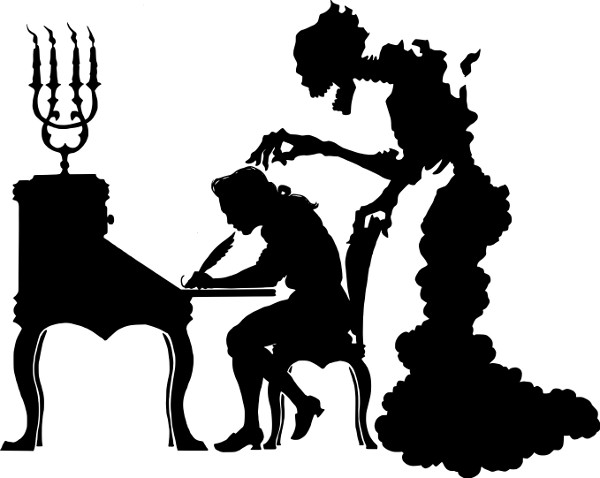 Christmas time is here again. It’s the season for decorations and songs. Eggnog and cookies. Little men moving in the night, and a spirit of justice flying through the air. There’s darkness around those Christmas lights, and it’s always been there.
Americans have largely forgotten the tradition of the Christmas ghost story, but it was once a vital part of our celebration. We love “A Christmas Carol”, but fail to acknowledge the tradition of Yuletide horror that it represents. But, what could be more appropriate on a cold winter’s night than to shudder at a chilling tale? When our ancestors shivered from the cold, they also told stories to send shivers down their spines!
This year, have a truly traditional Christmas. Help bring back the Christmas ghost story! Remember that elves are kin to goblins, and Krampus comes too. It isn’t just the living who yearn to be with their families, and mischievous sprites still lurk in your Christmas tree.
Look outside. What left such strange tracks in the new-fallen snow?
Horror doesn’t end at Halloween!
29 Tuesday Nov 2016
Posted in Ghastly Affair, Gothic Gaming, Historical Gaming, Random Tables
Tags
Ancient Folklore, Eighteenth Century, Georgian, Ghastly Affair, gothic game, Gothic Gaming, Gothic Horror, Gothic Literature, Gothic Romance, Gothick, mannerpunk, Napoleonic, Random Table, Regency, role-playing game, Romantic Horror, rpg

Upper class people of the Ghastly Age (1765 – 1820) spent much of their time visiting each other’s homes, often without bothering to announce their arrival beforehand! An entire Saga of Ghastly Affair could therefore revolve around a group of aristocrats and their retainers encountering horrors and scandals as they visit one estate after another.
The following tables let the Presenter (or GM) quickly determine the single most notable thing about any great house, château, estate, or manor. The feature determined could become central to the plot of the upcoming Affair (or story), suggest a subplot, or simply be an interesting backdrop to the real action.
The tables could be useful for any Gothic, Dreadpunk, Mannerpunk, Austen-inspired, Victorian-era, Steampunk, or Horror game.
1. Animals
(d6) The estate has…
| 1 | a famous dog pack (fox hounds, beagles, wolf hounds, etc.).
| 2 | a large clowder of cats.
| 3 | an excellent deer park.
| 4 | famous horses.
| 5 | a nearby wolf pack. But, are they natural wolves at all?
| 6 | a private menagerie.
2. Architecture
(d6) The construction is…
| 1 | unique.
| 2 | exemplary.
| 3 | dilapidated.
| 4 | unfinished.
| 5 | medieval.
| 6 | exotic (faux Chinese, Turkish, Hindu, etc).
3. Art Collection
(d4) Everyone has heard of the wonderful…
| 1 | paintings.
| 2 | outdoor sculptures.
| 3 | indoor sculptures.
| 4 | automatons.
4. Attractive Residents
(d4) People go there just to see the…
| 1 | beautiful lady of the house.
| 2 | handsome lord.
| 3 | enticing servants.
| 4 | lord’s gorgeous mistress (or lady’s handsome cavalier servente).
5. Cabinet of Curiosities (see Items in a Cabinet of Curiosities)
6. Cursed Family
(d6) According to legend…
| 1 | the first born son always dies tragically,
| 2 | the family is cursed with lycanthropy,
| 3 | the family members become vampires after death,
| 4 | the women of the family die in childbirth,
| 5 | the True Loves of family members die tragically,
| 6 | the family is plagued with madness,
(d6) because an ancestor…
| 1 | bargained with the Devil for fame and fortune.
| 2 | harmed a gypsy.
| 3 | mistreated a priest.
| 4 | murdered a man in cold blood.
| 5 | desecrated an ancient religious site
| 6 | broke a marriage contract to marry his/her True Love instead.
7. Entertainment
(d8) Visitors flock to the estate for its…
| 1 | amateur theatrical performances.
| 2 | professional theatrical performances.
| 3 | dances (unmasked).
| 4 | dinners.
| 5 | musical performances.
| 6 | masquerade balls.
| 7 | debauched parties.
| 8 | pyrotechnics displays.
8. Follies (see Random Architectural Follies)
9. Food
(d6) The estate produces especially good…
| 1 | cheese.
| 2 | ham.
| 3 | beer/wine.
| 4 | liquor (whiskey, rum, brandy, etc.).
| 5 | fruit.
| 6 | fish.
10. Games, Sports, and Contests
(d12) The estate is famous for its…
| 1 | tennis court.
| 2 | giant-sized lawn chess.
| 3 | roulette wheel.
| 4 | billiards table.
| 5 | collection of beautifully hand-painted playing cards.
| 6 | shooting contests.
| 7 | archery contests.
| 8 | animal fights.
| 9 | horse-riding.
| 10 | swimming.
| 11 | lawn sports (pall-mall, trucco, boules, quoits, cricket, golf)
| 12 | horse races.
11. Gardens
(d4) The gardens are known to be…
| 1 | extensive, and tasteful.
| 2 | extensive, but tasteless.
| 3 | small, but beautiful.
| 4 | small, and strange.
12. Haunting
(d4) Spectral activity occurs…
| 1 | every night,
| 2 | on nights of the full moon,
| 3 | on an anniversary,
| 4 | when a family member is in danger,
(d12) and is usually seen in…
| 1 | a bedroom.
| 2 | the main hall (or on the grand stairs).
| 3 | the servants’ quarters.
| 4 | the wine cellar.
| 5 | one of the gardens.
| 6 | a library.
| 7 | the attic.
| 8 | the woods nearby.
| 9 | the chapel.
| 10 | the front gate.
| 11 | the window of a sealed tower.
| 12 | a pool or pond.
13. Horrible History
(d6) The estate…
| 1 | was the site of a massacre.
| 2 | was used as a prison during the Inquisition or witch hunts.
| 3 | was an ancient place of pagan sacrifice.
| 4 | was a site where witches gathered.
| 5 | was the place where an infamous betrayal occurred.
| 6 | has one or more people supposedly immured in its walls.
14. Hunting
(d6) The estate is famous as a place to hunt…
| 1 | deer.
| 2 | boar.
| 3 | foxes.
| 4 | rabbits (on foot with beagles).
| 5 | birds.
| 6 | wolves.
15. Library
(d10) There is an especially extensive collection of…
| 1 | novels.
| 2 | plays.
| 3 | occult books.
| 4 | erotica.
| 5 | poetry.
| 6 | philosophy.
| 7 | histories.
| 8 | scientific treatises.
| 9 | heretical religious texts.
| 10 | supposedly lost books.
16. Literary Salon
(d4) The salon is held…
| 1 | weekly.
| 2 | biweekly.
| 3 | monthly.
| 4 | seasonally.
17. Notable Former Resident
(d10) The house was once inhabited by…
| 1 | a famous artist.
| 2 | an important writer.
| 3 | a legendary occultist.
| 4 | an infamous traitor.
| 5 | a respected religious figure.
| 6 | a wise philosopher.
| 7 | a brilliant (or woefully incompetent) military commander.
| 8 | royalty.
| 9 | a notorious criminal.
| 10 | the Devil himself, if you believe the stories.
18. Secret Passages/Rooms
(d6) The secret spaces were originally intended for…
| 1 | housing renegade clergy.
| 2 | smuggling contraband.
| 3 | hiding and moving lovers around.
| 4 | spying on guests.
| 5 | hiding the meetings of a secret society.
| 6 | hiding murdered victims.
| 7 | access to a secret laboratory.
| 8 | forbidden religious rites.
19. Unsolved Mystery
(d6) People say that…
| 1 | somewhere in the house there is a lost room that hides a family secret.
| 2 | coffins move inside the family tomb.
| 3 | parts of the house are inexplicably cold (or warm).
| 4 | nothing will grow on one part of the property that should be fertile.
| 5 | visitors often disappear from the estate.
| 6 | the family’s origin is shrouded in mystery.
20. Water Features
(d6) The parkland is well-known for its…
| 1 | grotto pool.
| 2 | artificial waterfall.
| 3 | extensive lake.
| 4 | fountains.
| 5 | cunningly crafted statues that squirt unwary visitors.
| 6 | canals.
27 Sunday Nov 2016
Posted in Ghastly Affair, Gothic Gaming, Historical Gaming
Tags
18th Century, Georgian, Ghastly Affair, gothic game, Gothic Gaming, Gothic Horror, Gothic Literature, Gothic Romance, Gothick, Napoleonic, Regency, role-playing game, Romantic Horror, rpg
Purchase both the “Ghastly Affair Player’s Manual” and “Ghastly Affair Presenter’s Manual” on Amazon today, and you qualify for $10 off your order! Just follow the instructions on Amazon, and enter the code HOLIDAYBOOK during checkout. Now is the time to discover The Gothic Game of Romantic Horror!
Note: Offer is subject to Amazon’s Terms & Conditions
25 Friday Nov 2016
Posted in Ghastly Affair, Gothic Gaming, Historical Gaming
Tags
18th Century, Georgian, Ghastly Affair, gothic game, Gothic Gaming, Gothic Horror, Gothic Literature, Gothic Romance, Gothick, Napoleonic, Regency, role-playing game, Romantic Horror, rpg
Now through Cyber Monday (11/28/16), you can get 25% off on the “Ghastly Affair Player’s Manual” and “Ghastly Affair Presenter’s Manual” on CreateSpace. Now is the time to get started playing The Gothic Game of Romantic Horror!
Enter code M5RA3RPS for 25% off the “Ghastly Affair Player’s Manual”!
Enter code LJJLMR5T for 25% off the “Ghastly Affair Presenter’s Manual!
Experience true Gothic role-playing in the age of powdered wigs, masquerade balls, and bloody revolution!
18 Friday Nov 2016
Posted in Ghastly Affair, Gothic Gaming, Historical Gaming, The Ghastly Salon
Tags
18th Century, British, Eighteenth Century, English history, English literature, Free RPG, French Revolution, George III, Ghastly Affair, gothic game, Gothic Gaming, Gothic Horror, Gothic Romance, Historic Figure, Historic NPC, pilosopher, Regency, role-playing game, Romance, Romantic Horror, Romantic poetry, Stats, Whig
Not to be confused with her daughter, who wrote “Frankenstein”, Mary Wollstonecraft was a founding voice of English Feminism, and certainly one of the most remarkable women of the eighteenth century.

Mary Wollstonecraft (December, 1792)
Radical Thinker, Champion of Women’s Rights, and Mother of Mary Shelley
Class: Everywoman
Level: 7
Appearance/Most Memorable Characteristic: A tall, attractive woman with light brown eyes and auburn hair powdered to a pale tan color, dressed simply but very neatly. She wears no perfume, but is notably clean smelling.
Age: 33
Charisma: 15 Intelligence: 17 Wisdom: 13
Strength: 9 Dexterity: 9 Constitution: 9
Perversity: 6
Speed: 9
Hit Points: 42
Attacks: 1 (punch, or improvised weapon)
Damage Bonus: +2
Special Abilities: Profession: Governess (+1) | Avocation: Writer (+1) | Affection (+1): Abused or Endangered Women | Inheritance: None (withheld by brother) | Social Contacts: Elizabeth “Bess” Bishop (née Wollstonecraft – sister), Everina Wollstonecraft (sister), Jane Arden (early friend), Margaret Moore (née King, Countess of Mount Cashell), George Ogle (conservative Irish politician), Joel Barlow (American writer and poltician), Ruth Barlow, Joseph Johnson (her publisher), Thomas Paine (radical political philosopher), Helen Maria Williams (radical writer), William Godwin (anarchist writer, and future husband), John Opie (painter), William Blake (visionary poet and artist), Thomas Holcroft (writer and radical), Aline Filliettaz (educator)
Weaknesses: Phobia (-1): Disease | Prejudice: High Society
Assets: Talented Writer, Brave
Afflictions: Prone to Melancholy, Fool for Love
Typical Equipment Carried: A simple but neat dress. 50 livres (500p) in cash. A small journal. A pencil. Practical shoes.
Current Residence: 22 Rue Meslay, Paris
Background (to 1792):
Personality and Role-Playing Notes: Mary is a conflicted soul who often seems torn between her deeply-held intellectual beliefs and sensual desires. Idealistic and sensitive, she loves and hurts deeply. She suffers from periods of deep depression, and will ruminate on insults. While she is polite and eloquent, Mary is also a fierce debater. She is exceptionally courageous for an eighteenth century woman, often traveling unescorted (in defiance of social convention), and deliberately walking city streets alone at night. She appreciates art and music, and loves to visit shows and converse earnestly about great painters and sculptors. Despite her previous work as a Lady’s Companion and a Governess, she despises the artificiality and pretension of High Society.
Mary is noticeably neat and clean in her appearance, although she lacks the funds to dress fashionably. Unlike many of her contemporaries, she tries to take a full bath (not just a sponge bath) as often as she can. Her concern with hygiene includes a distinct tendency towards hypochondria (ironic, since she will eventually die from septicemia after giving birth to her daughter Mary).
Although she can read formal French (as well as German) well enough to do translations, Mary’s comprehension of the spoken language is not good this point. She will prefer to converse in English if possible. She speaks with a slight Yorkshire accent, due to years spent there as a girl.
Mary Wollstonecraft in Your Game: Mary has just arrived in Paris, and is living alone in a large house with her hosts’ servants. She is always looking for a puzzle to solve, or an injustice to right. Mary may know of a woman who has been unjustly committed to a madhouse by her husband, and ask that the PCs help rescue her. Alternately, she could become involved in tracking down a perverse aristocrat attempting to flee France with a kidnapped peasant girl.
Mary should certainly be able to hold her own in a fight, if necessary. Mary’s Affection for abused and endangered women grants her a +1 Bonus on any action she takes on their behalf. Also, her low Perversity enables her to ward off creatures of supernatural Evil, even though will initially deny that such unreasonable things could exist!
Mary could become romantically involved for a short time with either a male or female PC. At this time she will be dismissive of the idea of marriage with a man, insisting that women should live together instead. Her great tragic romance with the American adventurer Gilbert Imlay will not begin until next year.
A Note on Mary’s “Romantic Friendships”:
It’s difficult to be certain whether the historical Mary Wollstonecraft was actually bisexual. The problem arises from the ambiguous nature of the “romantic friendships” which were common among 18th century women. It is unclear from the historical record just how often such “friendships” progressed beyond holding hands and exchanging passionate declarations of love, although many certainly did. While it seems fairly obvious that Mary was deeply in love with Fanny Blood, for example, we simply don’t know how physically intimate the two were.


