Portal:Amsterdam

Introduction

Amsterdam (/ˈæmstərdæm/, UK also /ˌæmstərˈdæm/; Dutch: [ɑmstərˈdɑm] ( listen)) is the capital city and most populous municipality of the Netherlands. Its status as the capital is mandated by the Constitution of the Netherlands, although it is not the seat of the government, which is The Hague. Amsterdam has a population of 854,047 within the city proper, 1,357,675 in the urban area and 2,410,960 in the metropolitan area. The city is located in the province of North Holland in the west of the country but is not its capital, which is Haarlem. The Amsterdam metropolitan area comprises much of the northern part of the Randstad, one of the larger conurbations in Europe, which has a population of approximately 8.1 million.
Amsterdam's name derives from Amstelredamme, indicative of the city's origin around a dam in the river Amstel. Originating as a small fishing village in the late 12th century, Amsterdam became one of the most important ports in the world during the Dutch Golden Age (17th century), as a result of its innovative developments in trade. During that time, the city was the leading centre for finance and trade. In the 19th and 20th centuries the city expanded, and many new neighbourhoods and suburbs were planned and built. The 17th-century canals of Amsterdam and the 19–20th century Defence Line of Amsterdam are on the UNESCO World Heritage List. Since the annexation of the municipality of Sloten in 1921 by the municipality of Amsterdam, the oldest historic part of the city lies in Sloten, dating to the 9th century.
Selected general articles
 * "'t Is Stil in Amsterdam" by Ramses Shaffy
- "A Bar In Amsterdam" by Katzenjammer
- "A Windmill in Old Amsterdam" by Ted Dicks and Myles Rudge
- "Aan de Amsterdamse grachten", lyrics by Pieter Goemans in 1949, composed by Dick Schallies. Most famous interpretation was sung by Wim Sonneveld.
- "All of the Stars" by Ed Sheeran
- "American in Amsterdam" by Wheatus
- "Amesterdão (Have Big Fun)" by Mão Morta
- "Amsterdam" by Axel Fischer
- "Amsterdam" by Buck Owens
- "Amsterdam" by John Cale
- "Amsterdam" by CirKus
- "Amsterdam" by Coldplay
- "Amsterdam" by Richard Clapton
- "Amsterdam" by Cora
- "Amsterdam" by Crowded House
- "Amsterdam" by Daughter
- "Amsterdam" by The Dreadnoughts
- "Amsterdam" by Fettes Brot
- "Amsterdam" by Nephew (Danish band)
- "Blind Man in Amsterdam" by George Ezra
- "Amsterdam" by Gregory Alan Isakov
- "Amsterdam" by Guster
- "Amsterdam" by Imagine Dragons
- "Amsterdam" by Jacques Brel
- "Amsterdam" by Katya Sambuca
- "Amsterdam" by Kevin Coyne
- "Amsterdam" by Liesbeth List
- "Amsterdam" by Alice Phoebe Lou
- "Amsterdam" by Maggie MacNeal
- "Amsterdam" by Mando Diao
- "Amsterdam" by Nothing but Thieves
- "Amsterdam" by Ørjan Nilsen
- "Amsterdam" by Peter Bjorn and John
- "Amsterdam" by Psoy Korolenko
- "Amsterdam" by Riblja Čorba
- "Amsterdam" by Rico Love
- "Amsterdam" by Scott Walker
- "Amsterdam" by Shane Alexander
- "Amsterdam" by Van Halen
- "Amsterdam" by Wouter Hamel
- "Amsterdam Crown" by Eszter Balint
- "Amsterdam, the first days" by Brainbox
- "Artis" by Spinvis
- "Big City" by Tol Hansse
- "Bij ons in de Jordaan" by Johnny Jordaan
- "Dans Le Port d'Amsterdam" by Jaques Brel
- "De stad Amsterdam" by Acda en De Munnik
- "Geef mij maar Amsterdam" by Tante Leen
- "Hallelujah Amsterdam" by Ramses Shaffy
- "Heart of Amsterdam" by The Gentle Storm
- "Houndog" by Cold Chisel
- "Ik verveel me zo (in Amsterdam-Noord)" by Drukwerk, music from Dylan's "A Hard Rain's a-Gonna Fall"
- "In Amsterdam" by Paul Weller
- "Kalverstraat" by Willy Alberti
- "Kamer in Amsterdam" by De Mens
- "Little Amsterdam" by Tori Amos
- "Lost in Amsterdam" by Parov Stelar Band
- "Lost Weekend" by Lloyd Cole
- "Maar in Amsterdam" Lenny Kuhr
- "Mary Jane Holland" by Lady Gaga
- "Oh, Waterlooplein" by Johnny en Rijk, music based on Jacques Dutronc's "Il est cing heures, Paris, s'eveille"
- "Origineel Amsterdams" by Osdorp Posse
- "Port of Amsterdam" by David Bowie, music based on Jacques Brel's Port d'Amsterdam.
- "Streets of Amsterdam" by Richard Ashcroft
- "Three Jolly Fishermen" (children's folk song)
- "Tulpen uit Amsterdam" famously sung by Max Bygraves. Original in Dutch by Herman Emmink
- "Vondelpark" by The 1990s
- "Zondagmiddag Buitenveldert" by Frans Halsema
- This is an index for the Amsterdam railway stations. Amsterdam is the capital of the Netherlands.
The operator of all trains within and around Amsterdam is the Nederlandse Spoorwegen.- Amsterdam Centraal also known as Amsterdam Central. This is Amsterdam's main station.
- Amsterdam Amstel This station on the eastern bank of the river Amstel is on the Amsterdam to Utrecht railway line.
- Amsterdam Bijlmer ArenA This is the main station for the south-eastern outskirts of Amsterdam. It is close to the Amsterdam ArenA stadium, as well as some major shopping and business centres.
- Amsterdam Holendrecht A new station, in south-eastern Amsterdam, that opened December 2008 on the Amsterdam to Utrecht railway line. It is close to the AMC hospital.
- Amsterdam Lelylaan Originally an Intercity station, now a local train station in the western Slotervaart borough of Amsterdam.
- Amsterdam Muiderpoort A junction station in Amsterdam-East, connecting the lines from Amsterdam Centraal to Hilversum and Utrecht.
- Amsterdam RAI A station in the south of Amsterdam, close to the RAI convention centre.
- Amsterdam Science Park A station in the east of Amsterdam in the Watergraafsmeer area and also close to the Science Park Amsterdam. Opened in 2009.
- Amsterdam Sloterdijk A station with two levels in the west of Amsterdam, moved during the construction of the Schiphol line. It allows passengers to change between the directions Amsterdam Centraal, Haarlem, Schiphol and Zaandam.
- Amsterdam Sloterdijk Hemboog Opened 2008, to be completed in 2009. This is an extra stop for trains on the direct railway between Zaandam and Schiphol.
- Amsterdam Zuid An Intercity station in the south of Amsterdam. Originally, it was called Amsterdam Zuid/WTC due to its proximity to the Amsterdam World Trade Centre.
- Duivendrecht Railway Station is a combined railand metro station in Duivendrecht, Netherlands. The station opened in May 23, 1993 as part of the extension of the Zuidtak of the Amsterdam Ringspoorbaan, between Amsterdam RAI and Weesp. This station allows for the interchange between two grade-separated railways: Weesp-Leiden and Amsterdam-Anhem
The Amsterdam Metro (Dutch: Amsterdamse metro) is a rapid transit system serving Amsterdam, Netherlands and extending to the surrounding municipalities of Diemen and Ouder-Amstel. The network is owned by the City of Amsterdam and operated by municipal public transport company Gemeentelijk Vervoerbedrijf (GVB) which also operates trams, free ferries and local buses. The metro system consists of five routes and serves 39 stations, with a total length of 42.7 kilometers (26.5 mi)
Three routes start at Amsterdam Centraal: Routes 53 and 54 connect the city centre with the suburban residential towns of Diemen, Duivendrecht and the southeastern city borough, while Route 51 connects the centre with the western borough via a ring line, serving the east and south of the city. Route 50 connects the southeastern to the western borough without crossing the city centre. A fifth route, Route 52, running from the northern to the southern borough, came into operation on 21 July 2018. Read more...- The Dutch city of Amsterdam has had many planned expansions over the past two centuries. Read more...

- A: Dam Square
- B: Nieuwmarkt
- C: Waterlooplein
- D: Spui
- E: Rembrandtplein
- F: Koningsplein
- G: Leidseplein
- H: Museumplein
- I: Marie Heinekenplein
- J: Markenplein
- K: Muntplein
- L: Noordermarkt
- M: Oudekerksplein
There are over eighty squares or pleins in Amsterdam, Netherlands. This is a list of the most notable ones. Read more...
Amsterdam-Oost is a borough of Amsterdam, Netherlands, established in May 2010 after a merger of the former boroughs of Zeeburg and Oost-Watergraafsmeer. In 2013, the borough had almost 123,000 inhabitants. Read more...- The Government of Amsterdam consists of several territorial and functional forms of local and regional government. The principal form of government is the municipality of Amsterdam, Netherlands. The municipality's territory covers the city of Amsterdam as well as a number of small towns. The city of Amsterdam is also part of several functional forms of regional government. These include the Waterschap (water board) of Amstel, Gooi en Vecht, which is responsible for water management, and the Stadsregio (City Region) of Amsterdam, which has responsibilities in the areas of spatial planning and public transport.
The municipality of Amsterdam borders the municipalities of Diemen, Weesp, Abcoude, Ouder-Amstel and Amstelveen in the south, Haarlemmermeer and Haarlemmerliede en Spaarnwoude in the west, and Zaanstad, Oostzaan, Landsmeer and Waterland in the north. Read more...
There are numerous parks throughout the city of Amsterdam, Netherlands. This is a fairly complete list of the most notable ones. Read more...
Amsterdam Nieuw-West is a borough (Dutch: stadsdeel) comprising the westernmost neighbourhoods of the city of Amsterdam, Netherlands. It was created in 2010 after a merger of the former boroughs Osdorp, Geuzenveld-Slotermeer and Slotervaart. In 2017, the borough had almost 150,000 inhabitants.
Most of the residential neighborhoods of Amsterdam Nieuw-West were built after 1950 under an urban expansion plan, based on the garden city concept. Centrally located within the borough are the Sloterplas (literal translation: Lake Sloter) and Sloterpark (around the lake). Read more... The medieval city with its walls, gates and towers can be seen on this map by Cornelis Anthoniszoon dating to 1538
The walls of Amsterdam were built in the Middle Ages to protect the city against attack. The Medieval walls were replaced with a series of bastions in the 17th century. In the 19th century, the walls were torn down and replaced with the Defence Line of Amsterdam (Stelling van Amsterdam), a fortification line which encircled Amsterdam at a distance from the city.
Remains of the Medieval and 17th-century defenses include the former city gates Waag and Munttoren, as well as the defensive tower Schreierstoren and the watchtower Montelbaanstoren. Read more...
This is a list of museums in the Dutch capital of Amsterdam:- Allard Pierson Museum, archeological museum of the University of Amsterdam
- Amsterdam Centre for Architecture (ARCAM)
- Amsterdam Dungeon
- Amsterdam Museum, formerly (up to 2011) Amsterdams Historisch Museum
- Amsterdam Tulip Museum
- Anne Frank House
- Appie Baantjer Museum
- Beurs van Berlage
- Bibliotheca Philosophica Hermetica, exceptional old books
- Bijbels Museum, also known as the Cromhouthuizen
- Willem Bilderdijk museum, part of the department Special Collections, University Library Vrije Universiteit, visit only on appointment
- Brilmuseum, museum about glasses
- Diamond Museum Amsterdam
- Electric Ladyland, museum of fluorescent art
- Electrische Museumtramlijn Amsterdam
- Energetica, closed; collection was transferred to NEMO
- Erotisch Museum, Oudezijds Achterburgwal
- Ethnographisch Museum Artis, collection was transferred to the Tropenmuseum)
- Fashion for Good Experience
- Filmmuseum, also known as Eye Film Instituut Nederland
- Foam Fotografiemuseum Amsterdam
- The Greenbox Museum of Contemporary Art from Saudi Arabia
- Hash, Marihuana & Hemp Museum
- Heineken Experience
- Hermitage Amsterdam
- Het Glazen Huis (Amstelpark)
- Het Huis van Aristoteles
- Hollandsche Manege, not a museum itself but contains the Levend Paardenmuseum.
- Hollandsche Schouwburg
- Hortus Botanicus
- House of Bols, cocktail experience
- Huis Marseille, museum of photography
- Imagine Identity and Culture, about culture and migration
- Joods Historisch Museum
- KattenKabinet
- Koffie- en Theemuseum Geels & Co.
- Madame Tussauds
- Max Euwe-Centrum, museum about chess and the only Dutch chess champion
- Medieval Torture Museum
- Micropia
- Moco Museum (Modern Contemporary Museum Amsterdam)
- Molen van Sloten, containing the Kuiperijmuseum
- Multatuli Museum
- Museum De Noord
- Museum Geelvinck-Hinlopen Huis
- Museum Het Grachtenhuis
- Museum Het Schip
- Nederlands Uitvaart Museum Tot Zover, museum about funerals
- Museum Van Loon
- Museum Vrolik, at the AMC Amsterdam
- Museum Willet-Holthuysen
- Museumwoning Tuindorp Oostzaan*Netherlands Media Art Institute (NIMk)
- Nederlands Scheepvaartmuseum, museum about shipping
- NEMO science center, former Nederlands Instituut voor Nijverheid en Techniek
- Nieuwe Kerk
- Noorder Kerk
- Olympic Experience Amsterdam, sports museum
- Ons' Lieve Heer op Solder, also known as Museum Amstelkring
- Oranje Voetbal Museum
- Oude Kerk
- Royal Palace of Amsterdam
- Pianola Museum
- Pijpenkabinet & Smokiana
- Press Museum, affiliated with the International Institute of Social History
- Rembrandt House Museum
- Rijksmuseum
- Rijksmuseum Amsterdam op Schiphol
- Rijksprentenkabinet, houses in the Rijksmuseum, but can be visited separately
- Sex museum, The temple of Venus, Damrak
- SMART Project Space, in the former pathological laboratory of the former Wilhelmina Gasthuis
- Special Collections of the University Library of Amsterdam
- Stadsarchief Amsterdam, city archive
- Stedelijk Museum / Stedelijk Museum Bureau Amsterdam (SMBA)
- Tassenmuseum Hendrikje (Museum of Bags and Purses)
- Tattoo Museum
- Theatermuseum, closed
- Theo Thijssen Museum, museum about the writer, teacher and socialist politician
- Torture Museum
- Tropenmuseum
- Vakbondsmuseum, in De Burcht, trade union museum in the oldest trade union building in the Netherlands
- Van Eesterenmuseum
- Van Gogh Museum
- Vereniging Museumhaven Amsterdam
- Verzetsmuseum, resistance museum
- Vodka Museum Amsterdam
- Werf 't Kromhout, one of few shipyards still in use in Amsterdam
- Witsenkamer, in the house of Willem Witsen
- Woonboot Museum, houseboat museum
- World of Ajax
- Zoological Museum Amsterdam of the University of Amsterdam
- Zuiderkerk
- Transportation within the city of Amsterdam is characterised by bicycles and public transportation. Large freeways only exist around the city, terminating at the A10 Ringroad. Navigating by car through the city centre is discouraged, with the government sponsoring initiatives to reduce car usage. Read more...
Amsterdam is both the most bicycle-friendly capital city in the world and, with an urban area population of over 1.1 million people, it is also the most bicycle-friendly city with over a million people in the world. In Amsterdam, over 60% of trips are made by bike in the inner city and 40% of trips are made by bike overall in the greater city area.
Nevertheless, though people outside of the Netherlands consider Amsterdam to be one of the most famous and important centres of bicycle culture worldwide, the city itself is actually not at the top in terms of bike-friendliness compared to many smaller Dutch cities. This is reflected in the fact that Amsterdam is not on the short-list for the Fietsstad 2014 (BikeCity 2014) awards, announced by the Dutch Fietsersbond (Cyclists' Union): the cities of The Hague, Eindhoven and Almere were nominated for the Fietsstad 2014 awards, while the Netherlands' most bicycle-friendly city of Groningen won the award back in 2001. It should be made clear that for bicycle-friendliness, one must consider the Netherlands as whole. Read more...- This is a list of notable people from Amsterdam. Read more...

Amsterdam-Centrum is the inner-most borough and historical city centre of Amsterdam, Netherlands containing the majority of the city's landmarks. Established in 2002, Amsterdam-Centrum was the last area in the city to be granted the status of self-governing borough. The borough is only 8.04 km2 large and covers the old innercity and the UNESCO-listed Amsterdam canal belt. In 2013, the borough had approximately 85,000 inhabitants, who on average had the second-highest income per household in the city (after Amsterdam-Zuid) and one of the highest in the country. Read more...
The boroughs of Amsterdam (Dutch: stadsdelen; literally "city parts") are the eight principal subdivisions of the municipality of Amsterdam, Netherlands. Each borough is governed by a directly elected district committee (bestuurscommissie). The first Amsterdam boroughs were created in 1981, with other boroughs created in later years. The last area to be granted the status of borough was Amsterdam-Centrum (2002). The existing system of eight boroughs, covering all parts of Amsterdam, is the result of a major borough reform in 2010. The current boroughs have populations of around 80,000 to 140,000, which is equivalent to an average-sized municipality in the Netherlands. Read more...
Amsterdam-Noord (English: North Amsterdam) is a borough of Amsterdam, Netherlands with a population of about 90,000. The IJ, the body of water which separates it from Amsterdam-Centrum and the rest of the city, is situated southwest of Amsterdam-Noord. The borough, which has an area of 49.01 km2 (18.92 square miles), borders the municipalities of Zaanstad, Oostzaan, Landsmeer and Waterland to the north, all part of the province of North Holland like Amsterdam. It borders the Markermeer to the east.
Amsterdam-Noord is mostly home to families who prefer it to the expensive, touristy and crowded Centrum, West and Zuid boroughs. It remains geographically close to major city landmarks, including Amsterdam Centraal station, the Royal Palace and the Rokin. Amsterdam-Noord is best known for its typical wooden houses (mainly located in Schellingwoude and Nieuwendam), historical areas with a low population density (Landelijk Noord) and large open spaces (especially Durgerdam and Ransdorp). Read more...
Amsterdam, capital of the Netherlands, has more than one hundred kilometers of grachten (canals), about 90 islands and 1,500 bridges. The three main canals (Herengracht, Prinsengracht and Keizersgracht), dug in the 17th century during the Dutch Golden Age, form concentric belts around the city, known as the Grachtengordel. Alongside the main canals are 1550 monumental buildings. The 17th-century canal ring area, including the Prinsengracht, Keizersgracht, Herengracht and Jordaan, were listed as UNESCO World Heritage Site in 2010, contributing to Amsterdam's fame as the "Venice of the North". Read more...
Amsterdam-West is a borough (Dutch: stadsdeel) of Amsterdam, Netherlands, to the west of the centre of the city. This borough was formed in 2010 through the merging of four former boroughs Oud West, Westerpark, De Baarsjes and Bos en Lommer.
This part of Amsterdam was built roughly between the end of the 19th century and 1960. In 2013, the borough had approximately 142,700 inhabitants. With about 14,000 inhabitants per km2, West is also the second-most densely populated borough of Amsterdam after Nieuw-West. Read more...- Below is a list of Mayors (Dutch: burgemeesters) of Amsterdam, capital city of the Netherlands. In 1824, it was decided only one person could govern the cities of The Hague and Amsterdam at a time. Mayors of Dutch municipalities are appointed by the municipal council after the acceptance of the King's Commissioner of the province. Read more...
Amsterdam-Zuid (Amsterdam South) is a borough (stadsdeel) of Amsterdam, Netherlands. The borough was formed in 2010 as a merger of the former boroughs Oud-Zuid and Zuideramstel. The borough has almost 138,000 inhabitants (2013). With 8,500 homes per square kilometer, it is one of the most densely populated boroughs of Amsterdam. It has the highest income per household of all boroughs in Amsterdam. Read more...
The coat of arms of Amsterdam is the official coat of arms symbol of the city of Amsterdam. It consists of a red shield and a black pale with three silver Saint Andrew's Crosses, the Imperial Crown of Austria, two golden lions, and the motto of Amsterdam. Several heraldic elements have their basis in the history of Amsterdam. The crosses and the crown can be found as decorations on different locations in the city. Read more...


Did you know...
- ... that Dutch-Jewish lawyer Abel Herzberg and his wife were moved by train from Bergen-Belsen in April 1945, liberated by the Soviets in May, survived typhoid, and arrived back in Amsterdam in June?
Need help?
Do you have a question about Amsterdam that you can't find the answer to?
Consider asking it at the Wikipedia reference desk.
Selected images

The Oude Kerk was consecrated in 1306 CE.

King Willem-Alexander, Princess Beatrix, and Queen Máxima greeting Amsterdammers from the Royal Palace of Amsterdam during Willem-Alexanders inauguration in 2013.

Courtyard of the Amsterdam Stock Exchange by Emanuel de Witte, 1653; the Amsterdam Stock Exchange was the first stock exchange to introduce continuous trade in the early 17th century.

A 1538 painting by Cornelis Anthonisz showing a bird's-eye view of Amsterdam; the famous Grachtengordel had not yet been established.

Reguliersgracht, Autumn 2010.

Photochrom of Amsterdam's Dam Square at the beginning of the 20th century.

Amsterdam Airport Schiphol ranks as Europe's third-busiest airport for passenger traffic.

Amsterdam Centraal station, the city's main train station.

Winter 2010 in Nieuwendammerdijk en Buiksloterdijk, Amsterdam-Noord.

The Amsterdam Metro is a mixed subway and above ground rapid transit system consisting of five lines.

Police bicyclist crossing a bridge over the Prinsengracht.

Police Headquarters of Amsterdam.

The Amsterdam Stock Exchange, the oldest stock exchange in the world.

Prinsengracht

Coldplay performing at the Amsterdam Arena, 2016.

Boats give tours of the city, such as this one in front of the EYE Film Institute Netherlands.

The Rijksmuseum houses Rembrandt's The Night Watch.

One of the decorated boats participating in the 2013 Canal Parade of the Amsterdam Gay Pride.

The Egelantiersgracht lies west of the Grachtengordel, in the Jordaan neighbourhood.

View of the city centre looking southwest from the Oosterdokskade. 
The Openbare Bibliotheek Amsterdam and Conservatorium van Amsterdam, two examples of 21st-century architecture in the centre of the city.

The Concertgebouw or Royal Concert Hall houses performances of the Royal Concertgebouw Orchestra and other musical events.

The Scheepvaarthuis, by architects Johan van der Mey, Michel de Klerk, Piet Kramer is characteristic of the architecture of the Amsterdam School.

The Westerkerk in the Centrum borough, one of Amsterdam's best known churches.

A typically well-attired Amsterdamer waits for a traffic light to change at Muntplein in the heart of Amsterdam.

A tram crossing the Keizersgracht.

Location of Amsterdam in the province of North Holland

View of the Stopera (left, behind the blue bridge), where the Amsterdam city hall and opera house are located, and the Hermitage Museum (right) on the Amstel. 
The Van Gogh Museum houses the world's largest collection of Van Gogh's paintings and letters.

The Zuidas, the city's main business district.

AFC Ajax player Johan Cruyff, 1967.

People celebrating the liberation of the Netherlands at the end of World War II on 8 May 1945.
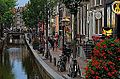
De Wallen, Amsterdam's Red-light district, offers activities such as legal prostitution and a number of coffee shops that sell cannabis. It is one of the main tourist attractions.

Spiegelgracht

Herengracht

The 17th-century Canals of Amsterdam were listed as UNESCO World Heritage site in 2010, contributing to Amsterdam's fame as the "Venice of the North". Along with De Wallen, the canals are the focal-point for tourists in the city.

A view of Vijzelstraat looking towards the Muntplein, 1891.

Femke Halsema has been Mayor of Amsterdam since 2018.

The Agnietenkapel Gate at the University of Amsterdam, founded in 1632 as the Athenaeum Illustre.

The Stedelijk Museum Amsterdam is an international museum dedicated to modern and contemporary art and design.
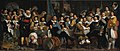
Amsterdam citizens celebrating the Peace of Münster, 30 January 1648; painting by Bartholomeus van der Helst.

Rembrandt monument on Rembrandtplein.

Stadsschouwburg, Amsterdam's best known theatre.


Subcategories

- Select [►] to view subcategories


