The AnarchAngel
The Random Mumblings of a Disgruntled Muscular Minarchist
Igitur qui desiderat pacem praeparet bellum
Wednesday, January 13, 2021
When is a "Hack" not a hack? How about fraud and negligence?
A Little Ramble about Liquor
Tuesday, December 29, 2020
My personal best (and not so best) games of 2020(ish)
Might as well do a listicle... My best (or other than best) games of the year, by category...
AAA single player: "Cyberpunk 2077"... I really don't have any gamebreaking bugs or performance problems making it unplayable, and it's otherwise the best single player game I have played, at least since New Vegas, maybe even better than that.
Close runner up: "Final Fantasy 7 Remake"... Its honestly much better than the original, both game play and story and (it follows the same basic storyline but has 100 times the depth and detail... and given the original is one of the greatest games of its genre, that's saying something. And its jaw droppingly gorgeous at certain moments.
And for additional... Flavor, as it were... "Game I wanted to love, and it was good enough that I still really liked it, but it has too many issues to actually make a "best of" list": that goes to "Control". Yeah it's not a 2020 release, but the "ultimate edition" went on super sale in 2020... and while its worth buying on sale, and worth playing... it was just a little more work, a little more polish on both crunch and fluff... away from actually being a great game.
Indie single player: "Hades", no doubt. Love the aesthetics, love the game play, love the humor, absolutely brilliant game. No other indy game even came close this year... Though there were definitely a bunch of great indies this year ("Kentucky Route Zero" FINALLY finished releasing its last episodes this year, and it's a very interesting experience... not much like any other game you would think of off hand, but certainly worth experiencing... and I've heard very good things about "Cloudpunk" for example).
AAA multi-player: Also easy, "Call of Duty Black Ops: Cold War". Without question the best Call of Duty... or for that matter CODlike game... Oh... at least a decade or so. Though it is absolutely KILLER on your system resources. Getting playable framers on a 1070 in 1080p was difficult, never mind anything better. That said, its a VERY good looking game when you turn the settings up.
Indie(ish) multi-player: For the... third year in a row now I think? It's "Warframe". They've completely overhauled the game over the last three years, even to the point of writing a new engine and new textures and shades, and of course major new content, for free, 4 times a year, with minor new content every 40 to 60 days.
Best mobile game: Well... that's kinda complicated and difficult at the moment... Hmm... Do you count Hades, which is on mobile platforms too (just the Switch for now, but likely it will be ports to iDevices soon, an android eventually), but is better on PC or heavier weight console? Do you count three of the best PC or Console games from decades ago...KOTOR and KOTOR-2, and "Castlevania Symphony of the Night"... which also released native mobile versions recently?
...Maybe... "Sky" Children of the Light"? Its gorgeous, it's fun, its got a unique aesthetic and viewpoint... Well worth getting. I haven't played "AnimA" yet but I've heard its really great. Same for "Battle Chasers: Night War".... Both are installed and waiting to play.
Worst mobile game AND worst game that I actually paid money for: "Elder Scrolls Blades"... its a switch and mobile game... and its been in Beta and early access for like 3 years, and yet there's very little content, and whats there is shallow and repetitive. Also MICROTRANSACTIONS!!!!!... I bought enough of the in game resources to try to make the game more enjoyable... But there's just not enough content or game play no matter what.
Biggest AAA (ish) disappointment: "Star Wars Squadrons"... It was... Just OK. Good even... But it had iffy controls, and just... not enough game. Both too short, and too shallow, with only OK game play. That said, you can often pick it up for $20 on sale, and it's worth the $20... Just not the original $40 release price.
Biggest indie(ish) disappointment: that Vampire the masquerade Bloodlines 2 was delayed repeatedly... and now may not even come out in 2021 even. We'll see.
Monday, December 14, 2020
SolarWinds, FireEye, and Russian Intelligence Compromise the entire damn world...
Ok folks, this one is the real deal... I believe that the SolarWinds global supply chain compromise incident disclosed yesterday, is now the most severe, and most widespread information security comprise incident ever publicly disclosed.
I can only think of one other that is even close... the RSA compromise... and from what was actually publicly disclosed (vs. what many of us in the field know to have been compromised but cannot officially confirm or disclose)... honestly... this may be worse. From all appearances, and the implications thereof, it may be MUCH worse in fact.
SolarWinds is a major component of the infrastructure that runs... everything really. 300,000 organizations may have been compromised by this... note, compromised not necessarily exploited... SolarWinds is used by a lot of major service providers, ISPs, ASPs, SaaS providers, Managed Service Providers in the networking, security, and every other space... It's everywhere, and when you look at the details of the compromise... yeah, this could be EXTREMELY bad.
For information and review... The various official notices and responses to the SolarWinds global supply chain compromise incident:
The emergency CERT alert issued appx. 2200est last night:
https://us-cert.cisa.gov/ncas/current-activity/2020/12/13/active-exploitation-solarwinds-software
The DHS-CISA (Homeland Security Cybersecurity and Infrastructure Security Agency) Emergency Directive for the compromise.
https://cyber.dhs.gov/ed/21-01/
This is the solarwinds official advisory and recommendations:
https://www.solarwinds.com/securityadvisory
Here's the FireEye advisory and recommendations:
Here's the Microsoft Advisory and recommendations:
https://msrc-blog.microsoft.com/2020/12/13/customer-guidance-on-recent-nation-state-cyber-attacks/
Here's the recommended detection and mitigation countermeasures, rulesets, and criteria... as published by FireEye and recommended by the CISA:
https://github.com/fireeye/sunburst_countermeasures
And the recommendations to detect persistence in a compromise event from MITRE-ATTACK
Sunday, December 06, 2020
Yes, rights ARE more important than lives
Thursday, November 19, 2020
You're welcome here
2020 has been one hell of a year... and I think that this year particularly, everyone should have friends and family... or chosen family... around them on the holidays if they can.
So... if you're a friend of mine (even if we've never managed to meet) and you don't have any family nearby to have thanksgiving with... or that you can STAND to have thanksgiving with... Or maybe you can't cook... or maybe you can't afford to put on a big special thanksgiving meal? You're welcome at our house.
Just you? Just you and your significant other? Just you and a housemate and neither of you can cook? Doesn't matter. If you want to be around cool people who you like, and have great food, and probably watch videos, listen to music, play games, and have great weird conversations, you're welcome here.
The only things I ask are:
1. If you can afford it bring beverages and/or desserts (because thanksgiving).
2. If possible, let me know you want to, or are planning to come over, so I can plan for how much food to cook (or rather, for how much TOO MUCH food to cook, because part of the joy of thanksgiving, is the leftovers for days afterwards).
... Trust me on this one, we lay out a damn good spread. I love to cook for friends and family, and thanksgiving is my favorite special meal to cook...
Plus, if we haven't managed to meet yet, it's a great opportunity to do so.
Saturday, October 17, 2020
Pocket Preparedness
Friday, October 09, 2020
Well... Hell... Time for Round 5
I have been struggling with when and how to talk about this for a while now...
A few months ago, my blood sugar started rising again... after having been falling on its own without requiring insulin for almost 2 years. I also started having recurrence of other symptoms, which I had experienced 4 times before...
As it happened, I was starting a new job, and my new health insurance wouldn't be active until September 1st... and then I had to get a new endocrinologist and get the process of confirming the diagnoses started.
I just got the ultrasound report back today... Its been an almost two month process to get here... and the cancer is definitely back.
Well... hell...
The good news... so far it doesn't look bad. Only 13 suspect masses, 10 of which are small and may not be cancerous. 3 larger ones are definitely cancer... they're all more than in inch in every direction.
That said, they are all round or ovoid, and they're free not implanted or infiltrated... I can actually move one of them around with my fingers its close enough to the surface... and the larger ones seem to be encapsulated well.
Those are all good signs.
I've also had supporting blood work, which was mostly good... my CEA, creatinine, calcitonin, and thyoid antibodies are all good... which means there is no recurrence of medullary or C-cell anomaly cancers. My thyroglobulin was pretty ridiculously high (1800) and theres some kidney damage that is probably leftover from the rhabdo and the paraneoplastic insulin resistance... but may indicate spread elsewhere.
Next steps are biopsies of the masses, and then a full body contrast MRI to look for distant masses.... particularly on other organs.
The good news is it looks like there was no spread into my chest... the cancerous nodes all seem to be among the few left in my neck after the last three radical neck dissections. None of them were in the mediastinal area, which would indicate direct spread... There's still a chance for distant spread, but hopefully it's just local lymph nodes... the MRI will confirm.
So... hopefully, the solution should be just another round of surgery... maybe another round of radiation after... we'll see.
My work is 100% supportive of me, it should all be good there. And I should be able to work right up to the surgery, and be back working the next week.
Monday, October 05, 2020
Alternate Means of Communication
If anyone wants to arrange more secure messaging that respects users privacy, I'm on Signal, and I strongly recommend it to others.
I've switched mobile providers and was unable to port my old number, so I've got a new Signal account. Message me directly to arrange contact transfer.
Oh, and in case anyone wants to connect there, I'm also on MeWe: https://mewe.com/i/cbyrneiv
And on Parler: https://parler.com/profile/Cbyrneiv
Though I don't really do much with either, since there isn't much to do, or many to do it with.
And of course, like everyone I'm still on facebook at: https://www.facebook.com/cbyrneiv/
And twitter at: https://twitter.com/chrisbyrne
Saturday, September 26, 2020
Mirror Tribes
Monday, September 07, 2020
Do you want to know the secret knowledge?
A short lesson on how to lie, with parts of the truth
Sunday, August 09, 2020
A bit of Pi
This is a 1.5ghz quad core, 4 gig of ram, full on 2x USB3 and 2x 4k HDMI capable workstation or server. It cost $69 for the computer, or $99 including the case, power supply, connection cables, extra fan and heat sinks, and a preloaded OS on a memory card.
...And about ten minutes later, theres two of them, assembled and ready to configure.
A hell of a world we live in.
Haven't done an EDC post in... uhhh... I dunno, 7 years? Ten?
Since I haven't done an EDC post in approximately forever... this is what I just carried out to dinner with me, and represents my normal pants (and wrist and neck) Every Day Carry.
I also usually carry a small cross body bag with my medications, a 25000mah slimline USB battery bank, some chargers and cables,a USB/bluetooth DAC and headphone amp, some USB drives and little security tools, additional spare ammo, a multi tool and a multi screwdriver, a notebook, some pens, and my kindle.
I also usually go out with a collapsible but 600lb rated aluminum cane... which is a formidable piece of kit by itself (and it has another flashlight in the handle).
So, from top center, clockwise:
- Soon to be replaced Samsung Galaxy S8 plus, with Linsoul KZ-ZSX in earmonitors, on a waterproof APTX bt5 cord.
- Case Edifice ECB-900 solar smart chronograph (it syncs with phones and atomic clocks etc...
- Kershaw Ken Onion S30V Blur
- SureFire Stiletto Pro flashlight
- KenaKai RFID/NFC blocking wallet. The wallet itself has a metal mesh faraday cage as its lining, and is opaque to x-ray. Inside, in addition to normal wallet items, are a concealed set of lock picks, a concealed knife, and a concealed handcuff key
- Custom Springfield EMP (I did a full action, reliability, and trigger on it... it was a gift from my girlfriend), with a simple belt slide holster, and a spare mag... a total of 19 rds of Federal HST 9mm +p. I'm thinking of putting the green laser CT laser grips on it.
- A microfiber cloth... it's what I carry instead of a handkerchief
- CRKT Get-A-Way driver on a QD clip, to a QD web strap key chain, which attaches to a real 1600lb rated 80mm D-ring carabiner (I wear a rescue belt, which can be used with the carabiner to lift me or secure me to something if necessary).
The StilettoPro by the way is brand new today. Prior to that, and for the last almost 20 years, on my keychain I have carried this single AAA all titanium type 3 hard anodized 25 lumen LED light made by a local aircraft aluminum/titanium fabricator, called the ARC-P (the "premium" version of the ARC-AAA).
Arc went out of business 16 years ago, but the light itself is tiny, light, and indestructible. I will probably keep it clipped to the d ring in my daily carry bag.
Honestly... I cant think of much of anything I could do to improve this setup... I'm pretty happy with it... except I would like my 340pd back as a backup pocket carry gun.
Friday, July 10, 2020
Friction
A digital bubble floating on an analog ocean
Believe me... there is no-one more particular about the characteristics of their analog cabling, than a ham. We use it ... generally multishielded coax these days... for antenna feed lines. The strength of some of the signals we use it to receive, are measured in femotwatts, at frequencies in the multighz ranges. The higher the frequency, the higher the attenuation of the signal per foot of feedline, and the more subject to spurious interference... so low attenuation and spurious signal rejection are kinda important to us.
Whether you're transmitting radio frequency analog transmissions, or internet data, or high resolution high framerate high def video... it's all analog once it's on copper, because the real physical world is analog. It's all high and low voltage values in a sine wave (or at least you hope it's a sine wave), and is subject to all the vagaries of the analog world.
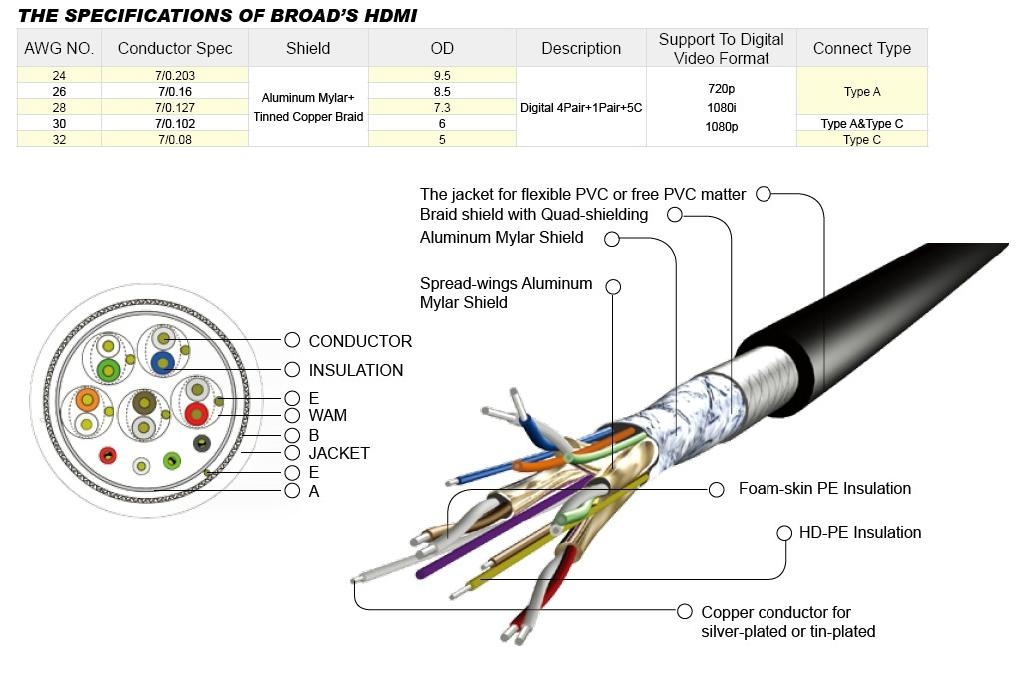
For example, HDMI... 1080p at 60hz SDR color (HDMI-1.1) is a two channel analog signal at about 165mhz, transmitted over 4 shielded twisted pair... 8 signal wires wide effectively, plus clock sync, control channel, power, and ground pins (including one ground pin for each shielded twisted pair), for a total of 19 pins. For 1080p@ 120hz it's about 340mhz, as is 4k@30hz. 4k@120hz HDR color is about 1.2ghz, however as transmitted over HDMI including audio, and various overheads, the actual maximum data rate ends up being appx. 1.485ghz... and 1.485gigabits per second per channel. Again, that's all over HDMI, which is a bonded multi channel serial digital interface (not actually a parallel interface, though the difference between the two is somewhat esoteric at this point)... the total aggregate data rate is between appx. 4gps for HDMI-1.0 (3.96gbps technically the same as DVI by the way), and appx. 48gbps for HDMI-2.1 (actually its 47.52gbps, effectively the same as 12x DVI channels, or 32x 1.485gbit serial data channels bonded together)
The higher the frequency of an analog signal, the higher the signal loss over distance, and the more subject to electromagnetic and radio frequency interference it is... which is why when we make digital interfaces out of analog wires, we tend to limit them to about 1.2-1.5ghz, and when we need more bandwidth, we aggregate or bond more 1.2-1.5ghz channels together.
...Which is why high bandwidth stuff like 4k video, is always transmitted as digital signals if it has to go long distances. It has extremely high signal attenuation, and sensitivity to interference, in analog form (about 6db per 100feet at 1000mhz, over conventional rg6 coax for example... the stuff your cable company uses to get signal to your cable box and cable modem. 30db signal attenuation is generally considered the maximum, so 500 feet would be the maximum at 1ghz. The actual data rate for a 1080p60hz signal as actually transmitted over coax as SDI [serial digital interface] is 1.485ghz x2 channels, for a maximum run of about 140 feet at 30db attenuation, though SDI interface boxes generally extend that out to between 200 and 300 feet through higher power, and some tricks with frequency modulation and error correction. As a purely analog signal, including audio and overhead, it's almost 3ghz if it's a single channel, which would attenuate out at about 90 feet on RG6, which is why we never do that). Breaking it up into high bandwidth IP data is much easier, with much lower losses and greater error tolerance and error correction.
In analog data transmission, using a waveform structure... as most electrical and optical data transmission and cabling standards, and most radio standards do... there's basically two factors which can be used to transmit information. Frequency, and amplitude. We can modulate the frequency at which we transmit... the number of times per second the wave hits a peak... and the amplitude... how strong the signal is, which translates into how high the peak gets.
...(note: theres actually a third, called "phase", and it IS used in many data transmission systems... most of them actually... but it's a much more difficult and complicated thing to decode with precision, or to explain without further background, so I'm MOSTLY ignoring it for most of this explanation)...
The most basic way of doing that is with binary amplitude modulation... off and on, dot and dash. That's the easiest thing to detect.... and consequently those were our earliest forms of optical and electrical communications... the heliograph and the telegraph... and our earliest form of radio communications as well, using spark gap transmitters and cat whisker coherer receivers. We then converted those "off" and "on" states into useful information with thing like Morse code or Baudot code (where we get the word "baud" from).
You'll find that for... ease of explanation let's call it... most examples and illustrations of most communication methods simplify it to this binary representation.
A binary amplitude modulation system, is limited by how fast you can turn the signal off and on... or really, how fast you can precisely and reliably detect it being turned off an on. It can only encode 1 bit of data per time division, because it is always on or off referenced to off.
However, even without frequency modulation, amplitude modulation can be more complicated... and cary more data... than just off and on. In fact, it's actually a lot easier to create more precise signals by NOT using a binary "off" and a binary "on", but instead to use a "high" value, where every signal above a certain "high" amplitude threshold is a 1 and everything below a "low" value is a 0... Every computer logic circuit on the planet does this, but we pretend that "high" and "low" are really "on" and "off" to simplify it for logical explanation purposes.
Further, because we are talking about waveform transitions between high and low states, we can actually have FOUR states represented with basic amplitude modulation... "high", "low", "rising", and "falling" (this is called Quad Amplitude Modulation or QAM, which itself can be detected either by precise time reference, or by phase shifting an amplitude modulated signal wave in reference to a baseline carrier wave... I said I would MOSTLY ignore phase, not entirely).
So, before we even get into frequency modulation, we have the ability to represent 4 states of data. In reference to itself, that can mean 2 or 3 bits (depending on how you encode and how you detect the state), or in reference to a precise clock or a known baseline state such as an unmodulated carrier wave, it can mean 4 bits of data.. a useful increment.
...An important note... 2 different states of data, only in reference to that state change itself... a binary 0 or 1...is only ONE bit of data. 2 different states in reference to something else, like a high or low state in reference to a neutral carrier, or a precise time clock, can be just one bit, OR it can be used to represent TWO bits of data with proper encoding. Four states in reference only to themselves can be 3 bits, but in reference to an outside value can be 4 bits etc... This is because some state must always be null or neutral, representing no data, while all other states can encode data in reference to null or neutral. One can even do this with purely binary data with bitwise time encoding or bytewise sequence encoding, across multiple bits or bytes... Each bit is in reference to a time, or sequence of previous bits, or sequence within a byte, and therefore 0 or 1 are both information states. Without bitwise or bytewise encoding, 0 is the null reference and 1 is the only state with data, with it both states contain or transmit data.... This logical structure is generally ignored when this subject is explained, because it hurts peoples heads.
Now... we have figured out that over most transmission media... be it copper wire, optical fiber, or radio frequency transmissions through a vacuum... we can transmit additional data through two other means.
The first, is by modulating the frequency of a signal wave slightly, compared to either a very precise time clock, or to a reference carrier wave. This again can give us four discernable states of information in any given time division for a wave... any given discrete small frequency band... a peak state, a trough state, a rising state, and a falling state.
The second, is by combining multiple signals in different frequency bands, over the same medium.... Of which there could potentially be infinite divisions in theory... though in practice its difficult to generate and detect a lot of different bands simultaneously with any precision.
However, even before we reach that point, you should be able to see that for any given time division, using a combination of both amplitude modulation, and frequency modulation, we can actually represent.. and transmit and receive... 4 discrete states per frequency, and as many frequency states per time division as we can detect, with 4 states for each as well... 16 total states per discrete division... 16 bits... using purely analog signaling.
In fact, for any given division of time and any given frequency banding, we can use frequency modulation (4 states), amplitude modulation (4 states), and in theory both frequency phase modulation (2, 3, or 4 states, but the 3rd and 4th state are hard to deal with, so really 2 states), and amplitude phase modulation (again theoretically 4 states but really 2) within each discrete frequency band, to represent 64 bits of data.... though using both amplitude phase modulation and frequency phase modulation, is extraordinarily difficult to do with precision, so up until recently generally only one or the other has been used. And of course, it is technically possible to detect and use all four phase states for both amplitude and modulation, meaning you could theoretically represent 256 discrete states, or bits, within one discrete frequency band, in one discrete time division (or you can do it on the rising and falling of a clock cycle.. but it's not practical to do both clock and phase at the same time, because one is detected in reference to the other).
Then, by modulating within a small discrete frequency band, we can multiply those states by the smallest divisions we can discern within that band, times the total number of divisions, or width of that band.
That's where the term bandwidth comes from by the way. It's a measure of the number of discrete bits of data we can discern within a single time division, in a single frequency band, or an aggregate of channelized bands.... and it applies whether were talking about copper hardline, fiber optics, or radio waves.
Right now our highest frequency, and highest bandwidth, commonly used wireless systems are using the 5ghz RF band, and modulating across 80mhz channels within the band. Our highest bandwidth commonly used hardline video systems (HDMI 2.1 or CoaXpress CXP-X standards) use 1.485ghz frequency (anything higher causes severe attenuation of signal over distance... the higher the frequency the higher the attenuation), with HDMI 2.1 using 4 different states per conductor, and 8 conductors, to get 32bits times 1.485ghz, or just under 48 gigabits per second.... a similar standard is also used for our fastest common data networking over copper wire (currently 40gig ethernet), achieving a similar data rate.
The fastest data transmission over copper wire commercially available for mainstream computing applications, is currently 100gigabit ethernet. It uses four pairs of conductors moving 25gigbit each pair, but the frequency is so high that the signal attenuated to un-usability within just a couple meters, so almost all 100gbe is over fiber optics.
When you combine that with heterodyning, or multiplexing of different frequency banded signals over the same media (or as noted near the top, in phase or out of phase signals... the last time I'll mention it in this piece), for channelization within the same larger band, it should be clear that analog data signaling can do a hell of a lot more than just off and on, one and zero.
The most basic means we have used these properties for... for well over a century now... are audio transmissions over the telephone, and audio transmission over the radio.
Audio inherently transmits both frequency and amplitude modulated signals, in 1hz and 1db increments, across about 20khz of frequency spectrum, and 120db of dynamic range... Or at least human audible audio does (ultrasound goes much higher of course). Though to simplify transmission, and to multiply the maximum number of transmissions over a single medium, we have often "narrowbanded" audio to as little as 3khz and as little as 30db dynamic range.
Taditional telephone signals for example, drop everything below 300-400hz or above 3300-3400hz (depending on the region and standards of the particular telephone system) and compand -compress and expand- dynamic range down to 42db or less (+- 18db). We can then take those limited bandwidth "narrowband" signals, and combine them over a single wire, by shifting their frequency up and down in discrete bands, and then shifting them back to their original frequency at the other end... even with basic analog equipment (this is called frequency shifting or tone shifting).
That's how some long distance phone calls and trunk line calls worked for decades, before we switched to digital telephony systems... a process which took decades (and if you still have a land line, your home phone may still be connected directly to the neighborhood switching node over a single analog channel, or even to a local central switching office, depending how overdue your local infrastructure upgrades are... But in the U.S. most landline service is now digital to the neighborhood node, or even digital to the home, and is only analog from that switching box to the analog handset)
It's also how radio stations work. FM stands for "frequency modulation" and AM stands for "amplitude modulation" but in reality both types of radio do both things, its just a question of how each creates and recreates the signal at either end of the transmission. An FM radio station can modulate frequency and amplitude across a small defined band, to transmit appx 15khz and 48db dynamic range worth of audio signal. An AM radio station can do the same but with only a 10khz and 30db range. Thus we can theoretically fit about 200 local FM and about 120 local AM radio stations into a given area, in the FM and AM broadcast bands... But to avoid interference and crosstalk, it's actually more like about 100 fm and 60 am stations.
When we first started sending digital transmissions over analog phone lines, we did it in the simplest way possible... Essentially back to the days of the telegraph, only a little bit faster... We eventually got to about 300 bits per second, before we had to switch from purely binary amplitude modulation, to add the rising and falling signal states, and the frequency banding and heterodyning or multiplexing of signals. Within the limited 3khz and 42db dynamic range allocated to each analog telephone line, we managed to go from pushing just 300 bits per second, up to about 56,000 bits per second.
Now, we're using wideband 5ghz band wireless with QAM, to get bandwidth exceeding a gigabit per second per channel, and bonding multiple channels to get multi gigabit wireless.
...But still... digital data, becomes an analog signal, the second it hits a wire or a radio, and is subject to the capabilities and limitations of its transmission medium. We may live in a digital bubble, but that digital bubble floats on an analog ocean, in an analog universe.