




 Muslim and Jewish Families Save Each Other, 50 Years Apart



3 min read


I am a university student in Alberta, Canada and I am doing a research paper on euthanasia from the Jewish perspective. Can you direct me to more information? Thank you.
The amazing strides in medical technology has given humanity the ability to extend or save a life which was impossible just a decade or two ago. This has brought to the forefront some moral and ethical issues concerning the value of life, and when to apply or withhold medical services.
Rabbi Tzvi Meklenberg, 19th century Europe, wrote in his scholarly work "Haktav vi-Hakaballah":
"The seemingly repetitive nature of the verse in Genesis 9:5: 'From the hand of every man; from the hand of every man who is his brother will I demand the life of man,' refers to two types of murder:
1) to the detriment of the victim ("from the hand of every man") – i.e. in order for revenge, or money, etc.
2) for the benefit of the victim ("from the hand of every man who is his brother"), when he is in great pain and would rather die than live.
By referring to the two ways in which one person might take another's life, the Torah does not differentiate based on motive and reasons. Both are equally prohibited."
Jewish law maintains that one has no absolute ownership of one's body. We are given a body for a fixed time. We are obliged to guard it for safe-keeping and to make rational decisions about its care. We have no rights to tamper with life except for the purpose of preventing its destruction or loss.
Life, be it for 120 years, or a split second, is itself of infinite value. It has intrinsic value, mystical, and unfathomable. Therefore the quality of life during any one moment does not alter its infinite value.
Regarding assisted suicide, Jewish law is clear and definite. Under no circumstances may a doctor directly kill, or indirectly provide the means for suicide. Any form of active euthanasia is strictly prohibited and condemned as plain murder. The fact that the patient is in unremitting pain and pleads for assistance in ending his life does not change the law. Murder is one of the three cardinal sins prohibited by the Torah, and anyone who kills a dying person is liable to the death penalty as a common murderer.
Terrible "mistakes" have been made which cost people their lives. A relative of mine was in a very bad auto accident (in which three of the occupants were killed). She was in a coma and the doctors wanted to "pull the plug." The family resisted, and 20 years later this woman is 100 percent alive and healthy.
Even the removal of a pillow when a person is in death throes, thereby hastening death, is forbidden. (Rabbi Moses Isserles, Code of Jewish Law)
Having said this, there are certain conditions where it may be permitted to withhold certain medical treatments that would otherwise prolong life. Though any real-life situation must be discussed with a rabbi, well-versed in practical halacha.
For further study, see: www.aish.com/ci/sam, www.jlaw.com/Articles/suicide.html, and www.jlaw.com/Articles/phys-suicide.html
→ Ask the Rabbi a Question ← Click here to comment on this article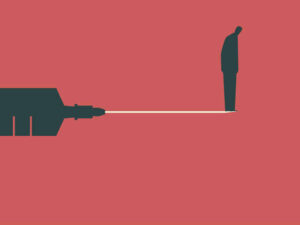










the king summons you. you don't summons him.
when its your time he will call you to stand before him.
those who went before a king without being called were beheaded do not test him. a man that fears God shall be blessed. you don't call him to come before you. he calls you when he feels the time is right. Esther went before the king but only to save others life. if you risk your life to save others yours will be spared. but if you take a life to spare your own you will lose your own. he will call you when its time stop testing him.