

|
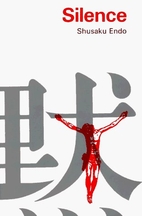
Loading... Silence (1969)by Shūsaku Endō
  
» 11 more Historical Fiction (46) Best of World Literature (119) Short and Sweet (78) 20th Century Literature (412) Top Five Books of 2016 (512) Religious Fiction (29)  bikesandbooks | Jan 29, 2017 | bikesandbooks | Jan 29, 2017 |  I’m pretty sure I am going to hell. I’ve read plenty of Saints lives, and there is one thing about Christian martyrs that puzzles me. If suicide is wrong, then isn’t martyrdom also wrong. Wait, wait. Hear me out. I know lying is wrong too, don’t get me wrong. But isn’t martyrdom suicide by another means? Two options, and one is death. We have seen variations of this in other places – Spain where Jews were forced to convert and some did – but only outwardly. So, if a small white lie could enable to not only live but to also practice in private than was it bad. Or at the very least, why would it be so bad. Yes, you have a responsibility to faith but do you not have a responsibility as well to those around you? Endo’s book deals with Christian persecution in Japan, and confronts another question. Does a priest, should a priest, renounce in order to save his flock. The novel isn’t so much about characters, and the people do not seem as if they are going to step off of the page. Still, the question raised is a worthy one. It is a book that lingers. (  ) Chrisethier | Jan 26, 2017 | ) Chrisethier | Jan 26, 2017 | This left me with such a depressed feeling that I'm not sure what to write about it. I read the 1978 Quartet Books paperback edition of Silence so I don't know if the 2017 movie tie-in edition of Silence provides any additional material beyond a foreword from film director Martin Scorsese. "Silence" recounts a journey of two Portuguese missionaries who journey to Japan in the mid 17th century during a time when the Shogunate was eradicating Christianity as it was perceived to be a threat to the regime due to its association with the Shimabara Rebellion of 1637-38. The main character of Sebastião Rodrigues is based on an historical Italian missionary Giuseppe Chirara. Endo's fictional character is presumably made Portuguese to create a tie-in storyline that he is also seeking his one-time mentor, the true-life Cristóvão Ferreira, who is reported to have apostatized i.e. renounced his Christian faith, after being tortured. Rodrigues' journey is such that he begins to imagine parallels with Christ's denunciation by Judas and denial by Peter. The end result was anti-climactic for me and the final chapter and appendix which seemed to be designed as pseudo-historical chronicles by other witnesses added a further distancing from the characters which added to my disengagement. I read "Silence" due to its inclusion in the 2008 edition of 1001 Books You Must Read Before You Die and as a prelude to likely seeing the film version, although I can't say I'm very enthusiastic about the prospect. (  ) alanteder | Jan 19, 2017 | ) alanteder | Jan 19, 2017 | Not a badly written book, but it just did not do it for me. The main character is just not very sympathetic. Yes, missionaries are human, but one would like to like them. (  ) bgknighton | Jan 10, 2017 | ) bgknighton | Jan 10, 2017 | The plot of “Silence” is fairly simple—two 17th-century Portuguese Jesuits travel to Japan to find their mentor, a Jesuit who is rumored to have apostatized under pressure from Japanese authorities. Along the way, they endure hardships and experience oppression due to their religious faith. Like most works of great literature, however, the novel is about so much more. Sebastian Rodrigues, the main character in “Silence,” is a tragic figure of Shakespearean proportions. As he seeks his former mentor amid the Japanese persecution of Catholics, he ponders the nobility of martyrdom and often compares himself to Christ, even going so far as to cast a Japanese peasant as his personal Judas. His growing obsession with his own virtue and his mounting frustration with God’s silence in the face of human suffering constitute an almost unforgiveable hubris—a flaw for which he is forced to face consequences. Poetic in style, epic in scope, but brief in length (just over 200 pages), Endo’s novel is an utter masterpiece. (  ) jimrgill | Jan 3, 2017 | ) jimrgill | Jan 3, 2017 | no reviews | add a review
Is contained in
Amazon.com Product Description (ISBN 0800871863, Paperback)"Silence I regard as a masterpiece, a lucid and elegant drama." Irving Howe. -- The New York Times Review Of Books(retrieved from Amazon Thu, 12 Mar 2015 18:11:52 -0400) Sustained by dreams of glorious martyrdom, a seventeenth-century Portuguese missionary in Japan administers to the outlawed Christians until Japanese authorities capture him and force him to watch the torture of his followers, promising to stop if he will renounce Christ.… (more) |
 Google Books — Loading... Google Books — Loading...
Popular coversRatingAverage: (4.03)
Is this you?Become a LibraryThing Author. |
||||||||||||||||||||||||||||||||||||||||||||||||||||||||||||||||||||||||||||||||||||||||||||||||||||||||||||||||||
 2
2


 Wikipedia in English (1)


 1
1
The bulk of the work seems to be a novel approach to a catechismic parable. The story mostly lacks a humanistic sense of character in favor of a fictionalized history of mission work in a foreign land.
This work may have been ground breaking for its time but I found myself nonplussed by the novelization, except for the character Kichijiro who's frailties lack sufficient depth of investigation by the author.
I did not experience this tale with the joy of reading great literature, nor is the theology particularly sophisticated. And so the work doesn't seem to stand the test of time for great literature. The work does bare the mark of an interesting piece of writing and cultural investigation for its time (written in the mid 1960s). But I posit the metaphorical ruminations on silence are barely plumbed. Meanwhile the historical investigation into the parochial barriers of Japanese cultural hegemony through the point of view of the Catholic missionaries are stilted. There are far more readable, intriguing and, simply, better works available to fans of literature. Silk by Baricco and Heart of a Samurai by Preus to name just two. (