
Do you use a rice cooker to make rice or do you cook rice the traditional way in a pot? Today let’s get back to basics and I’m going to show you how to cook Japanese short grain rice on the stove as I’ve received a lot of requests from readers for this recipe.
Growing up in Japan, where rice is the primary source of protein and a staple food, cooking rice is a basic kitchen task, but an extremely important one. While a rice cooker (this is the one I have) with all the bells and whistles seem to be an essential kitchen gadget in most Asian kitchens, I know not everyone eats rice on a daily basis and may not own a rice cooker. It’s also handy to know how to make rice over the stove in case your rice cooker breaks out of the blue or you’re craving for rice while camping.
Japanese short-grain rice is different from long-grain basmati or jasmine rice. So if you want to cook Japanese rice at home, please follow this simple method to cook a perfect pot of glossy and tender rice!

There are 4 important points to remember when cooking Japanese short grain rice!
1. Always soak the rice in water for 30 minutes. Rice has been sitting in the bag dried after milling and needs moisture. It’s important that you give it enough time for rice to absorb water so that rice has a nice fluffy texture after it’s cooked.
2. Drain the rice completely, at least for 5 minutes. Why? If you don’t drain thoroughly, you’ll be using more water in cooking than you intended. The rice might come out all mushy.
3. DO NOT open the lid while cooking! That’s a big no no when it comes to cooking Japanese rice. I learned from my experience to catch the indication of “boiling” by the sound. However, until you do, it’s okay to “quickly peek” inside to see if it’s boiling. The last 10 minutes of steaming is an extremely important part of cooking rice, so continue to keep the pot covered till the end and do not skip this step!
4. Use a heavy-bottom pot with tight-fitting lid that keeps the steam in. If your lid fits loosely, put a clean kitchen cloth between the lid and the pot.
I made a video for you so you can watch the whole process in less than 2 minutes. Also, this is our first video which we included some clips of outtakes! We are still learning how to shoot videos and we make quite a few mistakes. 🙂
By the way, you may wonder how to keep the leftover rice. And here’s what I do: freeze the rice! If you already know how much rice you will be using, then pack away the unused rice immediately to seal in the moisture (let it cool before freezing)!

Don’t want to miss a recipe? Sign up for the FREE Just One Cookbook newsletter delivered to your inbox! And stay in touch on Facebook, Google+, Pinterest, and Instagram for all the latest updates. Thank you so much for reading, and till next time!
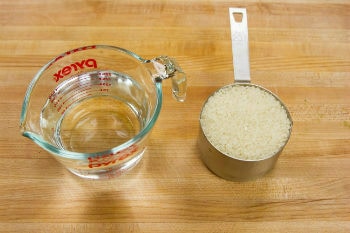
- 1 cup (240 ml) premium Japanese short grain rice
- 1 ¼ cups (300 ml) water
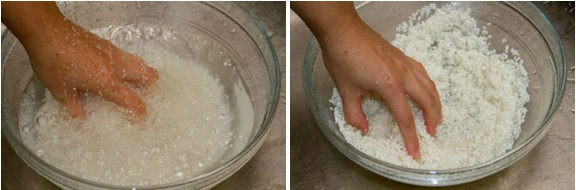
- Put rice in a large bowl. Rice absorbs water very quickly when you start washing, so don't let the rice absorb the unclear water. Gently wash the rice in a circular motion and discard the water. Repeat this process about 3-4 times.
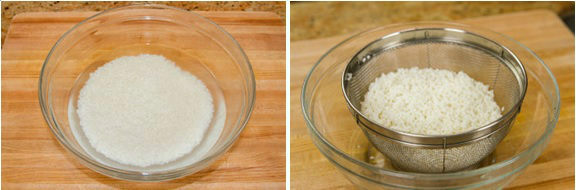
- Let the rice soak in water for 30 minutes. Transfer the rice into a sieve and drain completely, at least 15 minutes.
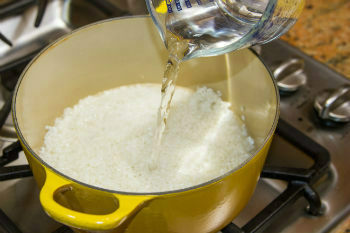
- Combine the rice and water in a heavy-bottom pot and bring it to a boil over medium heat.
- Take a quick peek to see if water is boiling (otherwise do not open the lid).
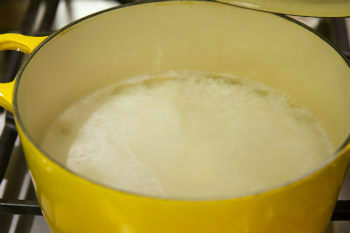
- Once water is boiling, turn the heat to low and cook covered for 12 to 13 minutes, or until the water is completely absorbed (take a quick peek!). If you see there is water left, close the lid and continue cooking for a little longer.
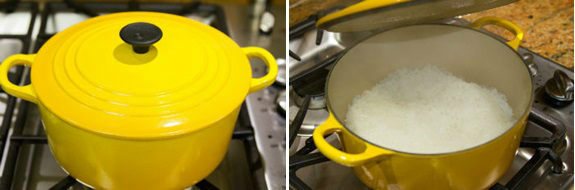
- Remove the pot (with the lid on) from the heat source and let it steam for another 10 minutes.
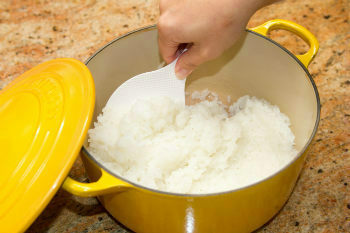
- Fluff the rice with a rice paddle when it’s done.
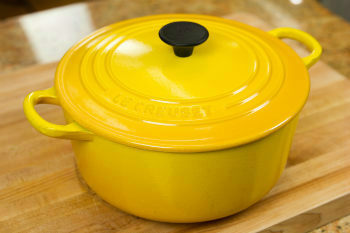
A heavy-bottom pot with a tight-fitting lid is recommended.
Rice to Water Ratio is 1: 1.2
Recipe by Namiko Chen of Just One Cookbook. All images and content on this site are copyright protected. Please do not use my images without my permission. If you’d like to share this recipe on your site, please re-write the recipe in your own words and link to this post as the original source. Thank you.

A_Boleyn
Everyone should know how to cook rice properly. No rice cooker required. 🙂
[email protected]
Now that’s a technique!! Thanks, Nami, for sharing… I am forwarding this to my Mom! She’s going to appreciate it. 🙂
Mi Vida en un Dulce
In Peru we eat all meals with rice, no matter if we have potatoes as a side, we always include rice, so it’s a basic thing for all of us: learn how to cook rice. But I have to admit that I never cook rice in a traditional way, I always use the rice cooker.
Lillie S
may i ask, shouldn’t the unused rice be cooled completely before freezing?
Nami
Hi Lillie! Sorry the link to How To Freeze Rice was broken. I just fixed it. 🙂 In the How To page, I mentioned that the rice has to be “packed” when it’s still hot (to trap moisture) but wait till cool to freeze it. 🙂 Hope that helps!
Priscilla | ShesCookin
This is how I learned it from my mother and I still don’t own a rice cooker – too many gadgets, not enough kitchen space 🙂
Lorely
Thanks for this Nami! I didn’t know you had to soak and drain Japanese rice, do you do the same when cooking in a rice cooker? 🙂 I love rice cookers and they are so easy to use and you to focus on dinner. I never learned how to cook rice on the stove. I remember my mom cooking it in a kaldero (that’s what we call the pot we use to cook rice in the Philippines) and they LOVE the tutong (English translation accdg to the internet is rice crust! haha!).
Behind-the-scenes are always fun to watch! 🙂 So sorry to hear about your hand, hopefully it healed soon after.
Nami
Lorely, you MUST soak and drain. Any Japanese recipes for cooking rice will say that. I know other kinds of rice don’t require soak and drain, but not Japanese rice. I think I’ve seen some recipes that don’t require soaking/draining but cooking time was close to 30 minutes (so maybe moisture goes in? I think the amount of water was like double?). Your rice will improve a lot by soaking, trust me. 🙂
Thank you also for watching the video. You saw my red hand? I was washing the sink with hot water prior to taking the video, and I completely forgot to change to cold water. I was shocked when hot water came…. but pretended nothing happened. But clearly you can see my red hand!! 😀
[email protected] Riffs
I don’t have a rice cooker, so I’ve had to learn how to do it properly! Good post – nice, clear instructions. I’ve gone both ways with washing and not washing the rice. You’re right that the quality of the cooked rice is better (and it cooks faster) if you wash it first. Never thought to freeze rice – I’ll start doing that! Anyway, thanks for this.
Nami
John, when you make rice, even though you eat the following day, I highly recommend you to freeze rice. The rice quality is much better than keeping in the refrigerator. 🙂 And it’s so convenient to have frozen rice! I usually heat 2 minutes in microwave and rice is ready for lunch (for my portion). 🙂 Thank you always for your kind comment!
Belinda @zomppa
Good to know – I don’t usually let it drain or 15 minutes.
Peachy @ The Peach Kitchen
I love Japanese Rice because it’s sticky
June G.
You make rice just like my mom did:) what brand of rice do you use?
Nami
Hi June! So sorry for my late response. I like Koshihikari most, and buy rice from Far West Rice (but very limited places carry their rice). Japanese grocery stores carry Koshihikari, and that’s what I’d recommend. 🙂
Jeanette | Jeanette's Healthy Living
Great tips Nami – I never soak my rice first, just put it in the rice cooker. Would you soak the rice before putting it in the rice cooker or is that only for stove-top?
Nami
Hi Jeanette! I don’t think all rice needs to be soaked, but for Japanese short grain rice, we do need to soak first. Or at least that’s what everyone does in Japan. We soak rice and drain even though we use the rice cooker. 🙂
Adeline-SG
Loving ur blog to the max, very informative, interesting. Thanks, Ms Nami for taking time and effort to share your bakes/ recipes with videos and step by step pics. Will try out soon.
Hope you hand is fine now.
Cheers,
Adeline
Nami
Hi Adeline! Thank you SO much for your support! My hand is okay now. I was so worried that my red hand will show on the video while I was washing, and it did show… 🙁 I soak in iced water after. Than you for your kind words! 🙂
Yi @ Yi Reservation
Nami, this is such a great tutorial on cooking rice! I personally prefer cooking my rice in a pot but I do have a rice cooker for emergency. Does cooking in a dutch oven make any difference? I have never done so but I’d totally try it if the rice comes out better. Thank for sharing!
nipponnin
ビデオ良く出来てました。とても分かりやすいし。無印良品から出ているご飯用の土釜おこげが、お値段も手ごろでいいそうですね。次回、買って帰ろうかと思ってます。
oscar
I know how to cook rice, in our country, we eat rice in every meal, now that I’m here in USA, I used to cook rice in a rice cooker, also I cook rice in traditional hargd bottom pot that came from my country, I want to eat the burned bottom rice I let stay longer in top of oven, I want to try to cook Japanese rice if I can found here where I live. One more thing do you know or is there another wayf cooking brown rice?
Nami
Hi Oscar! I don’t usually cook brown rice, so I’m not familiar with the best way to cook it. I also love burned bottom rice! So delicious. 🙂
Hotly Spiced
I grew up cooking rice on a stove and I thought that was the only way it was cooked. Then I was introduced to Asian cuisine and noticed everyone had a rice cooker! I was given a rice cooker and it’s been the best gift ever – I use it every week xx
Chrissie
Thanks for showing the way to cook rice on the stove. Most of us do not know how as it is very convenient to cook rice just by using the rice cooker. I have forwarded this link to my daughter. Sorry to notice your “red hand” though.
Nami
Hi Chrissie! Thank you so much for sharing my post with your daughter. 🙂 It’s pretty simple instruction in case we cannot use the rice cooker. It’s so convenient to use the rice cooker that I rarely need to use a stove top method. But once in a while it’s a nice change and we enjoyed it while I had to make rice this way for photo and video shooting. I should do this more often! 🙂 Thank you for your kind words!
Jayne
I have a recipe on my blog for stove top rice too! But I like yours because yours is for short grain rice while mine is for basmathi rice. It’s a little different. So valuable to know for when the rice cooker is out of order!
Kimmi
Thanks for sharing these tips on cooking rice without a rice cooker! I usually only make rice on the stove when preparing rice congee, so this is new to me. I’ve learned to listen for the sound of boiling water as well, though I have to admit, there have been a handful of accidents when I wasn’t paying the proper attention… =)
I hope that your hand is okay from after the filming — but the video is so helpful and fun to watch!
Nami
Hi Kimmi! Me too, sometimes I try to multi-task and forget about paying attention to boiling sound. 😀 Thank you so much for your kind words. I’m happy to hear you like my videos and thank you for watching!
Christiane ~ Taking On Magazines
Rice is a huge staple in Middle Eastern cooking but the way it’s made is so different than the Japanese way. I had no idea. I’m sorry that your hand got scalded while making the video. I saw that it was getting red and wondered about that. I hope it’s ok. Thank you for making the video though. It helped.
Sandra | Sandra's Easy Cooking
That’s how i do cook rice because as you know I don’t have rice cooker, and you explained wonderfully in this post and video of course! I do use glass lid so I don’t have to open up and check on it 😀
Enjoy rest of the week, Nami!
Sandra | Sandra's Easy Cooking
Oh and I hope your hand is alright now, but great helpful video!!! Take care!
Kelly
Great tips for cooking rice on the stove-top Nami! Thank you for sharing and that looks like the perfect bowl of fluffy rice 🙂
Dixya @ Food, Pleasure, and Health
i use my rice cooker most of the time but its always nice to learn how to do in stove top too. Thanks for clarifying why to soak and rinse because I always wondered about that.
Elizabeth @Mango_Queen
Great basic how-to lesson on cooking rice, especially for those who grew up on rice cookers (like my sons did). I will pass on this post to them. Thanks for sharing, Nami. Enjoy the holiday season 🙂
Candice
Thanks for making this video, Nami and Mr. JOC. Sorry to hear your hand was a little burnt.
The video was very informative. I’ve always wanted to learn how to cook rice on the stove.
Nami
Thank you so much Candice! I’m glad it was helpful, and thanks for your sweet words. 🙂
Charles
I’m not a fan of “single use gadgets” – precisely the reason I would never bother buying a rice cooker. I’ve even gone off kettles for that reason because you can just heat water on the stove.
As A_Boleyn says – everyone should know how to cook rice properly. Unfortunately, I’m not one of those people, and I don’t usually cook Japanese rice, but the next time I do I’ll refer back to here 🙂
Ash-foodfashionparty
Very nice Nami. Sometimes the simplest of things seem difficult. I really like your step by step, perfect.
I am from southern part of India, and rice is a staple and this is one of the ways I cook rice. But, my mom cooks it with lots of water and then drains the water out. Her theory is she takes out a lot of the starch.
Monica
As usual, great post and tutorial. You can make even a plain bowl of rice look irresistible! : )
Rosa
Great tips!
Cheers,
Rosa
[email protected]
Great tips for cooking Japanese rice, I have not cook some yet but want to try. It’s so confusing every rice is different lol.
[email protected]
Great tips Nami! Basic and essential.
Monet
Oh yay! I learned so much from this…and I just emailed Ryan a link to your post. He loves cooking rice, and I think he’ll benefit from all these tips! I never knew to soak rice. Brilliant! Thank you for sharing sweet friend!
Lisa H.
I can’t cook rice without rice cooker, it will end up either not cook or burnt rice ;P
Julia | JuliasAlbum.com
What a perfect, fluffy rice! Great tips. I never use rice cooker – I always cook rice in a pot, just like you!
wok with ray
Only here in the States that we started cooking with rice cooker. Back home, we always cook rice in a pot and with open fire. Nice to see you doing it. Have a good week, Nami. 🙂
Mich Piece of Cake
Thanks for sharing these useful tips!
My Kitchen Stories
Great idea Nami. Sometimes the simplest things are the ones that get us. Great video
cquek
That looks beautiful!! nice and fluffy!! just the way I like my rice!
madel vila
i want to know how to make my tempura crispy
Nami
Hi Madel! Please see my tempura post:
http://www.justonecookbook.com/recipes/vegetable-tempura/
Laura | My Little Gourmet
This is great! I still don’t own a rice cooker and have been thinking about getting one because my rice never turns out the way I want it to. Now I’m thinking I’m just using the wrong pot! Thanks for the tips Nami and I love the video!
[email protected] Chef
never even know that japanese rice is needed presoaked prior to cooking, btw, i thought all short grain rice is easily overcooked when soaked…..
btw, i’m jealous with your yellow crockpot Nami
Lava
I know this may sound weird, but I cook rice in the microwave! I used to do it on the stove but i kept burning the bottom, and have to keep an eye on it. With the microwave I just kinda shove it in for about 20-30 mins and its done. It works well, but its probably not as good as the proper way. But I like cheating when it comes to cooking (^-^)
Nami
Hi Lava! REALLY?!?!? I’ve never heard of it before!!! And I don’t think I turn on the microwave for more than 5 minutes. 😀 I didn’t know microwave can actually cook food for such a long time. Thanks for sharing your trick!
Lava
Yup! it works really well, kinda like a rice cooker. I just use a pyrex dish, and make sure the lid isn’t on otherwise it will overspill (^^;)
Ramona
I have to admit, I have been totally cheating and cooking rice in the microwave. I am too lazy to even pull out my rice cooker since it’s big and bulky. I like your tips for the stove top method.
PS.. freezing rice. I love that. I love to freeze single potions for myself since I am home alone at lunch. 🙂 I think freezing rice has a much better texture than putting it in the fridge. 🙂
Kumar's Kitchen
this is just the recipe we were looking for…we usually cook rice(long grained) in a pressure cooker…this recipe is going to come so handy for making sushi,thanks for sharing 🙂
Laura (Tutti Dolci)
Your rice looks absolutely perfect, though this doesn’t surprise me one bit :).
The Ninja Baker
いつも電気炊飯器でごはんを炊いているので本当に勉強になりました。
ご飯がないと生きられない私は両親の家まで電気炊飯器を送りました。(びびなびで20ドルで販売しておりました。びびなびでなにか購入したことがありますか。)とにかかくストオブでご飯できることは重要です。どうもありがとう =)
Liz
Great info, Nami! I never soak my rice, but will definitely start now. Lots of wonderful tips…I know my rice will be perfect from now on 🙂
Alessandra
Ciao Nami, you should write this article in nihongo for Japanese travelers. I often have Japanese guests (usually young) and the girls always say that they like to cook for us one evening, making sushi or other stuff, and then they panic when they see that I don’t have a rice cooker! I find it quite funny that I have to teach them how to cook rice, and they are very thankful, often they travel on, go to youth hostels, camping grounds and homestay around the worlds and they need to know how to cook rice! It is a basic skill that should not be forgotten
Ciao
Alessandra
Raymund
I use rice cooker all the time because the last time I cooked without it many years ago was a total burning disaster 🙂
I remember my grandmother never measue the water by cup but by fingers. She just pours water until it reaches the second line of her long finger from the top of the uncooked rice when dipped into the pot.
Natasha @ The Cake Merchant
What a great post, Nami! I always mess up rice, so I will try this the next time I make sushi at home.
TheKitchenLioness
Nami, you have no idea how difficult it is for me to get the rice cooked properly for my Asian dinners – it is eiter too wet or too lumpy. I shall follow your instructions to the “Tee” now and then enjoy the recults of my labor (inspired by lovely Nami!).
Kathleen Bryce
The video was great !
I’ve always cooked rice on the stovetop as I don’t have room on the counter for a rice cooker though I have dreamed of having one. There are so many kinds of rice to try. I enjoy all of the variety.
Nami
Hi Kathleen! Thank you for watching my video! I’m dreaming of having a slow cooker but I don’t have a room on the counter or in the cabinet…so I know what you mean. 🙂 Thanks for writing!
Asmita
Hi Nami,
I am so glad you did a post on this. Sometimes, the most simple and basic things are hard to do especially if you have no experience with cooking. When I moved to the States 10 years ago, I really did not know much cooking and often struggled with making the rice.
I like to cook pulaos/pilafs on the stove as I feel it retains the moisture well and does not dry out on me. But if I am cooking regular white rice, its usually the rice cooker. That way I can handle or do something else.
mjskit
I’ve never soaked the rice first! Good to know! 🙂 I don’t cook alot of short grain white rice, but I did buy a big bag of short grain sweet brown rice. I’ve cooked it a couple of times with not the best results. I did not soak it though. I know it cooks longer that white rice, but is there anything else that is different to cooking short grain brown vs. white (other than the cook time)? Thanks!
Sissi
Apart from the soaking (I am always in a hurry!) I prepare the rice exactly this way… I love touching rice with my hands when I rinse it… but afterwards I cook in the rice cooker. I have already burnt two pans before buying the rice cooker;, but I didn’t have such a good teacher at the time 😉 I must try once more because many people say that rice from a bad rice cooker (like mine) is much worse than the one from a simple pan. Thank you for this useful recipe!
Nuts about food
I had a Japanese roomate for a few months and she taught me how to make Japanese rice. I pretty much use that method with all kinds of rice now (when making white rice to accompany a dish). All her steps were the same (washing, covering with a lid and not peeking etc.) except for the soaking and draining. I will try it, I am sure it will turn out even better (and fluffier of course!).
Stephanie
I have a Zojirushi too! Only a 3 cup one though. =) Sorry about your hand!
DarrenB
What went wrong when my rice broke after cooking and fluffing. Too much water?
Nami
Hi Darren! I did a little bit research and found out a few reasons why the rice could be broken.
1) Rinse the rice too harsh (for example, don’t wash in sieve).
2) Drain the rice for too long. No more than 15 minutes. When the rice dries out completely, rice may be broken.
3) Didn’t soak rice in water for long enough.
I don’t think too much water was the reason for this. It’s more likely that rice was already broken before you started to cook? Hope this helps. 🙂
June
Hi Nami:
I’ve been enjoying your recipes, and have a question about the of water:rice ratio. Is it always 1/4 C. water more than the amount of rice? For example, with 1/2 C. rice do you add 3/4 C. water? For 2 C. rice is it 2 1/4 C. water? Thanks.
Nami
Hi June! Thank you so much for reading my blog! The basic is that you need the same volume of water as the volume of soaked & drained rice (so in a way, measuring cup is not necessary and you can just use a regular cup, for example, to measure volume of soaked & drained rice, then add the same amount (volume) of water to the pot. Ratio should be around 1 cup: 1 1/4 cup water. However, each rice (brand of rice, type of rice) absorbs different amount of water, and you need to adjust according to your rice. Hope this helps! 🙂
Linda
Hi Nami,
You shouldn’t wash the rice until the water is clear, since most the goodness of rice is in the skin. Just wash it once or two times to get rid of unwanted particles. By the way, Brown Rice is far healthier than white rice, since it still retained some of the skin.
Nami
Hi Linda! These days rice is milled very well, so I don’t think we need to rinse the rice till water is clear. Maybe my choice of words was not right. I removed “till water becomes almost translucent” but I usually rinse 3-4 times. Thank you so much for your feedback! I really appreciate it! I agree about brown rice. 🙂
Jane
Hi. I’ve been seeing a lot of pictures comparing Japanese to American food servings (e.g. small Coke at McDonalds in Japan and US) and I wondered what a “normal” serving of plain rice is in Japan. Some sites say 150ml, others 380, more 200. So what is “normal”, and what is “modest” for an adult woman, for example?
Thanks!
Nami
Hi Jane! So I just had lunch actually and made ochazuke (I was reading your comment and had sudden craving. :)). In a regular-size rice bowl in Japan (probably consider small for American standard), I put rice just like how I serve normally, and it was about 1 cup. That’s about 240 ml. There are smaller rice bowls or even bigger ones for men. So the amount of rice that can fit in rice bowl varies due to the size of bowls… For modest for an adult woman, I think 240 ml is considered good amount of rice. But this is for typical Japanese rice bowl size. Hope this helps!
Tiffany
Hello, is it necessary to soak the rice in water for 30 minutes before cooking? Thank you.
Nami
Hi Tiffany! I’m not sure about other kinds of rice but Japanese short grain rice, yes. I never seen any Japanese recipe that tells you to skip soaking process…Japanese rice has high moisture content and it’s very important to soak. But I have to admit that I have skipped soaking several times as I was running behind…(and rice comes out drier as expected). Hope this helps!
Rachel
Hi, I love your recipes they are so delicious! And the tutorials you have are great.
I am in Israel and am having a hard time finding sushi/Japanese rice.
Can I use regular brown or white rice to make sushi? will it come out like your rice if I follow your instructions, or does the type of rice make a huge difference?
Thanks!
Nami
Hi Rachel! I’m so happy to hear you enjoy my recipes and thank you for following my blog/videos! You really need short grain rice to make sushi if you want to make rolls or nigiri sushi. Rice will fall apart otherwise. Short grain rice has the right kind of moisture and stickiness (not sticky like glutinous rice). Hope you can find online, maybe?
Hello ;)
It would take a very long time to use this recipe to make rice. 45 minutes is too long for me. Hungry children don’t want to wait. Is there a shorter way? Please reply to my needy question. Thank you very much
Nami
Hi Hello! If you worry that your children can’t wait for the rice to be ready, you can rinse, soak, drain rice much ahead of time. I usually do that in the morning. Since I use a rice cooker, I set a timer for 6 pm, and the rice is automatically ready.
Barney
I made おにぎり in school the other day. I loved it and wanted to make it at home. But I was told that you have to use sticky rice. This recipe was really helpful. Thank you so much.
Nami
Hi Barney! The confusing part is that many people think Japanese short grain rice is “sticky rice” because compared to long grain rice each rice is stickier. However, the real “sticky rice” is glutinous rice (or sometimes called sweet rice) and it’s different from Japanese short grain rice. When you look for rice for Onigiri or Japanese food, I recommend to use the word “short grain rice” or Japonica. Hope this helps!
Egle
Thank you very much. Very helpful!:)
Nami
Thank you for reading my post! 🙂
Fay
Hello! I recently discovered this site and I’m eager to start making the recipes. I just tried this rice recipe, but my rice came out incredibly mushy and fat. My mom said I put too much water, but I used the amount of water proportional to the amount of water you used. I used 4/3 cups of rice and 1200 mL of water. I even checked with a proportions calculator to check that the amount of water was correct with the amount of rice. Was that too much water?
Nami
Hi Fay! Welcome to my blog and thank you for trying this recipe already. Please be aware that water amount slightly varies depends on the type of rice – first, this recipe is for short-grain rice, and even the same Japanese short grain rice, new crop and older crop requires different amount (for newer crop, reduce the amount slightly). I hope you experiment to see the perfect amount of rice for your rice you’re using. When you finish cooking the rice (and wait for 10 minutes), the pot should not have any water left on the bottom. At step 5, make sure there is no water left. 🙂 Hope this helps!
Ping L
Hi Nami, may I ask if I were to use this recipe to make sushi rice do I have to reduce the amount of water since I need to mix vinegar into the rice later ? If yes how much water and vinegar should put ? Thanks in advance.
Nami
Hi Ping! If you were to make sushi rice after making this rice, I recommend you to reduce the water a little bit. I have a separate post on how to make sushi rice here:
http://www.justonecookbook.com/how_to/how-to-make-sushi-rice/
Instead of using a rice cooker, you can use a heavy pot like this to cook rice. Hope this helps! 🙂
Poonnapa
How should I reheat the frozen rice? By microwave? If so, for how long and at what power? Also, the instructions on the page for “How to freeze rice” are missing…
Nami
Hi Poonnapa! Thank you for letting me know! I fixed the issue and now you can read the page properly…
http://www.justonecookbook.com/how_to/how-to-freeze-rice/
I use microwave to reheat, and with 1 bowl of rice it takes about 2 to 2 1/2 minutes on 1100 w microwave. Hope this helps.
Linda Koester
Thank you for sharing this recipe with us! We love to eat short grain rice, but I hate to cook it because it’s never right. Tonight however it came out perfect! I had to Pin it for next time…surprised I was the first to save it.
Thanks again!
Nami
Hi Linda! Thank you for trying this recipe and I’m so glad your rice came out well! 🙂 Thank you for pinning. I updated the website not a long ago and I now use a different plugin so I lost all the pinning counts… although that’s okay. 🙂 Thank you for your kind feedback. 🙂
Minh
Argh! I can never make perfect Japanese rice! I’ve tried it many times with always the same result…mush. :((
I followed your instructions to the T and I still have a bowl of mush.
Doesn’t make a difference if I use a pot or a rice cooker. I was so excited to make onigiri with the two fillings I came up with tonight but can’t even use the rice. Guess I’ll be making congee (rice soup) instead.
I give up.
Nami
Hi Minh! First of all, it’s important to know about the quality of rice and how the rice is (kind of silly, but we actually experiment as each brand is slightly different – some needs more water etc). It also matters how old the rice is.
If you (always?) get mushy rice, have you reduced the amount of water, with the same amount of rice, same method, etc? When I switch the brand of rice, I sometimes get mushier (softer) rice – so I had to adjust next time and it works. It sounds like it’s not about your skill – it’s so simple you won’t do much to affect the rice. Try reducing the water and experiment. 🙂 Good luck!!
Ducasse
Merci pour les conseils
Laura Yepes Moncada
Can I use this recipe for onigiri rice?
Nami
Hi Laura! Yes, for Onigiri, you need regular steamed rice like this, NOT sushi rice that includes vinegar. 🙂
Kendall
I was always told that no matter how much rice you have in the pot, the water should come up to your first knuckle if you put the tip of your finger on the rice, and it works perfectly every time. Here in Charleston SC rice is served with every meal, or IS the meal.
Nami
Hi Kendall! Really, I had no idea people in Charleston eat rice every meal! That is so cool!!!! Thanks for teaching me something new. I guess you grow rice there? Your trick is same in Japan too!
annie
Hi, i followed all the steps, the rice turned out to be good. But the rice at the bottom was burnt and the water keep rising and spilling out during the 12mins cook.
may i know why is this so?
Nami
Hi Annie! Two possible reason:
1) Probably the heat was a little stronger for your pot.
2) You could stop cooking 1-2 minute before and let the steam cook all the way (inside the rice kernel). So the water didn’t dehydrate everything and end up burning on the bottom.
Hope this helps!
Donna Dannemiller
Hi Nami san,
I’m really excited that you are using your Instant Pot more and more. I have tried so many times to cook Japanese rice in the Instant Pot, but it never turns out right. Because the Instant Pot is becoming more popular, maybe it would be a good update for your site!
Donna
(from Denenchofu!)
Nami
Hi Donna! Ohh you live in Denenchofu! You use the instant pot in Japan? COOL!
I usually use IP to make main dish, so I use my rice cooker to make rice all the time. Plus, I love Japanese rice cooker that I can set timer… so great, I can set it for the dinner time. I also heard that steamed rice sticks to the bottom of the stainless steel pot of Instant Pot. I do not waste any rice (you know how much Japanese people care about rice and eat till last rice kernel… haha). So I don’t plan to make it with IP… sorry! 😀
Eran
Thanks for the helpful recipe!
I also just bought an Instant Pot (partly due to your high endorsements ☺),
do you think there is a good way to prepare Japanese/Sushi rice using the Instant-Pot’s advantages, which is easier/faster than the regular stovetop method? I’ll be happy to hear your (or anyone else’s) thoughts about that!
Eran
Sorry, I just saw that you answered practically the same question in the comment above, so please ignore my previous comment and thanks anyway!
Nami
No problem! Feel free to ask me if you still have any question. 🙂 So glad you got an IP. More IP recipes coming soon! 🙂
Danielle
Thanks for this post Nami. I always wondered why you needed to soak the rice before cooking it! My rice tends to always come out mushy, so hopefully these tips will help. I am guilty of all the no-nos!
I am glad I found your blog. I was actually recommended to check out your website by a friend who knows who you are and your cooking style. It’s made me motivated to start working on my Japanese cuisine.
Nami
Hi Danielle! Welcome to my blog! Oh I wonder who your friend is! 😀 Please send my thanks to him/her. 🙂 xoxo