Science Science Notebook
-
Why science reporters were thrown for a loop this week
The breach of a popular online service for science journalists calls attention to news embargoes.
-
First Look Strawberry moon: Rare astronomical coincidence promises an extra bright solstice
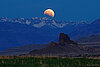
This year's solstice will be the brightest in decades, thanks to unusual timing of a Strawberry Moon.
-
First Look Will Bezos's Blue Origin be the first company to send tourists to space?
Blue Origin launched and landed its unmanned New Shepard for the fourth time, but SpaceX promises to venture farther into space at a cheaper price.
-
First Look Why ancient butter keeps turning up in Irish bogs
'Bog butter' may have had semi-religious significance during the time in which it was buried.
-
First Look Astronomers discover colossal, real-life 'Tatooine'
It's unlikely to contain life, but the Jupiter-sized planet is the largest real-life version of Tatooine, the fictional world that boasts two suns from 'Star Wars.'
-
First Look Periodic table to add four manmade elements. What should we call them?
The periodic table of elements is to be graced by four new members, and the International Union of Pure and Applied Chemistry has just announced their proposed names.
-
NASA spacecraft on way to asteroid to bring back samples
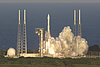
The 4 billion-mile mission, ending in 2023, could help us learn about the origins of the solar system and protect the planet from future collisions with space rocks.
-
First Look Turtle shells might not have evolved for protection, say scientists
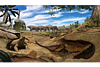
Thanks in part to a fossil discovered by an eight-year-old, scientists have new insights into the mystery of why turtle shells evolved.
-
K2 mission confirms 104 new alien planets
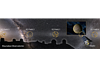
Confirmed exoplanets are still pouring in from Kepler data, even after the 2013 malfunction that led to the rebooted mission, K2. The spacecraft has now added over a hundred more confirmed exoplanets to its impressive exoplanet hunting resume.
-
First Look How NASA's Pluto mission 'revolutionized' planetary science
NASA's mission to Pluto shattered any misconceptions that scientists or the public might have had about the complexity of dwarf planets.
-
First Look Nettie Stevens, biology pioneer: A role model for female scientists?
Google celebrates the 155th birthday of Nettie Stevens, the biologist who discovered that sex is determined by X and Y chromosomes, at a time when women are seeing their greatest scientific success in biology.
-
South Pole rescue flight of 2 sick workers leaves Antarctica
There have only been three emergency evacuations at the Amundsen-Scott station since 1999, and rescuers on this occasion had to brave the pitch dark and extreme cold of Antarctic winter.
-
First Look Astronomers spot infant exoplanet: What can it teach us?
Researchers say K2-33b, the youngest fully formed exoplanet ever detected, could offer valuable insights into how planets are formed.
Follow Stories Like This
Get the Monitor stories you care about delivered to your inbox.

December 22, 2016
Photos of the day 12/21
Jade (l.) and Camden Evans sit on the lap of their dad, Heath Evan, as they watch an elaborate display of Christmas lights flash and blink to a soundtrack of holiday music at a home in Jenks, Okla.
More Science Notebook
-

First Look Technology transfer: NASA opens vault of space-age patents
The space agency has released more than 50 previously patented technologies that could be adopted by innovators to spur America's economy.
-
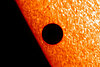
First Look Why Mercury's transit across the sun is so special
The littlest planet's journey isn't just a rare viewing opportunity for astronomers and amateur skywatchers.
-
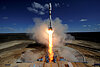
First Look Russia launches first rocket from troubled new cosmodrome
The launch is a point of success for Russia's challenged space industry.
-

First Look How Hertha Marks Ayrton made ripples in math and women's rights
The influential mathematician and scientist was also a prominent figure in the British suffrage movement and a staunch advocate for women's work to receive due credit.
-
Animal smarts: A Q&A with primatologist Frans de Waal
In an interview, the famed Dutch biologist discusses themes of animal cognition, empathy, and morality – subjects he explores in his newest book, "Are We Smart Enough To Know How Smart Animals Are?"
-
Menu miscue: Yale study prompts mammoth newspaper correction
In 1951, we reported that members of the Explorers Club dined on a 250,000-year-old extinct mammoth. Science has proven us wrong.
-
How computers are getting better at detecting liars
A group of researchers have developed new lie-detecting software, and it doesn't involve being hooked up to a polygraph machine.
-
Commentary: 'Trust but verify' should be a motto of Paris climate talks
The success of the COP21 talks will hinge on the creation of a transparency-and-review mechanism to ensure that countries are meeting their voluntary emissions-reduction targets.
-
NASA and 'The Martian' partner to make space 'cool' – and accurate
Ridley Scott partnered with NASA scientists to make 'The Martian' as realistic as possible. 'The more that happened, the more I got excited,' says NASA's Jim Green.
-
Supermoon: When and where to see it
This weekend the moon will reach its full phase while also nearing its closest point to Earth in its orbit, creating views of a 'supermoon.'

Monitor's Best: Top 5