The Frankincense Trees of Wadi Dawkah

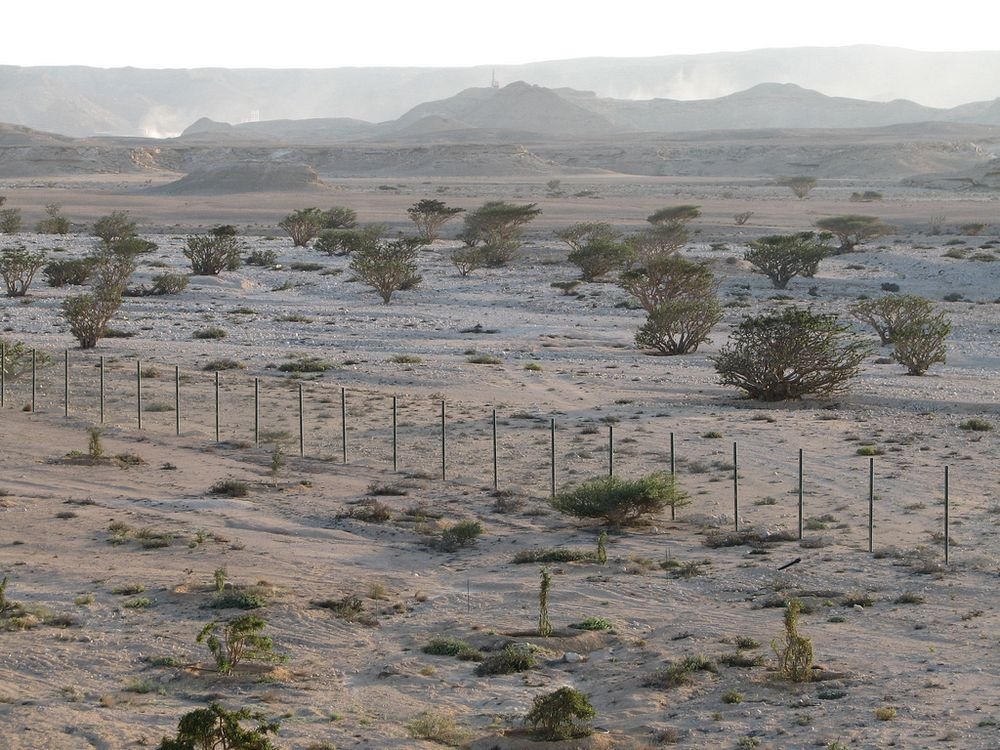
For more than 5,000 years, the Arabs have traded two highly prized fragrances —frankincense and myrrh— obtained from trees that grow exclusively in the southern end of the Arabian Peninsula. The dried, aromatic sap was transported by caravan across the Sinai desert to Egypt, via the so called “incense route”, from where they were loaded onto ships and sailed to far away destinations across the Mediterranean Sea.

Frankincense and myrrh were in high demand from Europe to Asia. The Greeks, Romans, Egyptians, Israelites and numerous other cultures used these perfumes as part of their religious ceremonies, and in burial rituals as an embalming material, and as an offering to the departed. Frankincense was one of the three gifts brought to the baby Jesus by the three wise men, according to The Gospel of Matthew.
frankincense-wadi-dawkah-4

Photo credit: Chris Price/Flickr

Semaphore: The World’s First Telegraph

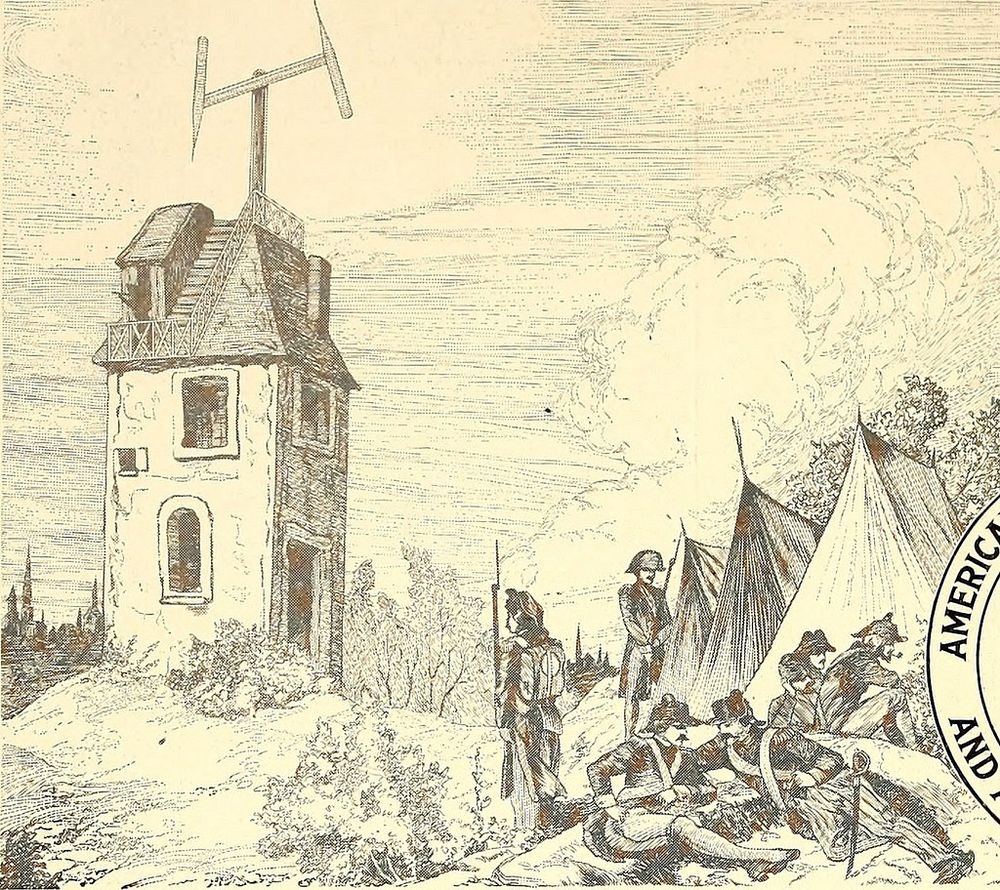
Smoke signals and beacons have been used to relay messages over short distances since ancient times, but the only reliable way to send messages over long distances was to dispatch a horse-riding messenger or a homing pigeon —until the arrival of the electrical telegraph. But fifty years before dots and dashes killed the messenger, for a brief period, there was another kind of telegraph in Europe —the optical variety, based on the same principle of flag waving that the Navy still use today. It was called the semaphore, and relics of this amazingly efficient 19th century network can still be found around Europe.

The semaphore was the first successful and large-scale communication network that allowed transmission of messages faster than horse-riding messengers could carry. Indeed, the very word “telegraph”, which means distance writing, in Greek, was coined to describe this nationwide network of semaphore.

semaphore-telegraph-3

Illustration of a semaphore tower in Napoleonic France. Photo credit: Internet Archive

Rosalia Lombardo: The Mummy That Blinks

Rosalia Lombardo was only two years old when she died from pneumonia in 1920. Her premature death left her father so heartbroken that he approached the noted embalmer, Alfredo Salafia, and asked him to preserve Rosalia’s body. Alfredo Salafia, a skillful embalmer and taxidermist, performed such an excellent operation on Rosalia that nearly a hundred years after her death, the little girl appears to be merely dozing beneath the glass case in the Capuchin Catacombs of Palermo, Italy, where she rests. Her little cheeks are stiff puffy. Tuffs of blonde hair are gathered around a knot above her head and tied by a silk bow. Even her internal organs are intact, as revealed by X-ray scans. Nicknamed the “sleeping beauty”, Rosalia Lombardo has gained the reputation of being one of the world’s best preserved mummies.

rosalia-lombardo-4

Rosalia’s perfectly preserved body is only part of the attraction. Visitors who come to see her swear that the little girl actually blinks here eyes. These sequence of pictures show her eyelids eerily opening and closing by a fraction of an inch. Her blue eyes are intact, like the rest of the body, and can be seen glistening in the low lights inside the catacombs.

rosalia-lombardo-blink[3]

The Museum of Bad Art

On rare occasions, a thrift store or a pawnshop can yield items of extreme value, but these are hardly the places you can expect to bump into the museum director of the Louvre or the Metropolitan. But Michael Frank is the head of a museum of a different breed, and a thrift store or a flea market is exactly the sort of place he would visit whenever he wants to enrich the museum's collection.

Frank works for the Museum of Bad Art, the only museum in the world “dedicated to bringing the worst of art to the widest of audiences”. The museum has three galleries in Brookline, Somerville and South Weymouth, all in the Boston area, where up to seventy pieces of atrocious artwork are displayed at a time, although the museum's actual collection numbers about 600 pieces.

museum-of-bad-art-10

“Charlie and Sheba”, a painting at the Museum of Bad Art, where “art is too bad to be ignored.”

London Necropolis Railway: The Train For The Dead

It was a difficult time to be alive in 1848 London, and worse still to be dead. A cholera epidemic had just swept through the city killing nearly 15,000 of its inhabitants, and bodies were literally pilling up besides churches waiting to be buried. But there was one problem: there was no space to bury.

The population of London was soaring. In 1801, the city had less than a million people living. In 1851, that figure had more than doubled to almost two and a half million. But the 300 acres allotted for burial space remain unchanged, requiring old graves, and some relatively fresh ones, to be regularly exhumed to make room for new burials. The old corpses were crumpled and scattered contaminating the soil and water supply resulting in fresh bouts of epidemics. Cholera, smallpox, measles, typhoid were pervasive in Victorian London.

london-necropolis-railway-6

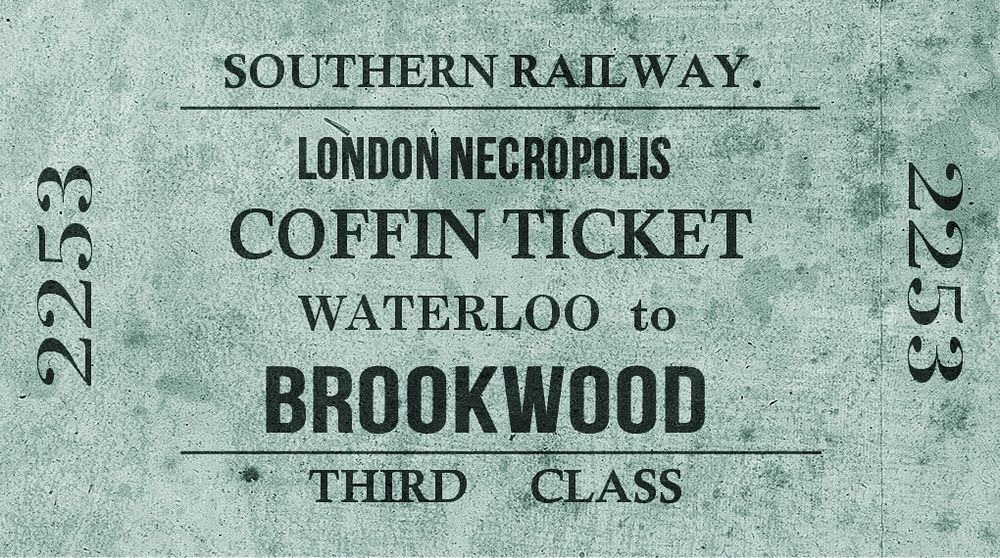
A third class coffin ticket issued to passengers of the London Necropolis Railway. Photo credit: qi.com

Oasis Bordello Museum: A 1988 Cat House Frozen in Time

In the heart of the Silver Valley mining district in the US state of Idaho, is an old dusty town called Wallace with a population of about eight hundred. But when the mines were booming in the early to the mid 20th century, there were four times as many residents. At that time men outnumbered women 200 to 1, so brothels were another thriving business.

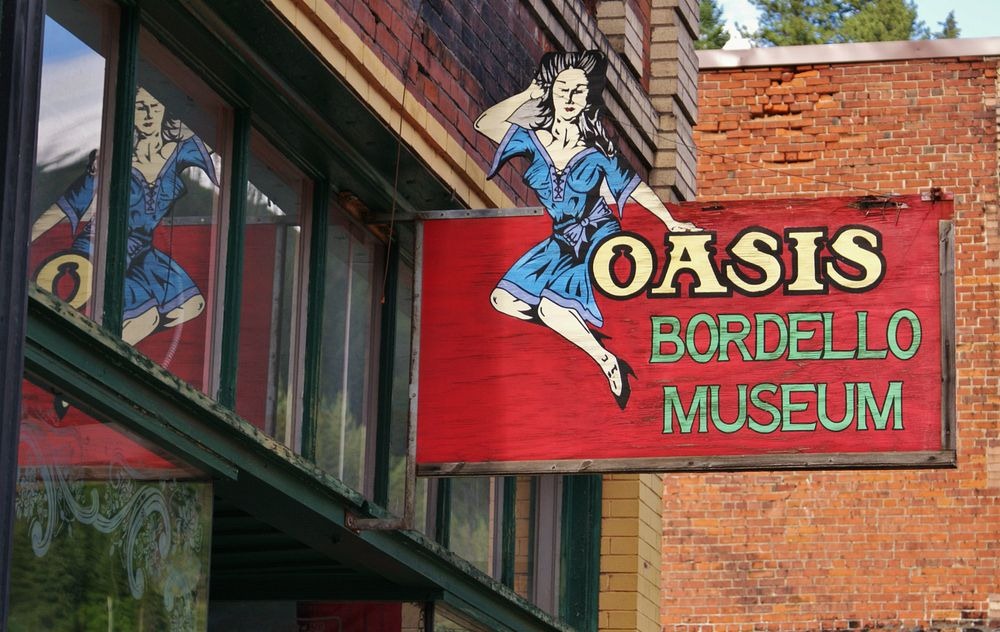
Wallace had several active whorehouses servicing the men at night after a laborious day of work at the mines. When prostitution was outlawed in 1973, all but one closed. Run by Madame Ginger, the Oasis Rooms simply took down its sign and continued operation. Madame Ginger made sure that enough donations were made to the local police fund to keep trouble out of the way. Law officers weren’t the only ones who benefitted from Madame's philanthropic activities. She also made generous contribution to the local economy, sponsoring the Wallace High School’s band uniform, for example. So when the FBI got wind of her illegal operation and prepared to raid her brothel in January 1988, Madame Ginger was tipped off. The employer along with all the girls grabbed whatever they could carry and vanished, never to return again.

oasis-bordello-museum-5

Photo credit: visitidaho.org

The Anti-Communist Dwarves of Wroclaw

Scattered throughout the city of Wroclaw, Poland, are hundreds of small bronze statues of dwarves. They began appearing in the streets in 2005, but their roots go back to the 1980s, to an anti-communist underground movement called the Orange Alternative.

In the 1980s when Poland was still under the communist rule, the Orange Alternative Movement started in Wroclaw as a way to peacefully protest against the authoritarian regime. The group found creative ways to stage protest, often bordering on silliness, such as dressing up as dwarfs and painting figures of dwarfs over all communist symbols throughout the city. The idea was to use absurd and nonsensical elements so that participants could not be arrested by the police. The movement spread to other cities around Poland like Warsaw, Łódź, Lublin, and Tomaszów Mazowiecki, eventually becoming a part of the larger Solidarity Movement that led to the fall of Communism in Poland.

wroclaw-dwarves-7

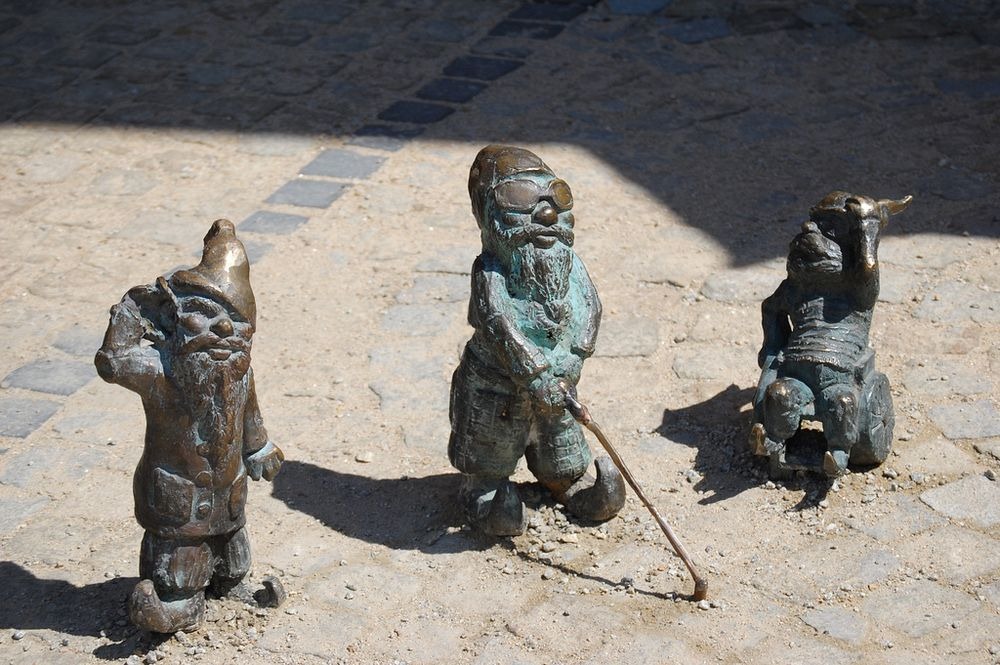
Three dwarves —one blind, one in wheelchair and one who is hard of hearing— in front of the Old Town Hall in Wroclaw, portray Wroclaw’s image as a disabled-friendly city. Photo credit: Piotr/Flickr

Casey: The Small Town of Big Things

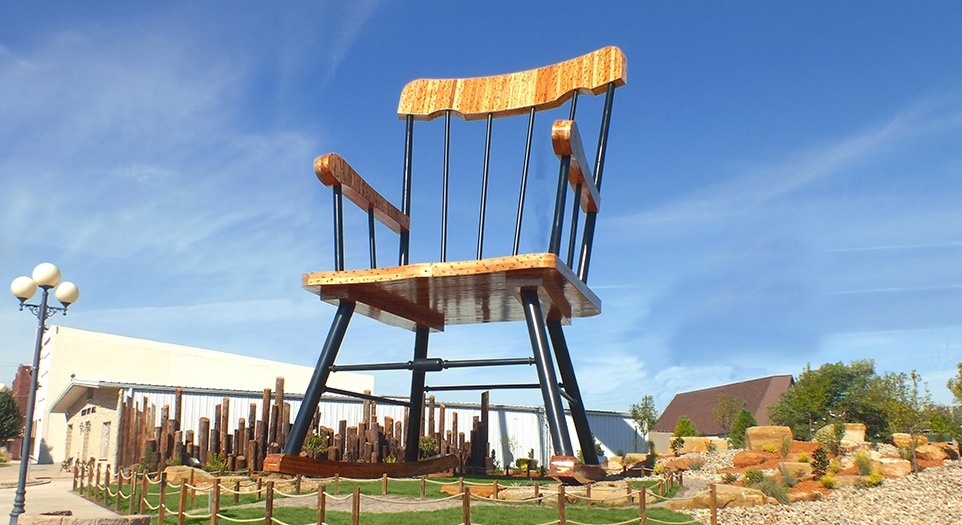
At just over two square miles and with less than 3,000 inhabitants, the town of Casey in Illinois might be among the smaller towns of the United States, but it's home to some of the biggest things in the world. These include a wind chime, a rocking chair, knitting needles and a crochet hook, a mailbox, a pitchfork, a golf tee, a pair of wooden shoes, a coin, a birdcage, a yardstick, a pencil, a ear of corn, saguaro cactus and many more. Eight of these have found place in the Guinness Book of World Records. Behind all these big attractions is a single man —local businessman Jim Bolin.

Bolin is the vice president of Bolin Enterprises Inc., which started out as a small paint and body shop operating out of his family garage. Today it employs 240 people and does oil and natural gas pipeline maintenance work across nearly half the country. But not all businesses in Casey shared Bolin’s success. Over the years Bolin watched several Casey businesses close shop — a shoe factory, a tools and manufacturing shop, a hardware store, a feed store. When the recession hit in the late 2000s, even Bolin started to feel the crunch. That’s when he decided that he needed to boost tourism to the town to help the local economy.

casey-big-things-11

Photo credit: bigthingssmalltown.com

The World's Smallest Monuments

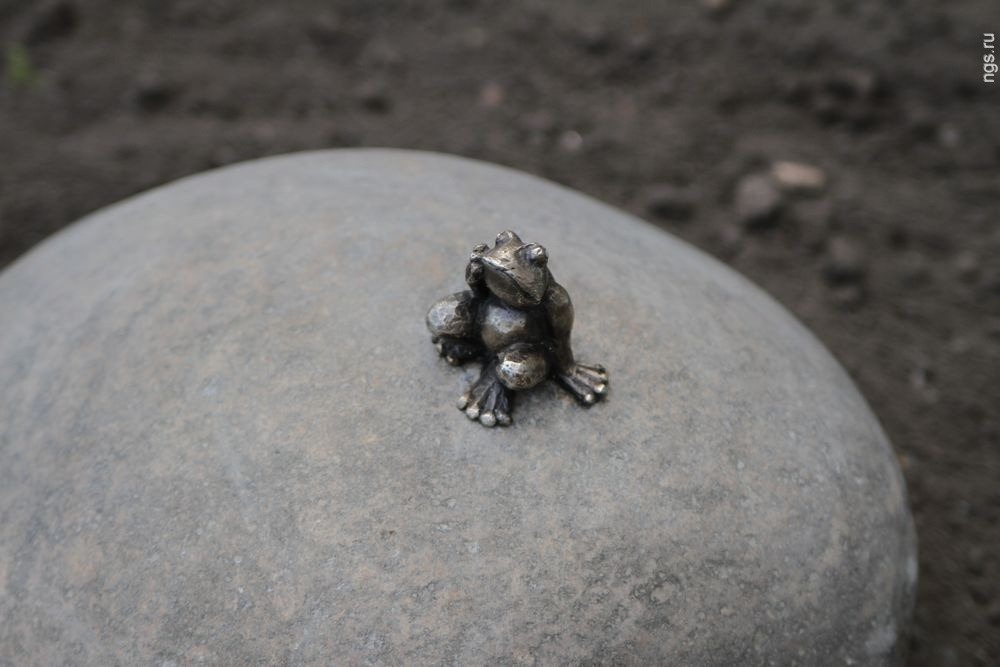
The Russian city of Tomsk is home to the smallest public monument in the world —a tiny bronze frog, sitting on top of a smooth rock. The sculpture is just 44 millimeters tall. The curious attraction, titled “the monument to the frog-traveler”, was installed in 2013 near the front entrance of a hotel. It’s creator, Oleg Kislitsky, wanted to create a monument dedicated to travelers and decided that the frog-traveler would be a fitting representation to his idea.

The story of the frog traveler —the one who goes flying with the storks hanging from a twig by his teeth, but couldn’t keep his mouth shut when people on the ground, seeing the unusual spectacle, began praising the storks instead, eventually leading to his death— is well known in Russia, having been penned by the famous Russian author Vsevolod Garshin.

frog-traveler-monument-2

Photo credit: ngs.ru

Venice Minus Water

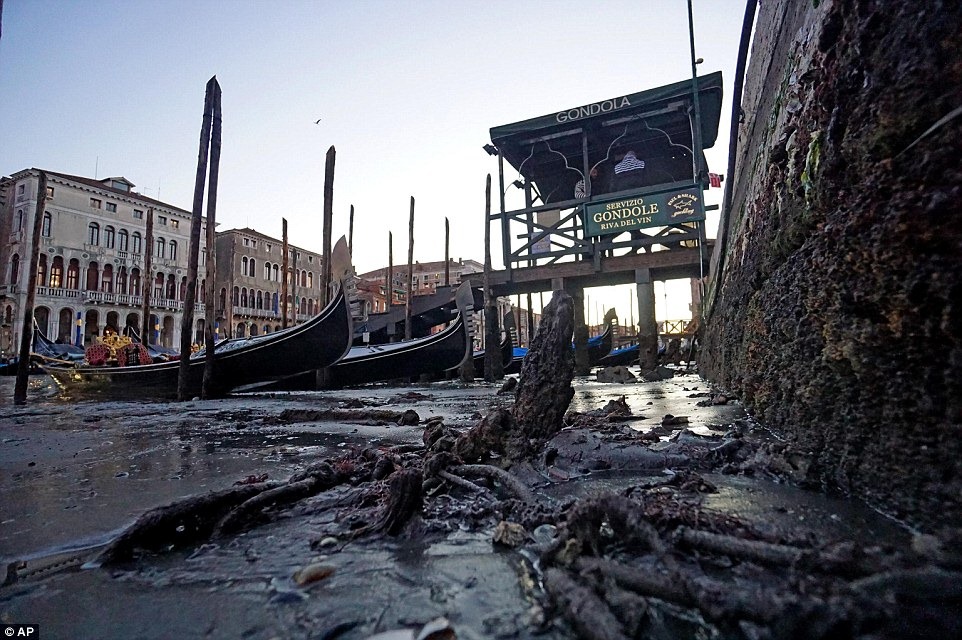
For the second year in a row, low tides in Venice have sunk to such record levels that it has left the city almost entirely without water. Visitors who came to the city expecting to ride gondolas through the city’s famous blue-green canals have found their plans foiled, as without water many of the city’s primary transport have been left grounded on the canals’ muddy beds.

The exceptionally low water levels have been caused by abnormal tides this year, combined with drastically reduced rainfall across northeastern Italy. Although low tides are common around this time of the year, this year the water levels have gone down some 70 cm below average. The phenomenon is surprising given that Venice is slowly sinking and floods are a more common feature of the city today than low tides.

venice-low-tide-11