Happy Holidays, Friends!

Well, team, 2016 has been hot garbage. A few good things have happened though. One of my oldest and dearest friends, a woman who I love desperately and whose happiness gets me totally teary, got married this year. My sister and brother-in-law had a baby, so I have a new godson to buy books for. Those were excellent things.

this is not my godson. this is a stock baby photograph from Wikipedia. we’re not posting pictures of the baby on the internet. luckily, all babies look alike.

In many other, terrifying ways, 2016 was a shitpile. I am trying not to think too much about it during this holiday season, and I hope that you have found some good distractions for yourself too. Stay safe and have wonderful holidays! I will be back in the New Year to talk about apocalypses and the books I (hopefully) got for Christmas and the book you (hopefully) received or purchased.

Oh, also! An exciting thing! I am going to try cooking a BRAND NEW THING: Brie cheese covered in apricot preserves wrapped up in puff pastry sheets. I will cook the fuck out of it and eat it on crackers and I will let you know how it turns out. Sounds good, right?

Okay! Go have your holidays! I love you all! I am sorry that 2016 was such a shitpile for all of us, and we will have to keep each other safe and brave and accountable in 2017.

NPR BOOK CONCIERGE TIIIIIIIIME: A Totally Chill Links Round-Up

Good morning! I have started a new thing that I wanted to tell you about, where I thank journalists when I read a story that I particularly like. There is every reason to do this (especially under the new administration, which we already know will be very hostile to journalists) and no reason not to. Try it!

The NPR Book Concierge has arrived once again! Every year I get zillions of recommendations from this thing, and you should too!

How fantasy movies portray the experience of oppression in near-totally white terms (by the fabulous Zeba Blay).

Vann R. Newkirk II is flames emoji as usual on calling out racism and the value of civility.

The Eritrean soccer league keeps defecting en masse when it goes to games overseas. The author of this article, Alexis Okeowo, allegedly has a book about resisting extremism in Africa, and I am going to read it twice because this article on Eritrean soccer is incredible.

2016 was the year America finally saw the (black) South: A super-great article by Jesmyn Ward. Oh! I forgot to tell you! Last night I dreamed I met Jesmyn Ward, and I wanted to tell her that I admired her work, but all I had read of hers was THIS ONE ARTICLE, and I felt terribly embarrassed that I hadn’t read any of her books yet. I was like “But — I mean, but, I have The Fire This Time at my apartment right now!” and Jesmyn Ward, in my dream, couldn’t have been more polite about it.

The rise of the romance novel (including the genuinely fucking awful The Flame and the Flower, dear God I want those hours of my life back). This article notably includes a picture of romance novelist Rosemary Rogers in a sari because of course.

Authors from around the world discuss colonialism and literature.

It’s been a while since we had a bonkers story in this round-up! Let’s have one: Sara Gruen, author of Water for Elephants, is embroiled in a deeply weird financial scheme regarding Hatchimals (a prime Christmas gift for children).

Zadie Smith talks about the experimental (or otherwise) nature of multiculturalism and her hopes for the future.

Reading the End Bookcast, Ep.72: 2016 Holiday Gift Guide!

Happy holidays, friends! The demographically similar Jennys are here in our last podcast of the year to tell you what to buy your loved ones this holiday season. WE LOVE PRESENTS. You can listen to the podcast in the embedded player below or download the file directly here to take with you on the go.

Audio clip: Adobe Flash Player (version 9 or above) is required to play this audio clip. Download the latest version here. You also need to have JavaScript enabled in your browser.

Our Own Personal Gift Guides

Whiskey Jenny: Classy af laundry products from The Laundress

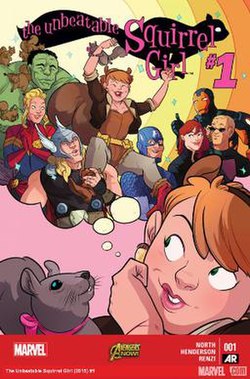
Gin Jenny: The Unbeatable Squirrel Girl in trade paperback

(You can read Ryan North’s Dinosaur Comics here.)

Whiskey Jenny: Adorable bathroom accoutrements. This Umbra Kleenex holder:

And this Melon Boat Q-tip holder:

Gin Jenny: This Kikkerland bed caddy, made of felt:

Whiskey Jenny: Kinetic sand. Here’s a video!

Gin Jenny: Johanna Basford’s Christmas coloring book.

Whiskey Jenny: Commission some fan art! The person she commissioned for her new apartment with Snapple Alex can be found here.

Gin Jenny: Coryographies bookshelf necklaces (on Etsy!).

Whiskey Jenny: Perfumes from Black Phoenix Alchemy Lab

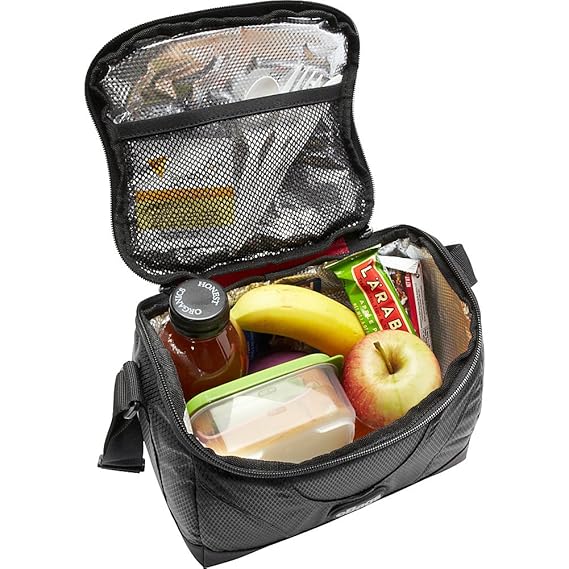
Gin Jenny: A cooler bag. Also, packing cubes. EBAGS DOT COM!

this is nice but my one actually is HUGE and I have never regretted having such a huge cooler bag. just FYI. only the other day, my power went out and I put 70% of what was in my fridge and freezer into my cooler bag and hauled it over to put in someone else’s fridge and freezer. my fancy ranch dressing lives to fight another day!

And then we had some v. good recommendations for individuals who asked for help via our holiday gift guide form. WE HOPE THESE HELP YOU but if not please email us for additional assistance.

Tracy

Every Boy’s Got One, Meg Cabot
The Royal We, Heather Cocks and Jessica Morgan
Eat Cake, Jeanne Ray
The Tapestry of Love, Rosy Thornton

Natalia

Chicka Chicka Boom Boom, Bill Martin, Jr. and John Archambault, illustrated by Lois Ehlert
Happy Hippo, Angry Duck, Sandra Boynton
This Is Not My Hat, Jon Klasson
Wild, Emily Hughes

Erica

Bel Canto, Ann Patchett
Mr. Fox, Helen Oyeyemi
The Kings and Queens of Roam, Daniel Wallace
A General Theory of Oblivion, Jose Eduardo Agualusa, translated by Daniel Hahn

Lindsey

The Possessed, Elif Batuman
Your Favorite Band Is Killing Me, Steven Hyden
Juliet Naked, Nick Hornby
Star Island, Carl Hiaasen

Chelsea

The Dresden Files, Jim Butcher
The Lives of Tao (et seq.), Wesley Chu
The Quantum Thief (et seq.), Hannu Rajaniemi

Jessica

The Secret Life of the American Musical, Jack Viertel
HHhH, Laurent Binet, translated by Sam Taylor
The Art of Fielding, Chad Harbach
Station Eleven, Emily St. John Mandel

Diana

Boy, Roald Dahl
(also kind of Station Eleven, Emily St. John Mandel)
(he’s probably already read Nation, by Terry Pratchett but just in case)
To Say Nothing of the Dog, Connie Willis
Lock In or Old Man’s War or Redshirts, John Scalzi

Elizabeth

Riveted or The Kraken King, Meljean Brook
An Inheritance of Ashes, Leah Bobet
The Long Goodbye, Raymond Chandler
Richard Armitage reading the audiobooks of Georgette Heyer

Snapple Alex

Alex’s Father

The Only Rule Is It Has to Work, Ben Lindbergh and Sam Miller
Big Trouble, Dave Barry
Born to Run, Bruce Springsteen (which I assume your dad already has!)
something by Stephen Fry, perhaps The Hippopotamus

Alex’s Mother

Tarcutta Wake, Josephine Rowe
The Night Circus, Erin Morgenstern
Hand-Drawn Jokes for Smart Attractive People, Matthew Diffee
2016 Best American Magazine Writing

Angelique

Midnight in the Garden of Good and Evil, John Berendt
Agent Garbo, Stephen Talty
American Revolutions, Alan Taylor
The Lost City of Z, David Grann
Under the Banner of Heaven, Jon Krakauer

Get at me on Twitter, email the podcast, and friend me (Gin Jenny) and Whiskey Jenny on Goodreads. Or if you wish, you can find us on iTunes (and if you enjoy the podcast, give us a good rating! We appreciate it very very much).

Credits
Producer: Captain Hammer
Photo credit: The Illustrious Annalee
Theme song by: Jessie Barbour

Review: Judenstaat, Simone Zelitch

In Simone Zelitch’s book Judenstaat (Tor, 2016), no Jewish state was created in territory that had once belonged to the Ottoman Empire. Instead, Judenstaat was created in Saxony, bordering Germany, Poland, and Czechoslovakia. Forty years later, documentary filmmaker Judit Klemmer is creating a film about the state’s creation, while she is haunted by memories of her husband Hans, a Saxon conductor shot years ago as he conducted the National Symphony for the first time. When Judit receives a note saying simply They lied about the murder, she is plunged into a world of conflicting histories and conspiracy.

Judenstaat

So before I dive into talking about Judenstaat, let me say up front that I do not know much of anything about Israel and Palestine. One of these days I am going to have enough time to really dig deep into what’s going on over there, and at that time I will form an opinion, and hopefully it will be a non-stupid opinion. For now, I don’t know enough about it to speak intelligently, and I therefore cannot say anything about how (or even if, frankly) Judenstaat‘s reality speaks to that of our own world.

I also do not have more than a high-schooler’s grasp on World War II history. As I was finishing this book, there was a whole uproar on Twitter over a dude who was equating USSR treatment of Jews to Nazi treatment of Jews. Soviet anti-Semitism comes up in this book, and here again, I simply don’t have the historical background knowledge to be able to say whether Zelitch does a good job of treating real-world history in this work of alternate history. So if you have views about this in relation to Judenstaat, and you feel like popping into the comments and telling me about them, I’d love you to do that.

(Because this is fundamentally who I am as a person, I went hunting for some further background information and added some books to my intimidating nonfiction TBR list. That list is very long however. My quest to know everything will last me many years.)

That very long disclaimer is to say that I can only speak to Judenstaat insofar as it is kind of a murder mystery and very much a book about what nations permit their people to remember. And on those fronts, I think that it succeeds admirably. As Judit uncovers more footage from her country’s past, she realizes more and more that the tidy version of history in which she has always believed, the narrative of her country’s creation and the values on which it claims to be founded, is flawed and incomplete. Did I find this to be terrifyingly relevant as our country awaits the presidency of a bigoted demagogue with no experience in government who got elected anyway because white America doesn’t believe in equality nearly as much as we say we do? Yes, okay? Yes, I super did.

(I am finding all my books to be terrifyingly relevant lately. Selection bias or apophenia? YOU DECIDE.)

Zelitch sensibly doesn’t subject us to too many visits from the Exposition Fairy, which was great for the murder mystery but not so good for my poor brain as I tried to figure out Judit’s country timeline and what the official history was versus what she was discovering as she made her film. If you are planning to read Judenstaat, I recommend carving out some time to sit down and really get into it. Even knowing that I’d missed some details, though, this was a really terrific read. I kept thinking of all the countries where history that doesn’t fit tidily into a linear narrative of progress towards shared national values is discarded and discredited. Like: We shouldn’t be able to talk about our country’s founding, or the liberal idea of ourselves as “a nation of immigrants,” without addressing the fact that these ideas are predicated on the violent destruction of American Indians.

Or like (if you want to look at something a bit farther away): I read Anjan Sundaram’s Bad News earlier this year, which talked about (among other things) the fact that Paul Kagame — the hero who ended the Rwandan genocide — also invaded Congo and carried out mass atrocities against Hutu refugees in that country. In Rwanda, Sundaram reports, you can never talk about that. You can talk about how Kagame saved the country. You can talk about the horrors of the genocide against the Tutsis. History that doesn’t fit into that narrative isn’t welcome.

Judenstaat teaches Judit (and reminds us) that history is never so simple. Nobody can hold power and keep their hands clean. We need to have heroes, but even more (argues the book, and I argue it, too), we need to know the truth about them. We need to speak — shout! — the truth about their failures so that we can avoid repeating them. Even saying that is probably a simplification of Zelitch’s message: She resists easy answers in this book, which offers no tidy solutions but only questions upon questions upon questions.

So. You know. My favorite kind of thing. YMMV.

Review: Death by Video Game, Simon Parkin

Who here is a gamer? Show of hands, please! I went into Death by Video Game with a very low level of gaming knowledge, and people with a low level of gaming knowledge is who I recommend this book for. I suspect that readers with knowledge of the gaming world would say “fie” to this book.

gamers reading this book, probably

THIS IS NOT A CRITICISM. I found Death by Video Game during a random, but pleasant, browse through my library’s catalog, and it is exactly what I wanted it to be: A series of journalistic sociology essays about the worlds and possibilities of video games, from people dropping dead at gaming cafes after hours of play, to fundraisers that depend on gamers being willing to play mind-numbingly dull video games for hours upon hours, to games that realistically explore some of the most difficult and terrifying things about being human. And I came away from the book feeling how I wanted to feel: That there are worlds of knowledge under the sub-heading “video game,” and I should dedicate some time to learning more about them.

Death by Video Game

(Jenny Learns Something New and Gets Excited about It: An Autobiography in Infinite Chapters.)

Did it make me want to play video games? Yes, but not enough for me to actually do anything about it. Knowing my addiction to stories as I do, I am sure that if I got into gaming, it would quickly consume my life (very expensively!) and I would never get anything else done ever again. So I continue to opt out of gaming. I feel the same way, roughly, about getting your ears pierced. Earrings would delight me! I would have tons of them! And it would cost money and I’d have to keep track of all of them and it’d be one more damn thing for me to worry about when I’m getting ready in the morning.

I know, it's unusual
how other adult women respond to discovering that my ears are not pierced

“But what’s your favorite thing you learned from this book, Jenny?” Glad you asked! My most favorite thing is that the EVE Online, a science fiction video game, has an elected player council called the Council of Stellar Management that meets once a year with the game developers, CCP, in Iceland to talk about new planned features and to represent player interests to the company that owns the game.

“Council members can have very different ambitions and concerns depending on which part of space their hail from,” explains CCP’s Ned Coker. “You may have somebody who lives in the galaxy’s outer reaches and, as such, they will have a very different viewpoint to those that live in a more centralised area.”

Fascinating, no?

Parkin also talks about the way games encourage imaginative identification to an extent that less immersive media do not. In a game like That Dragon, Cancer, it becomes impossible to separate yourself emotionally from the experience of having a baby who’s dying, because the game forces you to experience it from the viewpoint of the caretakers. He rejects the idea that video games are “just games,” or that the worldviews of the games have no effect on the worldviews of the gamers. At the same time, he doesn’t delve very deeply into this topic (or any of his topics), since the idea is more to provide a window into the variety of games that exist than to provide substantial critiques of gaming culture.

Verdict: An excellent, readable introduction to the video games and player types that exist in our wondrously varied world.

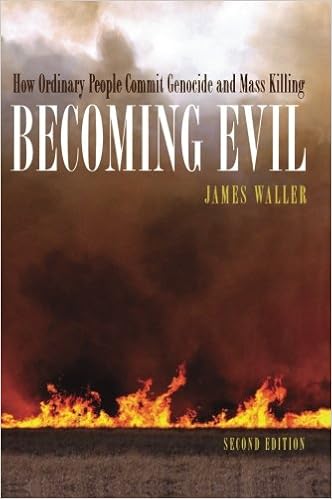
Review: Becoming Evil, James E. Waller

A note: I read the first edition of Becoming Evil, published in 2002, because that’s the edition my library had a copy of. Waller did publish a second edition in 2007, which may contain a more robust defense of evolutionary psychology and some refinements to his model.

So one of my things for the upcoming year (two years, four years) is that I want to learn more about the historical, social, and scientific contexts for some of the things I’m afraid will happen under President Trump. One thing that scares me is the heightening of racist speech against Muslims and immigrants. More and more in recent years, America has been rhetorically isolating certain groups, and this worried me badly even before a president got elected on the strength of that type of rhetoric. Laws that target Muslims have been in place since 9/11, and the election of President Trump will almost certainly lead to more open legal targeting of vulnerable groups. This is, to put it lightly, not a good path for us to walk down.

Becoming Evil
luckily the cover isn’t sensational at all, ha ha that’d be inappropriate for the topic, amirite?

I checked out James Waller’s Becoming Evil about a week after the election, as well as an enormous book all about genocide, because I guess I am not an optimist. We all want to believe the “never again” rhetoric; we want to believe that we’re sufficiently enlightened that it couldn’t happen here, but I have read enough books about genocide and its aftermath to know that it could absolutely happen anywhere.

I KNOW THIS IS A VERY DOWNER POST. But, still important, so on we bloodily stagger. Becoming Evil posits a four-part model that explains why people do evil things.1 The first prong of the model depends on evolutionary psychology, a branch of science that makes me want to lie down on the floor for several hours because it is nigh untestable and I find that suspect.2 The idea is that we are prone to love “us” and be suspicious of “them” — which I do believe, based on the way even tiny infants respond in tests, but which I have yet to be convinced is due to How We Lived in Ancient Times. But however it may be with evolutionary psychology, the first prong of the model is, basically, suspicion of outsiders.3

The second prong of the model is personal characteristics that make a person more prone to Evil.4 Cultural belief systems that emphasize submission to authority and externalize the locus of control of one’s life tend to produce people more inclined to accede to the commission of violence like genocide. Moral disengagement also makes genocide more likely — i.e., justifying one’s behavior to oneself, giving euphemistic labels to the bad deeds one is doing, etc. And finally, of course, self-interest plays a role: Very often when genocide takes place, it’s because the perpetrator group believes they will profit by the elimination of the victim group.

Y’all, I know this is a super heavy post. Let’s all take a breather and have a look at this Pomeranian getting blow-dried.

what a warm and happy dog

Okay, that was a good Pomeranian, thank heavens, because this third element is the one that feels the most controllable and urgent to me. (You can see what you think.) The third prong of Waller’s model is about the immediate social contexts in which we are asked to commit acts of violence and exclusion; he calls this “a culture of cruelty” and explores some ways that we’re socialized gradually into such a culture. Reading the book as “how not to commit genocide 101,” this prong of the model was the most useful to me. Here are two hot tips I gleaned:

  1. Do not do small, harmless-seeming compliances. Waller talks about “escalating commitments,” wherein we (humans) are more likely to commit resources to something “once [we] have been induced to go along with a small initial request.” He describes it as a “mounting momentum of compliance” — once we have done the first thing, we want to believe that we’re doing Right, so we get deeper and deeper in. Waller quotes psychologist John Darley as saying “the individual’s morality follows rather than leads.” Our brains are basically very bad at doing things we don’t agree with, so if we start regularly doing an action like saying “Heil Hitler,” our brains are like “oh yeah we must think Hitler is good, else why would we keep saying this thing?” Don’t comply with the small things, and you inoculate yourself (to a degree) against compliance with the big things.
  2. Related: Get better at not conforming not to peer pressure. I know this is so, so difficult. We are social animals and we want to fit in with the group. But this is a reason that people go along with mass murder: They never got good at resisting peer pressure, and they feel guilty “making” their peers do this unfun dirty work of, you know, literally killing people. Get good at it now while it’s easy, and you’re less likely later to agree to violence and repression against a target group.

The last prong of the model, of course, is inflicting “social death” upon the target population; i.e., making the “them” into the themiest “them” you possibly can manage. This includes rhetorical othering (see why I’ve been saying all along not to do that!) as well as physical separation (into, for instance, camps) and super-intense victim-blaming, which arises from our passionate desire to believe that the world is just and that if we ourselves do everything right, we and our loved ones will be safe and not get genocided.

The scary thing about this book5 is how quickly countries can move from the small things — the rhetoric, the ritual displays of national loyalty — to actual straight-up genocide. A robust democracy with lots of participation by its citizens is a strong line of defense against mass ethnic violence, so it is, again, incumbent upon us to be that. Defend our institutions, and participate early and often in our democracy, any way that you can.

  1. Sidebar, I have thought for years that it’s a bad idea to use the word “evil” to describe people who do particularly awful crimes like child abuse or murder. It’s an othering kind of word that absolves us of any commonalities we may share with the so-called evildoer, and I think that makes us less willing to believe that these crimes can happen close to us. Waller says, “Extraordinary human evil can never be simply distilled to one particular psychiatric diagnosis. To do so is to project evil exclusively onto some small segment of the population instead of acknowledging its imminent presence in each of us.” In other words, if only evil people abuse children, and our kid’s friend’s stepfather does not appear to be evil, then how can we believe our kid’s friend if she says the stepfather touched her inappropriately? He’s not evil, right? And abusers are evil? SEE HOW THIS LEADS TO BAD OUTCOMES?
  2. Man, this post is reeeeeeally how to win friends and influence people 101, n’est-ce pas? “First she said we can’t call child abusers evil, now she’s slagging off all of evolutionary psychology, wot a jerk.” I KNOW I KNOW but honestly I think I am correct on both fronts. Waller addresses some of the criticisms of evolutionary psychology but not really its untestability. Whatever, dude. You know what you did. (Maybe this is better in the second edition.)
  3. This does not reflect well on me, but I admit that I was reading this book trying to see if any of these things applied to me. I am okay on suspicion of outsiders, I think! But I do want to emphasize that this did not happen by magic: My parents taught me to be this way, and I have spent a lot of time in my adult life actively eradicating suspicion of outsiders from my brain by having as diverse a range of life experiences and reading material as possible. I recommend these strategies to everyone. They are not perfect, but they help.
  4. Again, I don’t endorse the use of the word evil. I think it’s a word that’s too unspecific to be of much use in contexts such as these, but whatever, I’m following Waller’s vocab use for the purposes of this post.
  5. aside from, just, everything

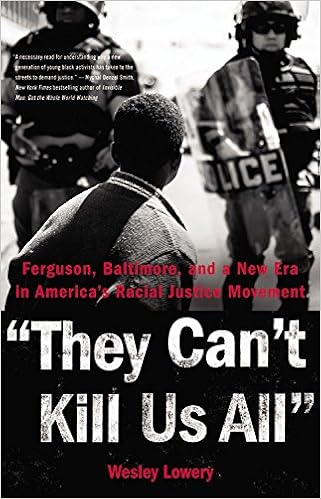
Review: They Can’t Kill Us All, Wesley Lowery

I’m in a strange, post-news-outlet state where I follow individual reporters more than I follow entire news outlets. This is possibly symptomatic of my increasing distrust of institutions in the wake of the recent election? And troubles me because of the echo chamber conservative news media insist that I (but not they) are in. I am not sure what the solution is. (Weirdly, the only outlet besides NPR’s Code Switch that I specifically follow on Twitter is the National Review, for like, ideological balance.)

So Wesley Lowery has long been one of my most trusted reporters on the Black Lives Matter movement, and I was excited for his book. They Can’t Kill Us All follows the development of the movement from Michael Brown’s death in Ferguson, an event I was surprised to discover only occurred in 2013. It feels like we’ve been talking about black death for a million years, but as a national conversation, where white people were forced to stop ignoring racially biased policing,1 that’s somehow only been three years.

They Can't Kill Us All

For all three of those years (coming up on four), Wesley Lowery’s been on this beat, and if you weren’t paying attention to the development of Black Lives Matter, They Can’t Kill Us All is a terrific way to catch up on what’s been happening. Lowery writes not only about the deaths that became hashtags — Michael Brown, Charles Scott, Tamir Rice — but about the rapid, meteoric growth of activism around police shootings. His reporting at the Washington Post, including his idea for the Police Shooting Database, won the Post the 2016 Pulitzer Prize for journalism.

Lowery also talks about the process and ethics of reporting on traumatic death, how you walk up to grieving family members on the worst day of their lives,  make them trust you, and get quotes out of them to convey to the country what has been lost.

A journalist’s portrait of the deceased is often used by the casual reader to decide if the tragic outcome that befell him or her could have happened to us, or, as is often implied to be the case in those killed by police officers, if this tragic fate was reserved for someone innately criminal who behaved in a way we never would.

Lowery isn’t trying to explain how this movement fits into America’s past or to predict what impact it will have on our future — it’s a book of journalism, not historical analysis. But Lowery’s a great reporter, honest about his errors and aware of the limitations of his form. If you’ve been following Black Lives Matter all along, there’s not a ton of new information in They Can’t Kill Us All, but it’s a terrific overview of how the movement developed.

  1. Ugh, I don’t know how else to qualify this. Many white people continue to close their eyes to racially biased policing. Lots of people of all races have been talking about this for years, but it just hasn’t been picked up national media in the same way that it has over the last three years. Y’all, words are hard.

Fantastic Girls and Gilmore Beasts: A Links Round-Up

Happy Friday, team! It is a grumpy Friday for me because I have to work tomorrow, but I struggle on in spite of everything. Stay brave, friends, and have a wonderful weekend.

It’s not too late to ask me and Whiskey Jenny to pick out books for you to buy your loved ones this holiday season! Fill out our holiday gift guide form and you’ll received personalized gift recommendations on our December 14th podcast.

Rebecca Traister is a writer I’ve come to really respect, and her piece on blaming Trump on the people who fought the hardest against him is fantastic.

Also, here’s Rebecca Traister again and the equally fantastic Rembert Browne talking about moving forward with anger and/or optimism in the age of Trump.

What books were some of this year’s most awesomest writers thankful for? Buzzfeed has your list.

The state of Harry Potter fandom in the conflicted age of Fantastic Beasts and Where to Find Them.

And speaking of Fantastic Beasts and Where to Find Them, Gavia Baker-Whitelaw has some thoughts about queer subtext in that movie and queer-coded villains.

The Merriam-Webster social media team speaks out about their on-point Twitter game.

Long story short, I always thought that Gilmore Girls was problematic and that the Gilmore girls were assholes (but I also love it!), so I’m really enjoying all the thinkpieces that have come out lately reading the revival for filth on those very points.

Also Maddie Myers is one of my fave critics these days, and she has good things to say about the Stars Hollow musical and what a jerk Lorelai is about it. (Lorelai Gilmore is a jerk, pass it on.)

On myths of racial determinism and books like Hillbilly Elegy.

Look up, please: Y’all, this is what I’m talking about. If you witness something like this happening, tell the person to stop. It will suck, but nobody else will do it if you don’t. Be that person.

A history of the concept of political correctness.

On the dearth of famous black writers in sci-fi.

The Atlantic has been doing Trump Time Capsules, but stopped when the election was over. Here’s what they have to say on the future of time capsules.

Review: The Wangs vs. the World, Jade Chang

One of the side effects of this election is that I’ve become very clingy and emotional. I burst into tears over design specs at work yesterday, and it’s not because design specs are inherently moving. It’s a reminder from my dumb, finicky heart, I guess, that love is what we have when the world is dark. So The Wangs vs. the World fit nicely with my current mood — a book about how a family holds tightly to each other at a time when they have lost everything.

Wangs vs the World

Charles Wang came to the United States to make his fortune, and that’s exactly what he did, building a cosmetics empire from the ground up. But an ambitious new project, launched just before the financial crash at the end of the second Bush presidency, has reduced them to almost nothing. Charles, his second wife Barbara, youngest daughter Grace and son Andrew, all pile into an ancient clunker to drive across the country to live with Charles’s eldest daughter Saina, a disgraced art world it-girl who has retreated to a house in upstate New York to escape media attention.

Though The Wangs vs. the World does satirize the worlds and lifestyles of the very wealthy, its primary concern is the relationships between these family members. Jade Chang is wonderfully specific in her portrayal of these five people and what they are to each other.

Saina always enjoyed her sister so much more in the particular than in the abstract. Grace in person was funny and self-aware. Grace on the phone was unrelenting and concerned with the smallest of slights — in between visits, that became the only Grace that she remembered.

She also captures an element of sibling relationships that I rarely see writers do well, which is the lifetime of shared in-jokes and common vocabulary that ties them all together. Saina and Andrew and Grace are separated by years and years, but they remain tremendously fond of each other. When Andrew ditches the family road trip and stays in New Orleans to lose his virginity, Grace isn’t just mad that he’s left her alone with the adults; she misses him. At a time when I’m wanting to grab all my friends-and-relations in massive hugs and never let go, it was great to read a book about a family who truly enjoy each other’s company.

The book is also wonderfully funny, although I wouldn’t say that funny is the point of it. Chang refers to Saina’s “human-rights disaster of an engagement ring,” and the passage where she describes Saina’s various art shows is — to someone like me, who loves art and finds the art world incomprehensibly ridiculous — perfect. Chang is satirizing a lot of different things in this book, and as it hurtles towards its conclusion, its wonderful scope started to feel a trifle overstuffed. But it’s well worth overlooking this minor complaint for a book as joyous and sincere as this one.

(Oh, also, writers of America? In Louisiana, we don’t say “Nawlins.” We just do not. I am sorry you have been misled on this. You can say “New OR-lins” from now on.)

Frightening, Destabilizing Shit that Trump Has Done

Welp, I think we’re all going to have a bitch of a time remembering all the fucking awful things Trump has done, because he keeps piling them on. So I am constructing the ultimate Your Fave Is Problematic post starting today (29 November).

My policy is going to be that I’ll only include stories and links to things that Trump and his hires have said; i.e., Trump’s friends and supporters may say and do things that won’t make the list. I’m trying to stick to just the things that are official words and deeds coming out of the Trump administration. It won’t be exhaustive because I am human and I get tired and miss things and take days off, but you’re welcome to pop into the comments and make note of big ones I missed. If you notice any mistakes, inaccuracies, etc., please comment and let me know!

If I don’t specifically mention where a link is headed in the text of my sentence, I’ll include a parenthetical note on the source. When referencing local stories I will do my best to cite local newspapers, TV, and radio rather than national. I don’t have time to watch video so I’ll be sharing articles rather than videos, nearly always. I will tend to cite neutral/conservative-leaning news sources over liberal-leaning ones where basic facts are concerned (though I’ll try to include both conservative and liberal analysis), since it’s been very difficult for right and left to agree on what actually happened at any given time.

17 December

China took possession of a US data collection drone in the hotly disputed South China Sea (NPR). The situation was resolved between the US and China fairly quickly through diplomatic channels, and the drone is scheduled to be returned to the US (Reuters). Here’s what Donald Trump had to say about this delicate diplomatic situation:

China steals United States Navy research drone in international waters – rips it out of water and takes it to China in unprecedented act.

Thanks, dude, really thrilled to have you in our corner. (He still won’t take intelligence briefings, by the way.) He later tweeted:

We should tell China that we don’t want the drone they stole back.- let them keep it!

The New York Times has some thoughts about the American position with China, given the muted response to the seizure of one of our drones. As regards the South China Sea, you can read about territorial disputes over who owns it on Wikipedia. Short version, China and Taiwan and Malaysia and Vietnam and the Philippines all believe that they own parts or all of the South China Sea, and it has been a complicated dance trying to navigate these competing claims of ownership.

16 December

With heightened attention being paid to the cyberattacks by Russia, Trump tweeted this:

Are we talking about the same cyberattack where it was revealed that head of the DNC illegally gave Hillary the questions to the debate?

The Washington Post reported that the FBI and the CIA are now in agreement that Russia interfered in the elections to help Trump win. Fox News confirms as well in case you’re in fear of the left-leaning media. Trump has ardently denied all allegations of Russian interference, although Reince Preibus has suggested (Wall Street Journal) that under certain circumstances, Trump would accept the conclusions of the nation’s intelligence agencies.

15 December

Trump continues to attack individuals in the press, and it has only been a month since the election but this already seems normal to me. I couldn’t decide if it was even worth including here. Fuck that. He tweeted:

Has anyone looked at the really poor numbers of @VanityFair Magazine. Way down, big trouble, dead! Graydon Carter, no talent, will be out!

It’s worth remembering that Trump allegedly sends regular letters to Graydon Carter, who once called him a “short-fingered vulgarian” in Spy magazine, to assure Graydon Carter that his fingers are a normal length. Please accept my assurance that I would love to be done with this idiotic joke about Trump having small hands, except that he absolutely cannot leave it alone. He has disliked Graydon Carter (International Business Times) for quite some time now, but hitherto without the power of the presidency behind him.

As the New York Times notes, this latest tweet may have been in response to Vanity Fair‘s negative review of Trump Grill in NYC, or their ridicule of his choice (“choice”) of inauguration singer. Or it could just be random! Who the shit knows.

14 December

The tech summit that Twitter was uninvited to because of the dumb fucking emoji thing. I don’t even the fuck know what this fucking presidency is.

13 December

Rex Tillerson

I’ll get to this later, I am tired.

Rick Perry

In the by-now grand tradition of selecting cabinet members who want to dismantle the agencies they’ve been tipped to lead, Trump has selected Rick Perry to run the Energy Department (NBC). Rick Perry once called Trump “a cancer on conservativism,” as ABC reported last year. Now I guess they are pals.

In a 2011 Republican presidential debate, Perry said the following (NBC):

I’ll tell you: It’s three agencies of government, when I get there, that are gone: Commerce, education and, the, uh, what’s the third one there? … Commerce, education and the uh, the uh… . . . . The third agency of government I would do away with — the education, uh the, uh, commerce, and let’s see — I can’t… the third one, I can’t. I’m sorry … oops. . . . By the way, that was the Department of Energy I was reaching for a while ago.”

12 December

Hey, remember the time Trump said he was going to give a press conference on December 15th explaining how he’s going to avoid conflicts of interest between his presidency and his businesses? (Scroll down to 30 November if not.) Well, he has now canceled that press conference (Wall Street Journal). Spokespeople for the Trump campaign gave no reason for the cancellation, nor has he named a date to reschedule it.

Trump tweeted (NO, OF COURSE NOT THREADED) here, here, and here:

Even though I am not mandated by law to do so, I will be leaving my busineses before January 20th so that I can focus full time on the……Presidency. Two of my children, Don and Eric, plus executives, will manage them. No new deals will be done during my term(s) in office. I will hold a press conference in the near future to discuss the business, Cabinet picks and all other topics of interest. Busy times!

Uh-huh.

10 December

Trump spokesperson KellyAnne Conway went on CNN’s New Day and defended, among other things, Trump’s announcement that he will continue to serve as executive producer of Celebrity Apprentice. Here’s the transcript. CNN had previously confirmed with NBC and the Trump campaign that an arrangement had been reached whereby Trump would remain EP of the show. (See also this statement from Trump spokesperson Hope Hicks to Fortune.)

After multiple people from his campaign had spoken publicly and to several different media outlets about his EP role, Trump tweeted this:

Reports by @CNN that I will be working on The Apprentice during my Presidency, even part time, are ridiculous & untrue – FAKE NEWS!

Again, his own spokespeople confirmed this was true. If you’re playing the drinking game (I have named it after my favorite quote from Welcome to Night Vale: “If you see something, say nothing, and drink to forget.”), take a drink for Trump substituting his own reality for what we all know really happened, and then take another drink for him targeting news outlets for criticism that attempts to delegitimize the free press.

9 December

This isn’t a new thing, but this The Hill article on Trump’s cabinet picks is worth reading.

With just over half of the jobs filled, he already has more high-end campaign donors in his Cabinet than either President Obama or President George W. Bush did when taking office.

Obama’s first Cabinet had more campaign donors (at least eight) in total than Trump, but the most any of them gave Obama was $9,000, according to Federal Election Commission records. Many of Obama’s initial picks were Democratic politicians.

But yeah, he’s draining the swamp.

8 December

I’ll just quote this, I guess. From Bloomberg, who broke the story:

The transition team has asked the agency to list employees and contractors who attended United Nations climate meetings, along with those who helped develop the Obama administration’s social cost of carbon metrics, used to estimate and justify the climate benefits of new rules. The advisers are also seeking information on agency loan programs, research activities and the basis for its statistics, according to a five-page internal document circulated by the Energy Department on Wednesday. The document lays out 65 questions from the Trump transition team, sources within the agency said.

You can see the document in full at the Washington Post.

7 December

Specifically Targeting a Union Leader

Trump said the following in two successive (YES, UNTHREADED) tweets:

Chuck Jones, who is President of United Steelworkers 1999, has done a terrible job representing workers. No wonder companies flee country! If United Steelworkers 1999 was any good, they would have kept those jobs in Indiana. Spend more time working-less time talking. Reduce dues

This appears to be in response to Chuck Jones’s recent criticism (Washington Post) of Trump for promising to save 1100 jobs at Carrier and actually only saving 800. Jones is now receiving telephoned threats, according to the Indianapolis Star.

United Steelworkers responded:

Dues have helped us file 45+ cases against bad trade; saving jobs in tire, paper, steel, etc. We walk the walk. #imwithchuck #wearewithchuck

I don’t even know what to do with this.

Small Business Administration

World Wrestling Entertainment co-founder Linda McMahon is to become (ABC News) the administrator of the Small Business Administration (a cabinet position that requires Senate confirmation). She was among the largest donors to Republican campaigns in this recent election, donating $6 million to a super PAC (Forbes) for the Trump campaign. She and her husband are the most generous donors to the Trump Foundation as well, giving $5 million to the foundation between 2009 and 2014. In September, she described Trump to the Associated Press as “an incredibly loyal, loyal friend.” Evidently.

(By the way, the top Trump donors this year were Miriam and Sheldon Adelson so I mean, stand by for them to get a job in the cabinet too.)

NDA Requirement for Trump Staffers

Members of Trump’s transition team were told to sign a stringent non-disclosure agreement, a copy of which was obtained by Politico. This is in line with what Trump told The Washington Post in an interview in April. Here’s the worst bit of the NDA:

It also demands that if anyone on the team suspects a colleague of leaking material, he or she must tell transition team leadership.

Campaign staffers had to sign an NDA as well, and the Associated Press obtained a copy of that document in June (Fortune). It prevented campaign staffers, including volunteers, from speaking disparagingly about Trump’s campaign or family, even after they leave the campaign. The new NDA does not (reports Politico) include a provision to prevent people from speaking ill of Trump. (The Clinton campaign also required staffers to sign an NDA, the contents of which have not been made public.)

EPA Head

When making his pick for who should head up the Environmental Protection Agency, Trump naturally selected someone who has no experience with environmental policy, Oklahoma Attorney General Scott Pruitt (Reuters).

(For context, this is not the first time the EPA has been headed up by a career politician. Both of Obama’s choices for EPA administrator had extensive experience in environmental policy, and George W. Bush’s final choice while he was in office, Stephen Johnson, was a laboratory scientist who had worked at the EPA since 1979. However, the previous two Bush Jr selections were career politicians, and Clinton’s choice had only a few years of experience in environmental issues prior to receiving the position.)

Last year, the New York Times reported on Pruitt’s close ties with energy companies and argued this about Pruitt and AGs like him:

Out of public view, corporate representatives and attorneys general are coordinating legal strategy and other efforts to fight federal regulations, according to a review of thousands of emails and court documents and dozens of interviews.

(Pruitt confirmed (The Oklahoman) the Times report but denied that there was anything wrong with what he was doing.)

The Atlantic has a rundown of lawsuits Pruitt has filed against the EPA, including one to block a rule that would restrict levels of mercury emitted into the air by coal plants, and their outcomes. Basically, this is yet another instance of Trump choosing opponents of federal agencies to run those agencies.

6 December

SoftBank thing

Goddamn y’all, this girl is going to be so motherfucking knowledgeable and wise by 2020. And when I say “knowledgeable and wise,” I of course mean “possessed of a very shallow comprehension of a wide range of topics.” Which is not ideal but is still I guess better than not knowing anything, right? Right? (How should a person be?)

Here is what Trump announced (via two tweets):

Masa (SoftBank) of Japan has agreed to invest $50 billion in the U.S. toward businesses and 50,000 new jobs…. Masa said he would never do this had we (Trump) not won the election!

(Trump Tweetwatch: No, he still has not learned to thread tweets. He did the ellipsis thing at the end of his first tweet.)

You’ll notice a pattern here, by the way, when Trump talks: Big rhetoric, few details. This administration is counting on all of us to remember that positive feeling (50K new jobs! Hooray!) and forget to keep asking questions about specifics even though, you know, the specifics are kind of important. So: when I say “few details of the deal have emerged,” you may take that to mean that I will goddamn believe it when I goddamn see it. Anyway, Reuters has the story.

Here’s two important pieces of background information. One, the proposed $50 billion investment is to come out of the Softbank Vision Fund, which was announced in October (New York Times). No specific investments were identified at that time, but for context, Financial Times documented the partnership between Saudi Arabia and Softbank’s CEO, Masayoshi Son, and Forbes speculated on possibly investments. In the wake of Trump’s announcement, CBS notes that Son did not confirm he said the thing Trump said he said, and reminds us that the fund existed already and could reasonably be supposed at its inception to be targeting the US, which is currently the world’s foremost locale for tech start-ups.

Two, Softbank owns Sprint, and in 2014 hoped to merge Sprint with T-Mobile, arguing that three robust telecom companies would make for healthier competition and better results for American consumers. The deal was dropped (Reuters) after the Justice Department’s antitrust division and the FCC indicated that it would not look with favor upon it. In 2014, Bloomberg had the case for and against the merger. So, yeah, that’s also potentially a factor at play here. Feel about it how you will.

Boeing

Because why the fuck not, Trump tweeted that Boeing’s proposed costs to replace the existing fleet of Air Force One planes were too high:

Boeing is building a brand new 747 Air Force One for future presidents, but costs are out of control, more than $4 billion. Cancel order!

Reuters has your rundown of where that number came from and what the Boeing order will consist of. Boeing stocks dipped immediately following the tweet, but had mostly recovered (Fortune) by the afternoon. Fox News notes that there is precedent to canceling Boeing contracts over cost overrun concerns (though this type of business is not typically conducted via Twitter), and that Trump’s public criticism of Boeing may be related to the company’s willingness to do business with China.

(Obviously, this one isn’t a big catastrophe. It seems clear, though, that Trump is planning to conduct business as president in a way that I find deeply, deeply troubling: i.e., to say things like “Cancel order!” that sound dramatic and impressive, while singling out individual companies and ignoring broader problems. Cf., the Carrier deal.)

Carrier

There’s an update on the Carrier deal. According to Indiana NBC affiliate WTHR, only 800 jobs are actually staying in America, not the 1100 claimed by Trump’s office. More details (including Mike Pence’s office straight-up denying it) are below, under “Carrier” on 1 December.

5 December

Trump selected Ben Carson (Reuters) to head up the Department of Housing and Urban Development. A retired neurosurgeon and the first black person selected for participation in the Trump administration, Carson has no experience (The Blaze) working in government. His main qualification for the job appears to be that he grew up in the inner city (Fox News), which, I mean, if that’s all that’s required to get a job in government, I would like someone please to hire me to govern the whole of Louisiana. The Washington Post has more on Ben Carson’s record of commentary on housing policy. His mother took government aid sometimes, but she didn’t want to, so Ben Carson basically thinks it’d be best if nobody took government aid. NEAT.

4 December

This isn’t exactly a thing Trump has done, but I think it’s worth mentioning. This weekend, the US Army Corps of Engineers announced (Reuters) that they would not let the Dakota Access Pipeline drill underneath Lake Oahe. Trump has said that he supports the completion (Reuters) of this pipeline. This is another case where Trump’s personal business holdings present potential conflicts of interest with his presidency. As Bloomberg notes, he owns stock in several companies involved in the construction of the pipeline; and Kelcy Warren, the CEO of the pipeline’s owner, Energy Transfer, gave $100,000 to an organization supporting Trump’s candidacy.

2 December

Taiwan call

The Financial Times broke the news that President-Elect Trump called Taiwan, marking the first contact between the Taiwanese and US governments since diplomatic relations were cut in 1979. According to Fox News, the White House did not know about the call until after it happened; and the Chinese Foreign Minister, Wang Yi, said that China does not expect any alteration in US foreign policy towards China and Taiwan. China subsequently lodged a complaint (BBC News) about the call.

Trump tweeted (here and here) (still not threaded, please God someone teach the man to thread tweets):

The President of Taiwan CALLED ME today to wish me congratulations on winning the Presidency. Thank you! Interesting how the U.S. sells Taiwan billions of dollars of military equipment but I should not accept a congratulatory call.

A spokesman for Taiwan’s president confirmed to Reuters that the call was arranged in advance. Some additional info from CNN: The White House and State Department were not informed of the call until after it had happened. The mayor of the Taiwanese city Taoyuan (pop. 2.17 million) said last month that a representative from the Trump Organization visited Taoyuan with an eye to potentially building hotels there. An unnamed spokeswoman for the Trump Organization gave this statement to CNN:

There have been no authorized visits to Taiwan on behalf of Trump Hotels for the purposes of development nor are there any active conversations. Trump Organization is not planning any expansion into Taiwan.

So I guess we’ll see.

Incidentally, President Trump is correct that it’s interesting how the US sells Taiwan billions of dollars of military equipment but he should not accept a congratulatory call (arranged in advance without reference to the State Department and agreed up on by both sides). That is interesting. Here is a National Review and a Washington Post summary of why that’s interesting. The short version is that we’ve been doing this delicate dance with China since 1979 in which we get to have trade relations with China while also supporting Taiwan financially and militarily.

The balance here is important. As both of the above-linked articles note, when Clinton allowed a pro-independence Taiwanese President to visit Cornell University, China began engaging in missile tests near Taiwan. American policy towards Taiwan has, in other words, tried to find a middle ground where we can maintain an official relationship with China, an unofficial one with Taiwan, and (therefore) business interests with both, while not getting involved in a great big war between them.

Like Rich Lowry (believe me, I’m as surprised as you are that I am typing those words), while knowing very little about it, I’m not necessarily opposed to revisiting Taiwanese policy. The US has an absolutely awful track record of supporting violently repressive governments that we believe will ensure our economic interests (do some reading about Cold War proxy conflicts if you want to feel real real bad about the US). But also like Rich Lowry (I KNOW), I believe that this needs to happen with serious, serious deliberation and consideration of consequences — both for us and for Taiwan.

Victory rally in Cincinnati

President-Elect Trump’s totally normal, not at all disturbing series of victory rallies kicked off today in Cincinnati. According to Business Insider, he pointed out the members of the press assembled in the arena and said, “The people back there, the extremely dishonest press. Very dishonest people … I mean how dishonest.” The crowd booed enthusiastically. The Cincinnati Enquirer says that he then added, “I love this stuff. Should we go on with this a little bit longer?”

(You can watch all this on video, if you wish.)

So yeah. The rhetorical delegitimizing of a free press continues. It’s also alarming that Trump continues to point screaming mobs at specific people he doesn’t like.

Corey Lewandowski thing that I’m not going to worry about for now

A couple of people sent me this story about Corey Lewandowski, so I’ll address it quickly. At a Harvard event for Trump and Clinton staffers (which sounds like a shitshow (Bloomberg)), Lewandowski criticized Dean Baquet, executive editor of the New York Times, for expressing his willingness to go to jail (CNN) in order to publish Donald Trump’s tax returns. Lewandowski cited Baquet’s words from earlier in the year and added: “He’s willing to commit a felony on a private citizen to post his taxes? . . . It’s egregious. He should be in jail.”

Lewandowski is not currently employed with the Trump campaign / administration, but some people are spun up about this comment in the context of the possibility that he will get a job in the Trump administration. If he does, I’ll keep this story here. If not, I’ll try to remember (or you can remind me!) to come back and delete it.

1 December

Global Warming Jesus Christ

Okay, this one can’t be blamed on Trump but it’s so fucked up that I’m sharing it here anyway. The House Committee on Science, Space, and Technology (Wikipedia gives you an overview of its history and jurisdiction) retweeted (badly–can someone please teach our government officials how to use Twitter?) a story from Breitbart claiming that global temperatures had dropped by an unprecedented amount in the second half of the year.

The Breitbart story drew most of its information from a Daily Mail (I know) story by David Rose. The Weather Channel explores which data Rose was using and why they present a very incomplete picture (short version: he used data that only measure land temperature, i.e., only 29% of the entirety of the earth’s surface).

The Breitbart piece also cites David Whitehouse of the Global Warming Policy Foundation, a climate change skeptic that has about 80 annual members, doesn’t disclose its funding sources, and is directed by a social anthropologist and chaired by a Tory politician (i.e., actual climate scientists are not involved). David Whitehouse is a longtime science reporter whose science education and expertise is in astrophysics (space science), not climatology or any other branch of atmospheric science.

Also, the chairman of the House Science Committee writes for Breitbart sometimes. Not worrying at all.

Carrier Deal

Update: A statement at the time of the Carrier deal claimed that over 1000 jobs were saved (see Fox News link, below). According to Indiana NBC affiliate WTHR, details of the deal have now emerged, and only 800 jobs are staying in America (730 union jobs and 70 salaried positions). While Trump claimed that 1100 jobs were staying in the US, 350 of the jobs included in that claim were R&D positions that were never going to move to Mexico. Mike Pence’s office (via spokesman Matthew Lloyd) gave this statement to WTHR:

More than 1,000 jobs for hard working Hoosiers were going to leave Indiana for Mexico. Those jobs are now staying right here in Indiana thanks to the efforts of President-elect Trump and Vice President-elect Pence.

So, uh, yeah. They’re just going to lie about it I guess, and hope that the American public a) never hears about it or b) hears about it but believes Pence’s office over the actual employees of and union reps for Carrier.

Trump announced a deal with heating and cooling company Carrier to reduce by half the number of jobs the company will send to Mexico, receiving criticism from liberals and conservatives. Though we don’t have a ton of details about the deal, Carrier received $7 million in tax credits, and we can safely assume that their parent company, United Technology Corporation, was aware of the potential loss of federal contracts (NYTimes) if they failed to agree. Fox News explores what we do and don’t know about this deal:

The prospect that the White House might directly intervene is also a concern to some economists. The incentives needed to keep jobs from moving often come at the public’s expense. They note that Trump’s activism might encourage companies to threaten to move jobs overseas in hopes of receiving tax breaks or contracts with the government.

“It sets up a race to the bottom,” said Diane Lim, chief economist at the nonprofit Committee for Economic Development.

NPR explores some of the job problems that a Trump presidency will need to address in the next four years. Reuters notes that United Technology Corporation still plans to close a separate Indiana branch that employs 700 American workers. The economic minister of Nueva Leon, Mexico, said this deal was reminiscent of “[what] they call banana (republics) in the United States” (Reuters). The National Review called the deal “straight-up corporate welfare.”

Rafael Sanchez, an investigative journalist at Indianapolis’s ABC affiliate TV station, has covered Carrier’s proposed closures and the lives of its workers extensively. He was refused press credentials to the event where the Carrier deal was announced, apparently at the behest of the Carrier team rather than the Trump/Pence camp.

30 November

Trump released a series of tweets in the wee hours of the morning saying that he’ll give a press conference on December 15th to explain the disposition of his business assets. Newsday makes the case that handing the running of his business over to his children would be sufficient. Washington Post explores why it may not be. The Sunlight Foundation is now maintaining a running list of potential and confirmed conflicts of interests between Trump’s administrative duties and his business ties.

Update (12 December): He canceled (Wall Street Journal) the 15 December press conference. It has not yet been rescheduled.

29 November

5:55 AM, Trump tweets:

Nobody should be allowed to burn the American flag – if they do, there must be consequences – perhaps loss of citizenship or year in jail!

Context: The Supreme Court cases Texas v. Johnson (1989) and U.S. v. Eichman (1990) (links go to Oyez.org) ruled that flag-burning is constitutionally protected speech under the First Amendment. Since these Supreme Court cases, constitutional amendments prohibiting flag-burning have been proposed over a dozen times.

Since everybody seems to think I have forgotten a thing I have in no way forgotten and indeed brought up semi-regularly over the course of the last election season: In 2005, then-Senator Hillary Clinton sponsored a law that would have made flag-burning illegal in certain contexts. These contexts were vaguely defined in the language of the bill, and it was never assigned to committee or sent to Congress for a vote. Clinton voted against a constitutional amendment against flag-burning in 2006.

Also, “loss of citizenship” is a thing nobody, until today, has proposed as a response to flag-burning. Because it’s, you know, horrifying.

27 November

Trump’s Chief of Staff Reince Priebus went on Fox News to discuss some of the President-Elect’s positions and said this about climate change (from the Fox News transcript):

As far as this issue on climate change — the only thing he was saying after being asked a few questions about it is, look, he’ll have an open mind about it but he has his default position, which most of it is a bunch of bunk, but he’ll have an open mind and listen to people.  I think that’s what he’s saying.

22 November

Trump scheduled, then canceled (via Twitter), then rescheduled a meeting with the New York Times. Three sources confirmed to the Times that chief of staff Reince Priebus, who had been urging the president-elect to cancel the meeting, incorrectly told Trump that the Times was changing the terms of the meeting, and that this was what led Trump to Twitter-cancel the meeting.

18 November (added on 5 December)

President-Elect Trump’s first meeting with an international leader was with Japanese Prime Minister Shinzo Abe. Ivanka Trump sat in on this meeting (Reuters), raising concerns (Washington Post) about creating a bright line between Trump’s presidency and the business interests of his company, as run by his children.

On 4 December, the New York Times reported that Ivanka will soon close a licensing deal with Japanese apparel company Sanei International, whose largest shareholder is a bank owned by the Japanese government. (Both sides of the deal confirmed to the Times that it exists.)

Okay, I’m not going back in time because it’s impossible for me to keep up, but real quick, here’s a New York Times article on some of Trump’s business holdings in foreign countries and why they are a problem.

And also here is the Southern Poverty Law Center’s report on hate crimes following the election.