Obama’s record-breaking spree of presidential pardons to now include dead communist dictators and murderers

President Obama has been breaking records handing out pardons and commuting prison sentences for convicted felons. Now, he has decided to move this spree into the realm of dead communist dictators and murderers who were just misunderstood and maligned unfairly.

The People’s Cube reports:

Obama to pardon Stalin, Mao, Ho Chi Minh, Castro

obama_leftist_dictators_history

President Obama on Monday pardoned 78 people and granted another 153 commutations, amounting to the most acts of clemency by a U.S. president ever in a single day. White House Counsel Neil Eggleston added that Obama is considering clemency for individuals who have contributed significantly to human progress by “bending the arc of the moral universe toward justice” – even though they were not U.S. citizens and are dead.

Presidential “posthumous pardons” are scheduled to be extended to such legendary international icons as Joseph Stalin, Mao Zedung, Pol Pot, Ho Chi Minh, the Kim dynasty of North Korea, and Che Guevara along with his comrade-in-arms, the recently deceased Fidel Castro. Eggleston revealed that Hollywood celebrities were consulted on this decision and concurred. Jane Fonda, for example, spoke warmly about Ho Chi Minh. Michael Moore felt certain Stalin and the others would have voted for Hillary Clinton.

According to Obama, these legendary figures have been unfairly maligned by the sensationalist right-wing media. Slanderous language such as “mass murder,” “show trials,” “political repression” and “concentration camps” has been used to downplay the highly significant accomplishments of these leaders. Stalin, for example, helped defeat Hitler and liberate half of Europe. Mao’s Cultural Revolution led to the emergence of a China whose billions kept the Obama Administration in power for eight years.

Yes, President Obama is aware that mistakes were made – “you can’t make an omelet without breaking eggs” – but nevertheless is convinced that these leaders were “on the right side of history.” Obama recalls with fondness the many hours he spent at Harvard reading and re-reading Mao’s Little Red Book, which he still considers a more important influence than The Federalist Papers.

Mr. Eggleston concluded with the comment that these presidential pardons are intended to help advance the righteous struggle of the oppressed masses around the world. Media organizations such as CNN, MSNBC, the New York Times and the Washington Post can be trusted to make sure that the initiatives launched by Stalin and Mao and continued by Obama are irreversible despite the election of Donald J. Trump.

With Santos leading the charge, FARC and Cuba launch a coup against democracy in Colombia

Sponsored by Cuba’s communist dictatorship, FARC has launched a coup against democracy in Colombia. But the worst part is that Colombia’s president, Juan Manuel Santos, is leading the charge.

Orlando Avedaño in PanAm Post:

Coup Against Democracy Pro-Santos Court Invalidates Referendum Result

olombia’s judiciary branch has called into question the “No” campaign, citing falsehoods in the campaign
Colombia’s judiciary branch has called into question the “No” campaign, citing falsehoods in the campaign

On Monday, December 19, the Justice of the Fifth Section of the Council of State of Colombia, Lucy Jeannette Bermúdez, ordered the Colombian Congress and President Juan Manuel Santos to continue with the peace agreement with the FARC, which was rejected by means of a national referendum last October 2.

The ruling was handed down in the wake of the so-called “notorious fact” that there were falsehoods in the “No” campaign during the referendum, and also affirms the claims filed by citizens David Camilo Narváez and William Efraín Clavachi against the vote, which features as their main argument the alleged lies of the “No” campaign.

The Council of State made two official pronouncements:

“To order the Congress of the Republic and the President of the Republic to proceed with the implementation of the ‘final agreement for the ending of the conflict and the construction of a stable and lasting peace’, providing for – in extraordinary sessions convened especially for that purpose – special mechanisms for the creation of regulations established in legislative act 01 of 2016 (fast track legislation), which for purposes of compliance with this precautionary measure must be understood as effective,” said the ruling.

And secondly, “to urge the Constitutional Court to give priority to the resolution of the demands to determine the constitutionality in the matter on which it is required to rule on the validity of the legislative act 01 of 2016, and in particular regarding article 5 of that act.”

The article referred to establishes that, in order for the fast track to be implemented (which entails reduction of debates in Congress to pass laws and reforms), there must be a popular referendum.

However, last week the court approved the fast track’s activation. Congress is preparing to start processing the Amnesty Law, which would be the first step in the peace agreement’s timetable.

Thus, the decision of the Council of State orders the continuation of the peace agreement that was rejected and, thus, invalidates the results of the referendum that took place on October 2.

Source: Semana, RCN Radio

Reports from Cuba: Cuban Christmas: Between killjoys and mourning

Miriam Celaya in Translating Cuba:

Cuban Christmas: Between Killjoys And Mourning

Cuban university students march after Fidel Castro’s death in Havana.

14ymedio, Havana, Miriam Celaya, 18 December 2016 — I’m clueless as to what they are called in other cultures, but for Cubans here and abroad, the word “sapo,” which literally means “toad,” is a term applied to the typical individual who always shows up in a situation where there is fun, optimism or joy, for the sole purpose of ruining it, spoiling the fun, souring the wine, in short – using the verb form of the word, sapear – acting like a toad (or in English, like a killjoy, a drag, a sourpuss, a wet blanket).

In Cuba, hedonistic and smiling despite adversities, being a killjoy is one of the many ways of being a drag, which, among us, is the worst of defects. Understand the subtlety: you can be a drag without necessarily being a killjoy, but it is irrefutable, that absolutely all killjoys are drags. That is why the killjoy can earn the dislike of everyone present in a second, in any setting and circumstance. “Don’t be a killjoy” is an expression of resounding rejection among us, against the individual who sabotages pleasure in any of its manifestations.

That is why it’s all the more curious and contradictory that in Cuba the killjoy has been inflated to become an institution and State policy. In fact, in the last 60 years the Power has been in the hands of a small group of green batrachians who systematically and by decree, are committed to put down any hint of popular happiness.

If anyone has any doubts about this, suffice it to list a few brushstrokes of the unrepentant olive-green killjoys: the proscription of traditional festivities like Christmas, the rationing of food and everything that meant prosperity and comfort, Volunteer Work to ruin the workers’ Sunday rest, the exclusion of a lot of very good foreign and local music from national radio stations, the imposition of mournful commentaries of the calendar of “communist saints” list to the detriment of religious holidays (Holy Week, among others), and many other examples too numerous to list here.

In these final days of 2016, another thorny and barren year, and after barely surviving the recent novena of the Deceased in Chief (Killjoy par excellence), Cuban workers have been informed that traditional Christmas festivities will not be held, festivities which in many State labor centers are practically the only celebrations almost devoid of political nuance. And I say “almost” because it is known that, at least officially, Cuban workers do not celebrate the birth of the Baby Jesus or the advent of the New Year, but the glorious anniversary of the triumph of the revolution. (Lowercase letters are intentional).

Anyway, there will not be any hullaballoo. “We are in mourning,” according to the secretaries of the Cuban Communist Party (PCC) and the directors of each state work center, minor killjoys responsible for revealing the bad news, which is in addition to the already known suspension of festivities and popular celebrations in the towns in Cuba’s interior.

Read more

Seven warnings in 2015 about Obama’s pro-apartheid Cuba policy that became reality

obama raul cuba

One and a half years ago, Carlos Alberto Montaner gave these warnings about Obama’s new Cuba policy of embracing the apartheid Castro dictatorship in June of 2015. And as we go through each of these seven warnings, we see that they have all become reality; each and every one of them.

Seven Warnings about Obama’s New Cuban Policy

This is one of those rare times in which it’s better to begin at the end. The words that follow will quickly convey how the relationship between the United States and Cuba has been since 1959 in order to analyze the new Cuban policy announced by President Barack Obama and General Raúl Castro in December 2014.

This task requires me to give seven warnings. They are not recommendations or conclusions. They are observations that come naturally from the story that I will briefly tell.

Let’s examine them:

The first warning is that the Castro brothers’ government continues to hold the same opinion of the United States in 2015 that it had when the guerrillas came to power in January 1959.

According to them, their big, powerful neighbor and its alleged predatory practices in the field of economics are at the root of humanity’s fundamental problems. Because they read little and perceive poorly, they continue to believe that the calamities of the Third World are due to the ill will of developed nations, especially the United States and its vicious terms of exchange and exploitation of poor nations’ resources.

The second warning, as a consequence of the first, is that this regime, true to its beliefs, will continue to try to negatively affect the United States every chance it gets.

In the past, the Castros retreated underneath the Soviet umbrella. In the post-Soviet era, it expelled the Sao Paulo Forum and, later, the group known as socialism of the 21st century, which spans the countries of the Bolivarian Alliance for the Americas – ALBA. Today, it has allied itself firmly with Iran, and it is already moving toward the Chinese-Russian alliance in this new, dangerous cold war that is beginning. For the Castros, anti-Americanism is a moral crusade that they will never give up.

The third warning is that the Cuban dictatorship does not have the smallest intention of beginning the deregulation process that would allow political pluralism as well as the liberties that are found in the more developed nations on the planet.

The opposition Democrats wait while their movements and communications are watched by the political police. The Castros are experts in social control. Apart from the conventional police, to maintain the opposition at bay, the regime has at least 60,000 counterintelligence officials assigned to MININT*, as well as other tens of thousands of collaborators. To them, repression is not a dark, shameful behavior, but rather a constant, patriotic work.

Read more

UN honors and pays tribute to Cuba’s murderous apartheid dictator Fidel Castro in New York

When it comes to the United Nations, absurdity and contempt knows no bounds. Once again, this corrupt and incompetent body pays tribute to a vicious and murderous apartheid dictator who enslaved millions of Cubans on an island prison.

UN Watch has the report on the latest revolting and insulting act by this organization:

UN’s third revolting tribute to brutal dictator & rights abuser Fidel Castro

un-pays-tribute-to-fidel-in-nyc

GENEVA, Dec. 20, 2016 – Human rights activists are outraged that the UN General Assembly Hall in New York today hosted yet another tribute to brutal dictator Fidel Castro, with the participation of UNGA president Peter Thomson.

“It was bad enough that both the UN General Assembly and the UN Human Rights Council in Geneva already held separate tributes with a minute of silence to honor the human rights abuser’s memory,” said Hillel Neuer, executive director of UN Watch, an independent non-governmental human rights group.

“Holding this third shameful and Orwellian tribute at the UN, however, is only rubbing salt in the wounds of Castro’s thousands of victims.”

Today’s “special commemorative event” honoring the leader of the Cuban revolution was organized by Cuba’s UN mission, and drew numerous UN delegates and officials.

sign-castro-event-768x432

“It was obscene for the UN General Assembly to commemorate a brutal dictator, though not all that surprising given that the same body just reelected the Communist government of Cuba as a member of the council, and given that it also elected many other despotic regimes, including Burundi, China, Russia, Venezuela, Qatar and Saudi Arabia,” said Neuer.

“It is particularly absurd for the UN to honor Fidel Castro because he was not only an enemy of human rights, but an enemy of the UN human rights system.  When there was a UN human rights monitor on Cuba, Castro’s delegate routinely insulted her, and eventually killed off the mandate.”

Castro’s Cuba refused to allow a single UN human rights expert to visit the country, with one exception.

Cuba allowed in UN official Jean Ziegler, a radical Swiss socialist politician, co-founder and 2002 recipient of the Qaddafi Human Rights Prize, who was appointed to the UN at Cuba’s urging.

Ziegler turned his visit into a propaganda exercise for the Castro regime, both during his visit, and in his later UN report and press conference.

See the entire report HERE.

Repression kicks into high gear in Santiago de Cuba: UNPACU under siege

1124fccb-cb13-4e9f-8347-1b0f548b5d9b_cx2_cy22_cw81_w987_r1_s_r1
UNPACU headquarters

HAPPY WINTER SOLSTICE

Aaah, the marvels of the Normalization Circus!

And aaaaah, the marvels of the new European Union Carte Blanche Circus!

Put those two together and here is what you get: 115 dissidents arrested, homes raided, 11 dissidents in jail, 20 dissidents trapped in a small house without food, and continuing threats of violence against anyone who dares to disagree with King Raul.

José Daniel Ferrer
José Daniel Ferrer

(loosely translated from Marti Noticias)

Agents of the Castro regime’s State Security continue their siege of  the dissident organization UNPACU’s  headquarters in Santiago de Cuba.

UNPACU (Unión Patriótica de Cuba) has been hard hit by repressive measures over the past few days.

Eleven members of the organization have been arrested and remain in prison.  Nine were arrested on Sunday, two were arrested on Tuesday.

Twenty members remain under house arrest at UNPACU headquarters, a small house completely surrounded by State Security agents who will not allow anyone to exit or to enter.  One of the women trapped inside  is pregnant.

Those inside are running out of food, but the guards surrounding the house have turned away everyone who has tried to bring food to the trapped dissidents.

Dissident leader  José Daniel Ferrer, executive secretary of UNPACU told Marti Noticias that the two men arrested on Tuesday — Ernesto Morán Sánchez y a Fernándo González Vaillant — were merely trying to deliver some food.

State Security agents and local police have blocked off the entire street on which UNPACU headquarters is located, and, as  José Daniel Ferrer puts it,  all members of the organization are “under constant threat of new attacks” by Castronoid agents.

On Sunday, over 100 members of UNPACU were rounded up as they tried to organize a procession to the sanctuary of Our Lady of Charity in nearby El Cobre, where they intended to publicly demand the release of all political prisoners in the Castro Kingdom.   Most of those arrested were released later that day, but many of them had their homes raided.

UNPACU has published a list of those arrested on Sunday 18 December as well as of those whose homes were raided.

Read the original article in Spanish HERE — includes voice recording of José Daniel Ferrer’s report.

6ca9e554-b314-435a-8427-60bbfadb64cd_cx7_cy3_cw93_w987_r1_s_r1

An American Lawyer arrested in Havana: What She Saw & Experienced in Cuba

Kimberly Motley
Kimberley Motley

Want to know the details of the latest outrageous act in the Normalization Circus?

Today is your lucky day.

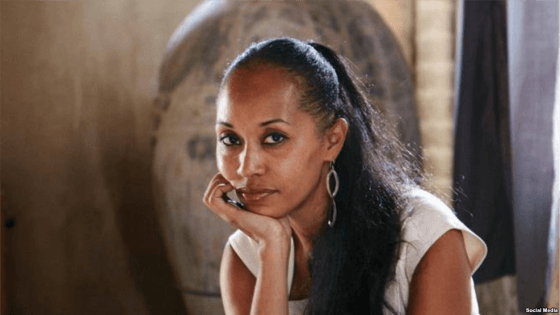
Jay Nordlinger at the National Review has interviewed Kimberley Motley, the American attorney who tried to involve herself in El Sexto’s case in Castrogonia.

The details should shock everyone who claims to care about human rights.

As she says, what is going on in Castrogonia, what has happened to El Sexto, and what was done to her is “legally and morally reprehensible.”

But, of course, as we all know, there are many such people who won’t give a damn about this story, simply because it’s about human rights abuses committed by a leftist regime.

Of course, of course, naturellement, self-anointed activists of this sort might be slightly irritated by the fact that an American woman of colour was treated as if she were a Cuban.

Will they be scandalized?  Will they call for sanctions against the Castro regime?  Will they boycott firms that do business with the Castro regime?  Will they ask American and European universities to sell their stock investments in firms that do business with the Castro regime?

Dream on….

1533922_10154163159439714_8824734146822278952_n__1_-jpg590x318

From National Review

Kimberley Motley is an American attorney and human-rights activist. I have known her for several years. For some time now, she has lived and worked in Afghanistan. She especially helps girls and women there. She is a multifaceted woman, Kim Motley. Her résumé includes the Mrs. America competition. Readers of NR know who Danilo Maldonado is. We have written about him several times, and I interviewed him earlier this year. For that piece, go here.

Maldonado is the Cuban dissident and street artist nicknamed “El Sexto” (meaning “The Sixth”). He has been in and out of prison. He is in again, this time for not saying and doing the right things after the death of Fidel Castro. Last week, Kim traveled from Afghanistan to Cuba, in hopes of representing Danilo. She herself was detained by the regime, for hours. They came again at midnight. She is now in the United States, and I talked with her yesterday.

For the Q&A interview pod cast, go here.

n123_0150_005

Reports from Cuba: Regime forces ‘assault’ headquarters of UNPACU and homes of activists

Diario de Cuba reports from Santiago de Cuba:

Regime forces ‘assault’ the headquarters of the UNPACU and the homes of several activists

Police raid UNPACU headquarters in Altamira.

Early Sunday regime forces simultaneously “assaulted” the headquarters of the Patriotic Union of Cuba (UNPACU) in Santiago of Cuba and another eight houses of activists in that city and Palma Soriano, reported members of the DIARIO DE CUBA organization.

Several dozen dissidents were apparently arrested, 12 of them in Palma Soriano and another 10 in Havana. The arrests could total more than 80, according to former prisoner of conscience José Daniel Ferrer, leader of the organization, who was among those detained.

“We are assessing the raids, the robberies and the arrests, but the UNPACU maintains its appeal to take to the streets to demand the freedom of political prisoners and an end to the brutal repression against civil society,” Ferrer told the DIARIO DE CUBA moments after being released. “We continue urging dissidents and the population to stand up to this infamous tyranny,” he insisted.

The UNPACU had announced that this week it would resume Sunday demonstrations, and had summoned its activists to the National Sanctuary of the Virgin of Charity in El Cobre, Santiago de Cuba.

Alexei Martinez, a member of the organization, told DIARIO DE CUBA that the losses inflicted by the police on Sunday “were serious.”

According to activist Liudmila Cedeño on her Twitter account, the authorities took laptops, cell phones, CDs and other equipment used by the dissidents.

Martínez said that, in addition to the UNPACU headquarters, where José Daniel Ferrer resides, the homes raided included those of Ovidio Martín Castellanos, Leonardo Pérez Franco and Yeroslandy Calderín Alvarado.

Also attacked was the home of political prisoner Geordanis Muñoz Guerrero, where his two children were, along with his wife, Yenisey Jiménez Reina, who was arrested.

Cedeño said that the home of Yriade Hernández, another UNPACU coordinator, was also stormed.

Read more

After Fidel, what is next for Cuba? Much of the same…

If you think the death of Fidel Castro will make Cuba any less of an island prison, you are sadly mistaken.

Alvaro Vargas Llosa in Newsday:

What’s next for Cuba?

Students gather behind a business looking for a Internet signal for their smart phones in Havana, Cuba,
Students gather behind a business looking for a Internet signal for their smart phones in Havana, Cuba

One would think there is no doubt in anybody’s mind about Fidel Castro’s horrific legacy. And yet we have heard important leaders say some outrageous things.

What is Castro’s real political legacy? The last free election in Cuba was in 1948; Fidel Castro turned the island into a more ruthless police state than the one he inherited from the Batista regime. The guerrillas he exported to Latin America gave rise to savage right-wing military dictatorships in the 1970s. Today no country in Latin America, with the pathetic exception of Venezuela, models itself on Cuba. The few left-wing populists who were allies of Cuba have been defeated at the polls (Argentina), constitutionally removed from power (Brazil), or forced to give up their hopes of another unconstitutional re-election (Ecuador, Bolivia), while Nicaragua’s Daniel Ortega has metamorphosed into a right-wing despot.

Soon after he took over from Fidel (first on an interim basis, then formally), Raul Castro, who would like to copy the Vietnamese formula (state capitalism and one-party rule), began to renounce some basic tenets of Cuba’s socialist economic model. He did not go far, but some of his measures — those relaxing the draconian emigration rules, allowing small businesses to operate privately, and re-establishing diplomatic relations with the United States without the precondition of lifting the embargo — have a counterrevolutionary whiff.

What about Fidel Castro’s economic legacy? The respected Cuban economist Carmelo Mesa-Lago has calculated that the Soviet subsidy amounted to $65 billion over a 30-year period and that Venezuela’s largesse toward the island amounted to $10 billion annually during the reign of Hugo Chavez. (It continues in diminished form under Nicolas Maduro.)

Castro wanted to turn Cuba into an agricultural powerhouse, but today it imports more than 70 percent of its food, and the sugar harvest, which reached 8 million tons a long time ago, has been reduced to about 1.4 million tons. The small industrial activity that still exists is half of what it was at the time of the fall of the Berlin Wall. Economics professor and blogger Tyler Cowen thinks the country’s per capita income is below $2,000.

What now? Raul Castro announced in 2013 that he will relinquish power in 2018 and seemed to suggest he would be succeeded by Miguel Diaz Canelo, an electrical engineer. Raul will relinquish the presidency of the Council of State and the Council of Ministers, but real power rests in the military and the Communist Party, where he will continue to call the shots. His son-in-law, Luis Alberto Rodriguez, is the head of GAESA, the holding company of the armed forces, which directly controls half of Cuba’s economy. This is the body you must partner with if you want to invest in tourism, retail, infrastructure projects, etc.

Not to speak of the third Castro generation, already positioned for important things. A son of Raul Castro, Alejandro, is a colonel in the Ministry of the Interior and the head of counterintelligence.

Continue reading HERE.

Spin alert : Is internet access really about to improve in Castrogonia?


imgscan-contrepoints-268-cuba-internet

If you’ve read any of the numerous news reports that have appeared in the past three days about internet improvements in Castrogonia, you would think that King Raul is finally loosening up on his total control of information in his giant slave plantation.

Wow!  You see, Mildred: It seems that the Normalization Circus is really helping the Cuban people!  This is what people-to-people trips can do!

The price of an hour on the internet has been lowered to 1.50 CUC per hour ($1.50 US dollars)!

Internet connections will be sold to 2,000 ordinary households in Old Havana, with an improved connection speed!

Santa Mierda!

zzzz

The article below is much like all the others that have appeared.  It relies on information provided by the Castro Ministry of Truth.

Like all the other articles, this one fails to mention some very important facts:

1. Access to the REAL internet will continue to be blocked by the Castro regime. Cubans are only allowed access to a highly-controlled intranet, in which censorship is the rule.

2. Even with the price reduction, access to this service is totally unaffordable. 98 percent of Cubans earn less than 30 dollars a month. This means that a mere two hours of “internet” access costs 10 percent of one’s salary.  And that’s not all: There are also hidden fees for connecting and maintaining and “recharging” a Nauta account.  The Ectesa web site is very unclear about these charges.

3.  Since the government-run Etecsa monopoly determines who will get “internet” service, anyone with dissident proclivities will be denied service.

4.  Since Etesca is in charge, everyone using the “internet” will be closely watched.  Forget about privacy.

5.  The two districts in Old Havana chosen for this trial are predominantly tourist areas, so these 2,000 new access points to the internet are an extension of Castronoid apartheid policies and they not really intended for ordinary Cubans.

internetcensorship061208

From the Latin American Herald Tribune:

Cuba’s state telecom monopoly Etecsa announced on Monday a reduction in the cost of Internet service and the start of online trials in the homes of 2,000 users in Old Havana.

The reduction from 2 Cuban convertible pesos (CUC, equivalent to the dollar) to 1.50 CUC will encourage people to visit the cultural, investigative and news content on the island’s Web sites, Etecsa’s commercial communications specialist Beatriz Fernandez said, as cited by the daily Juventud Rebelde.

From this Monday, Etecsa services for surfing the worldwide Web with a Nauta account will cost 1.50 CUC per hour, while nationwide navigation will cost 25 centavos CUC per hour, Fernandez said.

Meanwhile, Cuba is about to launch a 2-month pilot trial offering users Internet access at home, something that has been harshly restricted up to now.

The trial will be carried out in 2,000 homes located in two districts of Old Havana, selected for their “technical availability” (having a landline telephone), among other criteria, the specialist in landline services, Ana Mendez, said.

Plenty of "technical availabilty" here
Plenty of “technical availabilty” here

Up to now, home Internet connections have been limited to professionals like doctors, journalists, intellectuals and academics.

In the Nauta Home Trial, a wide-band connection with ADSL technology will be employed for a number of hours determined by Internet connection speed, the official said.

She said that Web surfers in this pilot experiment must have a Nauta account, and after signing a contract will receive the necessary equipment to go online from their homes.

Once the trial is over, Etecsa will offer them contracts for Internet use at home from that day onwards.

No "technical ability" here
No “technical availability” here

The legacy of ‘Hope and Change’ in Obama’s apartheid Cuba: Tyranny legitimized and dissidents marginalized

If Cubans had to use the words “Hope” and “Change” to describe President Obama’s Cuba policy, they would be used to describe how Obama’s policy of embracing the apartheid Castro dictatorship and abandoning the island’s dissidents have dealt serious setbacks to their “hope” that Cuba would “change” for the better.

John Suarez in Notes from the Cuban Exile Quarter:

Obama’s Cuba Legacy: Legitimizing tyranny, marginalizing dissidents & deteriorating human rights

An old, discredited policy repackaged as new delivers same failed results

https://1.bp.blogspot.com/-paWw5wou0Pc/WFczU2Ky6eI/AAAAAAAAN9U/ckvSbvwZ5HgBN4Kye0JnLkgK8QQElYSfwCLcB/s1600/160321-obama-cuba-mn-05_061eb24a763b9f6fd7951349eef8b230.nbcnews-ux-2880-1000.jpg
President Obama leaves office while General Raul Castro stays on in power

The White House claimed in a tweet on December 16, 2016 that they had “opened up a new chapter with the people of Cuba.” There is nothing new in what the Obama administration has done in Cuba because it is a retread off the old, discredited approach of embracing dictators while focusing on narrow economic interests. Google is now partnering with ETECSA, the Castro regime’s telecommunications monopoly that engages in systematic censorship. Other companies have engaged in discrimination based on national origin in the United States in order to satisfy regime demands.

Meanwhile Cubans continue to be jailed for what they think and the press has picked up on three high profile cases of a medical doctor, a lawyer and an artist. The two year anniversary of the new Cuba policy also coincided with the arrest of a U.S. citizen, Kimberley Motley, an international attorney who wanted to hold a press conference to discuss the case of Danilo Maldonado, the jailed Cuban artist.

Ben Rhodes published a blog entry claiming “two years of progress” citing progress in the private sector in Cuba but failed to mention that the Cuban military has expanded its control of the economy in the island since 2014. The White House has also been shy about mentioning the collapse in trade between U.S. companies and Cuba over the past two years. Nor does anyone want to mention that the peak year of trade was 2008, the last year of the Bush Administration. Instead the focus is on the latest celebrity visiting the island for a photo opportunity.

Continue reading HERE.