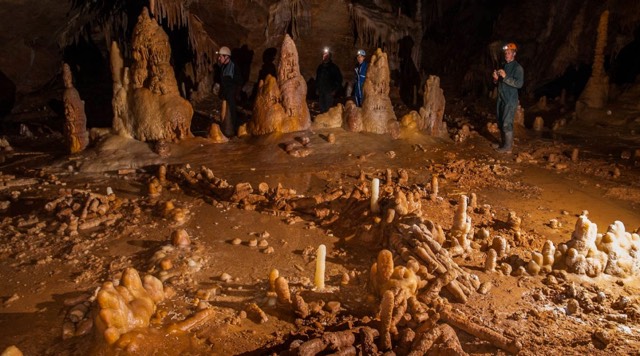
In the 90s, Bruniquel Cave was discovered to have a chamber containing an interesting human-built structure made from broken stalagmites. Carbon dating of a burnt bear bone within the chamber put the age of the activity at 47,600 years ago, smack dab in the Neanderthal era in that area. But recently, after a lull in research about these cave structures, analysis of uranium levels in the broken stalagmites resulted in a much older date for the construction: 176,500 years ago.
Nor is it clear how the Neanderthals made the structures. Verheyden says it couldn't have been one lone artisan, toiling away in the dark. Most likely, there was a team, and a technically skilled one at that. They broke rocks deliberately, and arranged them precisely. They used fire, too. More than 120 fragments have red and black streaks that aren't found elsewhere in the chamber or the cave beyond. They were the result of deliberately applied heat, at intensities strong enough to occasionally crack the rock. "The Neanderthal group responsible for these constructions had a level of social organization that was more complex than previously thought," the team writes.
In Trump Taps Into the Anxiety of American White Males, Anand Giridharadas writes:
Yet there is some evidence that a sizable number of white men see the push toward diversity, along with the larger changes it telegraphs, as less about joining and more about replacement, and a country that is less hospitable to them.
That sentiment is perhaps expressed in a quote widely circulated online in these discussions, though the origin is unknown: "When you're accustomed to privilege, equality feels like oppression."
This is perhaps what Tyler Cowen was getting at with his highly speculative and provocative What the hell is going on?
The contemporary world is not very well built for a large chunk of males. The nature of current service jobs, coddled class time and homework-intensive schooling, a feminized culture allergic to most forms of violence, post-feminist gender relations, and egalitarian semi-cosmopolitanism just don't sit well with many...what shall I call them? Brutes?
Quite simply, there are many people who don't like it when the world becomes nicer. They do less well with nice. And they respond by in turn behaving less nicely, if only in their voting behavior and perhaps their internet harassment as well.
I wouldn't recommend it, but a spin through the comments on Cowen's piece provides some examples of what he's talking about.
If you skip to around 3:15 in this video, you'll see a race between the Tesla Model X, the company's electric SUV, and an Alfa Romeo 4C Spider sports car. The Model X easily beats the Alfa Romeo to 60 mph while towing another Alfa Romeo 4C Spider behind it. Here's Keanu with a comment: "Whoa." How can you not love a car outfitted with something called Ludicrous Mode? (via a proud @elonmusk)
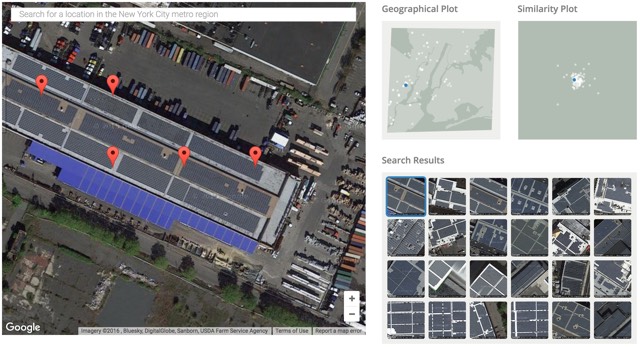
Terrapattern is a search engine for satellite images. You click on a specific feature of interest on a map and the site returns results that match it. For instance, here are the locations of solar panels in NYC.
You can also use Terrapattern to find school bus depots, fracking wells, Air Force bombers, baseball diamonds, train tracks, and much more.
There are only four cities currently represented (Pittsburgh, New York, San Francisco, and Detroit) but this is already super cool to play around with. (via @genmon)
My therapist and I have yet to figure out why, but I have a soft spot for objects that do unexpected impressions of other things and people. Like this sliding door that sounds like R2-D2 screaming. Or the falling shovel that plays Smells Like Teen Spirit. Or the door that can do a wicked Miles Davis impression. Or the nightstand door that sounds like Chewbacca. I even found one of my own a few months ago: the elevator door at the old Buzzfeed office sounded like Chewbacca as well. (via @williamlubelski)
In the latest Slow TV experiment, the Norwegian Consumer Council is doing a live read of the terms of service for a number of different apps, including Instagram, YouTube, Kindle, Spotify, and Snapchat. It's in Norwegian and it looks like they're on the last app, but the total time elapsed so far is 1 day, 7 hours, 49 minutes. (via @Rudien)
The Crandall Historical Printing Museum has the "most complete and functioning Gutenberg Press in the world" and in this video you can see one of the museum's guides demonstrating it for some visitors. (via digg)
In 2015, BBC Culture polled critics around the world and came up with a list of the best 100 American films. The video above offers a visual look at the list. Hitchcock, Kubrick, and Spielberg each have several films on the list. Although many of the films were edited by women, only one was directed by a woman.
In a conversation last year with Nikole Hannah-Jones, Ta-Nehisi Coates recommended that readers of his acclaimed Between the World and Me check out a baker's dozen other books, including his mentor David Carr's The Night of the Gun, The Half Has Never Been Told (previously mentioned here), and James Baldwin's The Fire Next Time.
I could have imagined Isabel Wilkerson's excellent The Warmth of Other Suns on this list too; it's the most eye-opening American history book I've read in years. (Paging Lin-Manuel Miranda to make a play out of this.)
Creep is perhaps Radiohead's best known song, especially in the US. But the band is a bit ashamed of it, so they don't play it all that often. They played it last night at a show in Paris for the first time since 2009. When I saw them in 2001, they played it for the first time since 1998 (and it was awesome).
There's a certain point in everyone's life when they're unable to appreciate their younger selves. Between this and putting True Love Waits on their latest album, perhaps Radiohead has become more accepting of the band they used to be. The genie's out of the bottle, mates, you might as well use the wishes.
As part of the Interstate Highway System project, expressways were run right through the heart of many American cities, disrupting neighborhoods and displacing hundreds of thousands of people.
The 48,000 miles of interstate highway that would be paved across the country during the 1950s, '60s, and '70s were a godsend for many rural communities. But those highways also gutted many cities, with whole neighborhoods torn down or isolated by huge interchanges and wide ribbons of asphalt. Wealthier residents fled to the suburbs, using the highways to commute back in by car. That drained the cities' tax bases and hastened their decline.
So why did cities help build the expressways that would so profoundly decimate them? The answer involves a mix of self-interested industry groups, design choices made by people far away, a lack of municipal foresight, and outright institutional racism.
Here's some homework: think about Uber/Lyft and the coming self-driving cars (Tesla, Apple, Google, Ford, etc.) in the context of the highways' effect on the American city. Who benefits most from these services? (The wealthy? Huge companies?) How will they affect the funding and use of public transportation? What will happen to cities? To urban sprawl? To the economically disadvantaged?
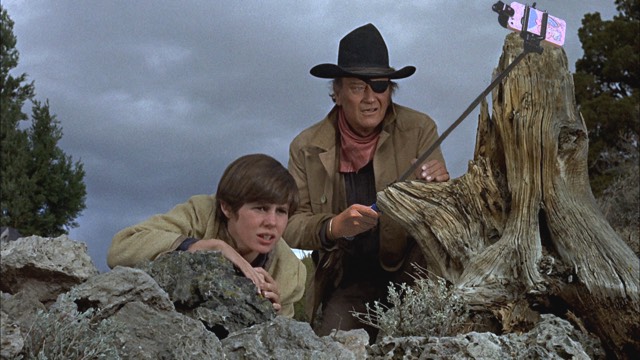
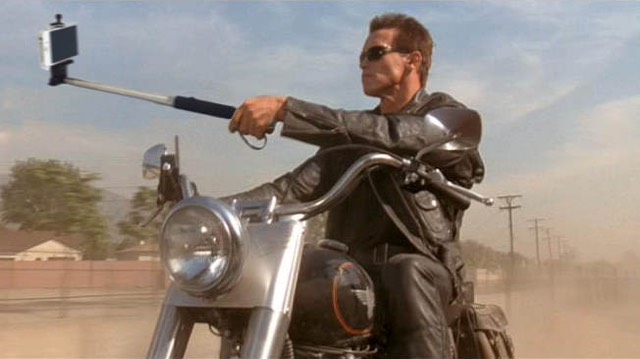
The John Wayne one made me LOL. Many more here. See also Matt Haughey's conservatives holding dildos.
Update: Some prior art, also from Matt, who loves to Photoshop guns into other things.
Microsoft founder Bill Gates, in addition to attempting to save the world, is also a voracious reader. He recently recommended five books that you should read this summer. On the list is Seveneves by Neal Stephenson, which I might finally try, having absolutely loved Snow Crash and Cryptonomicon when I read them a few years ago. Gates also recommends Yuval Noah Harari's Sapiens, which I read earlier this year and think about every few days. I wrote a bit about Sapiens and the invention of farming, which is a topic about which Gates disagreed with Harari.
Jller is a machine that sorts stones from a specific river according to their geologic age.
The machine works with a computer vision system that processes the images of the stones and maps each of its location on the platform throughout the ordering process. The information extracted from each stone are dominant color, color composition, and histograms of structural features such as lines, layers, patterns, grain, and surface texture. This data is used to assign the stones into predefined categories.
See also the robotic pancake sorter. (via colossal)
Older entries »