 שתף/שתפי

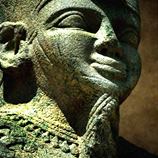
The National Museum of Sudan, founded in 1971, is the national museum of Sudan, located on El Neel Avenue in Khartoum. The double storied building was constructed in the 1955, and established as the National Museum of Sudan in 1971. It contains the largest and most important archaeological collection in the country.The museum has exhibits from different epochs of the Sudanese history such as Kingdom of Kush and ancient Nubia, and also ancient Egypt. Among the exhibits displayed in the gardens surrounding the museum are the two Egyptian temples of Buhen Temple and Semna Temple, which were originally built by Hatshepsut and Tuthmosis III but relocated to Khartoum upon the flooding caused by Lake Nasser.GeographyThe museum is located on the El Neel Avenue in Khartoum at the junction of White Nile and the Blue Nile in Al-Mugran area. It is the largest and most visited museum in Sudan.DescriptionEven though the building was built in 1955, its actual occupation as a museum took place in 1971. It is a double storied building where ancient architectural antiquaries are displayed. The antiquaries displayed relate to the history of the ancient Kush kingdom and the Nubia's Christian period. The artifacts on display are: Stone age relics of the Al Saltan Al-Zarqa era also known as the black sultanate; Kush glassware, pottery and statuary; frescoes and murals of the Nubia’s period from the 8th to 15th century. The frescoes made in water colour are well preserved and appear bright and clear.


Situated at the join of the Blue and White Nile Rivers, Corinthia Hotel Khartoum is a picturesque retreat for every guest.
